
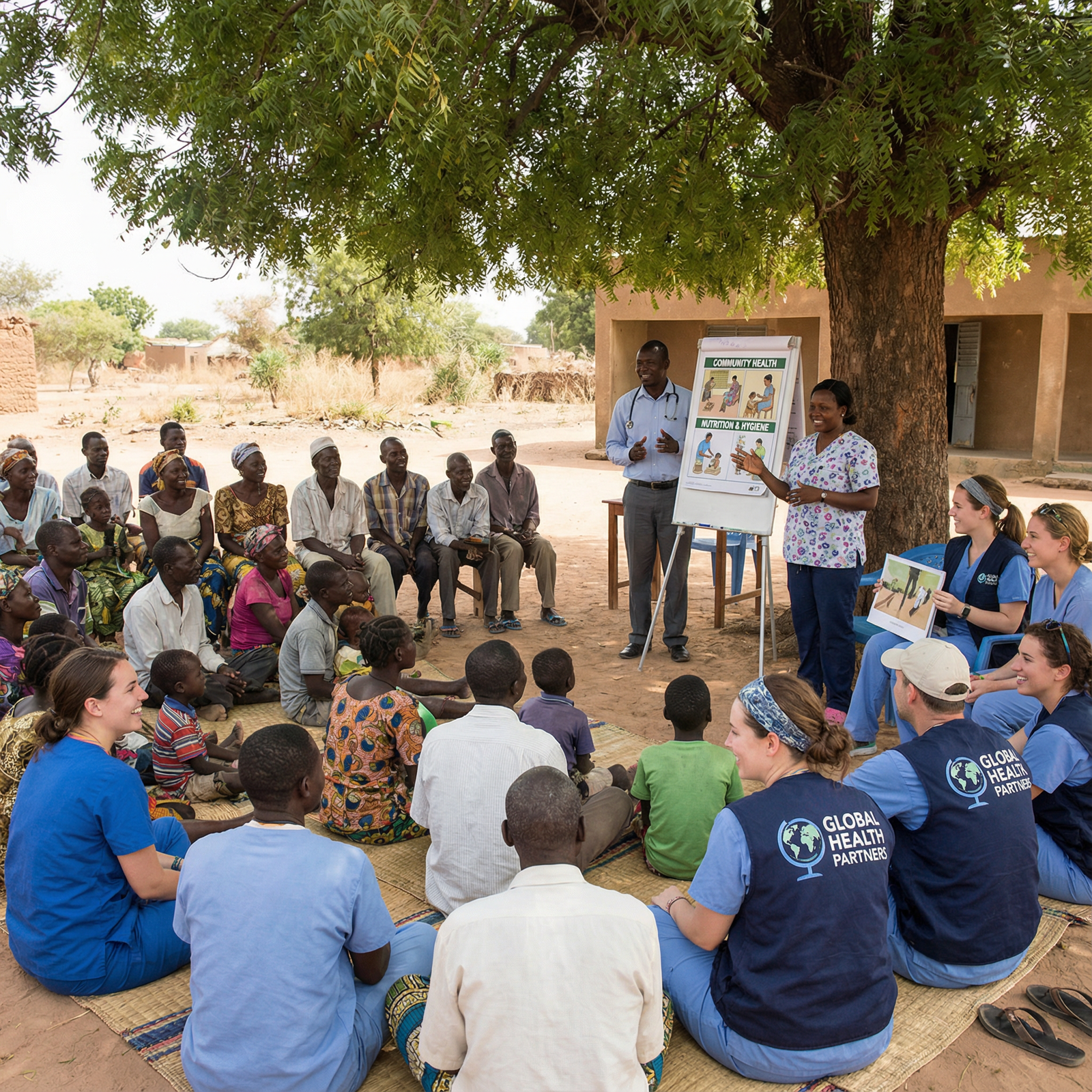
The biggest mistake private practitioners make about global health is thinking they need to blow up their life and move overseas to matter. You do not. But you do need a plan—or you’ll waste years dabbling and feeling guilty.
You’re already in private practice. You have a panel, overhead, maybe partners, maybe kids in school. You’re not a 25‑year‑old with a backpack and zero obligations. So the usual “join a medical mission!” advice is lazy and wrong for you.
Here’s how to approach global health from exactly where you are—and how to do it ethically, without turning into the stereotypical “voluntourist with a license.”
Step 1: Get brutally clear on what you actually want
Do not start by looking for volunteer trips. Start by looking in the mirror.
There are 4 very different things people mean when they say “I want to do global health”:
- I want to do short, periodic clinical trips.
- I want to build or support long-term systems, training, or policy work.
- I want to eventually work abroad part-time or full-time.
- I want to align my career with justice/ethics and stop feeling like I’m ignoring the rest of the world.
You need to know which bucket you’re actually in, or you’ll chase the wrong opportunities.
Ask yourself, with zero romanticizing:
- How many weeks a year can I realistically be away in the next 12 months? Write a number. Not a dream. A number.
- What can my practice tolerate without imploding?
- Do I want primarily hands-on patient care, or am I more interested in teaching, system-building, or advocacy?
- Am I looking for a one-off experience, or to build a 10‑year body of work?
If you say “Oh, I’m open to anything,” that tells me you haven’t thought hard enough.
Here’s how that self-assessment usually shakes out for private practitioners:
| Path Type | Time Away/Year | Primary Focus | Fit For |
|---|---|---|---|
| Short clinical trips | 1–3 weeks | Direct care | Heavy practice obligations, early exploration |
| Longitudinal partner site | 2–6 weeks split | Clinical + teaching | Those wanting continuity and relationships |
| Remote support | 0–2 weeks | Mentoring, planning | Very limited travel flexibility |
| Career pivot abroad | 3+ months | Full-spectrum work | Kids grown, practice transition possible |
You’re probably in the top three right now—even if part of you fantasizes about the last one. That’s fine. Start where you are, not where Instagram thinks you should be.
Step 2: Fix your mindset: this is not charity tourism
If you do not get the ethics and power dynamics straight, you will cause harm. I’ve seen it.
The old model: a team flies in, operates or runs clinic for a week, posts photos with kids, leaves behind destabilized local clinics and no continuity of care.
The better model: you plug into existing local systems, follow local priorities, and accept that your role may be smaller and less glamorous than you imagined.
So before you go anywhere, do three things:
Educate yourself
Read at least a couple of serious global health books or essays—not glossy NGO brochures.Try:
- “Reimagining Global Health” (Farmer, Kim, et al.)
- “Do No Harm” (Mary B. Anderson – about humanitarian work but very applicable)
- WHO’s short documents on health systems strengthening in low- and middle-income countries.
Get comfortable with being a guest
You are entering someone else’s health system, culture, and political reality. They are doing global health every day. You’re visiting.Lose the savior script
If any part of your motivation is “these people have nothing, I will go help them,” you need to interrogate that. The real work is solidarity, partnership, and humility, not rescuing.
Once that’s clear, then you can start looking for the “where” and “how.”
Step 3: Decide what kind of contribution fits your specialty and skills
What you do day-to-day in private practice matters. Some specialties slot into global health easily; others need more creativity.
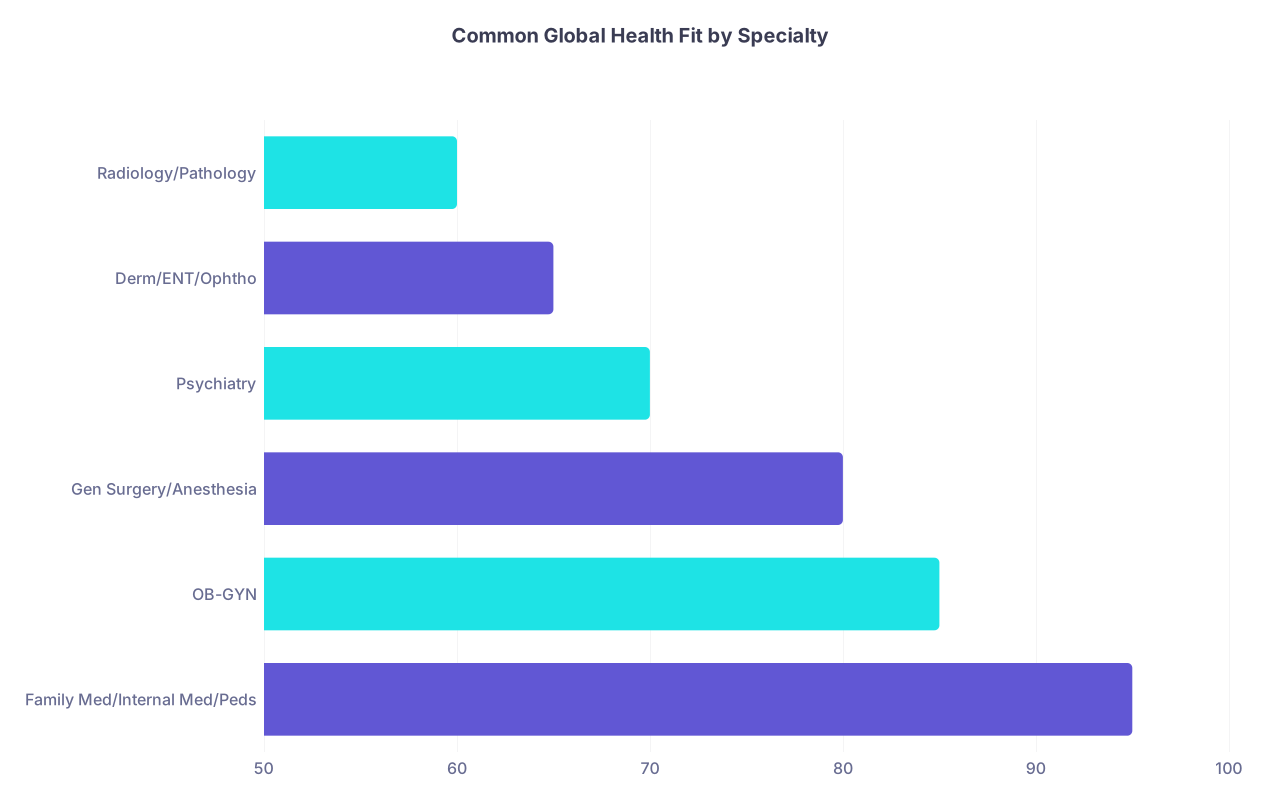
Here’s a quick sense check.
| Category | Value |
|---|---|
| Family Med/Internal Med/Peds | 95 |
| OB-GYN | 85 |
| Gen Surgery/Anesthesia | 80 |
| Psychiatry | 70 |
| Derm/ENT/Ophtho | 65 |
| Radiology/Pathology | 60 |
Rough translation:
High natural fit: FM, IM, Peds, OB‑GYN, Gen Surgery, Anesthesia
You can plug into primary care, maternity care, perioperative care, trauma, etc., very directly.Medium fit: Psych, Derm, Ophtho, ENT
There are strong needs, but you’ll tend to work in more defined programs (e.g., eye surgery camps, mental health integration projects).Less obvious but still very valuable: Radiology, Path, Oncology, Cardiology, etc.
Huge opportunities in teleradiology support, pathology quality improvement, oncology guideline adaptation, etc.—often less glamorous, more systems-focused.
The takeaway: don’t decide you don’t fit. Decide what version of global health work aligns with your skill set.
Examples:
- You’re a dermatologist in private practice: tele-mentoring primary care clinicians in acne, fungal infections, leprosy, and skin cancer recognition can be far more impactful than flying in for 5 days of clinics.
- You’re an anesthesiologist: partnering with a surgical/OB program to standardize safe anesthesia protocols, develop checklists, and train nurse anesthetists may matter more than the number of cases you personally anesthetize each trip.
- You’re a radiologist: working with a hospital to improve ultrasound training or interpreting complex scans remotely through a structured program is significant global health work.
Step 4: Start locally connected, not randomly abroad
Random Googling “medical mission trip” at 2 a.m. is how you end up on bad trips with questionable ethics.
Instead, look for one of these entry points:
Academic medical centers near you
Most large universities with med schools have a global health office or center. They’re often desperately trying to find clinicians with real-world experience who can precept, teach, or occasionally travel.Search “[Your City] global health center,” “[University Name] global health,” or “department of [your specialty] global partnerships.”
Specialty-specific global health organizations
Many specialties have established entities. Examples:- Surgeons: Partners In Health, Operation Smile (for cleft, though be careful to ask about longitudinal follow-up), global surgery programs at specific universities.
- Anesthesia: SAFER Anesthesia, WFSA (World Federation of Societies of Anaesthesiologists).
- OB‑GYN: FIGO, EngenderHealth, maternal health partnerships.
- Family Med: Global Family Medicine collaborations, IntraHealth, etc.
Faith-based or NGO hospital systems with long-term presence
Not the pop-up team model. Look for institutions that have run hospitals or health systems in-country for decades, with local leadership. Examples: mission hospitals with fully local staff where international clinicians come as guests and trainers, not as “heroes of the week.”Diaspora connections in your own community
Many immigrant communities maintain strong ties to home-country hospitals or clinics. A local Somali community leader who says, “Our district hospital in Hargeisa needs help building a diabetes program” is an infinitely better starting point than a glossy website.
Your rule of thumb: if the opportunity doesn’t involve local health professionals in leadership and long-term planning, be skeptical.
Step 5: Trial run with 1–2 weeks, but do it right
You’re in private practice. You probably cannot disappear for 6 weeks on your first go. So think in terms of a 7–14 day initial commitment.
But here’s the catch: you treat that short trip as the beginning of a relationship, not a vacation.
How to set it up well:
Be honest upfront
Tell the hosting organization or partner: “I can realistically do 1–2 weeks this year, possibly every year or every other year. I want to be useful within those constraints and willing to support remotely in between.”Ask what they actually need
And be ready for the answer to be “training, protocols, case discussion, quality improvement” rather than “please see 150 patients a day.”Clarify scope of practice and supervision
Do not assume your U.S. standards and autonomy transfer over. Ask: Who’s in charge clinically? How are decisions made? Who follows patients after I leave?Plan for handover and continuity
You’re not there to be a one-man/woman ICU. Anything you start, someone else must be able to continue.
Early on, your job is as much listening and observing the system as it is “doing.” If you come home from your first trip burning with 20 ideas but also painfully aware of how little you understand, that’s a good sign. You’re starting correctly.
Step 6: Make your practice structurally compatible with global work
If your income and practice implode every time you leave for 10 days, you will not sustain this.
You need to treat global work as an operational problem, not just a moral calling.
Look at four domains:
Coverage
- Can a partner cover your call?
- Can you hire a locum tenens for specific windows each year?
- Can you cluster your global work in your slow season?
Revenue
- Accept that global work will likely cost you money in lost billings.
- Decide in advance what you’re willing to lose per year (e.g., equivalent of 1–2 weeks of clinic).
- Some NGOs cover travel and lodging; some do not. Clarify that early.
Communication with staff and patients
Explain to staff: “Every year, I spend two weeks working with a hospital overseas that has very limited resources. This is a planned and recurring part of my work. Here’s how we’ll handle it operationally…”
To patients: a simple, non-self-congratulatory explanation is enough. “I’ll be away volunteering with a partner clinic overseas; Dr. X will cover urgent issues.”Legal and insurance
- Ensure your malpractice insurer understands you’re working abroad; some cover, some do not.
- Make sure the host country and institution have appropriate licensing or temporary registration for you.
You do not need this perfect before you start. But you need a deliberate structure within 1–2 years, or you’ll burn out on the juggling act and quit.
Step 7: Build a real, long-term partnership (not a photo album)
The people who end up doing meaningful global health work from private practice are not the ones who hop to a new country every year. They pick one or two partners and go deep.
Think in terms of a 5–10 year arc:
Year 1–2:
- Visit 1–2 times briefly.
- Learn systems, needs, politics, constraints.
- Start small—case discussions, simple protocols, joint QI projects.
Year 3–5:
- Co-develop specific projects: training programs, guideline adaptations, device procurement plans, tele-consults.
- Anchor your work to local priorities, not your specialty vanity project.
Year 5–10:
- Shift from you “doing” to you supporting local leadership, mentoring, and making yourself progressively less essential.
- Maybe help them build networks, find grants, or connect with academic partners.
It’s not flashy. That’s the point. Sustainable global health is often quiet, slow, and frankly un-Instagrammable.
Step 8: Use remote work to multiply your impact
You do not have to be physically present to contribute. Especially now.
You can:
- Do regular case conferences with a partner site via Zoom or WhatsApp.
- Help them write clinical protocols, consent forms, discharge instructions.
- Provide asynchronous second opinions on complex cases through formal telehealth programs.
- Mentor local clinicians who are early in training or new to a particular procedure or program.
| Category | Value |
|---|---|
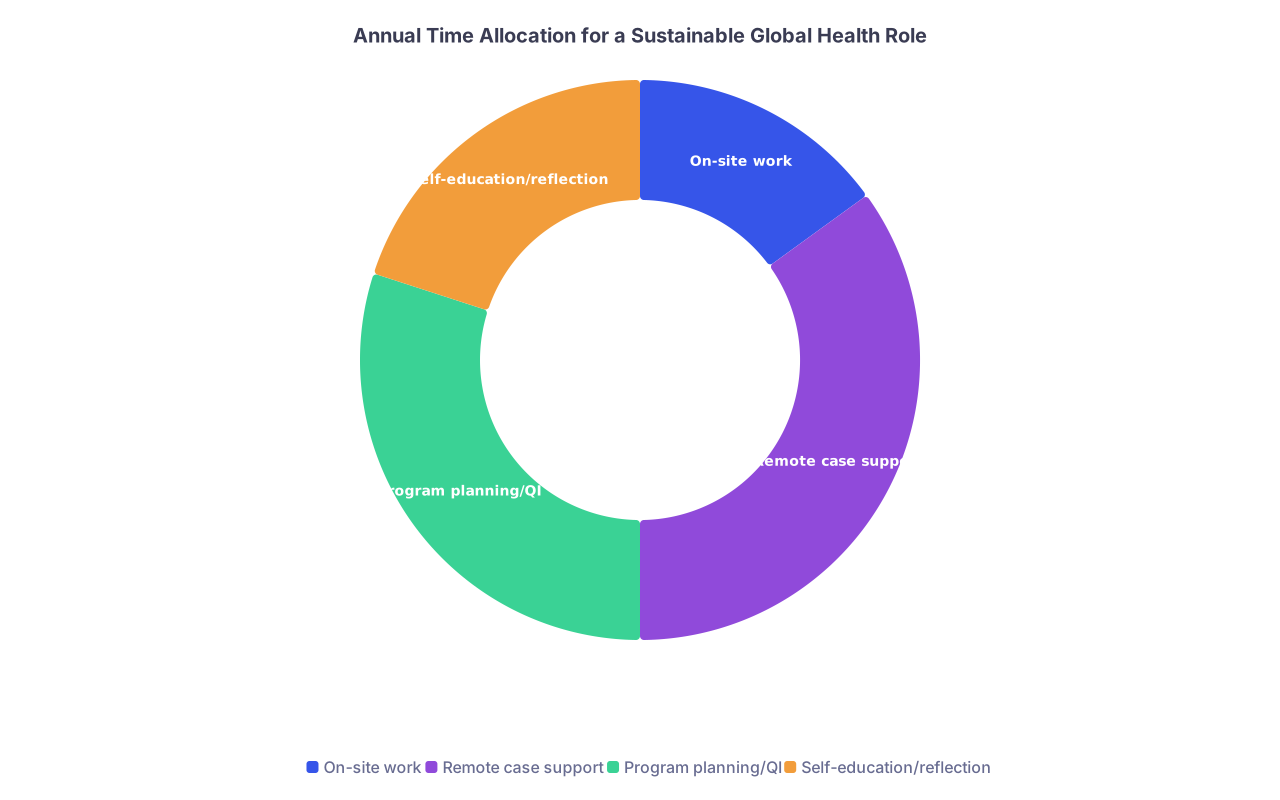
| On-site work | 15 |
| Remote case support | 35 |
| Program planning/QI | 30 |
| Self-education/reflection | 20 |
That pie is realistic for a private practitioner who’s serious but not full-time.
The remote work is often where you become truly valuable—because you’re consistent. Not just a guest who shows up for 10 days once a year.
Step 9: Check yourself constantly on ethics, ego, and impact
Global health has a lot of people with big egos and hazy ethics. Do not become one of them.
Some hard questions to ask yourself yearly:
- Am I doing things here I would never do at home? Why?
- Are local clinicians compensated and recognized, or only “visiting experts”?
- If I disappeared tomorrow, would this program collapse? If yes, that’s a problem.
- Am I listening more than I talk in planning meetings?
- Am I centering my stories around “what I did” or “what our partners are building”?
If this makes you uncomfortable, good. Global health should unsettle you. It’s about structural inequity, colonial history, power, and money—not just heroic doctors.
You also need to be honest about your limits. You cannot fix everything. You cannot solve a broken health financing system with a two-week camp. You can contribute thoughtfully inside specific, realistic lanes.
Step 10: If you’re thinking about a bigger life pivot
Some of you reading this are already halfway out the door mentally. You’re tired of private practice grind, and global work looks like meaning and escape rolled into one. Careful.
If you’re seriously considering a 3–12 month or longer commitment abroad:
Do at least one shorter visit first with the same partner so you’re not moving into a complete unknown.
Involve your family early. This is not a surprise conversation.
Get real about finances.
- How much runway do you need?
- Can you rent out or sell your practice?
- Will your retirement and benefits take a hit?
Understand the job types:
- NGO medical advisor or field clinician
- Academic global health faculty (with trips abroad)
- Long-term hospital posting (e.g., mission hospital, international hospital group)
- WHO/UN policy work (far less clinical than most imagine)
Give yourself a time-bound trial (e.g., “We’ll reassess after 1 year” instead of “This is forever now”).
This long-term pivot is a different conversation. But starting now with a smaller, structured global role gives you the experience—and credibility—to make that decision later without fantasy.
A simple 12-month starter plan
If you want a concrete sequence, here’s a perfectly reasonable first year blueprint:

| Step | Description |
|---|---|
| Step 1 | Month 1 - Clarify goals |
| Step 2 | Month 2 - Educate self |
| Step 3 | Month 3 - Identify 2-3 orgs or partners |
| Step 4 | Month 4-5 - Meet and choose one partner |
| Step 5 | Month 6-7 - Plan 1-2 week visit |
| Step 6 | Month 8 - First on-site visit |
| Step 7 | Month 9-10 - Debrief and set remote rhythm |
| Step 8 | Month 11-12 - Commit to 2-3 year partnership |
No drama. No sudden quitting your job. Just deliberate, structured steps.
Document your work like it matters—because it does
Treat your global health work with the same seriousness you’d give a new clinical service line in your practice.
Track:
- Number and nature of visits
- Remote support activities and hours
- Projects started and completed
- Outcomes where measurable (e.g., number of staff trained, implementation of new protocols, reduction in specific complications)
This is not for bragging. It’s so you can assess whether you’re actually useful and refine what you do.
It also matters if you ever want to:
- Apply for global health fellowships or certificate programs
- Seek small grants for equipment or training
- Partner with academic centers that want to see seriousness, not tourism
Two realistic case examples
To anchor this, two composites based on people I’ve seen do this well.
The community internist
- 49-year-old internist in a 4‑physician group.
- Initially could manage only 7–10 days away per year.
- Connected via a local Congolese church member to a district hospital in DRC with a huge burden of hypertension and diabetes.
Year 1–2:
- Two 7‑day trips focused mostly on listening, doing ward rounds with local docs, and understanding their medication and lab constraints.
- Started a shared WhatsApp group for complex cases.
Year 3–5:
- Co-developed simple hypertension and diabetes management algorithms adapted to local formularies and lab access.
- Helped train local nurses and generalists in chronic disease follow-up and basic patient education.
- Did quarterly Zoom case conferences.
Outcome: BP control rates improved in follow-up samples; local team fully owned and ran the program. The “visiting doctor” became less central over time, more like a consultant in the background.
The anesthesiologist in private practice
- 43-year-old anesthesiologist in a small city, private group.
- Partnered with a long-running surgical training program in East Africa.
Year 1:
- One 10‑day visit embedded with local anesthesia staff. Did not “run cases alone”; worked side-by-side observing workflows and constraints.
Year 2–3:
- Co-created a basic safety checklist tailored to their realities (oxygen reliability, limited monitoring).
- Set up quarterly virtual teaching sessions on obstetric anesthesia, management of intraoperative emergencies, and post-op pain with limited meds.
Year 4+:
- Helped find low-cost equipment donors, but only based on local requests.
- Local anesthesia providers presented their own QI data at a regional conference.
Outcome: Intraoperative adverse events decreased measurably; the local team took credit (as they should). The U.S. anesthesiologist continued annual visits plus ongoing mentoring.
Both still run their private practices. Neither is a full-time global health professional. Both are doing legitimate, ethical, useful work.
If you remember nothing else
Three things:
- Do not start with “Where can I go?” Start with “What can I realistically offer, over several years, and who is already doing this work that I can support?”
- Treat global health as a serious, long-term professional commitment—not a feel-good add-on. Build your practice, calendar, and finances around it, even if in small increments.
- Stay humble and partnership-focused. If you center local leadership, long-term systems, and your own willingness to be a guest, you’re far less likely to do harm—and far more likely to do work you can be quietly proud of ten years from now.


