
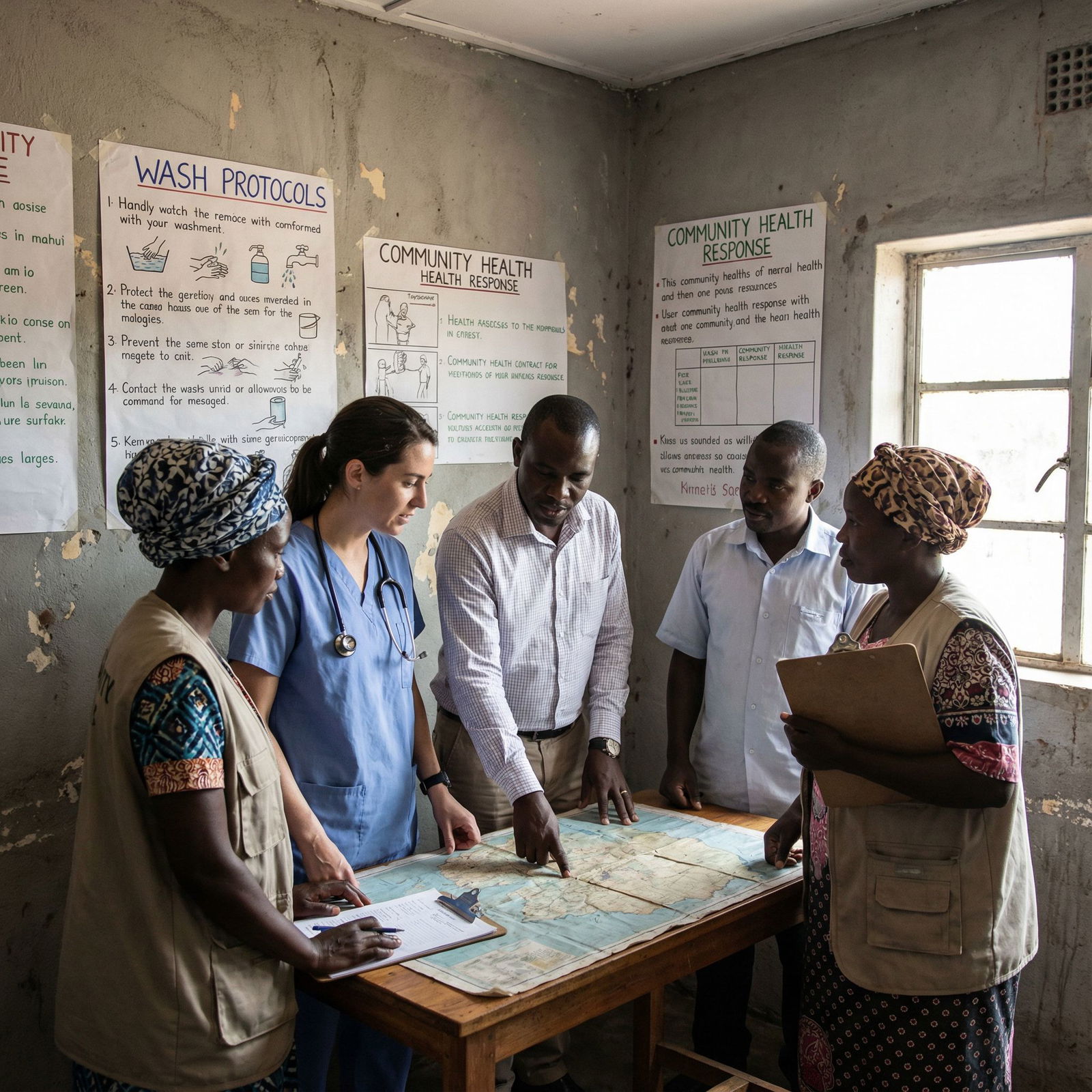
The biggest documentation mistakes on humanitarian rotations are not about grammar or templates. They are about harm. To patients, to colleagues, and sometimes to you.
If you treat documentation on global health trips as “less serious” than at home, you are already making the first mistake.
You are in the Global Health / Personal Development and Medical Ethics space now. That means the stakes are higher, not lower.
Mistake #1: Treating Documentation as Optional Because “We’re Just Doing the Best We Can”
I have heard this line more times than I care to count:
“We are in the field. We do not have time for notes.”
That attitude is how errors compound quietly.
On humanitarian rotations, the temptation is real: limited time, huge queues, high acuity, language barriers, no EMR. So people start cutting corners: minimal notes, or none; undocumented meds; “mental notes” about follow-up plans.
This is how you create avoidable harm:
- A child receives amoxicillin from your team on day 1, then is seen by another team on day 4 with no note. They assume no prior antibiotics. Double dosing, with no one understanding why the diarrhea is worse.
- You suspect TB but document only “cough.” The next team misses the concern, fails to isolate, and the patient spends hours in a crowded waiting area.
- A complicated pregnancy is seen by three different short-term teams. No coherent written plan anywhere. Each team “starts fresh.” You are not “being thorough.” You are fragmenting care.
Reality check: Short-term rotations magnify handoffs. Different teams, different languages, different days, and often zero continuity from your own group. Documentation is the only thread.
Do not romanticize the chaos. You still have ethical and professional duties.
How to avoid this:
- Decide before the first patient is seen: What is our minimum dataset for every encounter? Vital signs, chief complaint, exam, assessment, plan, meds with dose and duration. Every time.
- Build a simple paper template if there is no EMR. One page. Pre-printed fields. No one should be inventing note structure on the fly in front of 60 waiting patients.
- Assign a rotating “documentation hawk” each day whose job is to make sure notes are complete before anyone leaves the site.
If you cannot document safely, you are seeing too many patients. That is not heroic. That is reckless.
Mistake #2: Ignoring Local Legal and Ethical Realities
You are not documenting in a vacuum. You are operating in a health system, with laws, norms, and risks that are not your own.
The lazy assumption: “We are guests. They will not sue us. Documentation does not matter here like it does at home.”
Wrong.
Legal exposure exists. Ethical exposure always exists.
Here is where people get burned:
- Recording diagnoses that are legally or socially dangerous—HIV, STIs, sexual assault, psychiatric labels—without understanding who can see the chart and how it is stored.
- Writing disparaging or judgmental comments about patients, local providers, or traditional healers in a record that local staff will later read.
- Documenting treatments or procedures outside your licensed scope in your home country, as if being on another continent magically changes your credentials.
You might not end up in court. But your notes can damage patient safety, local relationships, or even put patients at risk of stigma or violence.
| Area | Common Mistake |
|---|---|
| HIV/STI status | Recording without consent context |
| Mental health | Using stigmatizing diagnoses |
| Sexual violence | Over-documenting identifiable data |
| Political violence | Naming perpetrators in clear text |
| Scope of practice | Recording procedures you should not do |
How to avoid this:
- Ask early: Who owns these records? Who reads them? How are they stored and for how long?
- Ask local clinicians explicitly: Are there diagnoses or topics where extra discretion is expected? How do you usually chart them?
- For high-risk information, consider carefully what must go in the chart vs what should be in a secure, de-identified registry (if at all).
- Never write anything in the chart you would not be willing to explain to the patient and the local medical director face to face.
You are a guest. Document like one.
Mistake #3: Writing Useless Notes for Continuity of Care
Some physicians write beautiful, thorough, utterly unhelpful notes on global rotations.
I have seen notes like:
“Will monitor. Follow-up PRN.”
Monitor how? Where? By whom? With what?
On a short humanitarian rotation, your note has one primary job: to help the next clinician who sees this patient—often someone who has never met you, in a system you barely understand.
Common failures:
- No explicit follow-up plan: no time frame, no location, no trigger for return.
- No clear “working diagnosis”—instead, vague lists of symptoms and orders.
- No explanation that a treatment is empirical vs confirmed.
- No documentation of what you explained to the patient and family, especially around prognosis and red flags.
The worst offender: the “mobile clinic black hole.” You see a patient in a rural outreach setting that will not be visited again for months. You treat as best you can, scribble a note, and walk away, never clarifying what should happen if things worsen.
Here is the ethical standard: If the note is not designed to help someone else care for this patient, you have failed.
A better pattern for each note in a humanitarian or short-term setting:
- Assessment: What do you actually think this is? Pick a primary working diagnosis, or a ranked list if you must.
- Uncertainty: If you are guessing (and often you are), say so. E.g., “Likely viral pneumonia based on exam; no CXR available.”
- Plan:
- What treatment you gave (drug, dose, duration).
- What you would do next if you had more resources—but cannot.
- Follow-up:
- Where should the patient go if not better or worse in X days?
- For emergencies, what are explicit danger signs you told them?
If you are not writing these pieces, the next clinician has to reinvent the assessment from zero. That is a waste. And sometimes, a danger.
Mistake #4: Over-Sharing Patient Information for Research, Presentations, or Social Media
Humanitarian rotations are tempting content mines. I see trainees and attendings do this constantly: documenting cases with one eye on conference abstracts, Instagram, or future grand rounds.
Here is where it goes off the rails:
- Keeping parallel “case logs” with full names, dates of birth, and highly specific details, outside the formal chart system.
- Taking photos of records or imaging with visible identifiers, with the excuse “we will de-identify later.”
- Writing case reports without truly understanding local consent norms, or without any local ethics review.
- Posting “interesting cases” on social media with enough demographic and clinical detail that the community can identify the patient—even if the name is removed.
You think you are showcasing pathology. The patient and their community might experience it as exploitation.
Do not make yourself the protagonist in someone else’s disaster.
Protective habits:
- If you are going to document for research, set up a formal, approved system with IRB / ethics committee oversight before you leave, with clear de-identification rules.
- Never store identifiable patient data on your personal phone or laptop unencrypted. If you are doing this, stop. Now.
- For teaching files, strip unique details: exact village names, rare combinations of conditions, or dates that make it easy to infer identity in a small community.
- And social media “field stories”? Ask yourself one question: Would I post this if this were my own family, in my own city, in my own hospital? If the answer is no, then do not do it abroad either.
Mistake #5: Failing to Document Consent, Especially When Care is Non-Standard
On humanitarian work, you will sometimes offer care that is less-than-ideal by your home standards. Alternative regimens, no imaging, empiric therapy when you would usually observe. That is the reality of constraint.
The mistake is pretending that this does not affect consent.
You cannot obtain valid consent if you do not acknowledge, in the chart and to the patient:
- That there were other options (often unavailable here).
- That this plan carries particular risks or more uncertainty.
- That the patient agreed to this plan with that knowledge.
Common scenarios I see:
- Procedures (incisions, reductions, deliveries) done in improvised settings with minimal documentation beyond “procedure performed.”
- Switching to second-line drugs because the first choice is not on formulary, with no documentation that the patient understood the tradeoffs.
- Telling the patient “we will try this” but never charting what they were told about alternatives, even if those alternatives are geographically or financially inaccessible.
If a complication occurs, your vague note becomes a liability—to you, to your local partners, and to trust between the community and the clinic.
A minimal but meaningful consent note in these contexts should include:
- What: The specific intervention or plan.
- Why: The key reason and any constraints shaping the choice.
- Risks discussed: Not a full legal script, but the major foreseeable complications.
- Alternatives: Even if only theoretical—e.g., referral to distant tertiary center.
- Patient response: Agreed / declined, plus any concerns they raised.
You can do this in 3–5 sentences. Not a novel. But skipping it altogether is unethical.
Mistake #6: Erasing Local Clinicians from the Record
Western teams often act as if they are the first and only ones who have ever treated these patients. It shows in the documentation.
You see it in phrases like:
- “No prior care available.”
- “No local resources for X.”
- “Has never had access to medical attention.”
Then you talk to the nurse who has been running that clinic for 15 years. Or the local midwife. Or the district medical officer who sees the same patients every month.
This kind of note does two kinds of damage:
- It erases long-standing local work and knowledge, often from under-resourced, under-recognized local clinicians.
- It sets the stage for future teams to disrespect or bypass existing systems, because “no one here can manage this.”
Your documentation should do the opposite: acknowledge what care exists, what has been tried, and who is involved.
Instead of writing “no prior care,” actually ask and document:
- Has the patient seen a local provider? Where? When?
- What meds did they receive? Traditional treatments?
- Who is usually responsible for this patient—local clinic, hospital, NGO?
Then put it in the note. For example:
“Previously followed by local health post nurse for hypertension; on amlodipine 5 mg daily, adherence inconsistent by patient report.”
Or:
“Traditional healer treated with herbal poultice to leg for 3 weeks; no prior antibiotics documented.”
This is not fluff. It tells the next clinician: this patient has a care network. Do not bulldoze it.
Mistake #7: Documenting Through a Colonial Lens
You can harm patients and colleagues without a single wrong medication dose—simply by the way you write about them.
Documentation can carry bias. And in global health, ugly patterns show up fast:
- Describing patients as “noncompliant” when medications are financially or geographically inaccessible.
- Labeling cultures as “resistant to modern medicine” rather than noting structural barriers, mistrust born from history, or prior abuses.
- Writing about “primitive conditions” or “lack of sophistication” in local care, while ignoring resource constraints and systemic underfunding.
You might think you are just “being honest.” You are actually encoding your own cultural bias into the record, where it will stick.
Ask yourself:
- If a local trainee read this note in English, how would it land?
- If an NGO auditor or journalist read your notes, what narrative about this community would they pull?
There are better ways to document reality without contempt.
Bad:
“Patient noncompliant with hypertension meds.”
Better:
“Patient has been unable to obtain medication regularly due to cost and travel distance; takes pills intermittently when available.”
Bad:
“Family refuses modern treatment, prefers traditional healer.”
Better:
“Family strongly prefers to continue care with traditional healer; declined referral today after discussion of risks and benefits.”
You are not writing a travel diary. You are writing part of an official record of how foreign clinicians behaved toward a vulnerable community. Take that seriously.
Mistake #8: No System for Tracking High-Risk Patients Across Short-Term Teams
Humanitarian rotations are mostly short. Patients’ illnesses are often not.
Here is the recurring mess:
- Team A sees a child with severe malnutrition. Document well. Then leaves.
- Team B arrives three months later. No idea who was “high risk” last time. The notebook is there, but there is no simple way to know who needed follow-up.
- The child never comes back. No one knows whether they improved, deteriorated, or died.
The clinical error is obvious. The ethical error is subtler: you created expectations of ongoing care with no realistic way to deliver it.
The documentation mistake at the center: no structured way to mark, track, and hand off high-risk patients.
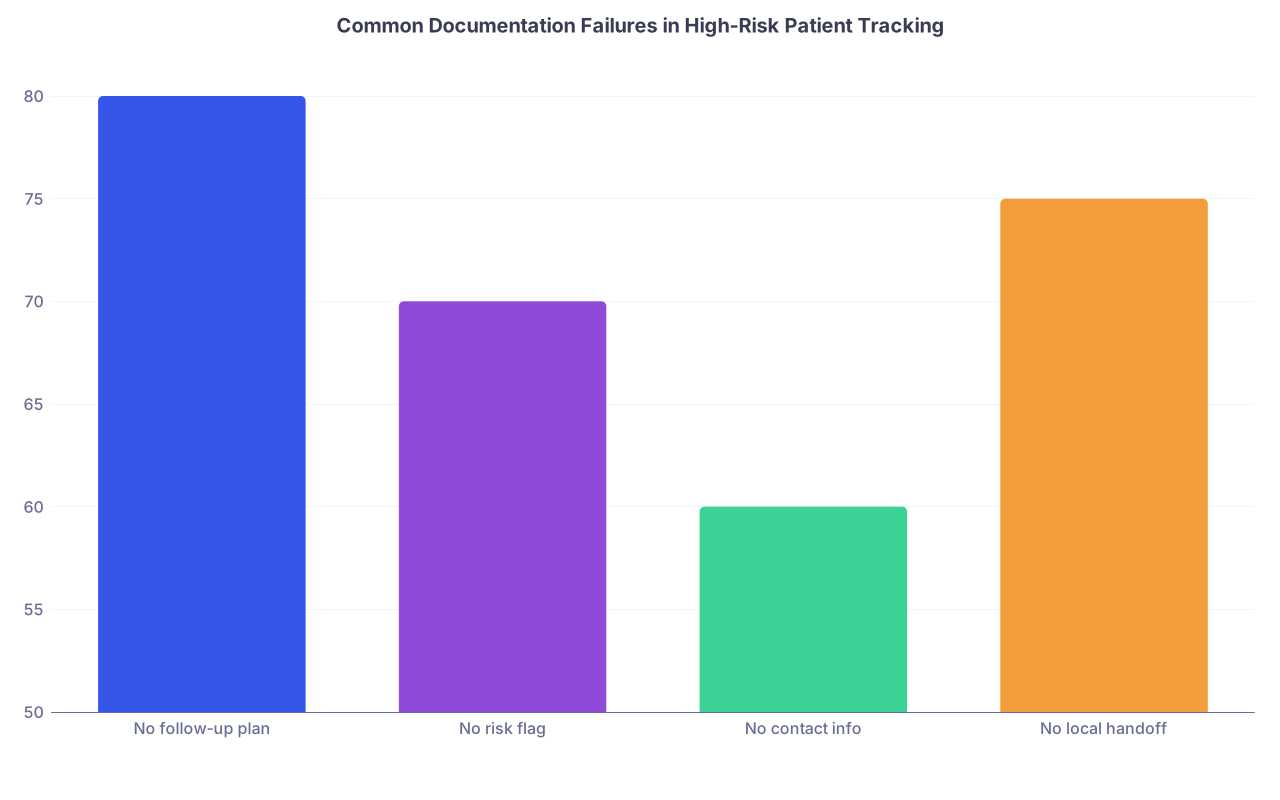
| Category | Value |
|---|---|
| No follow-up plan | 80 |
| No risk flag | 70 |
| No contact info | 60 |
| No local handoff | 75 |
Here is a more responsible structure:
- Create a simple, local “high-risk registry” in collaboration with local staff. Not a foreign team spreadsheet. Something that will outlast you.
- Define, together, what counts as high-risk: severe malnutrition, advanced pregnancy complications, TB suspects, severe chronic disease, etc.
- For each high-risk patient, add:
- Clear diagnosis or concern.
- Expected follow-up date and location.
- What the local clinic is expected to do vs what your team will attempt.
- At the end of your rotation, sit down with the local lead and go through every name. Confirm who owns follow-up.
Document in the individual chart that the patient has been added to the high-risk registry and who is responsible. Do not assume “the system” will remember them. You are the system for those few days.
Mistake #9: Using Jargon and Language That Local Teams Cannot Use
Another quiet but damaging pattern: writing notes as if the only readers will be your colleagues back home.
You see progress notes full of:
- Subspecialty jargon.
- Acronyms that mean nothing outside your training program.
- English-only documentation in a setting where the working medical language is French, Spanish, Arabic, Portuguese, or something else entirely.
Result: Local staff can access the chart but cannot reliably understand your reasoning.
You do not need to become fluent overnight. But you do need to stop pretending that an English-language note full of US-specific abbreviations is “good documentation” for a Haitian, Mozambican, or Bangladeshi clinic.
Practical adjustments:
- Ditch non-standard abbreviations. If it is not universally recognized (BP, HR, RR), write it out.
- If possible, have key parts of your assessment and plan translated into the local medical language—either by bilingual staff or pre-prepared templates.
- Use simple, descriptive terms over US billing codes or culture-bound diagnoses.
You are not performing for your CV. You are communicating with a team that will be here when you are gone. Write for them.
Mistake #10: No Debrief or Reflection on Documentation Ethics After the Rotation
Most teams debrief logistics: lodging, safety, cost. A few debrief clinical lessons.
Almost no one sits down and asks:
“How did we do on documentation? Did our notes help or harm?”
That omission guarantees that the same mistakes repeat on the next trip.
Common unasked questions:
- Did we systematically under-document certain groups (women, children, people with disabilities)?
- Did we over-document for “interesting” cases and under-document for routine ones?
- Did any local staff express confusion or frustration with our notes?
- Did we use any patient stories or images in teaching or social media without rock-solid, culturally appropriate consent?
You will not improve what you refuse to examine.
Set aside 30–60 minutes at the end of the rotation—ideally with local partners present—to talk explicitly about documentation. What worked, what did not, and what must change.
Write those lessons down. Hand them to the next team. Otherwise, they start from scratch and repeat your errors.

| Step | Description |
|---|---|
| Step 1 | Prepare Before Trip |
| Step 2 | Learn Local Record System |
| Step 3 | Define Minimum Note Standards |
| Step 4 | See Patient |
| Step 5 | Write Clear Assessment and Plan |
| Step 6 | Flag High Risk and Follow Up |
| Step 7 | Check for Privacy and Consent Issues |
| Step 8 | Review with Local Staff |
| Step 9 | Secure Storage and Handoff |
| Step 10 | Post Rotation Debrief on Documentation |
The 3 Things You Cannot Afford to Get Wrong
Documentation is not optional just because you are in a tent. If you cannot chart safely, you are seeing too many patients or working in the wrong way.
Your notes live on after you leave. They shape continuity of care, local trust, legal risk, and the narrative about that community. Write like someone else’s life and reputation will depend on your words—because they might.
Global health does not suspend ethics. Consent, privacy, respect for local clinicians, and protection of vulnerable patients all run through how you document. If your documentation would embarrass you in your home hospital, it is not acceptable on a humanitarian rotation either.


