
The feel‑good instinct to “bring meds” on a global health trip is one of the fastest ways to cause harm while believing you are helping.
You are not a walking pharmacy. You are a clinician with serious ethical obligations. And drug donation is one of the most commonly botched parts of short‑term global health work.
Let me walk you through the landmines I have seen over and over—so you do not become another well‑meaning disaster story.
The Feel‑Good Trap: Why “Any Meds Are Better Than None” Is Wrong
I have heard this sentence dozens of times on pre‑departure calls:
“Things are so bad there that anything we bring will help.”
That belief is not just naïve. It is dangerous.
Drug donation mistakes do not only “reduce impact.” They can:
- Harm patients directly
- Paralyze local pharmacy systems
- Undercut local prescribers
- Create long‑term dependency on random foreigners with suitcases
And the worst part: most of these harms are predictable. You can avoid them if you refuse the easy path: tossing together random samples and expiring meds and feeling like a hero.
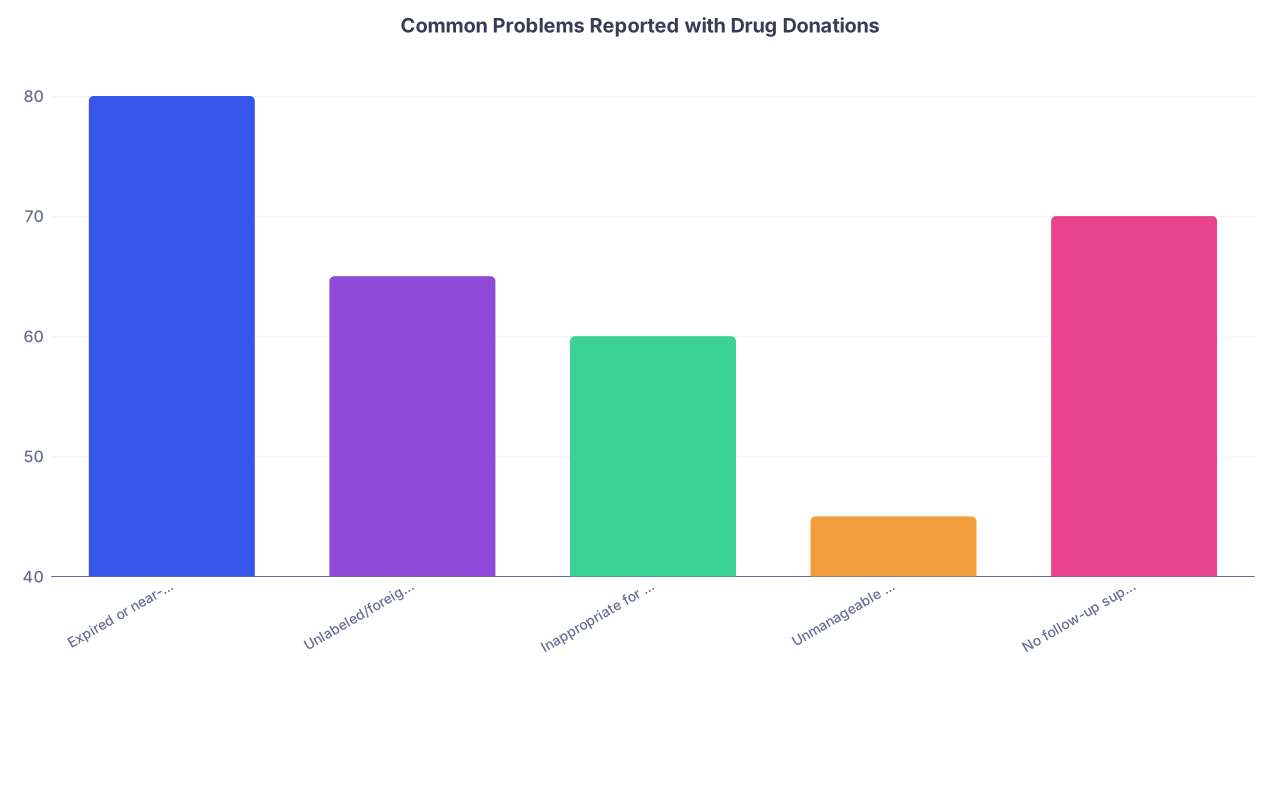
| Category | Value |
|---|---|
| Expired or near-expiry | 80 |
| Unlabeled/foreign labels | 65 |
| Inappropriate for local disease | 60 |
| Unmanageable quantities | 45 |
| No follow-up supply | 70 |
That chart is not hypothetical. Variants of those numbers show up in WHO and NGO reports from multiple countries. This is not a rare edge case. It is the baseline.
Do not be part of that baseline.
Mistake #1: Treating Expiring or Unwanted Meds as “Charity”
If you would not dispense it to your patient at home, it is not acceptable to ship it across an ocean.
I have literally watched volunteers gleefully pack:
- Samples pharma reps dumped on their clinic
- Meds with 2–3 months left before expiry
- Old stock a clinic “needed to clear out” for space
The unspoken logic: “It would be a shame to waste this.”
No. The shame is offloading your waste onto a low‑resource health system.
Here is what actually happens on the receiving side:
- Near‑expiry meds arrive in bulk. The clinic cannot realistically use all of it safely before it expires.
- Local staff spend hours sorting, checking dates, documenting—time that should go to patients.
- They become responsible for disposal of large quantities of expired drugs, which is not trivial or cheap. Incineration systems, if they exist at all, are often overloaded.
I have seen storerooms in East Africa stacked with boxes of donated meds expired years earlier. Nobody had the heart—or the budget—to deal with the mess some foreign group dumped on them.
WHO has blunt guidance on this: drug donations must have a remaining shelf life of at least 12 months on arrival, unless explicitly and formally agreed otherwise by the recipient.
If you are thinking, “But we leave in six weeks, they will use it quickly,” stop. That is you making assumptions about their workflow, patient volume, and formulary that you do not control.
Practical rule:
If you are looking at pharmacy shelves or sample closets as a “great source” for your trip, you are already heading into unethical territory.
Mistake #2: Ignoring Local Formularies and Treatment Guidelines
Nothing undermines local care faster than foreigners handing out drugs that do not match local protocols.
Common pattern:
- You arrive with U.S./European guidelines in your head
- You have a backpack full of drugs common in your practice
- The country has a national essential medicines list (NEML) and syndromic guidelines you never bothered to read
- You start prescribing what looks right to you, from what you brought
Problems:
You create confusion for patients. The hospital uses one first‑line antihypertensive. You hand out another, not routinely stocked locally. When the patient runs out, no one nearby carries it or knows their exact regimen.
You undermine local clinicians. They now must explain to patients why they are “stepping down” or changing regimens you started for no good reason except that you had samples.
You interfere with surveillance and resistance management. For example, arbitrary use of third‑generation cephalosporins or fluoroquinolones for minor infections because you packed them “just in case” is antimicrobial stewardship malpractice.
If you do not know the country’s:
- National essential medicines list
- Standard treatment guidelines
- Local formulary of the partner facility
then you have no business deciding which meds to “donate.”
| Scenario | Wrong Approach | Better Approach |
|---|---|---|
| Hypertension meds | Bring random beta-blockers and combos from home samples | Ask site what antihypertensives they stock and bring exactly those dosages/formulations if requested |
| Antibiotics | Pack broad-spectrum agents “for anything” | Match locally used first-line antibiotics and dosing regimens if clinic explicitly asks |
| Diabetes | Bring mixed insulins not stored locally | Support stable supply of the same oral agents and insulins on local formulary |
If you are serious about ethics, you align with the system you claim to support. You do not bulldoze over it with your backpack.
Mistake #3: Donating Without Confirmed Local Need and Capacity
“Need” is not what you think looks useful from 10,000 km away.
I have watched team meetings where someone proudly says, “We can get a bunch of ophthalmic drops / oncologic agents / inhalers donated.” Without once asking the hosting clinics if they:
- Actually see enough patients who need them
- Have clinicians trained to use them appropriately
- Have storage (cold chain, humidity control, security)
- Have mechanisms to reorder or maintain continuity
Here is what happens when you skip those questions:
- High‑value meds sit unused because no one is confident prescribing or monitoring them
- Sensitive drugs like insulin or some biologics spoil because the fridge is broken, electricity is unreliable, or no one realized proper conditions were needed
- You introduce a one‑time treatment without the ability to follow up, monitor side‑effects, or continue therapy
I once saw expensive asthma inhalers donated to a rural clinic that did not have spacers, did not routinely diagnose asthma, and had no follow‑up system. Most inhalers expired in the cupboard. Meanwhile, basic antibiotics kept running out.
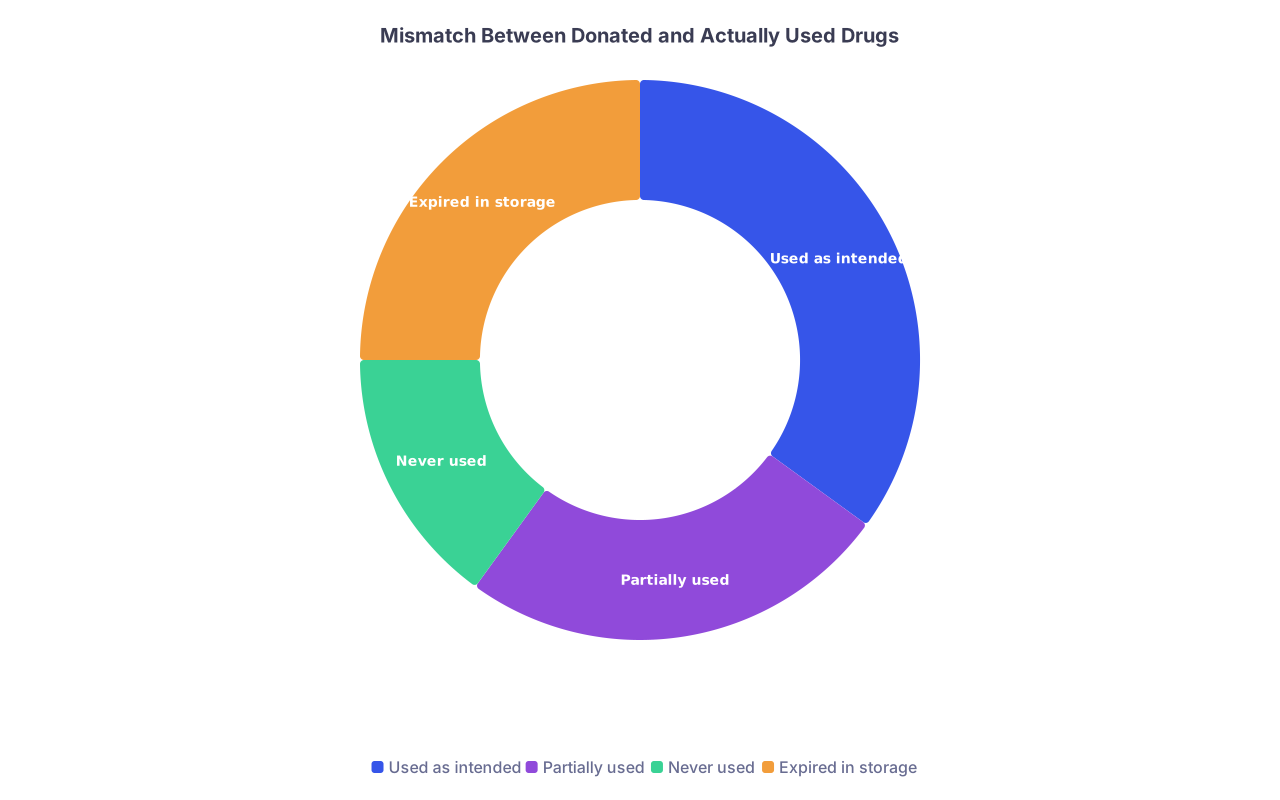
| Category | Value |
|---|---|
| Used as intended | 35 |
| Partially used | 25 |
| Never used | 15 |
| Expired in storage | 25 |
Your obligation is simple:
- Do not bring any medication unless it is explicitly requested by the local partner
- Confirm they have the capacity to store, prescribe, dispense, and follow up
- Confirm they want it as a donation—not as a temporary, one‑off infusion that disrupts their system
If they say, “We mostly need consistent funding to purchase our regular stock,” believe them. That is the right answer far more often than “Bring whatever you can.”
Mistake #4: Bypassing Local Prescribers and Pharmacy Systems
This one is common in student or church groups: the “pop‑up clinic” stocked out of suitcases, operating in parallel to the local health system.
Red flags:
- Foreigners doing their own registration, charting, and dispensing
- Meds stored in totes under tables, not in the existing pharmacy
- Local clinicians reduced to “translators” or “guides” while visitors make the decisions
When you run a parallel drug supply chain for a week:
You create a two‑tier system. For a brief window, patients get free drugs from outsiders, then go back to a fee‑based or limited local system. It erodes trust.
You remove accountability. Who is responsible when there is a medication error, a bad interaction, or counterfeit product? Your “clinic” may not exist legally at all.
You bypass local record‑keeping. Prescriptions and dispensed drugs are not recorded in the national system or patient’s official chart. Continuity of care becomes impossible.
The ethical way:
- Work through the existing pharmacy and supply chain, always
- Let local physicians and pharmacists lead prescribing and dispensing decisions
- Use your “donated” meds only if they are integrated into that system, labeled and stocked like the rest, and controlled by local standards
If your trip design requires you to function as a separate quasi‑clinic with your own little pharmacy, the flaw is not just operational. It is ethical.
Mistake #5: Ignoring Labeling, Language, and Packaging Safety
You would never hand a patient in your own country a zip‑lock bag with random pills and scribbled instructions in a language they cannot read. Yet I have watched exactly that in “medical brigades.”
Here are the predictable errors:
- Labels in English or another foreign language, dispensed in a country where few patients can read it
- Blister packs cut apart, with batch numbers and expiry dates removed, making pharmacovigilance impossible
- Meds removed from original packaging and repackaged in plastic baggies to “save space”
- Child‑unfriendly packaging for households with no safe storage
This is not a minor inconvenience. It is basic medication safety.
You are setting up:
- Accidental overdoses
- Confusion between adults and children in the same household
- Lost traceability if there is an adverse reaction or substandard batch
Short rule: if labeling and packaging would fail basic safety standards where you practice, it is not magically safe because the patient is poor and far away.
Mistake #6: Forgetting Continuity of Care
Chronic meds are not souvenirs. You cannot ethically “start” therapies you know have no realistic path to continuation.
Classic examples:
- You diagnose a patient with hypertension. You have two months’ worth of an ACE inhibitor you brought. The local clinic does not stock that particular drug. You hand it out anyway.
- You hand out SSRIs because you “want to treat depression,” but there is no mental health integration, no psychotherapy, no plan for tapering or switching, and the medication is not locally available when your supply ends.
- You initiate insulin in a setting where patients cannot store it safely, cannot afford strips, and the clinic has no reliable stock.
You have just created dependence on a medication that will vanish when you get on a plane. That is not beneficence. That is abandonment with better branding.
Your obligation:
- Do not start long‑term therapy if it is not available and affordable locally on a sustainable basis
- When in doubt, consult local clinicians about what they can truly maintain and monitor
- Prioritize acute, short‑course treatments that align with local capacity (and are needed and requested) over chronic meds you cannot guarantee
Ethically, you must think beyond your 7‑day brigade schedule. If the plan dies the day you leave, it was not a responsible plan.
Mistake #7: Using Donations to Feel Good Instead of Doing Good
This one will sting a bit.
Sometimes the deeper problem is not logistics or knowledge. It is ego.
Drug donations feel tangible and heroic. Photos of volunteers handing out meds look powerful on social media. It is much less glamorous to send an unrestricted monetary donation to a trusted local organization and let them handle procurement.
So teams do the dramatic thing:
- Pile suitcases with pills
- Take photos “dispensing”
- Fly home feeling generous and useful
While on the ground, local pharmacists roll their eyes and quietly dispose of what they cannot use.
I have literally heard volunteers say, “We want to bring something, not just write a check.” There is your red flag. Centering your own emotional satisfaction over the needs and preferences of the host community is the foundational ethical error.
If the partner clinic says, “What we really need is funding to buy more of our usual antibiotic,” and you respond, “We’d rather collect donated meds here and bring them,” you have already chosen self over system.
Mistake #8: Skipping the Boring Documents (There Are Rules for a Reason)
Drug donation is not ethically or legally neutral. There are:
- WHO Guidelines for Drug Donations
- National regulations about importation of pharmaceuticals
- Controlled substances rules
- Customs requirements and documentation
But I have watched teams:
- Show up at customs with suitcases full of meds and no letter from the receiving institution
- Try to bring controlled drugs without clearance
- Dump unlabeled bags in country and call it “donation” to avoid paperwork
Customs officials are not dumb. Many countries have been burned by inappropriate donations before. Confiscation, fines, and permanent damage to institutional relationships are common outcomes.
And ethically, you must be able to account for:
- What exactly you brought
- Batch numbers and expiry dates
- Who received it and how it was used (roughly)
If your “system” cannot produce a basic inventory before and after, you should not be moving meds across borders. Period.

| Step | Description |
|---|---|
| Step 1 | Thinking about bringing meds |
| Step 2 | Do not bring meds |
| Step 3 | Integrate with local pharmacy system |
| Step 4 | Document, monitor, and debrief |
| Step 5 | Requested by local partner |
| Step 6 | Align with local formulary |
| Step 7 | 12+ month shelf life and proper labeling |
| Step 8 | Legal and regulatory approvals |
If any major node is “No,” your answer is simple: you do not bring the meds.
How to Do It Right (If You Truly Must)
Sometimes, done carefully, drug donations are appropriate. Disaster settings, rare supply disruptions, or explicit, detailed requests from a long‑standing partner can justify it.
Here is what “right” actually looks like:
- The request originates from the local institution, not from your idea.
- The meds requested are:
- Already on their formulary
- Already in their guidelines
- Already part of their routine care
- You confirm:
- Storage conditions
- Prescribing capacity
- Follow‑up systems
- You comply with:
- WHO’s drug donation guidelines
- National laws and customs processes
- You integrate into:
- The local pharmacy inventory
- Their record‑keeping
- Their supervision structure
It is slower. Less sexy. More spreadsheets and emails, fewer Instagram photos.
Which is exactly how responsible global health usually looks.
Shifting From “Savior” to Ethical Partner
If you are serious about global health, your growth curve looks like this:
Early phase:
“I am going to help by bringing things they do not have.”
Mature phase:
“I am going to ask what strengthens their system and follow their lead, even if it is invisible and unglamorous to me.”
A few hard truths to internalize:
- Money to purchase consistent local stock often does far more good than transporting scattered donations.
- Respecting local guidelines, formularies, and prescribers is a core ethical duty, not a courtesy.
- Saying “No, we should not bring meds this trip” may be the most responsible choice you make.
Your Personal Checklist Before You Touch a Single Pill
Run yourself through this without self‑deception:
- Have local clinicians or administrators specifically requested these exact medications, in these exact forms and doses?
- Do the meds fully align with local formularies and treatment guidelines?
- Will they have at least 12 months’ shelf life on arrival, properly labeled, in original packaging?
- Does the local system have storage, prescribing capacity, and follow‑up for these drugs, and can patients access them long‑term if needed?
- Are legal, regulatory, and customs requirements clearly handled with documented approval?
- Will all dispensing happen under local authority, within the local pharmacy system, with proper record‑keeping?
If you cannot answer “yes” to every single one, your ethical responsibility is straightforward: stop the donation plan and redirect your effort.

The Bottom Line
Three points to keep with you:
- Drug donations are ethically and operationally high‑risk. The common errors—expired stock, misaligned meds, bypassing local systems—cause real harm.
- “Helping” by bringing whatever you can get is not generosity; it is dumping. Ethical donations start with local requests, align with local systems, and respect continuity of care.
- You will do more good by strengthening existing supply chains—often with money, not suitcases—than by performing short‑term pharmacy heroics.
If you remember nothing else: if the main beneficiary of your drug donation plan is your own sense of usefulness, you are doing it wrong.


