
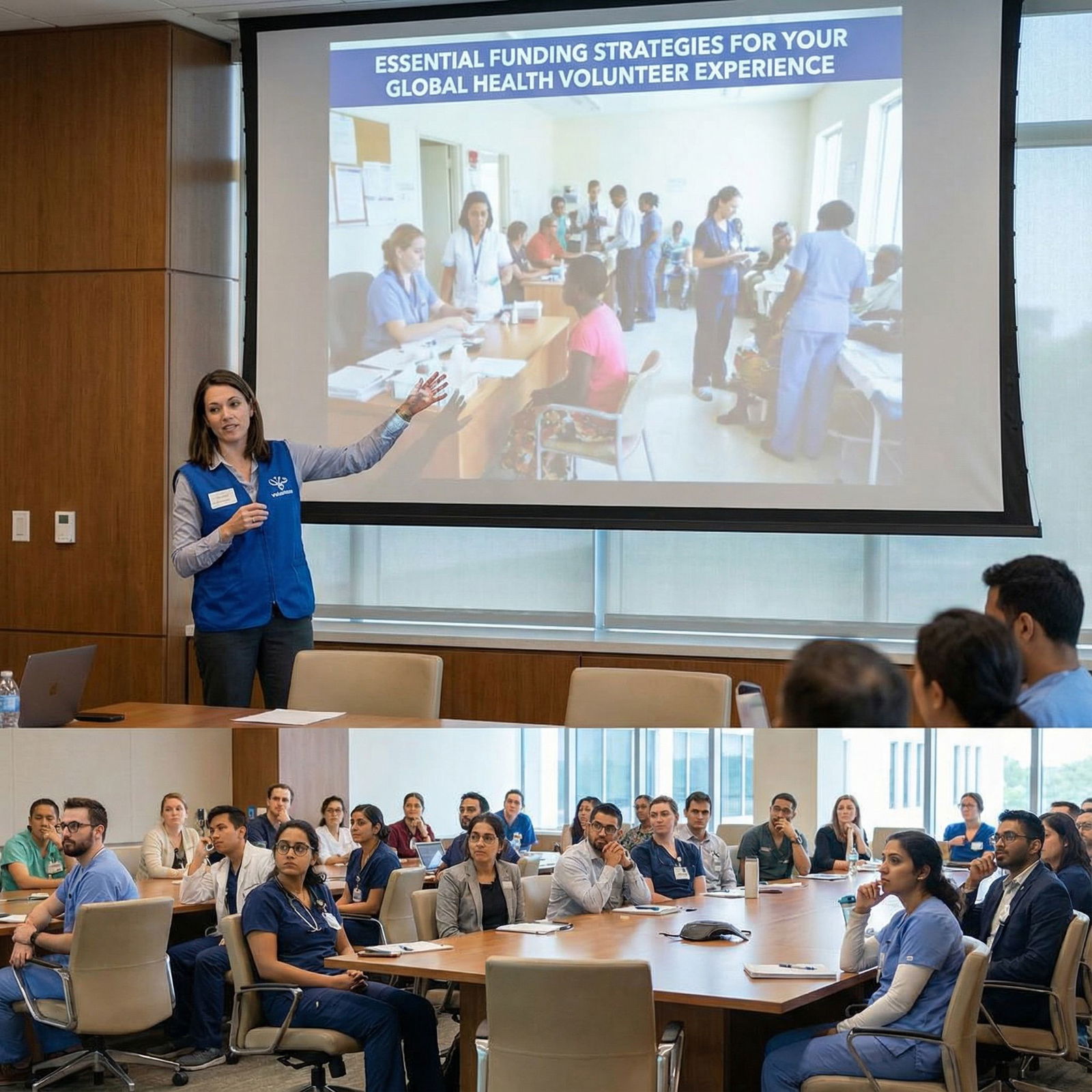
You are sitting on a metal chair in a crowded outpatient room in rural Uganda. Power has gone out twice already this morning. In front of you is a 34‑year‑old woman with widely metastatic breast cancer. She arrived late, cachectic, short of breath, with liver and bone metastases confirmed by an ultrasound and plain films done last week. There is no CT machine within 200 kilometers. The pharmacy has one cycle’s worth of doxorubicin and cyclophosphamide left for the month. Morphine supply? Three 10 mg vials until next Tuesday.
Her husband asks through the interpreter: “Doctor, can you cure her? We will do whatever is needed.”
This is where the textbook slogans stop helping. And where a clear, honest palliative vs curative decision framework becomes survival equipment, not a luxury.
Let me break this down specifically.
1. The Core Problem: Curative Reflex in a Scarcity Environment
In high‑income settings, oncology defaults hard toward “try to cure” or at least “prolong survival with acceptable toxicity.” Trials, second‑line, third‑line, targeted agents, ICU support if needed. You have options, and you can compensate for borderline decisions with backup resources.
In low‑resource settings, the situation is brutally different:
- Late presentation is the norm, not the exception.
- Diagnostics are limited: no CT, no PET, maybe no pathology.
- Drug availability is unpredictable and often incomplete.
- Palliative care infrastructure (opioids, home visits, psychosocial support) is usually fragile or absent.
- One patient’s chemotherapy might literally mean another patient goes without.
If you import high‑income “curative reflex” thinking here, you cause real harm:
- You give one or two poorly supported cycles of curative‑intent chemotherapy in a patient with advanced disease you have not properly staged.
- You consume scarce drugs without realistic benefit.
- You increase pain, nausea, infection risk, and hospitalizations.
- You crowd out basic palliative measures and non‑cancer needs.
So you need a decision tree that starts from reality, not wishful thinking.
2. A Structured Decision Tree: Curative vs Palliative in Low‑Resource Oncology
I will lay out the logical sequence first, then we will unpack specifics.
Step 1: “Is this cancer potentially curable at this stage?”
You look at three components:
Cancer type and biology
- Highly curable with proper therapy in principle: early breast, Hodgkin lymphoma, many pediatric leukemias, some testicular cancers.
- Potentially long‑term controllable: some localized head and neck, cervical, colorectal.
- Very low chance of cure at typical presentation: advanced pancreatic, metastatic gastric, widespread HCC, many metastatic solid tumors.
Stage (as best as you can approximate it)
- You may not have CT or PET, but you have:
- Good clinical exam.
- Chest X‑ray.
- Basic ultrasound.
- X‑rays for bone involvement.
- If you see clear distant metastases, extensive nodal burden, multiple organ involvement: curative intent rapidly becomes fiction.
- You may not have CT or PET, but you have:
Time delay and disease tempo
- Long delays (12–18 months of symptoms), severe weight loss, ECOG 3–4 performance status often indicate advanced, systemic disease, even if you cannot image it.
If biology + (approximate) stage + tempo clearly point to metastatic or far‑advanced disease, stop thinking “curative chemotherapy.” Shift to “symptom control and life quality.”
Step 2: “Is the health system able to deliver a full, coherent curative regimen?”
This is where global oncology gets uncomfortable. Because even if the cancer is biologically curable in theory, your system might not be able to deliver it safely.
You must ask:
Can we get the full regimen, on time?
- Not just cycle 1. All cycles.
- If you can only guarantee 1–2 cycles of a 6‑cycle plan, the chance of cure plummets and toxicity often outweighs benefits.
Do we have the critical co‑infrastructure?
- Safe IV access, lab monitoring, ability to transfuse if needed.
- Antibiotics and basic infection management.
- Capability to manage tumor lysis, severe neutropenia, sepsis.
- Radiotherapy access if the curative regimen depends on it.
Do we have functioning pathology?
- Treating “lymphoma” without pathology in a 25‑year‑old who might actually have TB is not just inappropriate, it is dangerous.
If the answer is “no” to regimen continuity and support, you are not doing curative‑intent oncology. You are doing toxic experimentation on poor people.
Step 3: “Is the patient physically and socially fit for curative therapy?”
Even with a doable regimen, not every patient should be pushed into it.
You look at:
Performance status
- ECOG 0–2: can consider curative intent if other pieces fit.
- ECOG 3: usually a red flag. Curative therapy rarely helps.
- ECOG 4: palliative measures only.
Comorbidities and organ function
- Full‑dose anthracyclines in patients with uncontrolled heart failure? Wrong.
- Cisplatin in someone with creatinine 3.5 mg/dL and no dialysis anywhere? Reckless.
Social support and logistics
- Can the patient reliably attend frequent visits?
- Is there any caregiver support?
- Will travel costs and lost wages destroy the family?
In low‑resource settings, you cannot pretend logistics are a side issue. They define whether treatment is feasible or abusive.
Step 4: “Given limited oncology resources, where does this patient sit in priority?”
Ethically ugly, but inescapable: allocation.
If you only have enough chemo for 10 complete, curative‑intent treatments this month, who gets them?
You prioritize:
- High likelihood of cure with standard treatment
- Younger patients with dependent children (many ministries of health explicitly factor this, even if not written)
- Cancers where partial completion still offers benefit (e.g., some lymphomas vs metastatic solid tumors)
| Scenario | Likely Priority Category |
|---|---|
| Early stage Hodgkin lymphoma, ECOG 1 | High curative priority |
| Locally advanced cervical cancer, ECOG 2 with RT access | Curative priority |
| Metastatic pancreatic cancer, ECOG 3 | Palliative only |
| Metastatic breast cancer, ECOG 1 | Palliative + selective systemic |
| Pediatric ALL with full regimen available | Highest curative priority |
You may not like thinking this way. But resources are finite, and pretending otherwise just hides rationing instead of doing it consciously and fairly.
Step 5: “Clarify goals with the patient and family in their cultural frame”
Once you have your internal decision (curative‑realistic vs palliative‑focused), you need to talk.
Not in euphemisms, and not with high‑income oncology scripts copied verbatim.
You must:
- Check understanding: “What have you been told about your illness so far?”
- Ask goals bluntly but respectfully:
- “Is your main wish to live as long as possible, even if you feel very unwell?”
- “Or is your main wish to be as comfortable as possible, even if that might mean living a shorter time?”
- Address spiritual and family decision‑making:
- In many settings, family, not the individual, is the primary decision unit.
- “Who should help make decisions with you? Who needs to understand this with you?”
Then you align. Or you correct unrealistic expectations gently but clearly.
3. Two Concrete Decision Trees
Let us make this very practical. I will map out two simplified flows you can mentally run in clinic.
3.1 Suspected Curable or Potentially Curable Cancer
Think: early breast, localized cervical, Hodgkin lymphoma, pediatric leukemia in a center that can treat it.

| Step | Description |
|---|---|
| Step 1 | New cancer diagnosis |
| Step 2 | Assess type stage tempo |
| Step 3 | Palliative oriented |
| Step 4 | Check system capacity |
| Step 5 | Assess ECOG comorbidities support |
| Step 6 | Discuss goals with patient family |
| Step 7 | Curative-intent treatment |
| Step 8 | Reassess regularly |
| Step 9 | Potentially curable? |
| Step 10 | Full regimen and support available? |
| Step 11 | ECOG 0-2 and acceptable risk? |
| Step 12 | Accepts intensive treatment? |
| Step 13 | Progression or intolerable toxicity? |
Key points in this tree:
- The first “No” (not potentially curable) should quickly drop you to palliative‑oriented care.
- In low‑resource settings, the “system capacity” box is not rhetoric. If you cannot offer the full package, curative intent is not real.
- Performance status and patient goals can and should halt curative attempts.
3.2 Advanced or Metastatic Cancer
Think: metastatic gastric, pancreatic, very advanced breast, wide metastatic cervical in a region with minimal RT.

| Step | Description |
|---|---|
| Step 1 | Advanced metastatic cancer |
| Step 2 | Confirm prognosis limited |
| Step 3 | Assess main symptoms |
| Step 4 | Pain dyspnea nausea psychosocial |
| Step 5 | Check palliative resources |
| Step 6 | Optimize palliative meds |
| Step 7 | Use available non-opioid measures |
| Step 8 | Discuss goals values |
| Step 9 | Purely palliative approach |
| Step 10 | Consider low-toxicity limited chemo or hormonal |
| Step 11 | Short trial with clear stop rules |
| Step 12 | Reassess frequently |
| Step 13 | Opioids antiemetics basic labs? |
| Step 14 | Patient wants some systemic therapy? |
| Step 15 | Benefit > burden? |
| Step 16 | Decline or no benefit? |
Here, systemic therapy is adjunctive at best. Not the main event. The center of gravity is symptom control, communication, and family support.
4. Palliative vs Curative in Practice: Specific Clinical Examples
Theory is easy. Let us walk through real‑world style cases.
Case 1: Metastatic Breast Cancer, Young Woman, Good Performance
Back to that 34‑year‑old with liver and bone metastases.
- Biology: breast cancer, yes, can be very treatable, but widely metastatic at presentation.
- Stage: clearly metastatic. Curative intent is gone.
- System capacity: limited chemo stock, erratic monitoring, minimal imaging.
- Performance status: probably ECOG 2–3.
- Prognosis: months to a short few years with systemic therapy, likely shorter without.
Here is a rational plan in a low‑resource setting:
- Be explicit: “We cannot remove this cancer completely. But we may be able to help you live longer and feel better.”
- Prioritize pain control: oral morphine if available, adjuvants (amitriptyline, gabapentin), dexamethasone for liver capsular pain if needed.
- Consider simple, low‑toxicity systemic therapy:
- If hormone receptor positive and you can test it: tamoxifen or an aromatase inhibitor.
- If no testing but premenopausal with typical ER+ phenotype: an empirical trial of tamoxifen may be reasonable.
- Cytotoxic chemo only if:
- ECOG 0–2.
- At least 3–4 cycles with monitoring are feasible.
- Clear symptom improvement is anticipated (e.g., visceral crisis).
You frame any chemotherapy as palliative, with explicit stop rules:
- “We will try two cycles. If you are not feeling better and the scans or exams show no improvement, we will stop because the treatment will be hurting more than helping.”
What you do not do:
Use up the last month’s anthracyclines on a patient with advanced disease, poor functional status, and no real chance of sustained benefit.
Case 2: Stage IIIB Cervical Cancer, Radiotherapy Available
Here the calculus changes.
- Locally advanced, not obviously metastatic.
- Cervical cancer can be cured or at least long‑term controlled with concurrent chemoradiation.
- If your center has functioning radiotherapy and can provide weekly cisplatin, curative intent is defensible.
Your decision framework:
- ECOG 0–2, creatinine acceptable, able to travel for RT.
- System can provide full radiation course (not one‑third).
- Cisplatin supply is stable for the intended duration.
Then you go all‑in with curative intent, but eyes open:
- Tell the patient this is intensive, with significant side effects.
- Set expectations about toxicity and the long RT schedule.
- Emphasize that completing the regimen is crucial; partial treatment is much less effective.
If radiotherapy is not available or is backlogged for months?
- “Curative chemoradiation” on paper is meaningless.
- You shift toward best possible non‑curative management: palliative RT if partial access, symptom control, maybe limited chemotherapy if there is a realistic chance of downsizing disease and improving symptoms.
5. The Ethical Layer: Autonomy, Justice, and Non‑Maleficence Under Constraint
You are not only doing clinical triage. You are doing ethics daily.
Autonomy: Informed Choice vs Cultural Reality
Western bioethics loves individual autonomy. In many low‑resource settings:
- Family decision‑making dominates.
- Direct disclosure of prognosis may be filtered through relatives.
- There can be strong pressure to “keep fighting” even when futile.
Your job is not to impose Western norms, but you must avoid covert coercion.
Pragmatic moves:
- Ask explicitly who should be involved.
- State things in plain but sensitive language:
- “These strong medicines might make you very sick and are unlikely to cure you. We can also focus on controlling pain and other symptoms instead.”
- Check that the patient, not only the spokesperson, has some voice.
Justice: Fair Allocation vs Quiet Favoritism
Unspoken reality: limited RT slots, limited chemo cycles, limited appointment slots.
Without clear criteria, allocation becomes who knows whom, who shouts loudest, or who can pay informally. That is unjust.
Better:
- Develop simple, transparent triage priorities at the institution level.
- Document them. Use them consistently.
- Advocate with hospital leadership for systems that track who receives what and why.
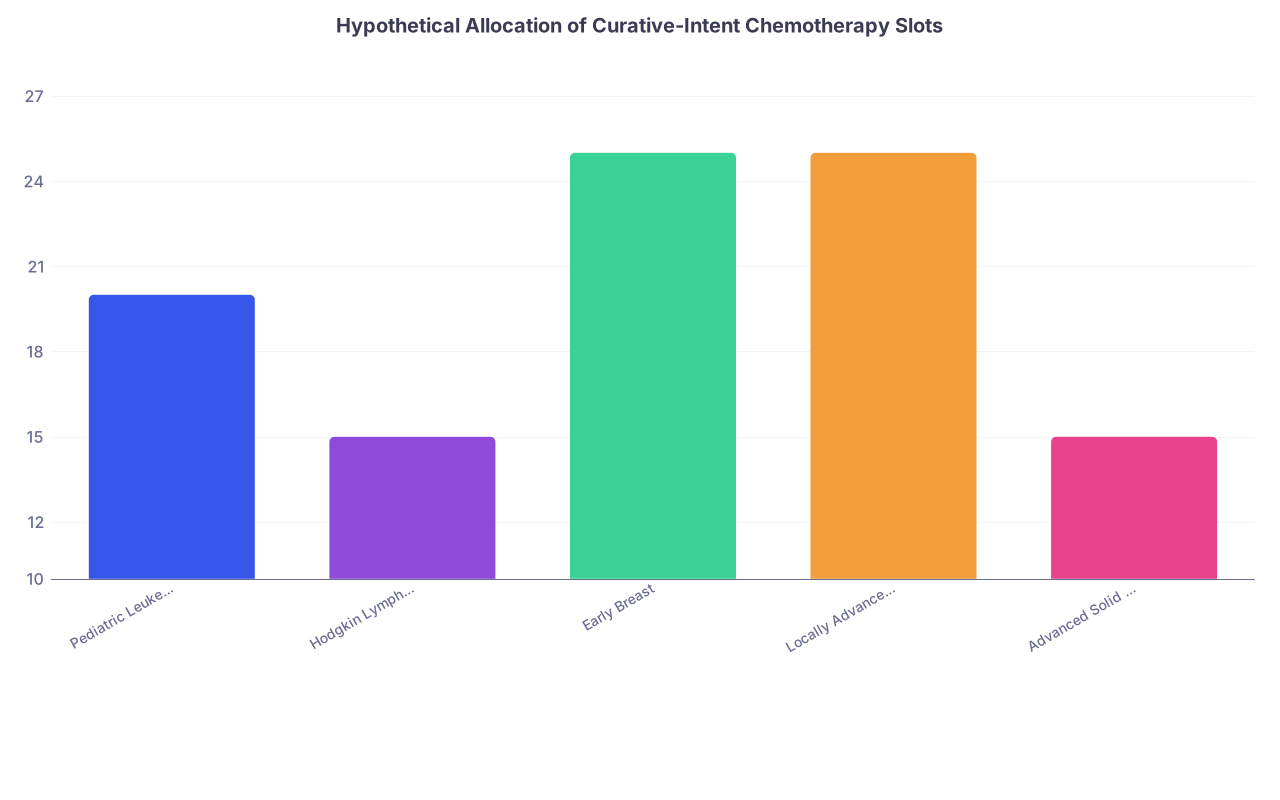
| Category | Value |
|---|---|
| Pediatric Leukemias | 20 |
| Hodgkin Lymphoma | 15 |
| Early Breast | 25 |
| Locally Advanced Cervical | 25 |
| Advanced Solid Tumors | 15 |
The numbers above are illustrative, but the point stands: you consciously skew curative‑intent capacity toward diseases with real cure potential, not toward whoever reaches your door first.
Non‑Maleficence: When “Trying Something” is Worse than Doing Less
I have watched well‑meaning visiting teams insist on aggressive regimens in settings without:
- Growth factor support
- Consistent lab monitoring
- ICU backup for sepsis
Result: neutropenic deaths at home, septic shock in a hospital that cannot ventilate, profound suffering without survival gain.
The ethical rule is simple:
If you cannot provide at least a minimally safe version of a regimen, you do not offer it.
You instead:
- Optimize pain control.
- Treat reversible problems (infection, anemia, obstruction) as appropriate.
- Use oral or low‑toxicity systemic treatments when they have clear symptomatic benefit.
- Support families to care for the patient at home.
6. Building Your Personal “Ethical Reflex” in Global Oncology
If you are a trainee or early‑career clinician in global health, you will not have time to look up guidelines in these moments. You need an internal reflex.
Train yourself to run through, almost automatically:
- Type and stage: “Curable in principle? Or not?”
- System reality: “Do we have the full package or just fragments?”
- Patient condition: “Can they withstand this, realistically?”
- Resource allocation: “If I use this here, who loses out?”
- Honest communication: “Have I actually said out loud what we can and cannot do?”
This reflex can stop you from:
- Pushing “curative chemotherapy” in a metastatic setting with no supportive care.
- Wasting final weeks in hospital when the patient wants to be home.
- Using scarce curative slots on patients with virtually no chance of benefit.
And it can allow you to:
- Fight hard for curative‑intent care where it truly makes sense (e.g., pediatric ALL in a functioning program).
- Advocate for better palliative care infrastructure because you see how much your decisions depend on it.
- Teach local colleagues and trainees not just drug regimens, but decision frameworks.

7. Practical Tools: Simple Scoring and Stop Rules
You do not need complex calculators, but you should use structured thinking.
ECOG Performance Status as a Gatekeeper
You should be able to score ECOG in 10 seconds. In many low‑resource oncology settings, it is the single most important number you collect.
| ECOG | Description | Typical Global Oncology Implication |
|---|---|---|
| 0 | Fully active | Curative or aggressive palliative feasible |
| 1 | Restricted in strenuous activity | Curative feasible if other factors align |
| 2 | Ambulatory, unable to work | Carefully selected systemic therapy only |
| 3 | Limited self-care, bed >50% of day | Systemic therapy rarely appropriate |
| 4 | Completely disabled | Palliative symptom management only |
If ECOG ≥3 in an advanced solid tumor: the default should be no cytotoxic chemotherapy.
Explicit Stop Rules for Palliative Chemotherapy
If you do start palliative systemic treatment, define and document:
- Start criteria (e.g., ECOG ≤2, controlled comorbidities)
- Stop criteria:
- ECOG worsens to 3 or 4
- Clear radiologic or clinical progression
- Unmanageable toxicity (grade 3+ neutropenia, severe mucositis, etc.)
- Patient preference shift away from hospital‑based care
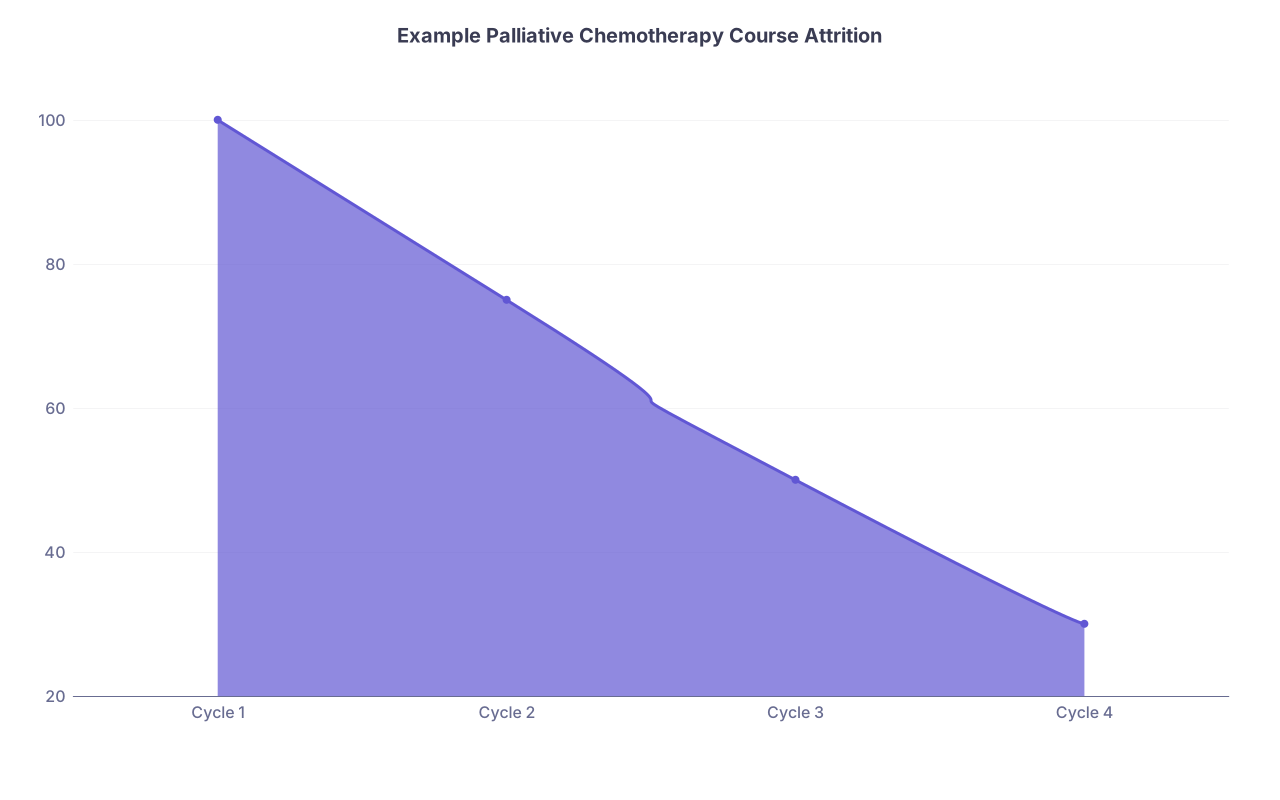
| Category | Value |
|---|---|
| Cycle 1 | 100 |
| Cycle 2 | 75 |
| Cycle 3 | 50 |
| Cycle 4 | 30 |
You want many of those “drop offs” by cycle 2 or 3 to be conscious, appropriate decisions to stop, not chaotic loss to follow‑up.
8. The Emotional Piece: Your Own Moral Distress
You will feel it. That knot in the stomach when you tell a 25‑year‑old with metastatic sarcoma that there is no curative treatment. Or when you allocate the last pediatric leukemia regimen to one child while another gets only palliation.
Two quick points:
- Moral distress does not mean your decision is wrong. Often it means you are taking resource constraints seriously rather than denying them.
- You need peers and mentors in global oncology who can sanity‑check your choices and share the weight.
If you feel the urge to “just try something” mainly to relieve your own discomfort with inaction, pause. That is not ethics; that is self‑protection masquerading as care.

FAQ (4 Questions)
1. Is it ever ethical to give “incomplete” chemotherapy when you know you cannot finish the full regimen?
Generally no, not as “curative” treatment. If you know from the outset you cannot provide the full standard course, you must frame any treatment as palliative, with modest aims like temporary symptom relief. Calling it curative or implying cure is possible is misleading. The exception is when shorter regimens are validated in that setting (for example, some abbreviated protocols tested in LMICs) and you are following those data.
2. How do I handle families who insist on “doing everything” even in clearly terminal disease?
You acknowledge the love and fear behind that request, then translate “everything” into medically appropriate options. For instance: “When you say everything, I hear that you do not want her to suffer or feel abandoned. The treatments I am proposing—strong pain medicine, help with breathing, support at home—are how we do everything for her now. The very strong chemotherapy would likely cause more suffering without changing the outcome.” You stay firm about not offering harmful, futile regimens.
3. Should patients in low‑resource settings ever be offered high‑income style targeted or immunotherapies?
Only if three things are in place: (1) robust diagnostics confirming the appropriate biomarker, (2) sustainable access to the drug beyond one or two doses, and (3) the ability to manage immune‑related or targeted toxicities. One‑off “heroic” infusions without that infrastructure are usually a bad idea. In practice, most low‑resource settings should focus first on building solid surgery, radiotherapy, basic chemotherapy, and palliative care before sporadically adding high‑cost agents.
4. How do I reconcile global oncology work with my own high‑income practice where we offer much more?
You hold both truths at once: what is ideal in a fully resourced system, and what is responsible in a constrained one. Your ethical obligation is not to equalize every treatment, which you cannot do, but to apply sound clinical judgment and fairness inside each context. Many clinicians I know integrate the two by: advocating for better cancer care infrastructure in low‑resource settings, fighting for rational use (and pricing) of essential cancer medicines, and teaching trainees decision frameworks that avoid both therapeutic nihilism and inappropriate aggressiveness.
Key points to walk away with:
- In low‑resource oncology, “curative vs palliative” is not a philosophical question; it is a concrete decision tied to cancer biology, staging, system capacity, patient status, and fair allocation.
- Saying “no” to curative‑intent treatment when cure is unrealistic or systemically impossible is often the most ethical, patient‑centered choice you can make.
- Your job is to build a fast, honest decision reflex and to pair it with blunt but compassionate communication—so patients and families understand what you can truly offer, and why.


