
You are here
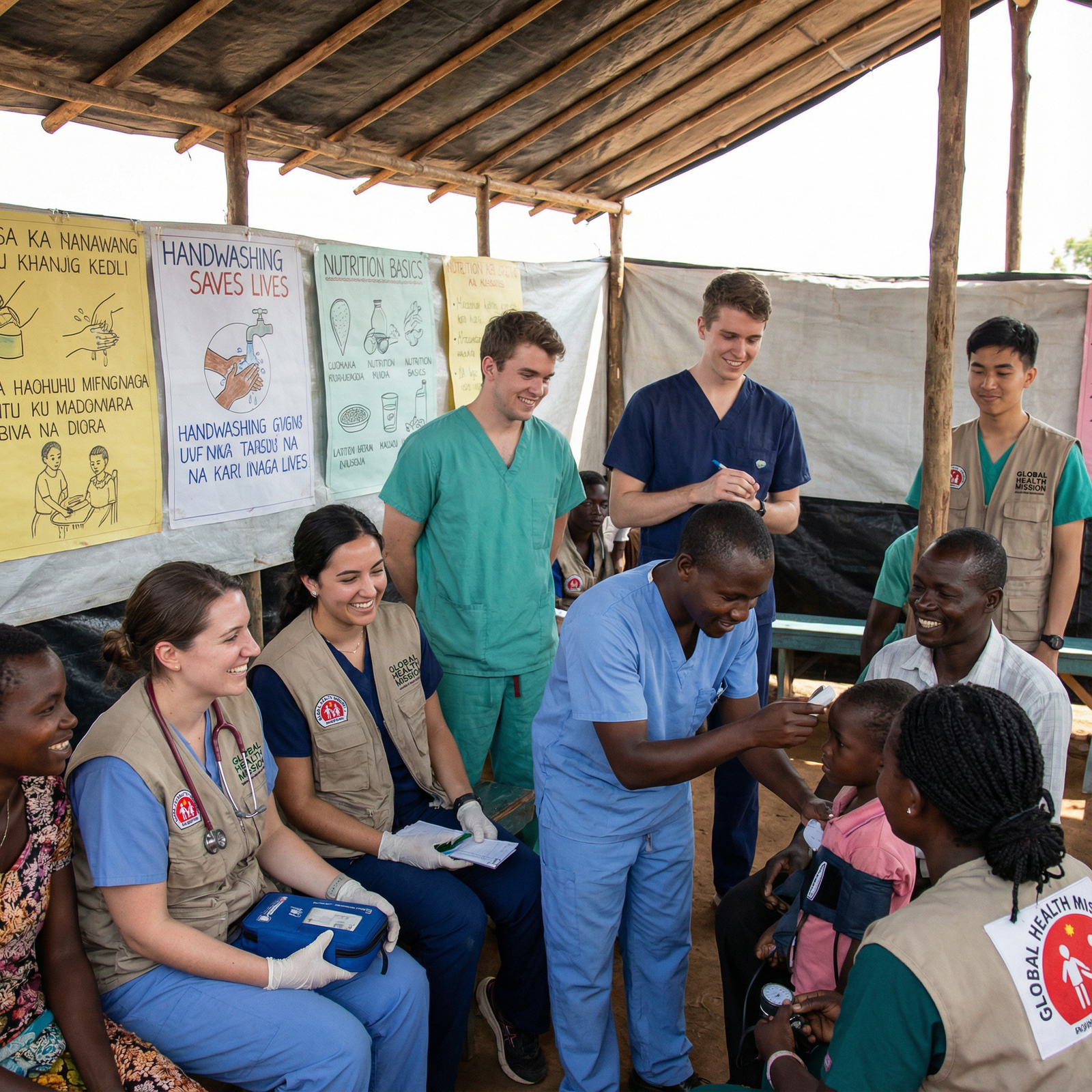
You are three weeks into a global health elective in rural Uganda.
The district hospital has one doctor covering the ward, maternity, and the “emergency room” (a room with two beds and an oxygen concentrator that works half the time). The queue outside the outpatient department wraps around the building.
Next to you is a nurse who has never used an EHR but can clinically diagnose severe malaria faster than you can spell “Plasmodium falciparum,” and a community health worker who knows every child in the surrounding 10 villages by name and vaccination status.
The medical officer looks at you and says:
“Can you show the village health workers how to start and adjust antihypertensives? We do not have enough clinicians for follow‑up. They see the patients more than we do.”
Your instinct screams: “Prescribing meds is a doctor’s job. This feels unsafe. Also possibly unethical.”
Your brain counters: “But doing nothing is also unsafe. And unethical.”
Welcome to task‑shifting.
Let me break this down specifically: when physicians should delegate, when they should not, and how to think ethically when every option feels like a compromise.
1. What task‑shifting actually is (and what it is not)
First, definitions. People use “task‑shifting” and “task‑sharing” sloppily. That muddies both ethics and practice.
Task‑shifting:
Specific clinical tasks are moved from highly trained health workers (physicians, specialist nurses) to health workers with shorter training or narrower scopes (nurses, clinical officers, community health workers), with the goal of expanding access.
Task‑sharing:
Tasks are distributed across cadres with overlapping roles, not fully shifted. Typically with sustained supervision and shared responsibility. This is the more modern, safer framing, but most policies and papers will still say “task‑shifting”.
What task‑shifting is not:
- It is not “untrained people doing whatever they want because there is no doctor.”
- It is not moral outsourcing: “Someone else will take the risk so I feel better.”
- It is not charity care with lower standards because “these patients are poor.”
At its best, task‑shifting is deliberate, structured reallocation of tasks backed by:
- Clear training and competency benchmarks
- Protocols and decision support
- Ongoing supervision and audit
- Legal and regulatory cover
When those are missing, you are not doing task‑shifting. You are improvising with people’s lives.
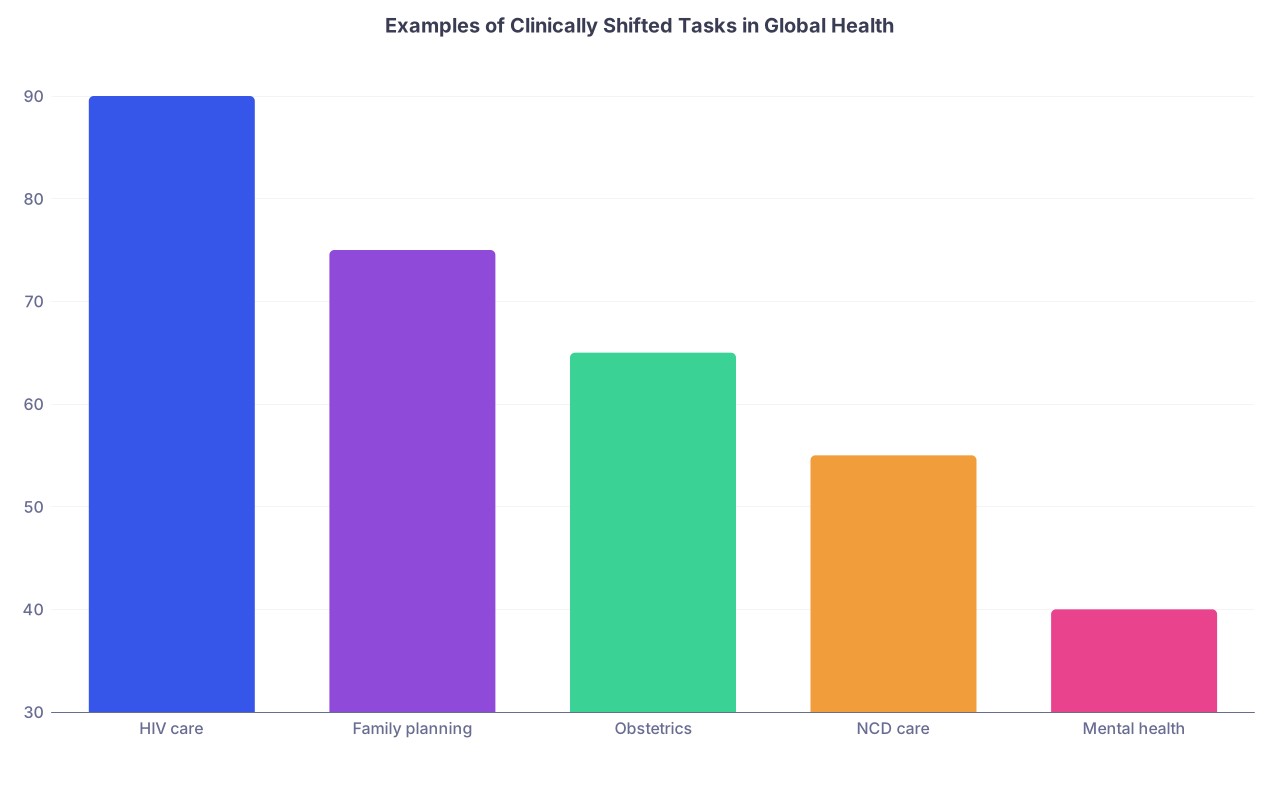
| Category | Value |
|---|---|
| HIV care | 90 |
| Family planning | 75 |
| Obstetrics | 65 |
| NCD care | 55 |
| Mental health | 40 |
(Values here reflect approximate % of low‑ and middle‑income countries that have adopted some form of task‑shifting in those domains, based on WHO summaries and regional reports.)
2. The ethical frame: four principles under scarcity
You already know the four big bioethics pillars: autonomy, beneficence, non‑maleficence, justice. In a Boston ICU, you can usually respect all four simultaneously without too much contortion.
In a district hospital with 1 doctor for 200,000 people, the tension explodes.
Let’s anchor them in task‑shifting:
Autonomy
Patients should know who is caring for them, what that person’s training is, and what the alternatives are (even if the alternatives are “wait several weeks to see the only doctor”). Autonomy here means honest disclosure, not fake parity.
Beneficence
You are obligated to act for the patient’s good. That includes recognizing that “no care” is not a neutral baseline. It is usually harm. If a trained nurse can competently start ART next week instead of a doctor starting it in three months, beneficence leans hard toward delegation.
Non‑maleficence
You do not cause avoidable harm. Key word: avoidable. Perfection is not the standard. The real ethical comparison is:
- Risk of harm if a lower‑cadre worker provides care now
versus - Risk of harm if no one provides care or if care is indefinitely delayed
Justice
Fair distribution of resources and burdens. It is unjust if rural, poor, or marginalized patients are only offered care by minimally trained staff while urban elites see specialists, with no effort to raise the rural standard. It is also unjust to refuse safe delegation if it leads to entirely absent services for large populations.
Here is the blunt reality:
In global health, refusing task‑shifting often violates justice and beneficence.
Uncritical, unsafe delegation violates non‑maleficence and, frequently, autonomy.
Your job is to stay in the narrow band where those four principles are strained but not betrayed.
3. When physicians should delegate: clear‑cut indications
There are situations where not delegating is almost certainly the wrong choice. Let’s be concrete.
3.1 High‑volume, protocol‑driven care
Anything that can be reduced to reliable, well‑tested protocols and basic clinical skills is prime territory for task‑shifting.
Classic examples:
- HIV care: Community health workers supporting adherence; nurses initiating and adjusting first‑line ART following WHO and national guidelines. We have mountains of data showing this can be as safe and effective as doctor‑led care for stable patients.
- Family planning: Nurses and trained lay providers inserting and removing implants, giving injectables, dispensing oral contraceptives. Again, evidence is robust.
- Vaccination: CHWs identifying defaulters, giving certain vaccines after competency‑based training, running outreach days.
- TB DOT: CHWs supervising treatment, monitoring side‑effects using checklists.
The pattern:
Standardized condition + clear algorithms + narrow scope + serious training + ongoing oversight = ethically strong task‑shifting.
3.2 Situations where delay equals significant harm
If waiting for a physician entails a nontrivial risk of progression to severe disease, permanent disability, or death, task‑shifting is favored—if there is a realistic way to train and support others to perform safely.
Examples:
- PEP for sexual assault or occupational exposure: Training nurses and clinical officers to start PEP immediately instead of waiting for a doctor who comes once a week.
- Management of severe acute malnutrition: Non‑physician clinicians initiating WHO‑standard protocols in nutrition units.
- Initial management of hypertensive urgency without red flags: Starting basic therapy by trained nurses or clinical officers per protocol, with clear thresholds to escalate.
Here, ethics is not “doctor vs non‑doctor.” It is “safe enough care now vs clinically unacceptable delay.”
3.3 Tasks where non‑physicians are already better
In many settings, nurses, midwives, or clinical officers are simply more experienced and effective at certain tasks than the available physicians.
Midwives managing:
- Normal labor
- Active management of third stage
- Basic management of postpartum hemorrhage with uterotonics and uterine massage
Community health workers:
- Identifying danger signs in under‑five children based on IMCI checklists
- Doing home visits for TB or HIV adherence
- Counseling for breastfeeding and nutrition
I have watched fresh foreign physicians override midwives on low‑risk labors and consistently increase cesarean rates “out of caution.” That is not ethical conservatism. It is hubris.
If a task falls well within another cadre’s proven competence, the ethical stance is to support, reinforce, and formalize their role—not hoard it.
3.4 Simple procedures with clear competency thresholds
If you can clearly define:
- Step‑by‑step procedure
- Complications and red flags
- Required equipment
- Objective tests of skill
…then you can usually delegate after training.
Examples:
- Manual blood pressure and basic interpretation
- Finger‑stick glucose and algorithm‑based response
- IM injections, wound dressing, simple abscess I&D in carefully selected cases
- Focused antenatal visits with standardized checklists
Do not romanticize physician uniqueness in tasks that are, frankly, mechanical once you understand the underlying rationale.
4. When physicians should not delegate: hard stops and red flags
Now the part you probably came for. Where does delegation cross the ethical line?
4.1 Tasks that require real‑time complex clinical judgment
If safe execution depends on integrating multiple uncertain data points, weighing trade‑offs, and rapidly revising hypotheses, think twice. Or three times.
Examples:
- Interpreting subtle ECG changes in a chest pain patient and deciding on thrombolysis vs transfer vs conservative management
- Balancing polypharmacy in a frail elderly patient with multiple comorbidities, especially when drug interactions and cumulative toxicity matter
- Initiating second‑ or third‑line ART with resistance concerns, complicated prior regimens, or major comorbidities
Could non‑physicians eventually be trained to do some of this? Possibly, but that is a different question. Right now, for you as a visiting or local physician, the line is: if there is no robust evidence or training framework supporting safe delegation to that cadre, and the task is judgment‑heavy, you should not casually shift it.
4.2 Tasks where the system lacks basic safety nets
You cannot ethically delegate into a void. Ask:
- Is there clear documentation of who did what and when?
- Is there a route for rapid escalation if something goes wrong?
- Is there legal or institutional backing for that cadre’s role?
If the answer is “no” across the board, you are not building a system. You are building scapegoats.
Example:
Asking CHWs to initiate antibiotics for undifferentiated febrile illness in neonates at home with no clear criteria, no documentation system, and no referral pathway. That is malpractice disguised as “innovative community care.”
4.3 Invasive or high‑risk procedures without robust training pathways
Minor injuries, IM injections, and simple dressings can be safely shared. But there is a bright line once procedural risk rises and simulation‑based or apprenticeship training is essential.
Procedures that generally should not be shifted casually:
- Cesarean sections to cadres without formal surgical training programs and structured supervision (some countries do have non‑physician surgical officers with proper training; that is different from “teach a nurse to cut”)
- Lumbar puncture by CHWs after a one‑day workshop
- Intubation and management of ventilated patients in settings without reliable oxygen, monitoring, or backup
Again, there are exceptions where countries have developed formal non‑physician surgical cadres (e.g., clinical officers in Malawi, non‑physician anesthetists in multiple African countries). That is not ad‑hoc task‑shifting. That is a different profession with designed training.
If all you are offering is a short course and a pat on the back, do not hand over high‑risk procedures.
4.4 Delegation primarily motivated by cost‑cutting or convenience
This one is ugly but common. NGOs, ministries, even well‑meaning global health “innovators” quietly try to do more with less by continuously pushing responsibilities downhill. Not to increase coverage ethically. To save money or simplify staffing.
Red flags:
- Replacing nurses with unpaid volunteers to run chronic disease clinics “because the app will guide them”
- Asking CHWs to conduct invasive research procedures because they are cheaper than hiring study nurses
- Shifting counseling about life‑changing diagnoses (HIV, cancer) to under‑trained cadres because “physicians are too busy”
If the main driver is budget, not access or quality, assume ethical corrosion unless proven otherwise.
5. The gray zone: most of global health
Most real ethical stress happens in the gray zone, not at the extremes.
You will encounter scenarios like:
- National guidelines authorize nurses to initiate first‑line ART, but the actual training they received is a 2‑day lecture series with minimal practical assessment.
- CHWs are formally allowed to diagnose and treat uncomplicated malaria, but RDT stock‑outs mean they are encouraged to treat empirically.
- A district has a written referral pathway on paper, but the ambulance is nonfunctional half the time and fuel is unfunded.
So what do you do?
You work through a structured set of questions. Quickly, in your head, if needed.
| Domain | Key Question |
|---|---|
| Evidence | Is there data that this cadre can safely do this task? |
| Training | Has this specific person reached demonstrable competence? |
| Supervision | Who reviews their work and how often? |
| Escalation | How do they get help when over their head? |
| Alternatives | What happens if no one does this task? |
If you cannot answer at least three of these in a reasonably reassuring way, you are drifting into ethically unstable territory.
6. Designing delegation that is actually safe
You are not always the policymaker, but you will often be the only person in the room with formal bioethics training. Use it.
6.1 Define the task narrowly
“Have CHWs help with hypertension” is nonsense.
“Have CHWs:
- Measure blood pressure with validated devices
- Classify readings as green/yellow/red using a laminated chart
- Give lifestyle counseling based on a script
- Refer yellow and red to the clinic within 7 days / 24 hours respectively”
…that is a task.
The narrower you define the task, the easier it is to train, monitor, and defend ethically.
6.2 Build simple algorithms and decision aids
Humans forget. Clinical judgment is variable. Protocols level the playing field.
Examples:
- IMCI‑style flowcharts for under‑five fever, cough, diarrhea
- “If BP ≥ X on two visits” rules for referral vs continued community monitoring
- Color‑coded cards for danger signs in pregnancy that trigger automatic referral
Algorithm ≠ rigid cookbook. It is a safety scaffold, especially when you are pushing tasks down to less‑trained cadres.

| Step | Description |
|---|---|
| Step 1 | CHW measures BP |
| Step 2 | Counsel and repeat in 3 months |
| Step 3 | Refer to clinic within 7 days |
| Step 4 | Immediate referral today |
| Step 5 | Call nurse or clinician |
| Step 6 | BP category |
6.3 Competency‑based training, not certificate‑based
I have watched “training sessions” where attendance equals certification. Completely useless.
Demand (and if you have any influence, design):
- Objective skills checklists
- Direct observation of tasks
- Pass/fail thresholds that actually mean something
- Structured refreshers and problem‑case reviews
If your CHW “hypertension champions” cannot accurately measure BP, you do not have a program. You have theater.
6.4 Continuous supervision and feedback loops
Without supervision, task‑shifting deteriorates over time. It becomes folklore.
Real supervision includes:
- Periodic joint clinic days where nurses/physicians see patients with CHWs, reviewing cases
- Simple audits: random chart reviews, adherence checks to protocols
- Safe channels for lower‑cadre workers to say “This protocol is not working; patients are different than the training scenarios”
If the system punishes escalation—“Why did you bother me with this?”—people will conceal complications and quietly exceed their scope.
7. Patient autonomy and transparency: tell them who is doing what
A common ethical failure: everyone is so focused on access and scaling that they forget to involve the patient.
Key practices:
- Clear introductions: “I am a community health worker. I am trained to measure your blood pressure, give counseling, and refer you if needed. I am not a doctor. The closest doctor is at X, and we work together in this way.”
- Honest about limits: “I can start your HIV medicines because I have specific training to do that. But if you develop problems, we will send you to the clinician at the health center.”
- Do not pretend equivalence: “Doctor” is not just a title. Using it loosely because you think it comforts patients is deception.
If you are worried that telling patients the truth will make them distrust CHWs or nurses, ask yourself why. Usually the problem is not the cadre. It is the training, support, and system design. Fix that, not the labels.
8. Power, colonialism, and who decides what is “delegable”
We need to talk about the politics under all this.
Hi‑income country physicians parachuting into low‑resource settings for a few weeks are often very keen to either:
- Do everything themselves (“These midwives do not know shoulder dystocia like I do”)
- Or “empower” CHWs to do tasks they would never dream of delegating back home
Both can be deeply paternalistic.
Let me be blunt:
It is not your job, as a short‑term visitor or junior doctor, to unilaterally redefine scopes of practice in someone else’s health system.
Your ethical obligations:
- Listen to local clinicians, midwives, and CHWs about what they already do safely; do not reinvent from scratch because your training is “better”
- Align with national guidelines and regulatory frameworks, even if you personally think they are too conservative or too liberal
- If you see unsafe practices, raise them with local leadership first, not your Twitter followers
Task‑shifting has a nasty history when driven by outsiders who quietly accept a lower bar of safety for “poor countries.” That is just colonialism with clinical branding.
A core ethical stance:
Any task you push onto lower‑cadre workers in a low‑income country should be something you could plausibly support being done by similarly trained workers in your own health system—given similar levels of oversight and resource constraints.
9. Concrete case walkthroughs: line‑by‑line reasoning
Let’s run through two realistic scenarios and make the ethics explicit.
Case 1: Community‑based hypertension management
District X. One physician, three nurses, fifteen CHWs. Hypertension prevalence exploding. Patients travel 3 hours to the clinic, lose a day’s wages, then get a 5‑minute visit. Follow‑up is terrible.
Proposal: Train CHWs to:
- Measure BP with automated cuffs
- Give lifestyle counseling
- Refill pre‑existing prescriptions for stable patients
- Identify red‑flag symptoms and refer
Should you support this as a physician?
Work it through:
- Evidence: Reasonable data from multiple LMICs that CHWs can safely screen and support hypertension management when integrated with nurse/physician oversight.
- Training: Plan includes a 5‑day course with return demonstration and quarterly refreshers.
- Supervision: Nurses review logs monthly, random home visit shadows, and have weekly drop‑in sessions.
- Escalation: Clear algorithm and phone access to a nurse for red‑flag questions.
- Alternatives: Without this, most patients get intermittent or no care.
Ethically, this is a yes. You should help refine protocols, advocate for cuff calibration, and insist on real supervision, but the core delegation is sound.
Case 2: CHWs initiating antibiotics for all fevers in under‑fives
Same district. Frequent stock‑outs of RDTs. Malaria, pneumonia, and viral infections are all common. Travel to clinic can be deadly for true sepsis cases.
Proposal: “Let’s just have CHWs give amoxicillin to any under‑five child with fever. We cannot risk missing serious infections.”
Work it through:
- Evidence: Weak or negative. WHO iCCM guidelines are more nuanced—emphasizing assessment for danger signs, RDT‑guided antimalarial therapy, and referral.
- Training: One‑day workshop, no structured follow‑up.
- Supervision: Minimal. Quarterly meetings when transport allows.
- Escalation: Vague instruction to “refer very sick children,” no clear criteria.
- Alternatives: Not great, but CHWs can already refer and give antipyretics.
Ethically, this is high‑risk. Massive overuse of antibiotics, resistance, and missed sepsis cases that get partial treatment and deteriorate at home.
More ethical compromise:
Limit CHW antibiotics to children with specific danger signs and no immediate access to clinic, with mandatory same‑day or next‑day referral. Use a danger‑sign checklist, not “any fever.”
10. Your personal development: how to carry this forward
You are not going to fix global task‑shifting policy in a year. But you can shape the way you, as a physician, engage with it.
Practical steps for yourself:
- Learn the actual scopes of practice in the country or region you are working in. Not what you think they should be. What they officially are.
- Spend real time watching nurses, midwives, and CHWs do their work before you change anything. They often run circles around you clinically in their domain.
- When someone proposes delegation, stop and ask the five‑question triage (evidence, training, supervision, escalation, alternatives).
- If something feels ethically wrong, articulate why concretely, then bring that concern to local leadership with specific alternatives. “This is unsafe” is less helpful than “We could restrict this to X subset with Y safeguard.”
- Keep your own humility intact. You are not the only ethical actor in the room.
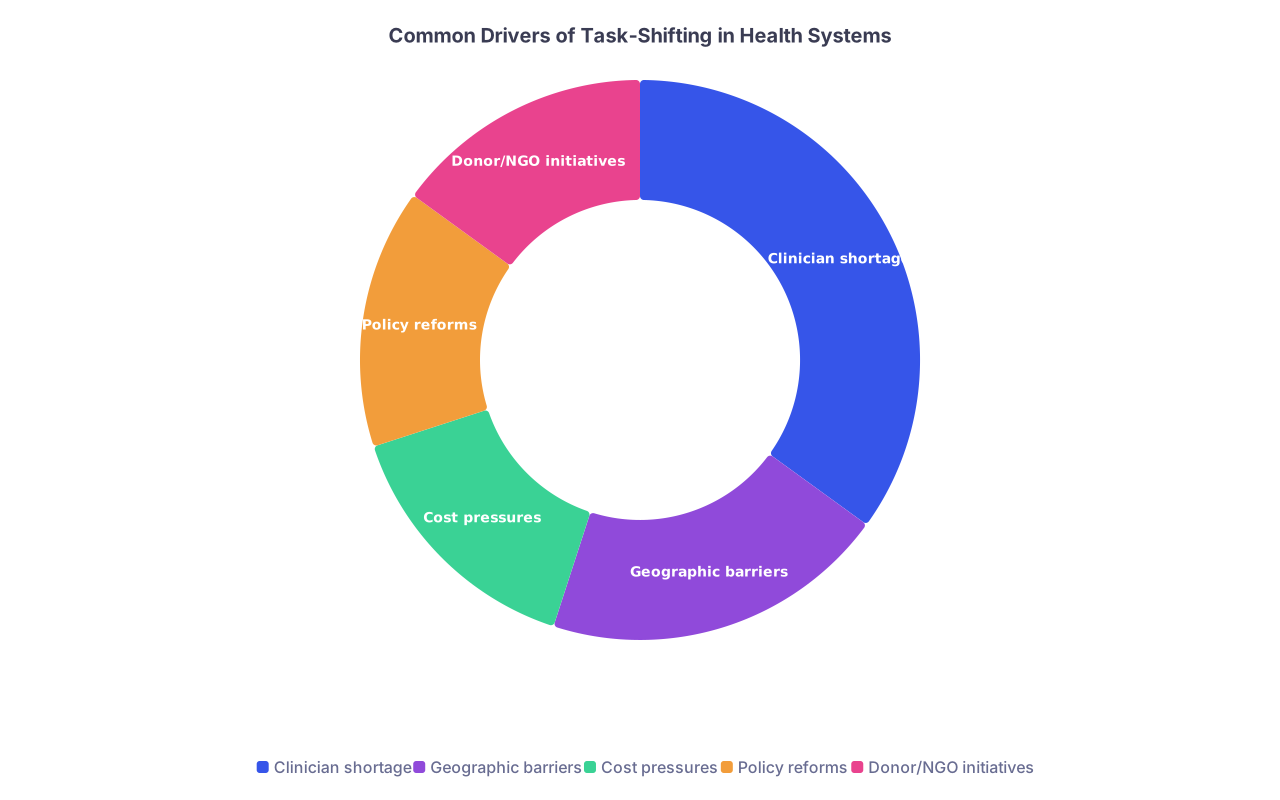
| Category | Value |
|---|---|
| Clinician shortage | 35 |
| Geographic barriers | 20 |
| Cost pressures | 15 |
| Policy reforms | 15 |
| Donor/NGO initiatives | 15 |
And, one more thing:
If you would not be comfortable with your own child or parent receiving care under the task‑shifting model you are designing—given the same training and resources—you need to pause. That gut check is not perfect, but it is a useful final filter.



| Step | Description |
|---|---|
| Step 1 | Proposed delegated task |
| Step 2 | Do not delegate |
| Step 3 | Delegate with safeguards |
| Step 4 | Monitor and adjust |
| Step 5 | Evidence of safety? |
| Step 6 | Adequate training? |
| Step 7 | Supervision and escalation? |
| Step 8 | Better than no care? |
Key takeaways
- Task‑shifting is ethically justified when it is structured, evidence‑based, supervised, and clearly better than delayed or absent care—not when it is a shortcut for cost‑cutting or convenience.
- Do not delegate complex judgment‑heavy tasks, high‑risk procedures, or work into systems with no safety nets. Narrowly define tasks, train to real competence, and build escalation pathways.
- Anchor every decision in the mix of beneficence, non‑maleficence, autonomy, and justice—while respecting local scopes of practice and avoiding the colonial reflex to accept lower standards “because it is global health.”


