
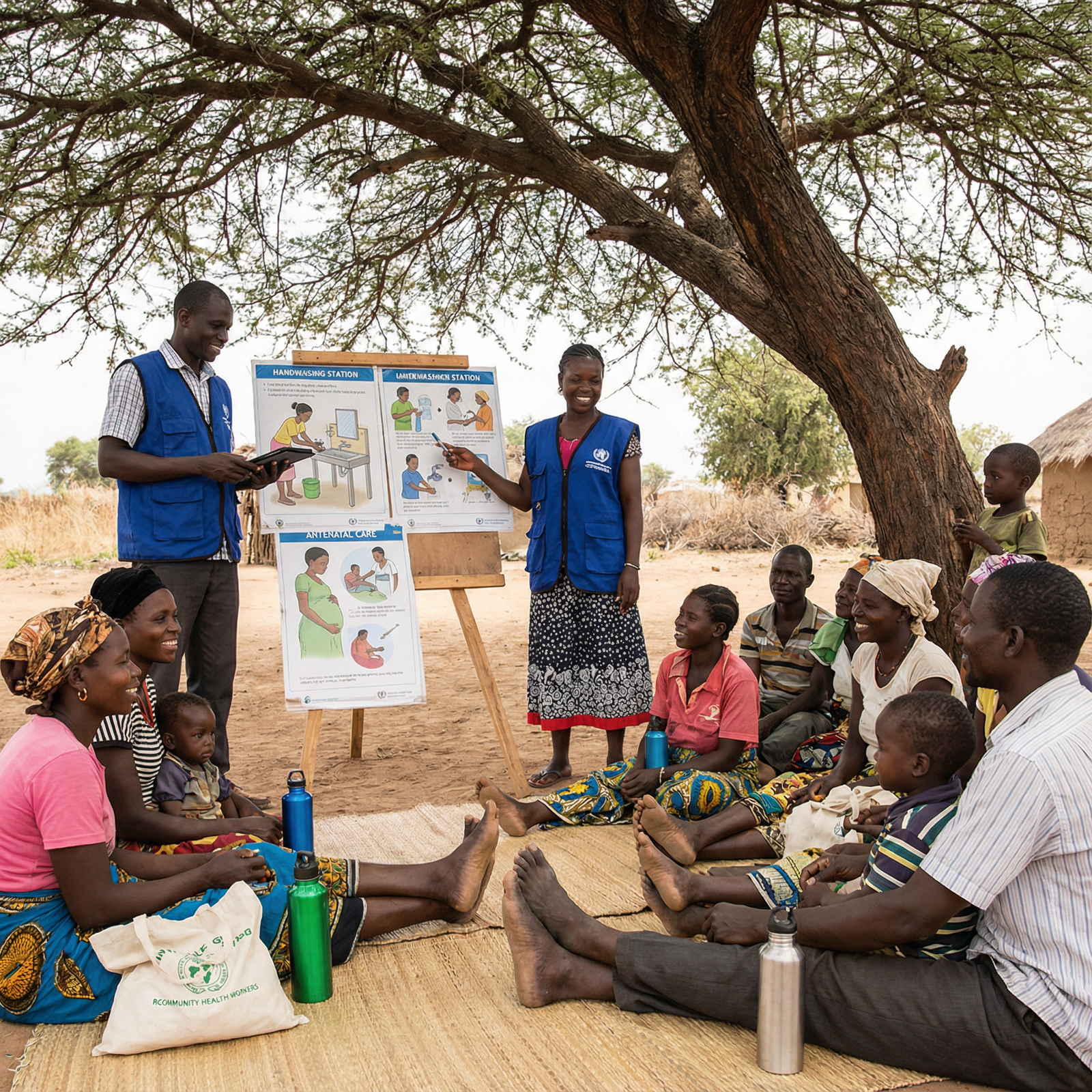
Most “global health” curricula for residents are superficial checklists. You need a competency framework that can survive a real district hospital at 2 a.m.
Let me break this down specifically: a serious global health curriculum for residents is not a travel elective, a vaccine talk, and a reflection essay. It is a structured, longitudinal training program that prepares a near-independent clinician to function ethically, safely, and humbly in health systems that do not look like their home institution.
If you design it like a tourism brochure, you will produce harm. If you design it around core competencies, you can actually produce value—both for your residents and for partner communities.
1. Start From the End: What Should a Graduate Be Able to Do?
Before competencies, you need a picture in your head of the “finished product.” A resident who has completed your global health track (or rotation) should be able to:
- Walk into a low‑resource ward, quickly read the system (who has power, how decisions are made, where supplies choke), and not create chaos.
- Manage common conditions using context‑appropriate diagnostics and treatment, not fantasy guidelines that assume infinite ICU beds.
- Recognize when they are out of their depth clinically, culturally, or ethically—and stop.
- Collaborate with local teams without trying to be the hero or the savior.
- Articulate structural determinants of what they are seeing—why the ward is full of advanced disease—without blaming patients or staff.
Those are not “nice to haves.” Those are minimums.
To get there, your curriculum should be built on a small number of core domains, each with clearly defined competencies and observable behaviors. Then mapped deliberately to teaching methods and assessments.
I will structure this around seven domains that actually hold up in practice.
| Domain | Focus Area |
|---|---|
| Clinical & Contextual Care | Safe, adapted patient management |
| Health Systems & Policy | How care is organized and constrained |
| Cultural Humility & Communication | Working across cultures & languages |
| Ethics & Professionalism | Power, equity, and responsible conduct |
| Teaching, Collaboration, & Leadership | Working with and not over others |
| Research & Quality Improvement | Doing projects that matter, ethically |
| Personal Development & Resilience | Sustainability and reflective growth |
Each of these domains can be translated into concrete competencies and curriculum elements. Not theoretical—things you can write on a milestone sheet.
2. Clinical and Contextual Care: Beyond “Tropical Diseases”
The worst designed global health rotations reduce clinical content to “tropical medicine trivia.” That is exam‑prep, not training. Residents need to be competent in contextualized medicine: adjusting diagnostic thresholds, treatment choices, and escalation decisions to system realities.
Core Clinical Competencies
You want residents to be able to:
Practice context‑adapted clinical reasoning
- Use probability and pretest likelihood when diagnostics are limited (e.g., empiric TB treatment decisions when GeneXpert is unavailable or backlogged).
- Generate differential diagnoses that consider local epidemiology, not just what is common “back home.”
Manage high‑burden conditions with limited resources
- Malaria, TB, HIV, diarrheal disease, obstetric emergencies, trauma, sepsis, acute respiratory infections, malnutrition.
- Use WHO or national guideline algorithms correctly. And know when guidelines break against reality (e.g., fluid resuscitation in septic shock where ICU care does not exist).
Apply rational, resource‑sensitive use of tests and therapies
- Decide when a lab test or imaging study is truly necessary, considering cost to patient, lab capacity, and opportunity costs.
- Understand essential medicines lists and stock‑out patterns.
Recognize and manage clinical uncertainty
- Document uncertainty transparently.
- Engage local colleagues in shared decision‑making instead of making unilateral “heroic” calls.
Teaching Strategies That Actually Work
Clinical global health cannot be taught just by lectures. You need:
Pre‑departure case‑based modules:
Use realistic vignettes from partner sites. Example: “25‑year‑old with obstetric hemorrhage in a hospital with no blood bank, no anesthesiologist on call, and one operating room used for emergency ortho trauma.” Ask: what do you do here, not in an urban tertiary center.On‑site supervised decision‑making:
Resident presents a plan. Supervisor asks: “What would you do if this test were not available? What if the patient cannot pay? Who else needs to be in this decision?”Post‑rotation clinical debriefs:
Take 3–4 difficult cases, reconstruct decisions, and map them against context: what options were realistically available? Where did the resident over‑medicalize? Over‑defer?
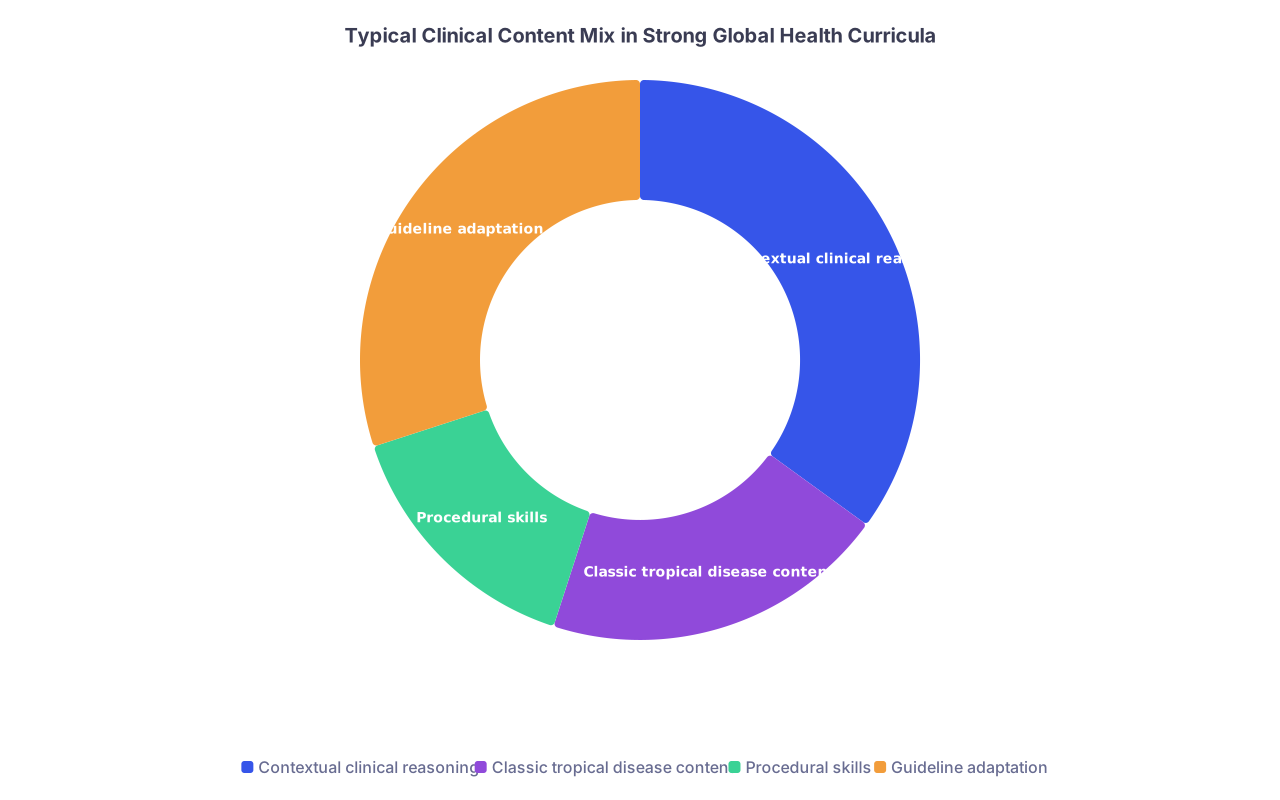
| Category | Value |
|---|---|
| Contextual clinical reasoning | 35 |
| Classic tropical disease content | 20 |
| Procedural skills | 15 |
| Guideline adaptation | 30 |
If your curriculum is 80% rare infections and exotic pathogens, you are doing entertainment, not training.
3. Health Systems & Policy: Teaching Residents to See the Water They Swim In
Most residents have never thought seriously about how financing, governance, and supply chains shape what they can offer a patient. They feel it—insurance denials, bed shortages—but they do not have a mental model.
In global health contexts, this blind spot becomes dangerous. They interpret systemic failures as individual laziness or incompetence.
Core Systems Competencies
Aim for residents to:
Map a local health system
- Identify levels of care, referral patterns, the role of private vs public sectors, and the role of NGOs.
- Understand who pays for what: out‑of‑pocket, insurance schemes, donor funding.
Understand policy and guideline structures
- Know where national treatment guidelines come from, and how strictly they are applied.
- Recognize how vertical programs (HIV, TB, maternal health) distort or support local systems.
Recognize system constraints and opportunities
- Identify bottlenecks: lab turnaround time, pharmacy stock‑outs, staffing patterns, transportation issues.
- Propose interventions at system level, not just individual patient level.
Avoid naive system disruption
- Understand why bringing “better” technology, drugs, or protocols without system integration can make things worse (e.g., an ultrasound machine with nobody trained or budgeted to maintain it).
How to Teach This Without Becoming a Policy Course
Use short, focused tools residents can actually engage with:
Health system “walking tour”:
Day 1 or 2 of a rotation, have them physically trace a patient journey—from community to clinic to hospital to lab to pharmacy. Who touches the patient? Where do they pay? Where are the choke points?Simple health system mapping assignments:
One‑page diagrams of referral pathways and key stakeholders. Present in a short group session.Mini‑policy briefs:
Have a resident write a 1–2 page policy summary: “How are HIV meds procured and distributed in this country?” or “What are the national C‑section targets and how are they enforced?”
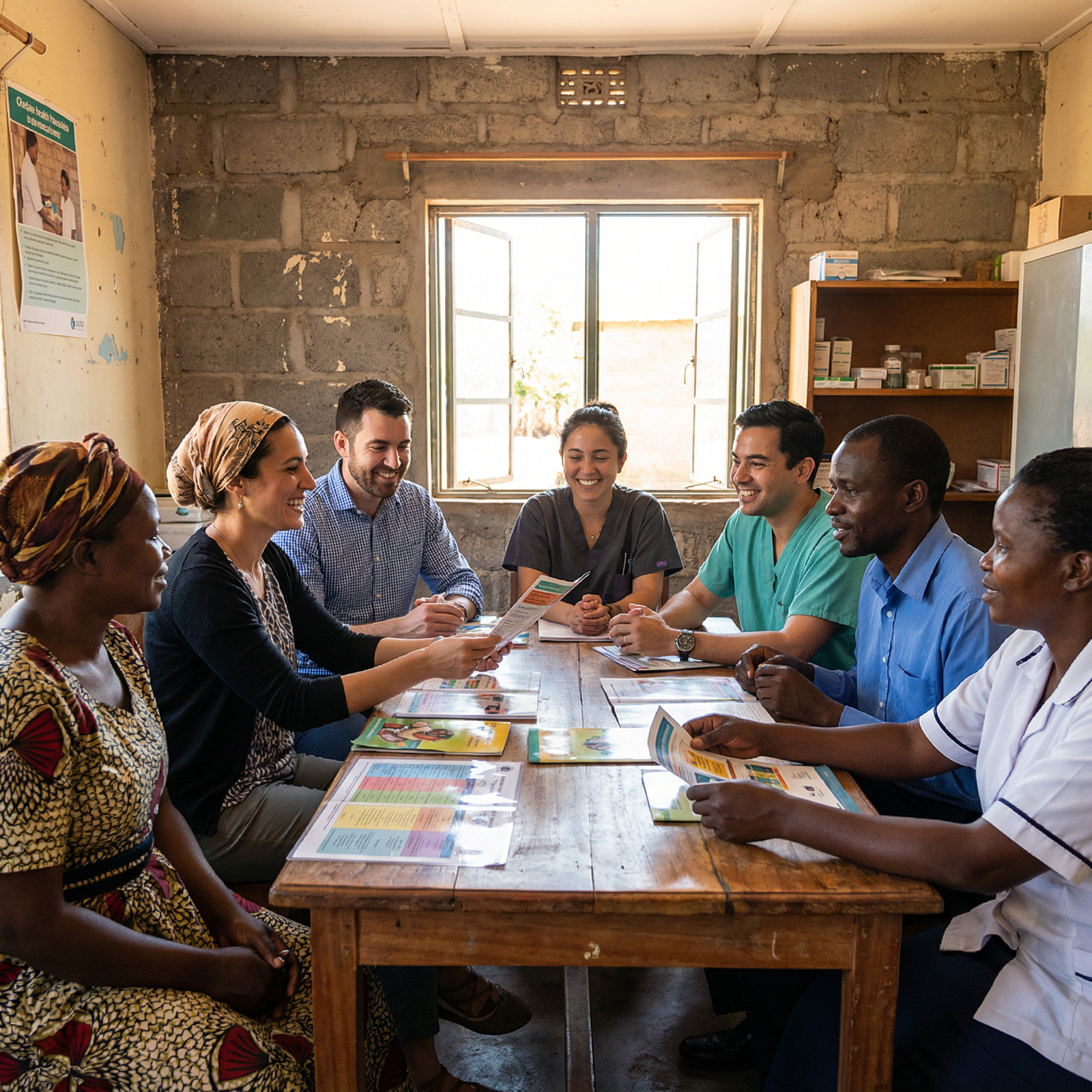
4. Cultural Humility and Communication: Drop the “Competence” Illusion
“Cultural competence” suggests you can master another culture like an UpToDate chapter. That is nonsense. What you can train is humility, self‑awareness, tools for cross‑cultural communication, and habits that reduce harm.
Core Humility & Communication Competencies
Residents should be able to:
Demonstrate cultural humility
- Acknowledge knowledge gaps and power imbalances explicitly.
- Ask, do not assume, about local beliefs, practices, and decision norms.
Work effectively with interpreters
- Use professional interpreters where possible; when not, at least structure interactions so that consent and key decisions are understood.
- Avoid speaking to the interpreter instead of the patient.
Recognize and interrogate their own biases
- Identify when they are framing a situation as “irrational” or “noncompliant” without understanding the structural context.
Navigate differing conceptions of autonomy and family roles
- Understand that “shared decision making” can look very different where family, elders, or community leaders hold decision power.
Practical Curriculum Components
Pre‑departure sessions with role plays:
Simulate consultations through an interpreter. Deliberately introduce common pitfalls: interpreter dominates, family overrides patient, resident uses jargon.Required readings from local authors:
Not just Western global health texts. Articles, essays, or short stories written by clinicians or patients from partner countries.On‑site narrative reflection (short and specific):
One‑page reflections on a specific cross‑cultural interaction, discussed with a mentor. Not generic “I was humbled.” Concrete: what was said, what you assumed, what you learned.
You are trying to build a reflex: pause, ask, recalibrate.
5. Ethics and Professionalism: Power, Exploitation, and Saying “No”
Ethics in global health is not a philosophical add‑on. It is central. The risk of causing harm—through over‑scoping, data theft, reputational exploitation, mission creep—is high.
Here is where many curricula are frankly irresponsible. They send PGY‑2s into situations where they can do procedures they would never be allowed to do at home. Because “the patients need it.” That is exploitation.
Core Ethical Competencies
Residents must be able to:
Respect scope of practice across settings
- Clearly articulate what they are and are not competent to do.
- Decline to perform procedures or assume responsibilities beyond that, even if pressured.
Recognize structural and historical power imbalances
- Understand colonial legacies in medicine and research.
- Identify how their presence might be valorized or resented, and not assume “grateful patients” as the default.
Apply ethical principles in resource‑constrained contexts
- Decide about allocation of scarce resources (ICU beds, dialysis, blood products) using transparent, locally grounded criteria.
- Be honest about prognoses and uncertainties.
Engage in ethical research and data use
- Know what counts as research vs QI vs service, and the oversight each requires.
- Understand data ownership and authorship norms in partnerships.
Reflect on and mitigate personal benefit vs community benefit
- Explicitly examine what they are gaining (CV lines, skills, prestige) versus what the host institution gains or loses.
Teaching Ethics Without Turning It into a Box‑Ticking Exercise
This cannot be just a lecture on “Do no harm.”
Pre‑departure case conference on scope creep:
Work through cases: “Intern asked to do C‑section at rural site,” “Resident asked to sign off on chemo with limited oncology support,” etc. Make them decide and defend their decisions.Explicit site agreements:
Before rotations, define resident roles jointly with host institutions: what they can do, under what supervision. Share this with residents—this is not negotiable locally.Morbidity & mortality with ethical dimensions:
After rotations, discuss at least one case where ethical discomfort existed. What should have happened? Where did the system fail the resident and the patients?

| Step | Description |
|---|---|
| Step 1 | Clinical Task Offered |
| Step 2 | Decline and explain |
| Step 3 | Proceed with oversight |
| Step 4 | Negotiate safest modified role |
| Step 5 | Decline and escalate to site lead |
| Step 6 | Within usual scope? |
| Step 7 | Supervision available? |
| Step 8 | Local standard? |
If your curriculum does not explicitly train and protect refusal, you are complicit in exploitation.
6. Teaching, Collaboration, and Leadership: Not “Coming to Help,” but to Partner
Residents often imagine they will “teach” local staff. Sometimes that is appropriate. Often it is patronizing. Competent global health practitioners know when to teach, when to learn, and how to co‑lead.
Collaboration & Leadership Competencies
You want residents who can:
Function as respectful team members
- Follow local hierarchy while still advocating for patient safety.
- Credit local colleagues for expertise and knowledge.
Provide bidirectional teaching
- Share knowledge when asked or clearly beneficial, using locally relevant examples and guidelines.
- Invite local teaching on epidemiology, traditional practices, system navigation.
Lead small projects or QI efforts with local co‑ownership
- Co‑design objectives with host partners.
- Ensure that local staff can continue or modify the project after the resident leaves.
Communicate across professional cultures
- Adjust feedback style so it is not either passive‑aggressive or culturally tone‑deaf.
- Recognize local norms about confrontation, hierarchy, and error disclosure.
Curricular Approaches
Co‑teaching models:
Pair residents with local registrars or junior faculty to run short teaching sessions together. Topic selected locally, not by visiting team.Leadership micro‑assignments:
Example: resident is responsible for improving morning handoff on one ward for 4 weeks—only if local leadership agrees it is a shared priority.Feedback training:
Short workshops on how to give and receive feedback in cross‑cultural teams. Include role‑plays where local staff push back.
This is under the “Personal Development and Medical Ethics” category for good reason: leadership without self‑awareness is dangerous.
7. Research and Quality Improvement: Do Less, But Do It Properly
Every resident wants a global health paper. That pressure drives garbage projects that drain local time, produce nothing useful, and disappear. A good curriculum teaches restraint and rigor.
Research & QI Competencies
Residents should be able to:
Distinguish between service, QI, and research
- Understand regulatory and ethical requirements for each.
- Not slap “research” onto simple audits to chase publications.
Formulate context‑relevant questions
- Identify real pain points for local staff (e.g., adherence to partograph use, triage times, stock‑out documentation) rather than imported pet topics.
Design small, feasible QI initiatives with local leads
- Use basic QI tools: process mapping, run charts, PDSA cycles.
- Hand over full documentation at the end of their rotation.
Share results responsibly
- Present to local teams first, in their language if possible.
- Ensure local co‑authorship on any abstracts or publications that arise.
| Project Type | Example | Comment |
|---|---|---|
| Service-only (fine) | Extra call coverage on busy ward | No publication, but real value |
| QI (ideal) | Improving triage documentation | Measurable, sustainable |
| Local-led research | Registry of maternal near-misses | Long-term, co-owned |
| Exported data-mining | Retrospective chart review for CV | Often exploitative |
Your curriculum should explicitly forbid solo, unpartnered chart reviews for “quick pubs.” Residents will complain. Let them.
8. Personal Development, Resilience, and Reflective Practice
This is often reduced to “self‑care” slides. That is shallow. In global health contexts, residents face moral distress, vicarious trauma, culture shock, and identity disruption. You either prepare them or you watch them flail.
Core Personal Development Competencies
Residents need to be able to:
Anticipate and manage emotional responses
- Recognize common reactions: guilt, anger at “the system,” over‑identification with certain patients, savior fantasies.
- Use concrete coping strategies that do not dump emotional burden on local colleagues.
Set realistic expectations of impact
- Understand that a 4‑week rotation will not “fix” anything.
- Measure success in terms of learning, relationship building, and incremental local priorities.
Engage in structured reflection
- Move beyond vague “this opened my eyes” comments.
- Use specific reflective frameworks (e.g., “description–analysis–action”) to identify what they will change in their own practice at home.
Plan for longitudinal engagement or graceful exit
- Decide whether and how they will continue global health work after residency.
- Avoid serial, unconnected one‑off trips that never build depth or accountability.
Concrete Tools
Pre‑departure values clarification:
Short written response to: “Why are you doing this?” and “What are your non‑negotiables ethically?” Discuss with a mentor.On‑site check‑ins:
Brief, regular one‑on‑one debriefs (in person or virtual) focusing on moral distress, role confusion, and any safety concerns.Re‑entry debrief:
Within 2–4 weeks of return. Discuss reverse culture shock, frustration with home system, and realistic pathways for continued engagement.
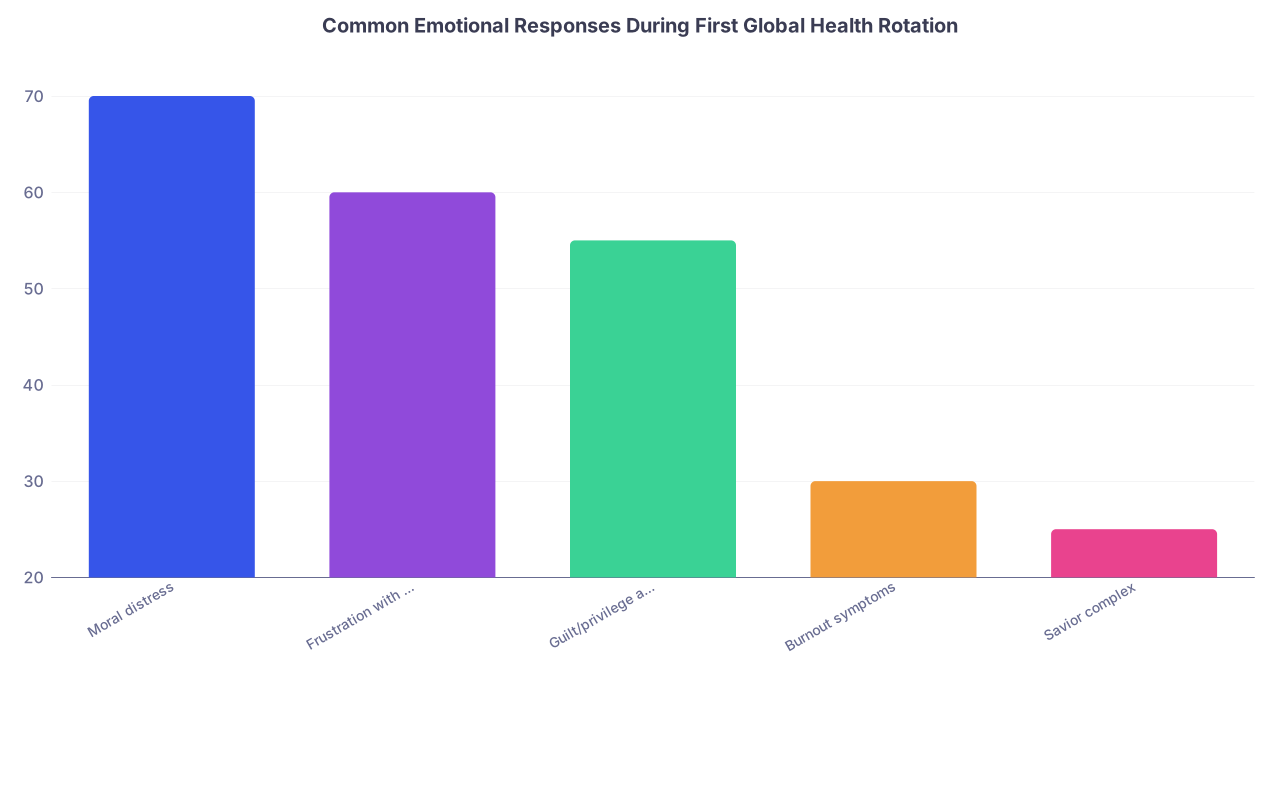
| Category | Value |
|---|---|
| Moral distress | 70 |
| Frustration with system | 60 |
| Guilt/privilege awareness | 55 |
| Burnout symptoms | 30 |
| Savior complex | 25 |
Those numbers are not from a specific dataset, but if you have been around residents in these settings, you know they are directionally right.
9. Structure, Sequencing, and Assessment: Making It All Cohere
Good intentions fall apart without structure. You need to decide: is this a longitudinal track, a single structured rotation, or a mixed model?
Basic Structural Template That Works
Here is a model that I have seen succeed across multiple institutions:
PGY‑1: Foundations
- Short intro seminar series on global burden of disease, health systems, ethics, cultural humility.
- No overseas clinical work yet, maybe local underserved/immigrant health rotations.
PGY‑2–3: First global health rotation
- 4–8 weeks at a stable partner site with explicit objectives.
- Strong pre‑departure and re‑entry components.
- Mandated project: small QI or teaching activity, co‑planned with local mentor.
PGY‑3–4 (for longer programs): Advanced engagement
- Option for longer or repeat rotations.
- Leadership role in resident teaching, track organization, or partnership stewardship.
Assessment must map to competencies, not just attendance.
Assessment Tools
Use a mix of:
Direct observation tools on site
- Mini‑CEX adapted for global health: assessing clinical reasoning in context, communication through interpreters, team interactions.
Structured feedback from local supervisors
- Short, behavior‑based evaluation forms.
- Space for narrative comments on respect, adaptability, and professionalism.
Reflective assignments
- Two or three required reflections tied to specific competencies (ethics, systems, personal development).
- Graded for depth and concreteness, not “right answers.”
Portfolio approach
- Collect teaching materials, QI plans, policy briefs, and reflections into a simple portfolio.
- Review annually with a global health faculty mentor.
This is where programs usually get lazy. They document “completed elective” and nothing else. That is not a curriculum. That is logistics.
FAQ (Exactly 4 Questions)
1. How do we prevent global health experiences from becoming “medical tourism” for residents?
Three guardrails: First, stable, long‑term institutional partnerships rather than one‑off site shopping. Second, clearly defined resident roles and scopes of practice negotiated with host institutions and written down. Third, competency‑based objectives that emphasize learning, collaboration, and system understanding rather than “doing as much as possible.” If a rotation is measured by how many procedures a visiting resident performed, you have a tourism problem.
2. Do all residents need an overseas experience to benefit from global health training?
No. You can build a robust global health curriculum entirely using local underserved settings, refugee clinics, and tele‑collaboration with international partners. The core competencies—contextual care, systems thinking, ethics, cultural humility—are just as relevant in a safety‑net hospital in your city. Overseas work should be optional, carefully selected, and reserved for programs with solid partnerships and supervision.
3. How much pre‑departure training time is realistically needed?
If you cannot protect at least 8–12 hours of structured pre‑departure training (spread over several sessions) you are under‑preparing people. Trying to compress everything into a single 2‑hour lecture is ineffective. Residents need time to absorb ethics cases, practice interpreter use, review local guidelines, and clarify expectations. Many programs integrate this into existing didactics across several months, which is far more effective than a last‑minute crash course.
4. What is the minimum faculty infrastructure to run a serious global health curriculum?
At least one faculty with real global health experience (not just “went on a trip once”) at 0.1–0.2 FTE for curriculum design, mentorship, and partnership management. Ideally, a small steering group that includes at least one faculty member from a partner institution. If your program cannot support that minimal structure, keep the scope of the curriculum modest and focus on local/global health equity content rather than sending residents abroad.
Keep this simple in your head:
- Design around competencies, not destinations.
- Protect ethics, scope, and partnership integrity above resident “experiences.”
- Make reflection and systems thinking as non‑negotiable as clinical skills.
If you build around those three pillars, your global health curriculum will actually hold up where it matters: in front of a real patient, in a real system, when no one is watching.


