
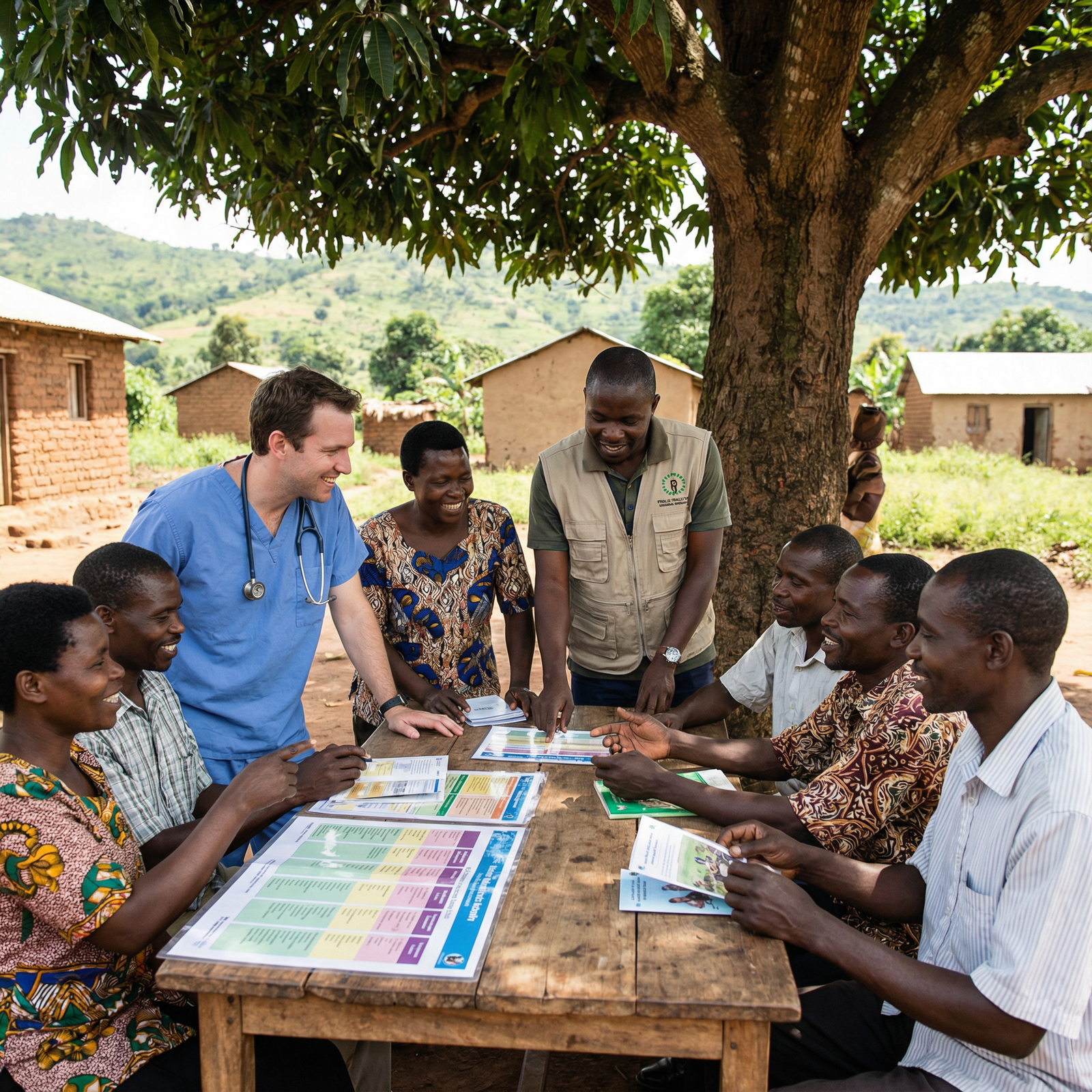
Most global health “collaboration” fails at the exact moment authorship is decided.
You can have the grant, the IRB approvals, the community buy‑in, the data collection. Then someone opens a Google Doc called “Manuscript – Draft” and suddenly all the talk about “partnership” evaporates.
Let me be blunt: if you do not have a clear, ethical, and workable authorship model with your partners abroad, you are not building research capacity. You are extracting it.
I am going to walk through specific authorship models that actually work in global health partnerships, particularly in low‑ and middle‑income country (LMIC) settings. Not theory. The models people use, fight about, refine, and sometimes destroy relationships over.
1. The Problem: Why Authorship Is The Real Power Struggle
Global health research often runs on three unequal currencies: money, institutional prestige, and local access. Authorship is how those currencies get converted into career capital. That is why people get vicious about it.
Typical pattern I have seen:
- HIC (high‑income country) PI writes the grant, controls the money.
- LMIC partners recruit patients, collect data, manage local staff, smooth over political and cultural landmines.
- The paper comes out with:
- 4 authors from the HIC institution,
- 1 local “collaborator” at position number 7,
- and a vague acknowledgment to “the local team.”
Everyone smiles at the conference. Locally, it breeds resentment and quietly kills future collaboration.
This is not just a “fairness” issue. It directly affects capacity building:
- Local researchers need first and senior author papers to get promoted.
- They need demonstrable intellectual contributions, not just “data collection.”
- They need practice leading analyses, responding to reviewer comments, and defending methods.
If your authorship structure keeps all of that in Boston, London, Toronto, or Geneva, you are actively blocking capacity development.
2. Ground Rules Before Any Model: What Must Be Non‑Negotiable
Before arguing about who is first, you need structure. Let me break down the minimum ethical baseline.
a. Decide Authorship Rules Before Data Collection
Not after results look “interesting.” Before patient #1 is enrolled, you should have:
- A written authorship and dissemination plan.
- Named roles or at least role types (local PI, data lead, analysis lead, first‑author candidates, etc.).
- A process for conflict resolution.
You would be shocked how many multi‑million dollar grants skip this and then try to fix it in a three‑email thread.
b. Use Real Standards, Not Vibes
Use formal criteria like ICMJE. Not because they are perfect, but because they give you something objective to point to when people start fighting.
ICMJE core criteria (paraphrased, not recited):
- Substantial contribution to conception/design, or data acquisition, or analysis/interpretation.
- Drafting or critically revising for important intellectual content.
- Final approval of the version to be published.
- Agreement to be accountable for all aspects of the work.
If your “local collaborator” only gets listed because “we needed their site,” that is tokenism. If your HIC junior gets authorship for attending two Zoom calls, that is exploitation.
| Situation | Why It Is A Problem |
|---|---|
| Local PI only acknowledged, not authored | Devalues core intellectual and logistical work |
| HIC trainee first author on locally driven question | Reverses true ownership of the work |
| “Gift” authorship for department chair | Distorts credit, undermines younger researchers |
| Local team not involved in revisions | Blocks capacity in analysis and scientific writing |
c. Assume Language ≠ Intelligence
I have seen very smart LMIC colleagues quietly removed from first authorship because “their writing is not strong.” That is lazy and unethical. English proficiency is a fixable skill. Ownership of a research idea is not.
If your solution to language issues is “we will just make the English‑speaking resident first author,” you are not a partner. You are a colonizer with Grammarly.
3. Core Authorship Models That Actually Work
There is no single perfect model. But there are recurring structures that work well across different project types. I will go through them with concrete examples, pros, and landmines.
Model 1: Local‑First Authorship on Primary Papers
This is the gold standard for capacity building.
Structure:
- First author: Local (LMIC) investigator or trainee.
- Senior (last) author: Local senior PI or co‑PI. Sometimes shared or alternating with HIC PI.
- Middle authors: Mix of HIC and LMIC team members reflecting actual contributions.
You see this in strong partnerships like long‑standing HIV cohorts in Kenya, TB consortia in Peru, and maternal health collaborations in Ghana that have matured enough to trust local leadership.
How it plays out in practice:
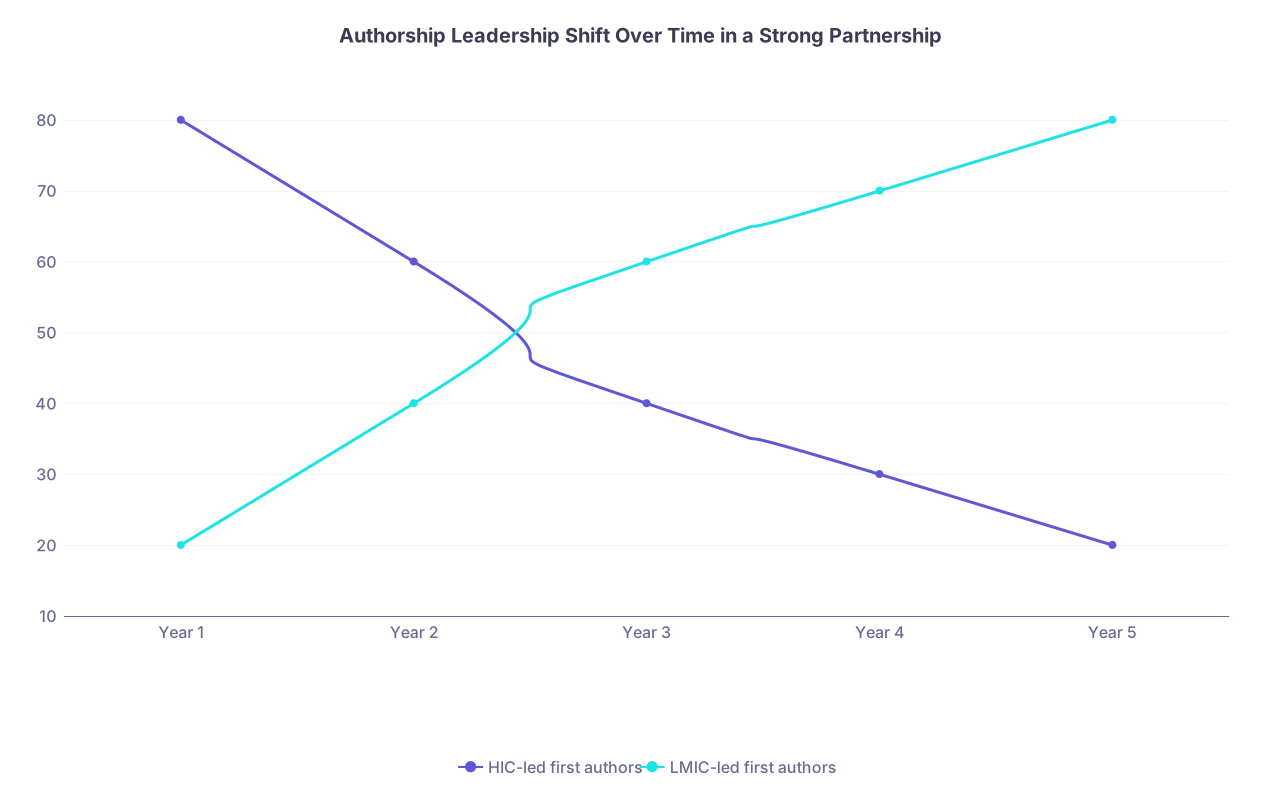
- Year 1–2:
- HIC PI often does more of the heavy lifting on design and writing, but explicitly mentors a local junior co‑first author.
- Year 3–5:
- Local mid‑career person takes first author with structured writing support from HIC.
- Local senior becomes last author on most site‑led manuscripts.
- Year 5+:
- HIC PI moves to middle author or co‑senior author; local team drives most outputs.
Pros:
- Directly builds CVs and promotion cases for LMIC partners.
- Forces transfer of skills: analysis, writing, responding to reviewers.
- Changes power dynamics; local investigators become recognized field leaders.
Common objections (and why they are weak):
- “But I wrote the grant.” Great. That makes you an author. Not necessarily first author on every paper for the next decade.
- “They cannot write at the required level yet.” Then your job is to fix that, not to bypass them. Co‑writing and editing are part of mentorship.
| Category | HIC-led first authors | LMIC-led first authors |
|---|---|---|
| Year 1 | 80 | 20 |
| Year 2 | 60 | 40 |
| Year 3 | 40 | 60 |
| Year 4 | 30 | 70 |
| Year 5 | 20 | 80 |
Model 2: Parallel Authorship Streams (HIC and LMIC Priority Questions)
This model works when there are clearly distinct but related aims.
Example:
- A large maternal health registry in Rwanda.
- LMIC team cares primarily about implementation outcomes, feasibility, local mortality drivers.
- HIC team also wants to do more mechanistic or methodology heavy secondary analyses.
Operational model:
- Set aside a number of “reserved” analyses/questions for LMIC leadership.
- e.g., first five major outputs are locally first‑authored, defined jointly at project start.
- HIC trainees can lead more technical secondary analyses, provided:
- They use previously agreed data,
- They include local co‑authors who contribute intellectually (not just as “data providers”).
Pros:
- Avoids the common trap where every interesting question gets scooped by HIC fellows.
- Gives structure: LMIC group has clear guaranteed leadership opportunities.
- Lets HIC trainees still participate productively without undermining local ownership.
Landmine:
If the “LMIC questions” end up being the boring descriptive stuff and the “HIC questions” are the high‑impact mechanistic analyses, you have simply rebranded exploitation. The split has to be equitable in scientific value.
4. Tactical Models For Common Scenarios
Let me go through specific scenarios you will actually encounter and how to structure authorship so it builds, not drains, capacity.
Scenario A: Big Multisite Trial with One Dominant HIC PI
You have:
- One HIC institution that holds the grant.
- Multiple LMIC sites providing patients, context, and sometimes co‑funding in kind (e.g., space, staff).
- Statisticians and data core at the HIC site.
Bad default pattern: Every key paper first‑authored by HIC trainees rotating through the data. LMIC colleagues become “site investigators” somewhere in the middle.
A better authorship model:
- Steering committee with formal LMIC representation
- They help decide the publication plan up front.
- Pre‑defined “flagship manuscripts” with assigned lead sites
- Each flagship paper has:
- A designated lead site (often LMIC).
- A designated first author (usually from that site).
- A formally assigned HIC mentor co‑author.
- Each flagship paper has:
- Rotation of lead authorship:
- If there are 6 major primary/secondary outcomes:
- At least 3 led from LMIC sites.
- Other 3 can be HIC led, but still with LMIC co‑authors who actually contribute.
- If there are 6 major primary/secondary outcomes:

| Step | Description |
|---|---|
| Step 1 | Trial Funded |
| Step 2 | Form Steering Committee |
| Step 3 | Define Key Manuscripts |
| Step 4 | LMIC First Author |
| Step 5 | HIC First Author |
| Step 6 | Assign HIC Mentor |
| Step 7 | Assign LMIC Coauthors |
| Step 8 | Write and Submit |
| Step 9 | Assign Lead Site |
Key ethical point: LMIC investigators must be in the room when deciding “key manuscripts.” If those conversations happen on HIC‑only Zoom calls, you already lost.
Scenario B: HIC Fellow Doing “Global Health Year” Abroad
This one is a minefield. A senior resident or fellow spends 6–12 months at an LMIC hospital. They want a paper. The local team wants capacity and continuity.
You must avoid turning this into the “visiting fellow swoops in, gets first‑author paper, disappears” cliché.
A workable model:
- Primary authorship: Local trainee or junior faculty.
- Co‑first or second author: Visiting HIC fellow.
- Explicit mentor roles:
- Local senior: Content and local relevance.
- HIC mentor (back home): Methods, writing, analytic rigor.
How it actually works day‑to‑day:
- HIC fellow:
- Helps with study design, protocol drafting, IRB, basic data system setup.
- Co‑writes introduction and methods with the local first author.
- Leaves with clear assignments and follow‑up schedule for revisions.
- Local first author:
- Leads data cleaning, basic analysis, and first draft of results.
- Drives revisions with support from both mentors.
Why this builds capacity:
- Local trainee learns how to own a project end‑to‑end.
- HIC fellow still gets strong authorship and real global health experience.
- The partnership is not dependent on the fellow’s presence or goodwill.
Common failure pattern I have seen: HIC fellow back home gets busy with boards/interviews. Manuscript stalls. Local trainee does not have access to analytic support or confidence to push. Two years later: nothing. That is a capacity‑killing outcome.
So: codify timelines, assign responsibility for sending monthly check‑ins, and make at least one person’s promotion dependent on seeing this through.
5. Concrete Authorship Structures That Respect Contribution
You want specifics, not just principles. Fine. Here are actual templates you can adapt.
a. The “Dual Senior” Model
Useful when both HIC and LMIC PIs have made major intellectual contributions over a long collaboration.
Example authorship line:
- A. Nshimiyimana*, B. Patel*, C. Wang, D. Rodriguez, E. Uwimana, F. Smith†, G. Kamara†
With footnotes:
- *Co‑first authors.
- †Co‑senior authors.
Who are these people?
- A. Nshimiyimana – Rwandan junior faculty, led the analysis and draft.
- B. Patel – HIC fellow who co‑led methods and initial concept.
- F. Smith – Long‑standing HIC PI, grant holder, original cohort architect.
- G. Kamara – Local senior PI, leads the program on the ground.
Pros:
- Reflects real shared intellectual leadership.
- Allows both PIs to show senior authorship for promotion.
- Elevates emerging local talent via co‑first authorship.
Important caveat: Do not use co‑first or co‑senior authorship as a cheap compromise to avoid hard conversations. It is meaningful only when contributions truly justify the sharing.
b. The “Local Anchor” Policy
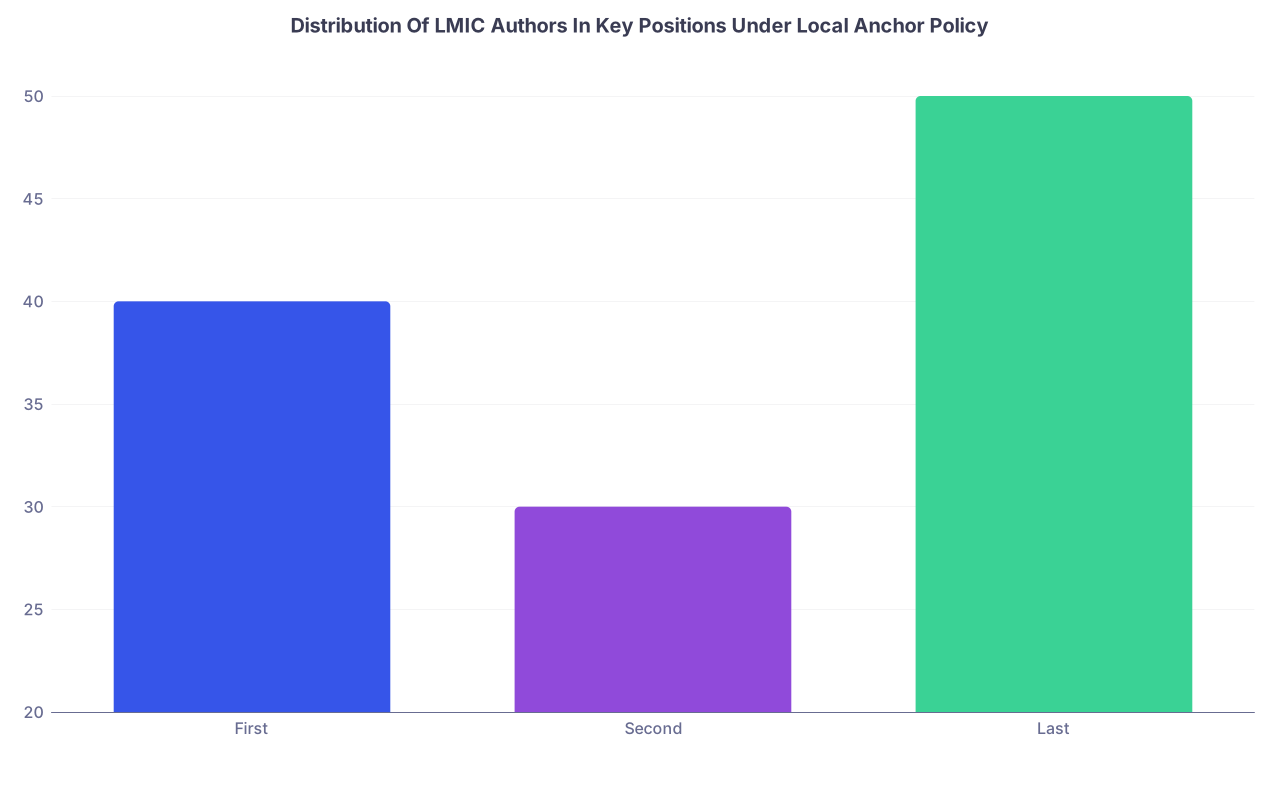
Some groups adopt a simple but powerful rule: No paper is submitted without at least one LMIC author in either first, second, or last position.
| Category | Value |
|---|---|
| First | 40 |
| Second | 30 |
| Last | 50 |
Not perfect, but it shifts the default. It forces every project lead to ask: “Who is our local anchor for this manuscript?”
You can hard‑code this into your collaboration MOU (memorandum of understanding). And you should.
6. Capacity Building Through Authorship: What It Looks Like In Practice
If you are serious about “building research capacity,” authorship is not just an endpoint; it is your main training pipeline.
Here is what real capacity building looks like inside a project.
a. Shared Analysis Work, Not Just Raw Data Transfer
Local colleagues need access to:
- Clean analytic datasets.
- Statistical code (Stata, R, Python, whatever you use).
- The logic behind analytic decisions (via mentoring calls, annotated code).
Common anti‑capacity move: HIC group says, “The stats are too complicated; we will just run the models and send you the results.” Translation: “You will never truly understand or critique the analysis; we keep the power.”
Better: Joint analysis sessions where code is screen‑shared, discussed, and modified together. Slower in the short term. Transformative in the long term.
b. Protected Time and Funding For Local Writing
You cannot build writing capacity if your local first author is doing all this at 10 p.m. after a 14‑hour clinical day and is not paid a cent for it.
- Allocate salary support for LMIC investigators for research and writing time.
- Budget for writing retreats or dedicated writing blocks.
- Fund travel for local first authors to present at conferences, not just PIs.

c. Formal Mentorship Tied To Manuscripts
If a local trainee is first author, assign:
- One local mentor (for context, politics, local career navigation).
- One HIC mentor (for methodology and publication pathway).
Define the expectation: By the end of the paper, the trainee should be able to independently:
- Draft a full IMRAD (Introduction, Methods, Results, Discussion).
- Address a standard set of reviewer comments.
- Understand authorship criteria and defend their own role.
This is personal development. It is also ethical practice. You are not just extracting authorship; you are training future collaborators who can write their own grants.
7. Guardrails Against Performative Equity
Let me be direct: there is now a trend of “performative equity” in global health. People have learned the language:
“Decolonizing global health.”
“Shifting power to partners.”
“Local ownership.”
Then they reproduce the same power structures with better‑worded emails.
Watch for these red flags:
- Local authors nominally first, but HIC team controls all analysis and rewrites every paragraph.
- Local teams excluded from the grant application but heavily involved after funding.
- HIC group deciding policy recommendations without local stakeholders at the table.
- Authorship discussions happening exclusively in English‑only, HIC‑time‑zone‑friendly meetings where half the local team cannot attend.
You can fix some of this by structure:
- Require written authorship plans signed by all site PIs.
- Rotate meeting times to accommodate LMIC partners.
- Circulate drafts with tracked changes and explicitly request local edits on interpretation and implications.

And when you see tokenism creeping in, call it out. Even if you are the junior person. Especially then. Your career will benefit more from doing the right thing than from quietly participating in exploitation.
8. Practical Steps To Implement Better Authorship Models Tomorrow
You do not need another framework. You need a to‑do list.
For any ongoing project:
- Sit down (virtually or in person) with your LMIC PI and co‑create a written publications plan.
- Explicitly assign lead authorship for already‑planned analyses.
- Revisit any drafts where local partners are not in meaningful positions and fix that.
For any new grant:
- Write the authorship and capacity‑building strategy into the proposal.
- Budget for local writing time, travel for local first authors, and analytic training.
- Name specific LMIC investigators as co‑PIs or co‑Investigators with protected effort.
For personal behavior:
- If you are HIC‑based and someone casually suggests you “just take first author” on a project clearly driven by local colleagues, say no.
- If you are LMIC‑based, push for clear authorship expectations before agreeing to “help with data collection.”
- For institutional policy:
- Push your department or center to adopt:
- An authorship equity policy for global health projects.
- A requirement that any global health manuscript list at least one LMIC author in a major authorship position, unless transparently justified.
- Push your department or center to adopt:
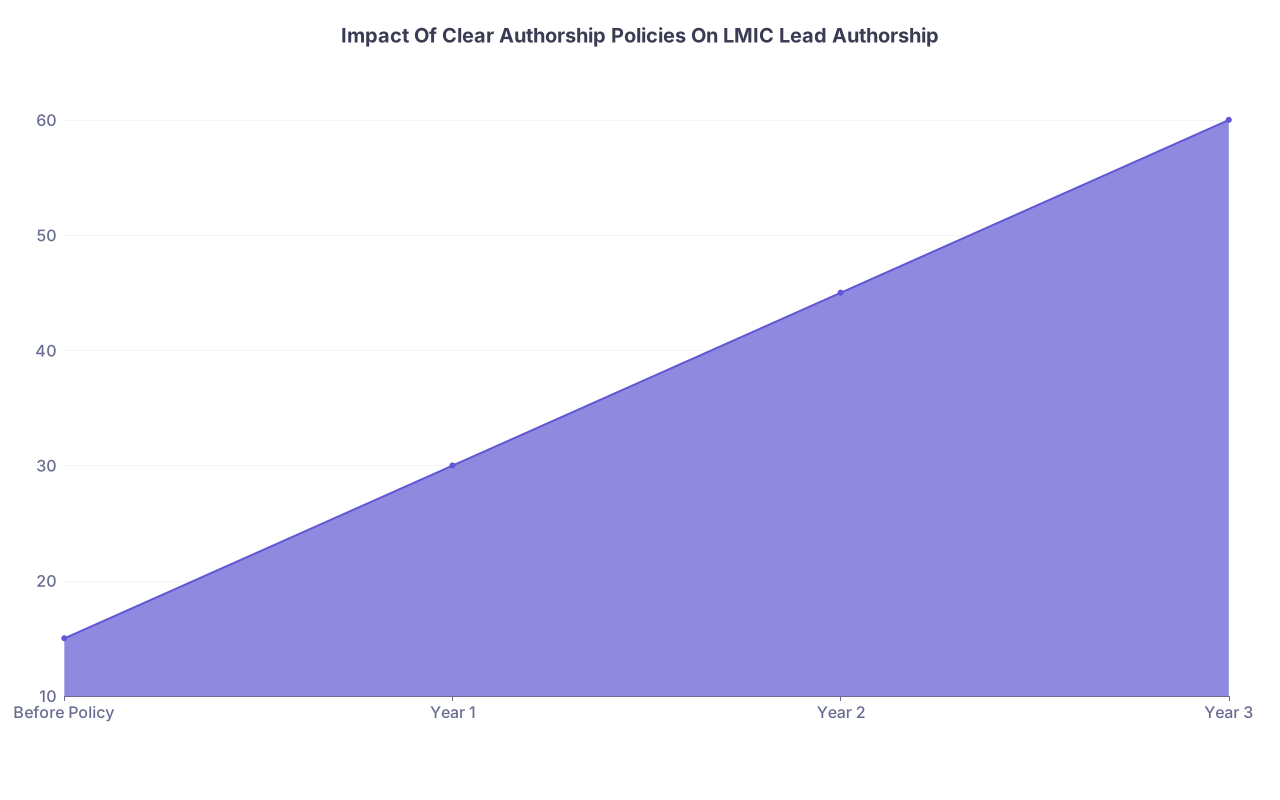
| Category | Value |
|---|---|
| Before Policy | 15 |
| Year 1 | 30 |
| Year 2 | 45 |
| Year 3 | 60 |
This is not cosmetic. It changes who gets promoted, who becomes a PI, whose ideas shape the global health agenda.
FAQ (Exactly 6 Questions)
1. What if the local team did not contribute much intellectually—do I still need them as major authors?
If the local team truly only provided minimal support, you should ask yourself why. Often the reality is they were excluded from meaningful design and analysis decisions. That exclusion is your ethical failure, not evidence they do not deserve authorship. For the current paper, follow ICMJE criteria honestly. But for the next project, restructure so that local partners are involved at concept stage, can comment on methods, and participate in analysis. Then there will be no question about their authorship.
2. How do I handle situations where multiple local and HIC people all feel they should be first author?
Use a transparent scoring system based on actual contributions: idea origination, protocol writing, data collection leadership, analysis time, writing time. Have all candidates list their contributions and discuss scores together with the PI mediating. If contributions are truly equal, co‑first authorship is defensible. But do not use seniority or institutional prestige as tie‑breakers. Use work performed and intellectual ownership.
3. Journals sometimes push back on long author lists. How do we include everyone fairly?
Authorship is not a participation trophy. Use formal criteria and be honest: if someone’s contribution was purely administrative or limited to routine data entry without analysis, acknowledgment may be appropriate. For those who meet criteria but risk being squeezed out by journal limits, choose journals that allow full authorship lists or supplementary contribution statements. The solution is not to quietly erase the contributions of LMIC colleagues to make room for every HIC trainee.
4. What about papers using legacy data collected years ago before equity was a priority?
You still owe the original data‑generating groups respect. At minimum, include key local PIs as co‑authors and consult them about new analyses. If the original MOU restricted data use, honor it or renegotiate transparently. For new analyses, intentionally build in local co‑leadership, even if the initial dataset predates your involvement. “We had the data on a server in Boston” is not a moral exemption from partnership.
5. How do I support a local first author who struggles with academic English without taking over the paper?
Use structured mentorship: let them draft in their strongest version of English (or even partly in their local language for early outlines). Then revise with tracked changes, explaining the rationale for edits. Offer writing workshops or link them with institutional writing support. The goal is progressive improvement: each paper, they should need fewer interventions. If every manuscript ends with you fully rewriting from scratch, you are not building capacity; you are ghost‑writing.
6. Does insisting on local first authors ever slow publication too much or hurt funding chances?
Yes, sometimes it will slow the process. Training, iteration, and joint analysis take longer than doing it yourself at midnight. But if your entire research program collapses because one paper comes out six months later, your model was fragile to begin with. Most funders now explicitly value capacity building and equitable authorship. Being able to show a track record of local‑led papers strengthens, not weakens, your competitiveness for serious global health funding.
Key points:
- Authorship is not an afterthought; it is the central mechanism by which power, credit, and capacity are distributed in global health research.
- Working models share one feature: local investigators lead or co‑lead high‑value outputs, with real analytic and writing roles, not just “data collection.”
- If your collaborations abroad produce lots of HIC‑first‑author papers and very few locally led manuscripts, you are not building capacity—you are mining it.


