

The biggest ethical mistake most trainees make on global health trips isn’t what they do. It’s what they’re too scared to say.
You saw something that felt wrong, or at least… off. Maybe it was a procedure you’re not qualified to do, medications handed out like candy, photos taken of patients without consent, or locals being talked about like props in someone’s personal statement. You knew, on some level, this wasn’t okay.
And you didn’t say anything.
Now you’re spiraling:
“Does this make me a bad future doctor?”
“If I bring it up now, will people think I’m attacking them?”
“Do I put this in my application? Or bury it and hope it never comes up?”
Let’s walk through this like what it is: a real ethical mess that collided with power dynamics, fear, and the fact that you’re still in training. Not a clean-case-in-a-bioethics-textbook scenario.
What Actually Happened vs. What Your Brain Is Doing
There are two separate stories here:
- What actually happened on that mission
- The story your anxiety is writing about what it means about you
You’re probably stuck in #2.
You might be telling yourself things like:
- “If I were truly ethical, I would’ve spoken up right then.”
- “Good doctors always advocate for patients, no matter the cost.”
- “I failed the test. This proves I’m not cut out for global health.”
I’m going to be blunt: that “good doctors are fearless heroes” narrative is garbage. It sounds noble. It’s also how people burn out, get retaliated against, or get kicked out of spaces where they could actually do good long-term.
You were:
- In a foreign or unfamiliar setting
- Lower on the hierarchy
- Worried about grades, letters, future opportunities
- Surrounded by people who seemed “sure” this was fine
That’s not a character flaw. That’s a power structure.
Ethically, what matters now is:
- Are you willing to examine what happened honestly?
- Are you going to learn skills so next time you’re not frozen?
- Are you going to do something—however small—after the fact?
That’s how you grow an ethical spine. Not by performing instant heroics in your first mission.
Common “Unethical” Situations You’re Afraid You Enabled
Let’s name the stuff you’re probably replaying in your head at 2 a.m.
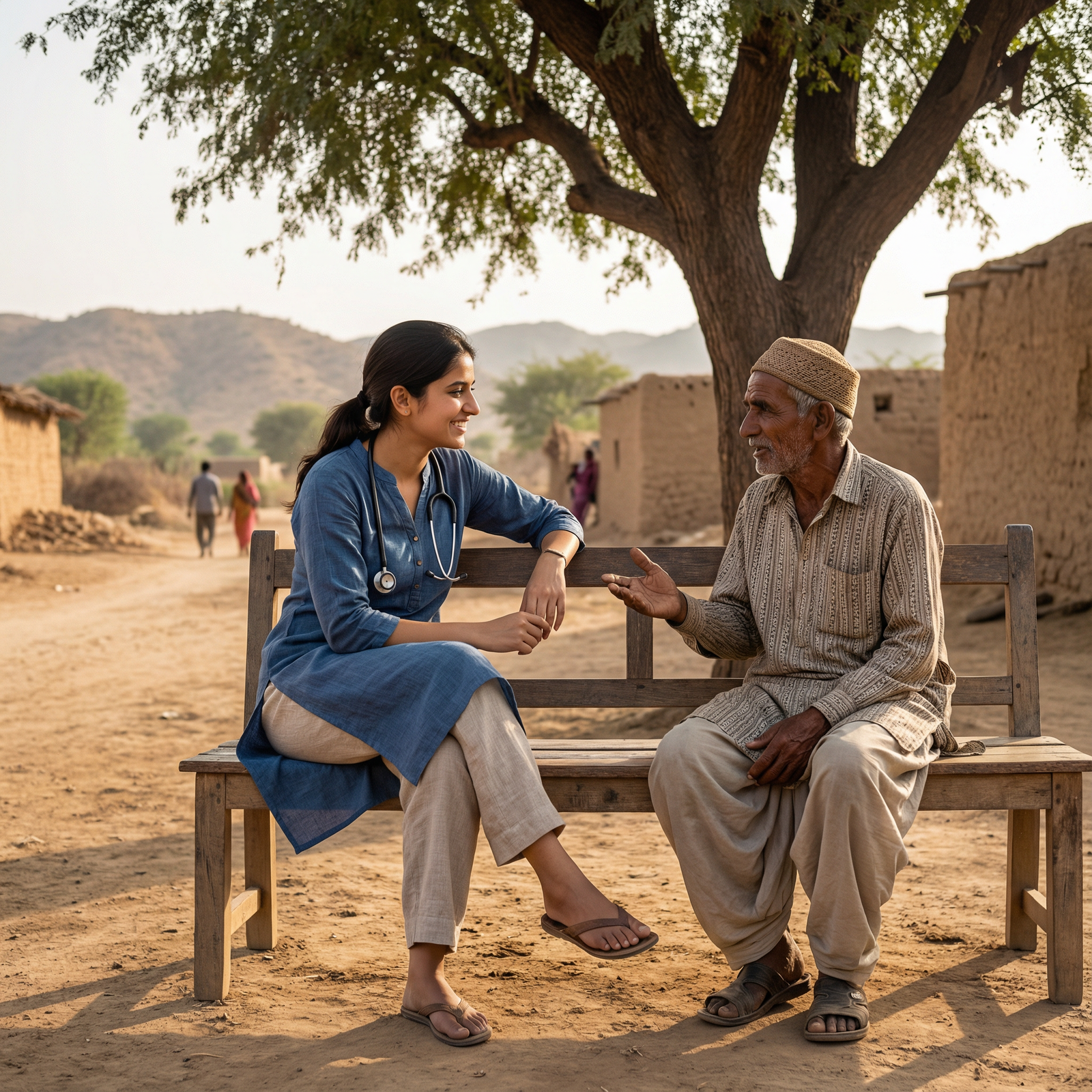
Things I’ve seen or heard students describe:
Being asked to:
- Start IVs, suture, or do pelvic exams when they’d never done them on patients at home
- Prescribe antibiotics “just in case” to huge groups
- “Screen” patients in ways that felt like practicing beyond their level
Seeing attendings or team leaders:
- Take photos of patients without clear consent
- Talk down to local staff or ignore their input
- Make comments like, “They’re just grateful for anything they can get”
System-level red flags:
- No plan for follow-up care
- No collaboration with local health systems
- Giving out medications that will run out with no continuity
Your brain: “I watched this. I didn’t protest. I’m complicit.”
Here’s the harder but more accurate framing: you were part of a system that normalized this behavior. You didn’t create it. You also didn’t actively question it in the moment. That’s not nothing—but it’s not the same as being the architect of harm.
The ethical move now is to stop pretending it was fine or unforgivable. It was messy. You froze. Now you decide what to do with that.
Can You Still Be a Good Doctor If You Stayed Quiet?
Yes. If you learn from it.
No. If you decide the lesson is “Never think about this again and just follow the crowd next time.”
The people I worry about are not the ones who go, “I should’ve spoken up.”
It’s the ones who say, “Well, that’s just how global health is. Shrug.”
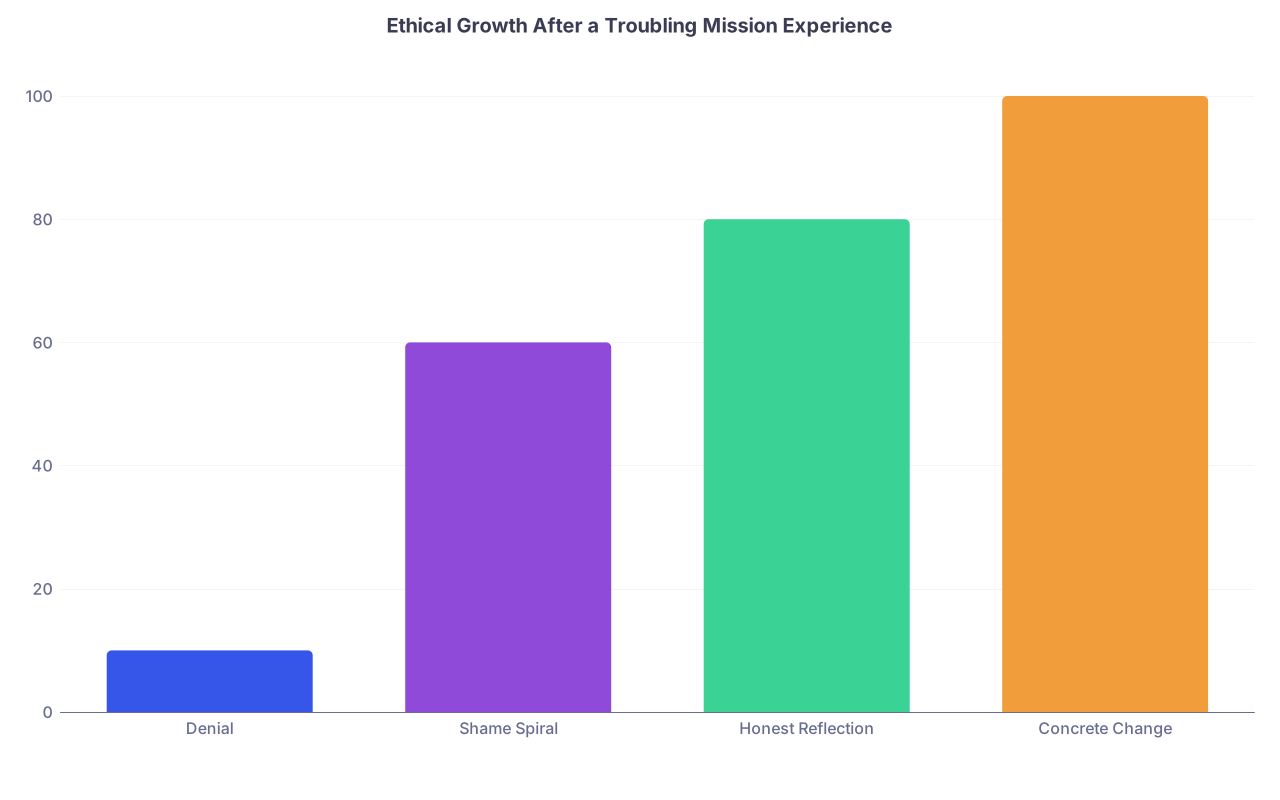
Let me give you a rough mental chart of where you stand right now:
| Category | Value |
|---|---|
| Denial | 10 |
| Shame Spiral | 60 |
| Honest Reflection | 80 |
| Concrete Change | 100 |
Where most anxious, conscientious applicants are:
- You feel shame (way too strongly)
- You are honestly reflecting (a lot)
- You haven’t yet built a plan for concrete behavior change
Residency directors, ethics committees, even interviewers—they’re not hunting for people who never make mistakes. They’re looking for people who:
- Can recognize harm, even if they were late to it
- Don’t double down or justify bad behavior
- Can describe what they’d do differently with specifics
That can absolutely be you.
What You Can Do Now (Not Theoretical, Actual Steps)
You can’t time-travel and fix what happened. You can change:
- How you process it
- How you talk about it
- How you act next time
1. Write out what happened. Brutally, specifically.
Not for publication. For yourself.
Questions to answer in writing:
- What exactly did I see or do that felt wrong?
- What did my gut say in the moment?
- What did people around me say or imply that made me doubt myself?
- What did I fear would happen if I spoke up? (Be honest: grades, LOR, social exclusion, looking “naive”)
- Could I have safely done anything, even small, and what stopped me?
You are not allowed to write, “I’m just a coward.” That’s not analysis. That’s self-attack. Useless.
What you’re looking for is the pattern: was it fear of authority? Cultural uncertainty? Lack of language to name the issue? Feeling like the only dissenter?
That pattern is what you need to address.
2. Identify one realistic, “next-time” version of courage
Courage doesn’t usually look like standing up in the middle of the clinic and announcing, “This is unethical!” That’s movie stuff.
It more often looks like:
- Quietly asking: “Can I clarify my role? I’m only trained to X, not Y.”
- Pulling a senior aside: “I’m feeling uneasy about ___, can you help me understand how this is being handled ethically?”
- Asking local staff: “Is this how it is usually done here? Is there any concern from your side?”
- Sending a follow-up email to the organizer afterward describing specific concerns
Next time, your “ethical upgrade” might be:
- Saying one respectful thing in the moment
- Or, if that feels too dangerous, committing to document and report thoughtfully afterward
That still counts. That’s not failure.
How to Talk About This in Applications Without Destroying Yourself
This is where people really panic:
“If I tell the truth, I’ll look unethical. If I lie, I’ll feel gross.”
You have three basic options.
| Approach | When It Makes Sense | Risk Level |
|---|---|---|
| Don’t mention it at all | Experience was brief, not central to your story | Low |
| Mention experience, skip the ethical part | Mission was important but story is about skills or exposure | Low-Medium |
| Directly describe the ethical conflict and your growth | You’ve processed it well and can show clear learning | Medium-High |
If you choose to write about it directly (and honestly, this can be powerful if you handle it well), your structure might look like:
Set the scene briefly.
“On a short-term medical trip to [country/region], our team ran a pop-up clinic in partnership with [organization]. I was a preclinical/clinical student with limited procedural experience.”Describe the concrete ethical tension.
“I was asked to perform [X] despite never having done it on a patient at home. I realized that standards I’d taken for granted in my home institution were being relaxed because we were ‘in the field’ and patients were poor and had few options.”Admit your discomfort and silence.
“I felt something was wrong, but I didn’t feel I had the authority to question it. I stayed quiet and did what I was told. I’ve wrestled with that since.”Show reflection and learning.
“Looking back, I see how my fear of disappointing supervisors and seeming ungrateful overrode my responsibility to the patient. I also see how lack of training in power dynamics, cultural humility, and global health ethics left me unprepared.”Describe specific changes you’ve made.
This is the crucial part. Things like:- Seeking out formal global health ethics or structural competency teaching
- Choosing organizations with strong local partnerships and continuity of care
- Setting personal boundaries about scope of practice on future trips
- Practicing language to raise concerns (“I’m worried we might be applying a double standard here…”)
End with forward-looking commitment, not self-flagellation.
“I don’t excuse my silence, but I’m using it as a reference point. Ethical practice for me now means not only wanting to help, but being willing to question power structures—even when it’s uncomfortable.”
That’s not an auto-reject essay. Done well, it reads as mature, reflective, and exactly the kind of person programs want: someone who can grow.
But What If They Judge Me?
They will. That’s literally their job.
You’re afraid they’ll think:
- “Why didn’t you speak up?”
- “Maybe this student doesn’t have enough backbone.”
Some might. The ones who’ve never felt frozen or intimidated in their career. (So… basically no one honest.)
The people you actually want to train you are the ones who’ll think:
- “This person can admit when they fell short.”
- “They’re already thinking about power dynamics and global health ethics. Good.”
- “They’re not romanticizing mission work. They’re seeing the mess.”
You cannot build a career on being perceived as flawless. That’s brittle. And it makes you way more likely to cover things up later because “people expect me to be the ethical one.”
Your job isn’t to sell a perfect version of yourself. It’s to show a trajectory that’s heading in the right direction.
How to Not Freeze Next Time You See Something Wrong
You won’t become fearless. But you can become preparedly anxious instead of paralyzed.

| Step | Description |
|---|---|
| Step 1 | Notice something feels wrong |
| Step 2 | Ask clarifying question now |
| Step 3 | Document details |
| Step 4 | Seek ally on site |
| Step 5 | Talk to leader or local partner |
| Step 6 | Follow up after trip in writing |
| Step 7 | Immediate harm? |
| Step 8 | Safe to escalate now? |
Concrete preparation steps:
Learn phrases that buy time.
“Can you walk me through the rationale for doing it this way?”
“I want to make sure I’m within my training. My experience so far has only included X, not Y.”Pre-commit to your limits.
Write them down before you go:
“I will not perform procedures I haven’t done under supervision at home.”
“I will not take identifiable patient photos.”
“I will ask about follow-up plans when long-term medications are prescribed.”Find at least one person in advance you could talk to if things feel off.
A faculty mentor, ethics office, global health director, someone outside the immediate mission team.Accept that discomfort is part of the job.
If every ethical stand you take feels safe and cozy, you’re not actually taking stands. You’re just being agreeable in ethical-looking ways.
None of this guarantees you’ll act perfectly. But it gives your future self something to reach for that isn’t just “be braver.”
FAQs
1. Should I report the mission organization or supervising physician?
Maybe. Not blindly, not impulsively. Start by:
- Writing a factual account (no adjectives, no guesses about motives)
- Talking to a trusted mentor not involved with the trip
- Asking about appropriate channels: school global health office, ethics committee, clerkship director
If patients were clearly harmed, or serious boundaries were crossed (coercive photos, unsafe care, clear exploitation), you have more than just a “maybe.” But even then, you deserve guidance and protection while reporting. You don’t have to do this alone.
2. Does staying quiet make me complicit in unethical care?
In a strict moral theory sense, yes, there’s some complicity. But beating yourself over the head with that word won’t help. The useful question is: “Given the power dynamics and fear I felt, how can I reduce my complicity next time?” Treat this as data for growth, not a permanent moral verdict.
3. Should I still pursue global health after this experience?
If this experience made you uncomfortable with “feel-good” short-term trips and more interested in ethical, long-term, partnership-based work—then honestly, you’re exactly who should stay in global health. The people who worry, question, and refuse to gloss over harm are the ones who improve the field. If this made you realize you only liked the photo-op side and not the messy ethical reality? Then stepping away is also an ethical choice.
4. What if my attending insisted everything was fine and that I’m overreacting?
That happens a lot. Power plus experience can look like moral certainty. You’re allowed to feel uneasy even when someone senior dismisses your concern. They might be right about some practical constraints, but that doesn’t erase what you saw. It also doesn’t mean you can’t seek a second opinion from someone with ethics training or global health background.
5. How do I know if something is actually unethical versus just culturally different?
This is where people hide: “Maybe it’s just a cultural thing, so who am I to judge?” Culture explains context. It doesn’t justify harm. If patients aren’t informed, can’t consent, are coerced, or receive care far below what you’d consider acceptable at home purely because they’re poor or foreign—those are red flags. You can and should ask local partners how they see it. But you don’t have to abandon your ethical standards to be “respectful.”
6. Will talking about this hurt my chances in interviews?
It could, if you frame it as either:
- “I was there but it wasn’t my fault, whatever,” or
- “I’m a terrible person, please punish me”
It’s powerful if you can say:
“I was part of something that raised serious ethical concerns. I felt torn and didn’t handle it perfectly. I’ve thought hard about it, sought out education, and I can now describe clearly how I’d act differently and why.” That reads as maturity, not liability. Use specifics, own your part, and emphasize the changes you’ve already made.
Key takeaways:
- Your silence on a mission doesn’t define you, but what you do after absolutely does.
- Honest reflection plus concrete “next time” plans beats pretending it was fine or catastrophizing that you’re irredeemable.
- You’re allowed to be scared and still become the kind of doctor who speaks up—one ethically messy experience at a time.


