
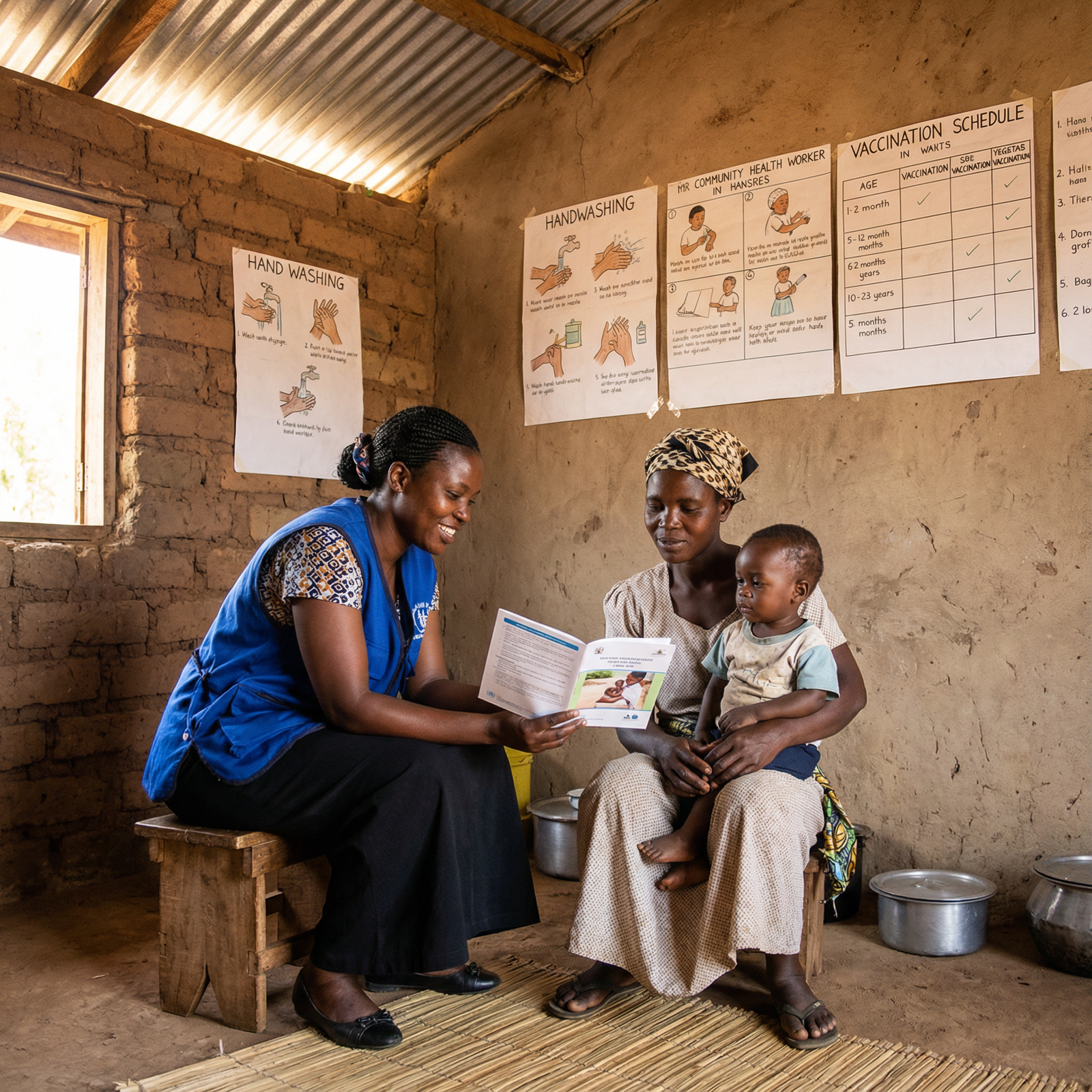
The uncomfortable truth: some of our global health “experiences” really do look like voluntourism. And admissions committees know it.
The fear you’re too scared to say out loud
You’re probably thinking something like this:
“I went on that short-term trip. I have the pictures in scrubs. We painted a wall, handed out vitamins, maybe watched a few procedures I didn’t fully understand. What if my ‘global health’ basically screams: privileged premed vacation?”
You’re not crazy to worry about this. People in medical education do roll their eyes at certain kinds of global health on applications. They’ve seen:
- The Instagram missions: 7 days, lots of selfies with kids, vague “shadowing surgeries.”
- The untrained “help”: premeds taking blood pressures, doing wound care, maybe even giving injections without proper supervision.
- The savior narratives: “I went to teach them hygiene and realized how privileged I am.”
And yes, they talk about it. I’ve heard versions of: “If one more applicant tells me their one-week trip to Guatemala changed their life, I’m going to scream.”
So the fear is real:
What if your global health experience gets read as unethical, performative, or just shallow?
What if it hurts your application instead of helping?
Let’s break this down before your brain convinces you you’re doomed.
First: how adcoms actually see “voluntourism”
They don’t sit there with a stamp that says VOLUNTOURISM and reject you automatically. But they do look for red flags.
Here’s what makes something look like voluntourism from their side of the table:
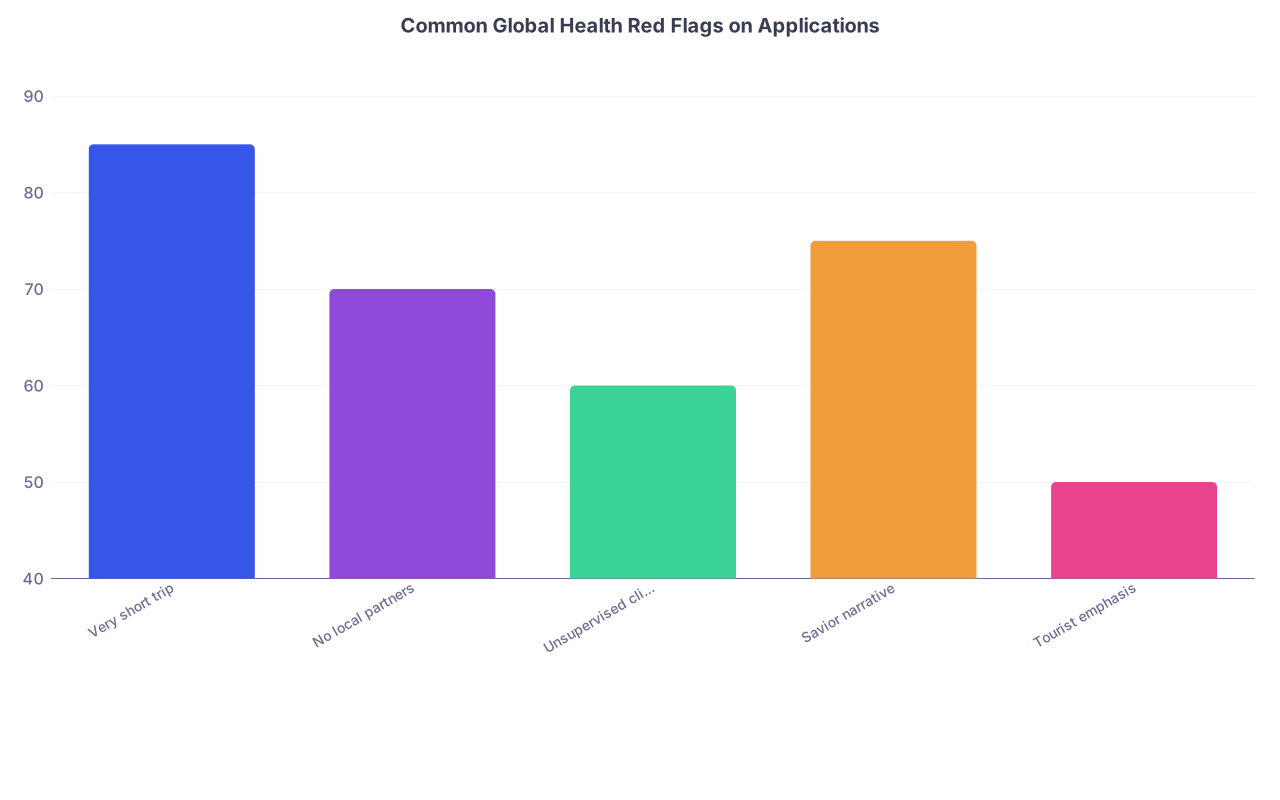
| Category | Value |
|---|---|
| Very short trip | 85 |
| No local partners | 70 |
| Unsupervised clinical work | 60 |
| Savior narrative | 75 |
| Tourist emphasis | 50 |
Not scientific numbers, obviously, but these are the main patterns that get commented on:
Extremely short duration
A 1–2 week trip with no longitudinal connection. Especially if it’s your only clinical “experience.”No clear local partnership
You don’t mention local clinicians, organizations, or any sustainable project. It sounds like a group of Americans dropped in, did stuff, and left.Scope of practice creep
You write about doing procedures, “providing care,” or “treating patients” when you weren’t actually licensed or trained to do that. This makes ethics people twitchy.Savior language
Phrases like “I went to help the poor people” or “they had nothing but were so happy.” This reads as naïve at best, dehumanizing at worst.Tourism vibes
Half your description is about the scenery, excursions, or how “fun” it was. No mention of local health systems, structural issues, or follow-up.
If your experience hits several of these, yeah, it can come across like voluntourism.
But here’s the piece you’re probably missing: admissions committees care much more about how you reflect on the experience than about the raw fact that you went.
They know premeds get sold these trips as “life-changing medical missions” by shady orgs and college clubs.
They’ve seen smart students wake up later and think, “Wow, that was… ethically questionable.”
So the real question isn’t: “Did I ever do something that looks like voluntourism?”
It’s: “Can I show that I now understand what was problematic about it and what I’ve done since?”
Brutally honest self‑audit: does your trip look like voluntourism?
Let’s do the thing you’re already doing in your head, but with structure so you don’t spiral.
Step 1: Basic facts
Write this out for yourself (don’t skip; your brain will lie to you):
- Where did you go?
- How long were you there?
- What exactly did you do on a typical day?
- Who supervised you (specific roles, not just “a doctor”)?
- What were you actually qualified to do at that time?
Now ask: if I stripped away the airfare and the “abroad” factor, would this be considered ethical and meaningful in my own country?
For example:
- Would a US hospital let an untrained undergrad insert IVs? Diagnose malaria? Decide treatments? No? Then writing that on an application is a problem.
- Would a US clinic think it’s useful to have a student paint one wall for 3 days and then vanish? Probably not.
This is the part where your stomach drops. Because you start to see the mismatch between how it was marketed to you and what it really was.
Good. That discomfort is where your application can actually become stronger.
Step 2: Sort what you did into three buckets
| Bucket | Description | Example |
|---|---|---|
| Clearly Ethical | Within your normal student role, supervised | Observing clinic visits, taking vitals under supervision |
| Grey Zone | Technically allowed, but feels iffy now | Giving health talks in a language you barely speak |
| Clearly Problematic | Beyond your training/scope | Doing procedures you’re not trained to do |
Be honest with yourself. You don’t need to list every “clearly problematic” thing in your application in gory detail, but you need to recognize them to write about this ethically.
How to talk about a sketchy global health trip without sinking yourself
Here’s the nightmare in your head: you mention this experience and some ethics‑obsessed faculty member torpedoes your file.
That’s not how this usually goes.
They’re looking for self-awareness, growth, and a shift from “I got to feel helpful” to “I learned how complex global health really is.”
So, here’s how you can frame it without sounding self‑justifying or clueless.
1. Don’t oversell the clinical part
If what you really did was:
- Mostly observe
- Take vitals
- Help with patient flow
- Sit in on health education sessions
Then say exactly that. Do not upgrade it into “I provided care.” That’s how you lose credibility.
Bad:
“I helped treat patients in rural clinics and performed basic procedures.”
Better:
“I observed patient encounters in rural clinics, assisted the team with non-clinical tasks, and, under close supervision, helped with basic tasks like taking vital signs.”
If you did things you now realize were unethical for your training level… you don’t have to highlight them as proud achievements. You can acknowledge the discomfort in a more reflective essay if it’s central to your story.
2. Show that your perspective has evolved
The key is showing that you don’t still see global health as a poverty-themed backdrop for your self-discovery.
What changed in how you think?
Maybe:
- You realized how much you didn’t understand about local health systems.
- You noticed the power imbalance between visiting students and local communities.
- You saw how language and culture barriers limited what you could safely do.
- You noticed the program seemed designed around student experience more than local needs.
Explicitly naming those things shows maturity. Something like:
“I initially saw this trip as a chance to ‘help.’ Over time, I became increasingly uneasy with how transient our presence was and how little follow-up we could provide. That discomfort pushed me to read more about short-term medical trips and rethink what responsible global health work should look like.”
That sentence alone signals to an adcom: okay, this person gets it.
3. Connect it to what you did after, not just how you “felt”
Reflection without action reads hollow.
What did this experience change about your behavior?
- Did you stop pursuing similar trips and instead volunteer long-term at a local free clinic?
- Did you take a global health ethics class? Read critique pieces (e.g., “The Problem with Medical Missions”)?
- Did you start working with a diaspora community in your own city instead of flying abroad again?
- Did you join a research project or policy group focused on health systems, not just “mission trips”?
That causal chain is what matters:
“I did X → realized Y → now I do Z differently.”

| Step | Description |
|---|---|
| Step 1 | Short term trip |
| Step 2 | Discomfort and questions |
| Step 3 | Learn about ethics and global health |
| Step 4 | Change behavior and future choices |
| Step 5 | More thoughtful application narrative |
If your story stops at “I felt bad but then moved on,” it’s weak. If it leads to concrete changes in what you chose to do next, it’s strong.
What if the only “global health” I have is that one sketchy trip?
This is where the panic usually spikes. Because you start thinking:
- “If I don’t mention it, I’ll have no global health.”
- “If I do mention it, I’ll look irresponsible.”
- “If I critique it, I’ll look disloyal or like I have bad judgment.”
Here’s the blunt reality: you are not required to have global health on your application at all. This is not a premed checklist box.
Lots of very strong applicants have:
- Zero international experience
- Only local community work
- Or global health interest that’s entirely academic/research
So no, you don’t have to make this trip the star of your app. In fact, for many people, it shouldn’t be.
You have a few options:
Make it a minor experience
List it, describe it factually, don’t milk it. Use your primary essays to showcase other, more ethical, longitudinal work.Use it as a turning point
If this genuinely shifted your ethical framework and led to years of more grounded work, you can build an essay around that evolution. But you have to be very honest and self-critical, not defensive.Omit it if it was basically tourism with a stethoscope
If you were mostly taking pictures, barely in clinical spaces, and it lasted 5 days… it might not be worth the ethical baggage to force onto your app.
You are allowed to decide: “This doesn’t represent who I am as an aspiring physician,” and not feature it.
Concrete examples of safer vs risky wording
Let’s get painfully specific, since this is where people accidentally nuke themselves.
You wrote in your draft:
“I traveled with a medical team to Honduras where I helped diagnose and treat underserved patients.”
This sounds like you, an unlicensed trainee, were functioning as a clinician. Big nope.
Safer version:
“I spent two weeks with a medical team in Honduras, where I observed clinic operations, assisted with patient intake, and helped with logistics such as organizing supplies and translating basic information under supervision. The experience made me question the impact and ethics of short-term trips without long-term follow-up.”
Another risky one:
“We performed basic procedures like injections, suturing, and wound care.”
If you personally did that without prior training and proper supervision, I would not highlight it as a brag.
If you were observing those things, say that:
“I observed procedures such as injections, suturing, and wound care, and I became aware of how little I could safely contribute as an untrained student.”
Notice the shift: you’re not flexing. You’re showing insight and appropriate humility.
How to show you’re not the “poverty tourism” applicant
Let’s say your global health history is not perfect. You still want adcoms to see you as someone who will handle future international work responsibly.
You want them thinking: “They started naïve, but now they get it. They’ll be the voice in the room questioning ethically questionable stuff.”
Signs of that in an application:
- You recognize power dynamics: who benefits, who decides, who stays after the Americans go home.
- You don’t center yourself in every sentence. Locals aren’t background characters in your hero story.
- You’ve read or engaged with critiques of global health, not just inspirational mission trip blogs.
- You tie global health to structures: colonial history, economics, policy, system design—not just “lack of resources.”
Even one or two sentences that show that level of thought can completely change how your experience reads.
A quick reality check: you’re allowed to have grown up
You are not being evaluated as the final version of yourself. You’re being evaluated on your trajectory.
If your global health looks a little like voluntourism, the question is:
Did you just enjoy the trip and move on?
Or did it push you into wrestling with ethics, power, and what “helping” really means?
You can’t change that you went. You can change how honestly and thoughtfully you write about it now, and what you choose to do going forward.
Years from now, you won’t be judged for having once been a naïve premed who went on a problematic trip. You’ll be judged for whether you stayed naïve once you knew better.
FAQ (exactly 5 questions)
1. Should I totally leave my global health trip off my application if I’m scared it looks like voluntourism?
Not automatically. If you truly did nothing meaningful or remotely ethical (basically tourism with a side of guilt), you can leave it off and focus on stronger experiences. But if there were real elements of learning, reflection, and some appropriate involvement, you can include it as a smaller activity with honest, modest wording. Just don’t exaggerate your clinical role or pretend it changed the world.
2. Can I write my personal statement about an ethically questionable trip if it genuinely changed how I see medicine?
Yes—but this is high‑risk, high‑reward. You have to own your naïveté without self‑pity, demonstrate real ethical growth, and show how it led to specific, better choices afterward. If the essay is 90% “I went, it was sad, I felt grateful,” it will backfire. If it’s “I went, realized the model was flawed, and shifted my path to long-term, community-based work,” it can be powerful.
3. What if I actually did procedures I wasn’t trained for—do I mention that?
Do not proudly list them as accomplishments. That can raise serious red flags. If they’re central to a growth story, you can allude to being asked to take on tasks beyond your training and how that made you uncomfortable, without detailing every ethically dubious thing you did. The point isn’t to confess every mistake; it’s to show that you now understand your limits and why scope of practice matters.
4. Will schools blacklist me for doing a short-term medical trip as a premed?
No. These trips are incredibly common, and schools know students are often misled or underinformed. You’re not getting “blacklisted” for going. What gets judged is how you talk about it now. If you still frame it as you “providing care” or “saving” people, that’s a problem. If you show evolution and humility, most readers will see it as part of your learning curve.
5. How can I show genuine global health interest if I decide not to highlight that trip?
You can demonstrate serious global health commitment without mentioning that specific experience at all. Longitudinal work with immigrant/refugee communities, language study, policy or public health research, courses in global health ethics, work with NGOs that have strong local partnerships—all of that can signal authentic interest. Global health isn’t defined by passport stamps; it’s defined by how you think about equity, systems, and responsibility.


