
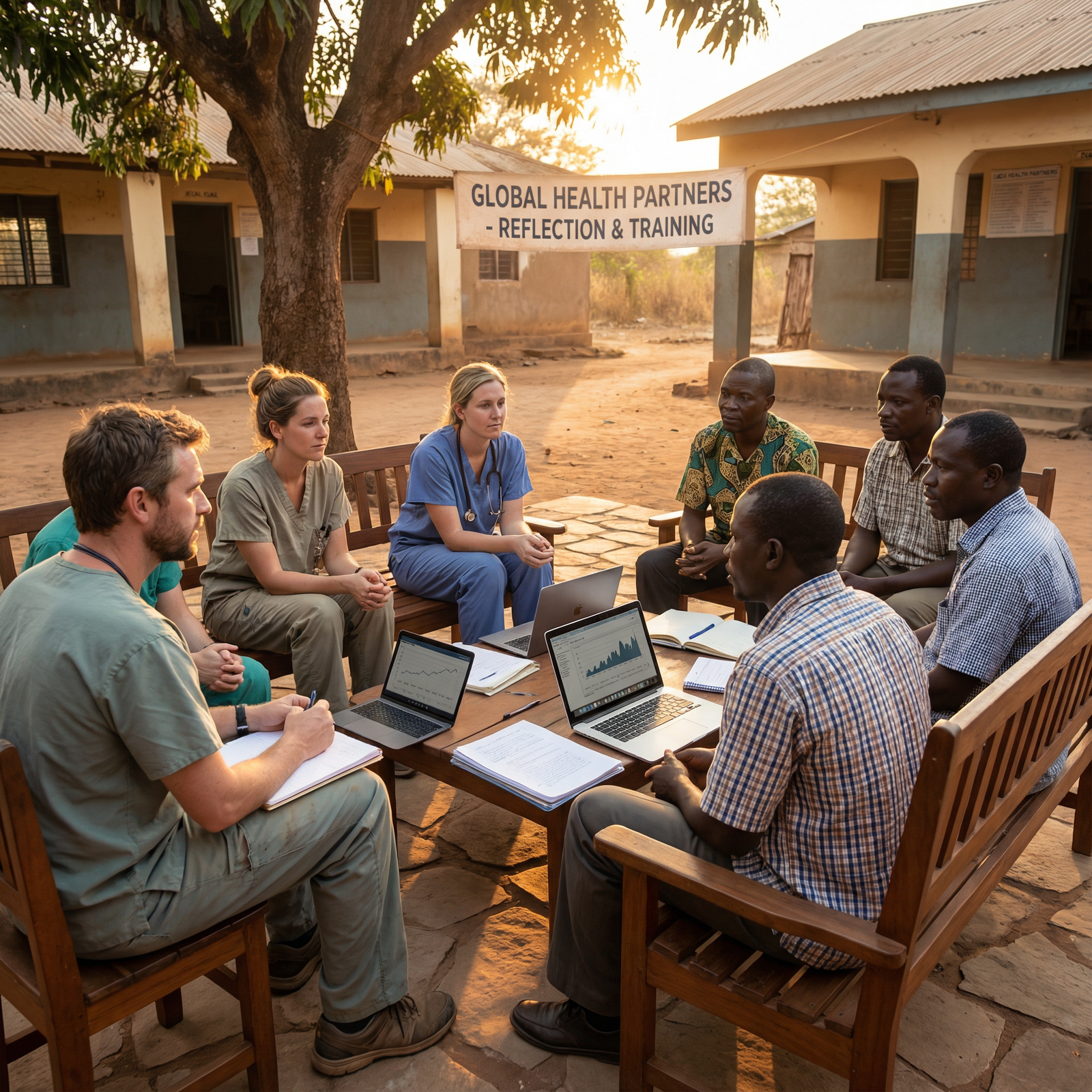
How many lives do you think you helped last time you “treated” 200 patients in a one‑week mission trip?
If your answer came from a PowerPoint slide—“Patients seen: 212. Teeth pulled: 58. Surgeries: 14.”—you’re already in the trap. The feel‑good metrics trap. They look impressive on Instagram and residency applications. They’re also some of the worst proxies for real global health impact.
Let’s tear this apart.
The Myth of “People Served”: Why Your Numbers Are Mostly Noise
Every short-term project report I’ve ever been handed had the same format:
“Clinic days: 5
Patients seen: 326
Procedures performed: 47
Medications dispensed: 780”
You know what’s almost never there? How many people were healthier six months later. Or whether the local clinic functioned better after you left. Or whether you unintentionally wrecked a fragile local market.
Because counting “people touched” is easy. Measuring real impact is hard, slow, and usually not glamorous.
Here’s the brutal reality: most feel-good metrics in global health track activity, not effect. Volume, not value.
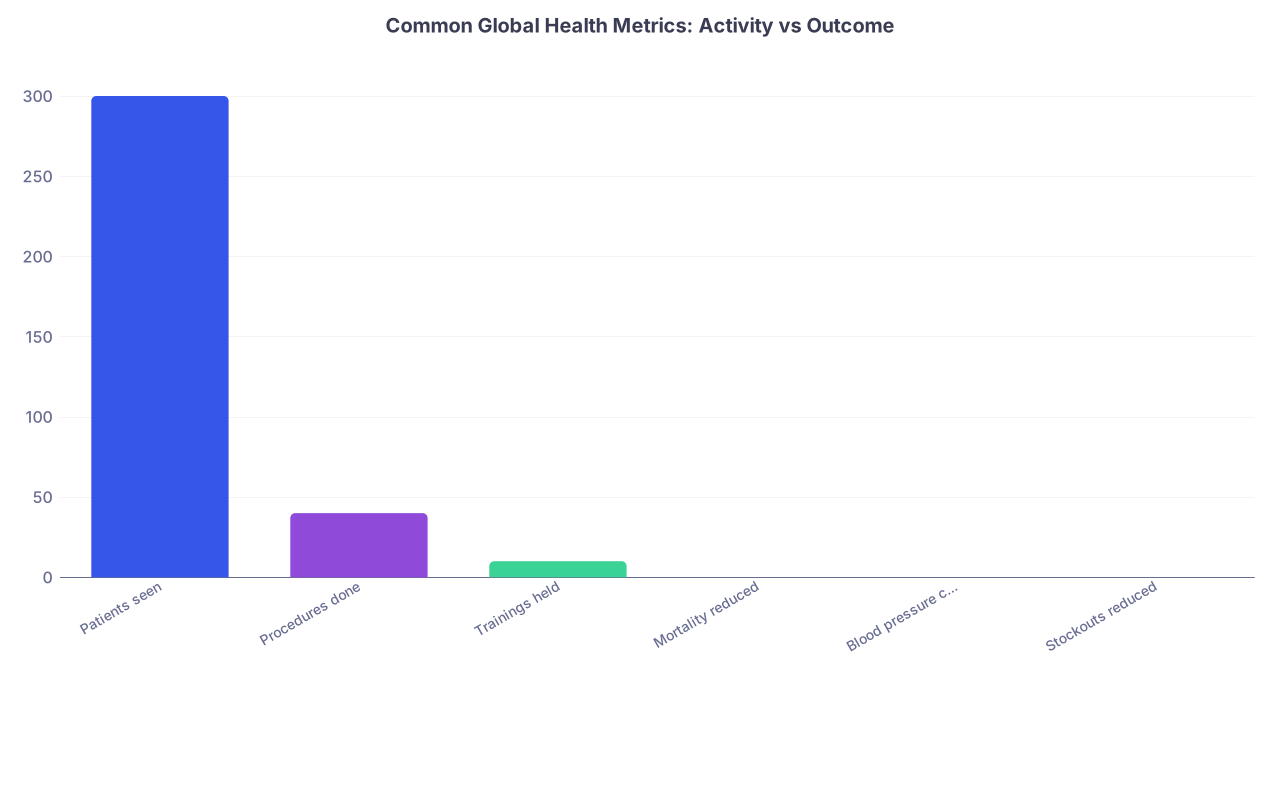
| Category | Value |
|---|---|
| Patients seen | 300 |
| Procedures done | 40 |
| Trainings held | 10 |
| Mortality reduced | 0 |
| Blood pressure controlled | 0 |
| Stockouts reduced | 0 |
Look at how schools, NGOs, and mission groups report:
- “Over 10,000 patients served in 3 years.”
- “Over 500 cataract surgeries.”
- “Distributed 2,000 bed nets.”
Notice the missing denominator: 10,000 out of how many? 500 surgeries compared to local capacity? 2,000 bed nets in a population of 50,000?
The worst version is “x lives saved,” usually hand‑waved from a modeling tool or copied from someone else’s brochure. I’ve seen students claim “saved 300 lives” from one season of village outreach because a staff member told them that “each delivery kit saves approximately one life.” That’s storytelling. Not science.
If your metric can be massively boosted by flying in 20 extra volunteers for four days, it’s probably not measuring what matters.
What the Data Actually Shows About Short-Term Trips
Let me be direct: the evidence on short‑term medical missions is underwhelming and often damning.
We have:
- Case reports of harm: poor follow‑up, inappropriate medications, botched procedures.
- Economic analyses showing undermined local practices because free foreign care undercuts local providers.
- Ethics papers on dependency, power imbalance, and photo‑op medicine.
What we do not have, in any serious volume, is rigorous data showing long‑term health improvement in host communities because a US or European group visited for a week each summer.
When researchers have tried to measure outcomes, they find exactly what you’d expect:
- High patient turnover, low continuity of care.
- Little to no integration with national treatment guidelines.
- Weak handoff to local systems.
Yet these trips explode on CVs as “global health experience.” Why? Because the metrics are easy and flattering.
You can write “participated in care of 300+ patients” after one week abroad. You cannot write “significantly contributed to 10% reduction in under‑5 mortality in district X” after a year unless you have very strong data—because the world is not that simple.
Programs lean into the easy numbers because funders and trainees respond to them. Shiny bar graphs get more donations than “we improved stock management in two district pharmacies by 15% and maybe reduced stockouts, but we need another year of data.”
The Metrics That Actually Predict Real Impact
So if “people served” is a lie, what does real global health impact look like?
It’s slow. Boring. Systems‑focused. Often invisible to outsiders for years. And it uses metrics that don’t make good Instagram captions.
Think in three layers: health outcomes, system performance, and power shift.
1. Health outcomes (real ones, over time)
Count outcomes that persist, not moments that feel good.
For example, instead of “patients with hypertension seen,” you care about things like:
- Proportion of hypertensive patients with blood pressure controlled at 6 and 12 months.
- Default rates from TB treatment at 2 years.
- Under‑5 mortality in a district, trended over 5–10 years.
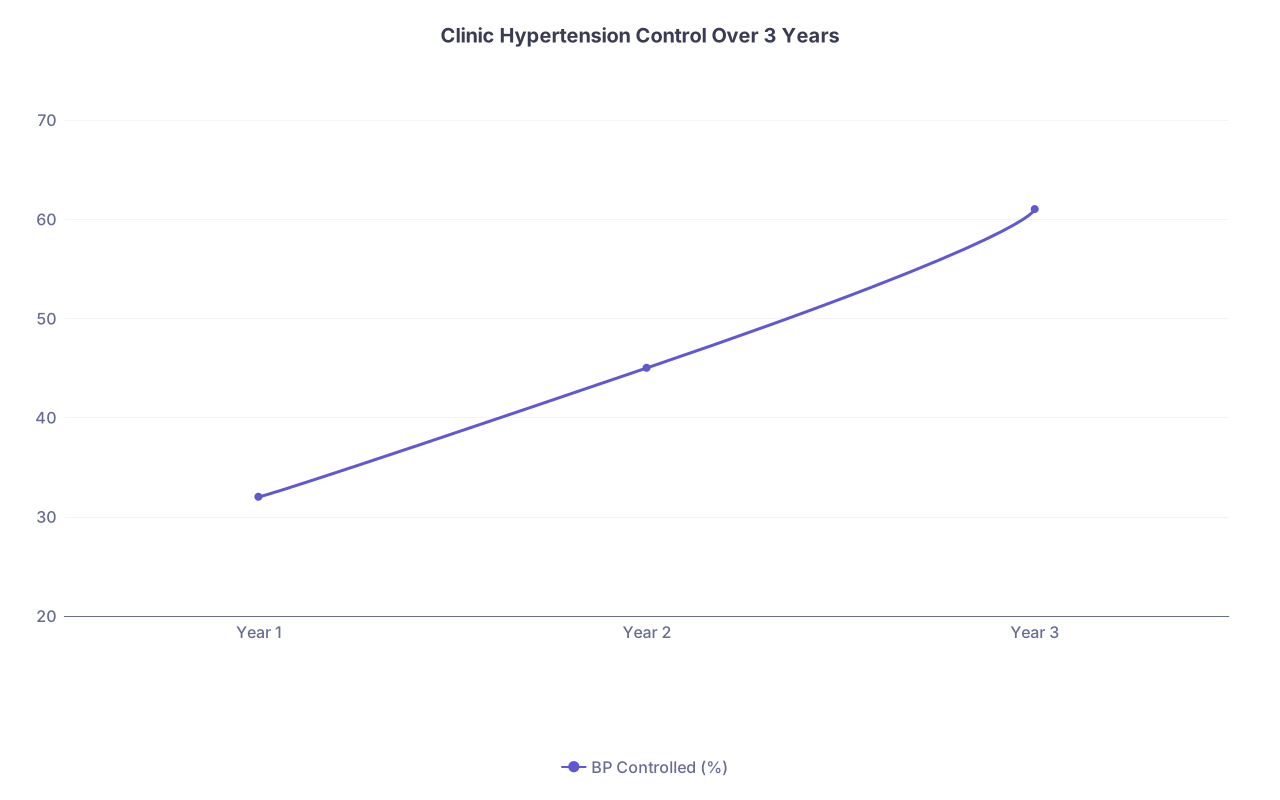
| Category | BP Controlled (%) |
|---|---|
| Year 1 | 32 |
| Year 2 | 45 |
| Year 3 | 61 |
That line quietly going up from 32% to 61%? That’s actual lives prolonged, strokes prevented, productivity preserved. Not glamorous, but real.
2. System performance (can the system deliver care without you?)
Here’s the real test: if every foreigner left tomorrow, what would still function?
You look at things like:
- Stockout rates for essential meds at local clinics.
- Time from obstetric emergency to definitive care.
- Lab result turnaround times.
- Provider retention and burnout rates at district hospitals.
- Proportion of services delivered according to national guidelines.
These are the core of functioning health systems. Without them, your 300 patients in five days are a sugar high.
| Metric Type | Feel-Good Example | System Metric Example |
|---|---|---|
| Service Volume | Patients seen | Stockout rate of essential meds |
| Training | People trained | Skills retained & used at 1 year |
| Procedure Counts | Surgeries performed | Surgical complication & referral rates |
| Community Outreach | Talks given | Vaccination coverage in target community |
| Infrastructure | Beds donated | Bed occupancy, wait times, staff utilization |
The shift is from “what we did this week” to “how the local system works next year.”
3. Power shift (who controls resources and decisions?)
Real global health impact moves power—budgetary, clinical, strategic—toward local actors.
You do not measure that by “US students rotating through” or “lectures given.” You track things like:
- Proportion of leadership positions held by local staff.
- Share of budget controlled by local organizations instead of foreign NGOs.
- Local authorship on research from local data.
- Existence and enforcement of locally led priorities and ethical guidelines for visitors.
This is development, not performance. If all the presentations at the annual “global health partnership” conference are given by visitors from the high‑income partner, you already have your answer about where the power sits.
The Voluntourism Illusion: Why It Feels So Impactful (To You)
You probably remember individual faces. The child whose pneumonia you treated. The woman whose blood pressure you checked. The diabetic man grateful for insulin.
Anecdotes are neurologically sticky. Systems change is not. That’s why your brain overestimates your effect.
But most short‑term visitors make the same mistakes:
They confuse novelty with impact. Something that’s new to you (first time seeing malaria, first delivery in a hut) feels enormous. For the local nurse who’s managed 500 such cases in the past decade, your presence may be noise—or worse, disruption.
They confuse proximity to suffering with effect on outcomes. Being the one to hold someone’s hand, to listen to their story, to hand them medicine, feels powerful. It does not mean you changed their prognosis more than the local health worker who will be there next week and next month.
They confuse gratitude with benefit. People will thank you for doing almost anything that looks like care—especially when it’s free and comes from someone with visible resources. Gratitude is not a reliable indicator that what you did was appropriate, cost‑effective, or sustainable.
The voluntourism industry—yes, it is an industry—feeds on this. Pre‑med trips that cost $3,000 for a week. “Shadow doctors abroad” programs where you do things that would be illegal for you to do at home. Photo shoots in scrubs with children you don’t know, faces you didn’t ask permission to share.
If the main outcomes of a program are “life‑changing experience for the visitor” and “beautiful photos,” you already know where the benefit is actually landing.
Real Global Health Work Looks Unsexy Up Close
Let me give you two composite scenarios based on projects I’ve actually seen.
Scenario A: A surgical mission trip.
A US team flies into a regional hospital for 10 days. They bring supplies and do 40 hernia repairs and 10 hysterectomies. They post smiling photos. The report says “50 life‑changing surgeries provided at no cost.”
What you don’t see:
- Local surgeons’ elective cases bumped because “the Americans are here.”
- Patients scheduled, then told they must wait months for follow‑up because no local capacity for that particular mesh or technique.
- New expectations in the community that “the foreign team will fix it for free next year,” increasing no‑shows for local fee‑based care.
- No documented complication rates, no long‑term follow‑up.
Scenario B: A district hospital systems project.
A small partnership with the same hospital focuses on three things over three years: anesthesia safety, emergency triage, and operating room utilization. The foreigners visit twice a year for one week, but most of the work is remote coaching and supporting a locally led quality team.
Year 1: They help the hospital create and enforce a surgical safety checklist.
Year 2: They restructure the OR schedule, reduce cancellations, and implement basic triage at the ED entrance.
Year 3: They support training a local nurse as anesthesia lead and help track intra‑operative adverse events.
No flashy numbers. No big social media presence. But:
- Post‑op infection and complication rates drop 20–30%.
- Average time from ED arrival to surgical decision falls by hours.
- Local staff report less chaos, more predictability, better morale.
If you had to judge only by “people served this week,” Scenario A wins. If you care about actual lives saved and suffering reduced across years, Scenario B crushes it.
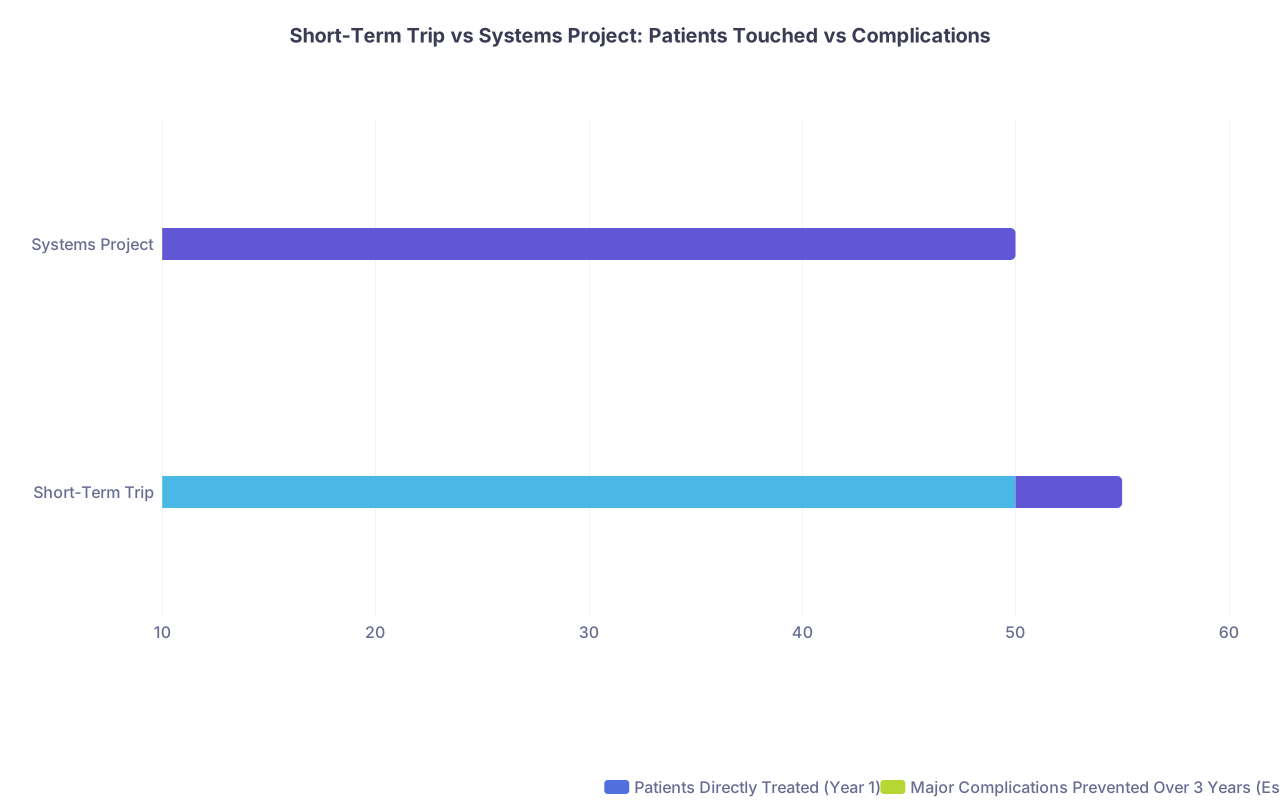
| Category | Patients Directly Treated (Year 1) | Major Complications Prevented Over 3 Years (Est.) |
|---|---|---|
| Short-Term Trip | 50 | 5 |
| Systems Project | 10 | 40 |
Here’s the ethical question: which project are you more drawn to? And why?
How to Stop Lying to Yourself on Your CV
You’re probably not running a global health NGO. You’re a student or trainee trying to “get experience” and not be a parasite.
Good. Let’s translate this into your choices.
1. Be suspicious of any program selling “impact” in one week
If a brochure promises “meaningful clinical work” in 7–10 days for people without full qualifications, that’s a red flag. Not because you’re bad. Because good programs do not need unqualified foreigners to provide direct medical care.
Look for phrases like:
- “Long‑term partnership with local institution”
- “Locally led priorities”
- “Your role: observe, learn, support data collection/quality improvement”
If you’re given your own “clinic room” on day 1 and told to see patients alone with a translator, you’re being used as cheap labor and a marketing prop.
2. Rewrite your own metrics
When you do write about experiences, stop bragging about patient counts. You know those are mostly vanity numbers.
Instead of:
“Provided care to 300+ patients in rural clinics.”
Try:
“Assisted local clinicians in routine primary care; observed gaps in medication supply and follow‑up systems; contributed to a small project helping the clinic begin tracking hypertension control rates.”
Notice the subject shift. You are not the hero. The system is the context. You are a short‑term participant.
3. Choose projects that care about follow-up and data
If a program cannot answer, clearly and with evidence, “What happens to patients after we leave?” you should be wary.
Ask annoying questions:
- How are outcomes tracked over time?
- What has changed in this community or facility in the last 5 years?
- Who asked for this project in the first place—the local stakeholders or the foreign organization?
- What happens if your funding stops next year?
Serious programs will have imperfect but honest answers. Sham ones will gesture at “stories” and “transformational experiences” and “huge need.”
A More Honest Set of Personal Metrics
Since you’re in the “personal development and medical ethics” zone, let’s talk about measuring your growth in global health.
These metrics are uncomfortable because you cannot inflate them with plane tickets:
- How often did you defer to local expertise instead of assuming you knew better?
- How many relationships did you maintain for years, not weeks?
- How much of your “global health” work could be handed to a local colleague with full pay and authority—and are you helping move in that direction?
- How frequently do you bring back hard truths to your own institution, instead of feel‑good stories?
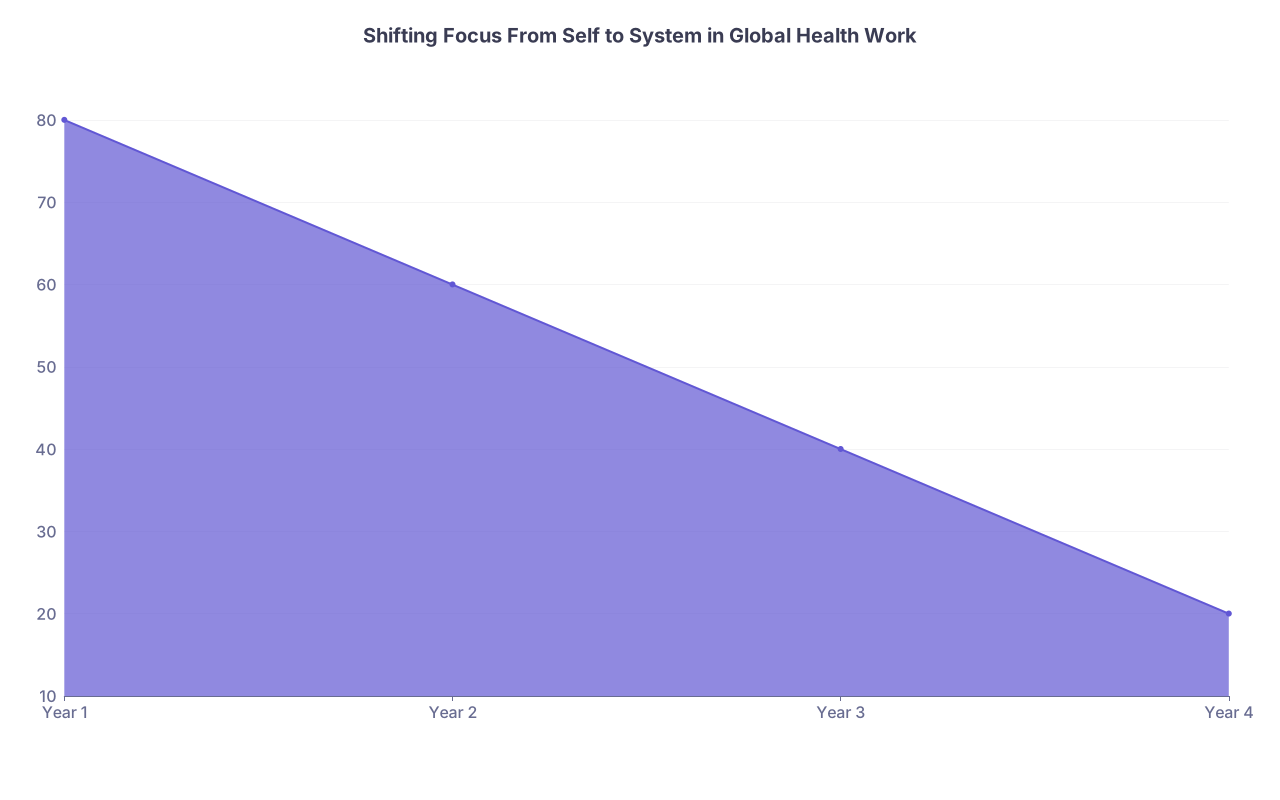
| Category | Value |
|---|---|
| Year 1 | 80 |
| Year 2 | 60 |
| Year 3 | 40 |
| Year 4 | 20 |
Imagine that area chart as the proportion of your time spent on “me‑centric” activities (photo ops, CV padding, savior fantasies). You want that trending down as the proportion of time spent on boring, system‑centric, locally accountable work goes up.
The Ethical Bottom Line
You are not going to fix global health with a suitcase of meds and a stethoscope. No one does. The people who actually move the needle are usually local, underpaid, and not on your Instagram.
Your ethical responsibility is not to maximize how good you feel about “helping.” It’s to minimize unearned harm, be honest about your role, and—if you stick with this field—orient your work toward outcomes that outlast you.
Real global health impact is quieter than the feel‑good metrics suggest. It’s in the stock rooms that no longer run out of oxytocin. The district data that actually get used. The community health worker who now runs the program you used to “help” with, and no longer needs you.
Years from now, you will not remember how many “patients you saw” on that one trip. You’ll remember whether you were brave enough to let the feel‑good numbers go and attach your identity to the slow, unsexy work that actually changes lives.


