

The biggest problem in global health isn’t money. It’s arrogance disguised as expertise.
The Myth of the Automatically Qualified Outsider
You flying in from a high‑income country does not make you the expert by default. It makes you the outsider with resources. That’s it.
I have watched visiting teams from the US and Europe walk into clinics in Uganda, India, Haiti, Guatemala, and behave like they were sent from some medical Olympus. Within 24 hours they’re “reorganizing triage,” rewriting treatment protocols, and teaching residents how to “properly” manage conditions those residents see a hundred times more often than the visitors ever will.
Here’s the uncomfortable truth:
In many low‑ and middle‑income country (LMIC) contexts, the local intern who’s been on call for 3 years probably understands sepsis outcomes, antimicrobial resistance patterns, and what actually kills patients there far better than the visiting attending from Boston or London.
Not because the visitor is stupid. But because “high‑income country” (HIC) expertise is context‑bound. Guidelines, technologies, staffing ratios, supply chains, legal frameworks, even patient expectations—completely different ecosystem.
Yet the myth persists: if your passport is from a rich country, and your health system spends 10 times more per capita, your opinion must be better.
The data says otherwise.
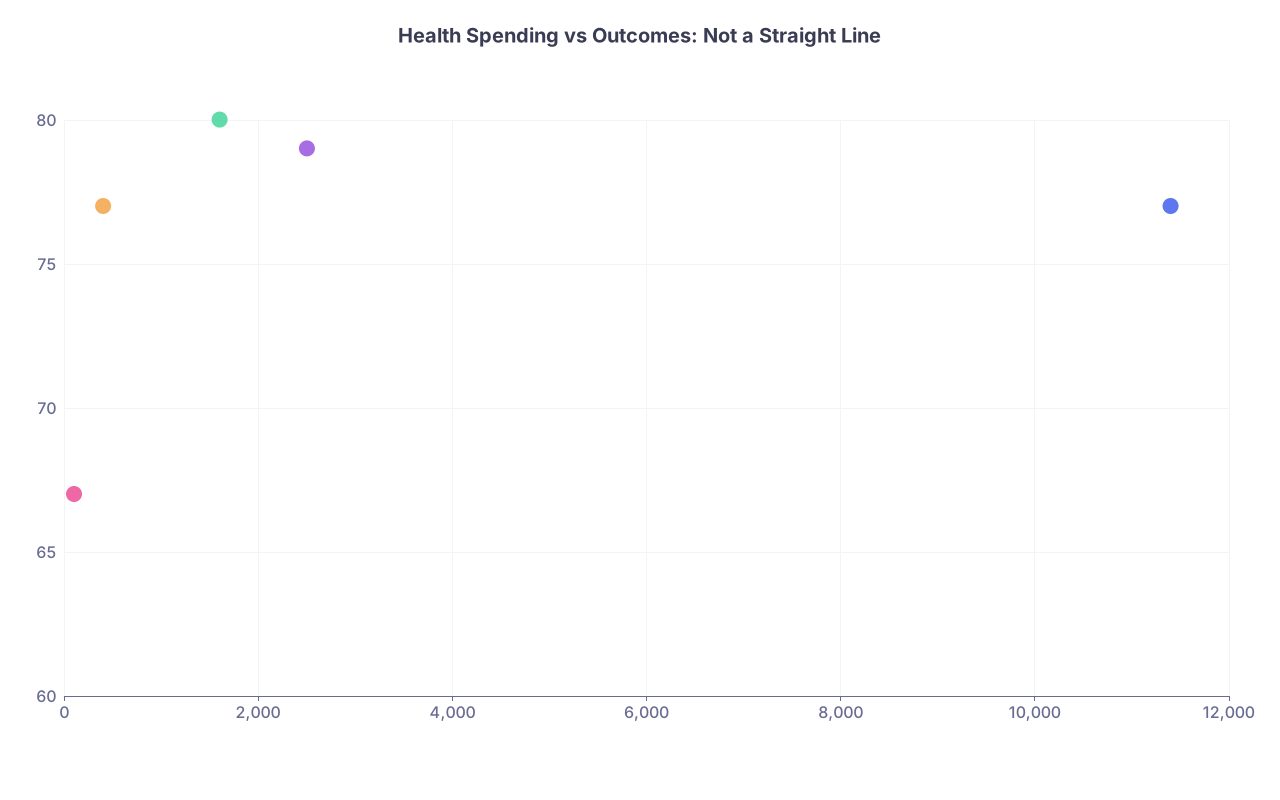
| Category | Value |
|---|---|
| United States | 11400,77 |
| Cuba | 2500,79 |
| Costa Rica | 1600,80 |
| Sri Lanka | 400,77 |
| Ethiopia | 100,67 |
Look at that. The US spends absurd amounts per capita and barely edges countries that spend a fraction. Expertise clearly isn’t proportional to money burned.
What the Data Actually Shows About “Expertise”
Let’s be blunt. If high‑income = expert, HIC health systems should be crushing basic outcomes across the board. They’re not.
Take maternal mortality. You’d expect the richest countries to be uniformly safest for childbirth. They’re not.
| Country | Income Level | Maternal Deaths per 100,000 Live Births* |
|---|---|---|
| United States | High | 21–32 |
| Norway | High | 2–3 |
| Sri Lanka | Lower‑middle | ~30 |
| Vietnam | Lower‑middle | ~43 |
| Cuba | Upper‑middle | ~39 |
*Approximate recent ranges from WHO/UN data
Why is the US, the richest health system on earth, sitting with maternal mortality numbers closer to some middle‑income countries than to its high‑income peers?
Because system design, equity, primary care access, racism, and social determinants matter more than GDP alone. Being from a high‑spending system doesn’t mean you imported wisdom. You might have imported structural dysfunction.
Now flip to primary care–oriented LMIC systems. Sri Lanka, Costa Rica, and Cuba repeatedly show outcomes (immunization coverage, life expectancy, some chronic disease control metrics) that punch far above their income weight. They optimized for primary care, public health, and community health workers, not fancy ICUs and MRI density.
So when a visiting HIC doctor or student walks in and starts lecturing on “how we do things back home,” the question should be:
Are you describing best practice—or just expensive practice?
Most of the time, it’s the latter.
Context Is Not a Minor Detail. It Is the Expertise.
I’ve seen this exact conversation:
Visiting resident:
“We should really be using broad‑spectrum cefepime or piperacillin‑tazobactam here for these septic patients.”
Local consultant:
“We don’t stock those. And the one private pharmacy that does has them at a week’s salary per dose. Patients will just leave. Or not buy them.”
Visiting resident, 10 minutes later, to their co‑resident:
“This hospital is so behind. They’re not even using guideline‑concordant antibiotics.”
Who actually understands sepsis care in that hospital?
Not the one with UpToDate accounts and a US fellowship. The one who knows local antibiograms (if they even exist), supply chains, what patients can afford, and how often lab results are delayed or lost.
That applied, situated knowledge is expertise. Without it, your “evidence‑based plan” is a fantasy.

| Step | Description |
|---|---|
| Step 1 | Clinical Guideline |
| Step 2 | Standard regimen |
| Step 3 | Alternative regimen |
| Step 4 | Clinical diagnosis only |
| Step 5 | Real impact |
| Step 6 | Local Resources |
But global health tourism runs on the myth that Western guideline knowledge is the apex of clinical wisdom. It’s not. It’s one input in a much bigger decision tree—the part you happened to train on.
Evidence Gaps: Whose Data, Whose Patients?
Another failure point: most “gold standard” evidence is generated in HIC academic centres on HIC populations, with HIC disease patterns and HIC infrastructure backing it up.
A lot of LMIC clinicians are quietly aware of this and already skeptical.
When a US cardiologist insists that the “only responsible choice” is a DOAC for atrial fibrillation, the local cardiologist is thinking:
- This patient can’t afford it sustainably.
- Warfarin is cheap and available.
- Monitoring is imperfect, but the patient can at least buy the medication.
The randomized trial that crowned DOACs king didn’t enroll people who had to choose between pills and food. Or people in a region where follow‑up might involve walking 10 km or paying everything they have for transport.
So no, being fluent in the latest NEJM trial does not automatically make you the most ethical or competent decision‑maker in that setting.
The Ethics Problem: When Good Intentions Become Harm
Let’s talk ethics, because this isn’t just about bruised egos. It’s about harm.
Global health ethics frameworks hammer the same themes: respect for autonomy, justice, beneficence, non‑maleficence, solidarity. But what actually happens on the ground?
I’ve seen:
- Visiting medical students “doing procedures” they’re not allowed to touch at home, because “they need help here.”
- Short‑term missions setting up parallel clinics that drain local staff and then vanish, leaving no continuity.
- Protocols tossed into existing systems like grenades, with zero plan for follow‑up or supply sustainability.
All of this is justified under the umbrella of “they need us” and “we know more sophisticated medicine.”
Here’s how that looks when you strip away the narrative:
It’s paternalism plus skill inflation, exported globally.
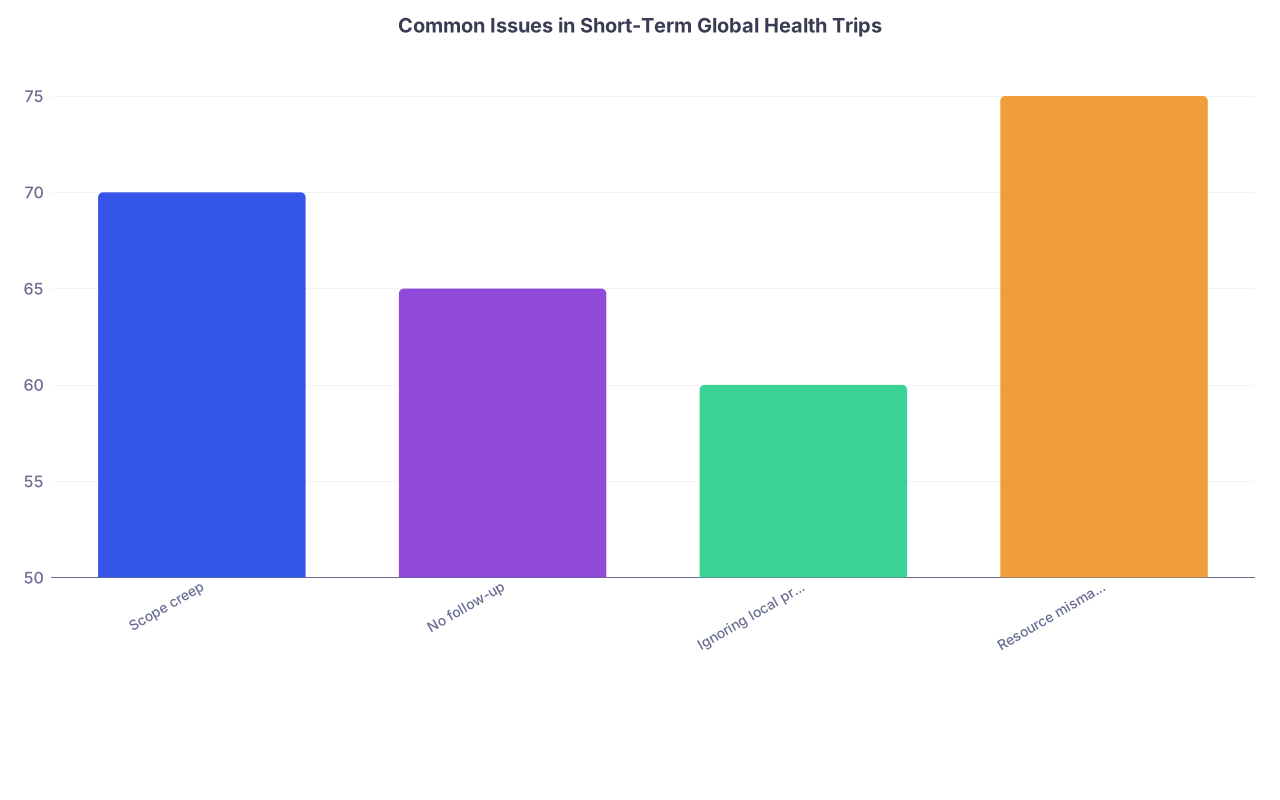
| Category | Value |
|---|---|
| Scope creep | 70 |
| No follow-up | 65 |
| Ignoring local protocols | 60 |
| Resource mismatch | 75 |
Those percentages are not from a single magic paper—they reflect repeated findings across audits of short‑term global health projects: skills used beyond training; projects without continuity plans; disregard for local guidelines; bringing in stuff that can’t be maintained locally.
You cannot call that “ethical” just because the passport is high‑income and the heart is in the right place.
What Real Expertise Actually Looks Like in Global Health
So if being from a high‑income country doesn’t make you the expert, who is?
Usually:
- The district nurse who’s been managing a massive catchment area with almost no support, and still keeps immunization rates high.
- The community health worker who knows which families will default on TB treatment unless visited.
- The local registrar who can spot which preeclamptic patient is going to crash, because they’ve seen a hundred of them in this exact ward with these exact constraints.
Real expertise in global health is:
- Deep knowledge of local epidemiology, culture, and systems.
- Ability to work within constraints without fantasy solutions.
- Longitudinal presence and accountability—being around to see what happens to your own decisions.
Most visitors fail on all three.
But here’s the twist: HIC clinicians can bring real value, if they drop the savior complex and step into the role they actually occupy—limited‑context partners, not owning the room.
The Only Legitimate Use of HIC “Expertise”
Where HIC experience can be useful:
You’ve seen certain subspecialty techniques, quality‑improvement methods, or system‑level approaches that local teams want to adapt. But that’s “offer and co‑design,” not “arrive and impose.”
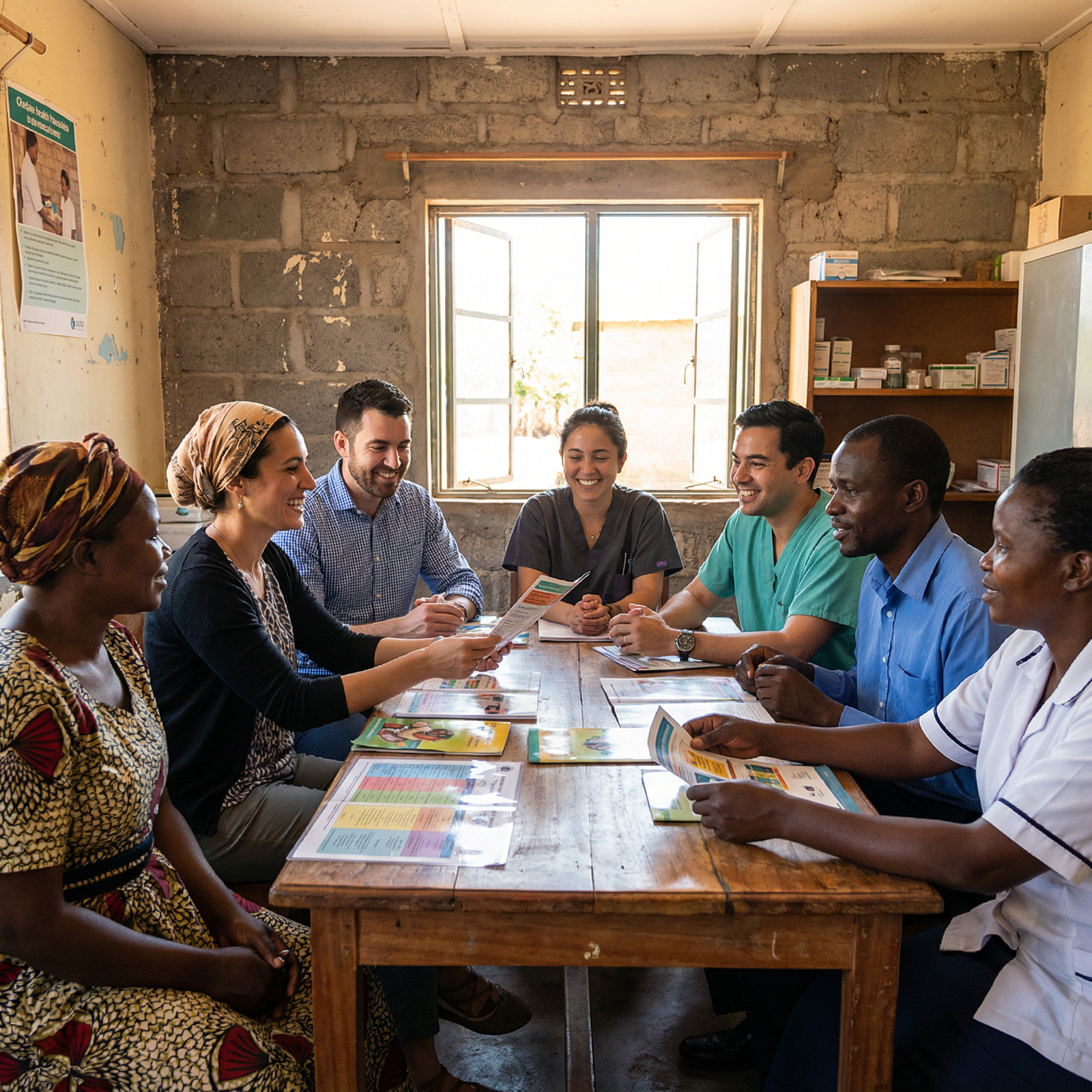
The ethical stance looks like:
- “Here’s how we track hand hygiene compliance in my hospital—does anything in this seem adaptable for you?”
- “What are your biggest pain points here? Anything we know from our setting that might be helpful?”
- “Can you walk me through how you currently manage X disease? I want to understand before I say anything.”
If you aren’t starting with those questions, you’re not doing global health. You’re doing colonial medicine with better branding.
Power, Prestige, and Why This Myth Won’t Die
Let’s be honest about another layer: careers.
Global health “experience” is currency for residency applications, promotion dossiers, and grant narratives in HIC institutions. The fastest way to generate that experience?
Short‑term trips where you can be “the expert.”
So the system quietly incentivizes the myth:
- HIC students get glowing letters describing their “leadership implementing new triage protocols” in some hospital they stayed at for four weeks.
- HIC researchers get first and last authorship on studies that were only possible because local teams did the year‑round grind.
- Conferences spotlight HIC voices “summarizing” the situation in countries where they’ve never lived.
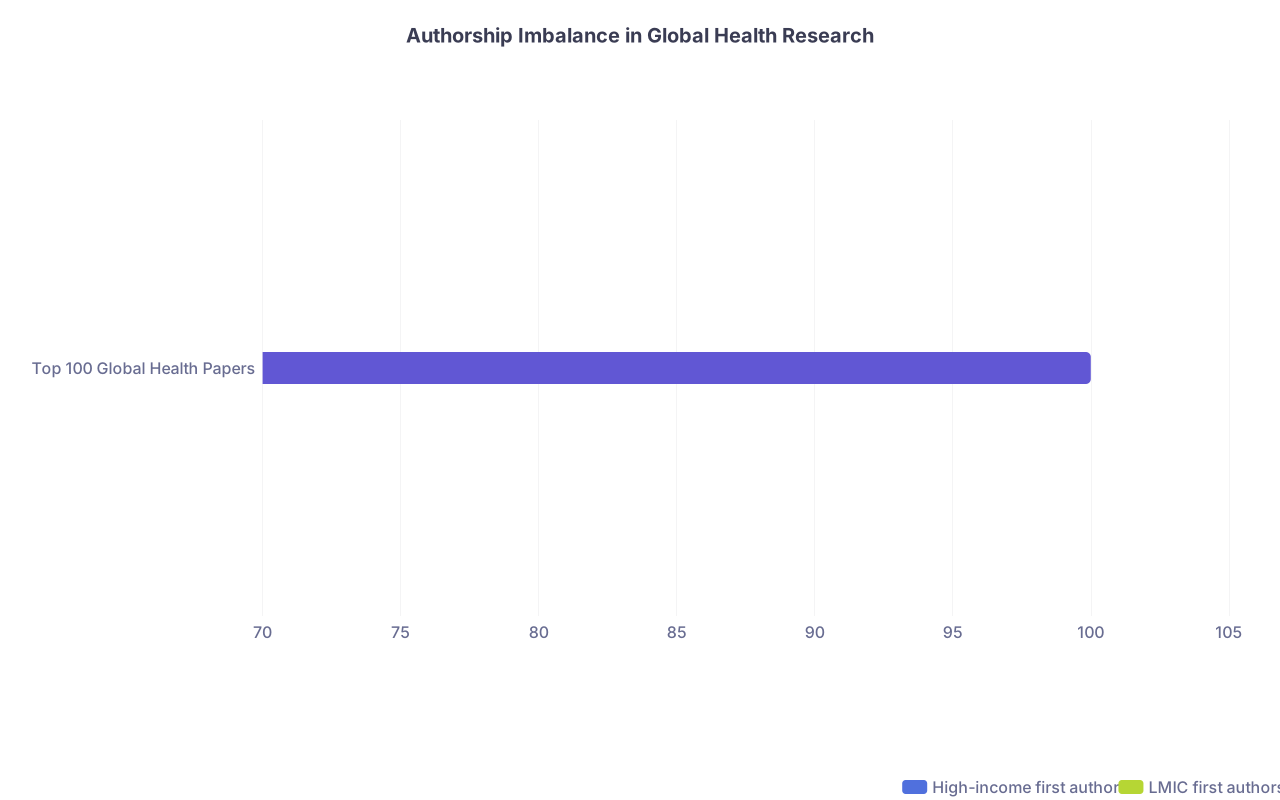
| Category | High-income first authors | LMIC first authors |
|---|---|---|
| Top 100 Global Health Papers | 70 | 30 |
That structural bias trains you to believe your presence is inherently value‑adding. It’s not. Often, the local team is quietly correcting your orders after you leave the ward.
I’ve watched this in real time: orders rewritten, meds changed, documentation “cleaned up” so visiting teams don’t lose face—but also don’t keep practicing unsafe or just irrelevant medicine.
You think you’re the expert. The system protects that illusion—for your benefit, not the patients’.
How to Unlearn the High‑Income = Expert Reflex
If you’re serious about ethics and personal development in global health, you have to actively kill this reflex in yourself.
Start with this mental model:
You are not the expert. You’re the guest with certain skills.

Concrete shifts that separate adults from ego tourists:
- Assume your local counterpart has seen more of these patients than you. Because they have.
- Ask, every time: “What do you usually do here?” before offering an alternative.
- Treat local guidelines as primary, your home guidelines as secondary references.
- Refuse to do procedures or make independent decisions that exceed your home scope of practice, even if people encourage you.
- Build projects that are co‑owned and locally led, with succession and funding plans that don’t depend on your annual two‑week visit.

That last point is where most “innovative” youth‑led global health ideas die. They’re not built to exist without the visiting hero.
If your project falls apart the second your return flight takes off, what you built wasn’t capacity. It was a performance.
Who You Should Be Learning From (Hint: Not Yourself)
Here’s the flip that actually helps your career long‑term: you will learn more from good LMIC clinicians about clinical reasoning under constraint than you ever will from another US or UK rotation.
The best global health experiences I’ve seen HIC trainees have looked like this:
- They sit in the back of the outpatient clinic for the first week. No heroics. Just observation.
- They ask the post‑call intern how they survived last night and what they prioritized when the oxygen cylinders ran out.
- They watch how families actually make choices about care when they’re paying out of pocket and understand what “shared decision‑making” looks like without insurance buffers.
- They shut up when they want to critique “non‑evidence‑based decisions” and instead ask, “What happened last time you tried the other approach?”
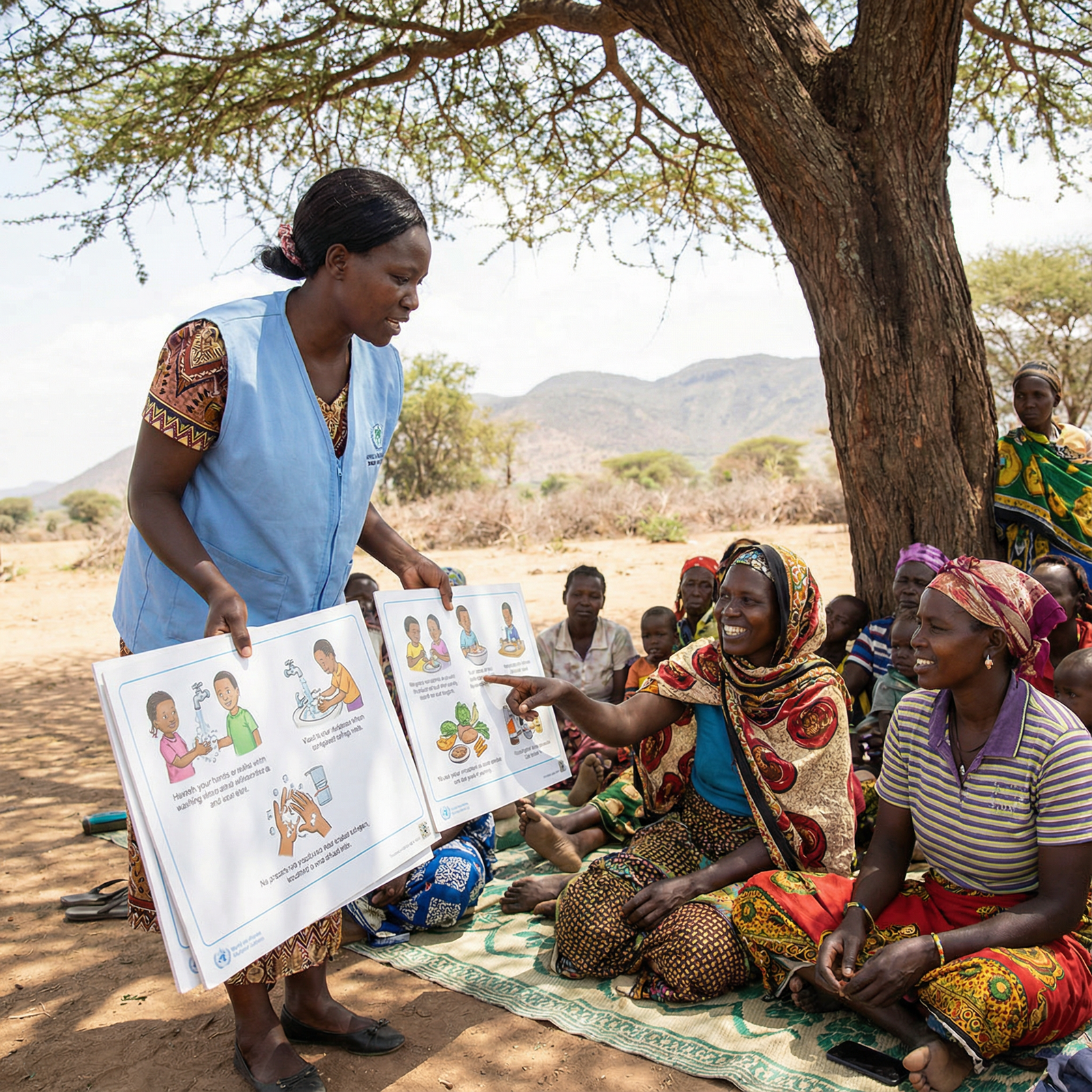
Those people come home with a more sophisticated understanding of medicine, ethics, and health systems. They become better clinicians at home too—because they’ve seen what happens when guidelines collide with reality.
They also tend to be the ones who stop centering themselves in every global health narrative. Which is progress.
The Bottom Line
Being from a high‑income country doesn’t make you the expert. It makes you the one with power, mobility, and access to prestige systems. That’s not the same thing.
If you remember nothing else:
- Expertise in global health is contextual, not imported. Local clinicians and communities usually hold the real operational knowledge.
- HIC status often correlates with blind spots—overreliance on expensive care, weak primary care, and distorted incentives—not with universal best practice.
- Ethical global health work starts when you stop assuming you’re the expert and start acting like a guest with specific, limited skills who’s accountable to the people already there.


