
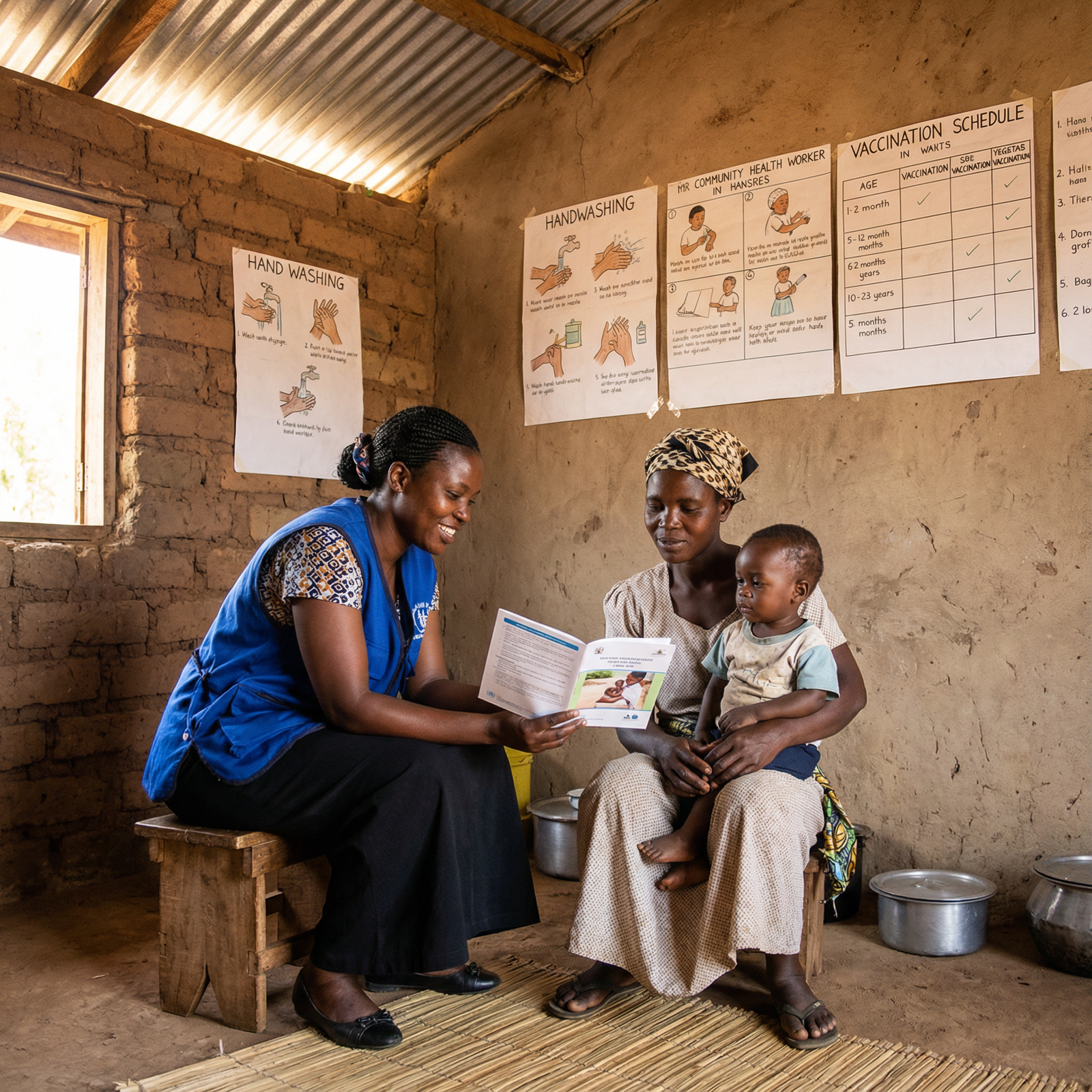
What if the global health trip that “changed your life” actually harmed the patients you flew across the world to help?
Let me be direct: the idea that any global health experience is automatically good—for you or for the host community—is fiction. And not harmless fiction. This belief has justified a lot of unethical, unsafe, and frankly self-serving behavior by students and trainees who should know better.
You’ve probably heard the usual narratives:
- “It was transformative.”
- “We helped so many people.”
- “I got to do things I’d never be allowed to do at home.”
That last one is the red flag that tells you everything.
Global health isn’t a playground for skill acquisition. It’s not a discounted surgical workshop with real humans instead of mannequins. It’s a clinical and ethical environment that should follow the same standards of safety, consent, competence, and accountability you’re supposedly learning in your home country.
The problem is, a lot of “global health” experiences ignore that. And too many schools and students look the other way because it makes for compelling personal statements and glossy brochure photos.
Let’s break the myth properly.
Myth: “If it helps me grow, it’s good global health”
This is the most common sleight of hand: turning a host community into a backdrop for your development and then calling that “service.”
The reasoning usually goes like this:
- I want to learn about health disparities.
- Poor country = lots of visible disparities.
- Therefore, any trip there is valuable.
No. Your growth doesn’t automatically translate to benefit for patients. Sometimes it translates to the opposite.
The power imbalance problem
When a preclinical student from the US or Europe shows up in a rural clinic in Uganda or Guatemala, you’re holding several kinds of power whether you admit it or not:
- Passport privilege
- Institutional backing
- Relative wealth
- The assumption (from patients) that you’re highly trained
Mix that with vague supervision, language barriers, and pressure to “do something” and you get exactly what the literature has been documenting for years: students doing unsupervised tasks beyond their competence.
Not hypotheticals. Actual examples I’ve seen or heard directly from trainees:
- A second-year med student suturing a facial laceration alone because “the local doc was busy and said just do it.”
- A fourth-year student “managing the ward” overnight in a district hospital without an in-country attending.
- Students doing vaginal exams, lumbar punctures, even C-sections because “we’d never get this opportunity at home.”
If your growth comes from doing things you have no business doing, that’s not global health. That’s exploitation dressed up as character building.
And yes, some local clinicians allow it. Sometimes they even encourage it. That doesn’t magically make it ethical. Structural power imbalance doesn’t disappear just because someone under-resourced says, “Sure, go ahead.”
The data: global health electives are often unsafe and unethical
You don’t have to rely on anecdotes. Surveys and reviews have been saying the quiet part out loud for over a decade.
](https://cdn.residencyadvisor.com/images/articles_svg/chart-common-problems-in-global-health-electives-approxi-3133.svg "Common Problems in Global Health Electives (Approximate Prevalence in Studies)")
| Category | Value |
|---|---|
| Poor supervision | 60 |
| Beyond-competence tasks | 40 |
| Lack of prep | 50 |
| No [follow-up care](https://residencyadvisor.com/resources/global-healthcare/mission-tourism-traps-red-flags-that-turn-global-health-into-harm) | 35 |
Across different studies of medical student electives in low- and middle-income countries (LMICs), you see the same themes:
- A large chunk of students report inadequate or inconsistent supervision.
- Many admit to performing tasks or procedures beyond their level of training.
- Pre-departure preparation is often minimal or absent.
- Systems to ensure follow-up care after a “mission week” are weak or nonexistent.
One systematic review of global health electives found frequent reports of role confusion, scope-of-practice violations, and ethical discomfort—usually recognized by the student after returning home, not while they were doing it.
That last part matters. The adrenaline of “helping” on the ground can drown out your ethical gut. Retrospective guilt is common; real-time restraint is rare.
“But the local staff wanted us to help…”
You will hear this a lot. It’s used as a moral shield.
“The local doctor told me to do it.”
“They were desperate for help.”
“There was no one else.”
Here’s the uncomfortable truth: scarcity does not suspend ethics.
Local clinicians operate under crushing constraints—understaffing, underfunding, supply shortages. When someone shows up with any medical training at all, of course they will try to squeeze capacity out of you. That’s rational from their perspective.
But the standards of non-maleficence and informed consent don’t evaporate just because the setting is resource-limited.
If you wouldn’t be allowed to do it on a patient in Boston or Berlin, the fact that you’re in rural Malawi doesn’t magically make it safe.
And no, “someone more junior than me does this at home” doesn’t count if that someone is actually licensed, fully supervised, and practicing within a regulated system with malpractice accountability and clear escalation pathways.
You, as a visiting trainee, are usually none of those things.
Short-term trips: high emotional yield, low system impact
The “global health mission trip” model—1–4 weeks, big group of students or volunteers, lots of photos—feels impactful. It is rarely structurally impactful.

| Step | Description |
|---|---|
| Step 1 | Recruit students |
| Step 2 | Brief orientation |
| Step 3 | Fly in for 1-3 weeks |
| Step 4 | High volume clinics |
| Step 5 | Take photos and stories |
| Step 6 | Return home |
| Step 7 | No systematic follow up |
Common reality of short-term trips:
- No integration into local health systems’ long-term plans
- Medication regimens started that can’t be continued
- Diagnostic workup initiated that can’t be completed
- Volunteers rotating in and out so fast that continuity is fiction
You see large numbers of “patients seen,” but basically no data on:
- Outcomes at 6 or 12 months
- Complication and adverse event rates
- Local stakeholder evaluations that aren’t filtered through the sponsoring organization
Yet these experiences are marketed aggressively as “great learning” and “huge impact.” For whom, exactly?
Let me be blunt: if the main measurable long-term outcome is your personal growth and your residency application essay, then the trip was about you, not the community. No matter how many scrubs selfies you took with local kids.
The savior narrative: how ego poisons ethics
There’s a reason you can go on Instagram and instantly find photos of Western trainees holding Black or Brown children in “global health” settings. You already know the aesthetic: smiling, often unaccompanied by parents, usually in visibly poor environments.
We’ve normalized using vulnerable people as props for our virtue.
That comes straight from the “any global health is good experience” myth. If being there automatically counts as good, then of course documenting that you were there and “helping” is also good.
Except:
- Those kids and patients rarely gave informed consent for their images to be used in your storytelling.
- Their privacy and dignity are routinely undermined in ways that would be illegal where you live.
- The power dynamic means they’re not really in a position to refuse even if you did “ask.”
And emotionally, it reinforces exactly the wrong lesson: that you are the central figure in their health story. You flew in, you touched their life, you left. You are the protagonist. They are set dressing.
That mindset leaks into clinical decisions. It nudges you toward:
- Doing the extra procedure
- “Trying” a treatment you’re shaky on
- Accepting a level of risk you’d never accept at home
Because it gives you a better story. A stronger sense of having “really made a difference.” And once you tell that story enough times back home, it calcifies into your identity as a “global health person”—even if your actual practice on the ground was reckless.
Misalignment with real global health priorities
Flip through actual global health policy documents—WHO, national health strategies, long-term NGO plans—and you see boring words:
- Supply chains
- Primary care strengthening
- Task shifting and training
- Health financing
- Data systems
You know what you don’t see? “Bring in foreign students to run clinics for a week.”
The big picture priorities in global health are systemic: building resilient, equitable health systems; supporting local training; addressing social determinants; reforming policy.
| Student Priorities | Host System Priorities |
|---|---|
| Procedural experience | Stable workforce |
| Number of patients seen | Continuity of care |
| “Exposure” to pathology | Prevention and early treatment |
| Personal growth and narrative | Sustainable capacity building |
When your main barometer of success is “how much did I do/see/learn,” you’re already misaligned with what actual global health work looks like.
That’s why some of the best global health programs look, frankly, unsexy: long-term partnerships, repeat visits to the same sites over years, slowly shifting more control and funding to local institutions, and trainees mostly observing, supporting, and learning the system rather than playing junior attending.
Boring. Ethical. Evidence-aligned.
What actually makes a global health experience ethical and useful
Let’s get practical. Because the answer is not “never go anywhere.” The answer is to stop pretending that any stamp in your passport with a clinic attached is inherently virtuous.
If you want your global health experience to be something other than ethical cosplay, you need to demand—and insist on—certain features.
1. Clear, limited clinical role
You should know exactly what you’re allowed to do, and it should be:
- Within your competence
- Comparable to what you could do under supervision at home
- Modifiable if the local supervisor says “no” to things you expected to do—but not expanded just because they say “sure, try it”
If the pitch for the trip includes “you’ll get to do so much more than you can at home,” walk away. They’re selling you scope creep.
2. Real supervision, not “reachable by phone”
Supervision means:
- A responsible in-country clinician who’s physically present during clinical care, not just “around the hospital”
- Someone who knows the local system, language, and standards
- Someone who can and will say “stop” if you’re out of your depth
If your day-to-day work is being overseen mainly by another visiting trainee a year ahead of you, that’s not supervision. That’s peer cosplaying as faculty.
3. Bidirectional, long-term partnership
You should be able to name:
- The local institution you’re partnering with
- How long the partnership has existed
- How local stakeholders evaluate and shape the program
And ideally, there should be something flowing in the other direction: capacity building, training, support for local trainees to study abroad, research resources that stay in-country.
One-off “service trips” that show up, do volume medicine, disappear, and return with a new batch of faces next year are built for your benefit, not theirs.
4. Real pre-departure preparation
You need more than a packing list and some travel vaccines. Serious programs include:
- Ethics of short-term work in LMICs
- Power, privilege, and saviorism
- Local health system structure and referral patterns
- Language or interpreter training
- Safety and security plans
If the prep is a 1–2 hour Zoom about logistics, that tells you exactly how much thought they’ve put into the ethics.
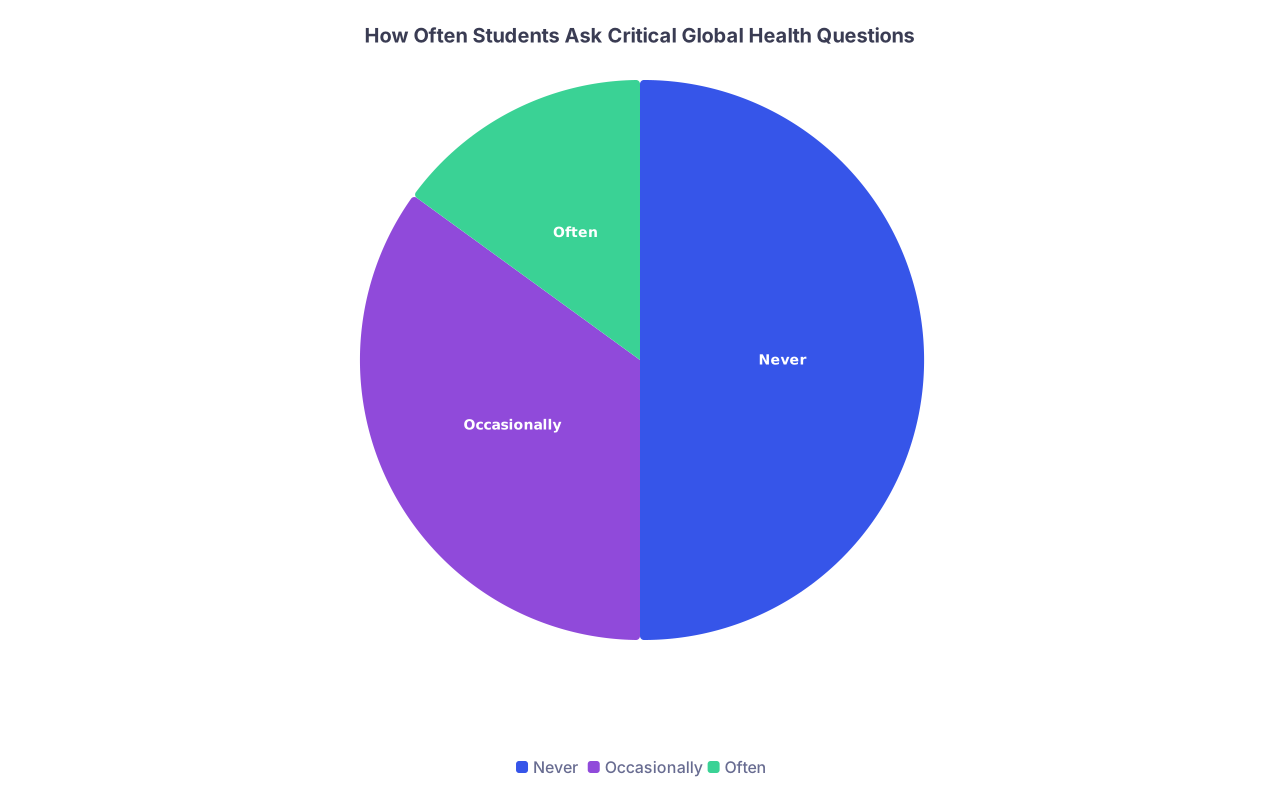
What you should be asking—before you go
If you’re serious about not participating in the “any global health is good” delusion, start here. Ask the organizer or sponsoring faculty these questions and pay attention to how specific the answers are.
| Category | Value |
|---|---|
| Never | 50 |
| Occasionally | 35 |
| Often | 15 |
Ask:
- What exactly is my clinical role? Can you list specific tasks I will and will not be allowed to do?
- Who is supervising me on-site? Are they in the same room when I’m interacting with patients?
- How long has your institution partnered with this site? Who initiated it, and how do local leaders evaluate the partnership?
- What happens to patients after we leave? Who provides follow-up and how is continuity ensured?
- Do local trainees get comparable opportunities at our institution, or is this one-way?
- What pre-departure training is mandatory, and what does it cover?
Vague answers are red flags. Overconfident “don’t worry, you’ll be fine, it’s an incredible experience” is an even bigger one.
If you push on these questions and the program looks flimsy, you have a choice: still go because you want the story, or don’t go because you want integrity. That’s the actual ethical test—not how empathetic you feel when you’re there.
The real point of global health training
Done right, global health work should dismantle your entitlement, not feed it.
You should come back with:
- A sharper sense of your own limits
- Deep respect for local clinicians who do more with less, and who understand their system better than you ever will from a month-long rotation
- Skepticism toward quick fixes and “hero medicine”
- A commitment to systems change at home and abroad, not just adventure stories
If you come back mostly with dramatic case anecdotes and a stronger sense that you’re “meant” to save people in faraway countries, something went off the rails.
Key takeaways
- Not all global health experiences are good. Many common models—especially short-term, poorly supervised trips—are ethically unsafe and misaligned with real global health priorities.
- If you’re doing things abroad that you’d never be allowed to do at home, you’re not “helping more.” You’re taking advantage of weaker systems and vulnerable patients.
- Ethical global health training is structured, supervised, long-term, and system-focused. If a program can’t answer hard questions about your role, supervision, partnership, and follow-up, you should question why you’re really going.


