
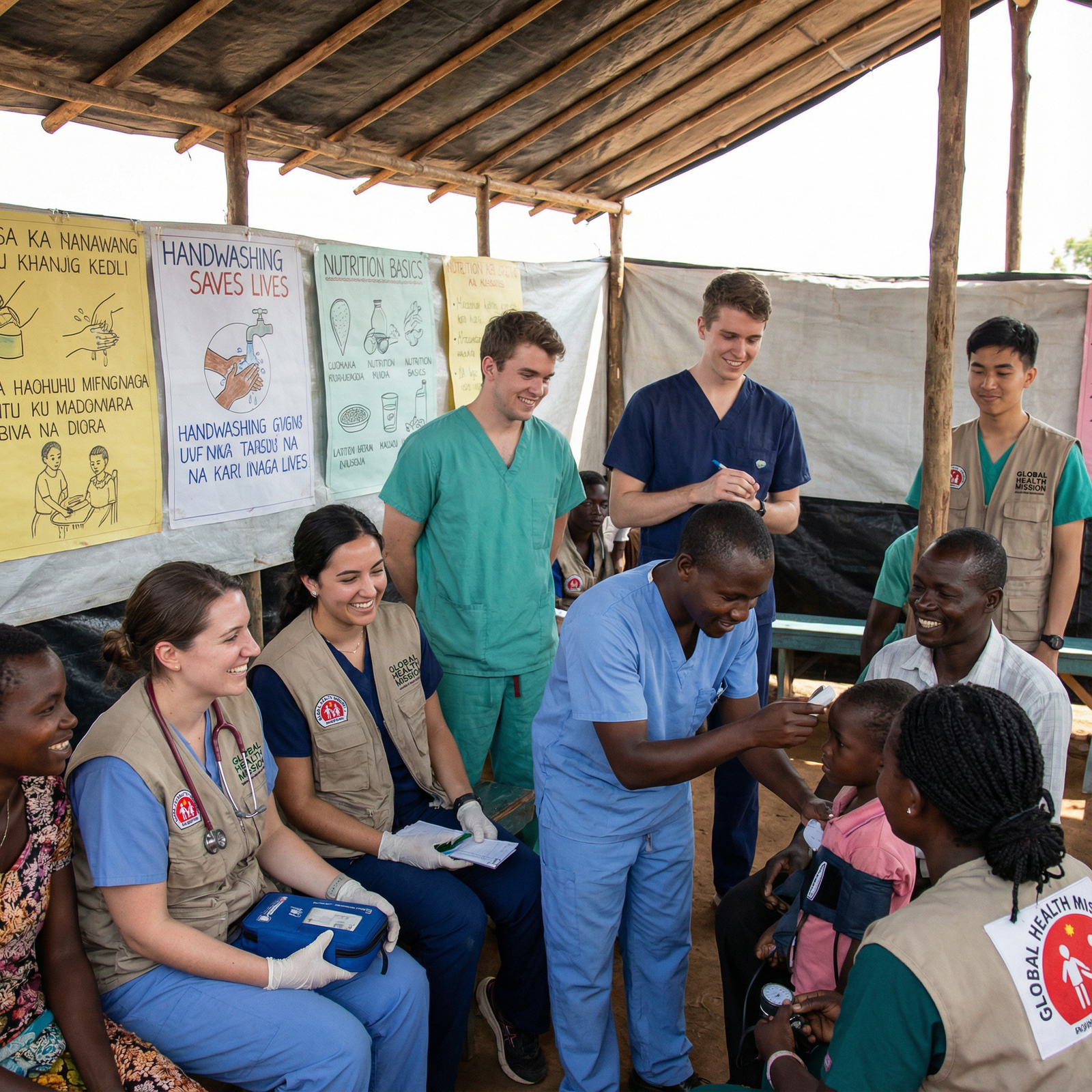
The biggest ethical failures in global health do not come from bad intentions. They come from sloppy systems in places with no infrastructure.
If you are working where there is no lab, unreliable power, limited meds, and chaotic records, you have two options:
- Blame “the system” and improvise every day.
- Or build a minimal, safe workflow that protects patients and your own integrity.
You are here for the second option. Good.
This is not about perfection. It is about building a floor below which care does not fall, even when you have almost nothing. I will give you a concrete, step‑by‑step framework you can implement in a week.
1. Start With Ruthless Triage: What You Will and Will Not Do
In low‑infrastructure settings, your first ethical act is not a heroic intervention. It is drawing hard lines.
You cannot safely do everything. Trying to do everything is how you harm people.
A. Define your “can do” and “cannot safely do”
Sit down with whoever is on your team (even if that is one nurse and a community health worker) and answer three questions:
What can we reliably do safely, every single day?
Examples:- Take vitals on every patient.
- Do a focused exam with basic tools (stethoscope, BP cuff, thermometer, light).
- Give oral meds we actually have in stock.
- Start and monitor IV fluids in a limited, controlled way.
- Do wound cleaning and basic dressings.
What can we do only under strict conditions?
Examples:- IV antibiotics only if:
- You can monitor vitals at least twice in the first 4 hours.
- You have a backup plan if they deteriorate (referral or observation).
- Oxygen if:
- You have cylinders or concentrator working.
- You have at least one person able to recognize and respond to respiratory failure.
- IV antibiotics only if:
What will we NOT do here because it is not safe?
Examples:- No blood transfusions without typed and screened blood and basic monitoring.
- No major procedures (e.g., C‑section, laparotomy) in a health center without surgical backup.
- No high‑risk medications if you cannot monitor for toxicity (e.g., aminoglycosides without any way to monitor renal function in high‑risk patients).
Write this on paper. Large letters. Post it in the clinical area.
This is not cowardice. It is ethics.
B. Simple risk grid for your setting
Make a 2x2 “risk grid” on a single sheet.
| Risk Level | Example Conditions | Action Rule |
|---|---|---|
| Low | Simple URI, minor wounds | Treat locally with standard protocol |
| Moderate | Uncomplicated pneumonia, mild dehydration | Treat locally but flag for reassessment |
| High | Suspected sepsis, severe anemia, obstetric complications | Stabilize and refer if feasible |
| Extreme | Suspected surgical abdomen, eclampsia, major trauma | Immediate referral after stabilization |
Everyone must know:
- Which box they are looking at.
- What the default action is.
If a nurse cannot remember the grid in a crisis, it is too complicated.
2. Build a Minimal Diagnostic Strategy Without a Lab
No CBC, no electrolytes, no cultures. Fine. You still have:
- History.
- Exam.
- Vitals.
- A few point‑of‑care tests (maybe).
- Time and serial assessment.
Use them properly and you will outperform people mindlessly ordering labs they cannot interpret.
A. Non‑negotiable data on every patient
These are mandatory, not “if we have time”:
- Temperature
- Heart rate
- Respiratory rate (actually counted for 60 seconds)
- Blood pressure (proper cuff size as best as possible)
- Oxygen saturation (if you have a pulse oximeter)
- Weight, and for children, MUAC or weight‑for‑age guess
If your team is not getting a respiratory rate, they are flying blind. Fix that today.
B. Minimum diagnostic test set (if you can get it)
If you can advocate for a few cheap, high‑yield point‑of‑care tests, these are the priority list:
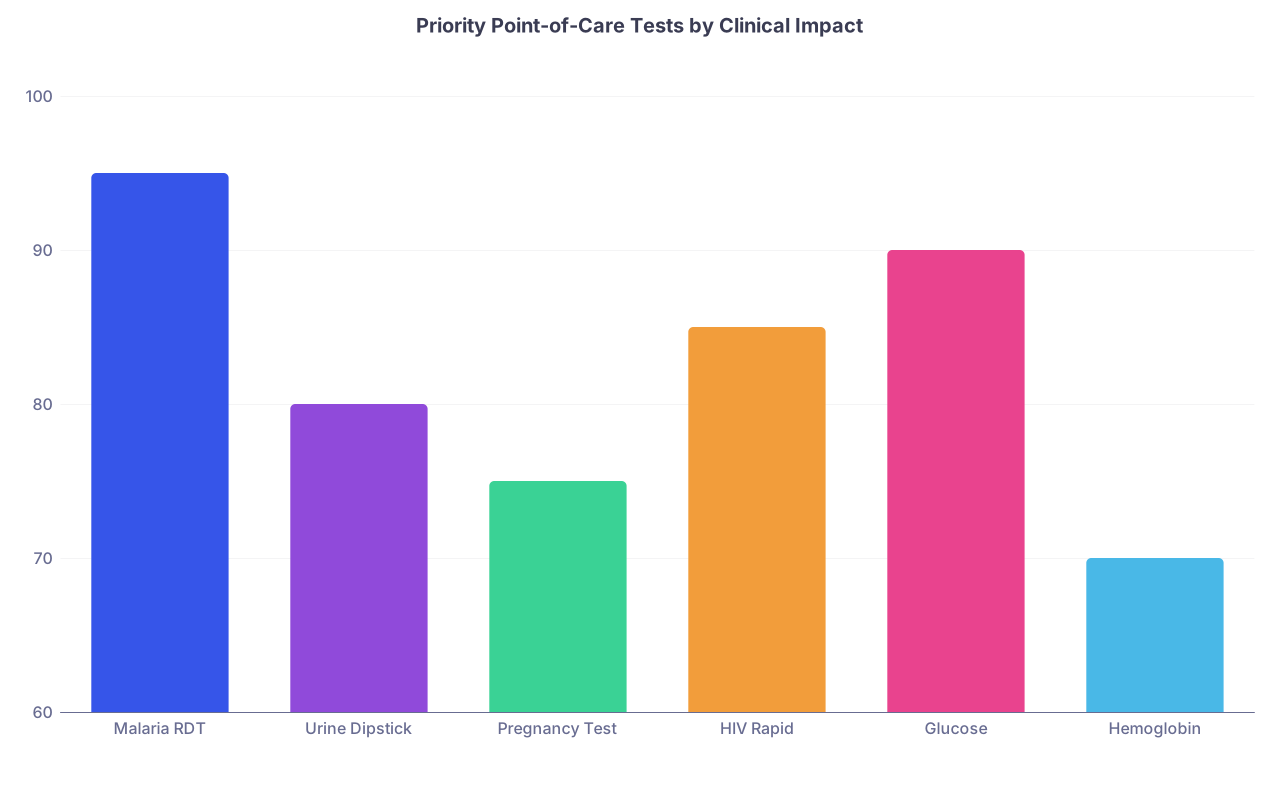
| Category | Value |
|---|---|
| Malaria RDT | 95 |
| Urine Dipstick | 80 |
| Pregnancy Test | 75 |
| HIV Rapid | 85 |
| Glucose | 90 |
| Hemoglobin | 70 |
Interpretation of “impact” here: how often they change your management in a typical rural clinic.
If you have none of these, your workflow leans even harder on:
- Clinical scoring (like qSOFA, simple pneumonia criteria).
- Serial exams.
- Clear thresholds for referral.
C. Serial assessment protocol
When you cannot run labs, you compensate with time and repetition.
Create a rule:
- High‑risk adult (very ill, sepsis suspicion, respiratory distress):
- Recheck full vitals at 1 hour, 4 hours, and 8 hours minimum.
- Moderate illness:
- Recheck at 4–6 hours or next morning.
- Child with fever or respiratory symptoms:
- Recheck within 6–12 hours, sooner if red flags.
No fancy EMR. Just a column on the paper chart:
- “Recheck time:” ______
- “Who will recheck:” name/initials
If there is no name next to the time, it will not happen.
3. Medication and Treatment: Standardize or Make Harm
In a resource‑poor setting, variability is dangerous. “I like to give…” is how dosing errors, drug interactions, and shortages start.
You need simple, written treatment protocols that everyone uses.
A. One‑page protocols for top 10 conditions
Pick the 10 most common and most dangerous conditions at your site:
- Pneumonia (adult and pediatric, separately)
- Malaria (if endemic)
- Diarrhea with dehydration
- Sepsis / suspected bacteremia
- Hypertensive emergency / preeclampsia
- Asthma exacerbation
- Simple UTI vs pyelonephritis
- Skin and soft tissue infections
- Minor trauma / open wounds
- Basic pain management
For each, one page only:
- Criteria to diagnose (using history, exam, vitals, maybe 1–2 tests).
- Clear first‑line treatment, with dose tables by weight.
- Red flag signs that require referral.
- Maximum dose and duration.
No “maybe,” no “consider,” no five drug options. Pick one main regimen that fits your actual medicine shelf.
B. How to handle drug stockouts ethically
You will run out. Pretending otherwise is fantasy.
Create three rules:
- Transparency to the patient when you deviate from the standard regimen because of stock issues.
- “We usually give X, but it is not available. We can give Y, which is weaker/less ideal, or transfer you where X is available.”
- Documentation: note when second‑line meds are used due to stockout.
- No splitting of limited drugs in sub‑therapeutic doses just to “give everyone something.”
Half‑dosing antibiotics to “stretch supply” is unethical. It breeds resistance and lies to patients.
4. Infection Prevention When You Have Almost Nothing
You can have no lab, but you must have some infection control. If not, your clinic becomes a disease amplifier.
You do not need fancy autoclaves and negative pressure rooms. You need discipline and a few cheap habits.
A. Core practices you enforce first
Non‑negotiable:
Hand hygiene:
- Handwashing station (bucket with tap + soap) at:
- Entry to clinical area.
- Procedure/wound area.
- Near toilet.
- Minimal rule:
- Before examining any patient.
- After contact with body fluids.
- Before any procedure.
- After removing gloves.
- Handwashing station (bucket with tap + soap) at:
Glove use:
- For blood, body fluids, mucous membranes, and open wounds.
- Do not waste gloves for social contact if stock is limited. Use them where they prevent real risk.
Sharps safety:
- Rigid sharps container. If you do not have one, improvise:
- Thick plastic bottle with screw cap, labeled and sealed when full.
- Absolute rule:
- No recapping needles.
- Immediate disposal after use.
- Rigid sharps container. If you do not have one, improvise:
Clean procedure area:
- One designated table/bed for any invasive procedure.
- Wipe with diluted bleach (properly mixed) between patients.
B. Simple zoning of your clinic
If your whole clinic is one room, you still separate clean from dirty in your head and your workflow.
Basic zoning:

| Step | Description |
|---|---|
| Step 1 | Outside |
| Step 2 | Waiting Area |
| Step 3 | Clean Exam Area |
| Step 4 | Procedure Corner |
| Step 5 | Medication Area |
| Step 6 | Waste and Sharps Zone |
Rules:
- No family members wandering into procedure corner.
- No eating or drinking in medication or procedure area.
- Waste and sharps do not cross back into the clean exam zone.
This looks obvious on paper. In practice, you will constantly fight the urge to “just do this injection here” because it is closer. Say no.
5. Documentation Without Computers: The Bare Minimum That Works
You do not need an EMR. You need consistency.
You can run a safe paper system with:
- One standard paper form for every visit.
- One logbook for key conditions and treatments.
A. One‑page universal clinical form
Your form should have:
- Patient info:
- Name, age, sex, village/ID.
- Chief complaint and history.
- Vitals section with three rows:
- Time / HR / RR / BP / Temp / SpO₂.
- Exam findings.
- Working diagnosis.
- Treatment given (with checkboxes for common meds).
- Plan:
- Treat here.
- Observe.
- Refer (where and how).
- Name/signature of clinician.
Photocopy 500 and use nothing else. The repetition will make your team faster and more reliable.
B. A disease and treatment logbook
Pick your top 5–10 high‑risk conditions and treatments that you want to track:
Examples:
- Severe pneumonia.
- Sepsis or suspected sepsis.
- Malaria (if relevant).
- All referrals.
- All deaths.
Logbook columns:
- Date.
- Patient ID.
- Condition.
- Treatment started.
- Outcome (discharged, referred, died, lost).
This is not for research. It is for you to see patterns:
- “We keep missing sepsis in young adults.”
- “Our severe pneumonia kids are dying late at night with no reassessment.”
You cannot improve what you never see.
6. Referral and Transport: Design the Process Before the Emergency
The worst time to figure out where and how to refer a patient is when they are already crashing on your table.
You need a pre‑planned, brutally clear referral workflow.
A. Map your referral options on day one
Do this physically, not in your head:
Where can you send:
- Surgical emergencies?
- Obstetric emergencies?
- Pediatric critical cases?
- TB, HIV, or chronic disease follow‑up?
For each, answer:
- Distance and average travel time.
- Transport options:
- Ambulance? Motorcycle? Private car?
- Contact phone or radio number.
- Referral requirements (paper note, call ahead, fees).
Put this data on a single laminated sheet near your desk.
B. Create a default referral pack
Every referred patient goes with:
- Short written note that includes:
- Vitals.
- Working diagnosis.
- Treatments already given (times and doses).
- Any tests you did (rapid tests, notes).
- A contact number back to your facility (if you have one).
You can prepare blank referral sheets in bulk:
- “To: _______ Hospital”
- “From: _______ Clinic”
- With pre‑printed sections for vitals and treatment.
C. Clear stabilization rules before transfer
Minimal stabilization checklist:
- Airway: patient can maintain airway or you have basic support.
- Breathing: oxygen started if needed and you have at least one cylinder or concentrator that will last long enough, or you have decided transfer is worth the risk even without O₂.
- Circulation:
- IV line placed if possible.
- First fluid bolus started when appropriate.
- Life‑threatening bleeding addressed.
If you cannot do any of the above, you still may have to transfer immediately. Document:
- What you could not do.
- Why you still chose to refer.
That documentation protects you ethically and legally.
7. Ethics in Minimal‑Resource Care: Guardrails Against “Mission Creep”
The real ethical danger in global health is not neglect. It is overreach: doing more than can be done safely because you want to help.
You must build your own ethical guardrails.
A. Hard rules you do not break
Examples of reasonable hard rules:
- “We do not perform surgery in this facility. Ever.”
- “We do not provide long‑term cancer chemotherapy here.”
- “We do not transfuse blood that has not been screened for HIV, hepatitis, and syphilis.”
- “We do not sedate patients without continuous observation.”
Write these down. Review with every new staff member and every foreign volunteer.
When someone says, “But this is a special case…” you have your answer ready:
“We still cannot do X safely. Let us focus on what we can do and a referral.”
B. Informed consent when options are terrible
You will often face choices between:
- A suboptimal local treatment.
- A better treatment far away that the patient cannot afford or reach.
Ethically, you must:
- Explain both options in clear language.
- Be honest about what you can and cannot provide.
- Respect the patient’s choice, even when you dislike it.
Do not oversell what you can do locally to make yourself feel better.
C. Protecting staff from moral injury
Your team will burn out if they feel blamed for systemic failures they cannot fix.
Set a norm:
- We hold ourselves accountable for:
- Following our protocols.
- Documenting our limitations.
- Treating patients with respect.
- We do not hold ourselves responsible for:
- Lack of national ambulance network.
- Drug stockouts beyond our control.
- Policies above our pay grade.
You push to improve conditions, sure. But you do not let guilt drive unsafe improvisation.
8. Training the Team: Turn System Into Habit
Your workflow is only as strong as the worst trained person who uses it on a night shift.
You cannot do a 3‑day seminar once and call it done. You need micro‑training baked into the work.
A. Daily 10‑minute huddles
At the start of each day (or each shift):
- 10 minutes.
- Stand‑up, not sitting.
Agenda:
- Quick review of one protocol (e.g., pneumonia treatment).
- Review of any serious case from the last 24 hours:
- What went well?
- What broke the protocol?
That is it. Short, repetitive, and focused.
B. Visual aids, not long manuals
You are not writing a textbook. You are posting reminders.
Use:
- Laminated one‑page protocols on the wall.
- Color‑coded tape:
- Red zone (procedure corner).
- Green zone (clean exam).
- Simple posters:
- Handwashing steps near the sink.
- Vital sign normal ranges for children near the pediatric area.
If people need to flip through a 50‑page binder, they will not.
9. Continuous Improvement with Zero Budget
You can still run a basic quality loop without money or computers.
A. Monthly “what failed us?” meeting
Once a month:
- 30–45 minutes.
- Bring:
- Logbook.
- Referral notes.
- Any death reports.
Discuss:
- Any deaths that were not clearly inevitable?
- Any late referrals?
- Any cases where protocols were ignored or unclear?
Then pick one small change to test this month. Not fifteen.
Examples:
- Add a “sepsis suspicion” stamp and checklist to forms.
- Create a night shift vitals chart that must be filled before 2 a.m.
- Change where gloves and soap are stored so they are not locked in the matron’s office at night.
Next month, review whether that one change helped.
B. Track one simple metric at a time
Choose one metric you can measure with a pen:
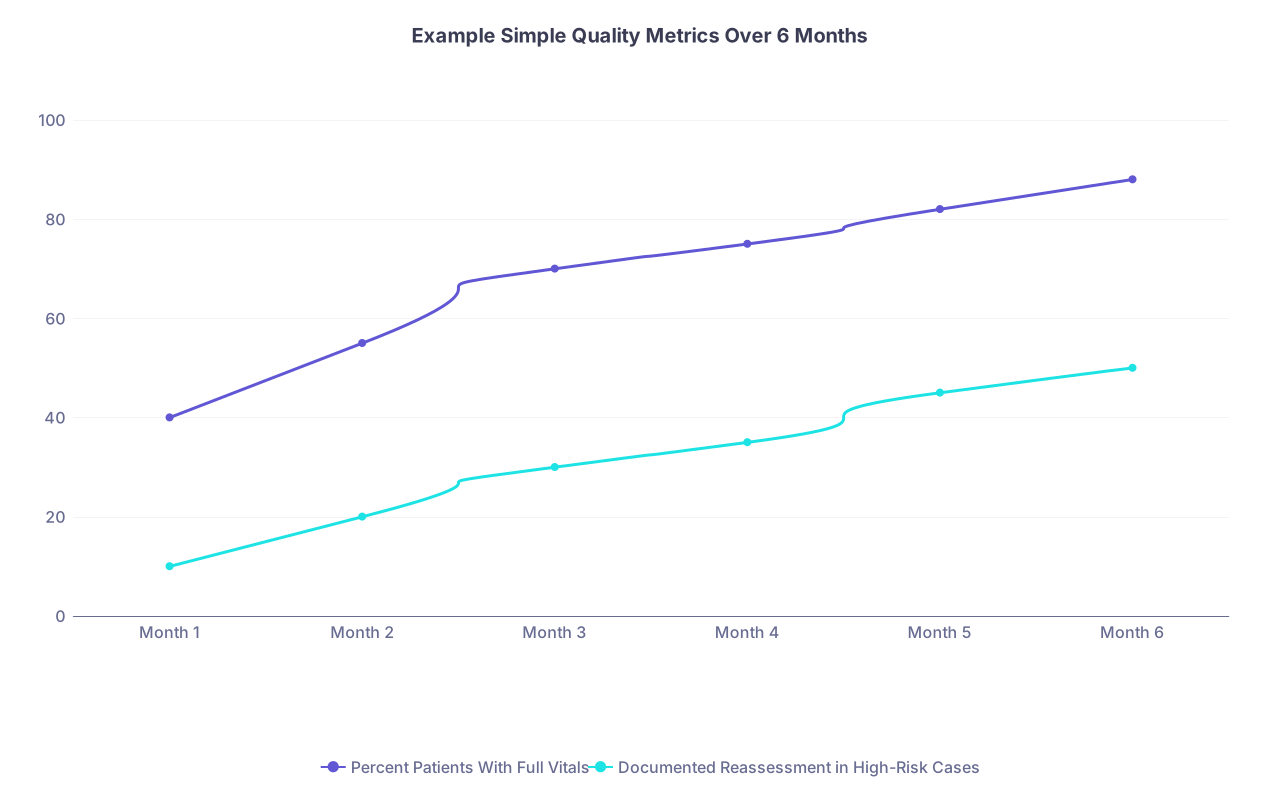
| Category | Percent Patients With Full Vitals | Documented Reassessment in High-Risk Cases |
|---|---|---|
| Month 1 | 40 | 10 |
| Month 2 | 55 | 20 |
| Month 3 | 70 | 30 |
| Month 4 | 75 | 35 |
| Month 5 | 82 | 45 |
| Month 6 | 88 | 50 |
When people can see progress, they care more. This is how you build a culture instead of endless crisis response.
10. Final Ethical Check: Are You Safer Than Doing Nothing?
Your minimal‑resource workflow passes the test if:
- Patients are clearly safer with you than without you.
- Your system is honest about its limits.
- Protocols are simple enough that they are followed under stress.
- Your actions reduce random variability in care.
If you build that, you are already far ahead of many “better resourced” institutions running on chaos.


