

What to Do When You’re the Only Doctor on Site: A Triage Playbook
It is 2:15 p.m. The clinical officer had to leave for a funeral. The nurse is in the maternity room with a difficult labor. The visiting NGO team is gone until next month.
You are standing in a cramped waiting area of a district clinic in rural Uganda / Guatemala / Appalachia (take your pick), and every pair of eyes is on you.
A motorbike just pulled up with an unconscious teenager. Someone is shouting that a child is “not breathing right.” An older man is lying on a bench, clutching his chest. The receptionist is already asking, “Doctor, who first?”
Nobody is coming to help you. No backup. No code team. No lab you can call stat. Just you, a blood pressure cuff, some basic meds, and whoever you can train on the spot.
Here is how you do this without freezing, burning out, or crossing ethical lines you will regret later.
1. First Rule: Stop the Chaos Before You Touch a Patient
You cannot triage in a crowd that is pushing forward, all insisting they are “emergency.”
Step one is scene control. Not airway, not IV access. Control.
Physically define your triage space.
- One door, one table, one corner.
- That is where emergencies come. Everyone else stays behind a visible line (taped on the floor, a bench, a doorway).
Appoint a gatekeeper.
- Grab the calmest staff member or even a senior family member.
- Script them: “Only patients who cannot walk, are not responding, or have very fast breathing come here. Everyone else waits there.”
- Make it clear to the crowd that this person speaks for you.
Announce the rules clearly and once.
Loud voice, simple categories:- “I will see the sickest patients first.”
- “If someone cannot breathe, is unconscious, bleeding a lot, or a baby less than 2 months old who looks very sick, bring them here now.”
- “Everyone else will be seen, but you must wait. If you shout, you do not go faster.”
Create two queues: emergency and routine.
- Emergency queue: carried-in, non-walking, altered, obvious respiratory distress, severe bleeding, labor.
- Routine queue: everything else.
You are buying cognitive bandwidth. If you skip this step, you will drown within an hour.
2. Use a Brutally Simple Triage Framework (No Fancy Categories)
Forget five-level triage systems and colored tags if you are alone with 30 patients.
You need one question: Who will die or be permanently harmed in the next 0–60 minutes without my immediate action?
Think in three buckets:
- Red – Immediate: treat now or they crash.
- Yellow – Urgent: need assessment and treatment within a few hours, but they are not dying in front of you.
- Green – Can wait: stable, walking, complaining but clearly not critical.
- Black – Expectant / Dead: dead or injuries incompatible with survival in this setting.
Yes, that last one is uncomfortable. You are in global health, not a simulation lab. Sometimes the right move is not starting CPR on a pulseless, asystolic patient you cannot possibly resuscitate. That is not cold; it is math.
Quick-Scan Triage: 30–60 Seconds per Patient
For every new “emergency” patient, do this in under a minute:
Look
- Are they walking? If yes, almost always not Red.
- Breathing effort visible? Chest heaving? Nostrils flaring?
- Obvious bleeding?
- Cyanosis? Extreme pallor?
- Level of interaction: alert, responding to voice, only to pain, or unresponsive?
Listen
- Can they speak full sentences? If yes, their airway and breathing are acceptable for now.
- Any stridor, gurgling, gasping?
Feel
- Radial pulse: present and strong, weak, or absent?
- Cap refill: press a fingernail, count seconds.
- Skin: very cold, clammy?
If any of these are present, they are Red:
- No or poor airway sounds, or obvious airway obstruction
- Very labored breathing or suspected apnea
- Profuse uncontrolled bleeding
- Unresponsive or only moaning to pain
- No radial pulse or severely weak with signs of shock
Everyone else is Yellow or Green. Sort them later. Red gets the next 10–15 minutes of your life.
3. Work in Layers: Stabilize First, Diagnose Second
When alone, you must stop thinking like an internist and start thinking like battlefield medicine.
The order:
- Life threats
- Time-sensitive but stable
- Everything else
The 5 Immediate Interventions You Actually Need
In limited-resource settings, these are your money moves:
Position and Airway
- Recovery position for anyone unconscious but breathing.
- Chin lift / jaw thrust. Roll out dentures, visible vomit, or foreign bodies.
- An oropharyngeal airway if available. If not, your hands and gravity.
- Sit-up or tripod position for severe dyspnea if they tolerate it.
Oxygen (if you have it)
- Use your oxygen rationally.
- High priority:
- Severe respiratory distress, cyanosis
- Shock
- Severe anemia
- Very sick infants
- Low priority: stable patients just “feeling weak.”
Stop Bleeding
- Direct pressure.
- Elevation.
- Tourniquet for life-threatening limb bleeding (belt or cloth if nothing else).
- Pack deep wounds with clean cloth/gauze if you have nothing better.
Treat Shock
- Lay them flat (or slightly elevated legs if no breathing compromise).
- Large-bore IV if available, or intraosseous if trained and equipped.
- Bolus with whatever appropriate fluid you have (normal saline, Ringer’s).
- Reassess every 5–10 minutes; do not just hang a liter and walk away.
Seizures
- Protect from injury, do not force anything into the mouth.
- Roll to side for airway protection.
- Benzodiazepines if you have them.
- Check for hypoglycemia as soon as possible.
Once those 5 are controlled, you can step back, breathe for 10 seconds, then move to the next crisis.
4. Build a Micro-Team from Whoever Is There
Being the only doctor does not mean being the only capable human.
You must deputize people. Rapidly.
Who You Can Draft
- Existing clinic staff: nurse aides, lab techs, cleaners, registration staff
- Patient family members
- Community health workers, if any
What You Can Safely Delegate in 3–5 Minutes of Training
You do not need them to be doctors. You need them to be extensions of your hands and eyes.
Vital Signs Station
- One person assigned: counts respiratory rate, pulse, temperature, simple blood pressure if available.
- Teach them:
- How to count breaths for 30 seconds and double.
- Which numbers mean “tell me now” (e.g., RR > 30 in adults, RR > 60 in infants).
- This frees you from wasting precious minutes.
Runner / Supply Person
- Their job:
- Fetch oxygen cylinder, IV supplies, bandages, meds.
- Clean and prepare the next bed / mat.
- They should not leave your line of sight for long without telling you where they are going.
- Their job:
Family Assistants
- Assign specific tasks:
- “You, stay at her head and keep her turned on her side if she vomits.”
- “You, keep pressing this cloth on the wound and do not lift it.”
- “You, hold this baby upright and tell me if breathing gets worse.”
- Assign specific tasks:
Queue Manager
- Their job:
- Maintain order in the waiting area.
- Call patients in by priority.
- Alert you if someone in the queue suddenly deteriorates.
- Their job:
Expect mistakes. But the alternative is you trying to do everything and failing everyone.
5. A Simple Flow for the First 30 to 60 Minutes
When it feels overwhelming, structure saves you.

| Step | Description |
|---|---|
| Step 1 | Arrive at Clinic |
| Step 2 | Create Triage Space |
| Step 3 | Assign Gatekeeper |
| Step 4 | Scan Room for Reds |
| Step 5 | Stabilize Airway Breathing Bleeding |
| Step 6 | Start Quick Triage of Waiting Queue |
| Step 7 | Delegate Vitals and Monitoring |
| Step 8 | Reassess Reds Every 10 min |
| Step 9 | Sort to Red Yellow Green |
| Step 10 | Treat Reds Then Yellows |
| Step 11 | Back to Queue Manager for Next Patients |
| Step 12 | Any Reds? |
Keep this mental loop:
- Sweep for new Reds.
- Stabilize them.
- Delegate monitoring.
- Rotate back to Yellows and Greens.
- Repeat.
Every time you feel lost, restart at step 1. You will miss less.
6. Decision Rules When Resources Are Ridiculous Limited
This is where global health gets ugly. You cannot save everyone. You must choose.
So you need pre-decided rules to avoid paralyzing guilt and random decisions.
Use a Simple Priority Matrix
Rank by:
- Immediate survivability with your available interventions
- Time sensitivity (minutes vs hours)
- Resource intensity required
If two patients both need the last oxygen port:
- A 25-year-old with severe asthma, speaking only single words, but with good potential to respond quickly to bronchodilators and oxygen.
- A 75-year-old with end-stage heart failure in extreme distress, who has been deteriorating for weeks.
You prioritize the younger patient with higher chance of rapid, meaningful recovery with the resources you have. That is not ageism; it is utilitarian ethics in a crisis.
Clear Red Lines: What You Will Not Do
To keep your moral compass:
- You will not spend 30 minutes doing full ALS on an asystolic pulseless patient in a clinic without a defibrillator, while three hypoxic, salvageable kids wait.
- You will not give the last units of blood to a patient with unsurvivable head trauma when there is a postpartum hemorrhage you can actually save.
- You will not start a time-consuming, resource-heavy intervention if it clearly dooms four others with simpler needs.
You are maximizing total lives saved and total suffering reduced, not hero points.
7. Communicating Honestly Without Causing Riot
Crowds in distress are volatile. Silence and secrecy make it worse.
You need transparent, consistent communication to keep control and maintain trust.
Core Scripts You Can Use
Explaining Triage to Waiting Patients
- “I will see the most serious patients first. That means people who cannot breathe, are unconscious, bleeding heavily, or are tiny babies who look very sick. If that is not you, you will wait, but you will be seen.”
Setting Time Expectations
- “There are many patients and only one doctor. It may take several hours. If your situation becomes suddenly worse—trouble breathing, chest pain, confusion—tell the staff immediately.”
When Someone Demands to Be Seen First Without Criteria
- “If I see you first, another patient who may die will wait. I will not do that. I will see you as soon as I can after those who are worse.”
Delivering Bad News in Resource-Limited Contexts
- “We have done what we can with the medicines and equipment we have here. I am very sorry. In a bigger hospital, there may be more options, but here, we do not have them.”
You do not overpromise transfers, ICUs, or specialist care that simply does not exist. That is lying, and families can sense it.
8. Personal Safety and Boundaries: You Cannot Help if You Collapse
Being the only doctor turns you into a lightning rod for fear, anger, and grief. That can turn physically dangerous fast.
You still have the right to safety.
Basic Safety Precautions
Never let a crowd surround you completely.
Position yourself near an exit or with your back to a wall.Keep one trusted staff member or community leader close.
Their presence can defuse situations and translate when needed.If tempers are rising, pause and address it head-on.
- “I see that people are angry and scared. I am working as fast as I can. Shouting or pushing will only slow care for everyone.”
If violence seems imminent, you step back.
You are not required to stay in a riot. Get to a safe space, regroup with staff, and re-establish order before continuing.
Self-sacrifice is romantic in stories. In reality, it just creates more patients.
9. Ethical Anchors When You Feel Like You Are Playing God
The worst part of being alone in these settings is not the medicine. It is the moral weight of your decisions.
Here are the ethical anchors I teach residents before they go out:
Use Consistent Criteria, Not Gut Feelings
- Life threat first, then time sensitivity, then resource intensity.
- Do not swap rules based on who is loudest or most influential.
Avoid Special Treatment for “Important” People
- Local official’s nephew, NGO staff, relative of a colleague.
- Unless their condition genuinely merits higher urgency, they wait like everyone else.
- Once you make exceptions for status, triage collapses.
Disclose Limitations, Do Not Fake Capability
- “We do not have a ventilator here.”
- “We cannot do a CT scan.”
- “I am not a surgeon; I can stabilize and refer, but not operate.”
-
- On a simple sheet or in the chart, write briefly:
- “Arrived pulseless, asystole, estimated downtime > 30 min. Focused care on two unstable children with high chance of survival.”
- This is not legal CYA. It is for your own future sanity. When you second-guess yourself weeks later, you will have the context.
- On a simple sheet or in the chart, write briefly:
Remember the Counterfactual
- You are not comparing reality to a fantasy ICU. You are comparing “you alone with limited tools” to “no clinician at all.”
- Imperfect care is still vastly better than abandonment.
10. Practical Tools and Minimal “Cheat Sheets” to Prepare in Advance
If you know you will be working in a setting where this might happen, do some prep before chaos hits.
Print and Laminate 2–3 Pages
-
- Adult and pediatric shock doses for your available fluids and vasopressors (if any).
- Dosing of common emergency meds available at your site:
- Diazepam / midazolam for seizures
- Adrenaline for anaphylaxis
- Salbutamol neb doses
- Paracetamol/ibuprofen dosing ranges
- Neonatal resuscitation basics.
Quick Triage Criteria List
Bullet list of what makes a patient Red:- Cannot breathe or severe breathing difficulty
- Unresponsive or only responds to pain
- Massive bleeding
- Severe chest pain with signs of shock
- Very sick infant (poor feeding, lethargy, respirations very fast or very slow, fever or very cold)
Referral Triggers and Distances
Referral Triggers for Common Emergencies Condition Local Action Refer If Head injury Stabilize, monitor GCS < 13 or worsening neuro Severe pneumonia O2, antibiotics SpO2 < 90% on oxygen PPH (postpartum) Uterotonics, IV, massage Ongoing heavy bleed after measures Sepsis shock Fluids, antibiotics Hypotension despite fluids Obstructed labor Basic stabilization No progress + fetal distress
Even if ambulances are fantasies, knowing exactly when a patient truly needs a higher level of care can help you argue for transport, advocate with families, and decide who you fight hardest to transfer.
11. How to Structure Your Own Workday When You Are It
Assume you will be alone most of the day. If you do not self-structure, you will be pulled into 50 directions and help nobody well.
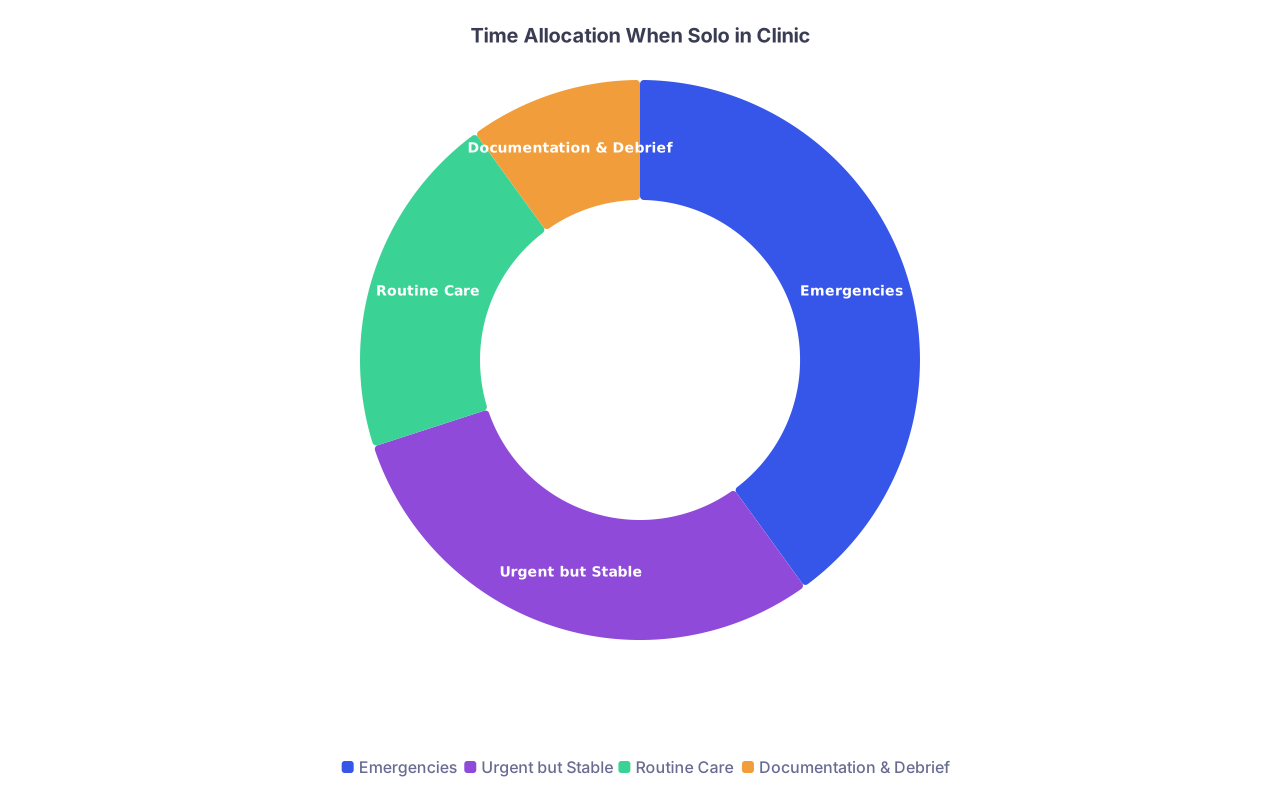
| Category | Value |
|---|---|
| Emergencies | 40 |
| Urgent but Stable | 30 |
| Routine Care | 20 |
| Documentation & Debrief | 10 |
A Functional Pattern
First 1–2 Hours: Aggressive Sorting
- Rapidly triage everyone in the building.
- Create clear Red/Yel/Green lists.
- Start stabilization on Reds with delegation.
Middle Block: Systematic Work-Through
- Finish stabilizing Reds, while reassessing every 15–30 minutes.
- Start seeing Yellows in short, focused visits:
- Targeted history, focused exam, specific plan.
- No rambling teaching sessions, no minor complaint deep dives.
Last 1–2 Hours: Clean-Up and Documentation
- Try to clear remaining Greens quickly or reschedule.
- Document the critical decisions.
- Confirm any transfers are actually en route or canceled.
- Debrief briefly with available staff: what worked, what failed.
Will your schedule be blown up by new emergencies? Of course. But having a structure gives you something to return to.
12. Aftermath: What You Do When the Rush Finally Stops
There will be a moment, often hours later, when you are sitting alone on a plastic chair, hands still shaking slightly.
This is part of the job, too.
Short-Term Decompression (Same Day)
Drink water and eat something salty.
Sounds ridiculous, but after 6–8 hours of adrenaline and sweat, you are physiologically wrecked.Write down 3 cases that will haunt you.
Just a few bullet points on each: what happened, what you did, what was impossible.
This gives your brain somewhere to put the memories.Check in with one trusted colleague (even remotely).
A text or call: “Today was bad. I had to triage X vs Y. I want you to know about it.”
This spreads the ethical load.
Longer-Term: Turn the Chaos into System Change
When you can breathe, do a short after-action review:
- What was missing that would have changed outcomes?
- Oxygen concentrator? Extra BP cuff? Basic trauma supplies?
- Which non-clinical staff helped the most? Train them more.
- What protocol do you wish you had on the wall? Put it there.
Then advocate. To your NGO, your health ministry contact, your hospital leadership. Not with vague “we need more resources,” but with targeted, practical asks:
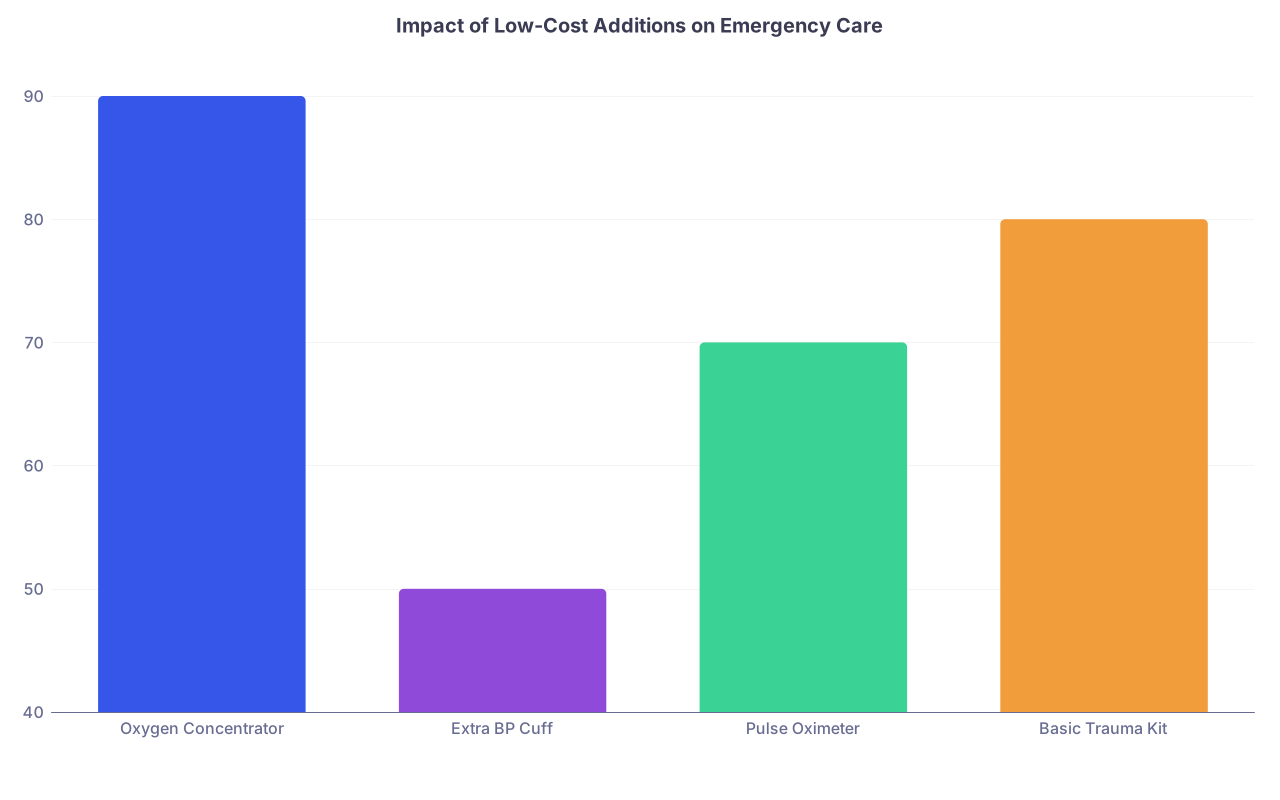
| Category | Value |
|---|---|
| Oxygen Concentrator | 90 |
| Extra BP Cuff | 50 |
| Pulse Oximeter | 70 |
| Basic Trauma Kit | 80 |
These four items alone can change survival curves in remote clinics. I have seen it.
13. One More Thing: Your Own Line in the Sand
You are going to be tempted to play savior. To work 18 hours straight. To personally carry patients on stretchers. To run after motorbikes to beg them to take a transfer.
Do not.
Set a personal rule now, before you are in crisis, for what “enough” looks like:
- Maximum continuous hours you will work before forcing a handover or a pause.
- Conditions under which you will refuse additional patients (e.g., already beyond safe capacity, no supplies, no light, you are unsafe to practice).
- A small ritual you will do at the end of a brutal day—a prayer, a note in a journal, a message to a friend—to mark that the day is over.
You are not a bottomless resource. You are one human being in a very unfair system, trying to make it less deadly.

Key Takeaways
- Control the scene, then triage fast using simple Red/Yellow/Green categories. Stabilize airway, breathing, bleeding, and shock before chasing diagnoses.
- Build a micro-team out of whoever is present. Delegating vitals, monitoring, and basic tasks is non-negotiable when you are the only doctor.
- Use consistent ethical rules and accept your limits. Prioritize those you can most likely save with the tools you actually have, document the hard calls, and protect your own safety and longevity.


