
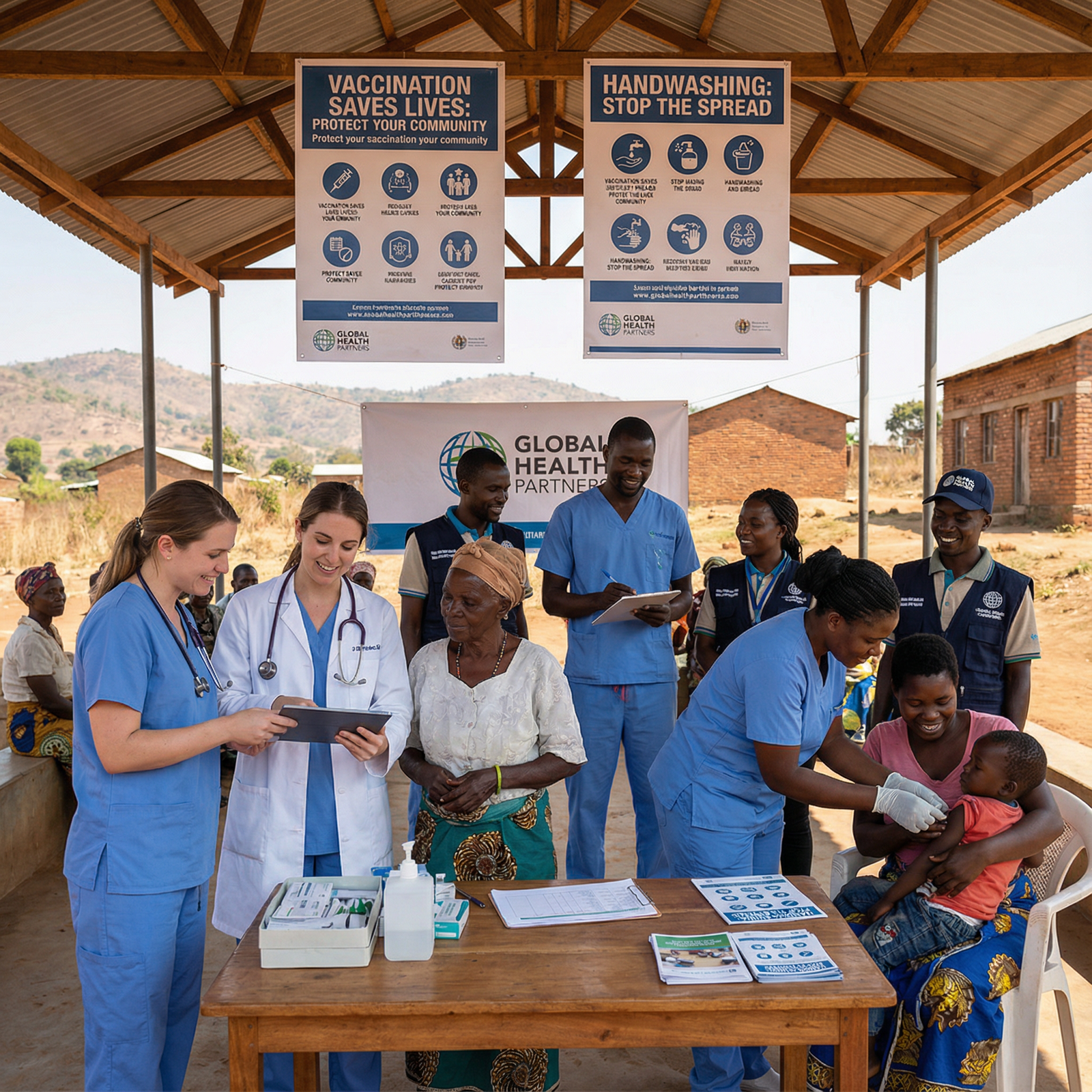
The dirty secret is this: most global health work does not help you get promoted. In some departments, it quietly hurts you.
Let me walk you through how this really plays out in promotion and tenure rooms, because what’s on the glossy “Global Health” webpage is not what’s said when the door closes.
How Promotion Committees Actually Think About Global Health
You’ve been told global health is “valued” and “core to our mission.” That phrase is on every brochure. It’s also almost meaningless when it hits the promotion grid.
Inside those meetings, three questions dominate:
- Does this person bring in money?
- Do they produce peer‑reviewed, citable output?
- Are they doing work the department can brag about to the Dean?
Your time in Malawi, Haiti, India, Navajo Nation—whatever the site—gets translated into those three currencies. If it doesn’t convert, it’s classified mentally as “service” or “nice-to-have,” not “promotion-worthy.”
Here’s the quiet hierarchy most academic departments are actually using, even if they never write it down:
| Type of Global Health Work | Typical Promotion Value |
|---|---|
| First/last‑author papers with funding | High |
| Multi-site trials / implementation grants | Very High |
| Curriculum & local teaching only | Low |
| Short-term trips / volunteer brigades | Near zero |
| Unfunded ‘capacity building’ without output | Low to Moderate |
I’ve sat in those rooms. A faculty member gets presented as “doing a lot in global health.” The chair glows: “She’s been going to Uganda for 8 years.” The promotion committee flips to the CV, scrolls the PubMed list, and asks:
“Where’s the output?”
That’s the translation layer no one explains to junior faculty.
The Three Myths About Global Health and Promotion
Let’s dismantle the biggest illusions, because if you build your career on them, you’ll stall at assistant professor.
Myth 1: “Global health is inherently valued”
No. It’s sentimentally appreciated. Those are very different things.
People will applaud your photos at Grand Rounds. They’ll nod approvingly in faculty meetings. But when your promotion file hits the table, your global health becomes:
- teaching hours
- “citizenship”
- maybe a line item in “service”
Those categories are the soft currency of academia. They make people like you; they do not move you up a rank on their own.
I watched a brilliant pediatrician who spent 10+ years building a neonatal program in West Africa get blocked at promotion twice. The committee comments?
- “Excellent service record.”
- “Limited independent scholarship.”
- “Hard to see national/international impact outside partner institution.”
Translation: we love what you do; we will not promote you for it.
Myth 2: “If I do meaningful work, promotion will follow”
Meaningful to whom? Promotion committees do not read your intent. They read your metrics.
You can run a rural HIV program that cuts mortality in half, and if it never becomes:
- funded work
- peer-reviewed publications
- invited talks / guidelines / leadership roles
it lives in the “good person” bucket, not the “associate professor” bucket.
Myth 3: “Global health counts as research”
Sometimes. But not automatically.
Half of what gets labeled “global health research” is retrospective chart reviews and “impact reports” no one outside that site will ever cite. Or it’s academic tourism: 4‑week projects CP’ing data that end with a poster and no follow‑through.
Promotion committees are looking for:
- rigor
- continuity
- increasing scope
- recognizable funding mechanisms
If your “research” is a graveyard of abstracts and posters, it does not register as a research program.
What Actually Counts: How Global Work Gets Converted into Promotion Currency
Now for the part no one explains clearly. The work itself is not the problem—it’s the packaging.
Global health helps you only when you translate it into the same three currencies as everyone else: grants, publications, and leadership.
Let’s break that down.
1. Grants: The Hardest but Most Powerful Lever
If your global work is tied to external funding, you suddenly become legible to traditional academic eyes. NIH, Wellcome Trust, Gates, CDC, USAID, major foundation money—promotion committees understand this.
Typical whispered logic in a P&T meeting:
- “She’s PI on a K award in implementation science in Kenya.” → “Serious trajectory.”
- “He’s co‑investigator on a CDC‑funded TB surveillance project in Peru.” → “Real collaborator, not a tourist.”
- “They’ve had Fogarty funding for training programs.” → “Stable program, institutional asset.”
Global work without any funding? That’s called “volunteerism” in the back of the room.
If you’re early-career and serious, your global health time should be attached to at least one of these:
- a mentored K‑type award (or equivalent career award) on a global topic
- a foundation grant with clear deliverables
- a role on a multi‑center or implementation trial
Not because money is everything—but because money is the committee’s shorthand for “this is real scholarship, not a hobby.”
2. Publications: The Only Evidence Most People Ever See
Those 6‑week field visits? No one on your promotion committee sees them. They see the PubMed search.
Here’s how they mentally score it, even if they won’t say it like this:
- First- or senior‑author global health papers in recognizable journals (Lancet Global Health, BMJ Global Health, PLOS Medicine, high‑tier specialty journals) = strong evidence
- Multi‑year, thematically linked papers (e.g., HIV retention in care across multiple countries) = “program of research,” big plus
- A scatter of one‑off case reports and local audits from random sites = noise
- Descriptive “we ran a camp” papers in low‑impact journals = minimal impact
If your CV has 15 years of global health and 2 weak papers that no one cites, promotion committees do not see a “global health scholar.” They see somebody who left a lot of effort on the table.
You need to train yourself to ask, every time you’re planning field work:
What is the publishable question here?
Who is my methodologist / biostatistician?
Where will this land as a paper?
If you cannot answer that before you get on the plane, you’re doing service, not scholarship. That’s fine if it’s intentional. It’s career suicide if you’re counting on it for promotion.
3. Leadership: Titles That Translate
“Runs a volunteer trip to Guatemala every spring” sounds nice.
“Associate Director, Center for Global Surgery; Co‑chair, WHO working group on trauma systems” translates to promotion language.
The titles that actually move the needle:
- Director / Associate Director of a recognized global health center
- Site PI for a major multi‑national study
- Leadership roles in professional societies’ global health sections
- Advisor or consultant roles to WHO, national ministries of health, CDC, etc.
- Organizing chair for major global health conferences or working groups
This is why some people with less field time get promoted faster than the true road warriors. They built leadership structure around a smaller set of activities.
How Different Tracks Really Treat Global Health
You can’t talk about this without talking about tracks. Most institutions pretend all tracks “value global health.” They don’t. They value track‑specific outputs.
| Track Type | How Global Health Is Typically Viewed |
|---|---|
| Tenure / Research | Valuable only if grant-heavy & published |
| Clinician-Educator | Useful if tied to curricula & teaching awards |
| Clinical / Service | Nice-to-have, rarely decisive for promotion |
| Research Faculty | Must be grant and publication engine |
On a classic tenure‑track line, hear me very clearly: global health that does not generate grants and high‑quality publications is almost always a liability. It’s time away from what the committee expects from you.
On clinician‑educator tracks, your global work can be a decent asset if you:
- build durable educational programs
- get recognized for teaching excellence
- publish about curriculum, training models, or outcomes
- secure at least some educational or training grants
On pure clinical tracks, global work is often invisible. It doesn’t touch RVUs. It doesn’t increase local patient volume. If your chair is old‑school, they’ll smile at your stories and then quietly ask, “But how does this help our clinic?”
The Ethical Trap: Exploitation vs. Career Security
Now we hit the uncomfortable part: the ethics of using global health for promotion.
Here’s what happens constantly, though few will admit it.
Faculty show up in a low‑resource setting with a half‑baked project idea driven by their CV needs. They:
- set up research that primarily benefits the home institution
- publish quickly on local data with minimal local authorship
- leave behind little except some training slides and a few laptops
Promotion committees love these “productive” people. Meanwhile, the faculty who spend years building local capacity, co‑authoring slowly, and insisting on equitable leadership get labeled “less productive.”
You feel the moral tension yet?
You’re navigating two clashing systems:
- A global health ethics world that preaches partnership, local leadership, and sustainability
- An academic promotion system that rewards speed, first/senior authorship, and individual branding
Attending in an actual meeting, I once heard: “Impressive that she put the local PI as senior author, but it makes it harder to see her leadership.” The committee member wasn’t malicious; they were being system‑honest.
So you must build structures that protect both ethics and your career:
- Multi‑PI grants with shared leadership across institutions
- Clear authorship plans that rotate first and senior positions over multiple studies
- Long‑term collaborative agendas, where you’re visibly essential but not colonial
If you don’t, you’ll either:
- Advance your career by exploiting partners
- Or sacrifice your career trying to be fair in an unfair system
You deserve better options than that false choice.
How to Design Global Health Work That Does Advance Your Career
Let’s get concrete. Here’s what actually works when you play the long game.
Pick a Narrow Problem and Own It
“Global health” is too broad. Promotion committees glaze over vague statements like “interested in improving health in low‑resource settings.”
You need a sharp edge:
- Surgical site infections in East Africa
- Hypertension control in urban slums
- Postpartum hemorrhage prevention in district hospitals
- Tuberculosis contact tracing among miners
- Adolescent HIV retention in care in southern Africa
Then build everything—teaching, implementation, research—around that same spine.
Over 5–10 years, your CV should show:
- a series of related studies
- implementation projects that scale
- guidelines or toolkits you helped develop
- invited talks all circling that same problem
That’s how you become “a person who changed X,” not just “someone who did global work.”
Attach Yourself to a Real Methodologic Engine
The best global health careers are built with statisticians, implementation scientists, health economists, or data people who actually like working with you.
You cannot be the person who flies in every 6 months, collects random data, and hopes for a publication. That doesn’t cut it anymore.
At one major US institution, the only reason a global surgery junior faculty got promoted early was because she plugged into an implementation science group. Her projects were methodologically tight, funded, and publishable. Same hours in the field as others; very different academic output.
Build Bimodal Legitimacy: Local and Home Institution
Promotion committees ask two quiet questions:
- Do local partners take this person seriously?
- Does our institution look good because of this work?
You answer yes to both when you:
- hold a formal appointment or role at the partner institution
- have local collaborators as co‑authors and co‑PIs
- are referenced in institutional global health reports, newsletters, donor pitches
- get asked to represent the institution in external global panels
This is why branding matters. Use your institution’s name strategically. Let communications people know what you’re doing. Those articles and web features end up in promotion packets as evidence of “institutional impact.”
The Time and Burnout Problem No One Warns You About
Global health is time‑intensive. Travel days, jet lag, WhatsApp calls across time zones, meetings at 5 a.m. or 11 p.m., constant grant hustle. And you’re doing this on top of your clinical and teaching load.
Most promotion committees do not price that in. A 6‑day trip to a domestic conference and a 6‑week field visit both show up as “academic time” on a spreadsheet. Completely different in reality.
What that means for you:
- If your chair is not fiercely protective of your non‑clinical time, global health will eat your career.
- If you say yes to every trip and no to focused writing / grant time, you will end up with stories instead of papers.
I’ve watched high‑energy idealists flame out by year 7, bitter and blocked at promotion, because they never said no. Their calendars were full. Their CVs were thin.
You must schedule output time as ruthlessly as field time. No one else will do that for you.
A Brutal but Useful Exercise
Before you say yes to any new global health activity, ask yourself three questions and force a specific answer:
- How does this concretely move me toward my next promotion?
- What is the likely tangible product—grant, paper, curriculum, leadership role?
- Who at my home institution will vouch for this work as part of my academic identity?
If you cannot answer all three, it’s probably an uncompensated hobby. If you’re okay with that, fine. But stop pretending it’s your “academic niche.”
Visual: Where Global Health Time Actually Goes
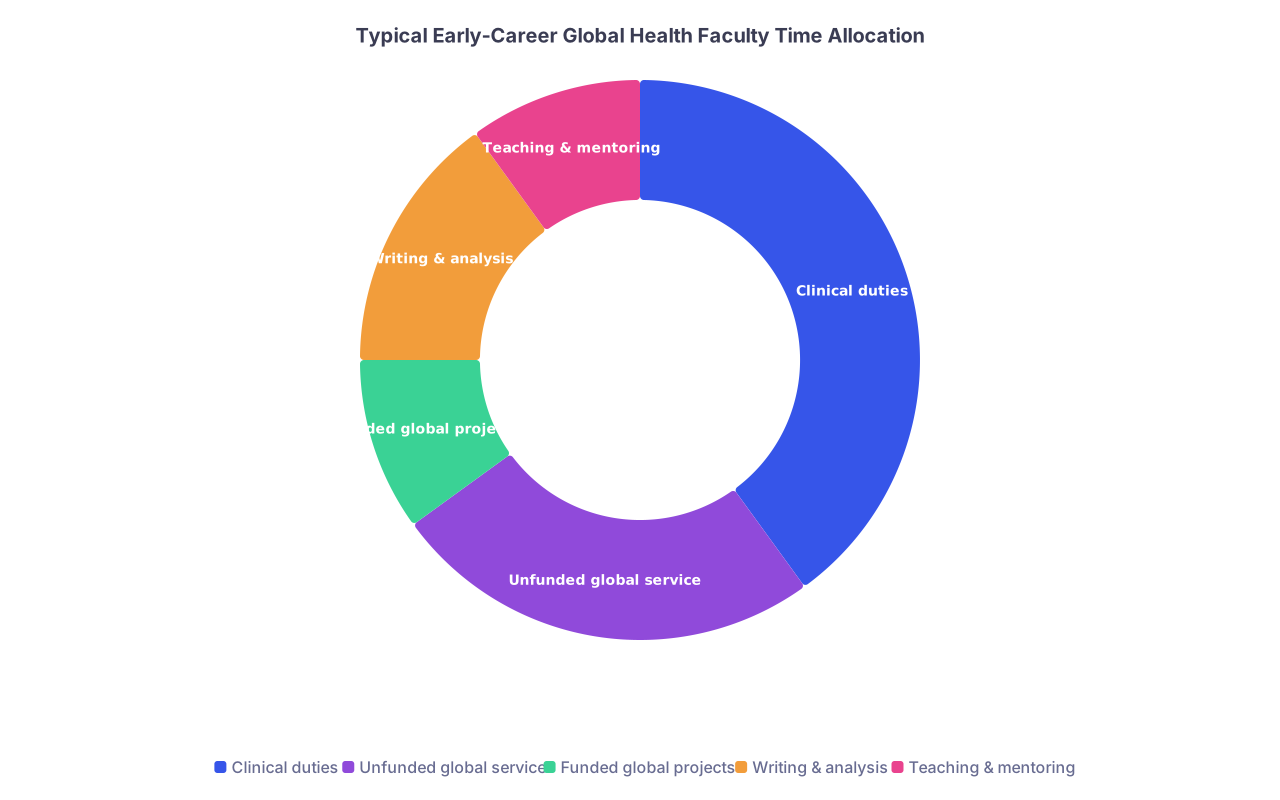
| Category | Value |
|---|---|
| Clinical duties | 40 |
| Unfunded global service | 25 |
| Funded global projects | 10 |
| Writing & analysis | 15 |
| Teaching & mentoring | 10 |
Most junior faculty sit in that pattern above. The only slice that reliably moves promotion is “funded global projects” and “writing & analysis.” But the emotional gravity of “unfunded global service” is huge. That’s where people get stuck.
Your goal over 5 years is to shrink the unfunded service slice and grow the funded + writing slices—without abandoning your ethics or your partners. Hard, but possible.
A More Honest Career Model: The Long Game
Let me give you a trajectory that actually works, because I’ve watched it play out successfully.
Year 1–3:
You pick a specific problem and a specific partner site. You attach yourself to a senior mentor who already has funding. You’re co‑authoring, not leading yet. You spend more time learning systems than launching your own half‑baked project. You apply for small pilot grants, career development awards, and join multi‑site studies.
Year 4–7:
You become the face of a sub‑area. You lead a multi‑year project or trial. You co‑develop a curriculum or training program and actually measure outcomes. You negotiate for protected time that matches your grant obligations. You say no to random trips that don’t align with your core problem.
Year 8–10:
You’re invited to write guidelines, join WHO groups, serve on editorial boards, maybe direct a center or program. Your CV shows a coherent body of work. Your global site sees you as a long‑term partner, not a visitor. Promotion to associate or full becomes an obvious next step, not a charity decision.
Contrast that with the default:
Go anywhere, say yes to everything, do heroic service, publish almost nothing, and hope that “impact” persuades a committee that mostly respects numbers.
You know which one the system rewards.
FAQ: Global Health, Promotion, and Ethics
1. If my institution doesn’t really value global health, should I still do it?
Yes—if you restructure why you’re doing it. If you’re doing global work primarily for personal meaning and ethical commitment, own that, and stop expecting promotion committees to treat it like R01‑level research. Protect enough time for promotion‑relevant activities locally (research, educational leadership, high‑impact clinical work), and let global health be a smaller, intentional slice that you don’t over‑sell in your packet. Or move to an institution with a track record—not just rhetoric—of promoting global health faculty.
2. How do I justify co‑first or local senior authorship to a promotion committee that only seems to count my name position?
You do not just drop the paper in your CV and hope they interpret it well. You use your personal statement and chair’s letter to explain your authorship philosophy and the structure of your collaborations. You highlight the series: “Across these 8 related manuscripts, I alternated first and senior authorship with my partner PI; together we built X program.” Serious committees understand that equitable global work looks different from solo lab science—if you spell it out and your chair backs you clearly.
3. Is it ever okay to walk away from a long‑standing global site for career reasons?
Sometimes it’s not just okay; it’s necessary. If you’ve spent years somewhere with no realistic pathway to equitable research, no local partners interested in scholarship, and no institutional support, staying out of guilt while your career collapses doesn’t help anyone. The ethical move is to exit cleanly—transfer knowledge, hand over programs, be transparent about why you’re stepping back—and then re‑build with structures that support both your partners and your academic survival. Martyrdom is not a sustainable global health model.
Key takeaways:
Most global health work is invisible to promotion committees unless you convert it into grants, publications, and leadership roles. The ethics of equitable collaboration clash with traditional academic metrics, so you must design structures that protect both. And if you want a real career, stop treating global health as magic fairy dust that guarantees promotion; treat it like any other academic niche that demands strategy, focus, and ruthless clarity about outputs.


