
The biggest technological lie in global health is that “we need more equipment.” You rarely need more. You need the right tool that actually changes your decisions. Point‑of‑care ultrasound (POCUS) is one of the few devices that does exactly that on humanitarian missions—if you know what you are doing.
Most people bring it as a toy. You are going to bring it as a weapon.
Let me break this down specifically: which POCUS applications are truly high-yield in humanitarian settings, how they change management in low-resource environments, and what ethical traps you are walking into if you use it without thinking.
Why POCUS Matters So Much in Humanitarian Work
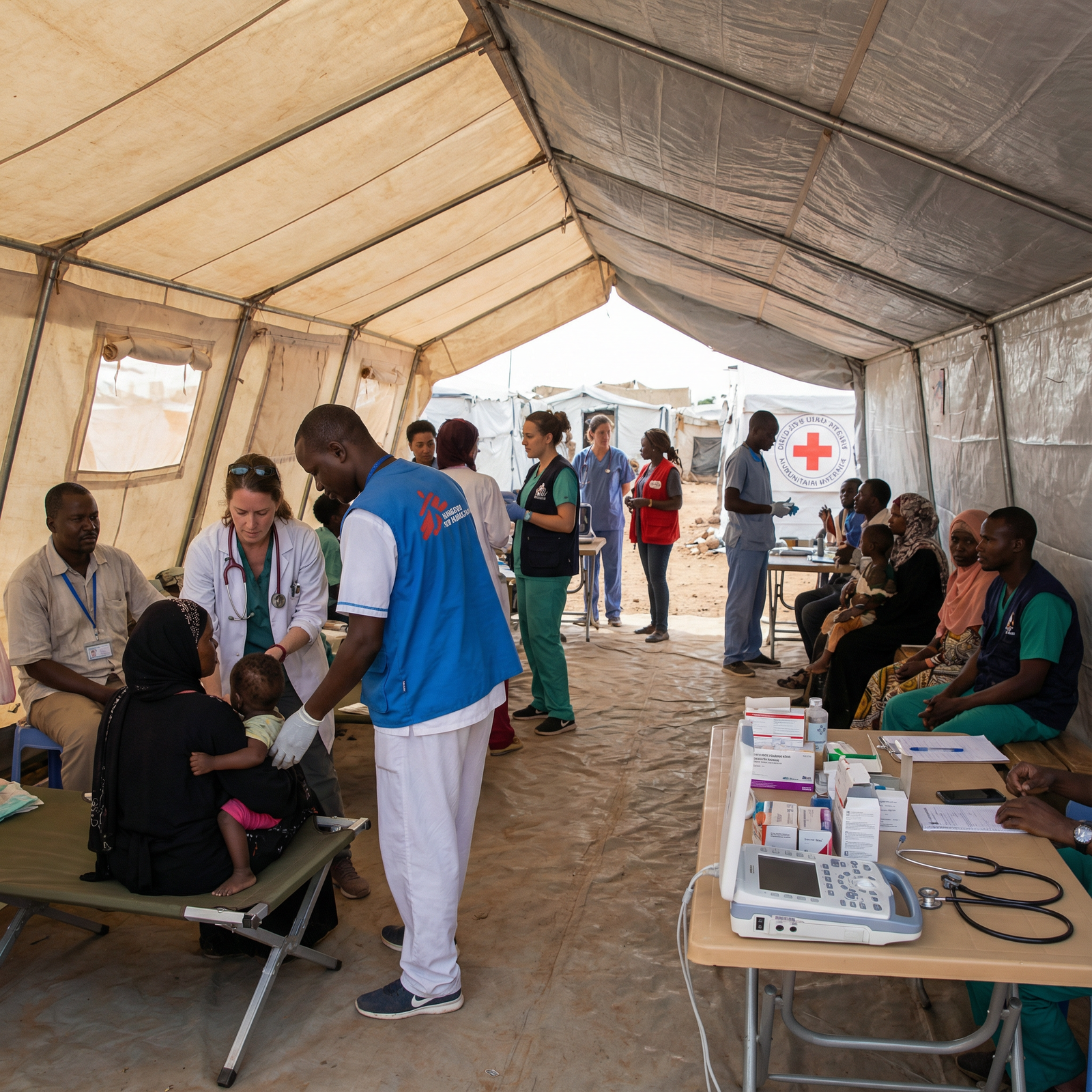
You are not in Boston. You are in a district hospital in South Sudan, a tent hospital in Gaza, or a cholera treatment center in Yemen. The constraints are brutal and very predictable:
- No CT. Often no X‑ray.
- Lab is limited or non‑existent.
- Oxygen is scarce.
- Blood for transfusion is rare and precious.
- Referral is a fantasy unless the patient can survive a multi‑hour transport over bad roads.
In that framework, “diagnostic imaging” means: whatever you can do at the bedside, on a battery.
That is why handheld ultrasound has exploded in global health. It is battery‑operated, portable, relatively rugged, and—key point—answers binary questions that matter:
- Is there free fluid in the abdomen or not?
- Is this shock cardiogenic, hypovolemic, or obstructive?
- Does this kid have pneumonia or asthma?
- Is this pregnant woman viable, in trouble, or at risk of uterine rupture?
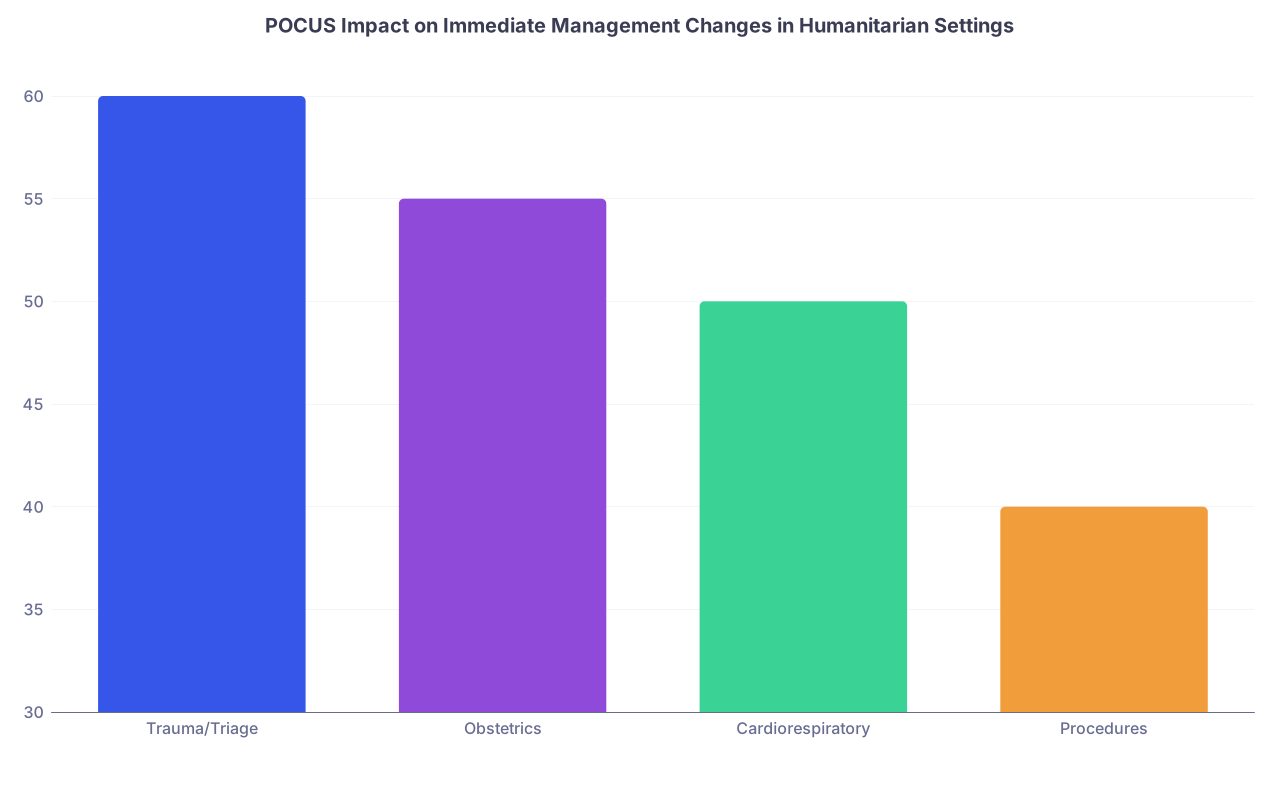
| Category | Value |
|---|---|
| Trauma/Triage | 60 |
| Obstetrics | 55 |
| Cardiorespiratory | 50 |
| Procedures | 40 |
Those crude percentages reflect reality from multiple field audits and NGO internal reports: about half the time or more, a focused POCUS exam changes what you do next. That is enormous.
Let us go system by system and talk about the high‑yield use cases you should actually care about.
1. Trauma and Shock: FAST, eFAST, and the “Why Is This Patient Crashing?” Question
If you remember nothing else, remember this: in resource‑limited humanitarian settings, POCUS is first and foremost a triage tool.
1.1 FAST/eFAST in Conflict and Disaster Zones
The Focused Assessment with Sonography in Trauma (FAST) and its extended version (eFAST) are not optional skills if you are working in:
- Conflict zones (blast injuries, GSWs, shrapnel)
- Earthquake response
- Any mass‑casualty setting with blunt trauma
Your high‑yield questions:
- Is there free fluid in the abdomen?
- Is there pericardial fluid with tamponade physiology?
- In eFAST, is there pneumothorax or hemothorax?
Where it changes management in humanitarian missions:
- Deciding who goes to the OR when you have one operating table and three hypotensive abdominal trauma patients.
- Deciding whether to send a patient for a 6‑hour transport to a surgical center.
- Deciding whether a chest tube is worth the risk where you lack post‑procedure radiography.
I have watched a local surgeon in a Médecins Sans Frontières operating theatre choose between two hypotensive trauma patients based on a 3‑minute FAST. One had a clear Morrison’s pouch full of fluid; the other had no intraperitoneal fluid and a borderline effusion. The first went to laparotomy immediately. The second got fluids, close monitoring, and oxygen. In that environment, that is rational triage, not cruelty.
High‑yield technical points:
- Scan windows you cannot skip: RUQ (Morrison), LUQ, pelvis, subxiphoid (pericardial).
- In eFAST, scan anterior chest for lung sliding and pleural line.
- You care about “definitely positive” or “definitely negative.” This is not the place for subtle anechoic slivers that only a fellowship‑trained radiologist would call.
Ethical issue: You must not overpromise. A “negative” FAST does not rule out hollow viscus injury. You need to be brutally honest with your team: “No large fluid; might still have injury; observe closely.”
1.2 Shock: The RUSH‑Style Approach in Settings without Lab or Echo
The Rapid Ultrasound in Shock (RUSH) exam—or any structured shock protocol—is pure gold in a humanitarian ICU tent.
You are usually dealing with:
- Hypovolemia (diarrheal disease, hemorrhage, malnutrition)
- Septic shock (pneumonia, abdominal sepsis, malaria)
- Cardiogenic shock (less common, but present)
- Obstructive (massive PE, tension pneumothorax, tamponade—rare but catastrophic)
In high‑resource ICUs, you have lactate, ScvO2, serial ABGs, full echocardiography. On mission, you have:
- Blood pressure cuff
- Maybe a lactate (if the cartridge machine is working)
- Your stethoscope
- Your ultrasound
POCUS here answers:
- Is the ventricle hyperdynamic and empty? → Give fluids.
- Is the ventricle poorly contracting, big IVC, B‑lines in lungs? → This is cardiogenic; do not drown them with fluids.
- Is there pericardial effusion with right ventricular diastolic collapse? → Emergency pericardiocentesis may be life‑saving.
- Are there diffuse B‑lines (pulmonary edema) or focal consolidation (pneumonia)?

| Step | Description |
|---|---|
| Step 1 | Patient in shock |
| Step 2 | Cardiac view |
| Step 3 | Check IVC small/collapsible |
| Step 4 | Check lungs for B lines |
| Step 5 | Consider tamponade |
| Step 6 | Hypovolemic - fluids |
| Step 7 | Cardiogenic - cautious fluids |
| Step 8 | Pericardiocentesis if feasible |
| Step 9 | LV empty and hyperdynamic |
| Step 10 | LV poor function |
| Step 11 | Pericardial effusion |
You are not trying to do full echo. You are answering three questions:
- Is the LV squeezing well?
- Is there tamponade?
- Is the IVC “empty” or “engorged”?
Ethical piece: If you detect tamponade in a setting where no one has the skills, equipment, or sterile supplies for pericardiocentesis, what do you do? You still scan—but you frame it with the team as prognostic and explanatory, not as a promise of intervention.
2. Respiratory Distress: Pneumonia, Effusion, Edema, or “Just Wheeze”
The single most common misuse of POCUS in global health is ignoring the lungs. That is a mistake.
Chest X‑ray in humanitarian settings tends to be:
- Unavailable
- Broken
- Or so delayed it might as well not exist
POCUS of the lungs is fast, mobile, and extremely actionable.
2.1 Distinguishing Pneumonia from Asthma/Reactive Airway
You already know the scenario: Child in respiratory distress. Tachypneic. Some crackles. Some wheeze. Malnourished. Could be bronchiolitis, bacterial pneumonia, viral pneumonia, asthma, or all of the above. The default in many low‑resource settings is a cocktail: ceftriaxone + salbutamol + steroids + oxygen if available. It is not a strategy. It is a shrug.
Ultrasound lets you:
- See focal consolidation with dynamic air bronchograms → real pneumonia.
- See diffuse B‑lines but no focal consolidation → more likely viral process or pulmonary edema.
- See an essentially normal lung pattern with preserved A‑lines and sliding → maybe wheeze/asthma, not pneumonia.
This does two big things:
- Reduces useless antibiotic use in very high‑resistance environments.
- Identifies the kids who actually need aggressive antibiotic therapy and closer observation.
2.2 Pleural Effusion and Empyema
You will see a lot of:
- TB effusions
- Parapneumonic effusions
- Empyema
- Malignant effusions in older adults
POCUS tells you:
- Is there a large effusion that justifies thoracentesis/chest tube?
- Is it simple or complex/septated?
- Where is the safest window for drainage?
Procedural guidance here can be the difference between a life‑saving chest tube and a fatal organ laceration in a setting without immediate backup. You do not poke blindly if you have ultrasound. That is malpractice with a battery.
2.3 Pulmonary Edema in Humanitarian Cardiology
You will meet the forgotten hearts: rheumatic valve disease, advanced cardiomyopathy from Chagas or peripartum cardiomyopathy, poorly controlled hypertension.
Lung POCUS clues:
- Bilateral, symmetric B‑lines in multiple lung zones → pulmonary edema.
- Dilated LV with poor function on basic cardiac view.
- Dilated IVC and possibly pleural effusions.
In a mission hospital without BNP, echo, or reliable chest X‑ray, this is how you decide:
- Who gets furosemide and fluid restriction.
- Who you avoid flooding with IV fluids “for hypotension.”
3. Obstetrics: The Highest-Yield Use Case You Are Probably Undertrained For
If you are going anywhere with high maternal mortality—and that is most places where humanitarian missions operate—POCUS in obstetrics is non‑negotiable.
Let us be precise. The high‑yield obstetric POCUS questions in humanitarian settings are:
- Is this pregnancy intrauterine and viable?
- Singleton or multiple gestation?
- Approximate gestational age?
- Placental location—particularly low‑lying or previa?
- Fetal presentation near term.
- Is there obvious gross abnormality incompatible with neonatal survival?
| Question | Typical Impact on Management |
|---|---|
| Intrauterine vs ectopic | Decide referral/emergency surgery |
| Gestational age (rough) | Time of delivery, steroid timing |
| Placenta previa/low-lying | Plan for facility delivery vs home |
| Fetal presentation near term | Decide on trial of labor vs referral |
| Viability (FHR) | Manage expectations, avoid futile care |
3.1 Early Pregnancy: Viable IUP vs Ectopic vs Failing
In many field hospitals, a woman with early pregnancy pain or bleeding is managed based on:
- Hemodynamic status
- Qualitative pregnancy test
- Clinical guess
If you can do even a basic transabdominal scan (and, if available, transvaginal), you can:
- Confirm a clear intrauterine gestational sac with yolk sac and/or fetal pole and heartbeat.
- Raise concern for ectopic if uterus is empty and there is adnexal mass or free fluid.
In a place with no OR, that can be the difference between:
- Early referral while she is still stable.
- Watching her bleed to death in your ward because you “did not know” until it was too late.
Ethically, failing to use POCUS you have—because you are untrained or unsure—is a problem. Humanitarian medicine does not exempt you from standard of care if the tools are present.
3.2 Second and Third Trimester: Placenta, Presentation, and Rough Dating
Critical, high‑yield applications:
- Placenta previa or low‑lying placenta near the os → this labor should not happen at home or in a clinic without surgical capability.
- Breech or transverse lie near term → anticipate difficult labor; consider referral if possible.
- Rough dating (biparietal diameter, femur length) when women have no idea of last menstrual period.
In the field, these scans decide:
- Who must deliver at the hospital rather than home.
- Who should be prioritized for the limited slots in a surgical facility.
- Who you should not induce in a peripheral center.
3.3 Fetal Well-being and End-of-Life Ethics
There is an uncomfortable but real ethical layer. POCUS will show you:
- Anhydramnios with severe anomalies.
- Lethal malformations (anencephaly, acrania, gross limb-body wall defects).
- Intrauterine fetal demise.
In many contexts, termination is illegal or culturally forbidden. You are not there to impose Western norms. But you are obligated to:
- Be honest with the mother about prognosis in words she and her community understand.
- Avoid promising neonatal care that your facility absolutely cannot provide (e.g., 26‑weekers in a district hospital with no ventilators).
- Prepare families early for poor outcomes rather than staging heroic but futile rescues that also consume scarce resources.
POCUS does not just improve diagnosis—it forces you to confront uncomfortable truths earlier in the pregnancy.
4. Infectious Disease and Tropical Medicine: The Quiet Power Use Cases
Everyone associates POCUS with trauma. The sneakily powerful domain in humanitarian medicine is infectious disease and “tropical” pathology.
4.1 TB and HIV: Effusions, Pericarditis, Abdominal TB
Co‑endemic HIV and TB means:
- Exudative pleural effusions
- Pericardial TB with effusion
- Abdominal TB with ascites and bowel thickening
High‑yield POCUS roles:
- Detecting pericardial effusion in a chronically ill, tachycardic, dyspneic patient with muffled heart sounds and equivocal chest X‑ray.
- Characterizing pleural effusions (loculated vs free) and guiding thoracentesis.
- Identifying gross ascites and bowel wall thickening suggestive of abdominal TB.
Again, the question: does this change management?
Yes. If you diagnose TB pericarditis early, you can:
- Start anti‑TB therapy.
- Consider pericardiocentesis if tamponade physiology is present and you have the skills.
- Avoid mislabeling as “heart failure” and drowning the patient in diuretics alone.
4.2 Schistosomiasis, Cirrhosis, and Portal Hypertension
In endemic regions, POCUS is an extension of your physical exam:
- Dilated portal vein, ascites, large spleen → portal hypertension (schistosomiasis, cirrhosis).
- Liver texture changes.
This matters if you are:
- Deciding on anticoagulation (massive varices at risk?).
- Triaging patients for scarce endoscopy services.
- Counseling families about prognosis and need for long‑term follow‑up beyond the mission.
4.3 Malaria and Severe Systemic Sepsis
This is still an evolving area, but there are patterns:
- Hypovolemic patients with severe malaria → hyperdynamic LV, small IVC.
- Capillary leak and pulmonary edema → B‑lines, pleural effusions.
You use POCUS here to:
- Avoid the reflex of “keep hanging fluids” when the patient is already leaking fluid into lungs.
- Differentiate cardiogenic pulmonary edema from ARDS‑like picture in severe sepsis.
5. Procedures: From Blind to Guided, Even in the Field
If you have ever done a blind subclavian line in a dimly lit tent with no X‑ray, you know how much you want POCUS.
High‑yield procedural POCUS on mission:
- Vascular access: Internal jugular central lines, difficult peripheral IVs in dehydrated kids, midlines.
- Thoracentesis and chest tube placement: Marking the safest spot, estimating depth.
- Paracentesis: Avoiding bowel and vessels.
- Pericardiocentesis in tamponade: Under ultrasound guidance, not “landmark and pray.”
Two reality checks:
- If your team does not do these procedures at home under ultrasound, you are not going to become safe at them in a tent. Training comes first.
- Ultrasound can create a false sense of security. Sterile technique still matters. Needle control still matters.
Procedural POCUS is an ethical upgrade: fewer complications, less iatrogenic harm in places that cannot easily rescue your mistakes.
6. Training, Competence, and the Ethics of “Doing Ultrasound” on Mission
Let us talk about the uncomfortable part: you, the operator.
POCUS in humanitarian missions sits at an ethical crossroads:
- Done well, it saves lives and reduces unnecessary suffering.
- Done badly, it creates misdiagnosis, delayed treatment, and false reassurance.
The common sins I have seen from visiting clinicians:
- Overcalling every tiny anechoic sliver as “hemoperitoneum” or “tamponade.”
- Using POCUS to justify risky procedures they are not truly trained for.
- Teaching local staff techniques the visitor themselves barely understands.
You must be brutally honest with yourself about three things:
- Which applications are you actually competent in? Not “watched on YouTube.” Competent.
- Which image interpretations have you validated against a gold standard in your own training context?
- What will you do differently after each POCUS finding, specifically?

6.1 Minimal Competency Thresholds Before You Go
I am blunt about this with residents who ask to join field teams. Before you rely on POCUS on mission, you should be able to:
- Perform and interpret a basic FAST/eFAST with >90% sensitivity for moderate‑large free fluid in your home environment.
- Obtain an apical or parasternal cardiac view and qualitatively judge LV function (hyperdynamic vs normal vs poor) and gross pericardial effusion.
- Perform basic lung ultrasound to distinguish A‑line predominant (normal/wheeze) from consolidation and from diffuse B‑lines.
- Do a basic second/third trimester OB scan: confirm FHR, presentation, placenta location, rough dating.
And you should have done all of that under supervision with feedback.
If you cannot, you are not “using POCUS.” You are experimenting on vulnerable patients.
6.2 Teaching Local Staff: Empowerment vs Dumping
POCUS democratizes imaging. That is good. It also creates a temptation: dump a device, run a 2‑day course, take photos for your NGO’s social media, and fly out.
That is unethical.
Responsible POCUS capacity building for local clinicians means:
- A longitudinal training plan, not a weekend workshop.
- Simple, context‑appropriate protocols (FASTER, BASIC, etc.), not full echo.
- Clear criteria for when to scan, how to document, and when to ask for help.
- Integration into local workflows (triage, maternity ward, TB clinic), not just the visiting team’s agenda.
If your project ends with a dusty machine in a locked cupboard, you did not “strengthen local capacity.” You wasted donor money and patient opportunity.
7. Practical Constraints: Devices, Power, Infection Control, and Data
The glamorous ultrasound screen hides a lot of unglamorous logistics.
7.1 Choosing and Maintaining Equipment
Handheld probes (Butterfly, Lumify, Kosmos, etc.) are seductive. You still have to ask:
- Battery life and charging: Do you have stable electricity? Solar? Generators? Enough power banks?
- Ruggedness: Can it survive heat, dust, humidity, and transport?
- Infection control: Can you safely clean probes between patients? Do you have compatible disinfectants?
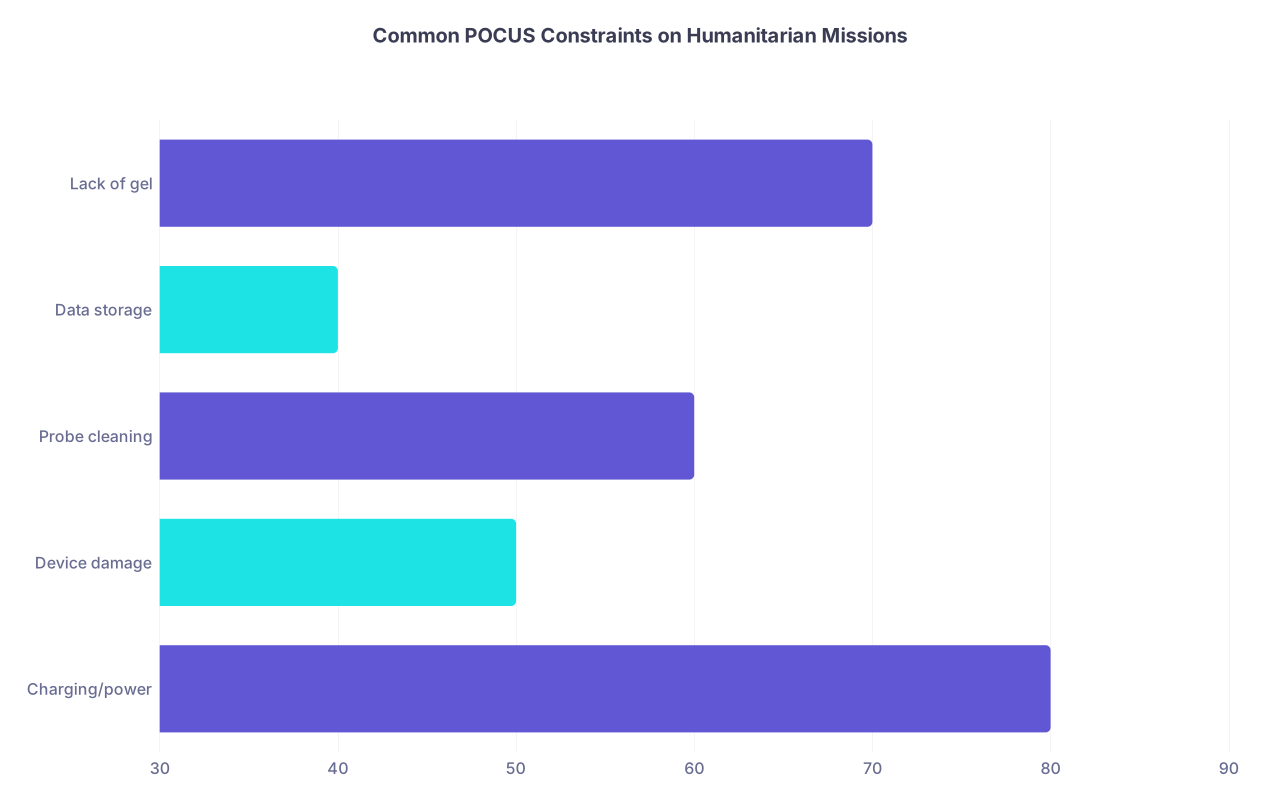
| Category | Value |
|---|---|
| Charging/power | 80 |
| Device damage | 50 |
| Probe cleaning | 60 |
| Data storage | 40 |
| Lack of gel | 70 |
Gel shortages are real. Workarounds like water or alternative viscous substances are used on mission, but you must ensure they do not damage the probe or compromise infection control.
7.2 Documentation and Data Ownership
Two big ethical issues:
- Image storage: Where do images go? On a personal phone? Local server? Cloud in another country?
- Patient privacy: Are you capturing identifiable images and sharing them in teaching or social media without proper consent?
You should:
- Use deidentified image storage whenever possible.
- Obtain explicit consent for any image used for teaching or publication, in the patient’s language and cultural frame.
- Comply with local laws and norms around data storage—your own country’s HIPAA rules are not the only thing that matters.
8. The Psychological Impact: Hope, Fear, and the Ultrasound Screen
Do not underestimate what that glowing screen does to people.
For many patients in humanitarian settings, ultrasound is the first “high‑tech” medical encounter in their lives. They will read meaning into everything:
- A frown at the screen → “Something is terribly wrong.”
- A nod and smile → “Everything is fine.”
You must develop a disciplined communication routine:
- Explain before you scan what you are looking for and what you might or might not be able to see.
- During the scan, avoid commentary beyond neutral descriptions.
- Afterward, give a simple, honest explanation of findings and what it means for decisions today, not an organ‑by‑organ lecture.

In maternal care, in particular, there is a risk of creating emotional bonds with a pregnancy that may not survive because you show detailed fetal images without the capacity to manage complications. Be deliberate about what you show and say.
9. How to Prioritize POCUS Use Cases on Your Next Mission
You have limited time, limited battery, and limited attention. You cannot scan everyone for everything.
Here is how I would prioritize, in order of real‑world impact in most humanitarian contexts:
- Shock and trauma (FAST/eFAST + basic cardiac + lung).
- Obstetric scanning for high‑risk pregnancies and early pregnancy pain/bleeding.
- Respiratory distress (lung POCUS to distinguish pneumonia, effusion, edema, wheeze).
- TB/HIV‑related effusions and pericarditis.
- Procedure guidance for high‑risk, high‑yield procedures (paracentesis, thoracentesis, central lines).
- Abdominal pathology where ultrasound might actually change disposition (e.g., massive ascites, gross masses).

If you try to do everything—advanced echo, detailed hepatic Dopplers, fancy MSK—you will do nothing well.
10. Where This Fits in Your Own Development and Ethics as a Clinician
You are not just learning POCUS. You are shaping the kind of clinician you are going to be in crisis and scarcity.
Three habits you want to build now:
- Ruthless diagnostic focus. Every scan must answer a concrete management question.
- Relentless humility. If an image does not make sense, you say, “I do not know,” not, “I guess it is probably fine.” The patient pays the price for your ego.
- Shared decision‑making, even under a tent. You use POCUS to include patients and families in real discussions of risk, prognosis, and options, not as a black‑box magic trick.
The frontier now is tele‑ultrasound, AI‑assisted interpretation, and structured training pipelines for local clinicians. Those are coming. They will change what you can do, and they will bring a fresh set of ethical headaches.
For now, your task is simpler and harder: master the handful of high‑yield POCUS applications that truly change lives in humanitarian missions, and use them with discipline, honesty, and respect.
Once you can do that consistently, you are ready for the next layer—building local POCUS programs that still function after you fold your scrubs and fly home. But that is a discussion for another day.


