

The way most humanitarian organizations talk about "family-friendly" deployments is misleading. If you are married with kids, the rules of the game are completely different—and most brochures do not tell you that.
You are not just asking, “Should I go?”
You are asking, “What happens to my kids if this goes badly, and what does this do to my marriage over three, five, ten years?”
Let’s draw an honest options map.
1. First reality check: what you’re actually choosing between
Before we get fancy with organizations and contracts, you need to define the type of humanitarian involvement you’re considering. There are really only five viable models once you have a spouse and kids in the picture.
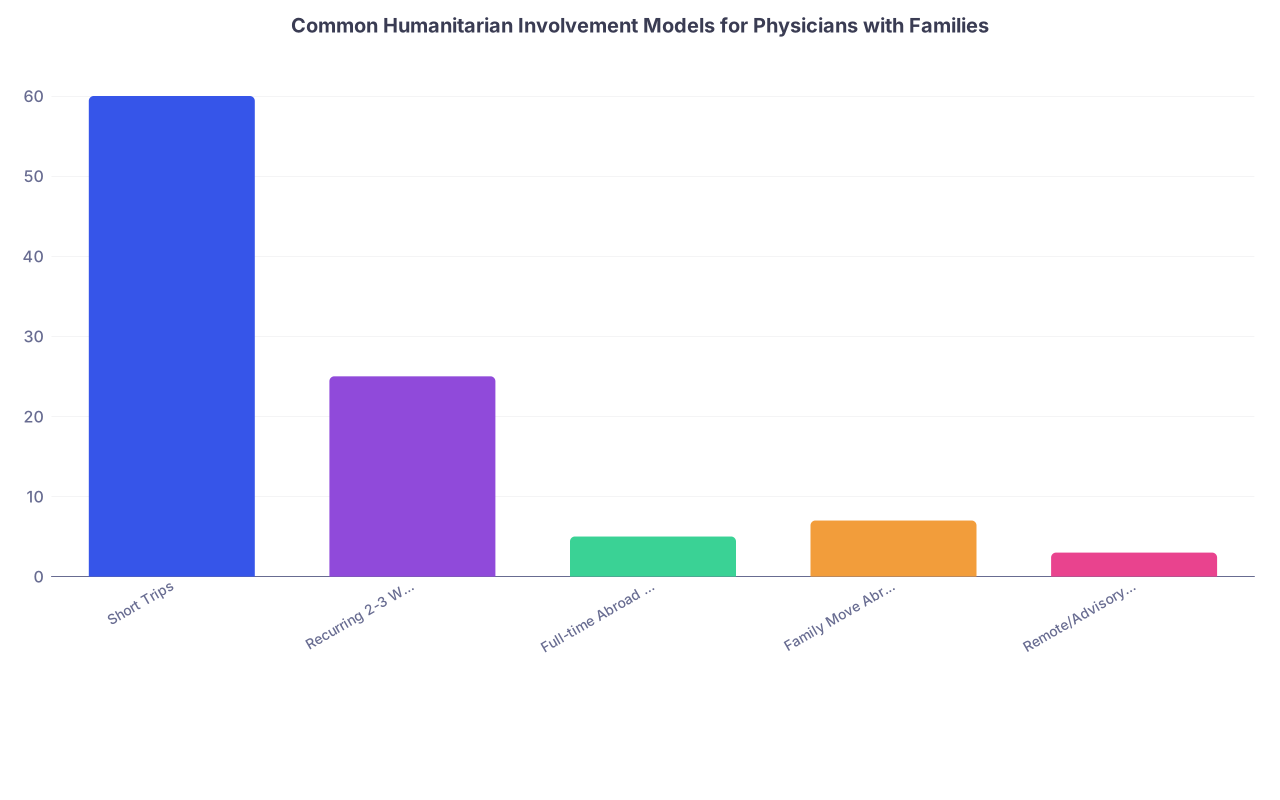
| Category | Value |
|---|---|
| Short Trips | 60 |
| Recurring 2-3 Week Blocks | 25 |
| Full-time Abroad (Solo) | 5 |
| Family Move Abroad | 7 |
| Remote/Advisory Only | 3 |
These five:
- Short, high-intensity deployments (1–4 weeks, once or twice a year)
- Recurring 2–3 week blocks integrated into your job
- Full-time abroad while family stays home (6–12+ months)
- Family relocation to a secure hub country with you doing field trips
- Remote/ advisory / capacity-building work with minimal or no travel
Each has a very different impact on:
- Your marriage
- Your kids’ stability
- Your income and benefits
- Your risk exposure
Let’s walk through what each actually looks like in real life, and where it fits in your situation.
2. Option 1: Short, high-intensity deployments (1–4 weeks)
This is where most married-with-kids clinicians should start. Not because it’s trivial, but because it’s survivable.
What it actually looks like:
- You take 1–4 weeks off (often unpaid or PTO)
- You join a surgical camp, emergency response, or short-term team (MSF training, ICRC course, Samaritan’s Purse, IMC, etc.)
- Your spouse carries 100% of home life during that window
- You come back exhausted, jet-lagged, emotionally overloaded—and hit normal life on Monday
Best for you if:
- Your kids are under 10 and highly dependent
- Your spouse does not have a highly inflexible job
- You’re still testing whether humanitarian work is a phase or a real professional direction
- Financially, you can weather a bit of unpaid time
Red flags I’ve seen:
- You schedule trips back-to-back with zero transition time. You land Sunday night and you’re back in clinic Monday. Your spouse resents you; your kids only see you tired and emotionally absent.
- You treat your spouse like a logistics officer, not a partner. “I booked the flights; you’ve got the kids, right?” That destroys goodwill fast.
- You think these trips are “vacation from work.” They’re not. They’re a second job.
If you pursue this path, build hard rules:
- Rule 1: One recovery weekend minimum. Land Wednesday/Thursday, do nothing official until at least Monday. You will be emotionally weird. You need space to reset.
- Rule 2: Spouse gets comp time. They’re effectively solo parenting. When you return, you owe them actual protected time off, not just “thanks so much”.
- Rule 3: Pre-brief and debrief. Two non-negotiable conversations: before you say yes to the trip, and after you come back. Clear expectations going in; honest emotional unpacking coming out.
If you cannot protect those three rules given your job and family realities, you’re not ready for even short deployments yet. You’ll burn your home base first.
3. Option 2: Recurring 2–3 week blocks built into your job
This is what it looks like when humanitarian work becomes part of your identity but you still prioritize a stable home.
What it actually looks like:
- You negotiate with your employer: 2–6 weeks a year for global health work
- You return to the same site or same partner every time—building capacity, not “voluntourism”
- You usually work through a consistent partner: e.g., Partners In Health, academic global health program, faith-based mission hospital, or a stable NGO
- Your family knows: “Every spring, mom/dad is gone for 3 weeks”
This path is sustainable if you:
- Have a stable, supportive employer (some academic centers, a few big systems)
- Can line up child care, extended family, or trusted backup for those blocks
- Are disciplined in saying no to “one more trip this year” just because an NGO emails in a panic
Where it goes wrong:
- Mission creep. You start with “2 weeks per year” and it becomes 4, then 6, then “just one emergency response” and suddenly you’ve been gone 9 weeks. I’ve watched marriages break exactly this way.
- Kids feeling abandoned. If they’re teens, they’ll vocalize it. If they’re under 8, they internalize it and act out.
- Spouse low-grade resentment. They support the idea of global health, but they’re bearing all the invisible cost.
Structuring this well:
- Fix a yearly cap. For example: maximum 4 weeks/year, in 2 trips or less. Put it on the calendar in January. Anything beyond that requires a fresh family decision, not a solo “yes.”
- Choose 1–2 organizations and stick with them. The more you’re integrated into one system, the less chaotic it is. They’ll know your constraints, family situation, and schedule.
- Build a “deployment playbook” at home. Who does school pickups? What happens if a kid gets sick and you’re in a no-signal area? Who has durable power of attorney if something happens to you?
4. Option 3: Full-time abroad while family stays home
This is the one everyone romanticizes and very few families actually tolerate long-term.
What it actually looks like:
- You sign a 6–12+ month contract (MSF, ICRC, IMC, etc.)
- Your spouse and kids stay in your home country
- You live in a compound / guesthouse with a rotating cast of expats
- You come home maybe once or twice, for 2–4 weeks at a time
This can make sense in narrow situations:
- Kids are older teens with strong local anchors (school, sports, extended family) and don’t want to move
- Your spouse has a career they cannot uproot
- You’re between jobs and have a clean calendar
- You’re intentionally doing this as a finite pivot: “I will do this one year, then return to a more conventional setup”
The risks are obvious but people still underestimate them:
- Emotional distance. Regular video calls help, but they don’t replace diapers changed at 2am or attending a school play.
- Marital strain. Your spouse is effectively a single parent. Resentment, isolation, “you’re off doing heroic things while I hold everything together” is a real, corrosive dynamic.
- Kids developing a narrative: “Dad/mom chose strangers over us.” That may not be fair, but kids are not fair. They’re concrete.
If you still feel pulled toward this, do it like an adult, not an escapist:
- Put a hard timebox on it. “One 9-month posting, then 6–12 months back home before we even discuss another.” Put it in writing between you and your spouse.
- Get a therapist before you leave. For you and for your spouse. Agree you’ll both have regular check-ins with someone neutral.
- Build a financial justification. If this pays poorly (many NGOs do), you need to articulate clearly what you are “buying” with the sacrifice: skills, experience, credentials for a future global health career.
If your spouse is quietly saying, “I’ll support whatever you decide,” you need to slow down. That sentence, in this context, often means: “I don’t know how to stop you and I’m preparing myself to endure whatever you do.”
5. Option 4: Move the whole family to a hub country
This is the least discussed but often the most realistic “serious global health” route for people with kids.
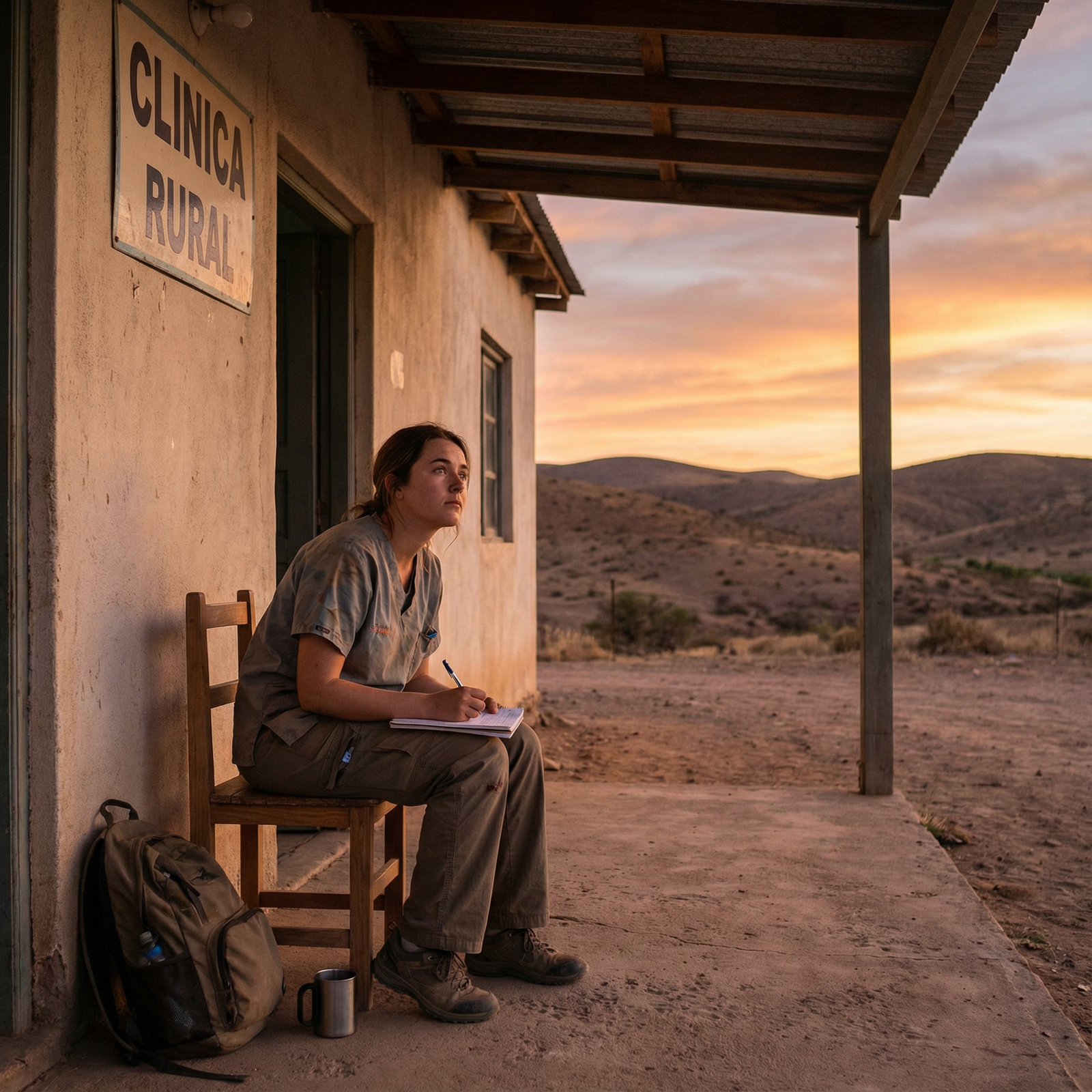
You base your family somewhere relatively safe with good schools—Nairobi, Kigali, Accra, Bangkok, Amman—and you do shorter field deployments (days to a couple of weeks) into higher-risk or more remote settings.
What it actually looks like:
- You have an expat contract (UN agency, academic global health unit, major NGO regional office, or long-term mission hospital in a stable town)
- Your kids attend international or local schools; your spouse either works locally, remotely, or runs the home base
- You travel regionally into humanitarian contexts, but your family stays in the safer hub
Pros:
- You’re physically closer to where you work, so trips can be shorter and more frequent
- Kids grow up globally aware, often bilingual, with strong cross-cultural skills
- Lower flight burden and jet lag than flying in from North America/Europe repeatedly
Cons:
- Schooling costs can be huge unless covered by your contract
- Your spouse may feel uprooted and isolated, especially early on
- You’re still disappearing into dangerous or destabilized areas for stretches
This path is best if:
- Your kids are still flexible (rough rule: 4–12 is easiest for international moves; 13–17 is tougher but possible with buy-in)
- You or your spouse actually want the expat lifestyle, not just tolerate it
- You can secure a package that covers: housing, school fees, evacuation insurance, and some form of R&R home leave
If you go this direction, you need to negotiate like a professional, not like a starry-eyed volunteer.
| Category | Ask Explicitly About |
|---|---|
| Housing | Security, distance to schools, costs |
| Schooling | Tuition support, school options, waiting lists |
| Travel | Frequency of field travel, length of trips |
| Safety | Evacuation plans, medical care access |
| Home Leave | Number of paid trips home per year |
If an organization cannot answer these clearly, they’re not ready to host a family. Do not be the guinea pig.
6. Option 5: Remote, advisory, and capacity-building roles
You don’t have to cross a border to do meaningful humanitarian work. You might just need to rethink what “deployment” means.
What this looks like:
- Technical advisor or consultant (clinical guidelines, protocols, training programs)
- Telehealth support for clinicians in low-resource or crisis settings
- Part-time faculty for a global health training program, mentoring in-country providers
- Work with organizations like WHO collaborating centers, academic partnerships, diaspora medical associations
This can be especially powerful if:
- Your kids are in a high-need season (early childhood, major school transitions, health issues)
- Your spouse’s job or a dependent parent keeps you physically anchored
- You’re mid-career and bring expertise in systems, QI, education, or policy
Most people underestimate how much impact you can have remotely if you commit to a stable partner and a long horizon (3–5+ years). Yes, it’s less “heroic” than a cholera camp. It’s also less likely to blow up your marriage.
If you’re craving on-the-ground work but know your family can’t absorb it right now, this is not a consolation prize. It’s a strategic choice.
7. How to actually make the decision as a family
You cannot approach this as “I need to convince them.” If you do that, you’ll get compliance, not partnership.
You need a structured conversation that surfaces:
- What your spouse actually fears
- What your kids actually notice and care about
- What you’re truly seeking (and what you’re trying to escape)
Here’s a simple but effective framework I’ve seen work.

| Step | Description |
|---|---|
| Step 1 | You want to deploy |
| Step 2 | Family meeting |
| Step 3 | Scale back or delay |
| Step 4 | Define max time away per year |
| Step 5 | Choose model 1-5 |
| Step 6 | Trial period 12-24 months |
| Step 7 | Family review and adjust |
| Step 8 | Spouse aligned? |
| Step 9 | Kids impact acceptable? |
What you do:
- Individual reflection first. You write down, privately:
- Why do I want to go?
- What am I afraid of if I go?
- What am I afraid of if I never go?
- Spouse does the same. Same questions, plus:
- What support would I need to survive this well?
- What is my absolute red line (max time away, safety concerns, financial hit)?
- Then you compare. Calmly, and you’re not allowed to dismiss each other’s fears as “irrational.”
With kids:
- Under ~8: keep it basic. “Mom/dad is going to help doctors in another country for a short time. You’ll be with [spouse/grandparent]. I’ll call every day. Let’s mark on a calendar when I come back.”
- 9–13: invite questions and concerns. They deserve a say, but not veto power.
- Teens: they need genuine input. If every time you leave, your 15-year-old crashes academically and emotionally, you have to take that seriously.
And one hard truth:
If your spouse is a hard no and you’re a hard yes, you don’t have a deployment problem. You have a relationship problem. Fix that first.
8. Safety, ethics, and the “what if I don’t come back” problem
You cannot ignore this just because it’s uncomfortable.
If you’re a parent, every humanitarian deployment carries two ethical duties:
- Duty to the patients/communities you’re going to serve
- Duty to the dependents who rely on you staying alive and (mostly) functional
You must balance them. Hero fantasies violate that balance.
Bare minimum responsible prep before any serious deployment:
- Updated will and guardianship arrangements. In writing. Spouse knows where.
- Life insurance and disability insurance that actually cover what you’re doing (deployment clauses matter).
- A frank spouse conversation: “If I die or am seriously injured, here’s what happens financially; here’s our plan for the kids.”
Yes, it’s grim. It’s also grown-up.
From a safety and ethics standpoint, ask potential sending organizations:
- What is your security protocol in unstable settings?
- Who decides if the team evacuates?
- Have you ever left local staff behind while expats evacuated? (Listen closely to how they answer this one.)
- What mental health support is available during and after deployment?
If the answers are vague, idealistic, or dismissive (“We’ve never had a problem”), that’s not noble. That’s irresponsible. You have kids; you do not join amateurs.
9. A staged plan: 5-year roadmap for serious-but-sane involvement
For many married physicians with kids, the answer is not yes or no. It is when and how.
Here’s a pattern I’ve seen work well:
Year 1:
- Do 1 short (1–2 week) deployment with a reputable organization
- Treat it as an experiment. Collect data on how it affects you, your spouse, and your kids
- Debrief as a family. What worked, what hurt, what surprised us?
Year 2–3:
- Move to a stable model: 2–4 weeks per year, same partner, predictable timing
- Start remote/advisory work in between trips if you want deeper involvement
- Pressure-test your relationship and kids’ responses. Adjust time away accordingly.
Year 4–5:
- If everyone’s still on board and you want more: consider
- A family move to a hub, OR
- A single long deployment (6–9 months) with clear, written family agreements and a return plan
- Simultaneously build the career side: global health credentials, formal roles, protected time written into contracts
At any point, if your spouse or kids are clearly not coping, you step back. Not because you are weak or unserious, but because your ethical priority order is clear: you do not sacrifice your own dependents to “save” other people’s.
You find another way to contribute.
10. Final clarity check
Before you commit to anything, sit alone with these three questions:
- If nothing about my family situation changed, what level of humanitarian involvement would still feel right in 10 years?
- If my kid needed me intensely next year—health crisis, mental health, school meltdown—would I regret having locked in long deployments?
- Is there a version of this work—more teaching, more systems, more remote support—that scratches the itch without taking the same toll?
If your honest answers point toward a more moderate or slower path, listen to that. The humanitarian sector will still be here in five years. Your kids will not still be seven, or ten, or fifteen.
You’re not just choosing a deployment. You’re choosing a story your family will tell about who you were to them.

Key points to walk away with
- There are multiple viable models of humanitarian involvement once you have a spouse and kids; the default “go for 6–12 months” is usually the worst starting point.
- You owe your family structured, honest decision-making—time caps, safety planning, financial planning, and real permission for them to say “this is too much.”
- If you treat this as a 5-year staged plan instead of an all-or-nothing leap, you can do real global health work without blowing up your home life in the process.


