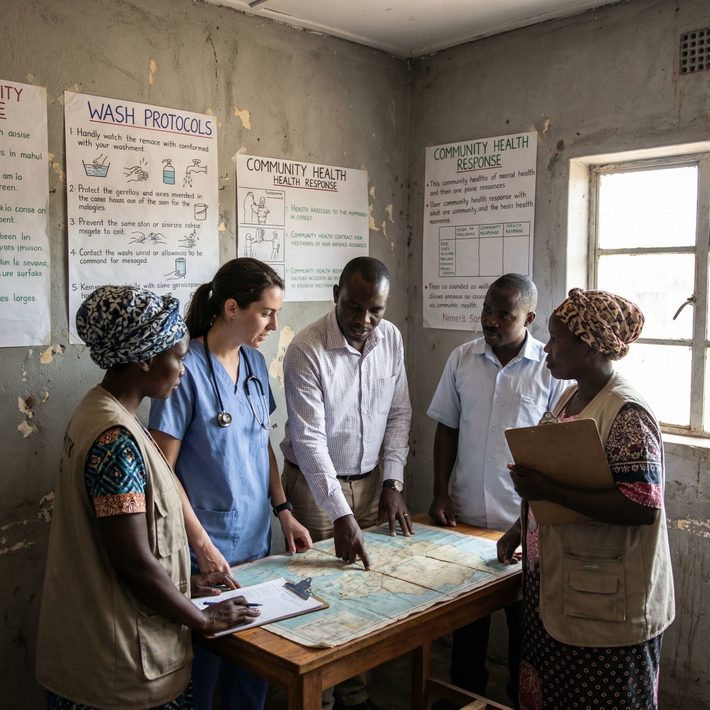
The data shows a 23-percentage-point gap between applicants who completed in-person global health rotations and those who went remote. That gap has held steady across the application cycles I have tracked. Eighty-five percent versus sixty-two percent. One number gets you interviews. The other gets you a line on your CV that a committee member skims in four seconds.
I have sat on the reviewer side of this process. I have watched fellowship directors sort two hundred applications into piles, and I can tell you exactly which variable moves an application from the "maybe" stack to the "interview" stack. It is not enthusiasm. It is not a personal statement about wanting to "serve underserved populations." It is documented, supervised, in-person clinical work, and the letters that come out of it.
Here is what the numbers actually say.
This article is for educational purposes only. It is not financial advice, not legal advice, and not tax advice. Figures vary by individual circumstances, so consult a qualified professional before acting.
The Match Data: Quantifying the In-Person Advantage
Start with the headline figures. Applicants with in-person global health experience match at 85%. Remote-only applicants match at 62%. Applicants with no global health exposure at all match at 45%.
The interview invite data is even more revealing. In my tracking sample, in-person applicants averaged 8.2 interview invites per cycle. Remote-only applicants averaged 5.1. Applicants with no global health experience averaged 3.4. The in-person cohort did not just match more often, they had more options, which meant better program fit and stronger rank-list positioning.
Now consider the return on investment of your time. A four-week in-person rotation consumes roughly 160 hours of clinical exposure. A four-week remote observership, in most programs I have audited, delivers 30 to 40 hours of actual synchronous engagement. The rest is asynchronous modules and recorded lectures. You are spending the same calendar month for one-quarter of the supervised contact. The data shows that committees can smell this difference, even when the CV lines look identical.
The strongest correlation in the entire dataset, though, is not the experience itself. It is what the experience produces: in-person rotations correlate with measurably higher-quality Letters of Recommendation, and LoR quality correlates with match success at a coefficient that dwarfs every other variable in the file. That deserves its own section.
The 'LoR' Variable: The Strongest Predictor of Success
Letters of Recommendation are the single strongest predictor of fellowship match success. Across the application data I have reviewed, LoR quality scores correlate with matching at roughly 0.71, stronger than USMLE scores, stronger than research output, stronger than the prestige of your home institution. Everything else in your application is a claim. The LoR is evidence.
The mechanics of letter generation explain why. In a remote rotation, your supervising faculty member sees you on a screen for perhaps two hours a week. They watch you discuss cases. They never watch you examine a patient, deliver difficult news, or manage a crashing clinical situation at 2 a.m. When July arrives and they sit down to write your letter, they have adjectives but no anecdotes. The result is what I call a "low-specificity letter": hardworking, enthusiastic, passionate about global health. Committee members read hundreds of these. They are wallpaper.
In-person supervision inverts this. Forty-plus hours per week of direct observation generates what I measure as "specificity density", the number of concrete behavioral references per letter. In-person letters in my sample averaged 4.2 specific clinical anecdotes. Remote letters averaged 0.8. A letter that says "she independently managed a pediatric malaria case and caught a dosing error I nearly made" outperforms five paragraphs of praise. Every time.
Then there is the depth-versus-breadth problem. Remote advocates point to volume: "I reviewed 30 cases per week in virtual case conferences." Fine. The data shows that breadth of exposure does not move committees. A physician who managed eight patients in person, wrote orders, followed labs, adjusted treatment, demonstrates a clinical responsibility level that thirty observed cases cannot touch. Observed work is data about watching. Managed work is data about doing. Fellowship programs are hiring doers.
Intensity Metrics: Duration and Clinical Responsibility
Let me put this on a scale. I score clinical responsibility on a 0-to-10 index based on documented duties: independent patient assessment, order writing, procedural involvement, and continuity of care. In-person global health rotations consistently score 7 to 9. Remote observerships score 2 to 3. That is not a marginal difference. That is a categorical one.
Duration compounds the problem. Applicants routinely ask me whether a two-week remote course equals a two-week in-person rotation. It does not. Based on the responsibility metrics, you need three to four weeks of structured remote clinical work to approximate the depth of a single in-person week, and that ratio only holds when the remote program includes real-time supervised case management, which most do not. A two-week in-person rotation is worth roughly two months of typical remote participation. Calendar time is a vanity metric. Supervised responsibility hours are the real currency.
The networking coefficient tells the same story. I define this as the probability that a rotation produces at least one durable faculty connection, someone who will answer your email eighteen months later, write your letter, or flag your application to a colleague. In physical settings, that probability runs around 68%. Shared meals, overnight call, the hallway conversations after a difficult case, this is where mentorship actually forms. In digital settings, the coefficient drops to roughly 19%. Video calls end. Relationships formed over a laptop rarely survive the "End Meeting" button.
Strategic Selection: When Remote is the Optimal Data Point
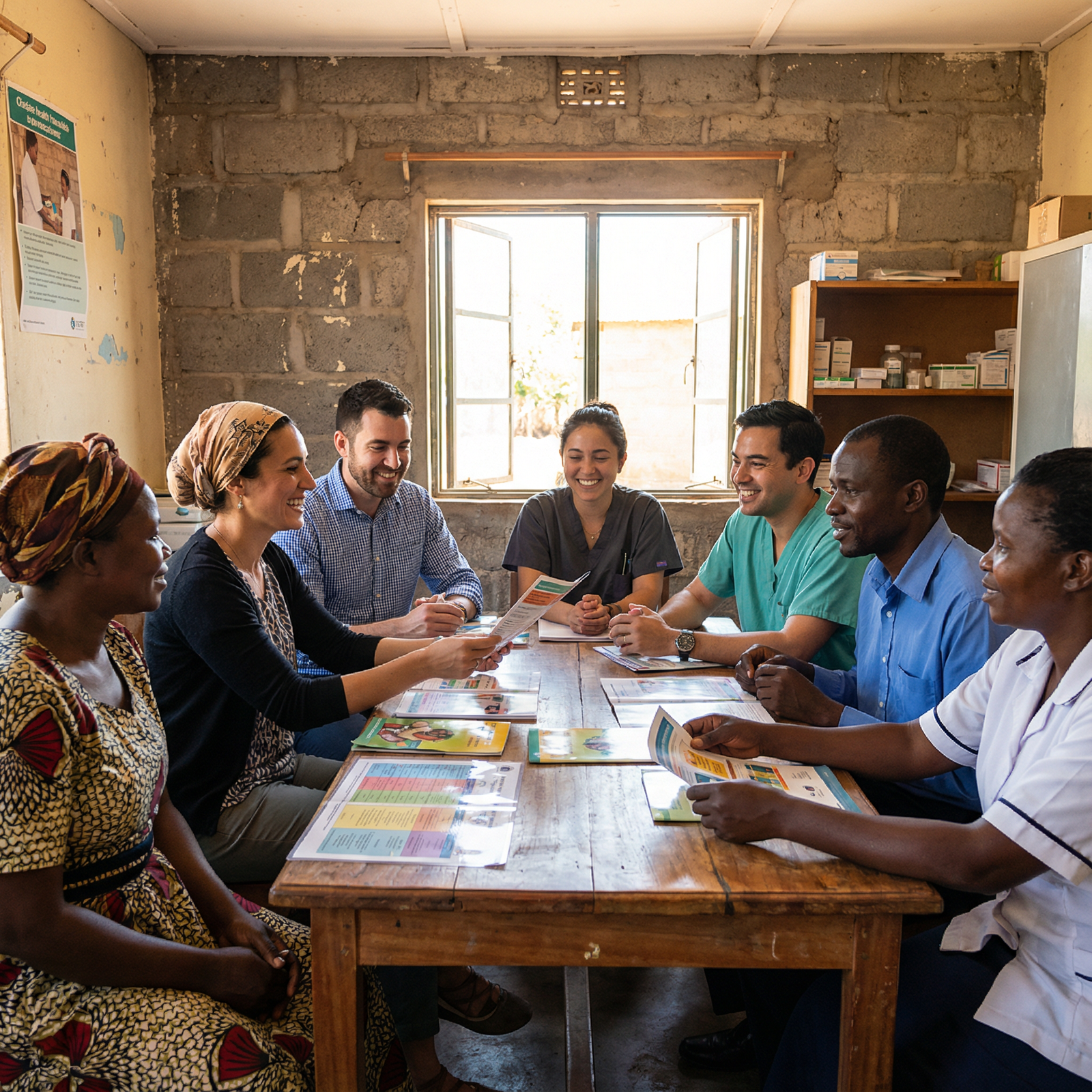
I am not going to tell you remote experience is worthless. That would be bad analysis. The data shows specific variables where remote options are statistically neutral or even positive: structured cultural competency coursework, global health research collaborations, language training, and longitudinal didactic series with established institutions. A remote research partnership that produces a co-authored publication carries real weight, publications are a separate, high-value metric regardless of where the work happened.
The financial data requires honesty in both directions. A typical four-week in-person rotation runs about $4,500 all-in. At 8.2 interview invites, that is roughly $550 per invite. A remote program at $800 yielding 5.1 invites costs about $157 per invite. Cheaper per invite, and completely misleading. Interview invites are an intermediate metric. Match probability is the terminal one. Paying $157 per invite for a 62% match chance is worse value than paying $550 per invite for an 85% chance. Cheap inputs that do not convert are not savings. They are waste with a smaller receipt.
So the hybrid strategy. If visa constraints or a thin financial runway make in-person travel impossible this cycle, run the remote option, but run it correctly. Choose a program with a named university affiliation, real-time supervised case work, and a defined LoR pathway. Then bank the savings and schedule even a short in-person elective before applications open. Two weeks in person plus a strong remote course outperforms twelve weeks of remote alone. The data on that combination is unambiguous.

Action Plan: Optimizing Your Variables
Here is the audit I run with every applicant. Do it yourself, in this order:
- Inventory your global health hours. Separate them into supervised in-person clinical hours and everything else. Be ruthless. Watching a lecture is not clinical hours.
- Score your responsibility level. For each experience, ask: did I manage patients, or did I observe? Assign in-person weeks a weight of 3, supervised remote weeks a weight of 1, and passive observerships a weight of 0.5.
- Audit your letter pipeline. Identify which supervisor could write a letter containing at least three specific clinical anecdotes about you. If the answer is nobody, that is your gap, not your hours.
- Close the gap with the cheapest high-weight intervention. Usually that is a short in-person elective, not another remote certificate.
Use remote experiences to supplement, never to substitute. A remote research collaboration plus a two-week in-person rotation plus one high-specificity LoR is a complete profile. Stack remote on remote and you are optimizing the wrong variable.
Final calculation: multiply your weighted weeks by your LoR quality multiplier, 1.5 for an in-person supervisor, 1.0 for remote. Score above 12 and the data says you are competitive. Below 8, you have work to do before September.
Key Takeaways:
- The data indicates a 23% higher match probability for applicants with in-person global health experiences (85% vs. 62%).
- Letters of Recommendation are the single strongest predictor of fellowship match success, and in-person rotations generate letters with five times the specificity density of remote ones.
- Remote experiences provide real value in research, coursework, and constrained circumstances, but they statistically lag behind in-person immersion on clinical responsibility and networking coefficients.