Your bags aren't packed. Your visa isn't stamped. And the clock is being nasty about it.
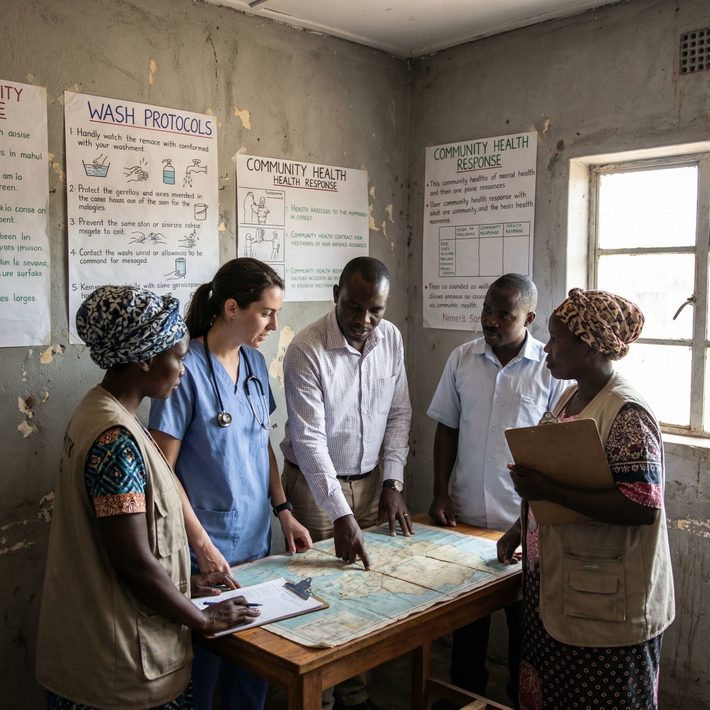
Dr. A, call her that, because this story belongs to about forty clinicians I've talked to, signed on for a four-week mission to a rural clinic in western Kenya. Start date: 14 days from now. Visa appointment: 30 days from now. You don't need a spreadsheet to see the problem.
The host organization just made it worse. Their email offered two options, both ugly: rebook the appointment immediately and eat the fee, or cancel the deployment and forfeit the stipend she's already budgeted against. No third option. No flexibility. Just a deadline and a shrug.
Here's where most people start guessing. They poll a Facebook group. They ask a cousin who "knows someone at the embassy." They pick whichever option lets them sleep that night.
We're not doing that. When the stakes are a mission, a stipend, and a clinic full of patients expecting a doctor who may never arrive, you don't guess, you run the numbers. Processing-time trends, denial-risk windows, the actual math on rebooking fees versus stipend loss. By the end of this article, you'll have a decision matrix you can apply to any mission, any destination, any deadline.
Let's fix this.
This article is for educational purposes only. It is not financial advice, not legal advice, and not tax advice. Figures vary by individual circumstances, so consult a qualified professional before acting.
Visa Processing Reality Check: The Data on Backlogs
First rule of mission travel: the embassy runs on its own clock, and lately that clock has been losing time.
Trend data across the major destination categories shows average visa processing times up roughly 15-20% over the past 12 months. The causes aren't mysterious: consular staffing shortages that never recovered post-2020, application volumes that did recover (and then some), and tighter security screening layered on top. Slower machine, more luggage on the belt.
Here's the backlog in numbers. Treat these as ballpark planning figures, they shift weekly, and your specific consulate may run better or worse:
Read that chart the way I read it: every one of those bars towers over the 14-day window Dr. A is working with. A two-week gap between "appointment" and "wheels up" isn't a gap. It's a wish.
The Safe Buffer Rule
After watching missions succeed and fail on this exact variable, here's the buffer I insist on: four to six weeks between expected visa issuance and mission start. Not four to six days. Weeks.
Why so much? Because issuance isn't the finish line. It's the start of a second race:
- Administrative errors. Misspelled names, wrong visa class, transposed passport numbers. It happens more than consulates admit, and fixing it means resubmission.
- Passport return shipping. Courier delays can add 5-10 business days in some regions.
- The resubmission spiral. One missing document, a bank statement, an invitation letter, can bounce you back to square one.
Your Risk Profile
Map your situation against these zones:
- 6+ weeks of runway: Green. Standard processing, standard stress.
- 4-6 weeks: Yellow. Workable, but start your expedite paperwork now.
- 3-4 weeks: Orange. Statistically significant risk of a delay blowing up your start date. One hiccup and you're done.
- Under 3 weeks: Red. You're not planning a trip; you're planning a gamble.
Dr. A, with her appointment landing 16 days after her start date, isn't even on this chart. She's in the zone below red, and that changes which levers are worth pulling. More on that in a moment.
The Denial Trap: Why 'Rebooking' Isn't Always the Answer
The agency's Option 1, "just rebook", sounds like the responsible choice. It's often the expensive one.
The Rebooking Paradox
Here's what nobody tells you about consular appointment systems: new slots are released months out, and rebooking rarely moves you earlier. It moves you later. I've seen applicants rebook a 30-day wait and land a 90-day one. Two to three months, gone.
Now think about what a two-month slip does to a medical mission. The clinic needed you for the dry season, when roads are passable and patient volume peaks. You arrive in the monsoon. Malaria transmission has spiked, the outreach camps have been rescheduled, and the surgical team you were meant to join has rotated home. You didn't delay the mission. You missed it.
Run the Actual Math
Everyone fixates on the rebooking fee, usually $150 to $300. That fee is a rounding error. The real math:
- Stipend at risk: $2,000-$5,000 for a typical short-term placement.
- Flight differential: last-minute rebooked fares can run $800-$1,500 above your original ticket.
- Home-side income: the locum shifts or clinic days you gave up for the original dates aren't coming back.
I watched a general surgeon rebook into a slot nine weeks out and lose a $4,200 stipend. She kept saying the fee was "only $225." The fee wasn't the loss. The mission was.
The No-Show Penalty
One more data point agencies don't advertise: host organizations penalize no-shows hard, and a rebook-then-denied sequence counts. If you rebook, get denied again, and miss the start date, you've lost the fee, the stipend, and, worst of all, your standing with that organization. Good luck getting next year's placement.
The flowchart is brutal because reality is brutal. Rebooking only pays off in one narrow corridor: a new date that still leaves you enough runway. So let's define that corridor precisely.
Analyzing Rebooking Success Rates: When to Pull the Trigger
Rebooking isn't inherently dumb. Rebooking blindly is. The data points to two conditions that have to be true before pulling the trigger makes sense:
- The new slot lands at least four weeks before departure. That's your processing window plus the Safe Buffer from earlier. Anything tighter and you've paid a fee to move from one red zone to another.
- Your immigration history is clean. No prior refusals, no overstays, no name-match flags. Consular officers have long memories and shared databases. A flagged file plus a rushed timeline is where denials breed.
If either condition fails, skip rebooking and go straight to the levers in the next section.
Hunt the Cancellation Slots
The exception to "rebooking moves you later": cancellation slots. Other applicants bail constantly, and their appointments get released back into the portal, often at odd hours. Check the booking system early in the morning in the consulate's local time zone, and check it two or three times a day. I've seen a 10-week wait collapse to 12 days because someone in another time zone cancelled at midnight. Set a phone alarm. This is free money sitting on the table.
Apply in the Off-Peak Months
Timing data is consistent on this: applications filed in February and September move measurably faster than those filed in July or December. Summer brings the student-visa surge and holiday travel; December brings holiday closures and skeleton staffing. If you have any control over when a future mission gets scheduled, schedule the visa application for an off-peak month, even if the mission itself falls later.
The Emergency Visa Protocol
This is the most underused lever in mission travel. Many consulates offer expedited appointments for urgent humanitarian or medical travel, but you have to ask, and you have to document:
- A formal invitation letter from the host organization, on letterhead, with exact mission dates and a statement of urgency.
- Proof of medical licensure and your role on the team.
- Evidence that standard processing cannot meet the start date, screenshot the published wait times.
Where a dedicated medical or humanitarian visa category exists, approval rates run higher than standard tourist or business visas, because your purpose is unambiguous and verifiable. Which brings me to a hard rule: never apply for a tourist visa to do a medical mission. Consular officers see through it instantly, it reads as misrepresentation, and a misrepresentation flag follows your passport for years. I've watched it end missions before they started.
The Strategic Protocol: A Step-by-Step Fix
Enough analysis. Here's the protocol, in order. Run it top to bottom and stop at the step that solves your problem.
Step 1: The 14-Day Audit
Measure your runway: days between your current appointment and your mission start date. If that runway is under 14 days, and Dr. A's is negative sixteen, do not rebook. That's the dead zone. A fee spent moving between two impossible dates is a fee wasted. Accept it and pivot immediately to Steps 3 and 4.
Step 2: The Cost-Benefit Analysis
If your runway is 14 days or more, do the math before touching the booking portal:
- Rebooking fee: ______ (typically $150-$300)
- Stipend at risk: ______ (typically $2,000-$5,000)
- Flight differential if dates slip: ______
- New appointment runway: ______ weeks
The rule: rebooking is viable only if the new date gives you at least a four-week runway and the total cost stays a small fraction of the stipend. A $200 fee to protect a $3,000 stipend? Obvious yes, if the runway condition holds. A $200 fee that still leaves you 10 days short? Obvious no.
Step 3: The VOA and eVisa Check
Before you spend anything, check whether your destination offers visa-on-arrival or an electronic visa. This is the highest-probability fix for short-notice missions, and it flips the entire sequence: instead of visa-then-mission, you go mission-then-visa-at-the-border.
- Nepal: visa on arrival for most nationalities, issued at Kathmandu airport.
- Kenya: electronic travel authorization processed online, typically in days.
- Philippines: visa-free entry for many passports on short stays.
Verify on the destination's official immigration site, rules shift, and "a guy in a forum said so" is not verification. Also confirm your mission activities are permitted under that entry class; some countries restrict clinical work to specific visa categories.

Step 4: Negotiate With the Agency, Using Data
Agencies don't respond to pleading. They respond to evidence. Send one email containing:
- A screenshot of the consulate's published wait times.
- Your runway calculation from Step 1.
- A specific ask: a two-week extension of the start date, OR a transfer to the next cohort, OR a formal expedite-request letter for the consulate.
A two-week extension sounds like a big ask. It isn't, host organizations build contingency into their rosters because clinicians miss flights, get sick, and yes, hit visa walls all the time. But they grant extensions to people who ask early, with documentation, not to people who disappear and resurface apologetic. Ask today.
Conclusion: The Action Steps
The whole decision matrix fits on an index card: runway under 14 days, don't rebook, pivot to VOA and negotiation. Runway over 14 days, rebook only if the new slot leaves four weeks of buffer and the fee is trivial against the stipend. And if the destination offers visa on arrival or an eVisa, take it and stop sweating the consulate.
Do these five things today:
- Pull up your consulate's published wait times and screenshot them.
- Calculate your runway, appointment date to mission start.
- Run the cost-benefit math from Step 2.
- Check the destination's official site for VOA or eVisa eligibility.
- Email the agency with your data and a specific ask.
Hope is not a visa strategy. Luck is not a visa strategy. Numbers, buffers, and the right lever pulled early, that's what gets you on the plane. The clinic is expecting a doctor. Make sure it's you.