Are you staring down two completely different global health career paths and wondering which one actually pays off?
You're not alone. Every year, I watch brilliant MPH and MD grads freeze at this exact crossroads. On one side: the polished, grant-chasing world of academic global health. On the other: the gritty, boots-on-the-ground reality of NGO field work. Let's cut through the romanticized university brochures and look at what the data actually says about where you'll end up, what you'll earn, and how you'll sleep at night.
This article is for educational purposes only. It is not financial advice, not legal advice, and not tax advice. Figures vary by individual circumstances, so consult a qualified professional before acting.
(See also: How Do I Choose Between Academic Global Health and NGO Field Work? for practical guidance on making this decision.)
Academic Global Health vs NGO Field Work: Which Path Pays Off?
Let's define the battleground.
Academic global health means you're embedded in a university or major research institution. Think Johns Hopkins, LSHTM, or massive NIH-funded research centers. Your currency is publications, grants, and policy influence.
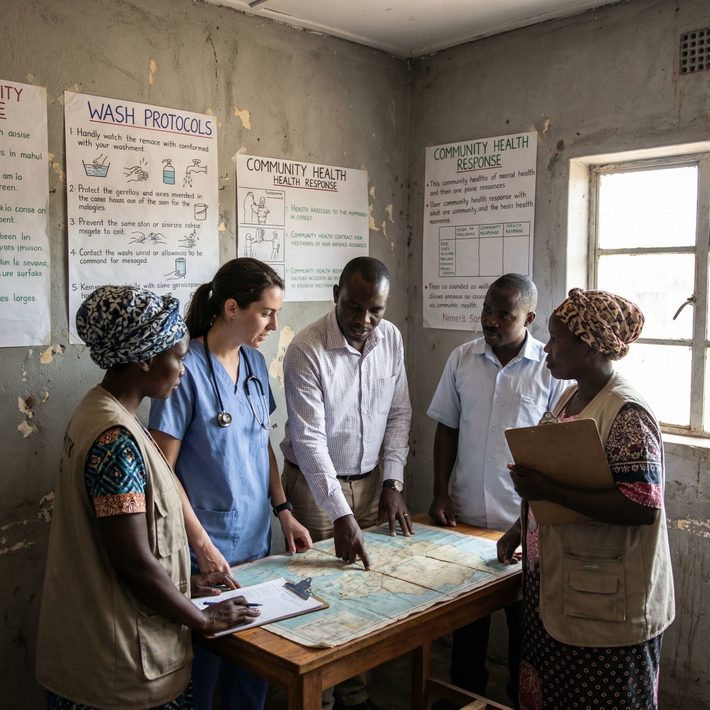
NGO field work puts you in the trenches with organizations like Médecins Sans Frontières (MSF), Partners In Health, or WHO field offices. Your currency is direct patient outcomes, program implementation, and crisis management.
Why does this comparison matter? Because you aren't just picking a job. You're picking a lifestyle, a stress profile, and a financial trajectory.
(See also: Salary hits and gains: income impact of choosing global health careers for detailed compensation breakdown.)
The data shows a stark divergence. Academia rewards longevity, credentials, and grant-writing endurance. NGOs reward adaptability, trauma resilience, and operational hustle. Neither path is inherently "better," but one will inevitably make you miserable if it doesn't align with your core drivers.
Compensation and Salary Data: The Numbers
Let's talk money. The "passion tax" in the NGO sector is real, and it's steep.
(See also: Career longevity in field-based humanitarian work: attrition curve analysis for insight into long-term NGO career sustainability.)
Academic global health positions simply pay more on average. A post-PhD or MD academic researcher or professor typically pulls in $85,000 to $150,000 once established.
NGO sector salaries are heavily compressed. A Field Coordinator might make $45,000 to $75,000. A Program Manager sits around $55,000 to $95,000. You only see academic-level money in NGOs when you hit the C-suite or Executive Director level ($100,000 to $180,000+), and those seats are incredibly rare.
But base salary is only half the story. Look at the perks.
- Academia: You get robust 401(k) matches, premium health insurance, sabbaticals, and tuition remission for your kids.
- NGOs: You get housing allowances in the field, per diems, covered travel, and sometimes hazard pay.
I've seen field workers save more cash in two years in South Sudan than they would have in five years in Boston, simply because the NGO covered every living expense. But back in the US or Europe? The academic wins the financial race every time.
Job Security, Stability, and Career Trajectory
Job security in global health is a myth if you think it's guaranteed. Both sectors are entirely at the mercy of funding landscapes.
In academia, early career is a bloodbath. You'll bounce between soft-money postdocs and adjunct gigs, praying your PI's R01 grant gets renewed. But if you survive the gauntlet and hit tenure? You've got a golden ticket. Structural stability.
NGO work is project-based. You're hired for a specific outbreak, a specific grant cycle, or a specific country strategy. When the USAID funding dries up, your contract ends. However, the growth trajectory in NGOs can be much faster. I've watched 26-year-old field coordinators become Country Directors by 32 because they were the only ones willing to stay in a hardship post during a cholera outbreak.
Geographically, academia ties you to a hub (Boston, London, Geneva). NGOs tie you to a hub until they don't, suddenly deploying you to a remote province with 48 hours' notice.
Impact, Fulfillment, and Day-to-Day Reality
How do you measure a good day at work?
In NGO field work, a good day is tangible. You secured a cold chain for vaccines. You treated 40 malnourished kids. You negotiated a checkpoint to get your ambulance through. The direct patient contact is immediate and visceral. But the psychological toll is heavy. Field trauma, moral injury, and watching patients die from easily preventable diseases because the supply truck got stuck in the mud. That stays with you.
In academia, a good day is your paper getting accepted into The Lancet Global Health. It's testifying before a parliamentary committee. It's watching your MPH students graduate and go on to change the world. You aren't touching patients, but your research might shift WHO guidelines that save 100,000 lives. The psychological toll here is different: isolation, "publish or perish" anxiety, and the soul-crushing bureaucracy of university IRBs.
Work-life balance? It's bad in both, just in different flavors. Field work demands 80-hour weeks in austere conditions. Academia demands you answer emails at 11 PM while rewriting a grant proposal for the fourth time.
Making Your Decision: Data-Backed Guidance
Stop looking for the "perfect" path. Look for the path that aligns with your actual priorities, not the ones you think you should have.
- Run a ruthless self-assessment. Do you care more about touching a patient's hand or shifting a policy document? If you need immediate, visible results to feel fulfilled, academia will drive you crazy. If you need intellectual rigor and geographic stability, the field will burn you out.
- Look at hybrid paths. The strict binary is dying. University-affiliated NGOs, clinical fellowships with heavy research components, and implementation science roles blend both worlds. You can be a physician-researcher who spends three months in the field and nine months at a desk.
- Take practical next steps. Don't just read about it. Do informational interviews. Talk to a tenured professor about their grant rejection rate. Talk to an MSF logistician about their last security evacuation. Get field exposure through a short-term practicum before committing to a two-year contract.
Key Takeaways
- Academic global health offers higher average salaries ($85K-$150K) but requires navigating highly competitive, stressful grant funding cycles.
- NGO field work provides more direct patient impact, but base compensation averages 20-40% lower than academic counterparts.
- Job security in both sectors depends heavily on funding. Academic tenure provides long-term stability, while NGO leadership roles offer faster, albeit riskier, advancement.
- The "better" path depends entirely on your personal priorities: direct, immediate impact favors NGOs; broad, systemic research influence favors academia.
- Hybrid careers combining research, teaching, and field work are increasingly viable and often represent the optimal path for modern professionals.