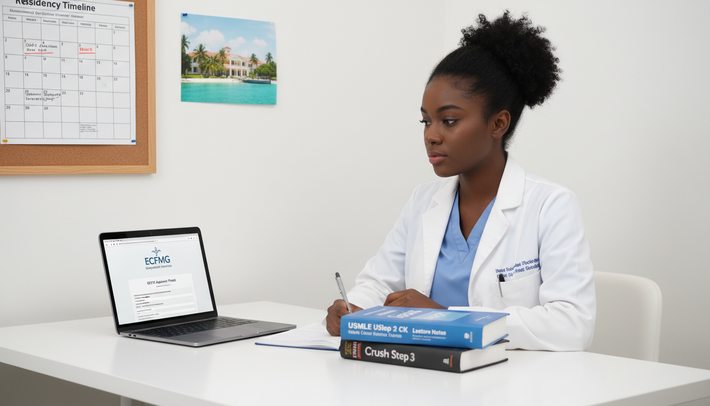
What actually goes through a program director's mind when they see your name on the interview list but know your visa is stuck in administrative processing?
If you're an International Medical Graduate (IMG), this scenario is your worst nightmare. You've matched the criteria, secured the interview, and now a bureaucratic delay threatens to derail everything. You're probably panicking, drafting emotional emails, and wondering if the PD is secretly crossing you off their rank list.
Stop. Take a breath.
Here is the reality: PDs care about reliability, communication, and the probability that you can actually start and participate in the program. They do not "penalize you" just because the consulate is slow. They penalize uncertainty, silence, and last-minute chaos. Your only goal right now is to reduce their perceived risk. You do this by providing a credible attendance plan and sending proactive, organized updates.
The PD's Mindset in One Sentence: Reliability Over Reasons
PDs are triaging risk. That's it. When they look at your file, they are asking one fundamental question: Will this person show up, communicate clearly, and complete the next steps smoothly?
They aren't sitting in their office judging your immigration status. They are balancing fairness with brutal operational constraints. They have to manage interviewer schedules, coordinate matching logistics, and plan the intern cohort. If you drop out 48 hours before your interview because your flight got canceled and you didn't tell anyone, you've just wasted a faculty member's entire afternoon. That's what they care about.
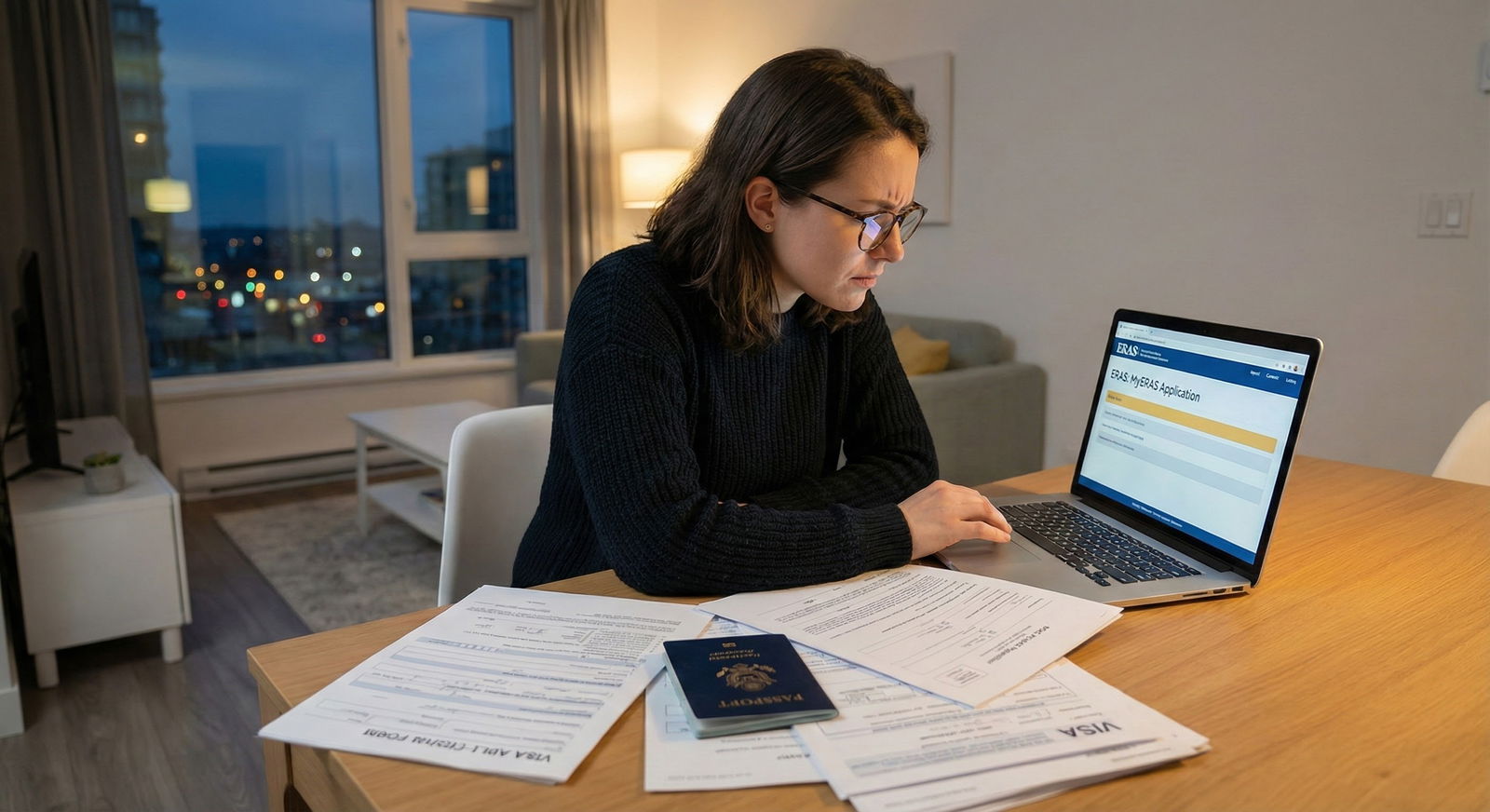
You get vastly better outcomes when you treat a visa delay as a project with dates, not an emotional crisis. I've seen applicants send three-paragraph essays about how unfair the embassy is. The PD doesn't care. They just need to know if you're going to be in the right time zone on Tuesday at 8 AM. Shift your mindset from "victim of circumstance" to "project manager of my own attendance."
What Triggers PD Concern (and What Doesn't)
Let's get specific about what actually makes a PD nervous.
The Triggers: Unanswered emails. Missed deadlines for interview confirmation. Unclear start dates. An inconsistent story across your ERAS application, your emails, and your coordinator notes. If you say your visa is "almost done" for three weeks straight without providing a single concrete date, you look unreliable.
What Doesn't Trigger Them: The actual visa delay itself. PDs generally understand visa and travel complexity, especially for IMG applicants. They know the system is broken. They know administrative processing happens. It's not a punishment.
The difference between a "visa problem" and a "planning failure" is entirely about how early and organized you act. A visa problem is out of your control. A planning failure is waiting until the day before the interview to mention it.
Look at the chart above. High-concern signals are all about poor communication and vague logistics. Low-concern signals are about proactive updates and documented timelines. Control what you can control.
Your Best Move: Build a "Show-Up Probability" Plan (Not Just an Apology)
Do not just email the coordinator to say "my visa is delayed, I'm so sorry." That's useless. Build a Show-Up Probability Plan.
First, create a hard timeline. Map out your visa status milestones, your expected entry date, your buffer days, and your interview day logistics. If your interview is on the 15th, and your visa drops on the 14th, you have zero buffer. That's a high-risk plan.
Second, quantify everything you can. Don't say "I should be there soon." Say, "My passport is at the consulate, tracking shows it will be released by the 10th. The earliest flight available is the 12th, giving me a 48-hour buffer before the interview." Provide flight availability and document readiness.
Third, provide alternatives. If in-person attendance is mathematically impossible or highly risky, propose a virtual backup, a same-day contingency, or a rescheduling request. And bring receipts. Attach the consulate tracking page. Attach the flight search results. Make it undeniable that you've done the math.
Follow this flow. It removes the emotion and replaces it with operational logic.
Email Templates PDs Actually Respond To (Subject Lines + What to Include)
I see so many applicants bury the lead in their emails. The coordinator is managing 500 applicants. If your email is a wall of text, they will skim it and miss the point.
Use crisp, highly specific subject lines. Good: "Interview Attendance Contingency Update, [Your Name], AAMC ID [12345678]" Bad: "Question about my interview / Visa issue"
Your email needs five components: confirmation of the interview, current visa status, best estimate arrival window, mitigation plan, and a clear ask. Keep the tone brief, factual, and respectful. Avoid long narratives. No repeated apologies.
Here is a template for an Early Warning (T-14 Days):
Subject: Interview Attendance Contingency Update, [Your Name], AAMC ID [12345678]
Dear [Coordinator Name],
I am writing to confirm my interview on [Date] at [Time]. I also want to provide a proactive update regarding my travel logistics.
My visa is currently in administrative processing. Based on the consulate's current processing times, my estimated passport return window is [Date Range]. I have identified flights that would allow me to arrive by [Date], providing a [Number]-day buffer before the interview.
To ensure I do not disrupt the interview schedule, if my visa is not issued by [Cut-off Date], I will immediately pivot to requesting a virtual interview or a reschedule to your next available date.
I will send my next update on [Date]. Thank you for your time and guidance.
Best regards, [Your Name] [Phone Number]

Here is a template for an Immediate Pivot (T-3 Days, In-Person Impossible):
Subject: URGENT: Interview Format Change Request, [Your Name], AAMC ID [12345678]
Dear [Coordinator Name],
I am confirmed for my interview on [Date] at [Time]. Unfortunately, my visa issuance has been delayed past my safe travel threshold, and I will not be able to arrive in person by the interview date.
To ensure I can fully participate without risking a last-minute cancellation, I am requesting to transition my interview to a virtual format. I have tested my AAMC PREview/Thalamus setup and my equipment is fully compliant.
If virtual is not an option, please let me know if I can reschedule to your next available interview date. I have attached my consulate tracking receipt for your records.
Thank you for your flexibility. I look forward to your guidance.
Best regards, [Your Name]
Notice the difference? No whining. Just facts, dates, and a clear ask.
Timing Your Communication: When to Act at Each Milestone
Early action is powerful. Once you see a realistic risk, message the coordinator immediately. Do not wait until the airline or the consulate officially fails you. By then, it's too late to fix the schedule.
Different triggers require different urgency. If your visa appointment gets pushed back by a month, that's an immediate email. If your flight gets changed by two hours, that's a minor update.
Build a strict communication cadence.
- Proactive update: As soon as you realize the timeline is tight (usually T-14 to T-21 days).
- Confirmation follow-up: When you hit your internal "go/no-go" deadline (usually T-5 to T-7 days).
- Travel buffer check-in: When you actually land or arrive in the city (T-1 day).
- Day-of contact plan: Know exactly who to call or email if your internet drops or your car breaks down on the morning of the interview.
Stick to this cadence. It shows you are organized and respectful of their time.
If You Have Already Missed a Confirmation Deadline: How to Recover Without Damage
Maybe you messed up. You missed the 48-hour confirmation deadline because you were waiting for a visa email that never came. Now the portal is locked.
Own the miss once, then pivot immediately to action. Do not send five emails begging for forgiveness. Send one single, comprehensive message.
State your status, outline your new plan, and express your willingness to comply with whatever procedure they require. Ask for a quick decision: "Can you advise whether I should proceed with a virtual setup or submit a formal reschedule request?"
Replace your repeated "I'm so sorry" emails with a single complete message that includes your updated status, your attachments (like tracking receipts), and a clear ask for the next steps. Coordinators respect applicants who fix their mistakes efficiently. They despise applicants who spam their inbox with panic.
In-Person vs Virtual: What PDs Want to Know Before They Approve a Backup
Understand this: virtual is not always equivalent to in-person. If a PD allows you to interview virtually, they need to know you can actually engage fully. They will mentally check your camera quality, your time zone alignment, and your overall reliability.
Rescheduling isn't free, either. PDs have to maintain scheduling integrity. If they move you, they have to ask a faculty member to give up another half-day of their clinical time.
Your job is to make it easy for them to say yes. Propose practical constraints and solutions. If you ask for virtual, confirm your time zone and tech setup in the same email. If you ask to reschedule, provide three specific alternate dates where you are 100% guaranteed to be available. Remove the friction.
How to Talk in Interviews or Coordinator Calls When Visa Timing Was the Issue
If you successfully navigated the delay and made it to the interview, the PD might bring it up. "I see we had some scheduling drama with your visa."
Keep it short. Do not launch into a 10-minute grievance about the US embassy.
Say something like: "Yes, the processing took longer than expected. I wanted to make sure I didn't miss this interview, so I built a contingency plan and coordinated with your team to ensure I could be here. It required some extra logistics, but I'm very glad to be here."
Emphasize your professionalism. Highlight the proactive steps you took, the documentation you gathered, and your flexibility. Turn a potential red flag into a demonstration of a highly positive trait: your ability to plan, execute, and follow through under pressure. PDs want residents who can handle logistics when things go wrong on the wards. Show them you can.
Summary: Reduce PD Perceived Risk, Increase Your Credibility
PDs think in terms of risk management. They just want to know if you will show up and communicate well. Your best strategy is to provide proactive, factual, and organized updates alongside a highly credible attendance contingency plan. Stop apologizing for things outside your control, and start managing the variables you can. Your message should never just be a complaint; it should be a tool that helps the coordinator make a decision quickly and confidently.
Key Takeaways
- PDs usually understand visa issues; they worry about uncertainty and silence, your priority is reducing risk with early, organized communication.
- Don't just explain; quantify your plan (dates, next steps, backup options) and make the coordinator's job easy to say "yes" to attendance changes.
- When deadlines are missed, recover with one complete, respectful message that includes updated status, attachments, and a clear ask for next steps.