
The match doesn’t actually end your anxiety. It just changes the monster.
You matched. You cried. You told your family. And now your new nightmare is: what if my visa gets delayed and I lose the residency spot I fought years to get?
You’re not overreacting. This is a real risk. But it’s also not as black‑and‑white catastrophic as your brain is currently telling you.
Let’s walk through this like someone who’s sat with too many IMGs on WhatsApp at 3 a.m. while they hit refresh on their visa status page. Because I have. And you’re not the first person to ask, “Am I about to lose everything?”
The uncomfortable truth: programs worry about this too
Residency programs don’t magically stop caring once you match. They want you there. On time. In July. With a valid visa and a functioning brain.
So no, you’re not the only one lying awake thinking about “administrative processing” like it’s Voldemort. PDs, GME offices, HR, they all know IMGs = visa drama potential. The better programs plan for it.
But here’s the part applicants misunderstand:
Your situation isn’t “visa delayed → automatic contract cancelled → goodbye career.”
Most of the time it’s more like:
- Visa slightly delayed → start date adjusted / orientation missed / a few weeks late
- Visa stuck longer → temporary leave of absence / delayed start until later in PGY‑1
- Very rarely → extreme delay / country‑specific issues → spot lost, maybe need to reapply
You’re obsessing over the rarest outcome and ignoring all the middle options that actually happen more often.
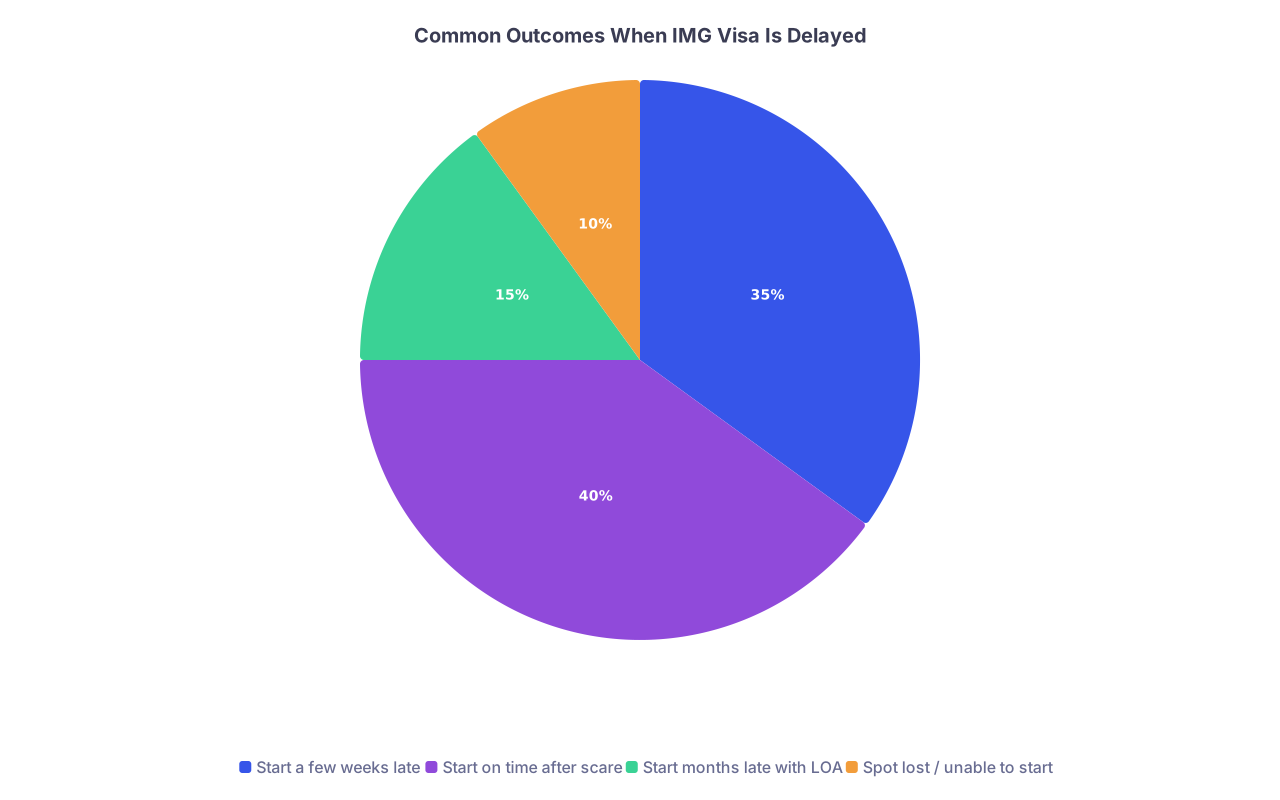
| Category | Value |
|---|---|
| Start a few weeks late | 35 |
| Start on time after scare | 40 |
| Start months late with LOA | 15 |
| Spot lost / unable to start | 10 |
Are those numbers exact? Of course not. But they reflect what I’ve seen: most people either start on time or a bit late. The nuclear scenario is not the default.
Step one: figure out your exact risk, not your imagined one
Before spiraling, you need cold‑blooded clarity. Not vibes. Not Reddit horror stories.
Three questions matter most:
- What visa type are you on (or planning)? J‑1? H‑1B? Something else?
- What’s your passport country? Some passports trigger more administrative checks.
- What’s your timeline from now until orientation day? Weeks? Months?
If you don’t know the answers, that’s priority #1. You can’t manage risk you haven’t defined.

J‑1 vs H‑1B: the anxiety flavors are different
Very simplified:
J‑1 (via ECFMG)
- You get sponsorship from ECFMG.
- They issue a DS‑2019, you schedule your visa interview.
- Administrative processing can still hit you, but there’s a large system built around this process.
- Many IMGs each year do this successfully; embassies are used to it.
H‑1B (via the program)
- More paperwork, more cost, more legal involvement.
- Timing is more rigid. There are cap and non‑cap issues.
- If the program is inexperienced or slow, delays stack fast.
Neither is “safe.” Both are workable. What matters more is how early things get started and how responsive everyone is when things slow down.
| Factor | J-1 (ECFMG) | H-1B (Program) |
|---|---|---|
| Main sponsor | ECFMG | Residency program |
| Typical cost to you | Lower | Often higher |
| Program experience | Usually common | Varies a lot |
| Flexibility | Moderate | Rigid with deadlines |
| Commonness for IMGs | Very common | Less common |
Worst-case vs realistic timeline: what actually happens
Let’s say Match Day is mid-March. You’re supposed to start residency July 1. You’re imagining a scenario like this:
- DS‑2019 or H‑1B approval delayed
- Consulate has no appointments
- Administrative processing added
- July 1 comes. You’re still at home. Program rescinds offer. You die (emotionally).
What usually happens in real life looks more like this:
- DS‑2019 / approval: slightly delayed but arrives
- You stalk visa appointments, sometimes using emergency request if allowed
- You get an interview date that’s “uncomfortably close but technically okay”
- Visa goes into “administrative processing” and you age 10 years in 10 days
- It clears either right before or slightly after your intended start
- You miss some orientation / some early days but still join
The gap between those two stories is exactly where your anxiety lives.
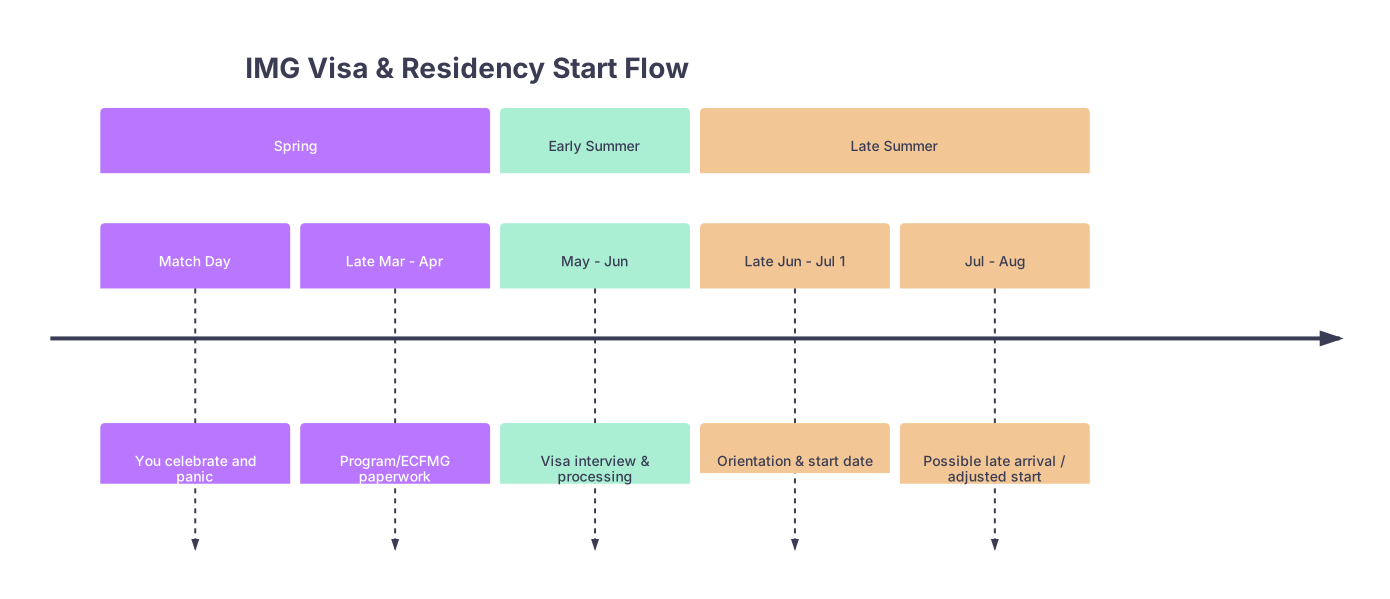
| Period | Event |
|---|---|
| Spring - Match Day | You celebrate and panic |
| Spring - Late Mar - Apr | Program/ECFMG paperwork |
| Early Summer - May - Jun | Visa interview & processing |
| Late Summer - Late Jun - Jul 1 | Orientation & start date |
| Late Summer - Jul - Aug | Possible late arrival / adjusted start |
Yes, there are people who miss an entire block or have to start months late. Yes, a very small number lose spots. But usually the story is messy, late, stressful — and still works out.
What your program can actually do (and what they can’t)
Programs aren’t immigration gods. They can’t snap their fingers and make a consulate speed you up. But they do have some real power:
They can:
- Start your visa paperwork early (gold standard; you want this)
- Connect you with their immigration lawyer or GME/HR specialist
- Write support letters for emergency visa appointments
- Adjust your start date, give you a short leave of absence, rearrange rotations
- Hold your spot if they believe you’ll realistically get there soon
They usually can’t:
- Override security checks or administrative processing
- Force the embassy to give you an earlier appointment in every country
- Guarantee you’ll be in the hospital on a specific calendar day
What matters is how proactive they are once there’s a sign of delay. And how communicative you are. Silence is your enemy here.
What you should do the second you smell “delay”
You probably want a checklist. So fine, here’s the “I’m freaking out, what now” version—no fluff.
Email the right person at your program.
Not just the PD. Usually it’s GME or HR or “international office.” Subject line something like: “Urgent: Visa status and potential delayed arrival.” State facts, not drama. Include dates, case numbers, attachments.Ask directly what their flexibility is.
Literally: “If my visa is delayed, up to what date can my start reasonably be deferred before my position is at risk?”
Their answer defines how close to the cliff you are.Document everything.
Every consulate email. Every embassy status update. Every receipt. You want to be the applicant who can say: “Here’s exactly what I did and when.” That makes it easier for the program to justify waiting for you.Use all legal/emergency channels you actually have.
Emergency appointment requests (if qualified). Contacting consulate helpdesk. Sometimes even reaching out to a local attorney familiar with your country’s embassy patterns. Don’t spam; be strategic.Stay visibly engaged with the program.
Short, calm updates every 1–2 weeks if things are moving, more often if there’s a major change. You want them thinking: “This person is responsible and on top of it,” not “They disappeared; should we give up?”

What if I physically can’t arrive by July 1?
This is the core fear, right? The date is printed in your contract and your brain treats it like it was carved into stone with the Ten Commandments.
Reality: programs are more flexible than they advertise if they trust you and if they believe you’ll actually show up.
Common options I’ve seen:
Starting late in July or even August.
You miss orientation and maybe part of a rotation. They catch you up or shift you to something lighter first.Short leave of absence at the beginning of PGY‑1.
Technically you’re an employee, but you’re on an unpaid leave until you physically arrive. Your training end date may get pushed a bit.Deferring your start to the next block / next credentialing cycle.
More complicated. Not every program can do this. But some will start you a month or two later and adjust pay/training dates.In very rare cases: deferring to the next academic year.
This is unicorn territory. Don’t count on it. But it has happened when there was a clear external political/visa disaster and the program really wanted that resident.
The nuclear scenario—“we rescind your contract and give your spot to someone else”—does exist. But it’s usually a last resort when:
- It’s clear you won’t arrive for many months, and
- The hospital needs the staffing, and
- There’s no institutional path to keep your slot open.
How big a red flag is a visa delay for my career?
You’re imagining that future PDs or fellowship directors will look at your file and think: “Oh, this one had a delayed visa. Problematic.”
They won’t. They barely have time to pee between interviews and notes.
Visa delays in your PGY‑1 start are annoying in the short term. Long term, they’re background noise. What will matter way more is:
- Your evaluations
- In‑training exam performance
- Letters of recommendation
- Step 3 (if you still need to take it)
- How you show up once you are physically there
The one thing you do want to protect is your paper trail in the US system. If your start is delayed a lot, make sure your contract and NRMP records accurately reflect how your PGY‑1 year is structured so you don’t get weird questions or licensing issues later.
Your catastrophizing vs what PDs actually care about
You’re imagining your PD thinking: “This IMG is such a headache; we made a mistake.”
What they’re more likely thinking is: “Immigration is a mess; I hope our new resident gets here soon because we’re understaffed.”
They care about:
- Are you communicating clearly and honestly?
- Are you taking responsibility for doing everything you can?
- Are you being respectful of their time (not sending 17 emails a day)?
- Does it look like you’ll realistically arrive in a timeframe they can programmatically absorb?
They don’t care that you’re anxious. Everyone is anxious. Just don’t let the anxiety make you erratic or impulsive in how you communicate.
When you should genuinely worry vs when your brain is lying
Let’s split this in a way your anxious side can work with.
You should be appropriately worried if:
- Your visa application hasn’t even started and it’s already late spring
- Your country/passport is known for long administrative processing
- Your consulate appointment is after your start date and they denied your emergency request
- Your program is non‑responsive, vague, or seems inexperienced with IMGs
Your brain is overreacting if:
- Your DS‑2019/H‑1B approval is in process but timelines are still within norms
- You’ve only been in “administrative processing” for a few days or a week
- Reddit told you about one person in 2016 who lost their spot and now your brain uses it as prophecy
- Your program has told you they can flex your start date within reason and you’re still imagining getting ghosted
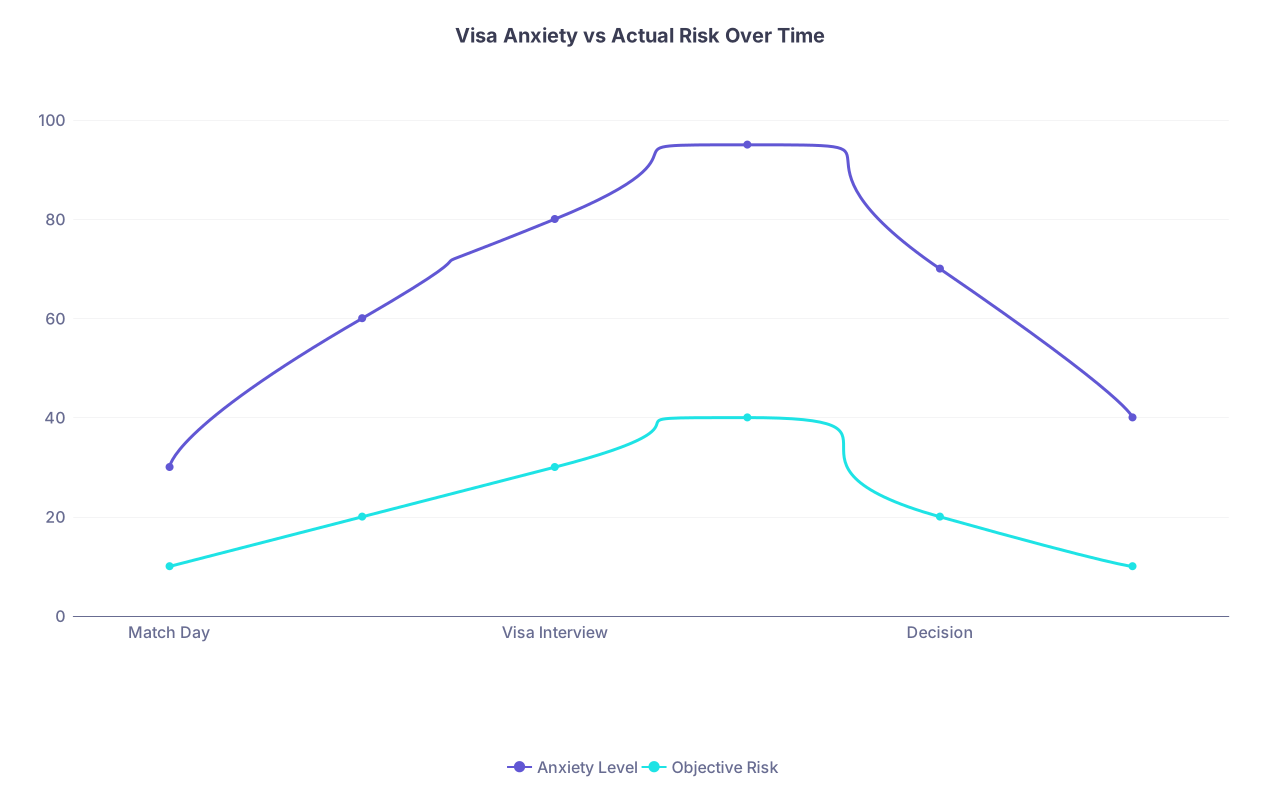
| Category | Anxiety Level | Objective Risk |
|---|---|---|
| Match Day | 30 | 10 |
| Paperwork Submitted | 60 | 20 |
| Visa Interview | 80 | 30 |
| Admin Processing | 95 | 40 |
| Decision | 70 | 20 |
| Arrival | 40 | 10 |
Concrete things you can do today to feel less helpless
You’re not going to meditate your way out of visa uncertainty. You need actions.
Today, not “sometime soon”:
- Make a one‑page timeline document of your entire visa process: what’s done, what’s pending, who’s responsible, and dates. Seeing it in one place calms your brain.
- Draft an email to your program’s GME/HR/PD with a short status update and specific questions about flexibility. Don’t send a novel.
- Check your consulate’s current appointment wait times and visa processing updates for your category. Real data, not rumors.
- Decide on a “panic threshold” date with your program—“If I don’t have X by Y date, we reassess.” It gives your brain a frame.
- Tell one friend or family member the full story so you’re not carrying all of this alone in your head.
You can’t control the consulate. You can control whether you’re the applicant who’s organized, communicative, and realistic—or the one who melts down and ghosts everyone.
FAQ: The 5 anxiety questions everyone secretly has
1. Can my program legally cancel my contract if my visa is delayed?
Yes. Contracts usually have clauses about being able to work legally in the US and starting by a certain date. But “can” isn’t the same as “want to.” Most programs really don’t want to scramble for last‑minute replacements. They’ll often stretch as far as their hospital and GME rules allow if they believe you’ll get there within a reasonable window.
2. Is there any point in contacting the embassy or is that useless?
It’s not totally useless, but it’s not magic either. Use official channels: embassy contact forms, call centers, emergency appointment requests if you have documentation (like your GME contract and start date). Don’t send emotional essays. Send concise, fact‑based requests. Sometimes it moves things a little. Sometimes it doesn’t. But at least you’ll know you did what you could.
3. Will a late start ruin my chances for fellowship later?
No. By the time anyone is reading your fellowship application, no one cares that you started July 15 instead of July 1 three years ago. If it affects anything, it might shift your graduation date or Step 3 timing slightly. What programs really care about is how you perform during residency, not how messy your immigration journey was.
4. Should I consider withdrawing and reapplying next year if the visa looks bad?
That’s a nuclear move. Don’t even think about it without a detailed conversation with your program leadership and, ideally, an immigration attorney. In many cases, it’s actually better to let the process play out and see whether you can start late than to walk away voluntarily. Once you give up a matched spot, there’s no guarantee you’ll ever get it back.
5. How do I not lose my mind while waiting in administrative processing?
You won’t like this answer, but here it is: structure and distraction. Set specific times of day you’re allowed to check your visa status. Outside those windows, work on something concrete—Step 3 prep, reading for your specialty, improving your English documentation style, even doing something totally non‑medical. Also keep a running log of all actions you’ve taken. When your brain starts screaming “You’re doing nothing!” you can look at the list and prove it wrong.
Open your email right now and draft a three‑paragraph update to your program about your visa status—specific dates, what’s completed, what’s pending, and one clear question about flexibility on your start date. Don’t send it later. Write it now while the anxiety is loud, and turn that noise into something useful.