The biggest mistake IMGs make with visas isn’t paperwork. It’s timing. They start three months too late and then wonder why HR is “seeing what they can do” instead of saying “you’re cleared to start July 1.”
You’re not going to do that.
Below is a season‑by‑season, then month‑by‑month visa prep timeline focused on DS‑2019 (J‑1), H‑1B, and the hard deadlines people quietly blow past every year.
Big‑Picture: What Needs to Happen, In What Order
At this point you should understand the basic sequence before we break it by season.
-
- NRMP Match or SOAP (for residents).
- Or direct contract for fellowships / non‑NRMP programs.
-
- J‑1 via ECFMG (DS‑2019).
- Or H‑1B via the hospital/university (I‑129).
Documents Collected
- Credentialing + contract signed.
- Degree, licenses, USMLE steps, translations, passport, etc.
Sponsorship Application Filed
- DS‑2019 request to ECFMG.
- Or H‑1B petition to USCIS.
Approval Notice Issued
- DS‑2019 form from ECFMG.
- H‑1B I‑797 approval.
Consular Visa Stamp
- Interview at US embassy/consulate.
- Visa placed in passport.
Arrival & Start
- Enter U.S. in allowed window.
- Complete hospital onboarding.
- Start PGY‑1 / fellowship (usually July 1).
You have two clocks running:
- The program’s HR/graduate medical education (GME) clock.
- The consulate/USCIS processing clock.
Miss either by 2–4 weeks and you’re in trouble.
Season by Season Overview
At this point you should know roughly where you are in the cycle. Here’s the high‑level seasonal map for a standard July 1 start.
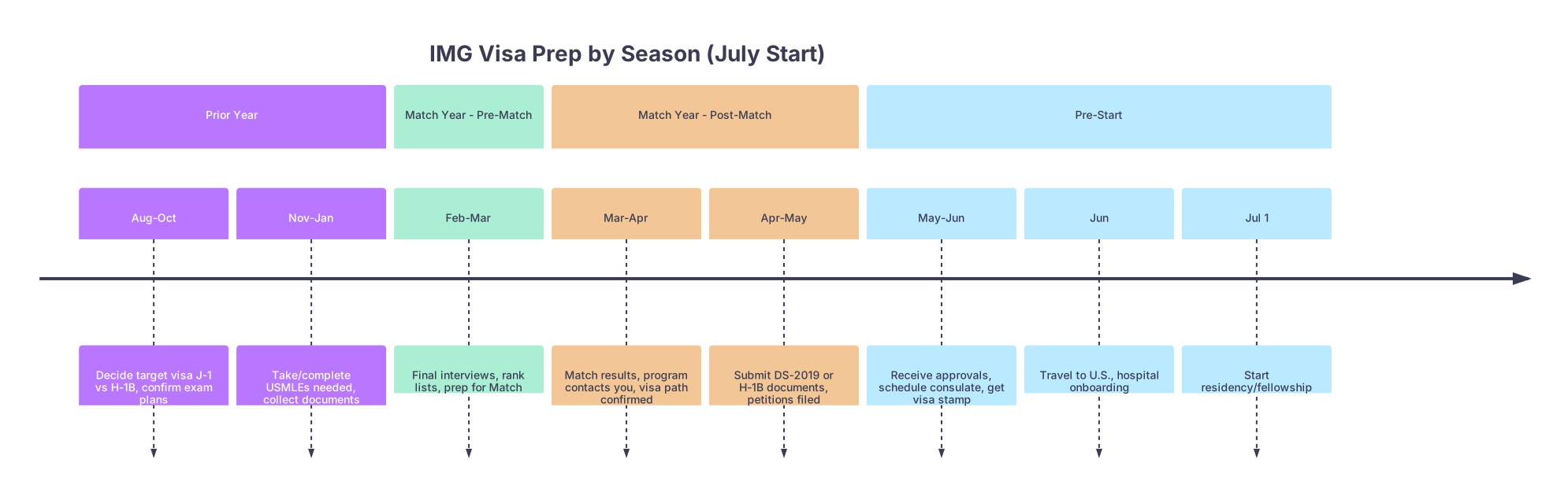
| Period | Event |
|---|---|
| Prior Year - Aug-Oct | Decide target visa J-1 vs H-1B, confirm exam plans |
| Prior Year - Nov-Jan | Take/complete USMLEs needed, collect documents |
| Match Year - Pre-Match - Feb-Mar | Final interviews, rank lists, prep for Match |
| Match Year - Post-Match - Mar-Apr | Match results, program contacts you, visa path confirmed |
| Match Year - Post-Match - Apr-May | Submit DS-2019 or H-1B documents, petitions filed |
| Pre-Start - May-Jun | Receive approvals, schedule consulate, get visa stamp |
| Pre-Start - Jun | Travel to U.S., hospital onboarding |
| Pre-Start - Jul 1 | Start residency/fellowship |
We’ll go deeper now, chronologically.
Phase 1: 10–12 Months Before Match (Aug–Oct, Prior Year)
At this point you should stop thinking in vague terms like “I’ll figure out visas after I match.” That’s how people lose a whole year.
Decide Your Likely Visa Type
You don’t need a program yet, but you do need a strategy.
J‑1 (ECFMG‑sponsored, DS‑2019)
- Most common for residents.
- Requires: USMLE Step 1, Step 2 CK passed + ECFMG certification by start.
- Two‑year home‑country requirement after training (for most).
H‑1B (employer‑sponsored)
- Less common, more complex.
- Requires: All Steps passed including Step 3 by filing time.
- Very program‑dependent. Many community programs do not sponsor H‑1B.
At this point you should:
- Make a shortlist of programs that historically sponsor H‑1B vs J‑1.
- Decide if Step 3 before Match is realistic (for H‑1B hopefuls).
- Accept that if Step 3 isn’t done by early spring, J‑1 is your default.
Phase 2: 6–9 Months Before Match (Nov–Jan, Prior Year into Match Year)
This window is where future H‑1B candidates either set themselves up to win or quietly remove H‑1B from the table.
November–December
At this point you should:
For J‑1 track:
- Ensure you’re on track to finish:
- Step 1
- Step 2 CK
- ECFMG certification (including OET/English, if required for your year).
- Start organizing:
- Degree certificates
- Transcripts
- Translations
- Passport (must be valid well beyond start date)
- Ensure you’re on track to finish:
For H‑1B track:
- Schedule USMLE Step 3 no later than January–February.
- Check state licensure timelines where your target programs are:
- Some states require Step 3 or a specific number of training weeks for a training license.
- Programs will tell you what they need for a “training license” vs full license.
January
By now, interview season is underway.
At this point you should:
- During interviews, explicitly ask:
- “Do you sponsor J‑1 only, H‑1B, or both?”
- “What are your internal deadlines for visa paperwork after the Match?”
- For H‑1B hopefuls:
- Have Step 3 scheduled or already taken.
- Understand the program’s usual filing dates (most file H‑1B for residents April–June).
Phase 3: Rank Lists & Pre‑Match Prep (Feb–Mid‑Mar)
This is where you align your rank list with your visa reality.
At this point you should:
February
- Make two mental rank lists:
- One if you are willing to accept J‑1 anywhere.
- One if you really want H‑1B and only certain programs will sponsor.
- Be honest with yourself:
- If Step 3 isn’t done (or results pending with a risk of fail), you cannot rely on H‑1B.
- Make two mental rank lists:
Early March (before rank list deadline)
- Confirm, via email if needed:
- “If I match at your program, and I’ve passed Step 3, will you support an H‑1B for PGY‑1?”
Get the answer in writing. Vague promises are useless.
- “If I match at your program, and I’ve passed Step 3, will you support an H‑1B for PGY‑1?”
- Rank accordingly. If one program says, “We only do J‑1,” believe them.
- Confirm, via email if needed:
Phase 4: Match Season – March to April
This is where the clock starts truly ticking.
Match Week (Mid‑March)
At this point you should:
After you Match (or get a SOAP offer):
- Read the contract carefully:
- Does it specify visa type?
- Does it refer to “J‑1 only” or explicitly allow H‑1B?
- Respond promptly to all program emails. Delays here cut into your visa window.
- Read the contract carefully:
Within 1 week of Match:
- Clarify with the program coordinator or GME office:
- “Will I be on J‑1 (DS‑2019) or H‑1B?”
- “What are your internal document deadlines to file?”
- Clarify with the program coordinator or GME office:
This is where some IMGs get burned: they go silent for 2–3 weeks “celebrating” and lose a month of processing time.
Late March – Early April: Key Fork in the Road
If you’re going J‑1 (DS‑2019)
At this point you should:
Get from your program:
- Their J‑1 instructions (most have a standard ECFMG packet).
- Deadlines for:
- Submitting your documents to HR/GME.
- When they plan to submit your DS‑2019 request to ECFMG.
Start assembling:
- Passport biographical page scan.
- Medical degree + translations.
- ECFMG certificate (or proof of pending, with timeline).
- CV.
- Signed contract.
- Any required financial/support forms (if asked).
If you’re pursuing H‑1B
At this point you should:
Confirm with HR/immigration:
- That they will proceed with H‑1B.
- Their latest allowed filing date for a July 1 start.
Step 3 reality check:
- If you don’t have Step 3 passed by now or won’t have results by late April, many programs will:
- Switch you to J‑1.
- Or delay your start (bad).
- Be explicit: “If I do not pass Step 3, what is your backup plan?”
- If you don’t have Step 3 passed by now or won’t have results by late April, many programs will:
Phase 5: The Critical Window – April and May
This is where approvals are either on track or slipping. You can’t be casual here.
April – DS‑2019 (J‑1) Path
At this point you should be submitting everything your program needs for ECFMG.
Typical sequence:
Early–Mid April
- Program instructs you to complete ECFMG’s online J‑1 application (EVNet / OASIS, etc.).
- You upload:
- Passport
- Medical school diploma
- ECFMG cert
- CV
- Program uploads:
- Contract
- Statement of need (sometimes comes later for certain countries).
- Training details.
Late April – Early May
- Program submits the completed packet to ECFMG.
- ECFMG processing time is usually a few weeks if documents are clean.
At this point you should:
- Check weekly with your GME or coordinator:
- “Has my DS‑2019 request been submitted to ECFMG yet?”
- “Has ECFMG requested any additional documents?”
April – H‑1B Path
For H‑1B, April is often the “file or switch to J‑1” month.
At this point you should:
Ensure HR / immigration attorney has:
- Proof of Step 3 pass (score report).
- All degree credentials.
- ECFMG certificate.
- CV and signed contract.
- State training license or at least the pending license number, if required for filing.
Ask clearly:
- “On what date do you plan to file my H‑1B petition?”
- “Are you using premium processing?”
Why it matters:
- Without premium processing, H‑1B approval can drag 2–4+ months.
- With premium, you usually get a decision in 15 days. Programs that understand IMG timing almost always pay for premium.
Phase 6: Late May – June: Approvals, Consulate, Travel
This is the squeeze point. If your paperwork isn’t moving by now, you’re at risk.
DS‑2019 (J‑1) Path – Late May
At this point you should ideally have:
- DS‑2019 issued by ECFMG or at least an approval email with mailing in progress.
Typical timeline once DS‑2019 is issued:
- DS‑2019 mailed to you or to the program then forwarded.
- You pay SEVIS fee.
- You schedule your J‑1 visa interview at your local US consulate/embassy.
You need to watch one thing like a hawk: consulate appointment wait times.
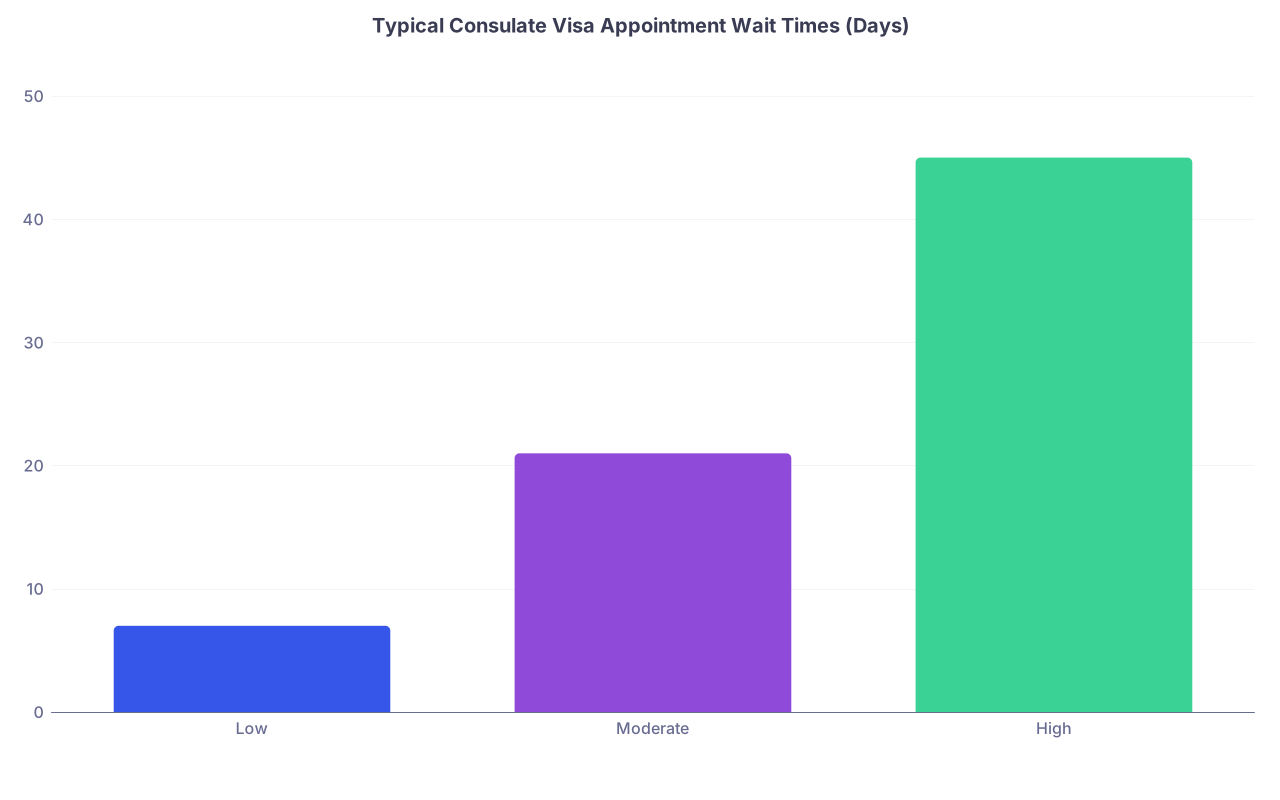
| Category | Value |
|---|---|
| Low | 7 |
| Moderate | 21 |
| High | 45 |
If your consulate has a 45‑day wait and it’s already early June, you’re in danger.
At this point you should:
- Immediately book the earliest available slot.
- Consider asking the program for a support letter to request an expedited appointment if available in your country.
H‑1B Path – Late May
By now:
- Your H‑1B petition should already be filed.
- With premium processing, you should have:
- Approval notice (I‑797) or at least a request for evidence (RFE).
At this point you should:
If there’s an RFE:
- Respond immediately, working closely with the program’s attorney.
- Understand that even a 2‑week delay here can push you into July.
Once approved:
- Use the I‑797 to schedule your H‑1B visa appointment at the consulate.
- Factor in:
- Appointment date.
- “Administrative processing” risk (221g delays).
DS‑2019 vs H‑1B: Timing Pressure Comparison
Here’s how the two paths usually feel, time‑wise.
| Factor | J-1 (DS-2019) | H-1B |
|---|---|---|
| Who sponsors | ECFMG + Program | Program/Institution |
| Must have Step 3 by | Not required | Before petition filing |
| Typical filing window | Apr–May | Apr–Jun |
| Common processing fix | Faster DS-2019 issue | Premium processing |
| Biggest risk | Late DS-2019 -> late visa | Late filing or RFE |
Phase 7: June – Final 30 Days Before Start
This is where the nightmares show up: “visa still in process,” “administrative processing,” “can’t get flight,” etc.
At this point you should:
Already have:
- Visa stamp in passport.
- Flight booked.
- Hospital onboarding dates.
For J‑1:
- You can usually enter the U.S. up to 30 days before your DS‑2019 start date.
- Confirm:
- “Report by” date for GME orientation.
- Any required in‑person paperwork (I‑9, badge, drug test).
For H‑1B:
- You may enter up to 10 days before your H‑1B start date (check your I‑797 dates).
- Double‑check your:
- I‑797 approval notice.
- Visa stamp dates.
- Start date on your offer letter.
If by mid‑June you still:
- Don’t have your DS‑2019 or H‑1B approval, or
- Haven’t secured a consulate appointment,
then you’re in red‑alert mode. At this point you should:
- Talk immediately to:
- Program director
- GME office
- HR / attorney
- Discuss:
- Expediting options.
- Adjusted start date (if absolutely necessary).
- Temporary J‑1 plan if Step 3/H‑1B is blocked.
Programs would rather scramble early than find out on June 28 that you “might not make it.”
Phase 8: July 1 and Beyond – Don’t Forget Extensions
Visa planning doesn’t end when you arrive.
At this point you should:
- Once settled (July–August):
- Understand your visa expiration and training end dates.
- For J‑1:
- Each year, your program must renew DS‑2019.
- Set a reminder 4–6 months before each annual expiration.
- For H‑1B:
- Track how many years you’ll need (e.g., 3‑year internal medicine then 3‑year fellowship).
- Stay ahead of cap‑exempt vs cap issues if you switch employers later.
Deadline Landmines by Season
Let’s call out the specific landmines I’ve seen IMGs trip over, season by season.
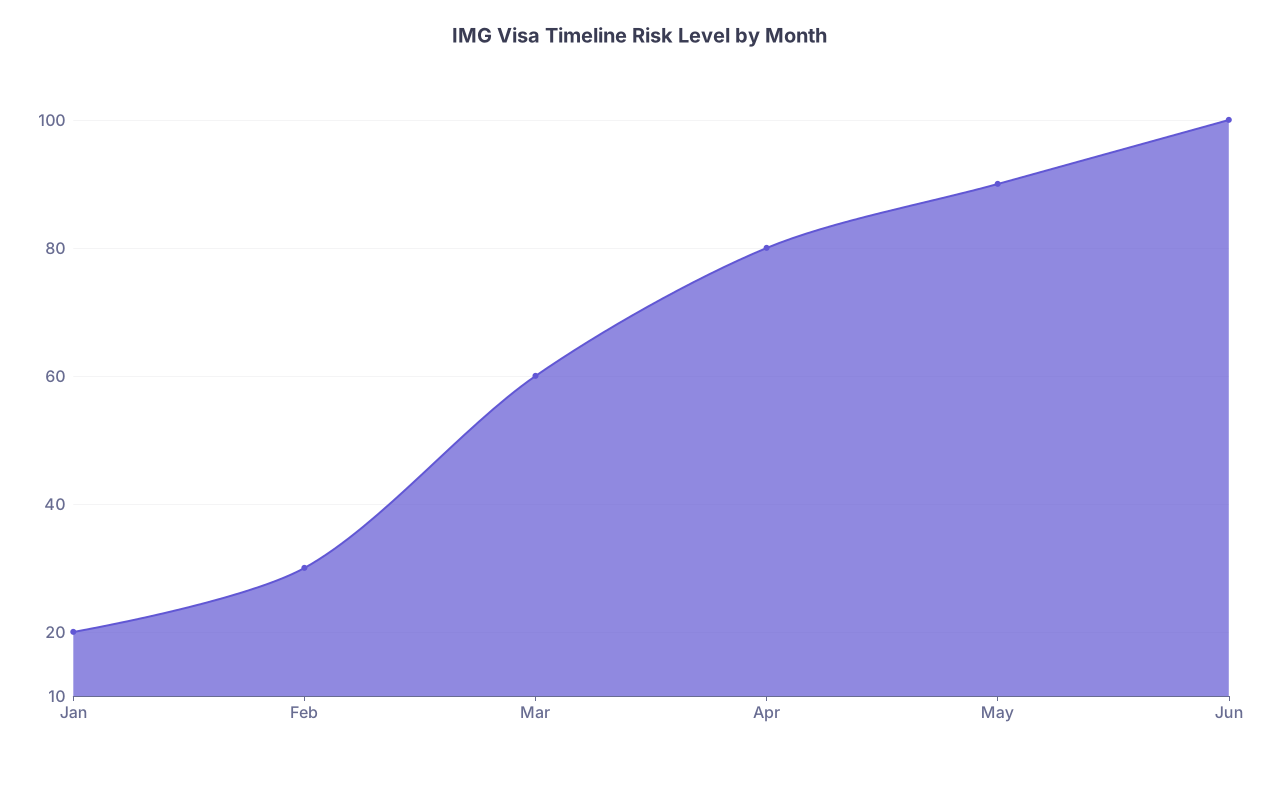
| Category | Value |
|---|---|
| Jan | 20 |
| Feb | 30 |
| Mar | 60 |
| Apr | 80 |
| May | 90 |
| Jun | 100 |
January–February
- Not scheduling Step 3 in time (for H‑1B).
- Ignoring programs’ visa sponsorship policies when ranking.
March
- Going dark after Match week instead of immediately engaging HR/GME.
- Assuming H‑1B is “automatic” with a pass, even when programs warned it isn’t.
April
- Slow response to document requests for DS‑2019/H‑1B.
- Not pushing politely to confirm when the program will file.
May
- Not booking consulate appointments early enough.
- Ignoring long wait times and not requesting expedite when appropriate.
June
- Hiding problems (visa denial, 221g delay, missing documents) from the program.
- Hoping things will “work out” instead of pushing for a formal backup plan.
Practical Micro‑Timeline: Post‑Match to Start (J‑1 Example)
To make this painfully concrete, here’s what a clean DS‑2019 timeline looks like for a July 1 start.
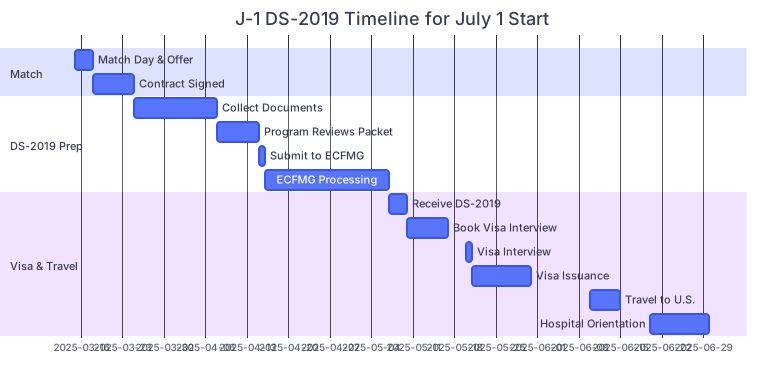
| Task | Details |
|---|---|
| Match: Match Day & Offer | a1, 2025-03-15, 3d |
| Match: Contract Signed | a2, after a1, 7d |
| DS-2019 Prep: Collect Documents | b1, 2025-03-25, 14d |
| DS-2019 Prep: Program Reviews Packet | b2, 2025-04-08, 7d |
| DS-2019 Prep: Submit to ECFMG | b3, 2025-04-15, 1d |
| DS-2019 Prep: ECFMG Processing | b4, after b3, 21d |
| Visa & Travel: Receive DS-2019 | c1, 2025-05-07, 3d |
| Visa & Travel: Book Visa Interview | c2, after c1, 7d |
| Visa & Travel: Visa Interview | c3, 2025-05-20, 1d |
| Visa & Travel: Visa Issuance | c4, after c3, 10d |
| Visa & Travel: Travel to U.S. | c5, 2025-06-10, 5d |
| Visa & Travel: Hospital Orientation | c6, 2025-06-20, 10d |
If any step in March–April gets delayed by 2–3 weeks, everything collapses toward late June. That’s why I keep hammering: respond fast and push gently.
Quick H‑1B Micro‑Timeline (Ideal Case)
Assume July 1 start, premium processing, and a program that knows what it’s doing.
- Mid March: You match, confirm H‑1B sponsorship is possible.
- Late March – Early April: You send:
- Step 3 pass, ECFMG certificate, degree.
- Passport, CV, signed contract.
- Mid April: Attorney files H‑1B with premium.
- Late April – Early May: H‑1B approved (I‑797 issued).
- May: Book consulate appointment.
- Late May – Early June: Visa issued, travel booked.
Push any of that into June and your risk skyrockets.
What You Should Be Doing Right Now (By Calendar Position)
To make this brutally clear, here’s a quick “at this point you should…” snapshot based on where you are in the year for a standard July start.
| Timeframe (for July start) | At this point you should... |
|---|---|
| Aug–Oct (prior year) | Decide J‑1 vs H‑1B strategy, plan Step 3 if needed |
| Nov–Jan | Finish needed USMLEs, verify programs' visa policies |
| Feb–early Mar | Align rank list with realistic visa options |
| Match week (mid‑Mar) | Sign contract, confirm visa type with program |
| Late Mar–Apr | Submit all documents for DS‑2019/H‑1B filing |
| May | Have DS‑2019/I‑797 in progress or approved, book consulate |
| June | Have visa stamp and flight, confirm orientation dates |
Final 3 Things to Remember
Visa type is decided months before you stand in front of a consular officer. It’s decided when you schedule Step 3, when you pick programs, and when you respond (or don’t) to HR emails in April.
The program’s internal deadline matters more than the legal deadline. If their GME office says “we must submit to ECFMG by April 30,” treat that as hard truth.
Silence kills timelines. If something is delayed—test score, document, consulate date—tell the program early. Programs can fix problems they know about in April. They can’t fix a secret in late June.