The biggest mistake IMGs make in final year is drifting through it and “seeing what happens.” You cannot drift into a US residency match. You plan your way in—month by month and week by week.
I’m going to walk you from the start of your final year through ERAS submission, assuming you want to match the first realistic cycle. I’ll flag where you must hit certain milestones, and where you still have room to maneuver.
I’ll divide this into three phases:
- Final Year Months 1–4: Exams + Foundation
- Final Year Months 5–8: USCE + Letters + Application Build
- Final Year Months 9–12: ERAS, MSPE, and Interview Readiness
If your school calendar is odd (February–November, etc.), ignore the exact month names and follow the sequence.
Phase 1 (Months 1–4): Lock Down Exams and Core Strategy
At this point you should stop thinking “I’ll apply to the US someday” and start building an actual timeline on paper. Not in your head. Written.
Month 1: Reality Check + Macro Plan
Your priorities this month:
- Decide which match cycle you’re targeting.
- Map your exam timeline (USMLE or alternatives).
- Sketch USCE and ERAS deadlines backward.
By the end of this month you should have:
- Chosen:
- Target Match year (e.g., applying in September 2026 for July 2027 start)
- Specialties you’re realistically aiming at (e.g., IM, FM, Psych vs. Ortho, Derm)
- A rough calendar pinned or in Notion/Excel that shows:
- Step/Other exams dates
- When USCE needs to happen
- When letters should be in
- ERAS opening and submission goals
Do this now:
- Pull actual dates:
- ERAS opens for applicants (usually early June)
- ERAS submission for residency programs (usually early to mid-September)
- NRMP registration (September)
- Decide exam path:
- USMLE Step 2 CK (Step 1 is pass/fail but still required to be done)
- OET Medicine (if needed for ECFMG certification route)
- Any local licensing exam you must pass to graduate
| Milestone | Typical Timing (for July start) |
|---|---|
| ERAS Account Opens | Early June (year before start) |
| ERAS Submission Date | Early–Mid September |
| MSPE Release | October 1 |
| Interview Season | October–January |
| Rank List Deadline | Late February |
Hard truth: if you haven’t passed at least Step 1 (or equivalent foundation exam) by now, you’re already tight for the next immediate match. You may need to shift to the following cycle to avoid a weak application.
Month 2: Structured Exam Prep Starts (for Real)
At this point you should be acting like your whole year orbits around Step 2 CK (or your major licensing exam). Because it does.
Weekly structure (example for Step 2 CK focus):
- 5–6 days per week:
- 40–80 UWorld questions/day
- 2–3 hours of reviewing explanations
- 1–2 hours content review (videos/notes)
- 1 day:
- NBME or mixed block + analysis + rest
Set exact checkpoints:
- Week 2: Take a baseline assessment (NBME or UWSA).
- Week 4: Your second assessment should show upward movement. If not, you tweak schedule—not “try harder,” change the mechanism.
By the end of Month 2 you should:
- Have a booked exam date (not “I’ll book when I’m ready”).
- Know your score target range based on specialty:
- Community IM/FM: often 230+ competitive as IMG
- Mid-tier academic IM: 240–250+
- More competitive specialties: 250+ is safer, but USCE + research matter too
Month 3: Exam-Heavy + Light Application Prep
At this point you should still be exam-first, but you start laying quiet groundwork for ERAS so it doesn’t all hit you at once later.
Exam side:
- Increase intensity:
- 80+ questions/day most days
- Weekly NBME or every 2 weeks depending on endurance
- Start building test-day stamina:
- 2–3 blocks back-to-back, minimal breaks
Application groundwork:
- Start a simple master CV document:
- Clinical rotations (dates, locations, specialties)
- Research (title, role, dates)
- Volunteering, leadership, tutoring
- Identify 2–3 faculty at your home institution who could eventually write strong letters about:
- Clinical ability
- Work ethic
- Communication with patients
You’re not asking for letters yet. You’re warming the relationship and making sure they see your best work.
Month 4: Exam Execution Window
This is the month where you either take your big exam or lock in the test date for Month 5. Do not let this drift.
If you’re 4–6 weeks out from Step 2 CK:
- Take at least:
- 1 NBME every 1–2 weeks
- 1 full-length simulation (7 blocks) before test day
- Target:
- NBME scores relatively stable or trending up
- Minimal “panic” topics—specific weaknesses now, not general confusion
If you’re not ready:
- You don’t just push the test “a month.” You re-evaluate the entire match-cycle plan:
- Shift the target Match year if needed
- Adjust USCE timing
- Accept that rushing a 215 when you could get a 240+ 3–4 months later is often a terrible trade.
At the end of Phase 1 (Month 4) you should have:
- Step 1: Passed (already done before final year in most sane plans)
- Step 2 CK: Taken or scheduled with a realistic score projection
- A clear planned Match cycle:
- “I am applying ERAS September 20XX” is a sentence you can say out loud.
Phase 2 (Months 5–8): USCE, Letters, and Application Build
This phase is where a lot of IMGs destroy their chances by being vague: “I’ll try to get some USCE.” Not enough. You need targeted USCE with letter potential, on a timeline that feeds ERAS correctly.
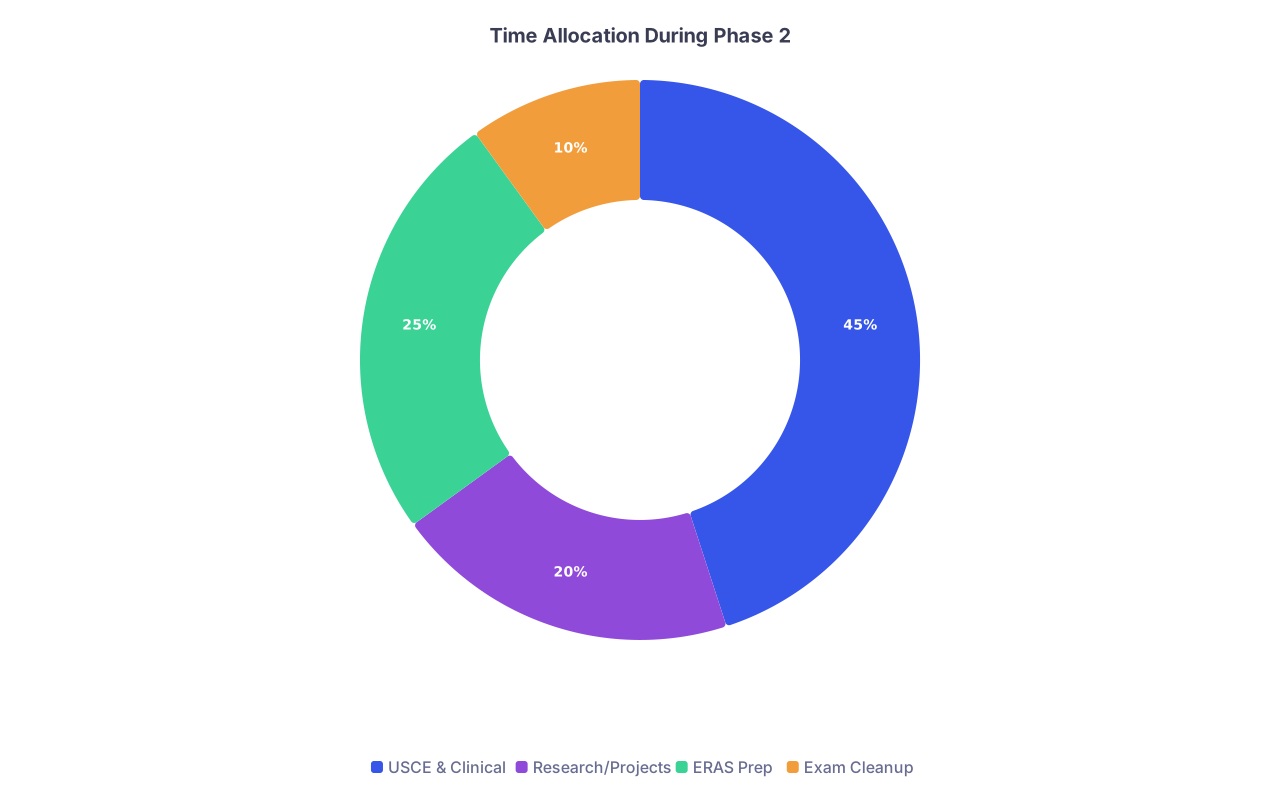
| Category | Value |
|---|---|
| USCE & Clinical | 45 |
| Research/Projects | 20 |
| ERAS Prep | 25 |
| Exam Cleanup | 10 |
Month 5: Lock USCE Dates and Types
If you haven’t secured USCE yet, this is late but still salvageable. You need to move.
Decide your USCE mix:
- Best options:
- ACGME-affiliated hospital clerkships
- Inpatient electives or sub-internships in your specialty of interest
- Acceptable but weaker:
- Outpatient observerships with little hands-on work
- Private clinic shadowing
At this point you should:
- Finalize:
- Which months you’ll be physically in the US (e.g., Months 6–7)
- Which hospitals or programs you’re rotating at
- Aim:
- At least 2–3 months of USCE in your target specialty (for core fields like IM/FM/Psych)
- 2–3 strong LORs from US physicians who saw you work closely
If your home country training calendar is rigid, negotiate:
- Push non-essential rotations to after ERAS submission.
- Get program office support for away rotations or “vacation blocks” used for USCE.
Month 6: First On-Ground USCE + Evaluation Focus
At this point you should be in your first USCE block or about to start it.
Week 1 of rotation:
- Learn:
- EMR system basics
- Rounding style, presentation format (“one-liners,” problem-based A/P)
- How attendings prefer notes and follow-up
- Signal intent early:
- “Doctor X, I’m hoping to apply to Internal Medicine in the US next year and I’d really appreciate any feedback about how I can improve during this month.”
Weeks 2–3: Build letter material
You’re not asking yet. You’re giving them reasons to say yes later.
Focus on:
- Showing up early, leaving late (without being weird about it)
- Taking ownership of a small set of patients:
- Follow labs
- Call consults (if allowed)
- Update families under supervision
- Presenting clearly and concisely
I’ve watched IMGs lose letters because they were “fine” but forgettable. You want the attending to think: “Oh yeah, that student hustled and actually made my life easier.”
Week 4: Soft letter conversation
Toward the end:
- Ask for feedback:
- “Do you have any advice for me as I prepare for residency applications?”
- If response is positive:
- “Would you feel comfortable writing me a strong letter of recommendation for Internal Medicine?”
If they hesitate or say “generic,” back off. Do not collect mediocre letters; they hurt more than they help.
Month 7: Second USCE Block + Start ERAS Skeleton
Now you should be on rotation #2 (or continuing a longer block). Simultaneously, you quietly start your ERAS file.
Clinic/Hospital side:
- Replicate what worked in Month 6.
- Aim for:
- At least one letter from academic faculty
- One from a residency program-affiliated attending in your target specialty
- If you’re repeating the same hospital:
- Try a different attending/service to broaden perspectives.
ERAS skeleton work (1–2 evenings per week):
- Request:
- ECFMG ID, if you don’t have it
- Official transcripts preparation from your medical school
- Enter:
- Education dates and locations
- Exam scores (when official)
- Experiences (from the CV you started in Month 3)
This is low-cognitive work. Don’t wait until August/September when everything is time-critical.
Month 8: Letters, Personal Statement, and Program List Draft
At this point you should already have US letters requested or very close.
Letters of Recommendation (LORs):
- Confirm:
- Each writer knows:
- Your specialty
- Rough timeline (letters uploaded by July/August)
- You’ve sent them:
- Your CV
- Brief summary of your work with them
- Personal statement draft (if ready) or at least your goals
- Each writer knows:
Personal Statement (PS) timeline:
- Week 1:
- Draft ugly first version. Don’t chase perfection.
- Week 2:
- Get feedback from someone who actually knows US residency culture (recent resident, advisor, not just another IMG friend).
- Week 3:
- Second draft with tighter structure:
- Why this specialty
- What you’ve done to test it
- What you bring to a program
- Second draft with tighter structure:
- Week 4:
- Final or near-final, ready for minor tweaks per specialty (e.g., IM vs. FM versions).
Program list draft:
You don’t build a perfect list yet, but you sketch:
- Categories:
- “Reach” programs
- “Realistic” community and mid-tier academic
- Safety / high IMG intake programs
- Use filters:
- Programs that accept IMGs and sponsor visas
- Historical IMG match data
Phase 3 (Months 9–12): ERAS Submission to Interview-Ready
Now the calendar matters down to the week. This phase assumes you’re targeting the upcoming ERAS cycle. If you’re one cycle later, stretch this phase across your post-graduation months.
Month 9: Finish Core Documents and Chase Loose Ends
At this point you should be flipping from “building” to “tightening.”
Documents that must be near-final:
- Personal statement(s) for each specialty
- ERAS experiences section:
- Each entry with:
- Concise description
- Impact/outcome bullets
- Verified dates and supervisor contact
- Each entry with:
- LORs:
- At least 3, ideally 4:
- 2–3 from US physicians in your chosen specialty
- 1 could be home-country or research if strong and relevant
- At least 3, ideally 4:
Administrative tasks:
- Make sure:
- ECFMG certification pathway is clear (you don’t necessarily need full certification at submission, but you need to be on track).
- Your medical school is ready to send the MSPE and transcript when requested.
Don’t underestimate how slow some university offices are. I’ve seen students tank cycles because their dean’s office sat on the MSPE request for weeks.
Month 10: ERAS Submission Month (Critical Weeks)
Here’s where you don’t get to be casual. Dates and sequence matter.
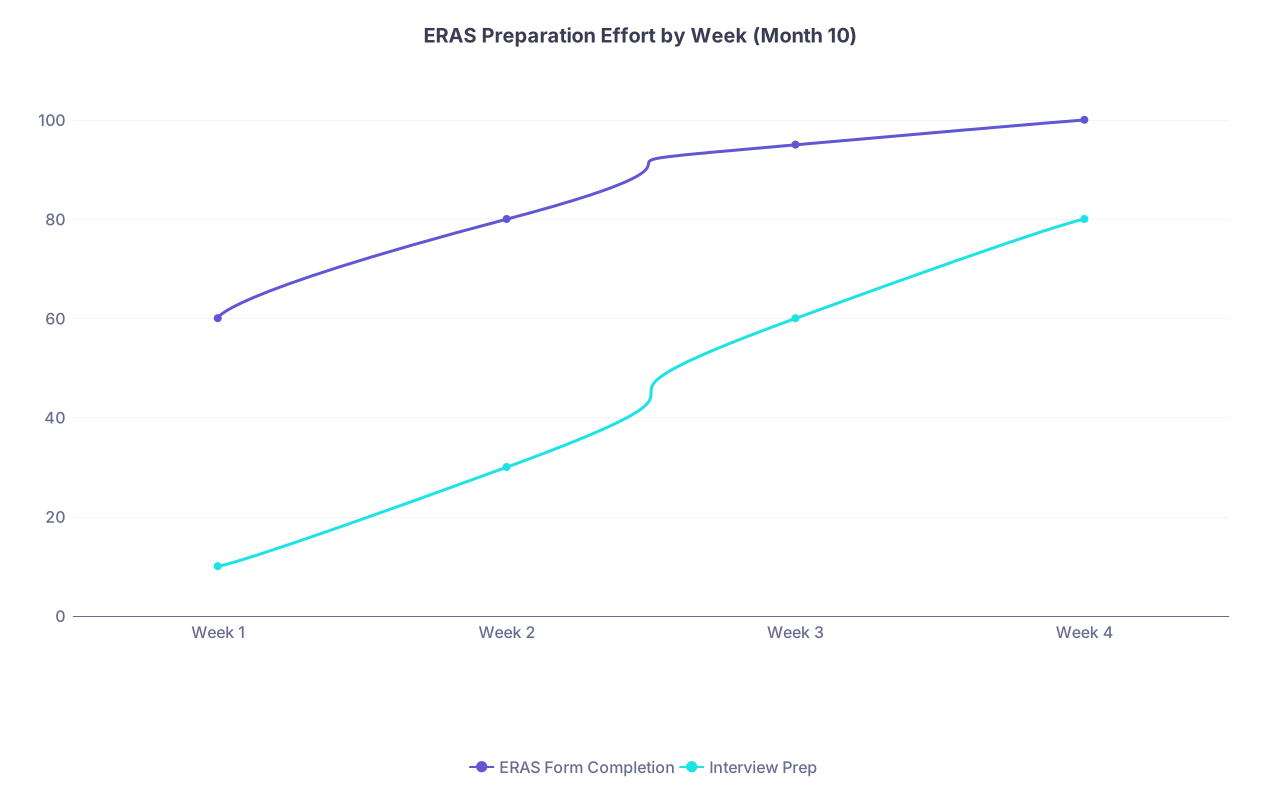
| Category | ERAS Form Completion | Interview Prep |
|---|---|---|
| Week 1 | 60 | 10 |
| Week 2 | 80 | 30 |
| Week 3 | 95 | 60 |
| Week 4 | 100 | 80 |
Week 1: Final ERAS Review
At this point you should:
- Have every section of ERAS filled.
- Double-check:
- Dates (no impossible overlaps)
- Names/directors spelled correctly
- Contact emails and phone numbers
Run a “fake submission review” with someone who’s been through it. They will catch things you are blind to.
Week 2: Program List Finalization
You turn your draft list from Month 8 into something you’re willing to pay for.
- Adjust based on:
- Final exam scores
- Actual USCE quality and letters you ended up with
- Typical IMG spread for IM:
- 80–120 programs (yes, it’s expensive; underapplying is worse)
- Tag:
- Visa-sponsoring programs
- Programs that historically match IMGs
Week 3: Submit ERAS Early in the Window
You don’t wait until the last possible day programs can see applications.
At this point you should:
- Submit ERAS on or very near the first day programs can start reviewing applications.
- Ensure:
- All USMLE scores you have are released to ERAS
- At least 3 LORs are assigned to your primary specialty
Yes, you can submit with one or two letters pending, but it’s not ideal. If waiting 3–4 days gets you a strong letter vs. a weak file, that’s negotiable. Waiting 3–4 weeks is not.
Week 4: MSPE + Interview Prep Mode
As you move toward MSPE release (October 1):
- Check:
- That your MSPE is uploaded when released.
- That your transcript is visible in ERAS.
- Begin formal interview prep:
- Structured answers to:
- “Tell me about yourself”
- “Why this specialty?”
- “Why this program?”
- “Explain this gap/low score/attempt” (if applicable)
- 2–3 mock interviews with:
- Physician mentor
- Resident
- Or at minimum, recording yourself on video and actually watching it
- Structured answers to:
Months 11–12: Interview Season and Damage Control
At this point you should be receiving interview invites or confronting why you’re not.
When invites start (October–November):
- Respond same day. Hour-of is better.
- Have:
- A calendar system ready (Google Calendar + spreadsheet backup)
- Travel / virtual logistics in place (good internet, quiet room, neutral background for virtual)
Interview day basics:
- 2–3 program-specific points memorized:
- Something about their patient population
- A feature of their curriculum
- Why their location works for you
- Questions for them that aren’t generic nonsense like “Tell me about your program culture.”
If invites are sparse by late November:
You don’t panic silently. You act.
- Reach out politely to a subset of programs:
- Brief email:
- Express genuine interest
- Attach updated CV
- Mention any new exam scores, publications, or rotations
- Brief email:
- Reassess:
- Does your program list skew too competitive?
- Are there December–January programs still offering late interviews?
You’re also watching your communications carefully:
- Respond quickly and professionally to every email.
- Confirm schedules.
- Send reasonable thank-you notes post-interview (short, not essay-length).
What If Your Final Year Ends Before ERAS?
Many IMGs graduate months before or after ERAS opens. If:
- You graduate before ERAS:
- Use post-graduation months for:
- Extra USCE
- Research positions
- Extra exam attempts (if you’re repairing a weak score)
- Use post-graduation months for:
- You graduate after ERAS:
- Make sure:
- Your school can still produce an MSPE and transcript on time
- You clearly state your anticipated graduation date in ERAS
- Make sure:
Graduation date alone usually isn’t the deal-breaker. Lack of structure in that awkward in-between year is.
The Short Version: Non-Negotiables
If you remember nothing else:
- Exams first, on a calendar. Step 1 passed before final year. Step 2 CK with a realistic score before ERAS submission, not “I’ll take it in October and hope programs wait.”
- USCE with purpose, not tourism. 2–3 months of solid, supervised USCE in your target specialty during Months 5–8, with explicit intent to earn strong letters.
- ERAS built slowly, submitted early. Start entering data months before, finalize PS and letters in time, and submit in the first wave—then shift energy to interview prep instead of last-minute chaos.
Follow the timeline with discipline, and you stop being the IMG who “hopes” to match and start being the one programs can actually picture on their team in July.