
Program directors care far less about your “gap” than they do about your story and your trajectory.
That is the part nobody tells IMGs honestly. Students obsess over the exact number of months since graduation, while PDs and selection committees are talking about a different question behind closed doors:
“Does this gap make me worry about this person’s reliability, skills, or risk to the program?”
You are not being judged for time. You are being judged for risk.
Let me walk you through how this actually plays out in PD meetings, rank list sessions, and those “secret” conversations that never make it into official webinars.
How PDs Actually Look at Time Since Graduation
Programs don’t all think the same way about gaps and delays. But the patterns are more predictable than you think.
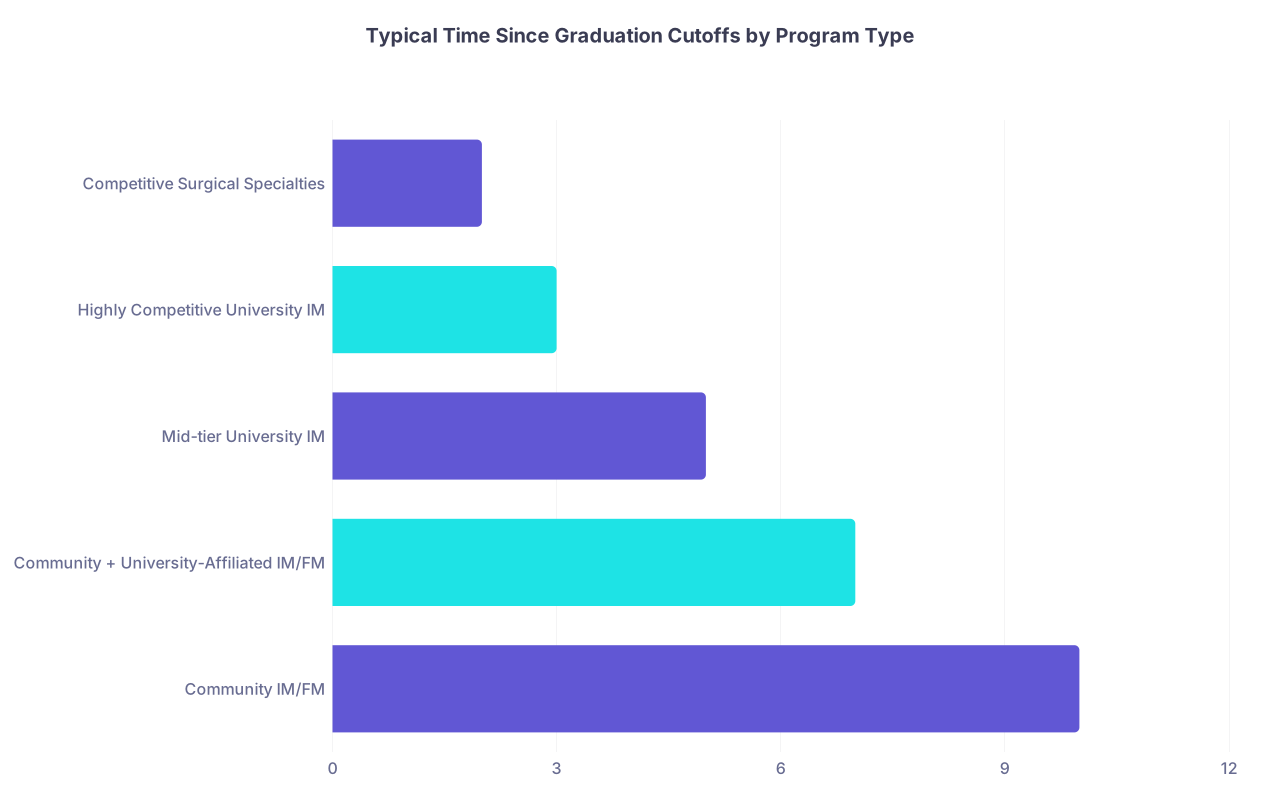
| Category | Value |
|---|---|
| Community IM/FM | 10 |
| Community + University-Affiliated IM/FM | 7 |
| Mid-tier University IM | 5 |
| Highly Competitive University IM | 3 |
| Competitive Surgical Specialties | 2 |
Those numbers (years since graduation) are not “hard rules” everywhere, but they’re representative of what I’ve seen programs say out loud in selection meetings:
- “We prefer within 5 years of graduation.”
- “Over 7 years out is tough unless there’s active clinical work.”
- “For neurosurgery, absolutely not if they’ve been out several years with no surgical continuity.”
Here’s the truth: most programs have three buckets in their heads when they see your graduation year.

Bucket 1: “Fresh Grad” – 0–2 Years Out
These IMGs are treated almost like US grads with respect to timeline:
- Assumed to have up-to-date knowledge.
- Skills are presumed to be intact.
- Gaps are less scrutinized if they’re short and clearly explained (e.g., Step prep, visa, limited research).
Behind the scenes, PDs say things like: “He’s only one year out, that’s fine, as long as he’s been doing something.”
Bucket 2: “Acceptable Window” – ~3–5 (Sometimes 7) Years Out
Now you are in explanation territory. The year itself isn’t the issue. The pattern is.
What they ask:
- “What have they been doing between graduation and now?”
- “Are they clinically active?”
- “Have they shown commitment to the US system (observerships, research, Step exams)?”
An IMG 5 years out, doing continuous clinical work, looks far better than someone 3 years out who did nothing but “prepare for Step” and cannot show anything else.
Bucket 3: “Red Flag Zone” – >5–7+ Years Out
This is where IMGs start getting auto-screened out unless something in the file forces a second look.
Faculty literally say things like:
- “This person is 9 years out… what has been going on?”
- “Skills get rusty after that long. Do we want to retrain from scratch?”
- “If we take them and they struggle, what does that do to our board pass rate and workload?”
It’s not age discrimination. It’s risk and effort. Training someone who has been away from real clinical practice for 8–10 years is a bigger lift than someone who just finished internship or is clinically current.
The Types of Gaps PDs Actually Worry About
Let me be blunt: the label of the gap isn’t what scares them. It’s the implications.
There are four categories of gaps in PD conversations.
1. “No-Activity” Gaps – The Worst Kind
This is the one that kills applications quietly.
You list:
- 2018 – Medical School Graduation
- 2018–2021 – Empty or “Step 1 and Step 2 preparation” as the only line
- 2021 – Attempt at Match
Behind closed doors, this is what gets said:
- “Three years of just studying? For what?”
- “Why no clinical engagement, not even at home country?”
- “If they couldn’t organize anything in three years, what will they do in residency?”
“Step prep only” for more than 6–9 months with nothing else is interpreted as:
- Poor initiative
- Questionable time management
- Possibly weak clinical drive
You might have had serious life constraints—but if that’s not clearly and credibly explained, the default assumption is not in your favor.
2. “Chaotic Pattern” Gaps – The Risk Signal
You see this a lot:
- 2017 – Graduate
- 2017–2018 – Internship
- 2018–2019 – No activity / exam prep
- 2019–2020 – Short observerships, nothing stable
- 2020–2021 – Another blank period
- 2022 – Research assistant for 4 months
- 2023 – Applying
On paper it just looks like “many things.” But what PDs see is inconsistency.
Comments you’ll hear in committee:
- “They seem all over the place.”
- “Where’s the continuity?”
- “Will they stick it out when residency gets hard?”
Residency is a grind. PDs are not just picking “smart.” They’re picking “reliable and steady.” A scattered CV raises anxiety, even if the individual experiences are decent.
3. “Structured, Purposeful” Gaps – Neutral to Positive
Now we’re talking about gaps that can be defended easily:
- 1 year of focused US clinical experience + research
- 1–2 years full-time research with publications and letters
- 1–2 years working clinically in home country with clear progression (e.g., junior doctor in internal medicine)
Those conversations sound different:
- “She’s 4 years out but has been an IM registrar, strong letters, still clinically sharp.”
- “He spent 2 years in cardiology research with 3 abstracts. Shows commitment to internal medicine.”
The timeline is less of a problem when the trajectory is clearly upward.
4. “Life Happens” Gaps – Case-by-Case
These are gaps due to:
- Serious illness
- Family caregiving
- Pregnancy/childcare
- War / political instability
- Immigration/visa problems
PDs are human. Many of them have had their own disrupted paths.
What matters:
- Is it clearly and honestly explained?
- Is there evidence you are back on track and functional now?
- Is the gap compatible with safe clinical performance now?
If you had a year off caring for a sick parent and then spent the next 18 months doing USCE and passing Step 2 with a strong score, most reasonable PDs will not penalize you. But if you had three vague years “for family reasons” with zero formal involvement anywhere—it is harder to defend.
The Silent Checkboxes: How Gaps Interact with Everything Else
Here’s what most applicants miss: gaps are never evaluated in isolation.
They are weighed alongside your scores, recency of clinical work, strength of letters, and specialty choice. PDs do a quick, almost subconscious risk calculus.
| Factor Combo | How PDs React |
|---|---|
| Fresh grad + strong scores + short gap | Usually fine with brief, explained delays |
| 4–5 years out + continuous clinical work | Considered acceptable for many IM/FM/community programs |
| 4–5 years out + no clinical + low Step scores | Very high risk, often screened out |
| 7+ years out + active clinical + strong letters | Gets a look in IMG-friendly or community programs |
| 7+ years out + no activity + average file | Almost never ranked unless extreme shortage |
I’ve watched PDs flip through applications and forgive a two-year delay because:
- Step 2 CK = 255
- Recent strong US letters
- Clear path: “I did X, then Y, then Z intentionally”
And I’ve watched other applicants with less than one year of gap get ignored because:
- Weak letters
- Nothing meaningful since graduation
- Vague descriptions like “self-study” and “personal issues”
You cannot fix the year you graduated. You can absolutely change how that year lands in context.
How Different Program Types See IMG Gaps
Not all programs talk about gaps the same way in their selection meetings. Some are quietly IMG-friendly. Others are quietly hostile.
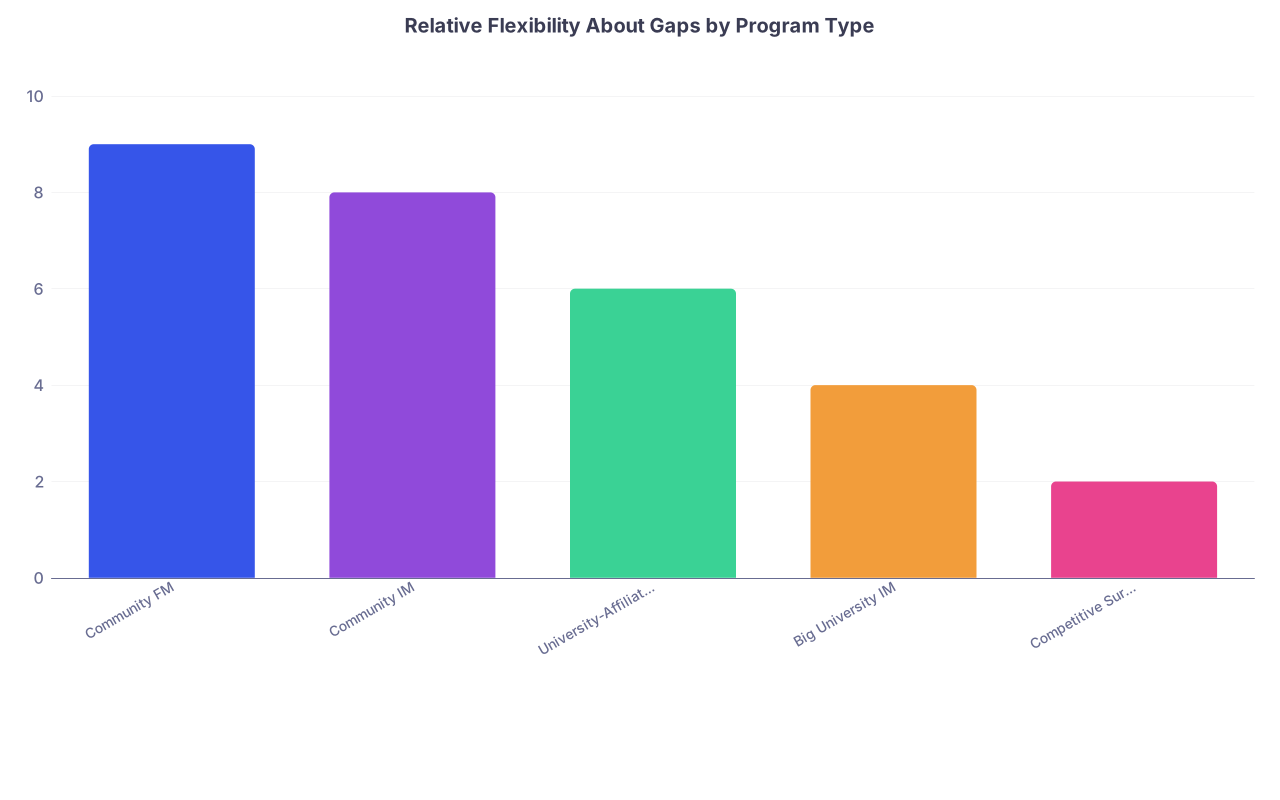
| Category | Value |
|---|---|
| Community FM | 9 |
| Community IM | 8 |
| University-Affiliated IM | 6 |
| Big University IM | 4 |
| Competitive Surgical | 2 |
(10 = very flexible, 1 = almost no flexibility)
Community Internal Medicine / Family Medicine
These programs are your biggest allies if you have gaps and you are an IMG.
What they actually say in meetings:
- “We need solid, hardworking residents who will show up.”
- “I don’t care if they graduated in 2016 if they’re clinically active and have good letters.”
- “We’ve had great older IMGs who were 8–10 years out.”
They will still worry about:
- Completely blank years
- No recent clinical experience
- Communication problems
But if you’ve been a practicing physician in your home country, with good English and decent scores, a 7–10 year gap since graduation can be survivable here—especially in less popular geographic areas.
University-Affiliated, Mid-Tier IM
These are more balanced.
They want:
- Reasonable time since graduation (ideally ≤5–7 years)
- Some academic or research engagement if possible
- Up-to-date exam scores and clinical letters
You’ll hear comments like:
- “He’s 6 years out; that’s older than our usual, but he has 2 years of US research and observerships.”
- “She has a 3-year gap with nothing. That’s tough for us.”
Big name university programs will often say things like: “We prefer within 5 years of graduation.” It’s not always an official requirement, but it strongly shapes who they invite.
Competitive Specialties (Surgery, Derm, Radiology, etc.)
Here, gaps are almost always a problem unless you’re bringing something extraordinary:
- Strong US research portfolio with publications
- Fellowship-level clinical work
- Top-tier scores and networking
For surgery, I’ve seen PDs say:
- “This candidate is 9 years out—skills decay is real.”
- “We do not have time to retrain someone who hasn’t been in an OR for years.”
If you’re 5–10 years out and set on a very competitive specialty as an IMG, you are not just fighting the gap. You’re fighting the PD’s fear that you will be unsafe in a high-acuity, high-pace environment.
The One Thing That Rewrites a “Bad” Gap
Here’s the real secret: PDs are incredibly influenced by recent, trusted voices.
A convincing, recent letter from someone they know or respect can overwrite a lot of anxiety about older graduation years or ugly gaps.
I’ve watched this exact conversation:
PD: “She’s 8 years out from med school. That’s older than we usually take.”
Associate PD: “Yes, but did you see Dr. X’s letter? He says she’s one of the best observers he’s had in 10 years. Also, she’s been working as an internist back home.”
PD: “Alright, let’s interview her.”
What helped there?
- Recency: Strong performance in the last 12–18 months
- Credibility: Letter from a faculty member they trust
- Continuity: Ongoing clinical work, not a resurrection after years of nothing
This is why “hiding” your gap or downplaying it is a mistake. You need to actively counter-program it with recent, real-world performance.
How to Frame Your Gap So PDs Don’t Panic
No, you do not write a melodramatic personal statement about your suffering. You don’t need a sob story. You need clarity and control.
Step 1: Own the Timeline
In your CV and ERAS:
- Account for every year. No unexplained blank stretches.
- If you really did only study for Step for 8 months, fine—but then show what else you did around that time, even if part-time (volunteering, teaching, local clinic work).
Question PDs actually ask: “What were they doing all that time?”
Make the answer easy to see.
Step 2: Convert “Dead Time” into “Development Time”
If your gap is already in the past, you can’t change what happened. But you can change how you describe it.
There’s a difference between:
2019–2021: Preparing for USMLE Step exams.
and
2019–2021: USMLE preparation (Step 1, Step 2 CK) while volunteering at a local clinic 2 days/week and assisting in a small retrospective study on diabetes outcomes at XYZ Hospital.
The first sounds passive and isolated.
The second sounds like growth, engagement, and initiative—even if it was not a formal job.
Step 3: Use the Personal Statement Strategically
Do not write your entire personal statement about your gap. That’s a common mistake.
Instead:
- One concise paragraph that explains the core situation
- Emphasis on what you learned, how you grew, and what you did to stay clinically or academically connected
- Then move on to why you’re ready for residency now
Something like:
After graduating in 2017, I returned to my home country to support my family during a period of illness and worked as a general practitioner in a rural clinic. Those three years shaped my clinical judgment and independence, but they also made clear that I wanted structured training in internal medicine. In 2021, I transitioned my focus to the US system, completed Step 1 and Step 2 CK, and sought out US clinical experiences to adapt to the practice environment here.
That’s honest, brief, and forward-looking. No excuses. No wallowing.
Building a “Now” That Makes Your Gap Forgettable
What matters most to PDs is what you look like today.
If you’re reading this with a big gap already behind you, your job is not to rewrite history. Your job is to build a powerful “now.”
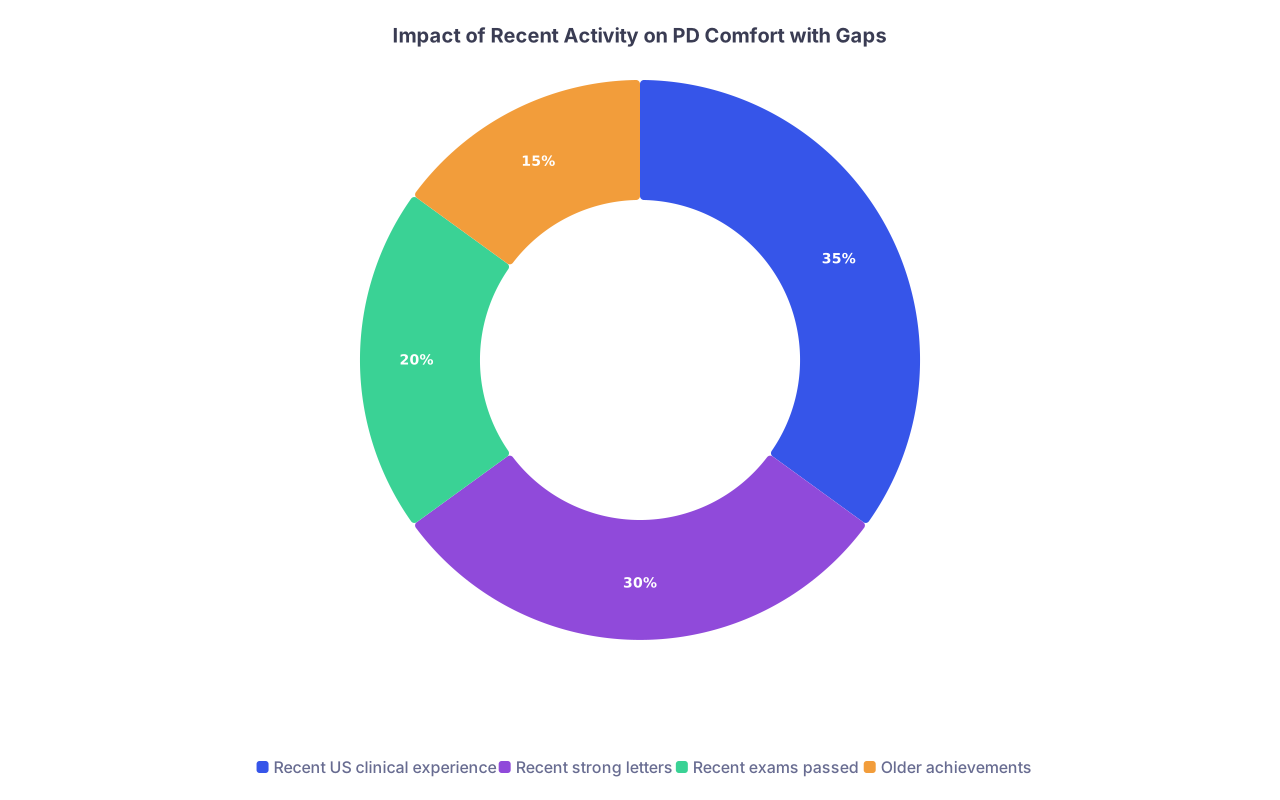
| Category | Value |
|---|---|
| Recent US clinical experience | 35 |
| Recent strong letters | 30 |
| Recent exams passed | 20 |
| Older achievements | 15 |
The closer to your application date, the more weight these carry:
- US clinical experience (hands-on if possible, or high-quality observerships)
- Fresh, detailed letters describing your bedside skills and work ethic
- Step 2 CK (and Step 3 for older grads) passed recently with solid scores
- Any ongoing clinical role—even in your home country—showing you didn’t “disappear”
If you have been out of clinical work for years, you should not just jump into applications. That is where IMGs sabotage themselves.
You should first:
- Get back into clinical work (home country or USCE) for at least 3–6 months
- Take and pass any remaining exams (Step 2, Step 3) during or just after that period
- Secure at least 2 recent letters that say, in some form: “This person works like a current intern.”
Then apply.
That one-year delay with substance will help you more than rushing into a match cycle with a weak, stale profile.
A Realistic Roadmap for an IMG With a Big Gap
Let’s put this into an actual scenario. Say you’re an IMG who graduated in 2015. It’s 2026. You’re 11 years out.
You’ve done:
- 2 years of internship / junior doctor in home country (2015–2017)
- Then some combination of local work, some family issues, and off-and-on exam prep
- Now you’re thinking of applying to internal medicine or family medicine in the US
Here’s what will actually help you:
Stop the bleeding: from this month onward, you must be clinically or academically active. Clinic work, hospitalist role, research assistant—something real.
Spend the next 12 months doing:
- Consistent clinical work (even if in home country)
- USCE blocks if you can travel (observerships, externships, if possible)
- Step 3 (if Steps are not yet complete)
Build a narrative:
- Explain the middle years succinctly and honestly—no drama, no excuses.
- Emphasize your recent 12–18 months: what you’ve done, how it shows readiness.
Target the right programs:
- Community IM/FM
- Programs with a history of taking older IMGs
- Geographic regions that struggle with recruitment
In a rank meeting, your advocate on the committee needs to be able to say:
“Yes, they’re 11 years out, but they’ve been a practicing physician, have recent US experience, great letters, passed Step 3, and they behave like a ready-made intern.”
If no one can say that, your gap becomes a liability. If someone can, the gap becomes a footnote.
Common IMG Mistakes Around Gaps (That PDs Roll Their Eyes At)
I’ve seen these over and over again:
- Trying to hide or minimize the gap on the application
- Writing a personal statement that is 80% “my struggles” and 20% medicine
- Labeling three years of unemployment as “Step preparation” with no other involvement
- Refusing to do any meaningful activity now because “I’m waiting to see if I match first”
- Aiming exclusively for hyper-competitive specialties or top-20 university programs with a 10-year gap and no US letters
From the PD’s point of view, those moves telegraph poor judgment. And poor judgment scares them more than a date on your diploma.
What You Should Take Away
Time since graduation is not a single yes/no filter. It’s a multiplier.
- A strong current profile × 8 years = maybe
- A weak, inactive profile × 3 years = no
- A chaotic, unstructured path × any number of years = high risk
Your job is to make your recent 12–24 months so obviously strong that the committee can say, “Whatever happened before, they’re ready now.”
And if you’re early in your gap or delay? You still have the chance to shape it while it’s happening instead of explaining it later. Fill it with things that prove you’re serious, reliable, and still clinically alive.
With that mindset, you stop being “the 2016 grad with gaps” and start being “the candidate who has been working hard, recently, in the right direction.”
That’s the person PDs fight for in the room.
You’ve now seen how they actually think about gaps and delays. The next step is obvious: choose your next 6–12 months strategically, not passively. With those pieces in place, you’re ready to start thinking about how to target the right programs and signal fit in your application—but that’s a story for another day.
FAQ: IMG Gaps and Delays
1. Is a 5-year gap an automatic rejection?
No, not automatically. A 5-year gap with no clinical or academic activity is severe and often fatal. But a 5-year delay where you’ve been working as a physician, doing research, or in continuous USCE can still be acceptable, especially for community IM/FM and IMG-friendly programs. Context is everything.
2. Should I explain my gap in my personal statement or in the ERAS experience section?
Both—but selectively. Use the ERAS experience section to factually account for the time (“Family caregiving while volunteering at X clinic”). Use a short paragraph in your personal statement to frame the why and, more importantly, to show how you grew and what you did to stay clinically engaged. Do not turn your entire personal statement into a gap apology.
3. Does doing a Master’s or MPH in the US “fix” an older graduation date?
It helps but it’s not magic. A US Master’s or MPH tells PDs you can function in an academic environment and improves your familiarity with the system. It does not substitute for recent clinical exposure. The ideal scenario: MPH + concurrent or follow-up US clinical experience + recent exams + strong letters. The degree alone without clinical relevance can be seen as “another way to avoid the real world.”
4. If I’m older and many years out, should I still bother with Step 3 before applying?
If you are more than ~5–7 years from graduation, Step 3 can be a major asset, especially for community programs and visa-requiring applicants. It signals medical knowledge, commitment, and reduces PD anxiety about your ability to pass future exams. For fresh grads, Step 3 is optional. For older grads, it often shifts from “nice to have” to “strategically wise.”
5. What’s worse in PDs’ eyes: a big gap or low Step scores?
They worry more about patterns than a single number. Low Step scores with strong recent clinical performance and no major gaps can still get interviews at the right programs. A large unexplained or inactive gap, even with decent scores, suggests deeper problems (motivation, organization, resilience). If you have both a significant gap and weak scores, you absolutely must overcompensate with recent, high-quality clinical work and strong letters to have any realistic shot.