It is mid‑October. You just received your first residency interview invite as an IMG. The email says “Congratulations!” and then hits you with three problems at once: limited dates, 48‑hour response window, and a confusing portal. Your heart rate spikes. You realize you have no real system. No master calendar. No clear plan for what you are going to do from this moment until Match Day.
This is where most IMGs start losing ground—not with the USMLE scores, but with strategy and timing. The good news: from this point forward, you can run on a clear, week‑by‑week plan.
Below is your chronological guide: from the moment that first interview invite arrives… all the way to Match Day.
Big Picture Timeline: Interview Invite → Match Day
Let us anchor the whole season first.
Assume a “standard” ERAS / NRMP calendar:
- Interview invites: Late September–January
- Most interviews: October–January
- Rank list opens: Mid‑January
- Rank list due: Late February / early March
- Match Week (SOAP + Match Day): Mid‑March
Here is how the overall flow looks.
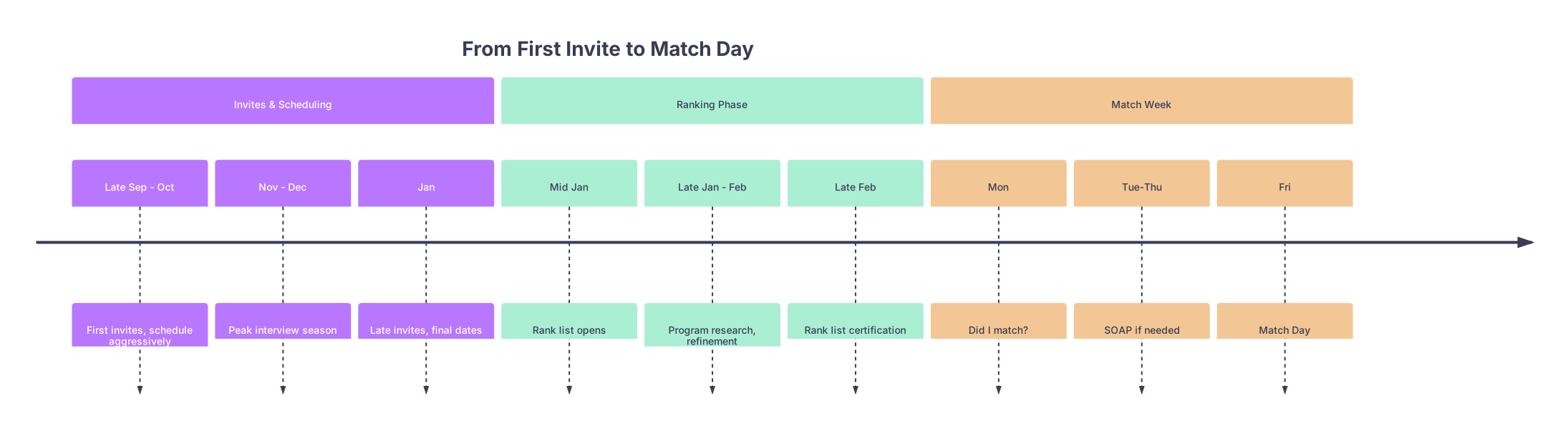
| Period | Event |
|---|---|
| Invites & Scheduling - Late Sep - Oct | First invites, schedule aggressively |
| Invites & Scheduling - Nov - Dec | Peak interview season |
| Invites & Scheduling - Jan | Late invites, final dates |
| Ranking Phase - Mid Jan | Rank list opens |
| Ranking Phase - Late Jan - Feb | Program research, refinement |
| Ranking Phase - Late Feb | Rank list certification |
| Match Week - Mon | Did I match? |
| Match Week - Tue-Thu | SOAP if needed |
| Match Week - Fri | Match Day |
Now we zoom in. Week by week.
Week 0: The First Interview Invite (Reaction Week)
You are here: the first “We are pleased to invite you…” email just landed.
At this point you should focus on one thing: infrastructure. If you do this week right, everything else becomes easier.
Within 24 hours of the first invite
Lock dates immediately
- Accept the earliest reasonable date that:
- Does not conflict with exams, visa appointments, or known obligations.
- Gives you at least 10–14 days to prepare for that specific program.
- Do not “wait for better invites” and leave slots empty. I have seen IMGs end up with 4 total interviews because they tried to game the calendar early.
- Accept the earliest reasonable date that:
Create a master interview tracker Use a spreadsheet or Notion / Trello. Bare minimum columns:
Core Interview Tracking Columns Column Purpose Program Name Identification Specialty If applying to >1 specialty City / State Travel / time zone planning Interview Date & Time Calendar and prep sequencing Format (In‑person/Virtual) Logistics & dress code Status (Scheduled/Waitlist/Declined) Quick overview Standardize your email + calendar
- Create:
- One dedicated “Residency” label/folder in your email.
- A color for residency events on your calendar (Google, Outlook, whatever you actually check).
- Turn on notifications on your phone and desktop for that email account. Invites are time‑sensitive. Missing 6‑hour booking windows is how you lose interviews.
- Create:
Draft 3 email templates You will reuse these constantly:
- Date change request
- Waitlist / alternative date request
- Thank‑you email skeleton (to be customized later)
By the end of Week 0
- 1–3 scheduled interviews on the calendar.
- A clean, working tracking system.
- Standard replies ready so you stop writing every email from scratch.
Weeks 1–2: Building Momentum and Baseline Prep
Now the trick is to keep your life from getting chaotic as more invites arrive.
At this point you should build routines.
Daily actions (15–30 minutes)
- Check:
- ERAS email at least 3 times (morning, midday, evening).
- Program portals (Thalamus, Interview Broker, proprietary portals).
- Update your tracker:
- New invites
- Waitlist movements
- Cancellations / reschedules
Set up your “core prep packet”
You do not re‑invent the wheel for each program. You create a core foundation, then customize.
By end of Week 2 you should have:
Master answers (typed, then practiced)
- “Tell me about yourself.”
- “Why this specialty?”
- “Why the US?”
- 3–4 clinical stories:
- A difficult patient
- A conflict or disagreement in the team
- A time you made a mistake or missed something
- A leadership or teaching experience
Program‑agnostic bullets For any program:
- 3 strengths and 1–2 weaknesses (real but fixable).
- 3 learning goals for residency.
- 3 things you bring as an IMG (language skills, resourcefulness, cross‑cultural care, etc.).
Technical setup (for virtual interviews)
- Test:
- Camera, microphone, internet stability.
- Zoom / Teams / Webex logins.
- Create:
- Neutral background or simple backdrop.
- Interview outfit (full outfit, not just top).
- Test:
Weekly structure (Weeks 1–2)
- 2–3 days: generic interview skill practice (mock interview, recording yourself).
- 2 days: reading US healthcare topics (insurance basics, ACGME, duty hours).
- 1 day: total break or light review. Burnout kills performance more than low content knowledge.
Weeks 3–6: Peak Invite & Interview Season
This is when the schedule gets ugly. November–December for most. You are juggling:
- Multiple interviews per week
- Ongoing invites trickling in
- Visa concerns
- Possible observership or job
At this point you should protect two things: your calendar and your energy.
Week‑by‑Week Core Pattern
Let us assume a “busy” week with 2 interviews.
7–10 days before each specific interview
- Deep dive that program:
- Program website: curriculum, tracks, call schedule.
- Resident list: IMGs present? Where from?
- Hospital type: community vs university vs hybrid.
- Prepare:
- 3 reasons you like this program (specific, not “good teaching”).
- 2 questions tailored to:
- PD
- Residents
3–4 days before each interview
- Full mock interview (ideally with a human who will not sugar‑coat feedback).
- Refine timing:
- Most answers should fall in the 60–90 second range, complex stories 2 minutes.
- Practice stopping talking. IMGs often over‑explain.
Day‑Before checklist
Print or write it out. Run it every time.
- Confirm:
- Time zone (I have seen people miss interviews over this—especially IMGs overseas).
- Link / login details.
- Lay out:
- Outfit + backup shirt / hijab / tie.
- Notepad, pen, list of names if provided.
- Re‑review:
- Program‑specific notes (10–15 minutes, not 2 hours of cramming).
- Sleep:
- Aim for 7+ hours. You are not prepping for Step; cognitive clarity matters more than memorizing attendings’ hobbies.
Interview Day structure (Virtual)
- T‑60 minutes: Dress completely, open Zoom, test audio/video.
- T‑30 minutes: Quick review of your “about me” and “why this program” bullet points.
- During:
- Camera at eye level.
- Look at camera when speaking, screen when listening.
- Keep answers structured: Situation – Action – Result – Reflection.
- Post‑interview (same day or next morning):
- Fill in your tracker:
- Vibe: 1–10
- Residents happy or exhausted?
- Faculty seemed engaged or rushed?
- Any red flags?
- Draft thank‑you emails:
- Specific comments about something you discussed.
- Fill in your tracker:
Energy Management During Peak Season
Let me be blunt: IMGs often crush content and then sabotage themselves with exhaustion.
At this point you should schedule your rest as aggressively as your interviews.
Create a “load chart” for yourself. Very simple.
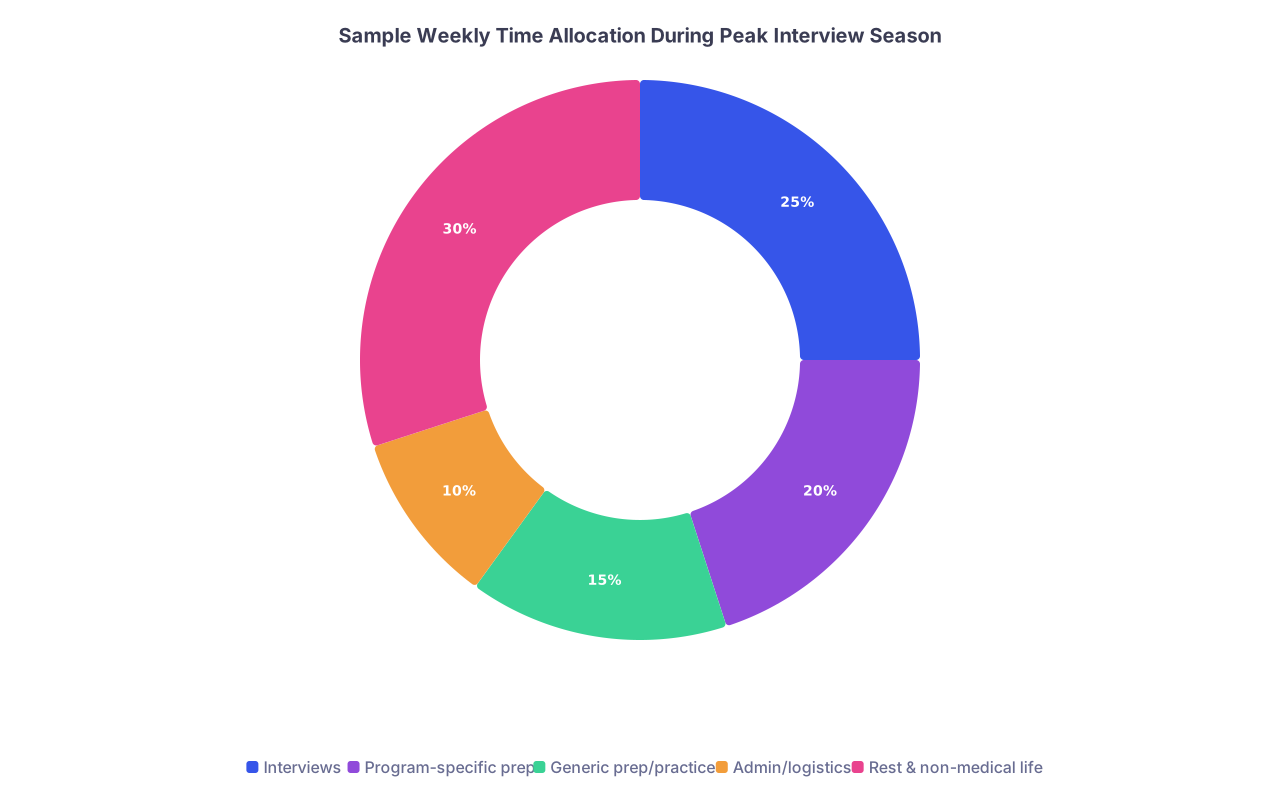
| Category | Value |
|---|---|
| Interviews | 25 |
| Program-specific prep | 20 |
| Generic prep/practice | 15 |
| Admin/logistics | 10 |
| Rest & non-medical life | 30 |
If your “rest” slice shrinks below ~20%, your answers will sound robotic, irritable, or flat. I see it constantly by late December.
Concretely:
- Cap heavy prep days at 8–9 hours total.
- Force at least one light day per week (emails only, maybe 30 minutes of review).
- Do not schedule back‑to‑back 8 a.m. interviews if you are overseas in a conflicting time zone. Your third interview like that will be a mess.
Late Interviews (January): Strategy and Selectivity
By January, two things usually happen:
- Your total number of interviews is basically set.
- Quality diverges. You will have a mix of:
- Programs you genuinely like.
- Programs that feel like pure “safety” or bad fit.
At this point you should be thinking like someone building a rank list, not just collecting interviews.
Week‑by‑Week (January)
Week A (first half of January)
- Rank your interviews provisionally:
- After each interview, give it:
- “Fit” score (1–10)
- “Training quality” score (1–10)
- “Lifestyle / location” score (1–10)
- After each interview, give it:
- Watch for:
- Programs you would not actually want to attend.
- Programs where residents clearly looked miserable, or PD made unsettling comments (“We expect residents to be here until the work is done, regardless of duty hours”—yes, I have heard this).
Should you cancel lower‑priority interviews?
My rule for IMGs:
- If you have <10 interviews: cancel nothing unless there is a direct conflict or clear toxicity.
- If you have 10–14 interviews: you can consider cancelling 1–2 that are obviously poor fit or in locations you would never rank over others.
- If you have >15 interviews: you can be more selective, but never get arrogant. Programs can and do rank you lower than you expect.
Rank List Phase: Mid‑January to Late February
The NRMP Rank Order List opens in mid‑January. This phase is where many IMGs make emotionally driven mistakes.
At this point you should slow down and be methodical.
Step 1 (Week 1 of Rank List Opening): Data Collection
For every program you interviewed at, pull into your tracker:
- Location specifics:
- Cost of living range.
- Public transport vs needing a car.
- Visa:
- J‑1 vs H‑1B vs “no visa sponsorship”.
- Any special restrictions mentioned by PD.
- Training environment:
- Inpatient volume, community vs academic, fellowship placement if relevant.
- Red / yellow flags you noted.
Step 2 (Week 2): First Draft of Rank List
Create three buckets:
- Top‑tier (your dream but realistic)
- Middle stable options
- Safety / backup
Do not be naive about prestige. For an IMG, the “perfect” program is often:
- Visa‑friendly with a strong history of matching IMGs.
- Reasonable workload with good teaching.
- City you can actually tolerate living in for 3+ years.
Not the fanciest name on the brochure.
Ordering within buckets
Prioritize, in this order:
- Training quality and support.
- Your likelihood of actually thriving there (cultural fit, IMG support).
- Location and personal life factors.
- Prestige last.
You rank in the order of where you most want to go. Do not “game” the algorithm by trying to predict how programs rank you. The NRMP algorithm favors the applicant’s preferences.
Step 3 (Week 3–4): Refinement and Reality Check
At this point you should attack your own list with hard questions.
- Would I truly be willing to train at #1 over #2 in real life?
- Am I ranking a “brand name” higher even though I liked another program more?
- Am I over‑weighting one friendly interviewer vs the whole program feel?
Useful reality checks
- Talk to:
- One mentor who actually knows US residency (not just another IMG friend).
- One resident (if possible) at a top‑ranked program for you.
- Re‑read:
- Your own post‑interview notes. The “fresh” impressions you wrote down right after the day are more reliable than what you feel a month later.
By one week before the NRMP deadline
You should have:
- A locked personal order of programs.
- Confirmed:
- Your NRMP login works.
- You know the exact certification deadline (date and time, including time zone).
The Week Rank List Is Due: No Last‑Minute Panic
People ruin good rank lists in the last 72 hours. Panic, peer pressure, random forum posts.
At this point you should avoid big changes unless there is new, major information.
5–7 days before deadline
- Enter your full list into NRMP (do not wait until the last day).
- Double‑check:
- Program names and codes.
- That every program you interviewed at and would accept is on the list.
- Save but do not certify yet. Take 24–48 hours away from looking at it.
2–3 days before deadline
- Final review:
- Ask yourself: “If I wake up on Match Day matched at #X, would I be content?”
- If the answer is “no” for any program → either move it down or remove it.
- Now certify.
- Screenshot or print the confirmation.
Day of deadline
- Do not log in to change anything unless:
- A program closes.
- You receive a serious red flag (e.g., loss of accreditation, major scandal).
Between Certification and Match Week: The Quiet Stretch
This is the psychological trap. You feel like you should “do something.” There is almost nothing left to do related to ranking. But you are not done preparing.
At this point you should:
- Prepare for both outcomes:
- Matching.
- Not matching and entering SOAP.
2–3 weeks after certification
- If you are likely to need visa support and have fewer interviews (<8):
- Read SOAP basics on NRMP and ERAS.
- Identify:
- Which specialties you are realistically willing to SOAP into.
- If you are more confident (10–12+ interviews) still:
- Maintain minimal SOAP knowledge. Overconfidence is dangerous.
Use this time to stabilize your life
- Documents:
- Make sure you have:
- Diploma, ECFMG certificate (if applicable), passport, translations.
- Make sure you have:
- Logistics (if you match):
- Rough budget for moving.
- Plan to transition from observerships / job.
Match Week: Day‑by‑Day (With and Without SOAP)
Match Week is emotional chaos. You need a precise timeline mindset.
Monday: “Did I Match?” Email
At this point you should pause before reacting.
Scenario 1: You Matched
- Do not email or call programs. The match is binding.
- Now:
- Start thinking:
- Housing in that location.
- Visa timeline (if applicable).
- Start thinking:
- Emotionally: let yourself enjoy it. You do not get many days like this.
Scenario 2: You Did Not Match (Entering SOAP)
Switch modes immediately. This next part is brutal if you are not prepared.
Monday (SOAP Day 1) actions
- With your school / advisor:
- Review the list of unfilled programs (NRMP releases it).
- Identify:
- Which specialties and programs you will target.
- Update:
- CV and ERAS application if needed (very minor edits only).
- Strategy:
- Do not mass‑apply randomly to every open slot.
- Prioritize:
- Programs that have historically taken IMGs.
- Places where your visa status is acceptable.
Tuesday–Thursday: SOAP Application and Calls
At this point you should live inside your email and phone.
- When applications open:
- Submit quickly but with targeted personal statements where feasible.
- Answer every phone call from unknown US numbers. Yes, even spam‑like ones. Better 10 telemarketers than missing a PD call.
- Keep a one‑page summary of:
- Your story.
- Why this specialty.
- Why you are still deeply committed despite not matching initially.
You may get:
- Brief screening calls.
- Short, intense interviews.
- Sudden offers that need immediate acceptance or rejection.
You cannot “hold” SOAP offers while waiting for better ones. So you must be clear in advance with your priority list.
Friday: Match Day
Whether you matched on Monday or got a SOAP offer later, Match Day closes this phase.
You open your result:
- If you matched somewhere on your main list:
- Re‑open your notes from the interview day.
- Start a folder for that program: policies, contact info, to‑do list.
- If you SOAP‑matched:
- Accept that this is your path now. Many IMGs build strong careers from SOAP entries.
- If you remain unmatched:
- Take 48–72 hours off before deciding anything.
- Then:
- Schedule a brutally honest debrief with a mentor.
- Start building a 12‑month remediation plan (USCE, additional research, exam gaps, application weaknesses).
Final Step: What You Should Do Today
You do not fix this season with vague intentions. You fix it with one concrete action at a time.
Today, before you close this tab:
- Open a blank spreadsheet (or Notion / Trello board).
- Create the columns I listed in the “Week 0” section.
- Add every program that has already contacted you—including rejections and waitlists.
- Then add three more columns: “Vibe (1–10),” “Visa Friendly? (Yes/No/Unknown),” and “Post‑interview notes.”
That tracker will become your brain for the next six months. Fill it in now, while you still remember your early impressions.