
It’s late. You’re staring at ERAS, that LOR section just… sitting there.
“Three to four strong letters from US physicians.”
You have… zero. No US doctors who know your name. No mentor at a US hospital. Just your home-country attendings and a sinking feeling in your stomach.
And then the spiral starts:
“If I don’t have US LORs, will anyone even look at my application?”
“Are foreign letters basically trash?”
“Did I ruin my chances by not arranging US electives earlier?”
Let’s walk through this like someone who’s been on both sides of the mess: helping IMGs who had literally no US contacts get real interviews, and watching others freeze and do nothing because the situation felt impossible.
It’s not impossible. It is harder. And you can’t wing it.
You need a plan.
First, Brutal Reality Check (So You Stop Guessing)
You’re worried about the right thing. LORs matter. A lot.
Programs like:
- Letters from US physicians
- Letters from people in the same specialty
- Letters that actually say something concrete about you
Do IMGs with zero US LORs still match? Yes. I’ve seen it. But most of them don’t sit around waiting for a miracle. They manufacture US contacts.
Let me be very clear:
If you apply with:
- Only generic home-country letters
- No US experience, no US context
- No attempt at building new contacts
You’re putting yourself into the “auto-filter in practice if not on paper” pile at many places. Not all. But many.
That’s the bad news.
The good news: you can build US-based letter writers even if you’re not physically in the US right now. It just takes deliberate work and zero pride about starting from cold outreach.
What Actually Counts as a “Strong” LOR for an IMG?
Before you panic-run into any random observership hoping for a letter, understand what makes a letter useful.
| Aspect | Strong LOR | Weak LOR |
|---|---|---|
| Writer title | Attending / faculty, knows you well | Random MD, barely met you |
| Specificity | Concrete examples, anecdotes | Generic “hard working, good” |
| Context | Direct clinical or academic work with you | Only knows you from a CV/email |
| US relevance | From US or well-known institution | Unfamiliar context, no detail |
Programs don’t care that much about fancy titles if the letter sounds fake. A US assistant professor who supervised you for 4 weeks and writes a detailed, story-based letter beats a department chair who clearly doesn’t remember who you are.
So your goal isn’t “get any US doctor to upload some words.”
Your goal is: “get 2–3 people who’ve actually seen me work to believe in me enough to write specifics.”
Paths to US LORs When You Literally Know No One
You don’t have US contacts. Fine. That just means your first step is to create them.
Here are the realistic routes, from most direct to more sideways.
1. Clinical Observerships / Hands-On Electives
Yes, you know this one. But maybe you’re thinking “I’m too late” or “I can’t get one without contacts.” Not always.
Places that regularly take IMGs without prior contacts:
- Formal university observership programs (e.g., some community hospitals affiliated with big names)
- Private practices / community hospitals that advertise “IMG observership” on their websites
- Fee-based observership companies (yes, some are predatory; some are actually decent)
You’re not just chasing a line on your CV. You’re chasing face time with an attending who might write you a letter.
You want:
- 4–8 weeks in the same place if possible (enough time for them to actually know you)
- Direct interaction with an attending rather than being hidden behind a resident 24/7
- A specialty aligned with what you’re applying to, or at least internal medicine / FM if unsure
If you’re thinking, “But I can’t afford these observership companies,” that’s valid. Don’t go into debt with trash programs. But also don’t assume you have zero options until you’ve:
- Emailed 50–100 departments and private practices
- Asked every alum / senior from your school where they did observerships
- Checked smaller community hospitals instead of just “famous” places
Most IMGs stop after 10 emails and say “no one replies.” The ones who get somewhere usually treated it like a part-time job.
2. Research Positions That Lead to Letters
You don’t need a 2-year research fellowship at a top 10 program. You need one US-based mentor who sees you work.
Options:
- Short-term unpaid remote research with a US faculty
- A 6–12 month in-person research position (if you’ve got time before applying)
- Even a structured online scholarly project with regular meetings
Programs don’t automatically worship “research letters.” What they care about: does the writer sound like they really know you? A research PI who meets you weekly, watches you handle data, deadlines, manuscripts — that person can absolutely write a strong LOR.
How do you get these?
Cold email. Lots of it.
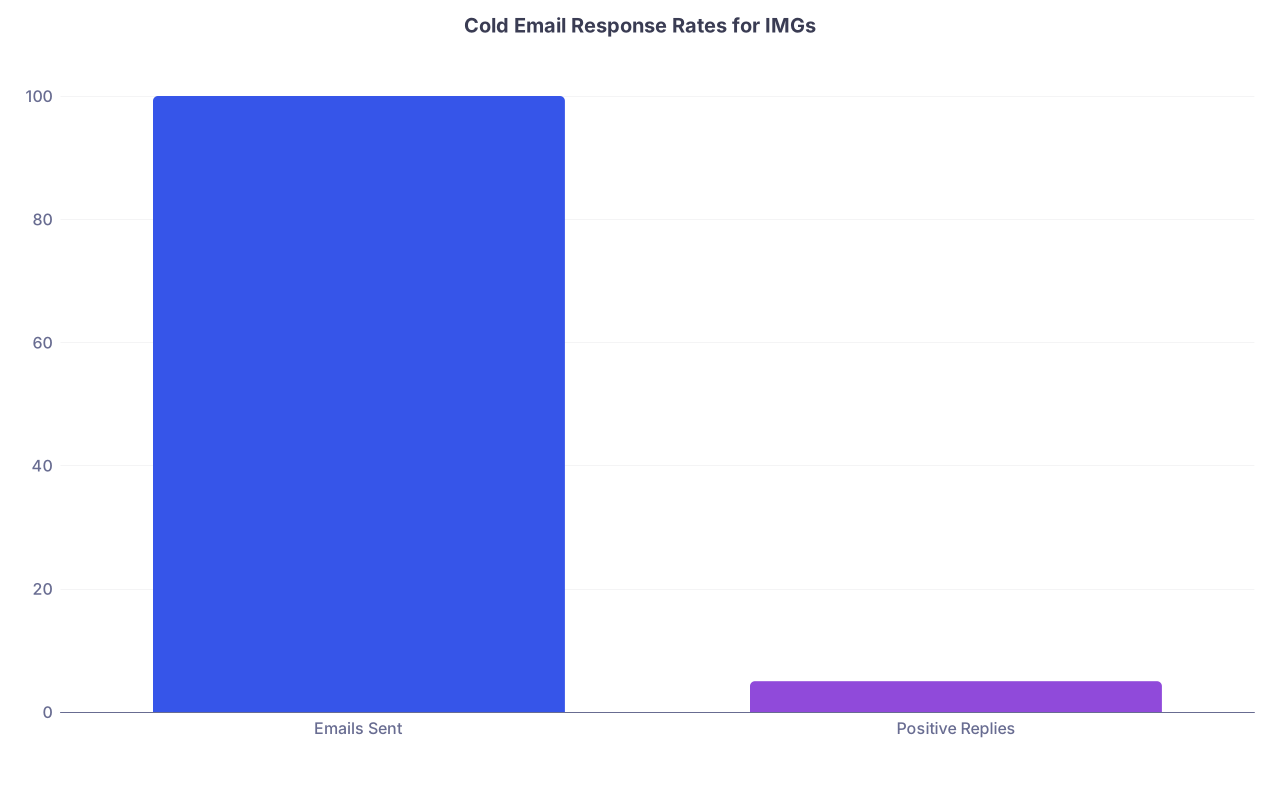
| Category | Value |
|---|---|
| Emails Sent | 100 |
| Positive Replies | 5 |
That’s not an exaggeration. I’ve seen people send 150–200 personalized emails and get 3–6 serious leads.
Make your email:
- Short
- Specific to their work
- Clear about what you want (e.g., “unpaid part-time remote help with data collection / chart review / manuscript prep”)
- Attached CV + brief mention of exams (if strong)
If you can get even a 3–6 month consistent research relationship, that can produce:
- A letter
- A publication / abstract
- Someone who can answer emails when programs ask, “Do you know this applicant?”
3. Virtual / Tele-Shadowing and Online Programs (With Caution)
Most “virtual shadowing” certificates are fluff. Let’s just say it. Dropping those on ERAS like they’re gold is delusional.
But some structured programs:
- Pair you with a specific US clinician
- Include small-group teaching or case discussions
- Have enough ongoing contact that a letter isn’t complete fiction
If:
- There’s sustained interaction
- You’re allowed to present cases/articles
- You get 1:1 or small group feedback
…then a letter can be semi-legit. Not as good as in-person, but not worthless.
Just don’t expect: “I watched 4 Zoom lectures” → “Strong LOR.” That’s not happening.
4. Leveraging Home-Country Faculty (Better Than Nothing)
You’re terrified that non-US letters don’t matter. Some PDs do discount them. But not all.
A strong home-country letter beats a fake-sounding US one every single time.
Strong means:
- The writer supervised you closely (clinics, wards, thesis, call)
- They know your personality, work ethic, skills
- They’re willing to be specific, not just “He is very hardworking, punctual, honest”
If English isn’t their first language, help them by:
- Giving them a bullet-point summary of your work with them
- Reminding them of specific cases / responsibilities you had
- Politely mentioning that US programs like concrete examples of patient care, teamwork, communication
No, you don’t write the letter yourself. That’s an ethical line. But you can give them material that jogs their memory and raises the quality.
“But I Need Letters This Year — Is It Too Late?”
Probably the #1 anxiety: timing.
You’re thinking: “If I start now, will I even have a letter before ERAS opens / MSPE release / interview season?”
Here’s the blunt timeline.
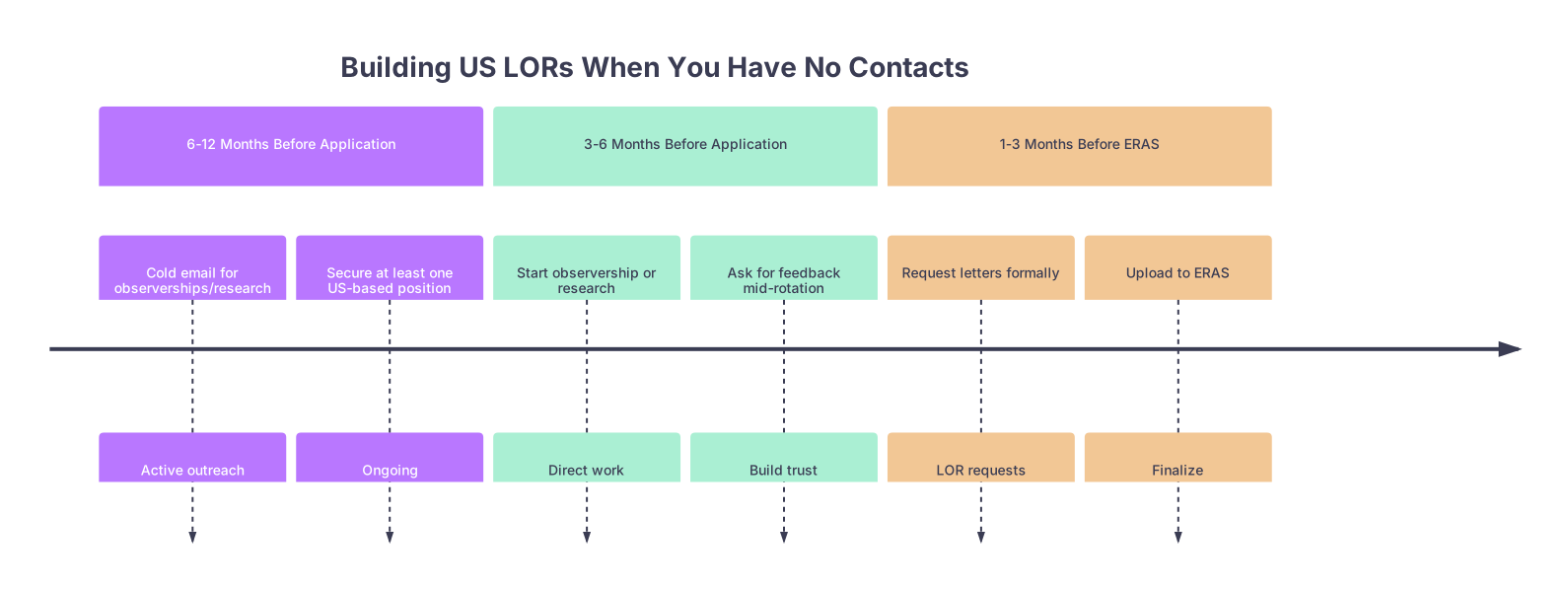
| Period | Event |
|---|---|
| 6-12 Months Before Application - Cold email for observerships/research | Active outreach |
| 6-12 Months Before Application - Secure at least one US-based position | Ongoing |
| 3-6 Months Before Application - Start observership or research | Direct work |
| 3-6 Months Before Application - Ask for feedback mid-rotation | Build trust |
| 1-3 Months Before ERAS - Request letters formally | LOR requests |
| 1-3 Months Before ERAS - Upload to ERAS | Finalize |
If you’re less than 3 months from ERAS opening and have nothing lined up, your realistic options:
- Maximize home-country letters now
- Hustle for at least one short US observership or research stint
- Apply this cycle knowing your app is weaker and consider:
- Using this year as data + learning
- Or delaying one year and building a proper US profile
People hate hearing “maybe wait a year,” but I’ve watched too many IMGs burn their one realistic financial shot on an application that had no chance.
If you can still:
- Get even 4 weeks in the US before uploads
- Show serious ongoing research with a US mentor
…it may be salvageable. One solid US letter + 2 really strong home letters is not a disaster.
How to Ask for a LOR Without Sounding Desperate
This part makes everyone sweat. You worry they’ll say no. Or worse, they’ll say yes and write something lukewarm.
Here’s how to reduce that risk.
Step 1: Earn it before you ask
During your observership / research / rotation:
- Show up early, leave late (yes, cliché, but attendings notice consistency)
- Volunteer for the annoying stuff: notes, follow-up calls, literature searches
- Ask for feedback halfway through:
“I really want to improve and hopefully be competitive for US residency one day. Is there anything I could be doing better on rounds / presentations?”
The mid-rotation feedback question does two things:
- It shows maturity.
- It tests if they even like your work so far.
If they say stuff like “You’re doing great, very reliable, I appreciate your help,” that’s a green flag for a letter request later.
Step 2: Ask clearly and directly
When the time comes (usually last week of your time with them):
Something like:
“Dr. X, I’ve really appreciated the chance to work with you these past weeks. I’m planning to apply for residency in internal medicine this coming cycle. Would you feel comfortable writing a strong letter of recommendation commenting on my clinical performance and suitability for residency?”
That word — “strong” — is there on purpose.
If they hesitate or say, “I can write you a letter” but avoid “strong,” you have your answer.
Better a polite no than a weak letter that quietly kills your application.
Step 3: Make their life easy
If they agree, send:
- Your CV
- Your personal statement draft (even if rough)
- A 1-page “brag sheet” with bullet points: cases you saw, projects you helped with, qualities you hope they might mention (e.g., communication, reliability, clinical reasoning)
You’re not scripting them. You’re giving them ammo.
How Many US vs Home Letters Do You Actually Need?
Ideal scenario for an IMG (yes, ideal, not mandatory):
- 2–3 US LORs from attendings who directly supervised you
- 1 strong home-country LOR (especially if it shows long-term relationship)
More realistic middle ground if you’re starting late:
- 1–2 US LORs from observership/research
- 2 strong home-country letters
Some programs will explicitly say, “We prefer at least one US clinical LOR.” That’s your minimum target. One. If you can get two, great. Three is luxury level.
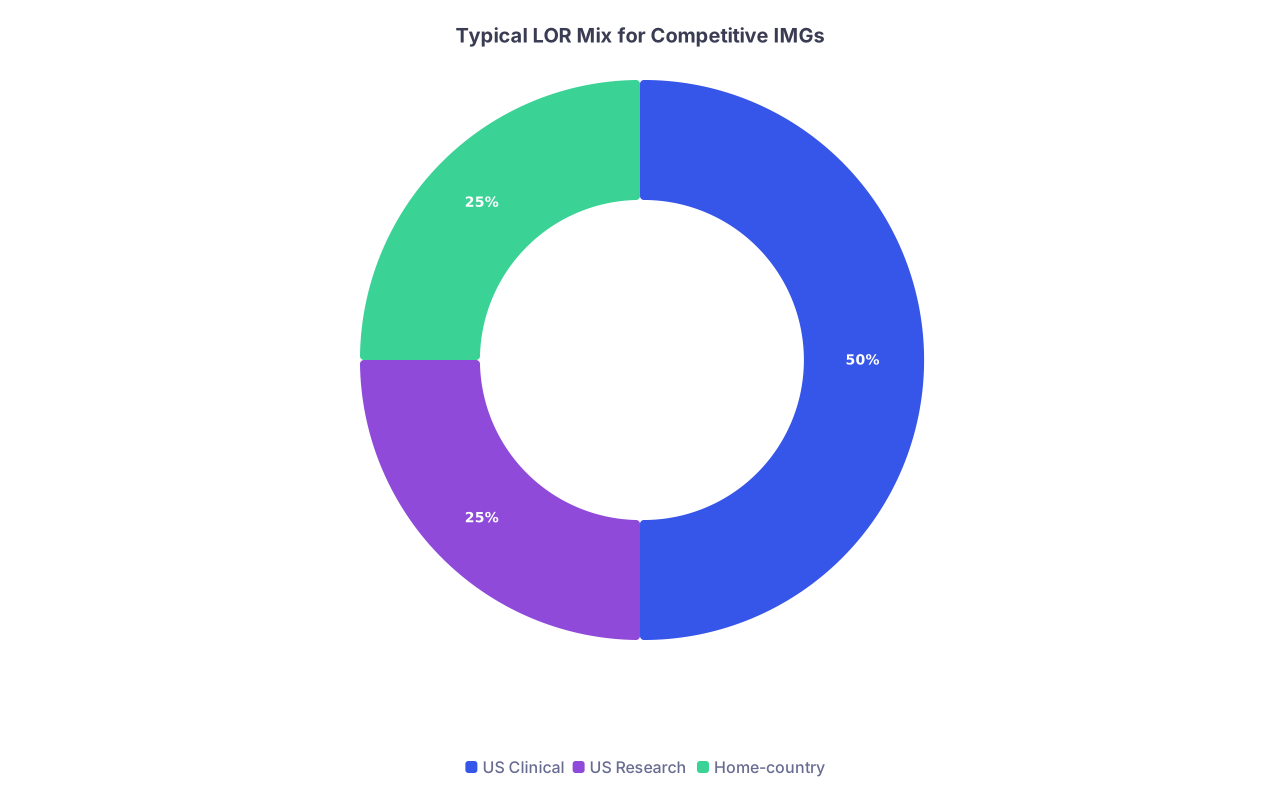
| Category | Value |
|---|---|
| US Clinical | 2 |
| US Research | 1 |
| Home-country | 1 |
If you’re applying this year and can’t get any US letters, then your job is:
- Make your home letters extremely specific and personal
- Target more IMG-friendly / community programs
- Be mentally prepared that this may be a trial run year, not your one shot
Common Mistakes IMGs Make With LORs (That You Can Avoid)
I’ve watched people sabotage decent chances by doing avoidable dumb things.
Top offenders:
- Collecting random “name” letters from someone senior who barely knows them. PDs can smell this.
- Recycling super old letters (4–5 years old) with no recent experience. Looks inactive.
- Sending a generic request like “Dear Professor, please write a recommendation.” No context, no materials.
- Not waiving the right to see the letter on ERAS — many faculty refuse or write flat letters if you don’t waive.
- Never following up and discovering in October that half their writers never uploaded.
Set a system: spreadsheet, reminders, whatever. Treat LOR tracking like a patient list. This is not the part you want to “hope for the best” on.
If You’re Crushed With Anxiety Right Now
Let me be blunt: yes, the system is stacked. US grads often get letters tossed at them; you’re begging strangers across continents. It feels humiliating sometimes.
But I’ve also seen:
- IMGs from non-famous schools with zero initial US contacts
- Who cold-emailed like maniacs, landed one research mentor
- Turned that into a letter + abstract + a second contact
- Then matched internal medicine or FM at solid community programs
They didn’t magically become less “foreign.” They just stopped waiting for perfect conditions.
You don’t need 10 US mentors and a Harvard letterhead. You need 2–3 people, anywhere in the US system, who can genuinely say: “I worked with this person; they’re safe, reliable, and trainable.”
That’s it.
FAQ (Exactly 4 Questions)
1. Are home-country LORs basically useless compared to US letters?
No. Weak home letters are useless. Strong home letters still help, especially if they show long-term supervision (e.g., 2–3 years in your home hospital, chief resident, thesis mentor). Many community programs, and even some university ones, understand that not all IMGs can get extensive US exposure. But if you give them only vague “hardworking and punctual” letters, they’ll assume you didn’t impress anyone enough to write more.
2. Is a research letter from a US mentor as good as a US clinical letter?
They’re different, not strictly better or worse. For internal medicine, FM, psych, etc., US clinical letters usually carry more weight because they speak directly to patient care. But a research letter from a US PI who worked with you for months and writes a detailed, enthusiastic letter can absolutely strengthen your application, especially when paired with at least one clinical letter (US or home-country).
3. Can I ask for a letter after only 2–3 weeks of observership?
You can, but don’t expect miracles. Two weeks is barely enough time for someone to really know you, unless you worked intensely and daily with them. If you’re forced by time constraints, then yes, ask — but make sure during those weeks you were visible, proactive, and engaged. And still try to back it up with stronger, longer-term letters from home.
4. What if I already applied once with weak LORs — am I doomed next cycle?
No, but you cannot recycle the same weak set and expect a different outcome. Between cycles, you need something concretely new: a US observership, a research role, or a new attending at your home institution who can comment on recent work. Reapplicants with significantly improved letters (and maybe updated scores / research) do match. The ones who don’t change anything and just “try again” usually get the same silence.
Key things I want you to walk away with:
- You’re not doomed without US contacts — but you are doomed if you don’t start building them, even from zero, right now.
- One or two genuine US-based mentors who know your work are infinitely better than a pile of generic, name-droppy letters.
- If this cycle is too tight to fix everything, don’t waste the year. Build the relationships now that will write the letters that actually move the needle next time.