
A hard truth first: ERAS timing is front-loaded. A large share of interview offers goes out early enough that even a "small" verification delay can function like a real application defect. Not because your file is weak. Because residency review is triage, and triage is ruthless.
I have seen this exact pattern over and over with IMGs: the application is submitted, the scores are decent, the personal statement is fine, letters are respectable, and then one ugly little phrase sits there poisoning first-pass review momentum. **Pending ECFMG.** That label is not neutral. Programs read it as uncertainty. Uncertainty becomes delay. Delay becomes missed interview slots.
Let me be precise about the problem. "Pending ECFMG" usually means one of three things: your certification is not complete, one or more source-verification steps are still processing, or the system has not fully linked or updated your status in the way programs expect. On your side, that may feel administrative. On the program side, it can push your file out of the "ready to review now" pile.
This article is the practical version. No vague reassurance. I am going to break down what programs likely see, why "Pending" changes reviewer behavior, how to identify the exact step causing the issue, and what to do, today, to salvage momentum if the label is still there.
What "Pending ECFMG" means (and what it does not) in ERAS
First, stop treating "Pending" as one single diagnosis. It is not. It is a status label sitting on top of several possible bottlenecks.
Most commonly, "Pending ECFMG" falls into one of these buckets:
You are not ECFMG certified yet
- This is the big one.
- You may have submitted ERAS just fine, but you have not completed all requirements for certification.
- Programs may interpret this as: "Can this applicant actually begin training on time?"
Your credentials or diploma verification is still in process
- Medical school verification, source verification, final diploma status, or related documentation may still be moving through the pipeline.
- This is different from being academically unqualified. But many programs will not distinguish unless you tell them clearly.
A required exam or result timing issue exists
- Maybe all paperwork is in, but a required exam pathway component or score release timeline means certification cannot yet be finalized.
- Again, this matters because programs think in deadlines, not intentions.
Data linkage or status update lag
- Sometimes the issue is not that nothing happened. It is that the system has not reflected what happened yet.
- That still hurts you. Administrative lag is still lag.
Here is the core distinction applicants constantly blur: you may be eligible to submit an ERAS application while still being ineligible, or uncertainly eligible, to start residency training on time. Those are not the same thing. Exam question logic applies here. If this were a board-style stem, the trap answer would be assuming "allowed to apply" means "safe to rank and hire." It does not.
Programs typically can assess whether your ECFMG-related status appears complete, pending, or unresolved. What they usually cannot do is read your mind and infer that your pending issue is minor, fixable, or only awaiting system refresh. If your file says pending and your CV says "ready," the reviewer does not reward optimism. They move on.
That is why your first task is diagnostic, not emotional. Figure out which exact component is pending.
Ask yourself:
- Is the problem full ECFMG certification not yet issued?
- Is it diploma or transcript source verification?
- Is it exam-related timing?
- Is it document processing?
- Is it simply an update lag after a completed milestone?
Those are different problems. Different problems need different fixes.
One more misconception. "Pending" does not automatically mean your season is dead. I do not buy that fatalism. What it does mean is that your file has lost efficiency. It now requires clarification. Programs rarely volunteer to do that work for you.
So your move is simple: identify the exact pending step, determine whether it is fixable on your timeline, and communicate like a grown professional, not like someone forwarding random screenshots in a panic.
Why "Pending ECFMG" triggers a delay in ERAS review
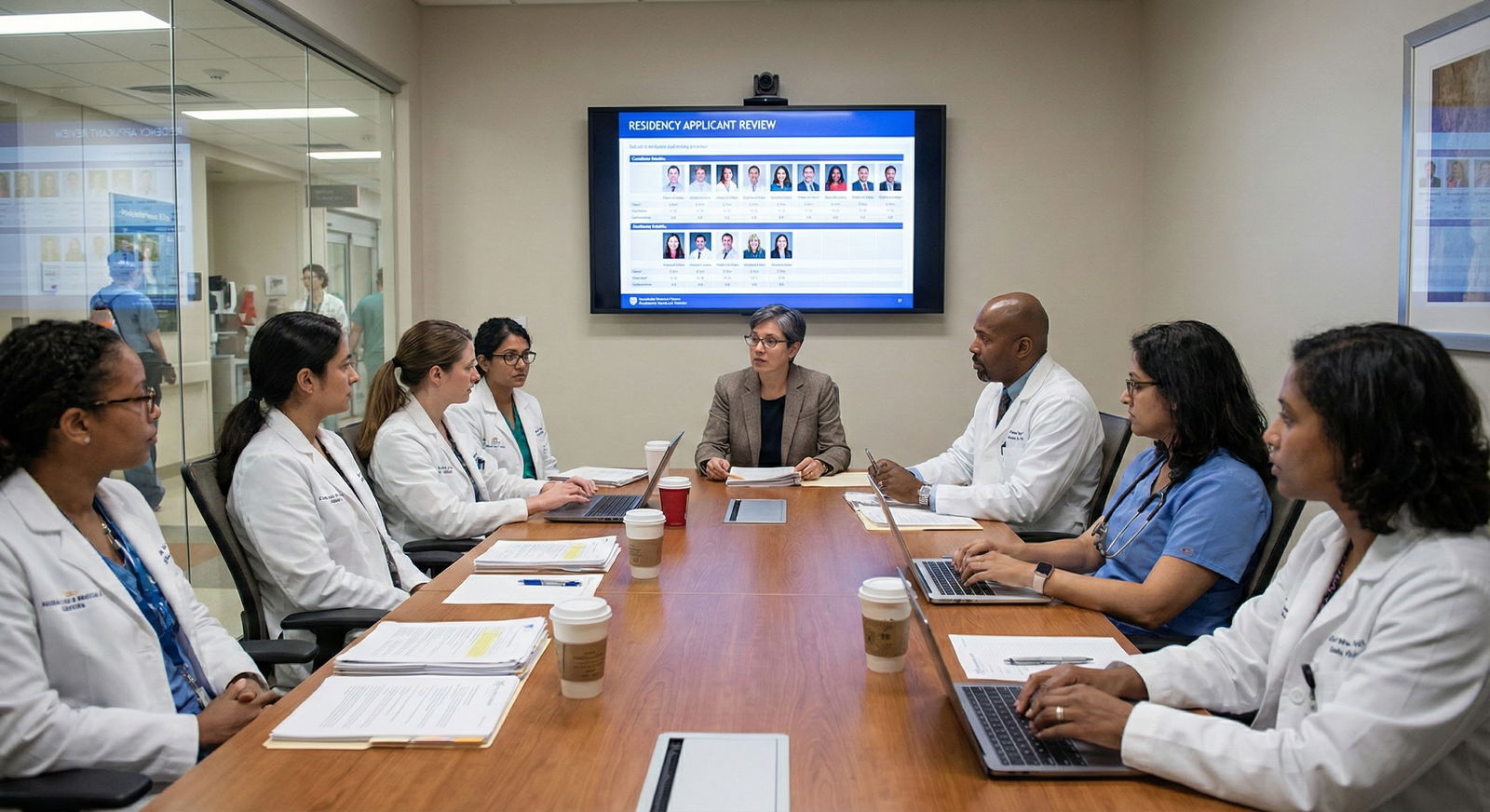
Programs do not review applications in the romantic way applicants imagine. Nobody sits down with tea and lovingly reads every personal statement before checking logistics. That is fantasy. Real review starts with filters, thresholds, and administrative risk.
Here is the actual process logic.
Step one: eligibility triage. Before your story matters, your file has to look usable. Specialty-specific score expectations, graduation year cutoffs, visa considerations, and ECFMG status often get checked before anyone gives serious attention to your experiences.
That is where "Pending" causes damage. It acts like a yellow warning light.
Not a red light every time. But definitely not green.
Why programs react this way:
1. They are managing finite interview slots
A program may have thousands of applications and only a limited number of interviews. If your status is unresolved, your file becomes extra work. Reviewers ask themselves a blunt question: Why spend one of our early interview opportunities on someone whose certification timeline may still collapse?
Harsh? Yes. False? No.
2. Compliance risk is real
Program leadership and coordinators are not merely being picky. They are trying to avoid ranking or interviewing candidates whose documentation may not clear in time. Whether the concern is onboarding, institutional processing, or match-season readiness, uncertainty creates downstream headaches. Nobody wants a March surprise.
3. Ambiguity gets punished
This is the part applicants underestimate. Reviewers are human. An unresolved core milestone creates an unconscious downgrade. Even if your USMLE scores are strong. Even if your letters are excellent. Even if you trained at a respected school. The unresolved status changes the emotional temperature of the file.
I have watched this happen in committee-style discussions. The file comes up, someone says, "Looks good, but ECFMG is still pending," and the room moves on. Not because they proved you are weak. Because they do not need uncertainty when fifty cleaner files are waiting.
4. "We can come back to this later" often means "we never will"
This is the silent killer. Programs defer your review thinking they may revisit once your status updates. But the season keeps moving. New applications come in. Interview calendars fill. Faculty attention shifts. "Later" is where many IMG files go to die.
That is why your goal is not merely getting certified eventually. Your goal is getting your file past triage while triage still matters.
So how do you reduce the damage?
You remove ambiguity with specifics:
- What exactly is pending?
- When was it submitted?
- What has already been verified?
- What is the expected next milestone date?
- What evidence can you show without turning your email into a junk drawer?
Those details matter because they convert "uncertain applicant" into "applicant with a defined administrative timeline."
That is a huge difference.
Think like a clinician writing a strong assessment note. Bad note: "Workup pending." Useless. Good note: "Final pathology submitted 9/12; institution confirmed receipt; estimated report 9/20." Specific. Verifiable. Bounded. Actionable.
Program reviewers respond to that same style of clarity.
The high-yield checklist triage: what you should verify today
If your ERAS-related ECFMG status is pending, do this today. Not next week. Today.
1. Identify the exact pending component
Do not say, "My ECFMG is pending" as if that explains anything. Break it down.
You need the answer to one of these:
- Certification not yet issued
- Final diploma not source-verified
- Medical school credentials still under review
- Exam requirement timing still incomplete
- Administrative update lag after milestone completion
One line. One bottleneck. Name it accurately.
2. Build a timeline audit
Map your case against the season.
Ask:
- What is today's date?
- What is the earliest realistic date this pending step clears?
- When are your target programs usually doing initial review?
- When are interview invitations likely to move?
If your likely clearance date lands after the main first review wave, that is a risk signal. Better to face that honestly than indulge fantasy.
3. Gather your paper trail
You need a clean evidence folder with:
- submission confirmations
- processing emails
- date-stamped status screenshots
- confirmation of completed milestones
- any official note with an estimated processing window
Do not send all of it to programs. But have it ready.
4. Perform an eligibility sanity check
Make sure your own narrative is not internally contradictory.
If your application implies immediate readiness but your documentation timeline says otherwise, that mismatch hurts credibility. Your CV, personal statement tone, and any update message should align with the actual certification trajectory.
5. Split your remediation plan into two tracks
Track A: ECFMG-facing acceleration
- confirm missing items
- verify receipt of documents
- clarify whether any school-side action is still pending
- document every communication
- escalate appropriately if a true administrative delay exists
Track B: program-facing transparency
- decide which programs need an update
- prepare one concise message
- send it only when you have a real milestone or timeline clarification
- keep proof ready if requested
That overlap is the problem. If pending stretches too far into the review window, your application may never get fully re-read at the right moment. This is not fair. It is still real.
What to do next: a program-facing communication strategy that works
Most applicants handle this badly. They either say nothing and hope. Or they spam programs with vague, anxious updates. Both are weak moves.
The right strategy is narrow and disciplined.
When to contact programs
Contact after a measurable change, such as:
- a credential being verified
- a document being received and confirmed
- certification being issued
- a specific processing milestone being completed
- an official estimated completion date being communicated
Do not email because you feel nervous. Programs do not reward emotional weather reports.
What the message should do
Your update should accomplish three things only:
- Clarify the exact pending item
- State the current verified progress
- Give a realistic expected next update date
That is it.
Subject line template
Use something like:
ECFMG Status Update, [Your Full Name], AAMC ID [Number] or Application Update: ECFMG Verification Milestone, [Your Full Name]
Clean. Searchable. Professional.
One-paragraph structure that works
Try this framework:
- sentence 1: identify yourself and your application
- sentence 2: state the exact item that had been pending
- sentence 3: explain what has now changed
- sentence 4: provide the expected next milestone date
- sentence 5: express continued interest briefly
Example:
Dear Program Coordinator, I am writing to provide a brief update regarding my ERAS application for Internal Medicine. My ECFMG status had been pending due to final credential verification. That verification has now been completed, and I have attached date-stamped confirmation of the update. ECFMG has indicated that the remaining processing should reflect accordingly, and I expect the next status update within the stated processing window. I remain very interested in your program and appreciate your consideration.
Notice what this does not do. It does not whine. It does not retell your CV. It does not claim certainty you do not have.
What to attach
Only attach or include evidence if it is relevant and understandable:
- a screenshot with visible date and status
- a brief official confirmation email excerpt
- a portal confirmation showing completed verification
If you attach something, label it. Random files with no explanation are sloppy.
What to avoid
This matters.
Do not:
- promise certification by a date you do not control
- send weekly "just following up" messages
- blame ECFMG, your school, or the system in a dramatic tone
- paste your whole personal statement into an update
- pretend a pending exam-related issue is just a paperwork delay
Programs can smell spin. It makes you look worse, not better.
Think like a progress note
The best update emails read like a tight clinical handoff:
- problem identified
- current status
- objective evidence
- next expected event
Specific. Verifiable. Bounded.
That style works because it lowers reviewer effort. And lowering reviewer effort is one of the smartest things you can do in ERAS.
ERAS packet optimization while certification is pending
Here is the mistake I hate most: applicants letting "Pending ECFMG" become the entire story of their season.
No. While that status is unresolved, your job is to make every other part of the file stronger so that the second your application clears triage, it lands as a serious packet.
Letters of recommendation
At least one letter should communicate readiness, reliability, and professionalism. Not just "pleasant to work with." That phrase is nearly useless. You want language that signals:
- handles responsibility well
- communicates effectively
- integrates into teams
- functions at resident level expectations
If a letter writer can update or strengthen wording, ask. Politely, specifically, and fast.
Personal statement
Do not waste the personal statement defending administrative delays. That is not what it is for. Your statement should sell your specialty fit:
- continuity and patient ownership for Internal Medicine
- procedural commitment for surgery-adjacent fields
- longitudinal care and prevention mindset for Family Medicine
- precision, teamwork, and resilience where relevant
Programs recruit physicians, not paperwork explanations.
CV formatting and experiences
Make available accomplishments easy to read. Tight formatting. Clear dates. No buried US clinical experience. No chaotic descriptions. If a reviewer gives your file a second chance after status improvement, do not make them dig.
USMLE and transcript cross-check
Make sure all released scores and transcripts are correctly visible and easy to interpret. Missing or mis-sequenced data plus pending ECFMG is a terrible combination. It makes the whole application feel unstable.
If you get an interview while still pending
Be ready for the question.
Your answer should be:
- honest
- short
- time-bounded
- calm
A good version sounds like this:
My ECFMG certification is still pending due to final credential processing, but the required documents have been submitted and confirmed. The most recent milestone was completed on [date], and I am expecting the next update within [time window]. I am happy to provide documentation if helpful.
That answer works. It shows control without false certainty.
FAQ: common IMG questions when ERAS says "Pending ECFMG"
Can I still apply if ECFMG is pending?
Yes, often you can still submit ERAS. But submitting is not the same as being review-ready in the eyes of programs.
Is pending credentials verification different from pending certification?
Yes. Very different. Pending credentials may be a narrower administrative issue. Pending certification can imply broader readiness concerns. Know which one you have.
Should I withdraw and reapply next cycle?
Usually no. That is an overreaction. Unless a program explicitly states you are ineligible this season, withdrawing is often the wrong move.
What if programs never respond to my update?
That is common. Silence does not always mean rejection. Send one concise update after a real milestone. If another confirmed status change occurs later, one more targeted update may be reasonable. Do not become background noise.
Who should I contact?
Start with the program coordinator or the communication route the program specifies. Jumping straight to the program director without a real update is amateur behavior.
How should I prepare for interviews while still pending?
Have documentation organized and rehearse a clean explanation. No rambling. No blaming. Just the exact pending item, the latest verified step, and the expected next update date.
Bottom line
"Pending ECFMG" is not a cosmetic label. It is an eligibility-uncertainty flag, and programs treat it that way. That is why ERAS review slows down. Not because your application automatically lacks merit, but because unresolved certification status gets stuck at triage.
Your fix is not panic. It is precision.
- Identify the exact pending step.
- Build a realistic timeline.
- Gather proof.
- Send one targeted update after a real milestone.
- Keep strengthening the rest of the packet so your application is ready the second the status clears.
That is the game. Remove ambiguity, protect momentum, and speak in facts. Applicants who do that give themselves a real chance. Applicants who send vague reassurance and hopeful noise usually disappear into the pile.