
Introduction
According to the NRMP, approximately 47.6% of IMG applicants who certified their ECFMG credentials before September still failed to match in recent cycles. For those who certify late, October, November, even December, the odds compress further. The system does not wait. ERAS opens in July, programs begin reviewing applications in September, and interview invitations often go out in waves well before late applicants have completed their credentialing. This creates a brutal timing gap that destroys otherwise competitive candidates.
Before communicating with residency coordinators, review guidelines on managing eras timing when you have a late visa or ecfmg hurdle.
Let me break this down specifically. ECFMG certification is the gateway. Without it, you cannot enter ACGME-accredited programs. You cannot even fully participate in the Main Residency Match. But the path to certification involves passing USMLE Step 1, Step 2 CK, and completing the ECFMG Verification of Credentials. Each step has its own processing time, its own bottleneck, its own capacity to derail a carefully planned application timeline. When certification arrives late, applicants face a choice: submit an incomplete ERAS application and risk being filtered out, or wait and risk missing interview slots entirely.
This matters to your medical career because the residency match is not a meritocracy. It is a logistics problem. Programs have finite interview slots, finite review bandwidth, and finite patience for incomplete files. A late ECFMG certification does not make you a weaker physician. It makes you a harder file to process. Your job, once certification arrives, is to make that file as easy to process as possible. Every action you take from the moment your ECFMG status updates must be deliberate, targeted, and executed with precision. Sloppy updates, panicked mass emails, or poorly timed retransmissions of documents will not help you. They will mark you as disorganized.
What follows is a specific, field-tested framework for updating your ERAS application safely after late ECFMG certification. Seven actions. Each one addresses a distinct failure point I have watched IMGs hit repeatedly over multiple match cycles.
The Core Challenge
The core challenge is not the lateness itself. Programs understand that IMGs face administrative delays, visa processing, and credential verification timelines that domestic graduates never encounter. The real problem is how applicants handle the update. I have seen IMGs make the same six or seven mistakes cycle after cycle, and these mistakes are avoidable.
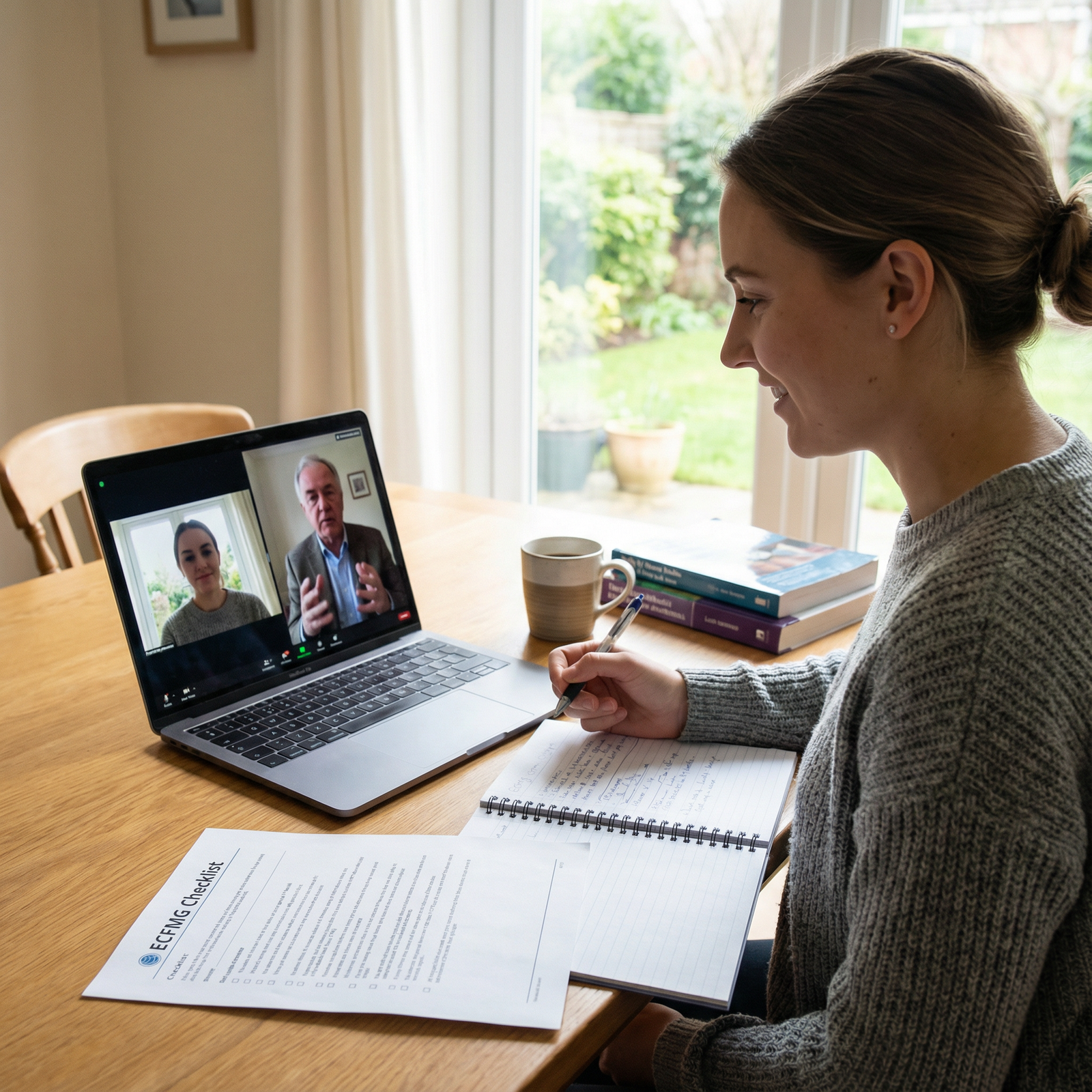
Pitfall 1: Panicked Mass Communication
The moment ECFMG certification posts, many IMGs fire off emails to every program on their list. Fifty programs. Eighty programs. A hundred programs. The email is usually identical, hastily written, and says something like: "Dear Program Director, I am pleased to inform you that I have now received my ECFMG certification. Please review my updated application."
This is wrong. It is ineffective, and in some cases it actively harms your candidacy.
For additional guidance on adjusting your documents, consult eras affiliations vs caqh reality fix img credential mismatch fast.
Program coordinators are processing hundreds of applications. They do not want a generic email. They want a clean, updated ERAS file. If your ERAS application already reflects your ECFMG status (which it does, because ERAS syncs with ECFMG automatically through the AAMC data feed), then your email adds zero information. It is noise. Worse, if you send it to a program that has already filtered you out, you look desperate. If you send it to a program that has not yet reviewed your file, you look impatient.
Pitfall 2: Failing to Understand the ERAS-ECFMG Data Sync
Here is the technical reality. ERAS and ECFMG are connected. Once your ECFMG certification is finalized, the certification status propagates to your ERAS application through an automated data exchange. This is not instant. It typically takes 24 to 72 hours, sometimes longer during peak periods. During that window, your ERAS application will still show your ECFMG status as "Not Certified" or "Pending."
Many applicants do not know this. They see their ECFMG portal showing "Certified," check their ERAS application, see the old status, and panic. They call ECFMG. They call ERAS. They email programs trying to manually explain the discrepancy. None of this is necessary. The sync will happen. You need to verify it has completed before you take any further action.
Pitfall 3: Retransmitting Documents Without Cause
ERAS allows you to retransmit your application to programs. This feature exists for a reason, but it is overused by anxious applicants. Retransmitting your entire application to every program because your ECFMG status updated is a waste. Programs receive a notification that your file has been updated, but they may not know what changed. If nothing material has changed beyond the ECFMG status (which they can see through the ERAS filter), the retransmission is noise.
Retransmit only when you have added something substantive: a new letter of recommendation, a completed rotation, a new publication, or a meaningful update to your personal statement. The ECFMG status update alone, handled through the automatic sync, is usually insufficient grounds for a full retransmission.
Pitfall 4: Ignoring Program-Specific Filters
Many programs use ERAS filters that automatically screen out applications lacking ECFMG certification. If you applied before you were certified, your application may have been filtered into a reject pile before a human ever saw it. Updating your ERAS status does not necessarily pull you out of that pile. The filter is applied at the time of review, and if a coordinator has already marked your application as "Rejected - Incomplete," your updated status will not override that decision automatically.
You need to know which programs filter pre-certification and which do not. This requires research. The FREIDA database, program websites, and direct coordinator contact all provide clues. Programs that require ECFMG certification at the time of application will not reconsider you, no matter how fast you update. Programs that allow pending certification may review your file once the status updates, but only if you are still in their active pool.
Pitfall 5: Updating the Wrong Sections of ERAS
When ECFMG certification arrives, applicants often rush to update every section of their ERAS application. They revise their personal statement. They add new experiences. They update their MSPE (if applicable). They change their photo. This is overkill, and it creates risk. Every change you make to your application after submission is visible to programs as an update. Too many updates signals instability. It suggests you submitted a half-finished application and are patching it together retroactively.
The safe approach is to update only what is necessary. The ECFMG status (handled automatically). Any new LOIs or LORs that were explicitly pending. Nothing else, unless you have a genuinely material addition such as a completed Sub-I or a new first-author publication.
Pitfall 6: Misunderstanding the Supplemental ERAS Application
The Supplemental ERAS Application (SupApp), introduced in 2021, offers programs additional signals: geographic preferences, program signals, and information about your most meaningful experiences. If your ECFMG certification arrives late, you may have already submitted your SupApp without full clarity on your competitiveness. Some applicants try to revise their SupApp signals after certification, hoping to redirect them toward more competitive programs.
You cannot freely revise program signals after submission. The signal allocation is locked once submitted. What you can do is ensure that your geographic preferences and experience entries are accurate and consistent with your updated timeline. If you signaled programs that require ECFMG certification at application and you were not certified, those signals are likely wasted. There is no mechanism to recover them. This is why understanding program requirements before signal allocation is critical, even if you are not yet certified.
Pitfall 7: Neglecting Direct Program Communication Strategy
The one area where direct communication with programs is appropriate and effective is when you have a specific, material update that the ERAS system does not capture well. ECFMG certification, by itself, is captured by the system. But if your certification coincides with another update, for example, you just completed a US clinical rotation and received a strong LOR from the attending, that combination is worth a brief, targeted email to programs where you are a realistic candidate.
The email should be short. Three to four sentences maximum. State that your ECFMG certification is now complete. Mention the additional update (new LOR, completed rotation). Express continued interest. Request nothing. Do not ask them to "please re-review" your file. They know what to do with the information.
The Seven Safe Actions
Let me now lay out the specific, sequential actions you should take when your ECFMG certification arrives late in the cycle. These are ordered by priority. Do them in sequence. Do not skip steps.
Action 1: Verify the ERAS-ECFMG Sync Before Doing Anything Else
Wait 72 hours after your ECFMG portal shows "Certified." Then log into ERAS and check your application status. If the ECFMG section now reflects your certification, the sync has completed. If it has not, contact ERAS support (not ECFMG) and request a manual status verification. This is rare but it happens, particularly during peak October-November processing windows.
Do not contact programs until this sync is confirmed. Your ERAS file is the source of truth for programs. If it does not show certification, your emails claiming certification create a discrepancy that coordinators will flag.
Action 2: Audit Your Program List Against Certification Requirements
Pull your full program list. Cross-reference each program against their stated ECFMG requirement. You are looking for three categories:
- Programs that require certification at the time of application. These programs likely filtered you out already. Your update will not resurrect your application. Do not waste time contacting them. Remove them from your active tracking.
- Programs that allow pending certification but require it before ranking. These programs may still have your file in an active or hold status. Your update is relevant to them. These are your primary targets.
- Programs that do not specify a certification timeline. These are variable. Some will review your file once updated. Others will have already moved on. A targeted email is appropriate here, but only after you have a clean ERAS file.
This audit should take you one focused afternoon. It is the single highest-yield action on this list.
Action 3: Compile a Material Update Package Before Retransmitting
If you have nothing new beyond ECFMG certification, do not retransmit. The automatic sync handles the status. If, however, you have accumulated additional materials during the waiting period, a completed US clinical experience, a new LOR, a recent publication, a completed research project, compile all of these into a single, coherent update.
ERAS allows you to assign new LoRs and update experiences. Do all of this in one session. Then retransmit to the programs in your "primary target" and "secondary target" categories from Action 2. A single, comprehensive retransmission is far better than piecemeal updates spread across two weeks. Programs see one clean notification that your file has been updated. They open it. Everything is there. This is how you want them to experience your application.
Action 4: Write Targeted, Individualized Program Emails
For programs in your secondary target category (those with unclear certification timelines), write a brief email. Not a form letter. Each email should reference something specific about the program that aligns with your updated file. If you completed a rotation in a similar clinical setting, mention it. If the program has a specific track or emphasis that matches your new experience, reference it directly.
The structure is simple:
- Sentence 1: ECFMG certification is now complete and reflected in your ERAS file.
- Sentence 2: One specific, material update that strengthens your candidacy (new LOR, completed rotation, etc.).
- Sentence 3: One program-specific detail that connects your update to their program.
- Sentence 4: Continued interest. No request for action.
Four sentences. That is the maximum. Anything longer goes unread.
Action 5: Update Your Supplemental ERAS Application Information Where Permitted
Your program signals are locked. Your geographic preferences, however, can be reviewed for accuracy. If your updated timeline changes your geographic flexibility, for example, you now have a completed rotation in a specific region and want to emphasize that region, ensure your geographic preference entries reflect this.
Do not attempt to contact ERAS to unlock or revise signals. They will not do it. The signal system is designed to be a one-time allocation precisely to prevent applicants from gaming the system after seeing early results. Accept the allocation you made and focus your energy on the programs where you still have a viable file.
Action 6: Leverage Your US Clinical Experience Network
If you have been completing US clinical rotations or observerships while waiting for ECFMG certification, you have a network. Attendings, program coordinators at those sites, and fellow physicians who have observed your work are your advocates. Now is the time to activate them.
Contact attendings who wrote your LORs and inform them that your certification is complete. If they have connections at programs on your list, a brief word from them to a colleague carries far more weight than any email you could send. This is not about asking for favors. It is about ensuring that the people who have vouched for you are aware of your updated status and can speak to it if the opportunity arises naturally.
Action 7: Prepare for Late Interviews Without Panic
Late certification often means late interview invitations, if they come at all. Some programs conduct interviews through January. A smaller number interview in February. You need to be ready to respond to an invitation within 24 hours, schedule the interview without logistical friction, and perform at your highest level despite the compressed timeline.
Preparation does not change based on when you are certified. You should have been preparing for interviews since August. If you have not, start immediately. Common interview questions, behavioral scenarios, and program-specific research should already be in your repertoire. The certification was the barrier. The interview is the test. They are separate challenges and require separate preparation.
Actionable Next Steps
Let me distill this into a concrete, step-by-step plan you can execute the moment your ECFMG certification posts.
Step 1: Day 1 (Certification Confirmed in ECFMG Portal)
Do nothing externally. Verify the certification is final in the ECFMG portal. Check that your ECFMG certificate is available for download. Take a screenshot for your records. Begin the 72-hour countdown for the ERAS sync.
Step 2: Days 2-3 (ERAS Sync Window)
Log into ERAS daily. Check your application's ECFMG status section. Once it updates to "Certified," proceed to Step 3. If it does not update within 72 hours, contact ERAS support via the AAMC message center.
Step 3: Day 4 (Audit and Compile)
Run your program list audit as described in Action 2. Categorize programs. Compile any new materials (LORs, experience entries, publications) into a single update package. Assign new LORs in ERAS. Update experience entries. Do not touch your personal statement unless you have a genuinely compelling reason.
Step 4: Day 5 (Retransmit and Email)
Retransmit your updated application to programs in your primary and secondary target categories. Send targeted four-sentence emails to secondary target programs. Do not email primary target programs; the retransmission is sufficient. Do not email programs that required certification at application; they are closed to you.
Step 5: Days 6-7 (Network Activation)
Contact your US clinical experience attendings. Inform them of your certification. If they have connections at programs on your list, ask whether they would be willing to mention your updated status to their colleagues. Be direct but respectful. Most attendings will help if they can. The key is making the request specific: "I see you trained at [Program X]. My ECFMG certification just completed. Would you be comfortable mentioning this to anyone there?" That is a reasonable ask. "Can you get me an interview?" is not.
Step 6: Week 2 and Beyond (Monitor and Prepare)
Monitor your ERAS inbox daily. Respond to all communications within 24 hours. Continue interview preparation. If you receive no interview invitations within three weeks of your retransmission, consider whether your program list was realistic. Some applicants apply to programs where they have no competitive profile, late certification or not. The certification was not the problem. The list was.

Resources to Use
- ECFMG Portal: Your primary source for certification status. Check it first, always.
- ERAS Applicant Portal: For application status, document assignment, and retransmission.
- FREIDA Online: For program-specific requirements, including ECFMG certification timelines.
- AAMC ERAS Support: Via the message center in your ERAS portal. They handle sync issues. ECFMG cannot fix ERAS-side problems.
- NRMP R3 System: For match registration. Ensure your R3 registration is active and your program list is current.
- Program Coordinator Contact Information: Found on FREIDA or individual program websites. Use email, not phone calls. Phone calls to program coordinators during application season are almost universally unwelcome.
Key Takeaways
- Be prepared. Your post-certification actions should be pre-planned. If you are scrambling to figure out what to do when certification arrives, you have already lost time you cannot afford.
- Focus on high-yield areas. The program audit is the single most productive action on this list. Every hour spent categorizing programs saves five hours wasted on programs that will never review your file.
- Less is more. A single, clean retransmission with material updates beats a dozen piecemeal corrections. Four targeted sentences beat a two-page letter. One comprehensive ERAS file beats a patchwork of post-submission edits.
- The system is mechanical. ERAS, ECFMG, and program filters operate on rules. Learn the rules. Work within them. Do not try to override them with volume or persistence.
The Road Ahead
The residency match will continue to evolve. The Supplemental ERAS Application is still maturing, and signal allocation strategies will shift as programs and applicants learn how to use the system effectively. ECFMG certification pathways will change with the implementation of the ECFMG 2024 requirements, which emphasize accreditation of the medical school rather than the traditional Step 1 and Step 2 CK pathway alone. This will alter the timeline dynamics for future IMG cohorts.
For now, the principles remain constant. Your ERAS application is a data packet. Your job is to ensure that packet is clean, complete, and delivered to the right recipients at the right time. Late ECFMG certification is a logistical obstacle, not a reflection of your clinical capability. Handle the logistics with precision, and the system will do what it is designed to do: route your file to programs that review it on its merits. That is the best outcome available to any applicant, regardless of when certification arrives.