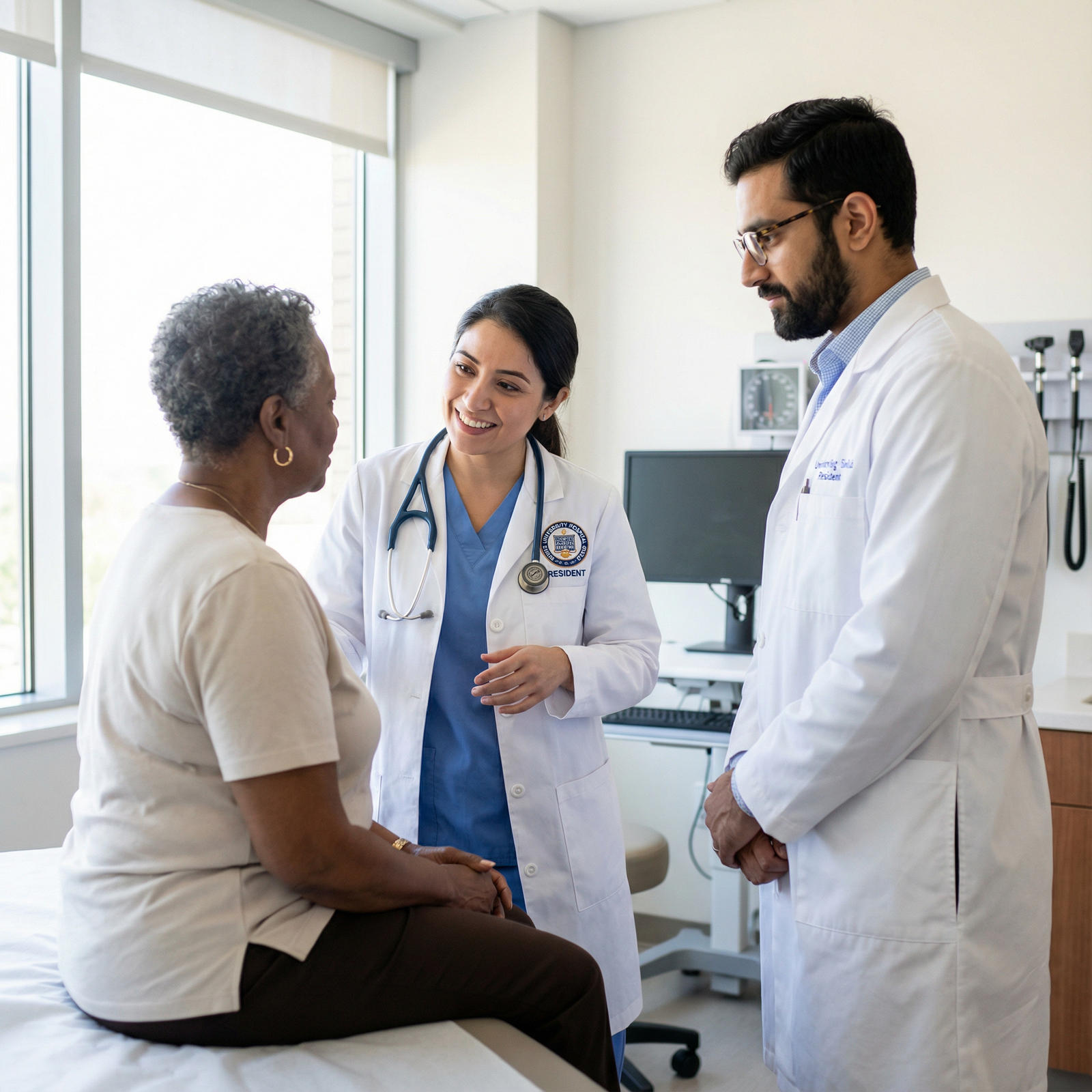
Enhancing Your Communication Skills: Essential for IMG Success in Residency
International Medical Graduates (IMGs) bring valuable clinical experience, diverse perspectives, and strong work ethic to residency programs in the United States. Yet even highly skilled physicians can struggle to succeed if their communication skills do not meet the expectations of U.S. residency training.
In a system that relies heavily on rapid team communication, shared decision-making, and patient-centered care, strong communication skills are not a “nice-to-have”—they are a core competency evaluated at every stage: observerships, interviews, clinical rotations, and daily work during residency. For IMGs, communication is also closely linked to cultural competency, professional development, and long‑term career success.
This guide details why communication skills matter so much for IMGs, the specific barriers you may face, and practical, step-by-step strategies to strengthen your communication, cultural competency, and professional presence in U.S. healthcare settings.
The Central Role of Communication in Modern Medicine
Communication in medicine is far more than speaking good English or explaining lab results. It is the foundation of safe, ethical, and compassionate care. For IMGs, mastering this domain can be a powerful differentiator during residency applications and beyond.
How Communication Drives Better Patient Care
Improved Patient Outcomes
- Patients who clearly understand their diagnosis, treatment options, and follow-up plan are more likely to adhere to medications, attend appointments, and recognize warning signs.
- Simple behaviors such as using “teach-back” (“Can you tell me in your own words how you’ll take this medication?”) dramatically reduce misunderstandings and prevent avoidable complications.
- Clear, jargon-free explanations are especially important for patients with low health literacy or limited English proficiency—groups IMGs frequently serve.
Enhanced Team Dynamics and Safety
- Residency training is team-based. You will regularly communicate with attending physicians, co-residents, nurses, pharmacists, social workers, and consultants.
- Structured communication tools (e.g., SBAR: Situation, Background, Assessment, Recommendation) and closed-loop communication (repeating back critical information) decrease medical errors and increase trust.
- Residents who communicate clearly and respectfully are more likely to be seen as reliable, competent colleagues—critical for strong letters of recommendation and leadership opportunities.
Higher Patient Satisfaction and Trust
- Patients value being heard, respected, and involved in decisions about their care.
- Non-verbal communication—eye contact, posture, tone—can be as important as your words.
- For IMGs, empathetic communication can help bridge cultural and linguistic differences that might otherwise create distance or mistrust.
Risk Mitigation and Professionalism
- Many complaints and lawsuits stem not from clinical incompetence, but from poor communication or perceived lack of respect.
- Clear documentation, informed consent discussions, and honest, compassionate disclosure after errors are all communication-dependent tasks.
- Residency programs view communication skills as a fundamental aspect of professionalism, one of the ACGME core competencies evaluated during training.
Unique Communication Barriers Faced by International Medical Graduates
IMGs often have strong clinical knowledge but encounter specific communication challenges in the U.S. healthcare system. Recognizing these barriers is the first step toward targeted improvement.
1. Language Proficiency and Medical English
- Accent and fluency: An accent is not a problem by itself. The issue arises if it interferes with being understood, especially in high-stakes situations (codes, phone handoffs, telehealth).
- Speed and clarity: Speaking either too fast (due to anxiety) or too slowly (searching for words) may be perceived as lack of confidence or knowledge.
- Listening comprehension: Understanding fast-paced speech, regional accents, or “shorthand” from colleagues can be challenging, particularly over the phone or in noisy clinical environments.
- Idioms and slang: U.S. patients and staff commonly use idioms (“I feel under the weather,” “I’m wiped out”) that you might not encounter in textbooks.
2. Cultural Differences in Communication Style
- Hierarchy vs. egalitarianism: In some cultures, questioning seniors is discouraged. In the U.S., residents are expected to speak up about concerns—even to attendings—and participate in shared decision-making.
- Direct vs. indirect communication: U.S. clinical culture tends to value direct, concise statements. Overly indirect or deferential communication can be misinterpreted as uncertainty or lack of initiative.
- Non-verbal norms: Eye contact, personal space, handshakes, and facial expressions have different meanings across cultures. Misalignment can lead to misunderstandings (e.g., avoiding eye contact being misread as evasiveness).
- Discussing sensitive topics: Conversations about sexuality, mental health, end-of-life choices, or substance use may be handled differently in your home country compared with U.S. expectations of openness and patient autonomy.
3. Performance Anxiety and Confidence
- High-pressure environments: Rounds, morning reports, and pages in the middle of the night can create intense pressure. Anxiety may interfere with finding the right words or presenting cases effectively.
- Fear of making mistakes: IMGs may fear that language errors will be judged harshly or interpreted as lack of intelligence, leading to reluctance to speak or ask questions.
- Perceived power imbalance: Visa status, unfamiliarity with the system, and cultural differences can intensify feelings of vulnerability.
4. Unfamiliarity with U.S. Medical Jargon and Systems
- Abbreviations and shorthand: Terms like “NPO after midnight,” “q4h,” “CTA chest,” “RRT,” or “NHBLE” may be new, even if you understand the underlying concepts.
- System-based language: Phrases related to insurance, disposition planning, or quality metrics (“readmission risk,” “case management,” “prior authorization”) may not have direct equivalents in your home country.
- Teaching and feedback culture: Phrases such as “Can you walk me through your thought process?” or “What’s your assessment and plan?” reflect expectations of independent clinical reasoning and clear, organized communication.
Understanding these challenges allows you to structure a deliberate, targeted communication improvement plan.

Proven Strategies to Strengthen Communication Skills as an IMG
Improving communication is a trainable skill, not an inherent personality trait. With structured practice and feedback, you can make substantial progress within months.
1. Targeted Language Enhancement for Clinical Practice
Enroll in Focused English and Medical Communication Programs
- ESL with medical focus: Choose programs or tutors experienced in teaching healthcare professionals. Look for courses emphasizing medical interviews, presentations, and documentation.
- USMLE-style communication preparation: OSCE or clinical skills courses for Step 2 CS (historically) or other OSCE exams often contain high-yield communication frameworks that remain valuable in real clinical practice and for residency interviews.
Practice Active Clinical Listening and Speaking
- Shadow and repeat: While observing patient encounters, silently formulate how you would introduce yourself, ask key questions, or explain the plan.
- Record and review (where permitted): Practice introductions, patient education scripts, or case presentations on your phone. Listen critically for clarity, pacing, and structure.
- Script key phrases: Prepare and repeatedly rehearse core phrases, for example:
- “I’m Dr. [Name], one of the internal medicine residents on your care team today.”
- “To make sure I explained this clearly, can you tell me how you will take this medication when you go home?”
2. Use Role-Playing and Simulation to Build Confidence
Simulate Common Clinical Scenarios
- Practice with friends, fellow IMGs, or standardized patient workshops:
- Taking a focused history (e.g., chest pain, abdominal pain, shortness of breath)
- Discussing abnormal test results
- Delivering difficult news or addressing an angry or anxious patient
- Use established frameworks (SPIKES for breaking bad news, NURSE statements—Name, Understand, Respect, Support, Explore—for responding to emotions).
Seek Observerships or Externships That Emphasize Teaching
- During clinical experiences in the U.S., identify attendings or residents who excel at communication. Observe:
- How they introduce themselves
- Their body language with patients and staff
- The structure of their presentations and handoffs
- Afterward, debrief and ask: “What could I improve in the way I presented or explained that plan to the patient?”
3. Leverage Group Activities and Collaborative Learning
Join Study and Communication Practice Groups
- Form small groups with other IMGs or U.S. graduates to:
- Practice case presentations in the style of morning rounds
- Role-play patient encounters and feedback sessions
- Review common residency interview questions focused on communication and professionalism
- Rotate roles: patient, resident, attending—to understand different perspectives.
Engage in Community and Volunteer Opportunities
- Volunteer at health fairs, free clinics, patient education workshops, or community centers.
- These settings allow you to:
- Practice explaining health concepts in simple, accessible language
- Interact with diverse populations and adjust communication styles accordingly
- Gain concrete experiences to discuss during residency interviews (“During my work at the community clinic, I learned to…”)
4. Seek Specific Feedback and Develop Reflective Practice
Request Concrete, Behavioral Feedback
Ask mentors, preceptors, or peers questions such as:
- “During rounds, was my presentation clear and organized?”
- “Did I provide enough detail or too much? How can I improve my assessment and plan statements?”
- “In that difficult conversation with the patient, is there anything I could have said differently?”
Actively write down feedback and convert it into actionable goals (e.g., “Shorten my subjective data to 3–4 key points,” “Use more signposting: ‘First, I’ll explain your test results; next, we’ll discuss treatment options.’”).
Practice Reflective Listening and Self-Assessment
After encounters, ask yourself:
- What did I understand clearly, and what did I miss?
- Did the patient/family seem confused at any point? How could I address that next time?
- How did my body language and tone likely appear to others?
Keeping a brief reflection journal during observerships, electives, or early residency can speed up your professional development.
5. Harness Technology to Accelerate Learning
Use Language and Pronunciation Tools
- Apps such as language-learning platforms, pronunciation trainers, and speech-to-text tools can help:
- Identify words the software consistently mishears (these may be hard for others to understand as well).
- Monitor pace and clarity of your speech.
- Watch high-quality clinical communication videos (e.g., academic center training modules, recorded grand rounds) to model your speaking style.
Practice Telehealth-Style Communication
- Telehealth emphasizes verbal clarity and structure, since non-verbal cues are reduced.
- Practice video calls with friends or mentors:
- Simulate a telehealth visit with a chief complaint, history, and plan discussion.
- Focus on speaking clearly, summarizing, and checking understanding.
Cultural Competency: The Bridge Between Communication and Trust
Effective communication for IMGs is inseparable from cultural competency—the ability to recognize and respectfully respond to different cultural beliefs, values, and expectations around health and illness.
Understanding Cultural Competency in U.S. Healthcare
- Patient-centered care: Patients have the right to participate in decisions, decline treatments, and request second opinions. Your role includes explaining options and honoring preferences, even when they differ from your own views.
- Diversity of beliefs: Within a single clinic, you may encounter patients with vastly different beliefs about pain, mental health, gender roles, preventive care, or end-of-life decisions.
- Health literacy and language barriers: Some patients have limited literacy or English ability, requiring simplified language, interpreters, and use of visual aids.
Practical Steps to Build Cultural Competency
Educate Yourself Continuously
- Attend hospital workshops on cultural humility, implicit bias, and health disparities.
- Read about common cultural health beliefs in communities you serve (e.g., use of traditional remedies, family roles in decision-making).
Use Professional Interpreters Properly
- Avoid relying on family members for critical medical communication when possible.
- Work effectively with interpreters:
- Speak directly to the patient, not the interpreter.
- Use short sentences and pause for interpretation.
- Confirm understanding with teach-back, even when using an interpreter.
Ask Open-Ended, Respectful Questions
- “Can you tell me what you think is causing your symptoms?”
- “Are there any treatments or remedies you’ve already tried or would like to continue?”
- “Is there anything about your culture or beliefs that you would like me to know so I can better care for you?”
Demonstrate Cultural Humility, Not Assumptions
- Recognize that you will never fully “master” every culture. Instead, show willingness to learn from each patient.
- Acknowledge limitations: “I may not be familiar with all aspects of your cultural background, but I want to understand what matters to you.”
When IMGs pair strong communication skills with genuine cultural respect, they often connect with patients in powerful ways and become invaluable members of residency programs serving diverse communities.
Networking, Professional Development, and Communication Growth
Communication skills develop fastest when you are embedded in strong professional networks that provide feedback, opportunities, and mentorship.
Why Networking Matters for IMGs
Access to Mentors and Sponsors
- Mentors help you navigate U.S. residency training norms, expectations, and unspoken rules.
- Sponsors (mentors who actively advocate for you) can connect you to observerships, electives, and research—and strongly recommend you during residency selection.
Real-World Communication Practice
- Conferences, journal clubs, and professional society meetings are safe environments to practice introductions, elevator pitches, and case discussions.
- Presenting posters or talks builds both communication skills and your CV.
Professional Development Resources
- Many organizations (e.g., state medical societies, specialty colleges, and IMG-focused groups) offer webinars and workshops specifically on communication, cultural competency, and professional behavior.
Practical Networking Strategies for IMGs
Join Specialty Societies and IMG Sections
- Many U.S. specialty organizations have discounted memberships for students, residents, and IMGs.
- Participate in online forums, interest groups, and mentorship programs.
Engage on Professional Platforms (e.g., LinkedIn)
- Create a concise, professional profile highlighting your clinical experience, research, and U.S.-based activities.
- Reach out respectfully to residents or faculty:
- Introduce yourself briefly
- Express specific interest
- Ask one or two focused questions
Attend Workshops on Communication and Leadership
- Look for programs that cover:
- Presentation skills
- Difficult conversations
- Negotiation and conflict resolution
- These skills are highly valued in residency and lay the foundation for future leadership roles.
- Look for programs that cover:
Communication skills, cultural competency, and networking are not separate domains; together they form a powerful framework for IMG success in residency training and beyond.
Putting It All Together: A Real-World IMG Success Example
Consider Dr. Maria, an IMG from Spain. She arrived in the U.S. with excellent clinical knowledge but struggled during her early observership:
- She found fast, colloquial English difficult to follow during rounds.
- Her case presentations were disorganized and overly detailed.
- She was hesitant to ask questions for fear of “bothering” the team.
Recognizing these challenges, she designed a structured improvement plan:
Focused Language Training
- She enrolled in a medical ESL course emphasizing patient interviews and case presentations.
- She recorded herself presenting cases and compared them to sample U.S. resident presentations online, refining her structure.
Deliberate Practice and Role-Play
- With another IMG friend, she practiced common chief-complaint interviews twice weekly, using English only.
- They simulated handoffs using SBAR and timed presentations to match typical morning-round expectations.
Seeking Feedback and Mentorship
- She asked one attending, “Could you give me feedback on my case presentation structure?”
- Over several weeks, he coached her to lead with a concise one-liner, problem list, and clear assessment and plan.
Building Cultural Competency and Confidence
- She attended a hospital seminar on caring for Spanish-speaking and migrant populations in the area.
- This helped her understand how to combine her cultural background with new knowledge of U.S. expectations.
By her second year of residency, Dr. Maria was consistently recognized for:
- Clear, structured presentations
- Strong rapport with patients from diverse backgrounds
- Willingness to speak up on rounds and offer thoughtful assessments
Her experience illustrates that communication excellence is not innate—it is the result of targeted, persistent practice and openness to feedback.
Frequently Asked Questions (FAQ) for IMGs About Communication Skills
1. Why are communication skills so heavily emphasized for International Medical Graduates in residency training?
Residency programs expect residents to function as both clinicians and communicators. IMGs must navigate not only patient care but also interprofessional collaboration, documentation, and teaching. Strong communication skills demonstrate that you can keep patients safe, work effectively in teams, and adapt to the U.S. healthcare environment. These skills are also closely linked to ACGME core competencies in professionalism, patient care, and systems-based practice.
2. How can I realistically improve my clinical English if I’m not yet in a residency program?
You can start before residency by combining several approaches:
- Enroll in medical ESL or communication-focused courses (online or local).
- Volunteer in healthcare or community settings where you speak with patients or staff in English.
- Join virtual case-discussion groups or journal clubs with U.S.-based physicians.
- Watch and mimic clinical teaching videos, grand rounds, and patient-education sessions from U.S. institutions.
Consistency is crucial; even 20–30 minutes of focused practice daily can lead to major gains over several months.
3. I’m worried that my accent will hurt my chances. What should I do?
Having an accent is not a problem. The key issue is intelligibility—whether patients and colleagues can easily understand you. To improve:
- Ask trusted peers or mentors if there are specific words or sounds they find difficult to understand.
- Use speech-to-text or pronunciation apps to identify patterns where software misinterprets you.
- Slow slightly, articulate clearly, and avoid mumbling, especially over the phone.
Residency programs value diversity; many successful U.S. physicians are IMGs with accents who communicate clearly and compassionately.
4. How can I show my communication and cultural competency skills during residency interviews?
Demonstrate these skills by:
- Answering behavioral questions with specific examples (e.g., “Tell me about a time you dealt with a difficult patient conversation”).
- Describing your experiences working with diverse populations, including what you learned and how you adapted your approach.
- Speaking clearly, structuring responses logically, and maintaining good eye contact and body language during virtual or in-person interviews.
- Highlighting activities such as community outreach, language interpretation, or teaching that required advanced communication and cultural sensitivity.
5. What are some red flags related to communication that residency programs might notice—and how can I avoid them?
Common red flags include:
- Disorganized or excessively long case presentations
- Difficulty answering direct questions clearly or concisely
- Inappropriate or unprofessional language or tone when discussing patients
- Dismissing or ignoring cultural, social, or language barriers in patient care
You can avoid these by practicing structured presentations, seeking honest feedback, reflecting regularly on your interactions, and continually working on cultural competency. Showing growth and self-awareness is as important as your current skill level.
By intentionally developing your communication skills, cultural competency, and professional networks, you can transform one of the most challenging aspects of IMG adaptation into one of your greatest strengths. These efforts not only support your residency match and performance, but also ensure you provide safer, more compassionate, and more effective care to the patients who will rely on you throughout your career.