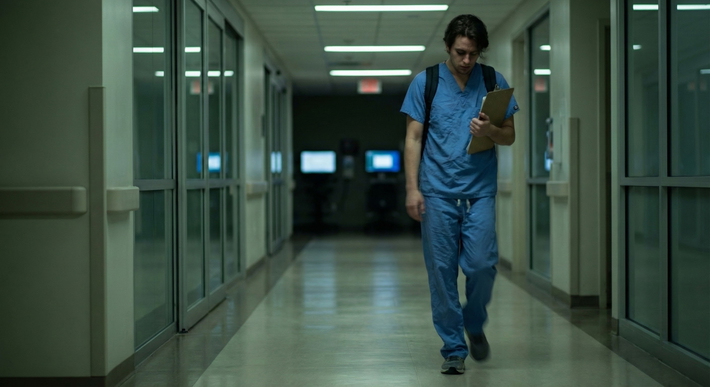
You think internship will punish you for calling too much. Then you start, and you realize the real danger is worse: calling too late for the sick patient and too early for the nonsense.
That's the intern reality gap.
New interns are trained to fear missing catastrophe, so they often react to drama instead of risk. A page that says "patient looks off" gets delayed because the vitals aren't horrifying yet. Meanwhile "can you renew melatonin?" gets escalated like a code because it feels like unfinished business. I've watched this play out on nights a hundred times. The loudest page is not the most important page. The most inconvenient page is not the sickest patient. And the nurse who sounds calm can absolutely be calling you about the one person who is about to declare themselves.
Here's the rule people actually use once training wheels come off: escalate based on patient risk, trajectory, and time sensitivity. Not tone. Not your anxiety. Not the page wording. Risk, trajectory, time.
That means you need a filter. A real one. Red flags that demand immediate escalation. Yellow flags that require you to go look, gather data, and think before calling. And false alarms that usually just need competent intern work, not a midnight chain of command activation.
If you learn that filter early, you stop being the intern who either freezes or floods the team. You become the intern seniors trust. Calm. Useful. Safe.
The Hidden Hierarchy: How Attendings and Residents Really Think About Pages
Let me tell you what really happens on the other end of the phone.
Senior residents and attendings are not sitting around hoping you'll prove total independence by suffering in silence. They want to hear about unstable patients, new objective changes, and decisions that cannot wait. That's it. They do not want a ceremonial "just FYI" every time a stable patient asks for Tums. They also do not want to discover at 6 a.m. that a patient had new oxygen needs, worsening confusion, and soft pressures for four hours while you were "monitoring."
The hidden hierarchy is simple. At the top: threats to life, threats to airway, threats to brain, threats to circulation. Next: meaningful changes in physiology that could become those things by the end of the shift. Below that: operational noise, comfort issues, clerical junk, and chronic problems pretending to be emergencies.
And here's the part interns misunderstand: escalation is not asking permission. It is notifying the team about a meaningful change in patient risk. That mindset matters. If you call your senior sounding like a child asking whether it's okay to order Tylenol, you look unprepared. If you call saying, "Mr. James in 814 is newly tachypneic, now needs 4 liters from room air, febrile to 39.1, MAPs drifting down, I'm concerned about sepsis and I've already sent cultures and started the bolus," you sound like a doctor. Even if you still need help. Especially then.
What makes a page worth a real call? Hemodynamic instability. A new oxygen requirement. Altered mental status. Active bleeding. Anaphylaxis. Sepsis concern. Uncontrolled pain with physiology changing around it. A new focal neurologic deficit. Those are not "I'll mention it later" issues. Those are "someone else on this team needs to know now" issues.
Urgent vs Important: The Intern Triage Framework That Actually Works
Urgent means delay could hurt the patient. Important means it matters clinically, but you usually have time to assess before escalating. If you don't separate those two, your whole night gets wrecked.
Here's the bedside framework that actually works.
Start with vitals trend, not a single value. A heart rate of 118 in isolation may be nothing. A heart rate rising from 92 to 118 to 128 over three checks in a patient who now looks pale and uncomfortable? Different story. Same number, different trajectory.
Next, weigh the nursing concern. Good nurses are pattern detectors. When a nurse says, "I don't know, this patient just isn't acting right," listen. I've seen that sentence precede GI bleeds, septic crashes, and hypercapnic confusion more times than I can count. But don't blindly escalate from the nursing desk. Go see the patient.
Then look for exam change. New work of breathing. Cool extremities. New confusion. A belly that's now distended and tender instead of soft. A patient who was texting family at sign-out and now can't finish a sentence. That's real medicine. That's where interns either grow up fast or miss the plot.
Check the labs and imaging delta. Not just whether the potassium is 3.3. Ask what changed. Is the sodium 128 in a patient who has lived at 128 for months, eating chips and watching television? Fine. Is the hemoglobin down two points with melena and tachycardia? That's movement. Movement matters.
And ask the most useful question on cross-cover: what happened since the last note or sign-out? The answer tells you whether this is stable background noise or an active story developing overnight.
The rookie mistake is worshipping isolated abnormal numbers. One blood pressure of 89/57 in a sleeping patient with a tiny cuff and warm hands is not the same as repeated MAPs under 60 in a patient with worsening mentation. One glucose of 68 in an awake patient who can drink juice is not the same as recurrent hypoglycemia in a septic NPO patient on insulin. Context is king. Pattern is king. Symptoms are king.
So use a mental three-color system. Red: unstable, worsening, time-sensitive, or management-changing tonight. Yellow: could matter, needs bedside assessment and quick reassessment. Green: stable routine issue, handle it and move on.

What Definitely Gets Escalated: Non-Negotiable Red Flags
There are some calls you do not sit on. Ever.
Airway and breathing issues. New stridor, severe wheezing, rising oxygen requirement, escalating work of breathing, saturation dropping despite support. Don't be clever. Call.
Chest pain with instability. Not every chest pain page is a disaster, but chest pain plus diaphoresis, hypotension, new arrhythmia, respiratory distress, or an awful-looking patient? That gets escalated immediately.
Stroke symptoms. New focal weakness, facial droop, aphasia, sudden altered mental status with concern for acute neuro event. Time matters. Not later. Now.
Seizure. Severe hypotension. Persistent or symptomatic tachycardia. Rapidly dropping hemoglobin with bleeding concern. A critical lab paired with clinical decline. Those are classic red flags because they reflect failing physiology, not just paperwork abnormalities.
And then there's the category interns are embarrassed to admit: "I don't like this patient." Good. Admit it anyway. That instinct is often your brain integrating a dozen subtle things before you can name them. The patient is greyer. The nurse has paged three times. The family says "this is not how he was an hour ago." The patient is more somnolent, more tachypneic, less interactive. The numbers aren't screaming yet, but the room feels wrong. I've seen those patients circle the drain while an intern kept trying to find a perfect objective threshold. Bad move.
Here's the insider truth: programs do not punish you for escalating a high-risk change that later turns out not to be catastrophic. They punish silence after obvious deterioration. If you communicate early and clearly around a concerning trajectory, you look safe. Safe matters more than being theatrically independent.
What Usually Does Not Need Immediate Escalation: The False Alarms New Interns Overcall
Now for the opposite problem. The overcalls.
Routine pain requests in a stable patient. Constipation. Insomnia. Mild chronic lab abnormalities in somebody who feels fine. Non-urgent medication clarifications. A blood pressure of 154/88 in an asymptomatic patient at 2 a.m. A magnesium of 1.7 on a person who has been 1.7 since the invention of fire. This is intern work, not escalation-worthy drama.
The expected first steps are boring, and that's why they matter. Review the chart. Read the sign-out. Check recent vitals. Go see the patient if the issue is clinical. Use standing orders, PRNs, and local protocols. Figure out whether the problem is new, worsening, or already known and being managed. Then decide whether it changes tonight's plan.
A lot of intern panic comes from trying to outsource uncertainty before doing a basic assessment. Don't do that. If the patient wants sleep medication and has no respiratory risk, no delirium, and a clear PRN pathway, handle it. If the potassium is slightly low in a stable patient and repletion is routine on your service, handle it. If the issue is chronic back pain at the same baseline, handle it.
But don't get cocky. "Probably nothing" is how people miss early deterioration. The point is not to suppress pages. The point is to separate nuisance from signal.
Because over-escalating every nuisance issue creates noise. Enough noise, and the team starts tuning out your calls. That is dangerous. A senior who's been hit with six pages about stool softeners is slower to appreciate call number seven about new hypoxia. You don't want to become background static.
How to Escalate Like a Pro: What to Say, When to Call, and How to Sound Prepared
The order of operations is simple. See the patient. Collect the objective data. Decide whether there's immediate danger. Then call with a recommendation-focused update.
That sequence alone will make you better than a shocking number of interns.
When you call, structure it cleanly. Who the patient is. What changed. Your assessment. What you've already done. What you need.
Something like this: "Hey, this is the intern cross-covering 8 West. I'm calling about Ms. Lee, 67, admitted for pneumonia and CHF. She's newly requiring 5 liters from baseline 2, satting 90 to 92%, heart rate is up to 126, temp 38.8, and she's more confused than earlier. On exam she has increased work of breathing and diffuse crackles. I repeated vitals, got an ABG and lactate, started the sepsis bundle, and asked RT to come by. I'm concerned she's worsening and may need higher level monitoring. Can you come assess with me?"
That sounds credible because it is credible. You went to the bedside. You recognized physiology. You moved the work forward. You didn't just throw a raw page uphill like, "Nurse is worried, can you advise?"
Here's the secret residents appreciate but rarely say out loud: your call earns trust when it shows you already thought through the problem. Not solved it. Thought through it. Even a simple line like "I think this is probably pain-related tachycardia, but she also has new O2 needs so I don't want to anchor" tells your senior you're using your brain.
Timing matters too. If the patient is unstable, call while moving. Get help early. If the patient is stable but management might change tonight, do a quick focused assessment first so your page contains actual value. Don't spend 45 minutes collecting the perfect story while the patient worsens. Don't call after 10 seconds either unless the room is actively on fire. This is judgment. It gets better with reps.
And say what you need. Come see the patient. Help decide ICU vs floor. Review the ECG. Discuss whether to transfuse. Interns often ramble because they're afraid of sounding demanding. Skip that. Clear ask. Clear concern. Clean handoff.
Special Situations: When the Rules Bend
Some patients get a lower threshold. Post-ops. Fresh admissions you barely know. ICU downgrades who never really belonged on the floor. High-risk GI bleeds. DNR/DNI patients who are still absolutely allowed to receive urgent evaluation, symptom treatment, and goal-concordant escalation. Don't confuse code status with "do nothing." That mistake is ugly.
Unit and service culture matters more than anyone admits. Some attendings want to hear early about trends: creeping oxygen, borderline urine output, recurrent fever in the neutropenic patient. Others expect you to assess first and present a worked-up problem, not a vague concern. Neither culture is automatically right. It's just reality.
So stop guessing and ask early. On day one or night one, ask your senior: "What kinds of changes do you want to hear about immediately, and what do you want me to evaluate first?" That one question saves a ridiculous amount of friction. It also shows maturity. You're not asking for less responsibility. You're asking for the service's real operating manual, which is usually very different from the polite version people say at orientation.
Closing Encouragement: You Don't Need to Be Perfect, You Need a Reliable Filter
Nobody starts internship with perfect escalation judgment. Nobody. The confident intern who acts like they do is usually the dangerous one.
This is a repetition skill. You'll overcall some things. You'll under-appreciate others. Then, if you're paying attention, your filter sharpens. You start noticing trajectory faster. You stop getting hypnotized by isolated numbers. You learn which pages are noise, which are signal, and which deserve your senior right now.
Trust the framework. If it's unstable, worsening, time-sensitive, or changes management tonight, it rises. If it's routine, stable, and already being addressed, it usually doesn't. That's the line. Not perfect. But reliable.
And that's what teams trust. Not brilliance. Not swagger. A reliable filter. A calm bedside assessment. A clean escalation when the patient needs it. That's how you become the intern people want on nights.