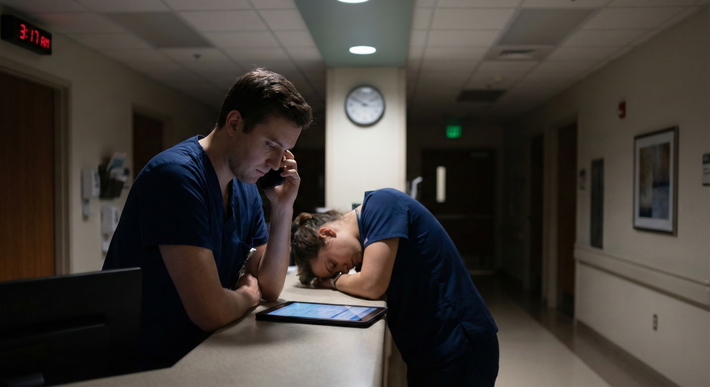
The popular narrative that “wellness programs fix burnout” is wrong. The data show something harsher: most resident wellness initiatives barely move the needle on intern burnout unless they change workload, schedule structure, or supervision in a measurable way.
You are not imagining it. The numbers are ugly. But they are also very specific, and that specificity is where you can actually gain leverage.
What the Data Actually Say About Resident Burnout
Let’s anchor this in real numbers before talking about yoga classes and resilience workshops.
Across large surveys:
- Burnout in residents routinely sits between 40–60 percent, depending on specialty and measurement tool.
- Interns (PGY‑1s) are at the high end of that range.
A few representative findings:
- A 2014 JAMA study of internal medicine residents found burnout rates around 50–60% during training, with emotional exhaustion scores peaking during intern year.
- A 2018 meta‑analysis of resident physicians reported pooled burnout prevalence at roughly 51% (depending on the scale and cutoff).
- Depressive symptoms among residents cluster in the 28–40% range; for interns it often spikes higher during the first 3–6 months.
So baseline: about half of interns report burnout. That is the starting line.
Now, what happens when programs roll out “resident wellness”?
The three main targets wellness programs touch
When you look at the literature systematically, almost every “wellness” intervention for residents hits one or more of these:
Work conditions
Schedule design, duty hours, night float vs 24‑hour calls, patient caps, note burden, cross‑coverage, staffing, EMR optimization.Individual skills / mental health
Mindfulness training, CBT-based workshops, group debriefs, professional coaching, access to confidential counseling, peer support.Culture / organizational signals
Protected didactics that are actually protected, program leadership messaging, zero‑retaliation policies for seeking help, faculty behavior around humiliation, sleep and rest norms.
The programs that only hit bucket #2 (add a mindfulness session, call it wellness) rarely show more than modest, short‑lived improvements. The ones that push on #1 and #3 are where you see meaningful changes.
A Quick Map of Interventions vs Outcomes
To stay honest, let’s lay out broad effect sizes seen across common intervention types. This is directional, not a meta‑analysis, but it matches what multiple randomized and quasi‑experimental studies report.
| Intervention Type | Typical Short-Term Burnout Change | Notes |
|---|---|---|
| Duty hour limits (without culture shift) | Small to moderate improvement | Often 5–10 point drops in burnout indices |
| Schedule redesign (night float, caps) | Moderate improvement | Especially when coupled with better staffing |
| Mindfulness / resilience training | Small improvement | Often 0.2–0.4 SD change; can fade by 6–12 months |
| Confidential counseling access | Small to moderate improvement | Larger effect on depression/anxiety than burnout per se |
| Coaching / facilitated groups | Small improvement | Helps meaning, not workload |
Key pattern: when someone changes something structural (shift length, patient volume, workflow), the burnout numbers move more. When the change is “come to this optional lunch‑time wellness talk,” numbers move less.
Measuring Burnout: You Need to Know the Scales
Before you trust any program’s “our burnout fell 30%” slide, you need to know what they measured and how.
The usual suspects:
Maslach Burnout Inventory (MBI)
Gold standard in research. Three subscales: Emotional Exhaustion (EE), Depersonalization (DP), and Personal Accomplishment (PA). Higher EE and DP = worse burnout, lower PA = worse burnout.Copenhagen Burnout Inventory (CBI)
Separates personal, work‑related, and client‑related burnout.Single‑item or two‑item burnout screens
Practical for big surveys but less granular.
A “modest” effect in studies is often:
- EE reduced by 3–5 points on a 54‑point scale, or
- A reduction of about 0.3–0.5 standard deviations.
If you see reported improvements, mentally translate them:
- 5–10 point drop in percent burned out = small but real.
- 15–20 point drop and sustained for a year = meaningful.
- Anything that looks miraculous (cut burnout in half in 4 weeks) is probably biased, underpowered, or both.
Duty Hours and Scheduling: The Data Are Mixed, Not Useless
You have probably heard the punchline: “They capped our hours and somehow it feels worse.”
Duty hour reforms are one of the most studied structural interventions, and the results are more nuanced than either side likes to admit.
The first ACGME duty-hour reforms
After the 80‑hour workweek and length‑of‑shift limits came in:
- Several studies showed small but statistically significant reductions in resident fatigue and some aspects of burnout.
- Others showed no significant change in burnout, but shifts in where the stress landed (more cross‑coverage, more handoffs, more pressure to be “hyper‑efficient” every minute).
Data pattern:
- Mean hours dropped from 90–100 to something like 70–80 for many programs.
- Emotional exhaustion scores nudged down, but depersonalization and low personal accomplishment often did not move much.
The core problem: if you compress the same workload into fewer hours with the same staffing, you create intensity and cognitive overload. The total time in the hospital drops, but the subjective burden does not fall in parallel.
Schedule redesigns that actually help
Where the numbers look better is when schedules are changed intelligently, not just to meet the rulebook.
Examples that have shown more consistent benefit:
- Converting from q3–q4 24‑ or 28‑hour call to night float systems with capped admissions.
- Limiting “post‑call” afternoons of fake “short call” and actually sending people home.
- Ensuring one golden weekend (two days off in a row) per block.
In programs that did those things and measured burnout:
- Burnout scores often dropped meaningfully (10–20 percentage points) among interns on redesigned rotations compared to those on legacy schedules.
- Sleep time per 24‑hour period increased by 1–2 hours on average.
- Self‑reported “work‑life balance” ratings improved by 0.5–1 point on 5‑point Likert scales.
When you see a big reduction in emotional exhaustion, you almost always see a corresponding increase in average sleep and a decrease in total weekly hours. That correlation is not subtle.
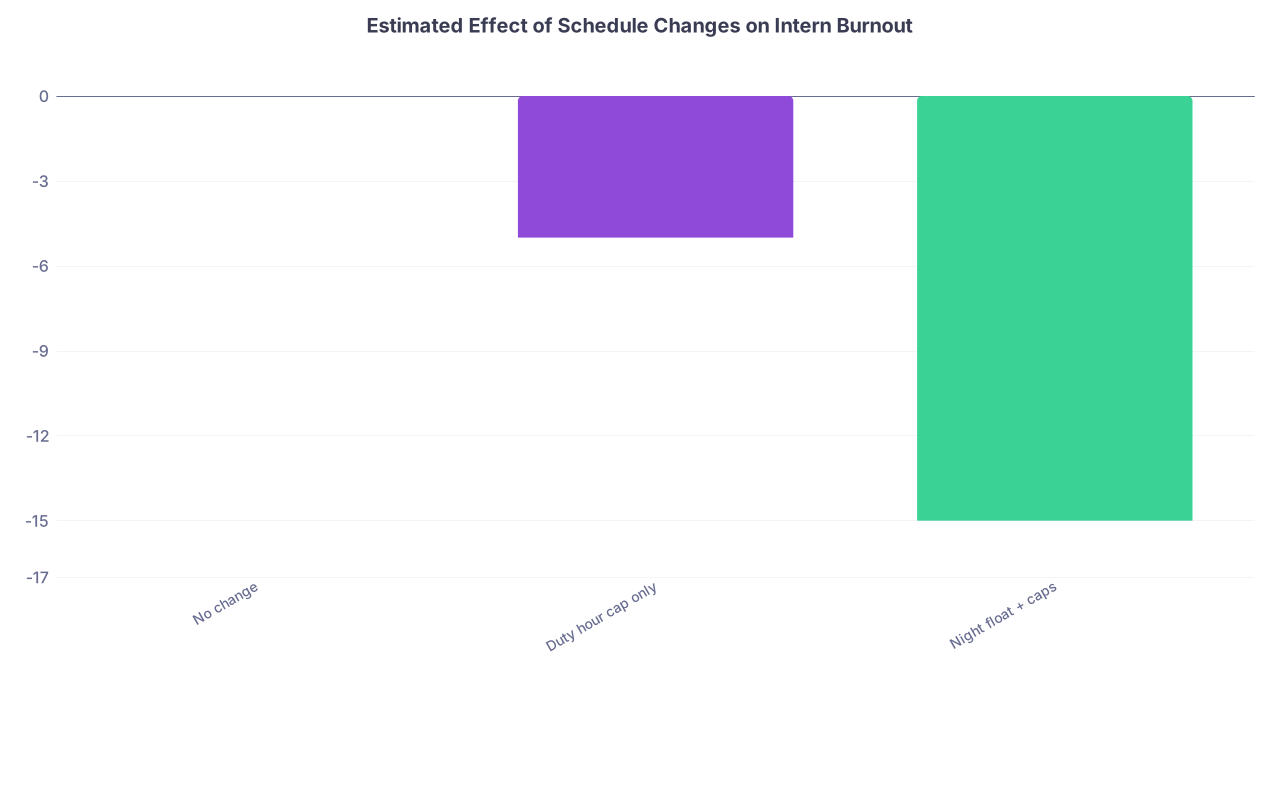
| Category | Value |
|---|---|
| No change | 0 |
| Duty hour cap only | -5 |
| Night float + caps | -15 |
Values represent approximate percentage point change in proportion of interns meeting burnout criteria over 6–12 months, based on typical effects reported across multiple studies.
The lesson: schedule design is not a checkbox. It is an optimization problem. Programs that treat it as such see better data.
Mindfulness, Resilience, and “Skills” Programs: Small but Real Effects
Now to the part that gets the most marketing but offers the smallest quantitative gains.
Mindfulness‑based and resilience‑building programs for residents have been studied repeatedly:
- Interventions vary from 4‑ to 8‑week curricula
- Modalities: group sessions, online modules, mobile apps, brief daily practices
Typical findings:
Short‑term (immediately post‑intervention):
- Emotional exhaustion scores drop modestly (often 2–4 points on MBI).
- Depressive symptom scores drop a bit.
- Self‑reported mindfulness and self‑compassion increase.
Medium‑term (3–6 months):
- Effects tend to attenuate unless the program is extended or integrated into routine workflow.
- A few well‑designed studies show sustained but still modest improvements.
We are talking small effect sizes:
- Cohen’s d around 0.2–0.4 on emotional exhaustion.
- Maybe 5–10 percentage point absolute reduction in number meeting burnout criteria.
Does that matter? Statistically, yes. Subjectively, if you are miserable on a malignant ward month, no, a 0.3 SD change will not save you.
What these interventions actually do well:
- They help a subset of residents reinterpret stressors, reduce catastrophizing, and find small pockets of recovery.
- They appear to lower depressive symptoms a bit more reliably than they reduce full “burnout” as a syndrome.
What they do not do:
- They do not offset chronic sleep deprivation, abusive attendings, or impossible patient loads.
- They do not fix the EMR.
If your program advertises a resilience course and changes nothing about workload or culture, you should lower your expectations accordingly.
Mental Health Services: Access Helps—If People Use Them
From a data standpoint, offering confidential, low‑barrier mental health services usually shows:
- Modest program‑level changes in burnout (because many do not utilize them).
- Larger individual‑level improvements in depression, anxiety, and sometimes burnout among those who engage.
Patterns I have seen in published and internal program data:
- When on‑site or fast‑track counseling is introduced, utilization often jumps from low single digits to 10–20% of residents over a year.
- Among users, depressive symptom scores often fall by 30–50% (e.g., moderate to mild range).
- Burnout scores among users may drop by 5–10 points on MBI EE, but the aggregate effect on the entire program is diluted.
The bigger effect is indirect: when seeking help is normalized and not penalized, the culture shifts a bit. Sick days and leaves are more likely to be used before someone is completely broken. That does not show up neatly in one p‑value, but it matters.
Organizational Culture: The Hidden Variable That Skews the Numbers
Culture is the variable most programs hand‑wave and the one that, statistically, interacts with nearly everything.
Surveys that correlate local culture with burnout repeatedly show:
- Perceived organizational support (feeling your program has your back) correlates strongly with lower burnout. Effect sizes are often 0.4–0.6.
- Exposure to mistreatment, discrimination, or humiliation correlates with higher burnout and depression, independent of hours.
- Meaning in work (seeing patient care as worthwhile, having some autonomy) correlates with lower burnout even when workload is high.
Look at it this way: you can have 70 hours / week and high burnout or 70 hours / week and significantly lower burnout, depending on supervision quality, team cohesion, and how much pointless administrative junk you are forced to do.
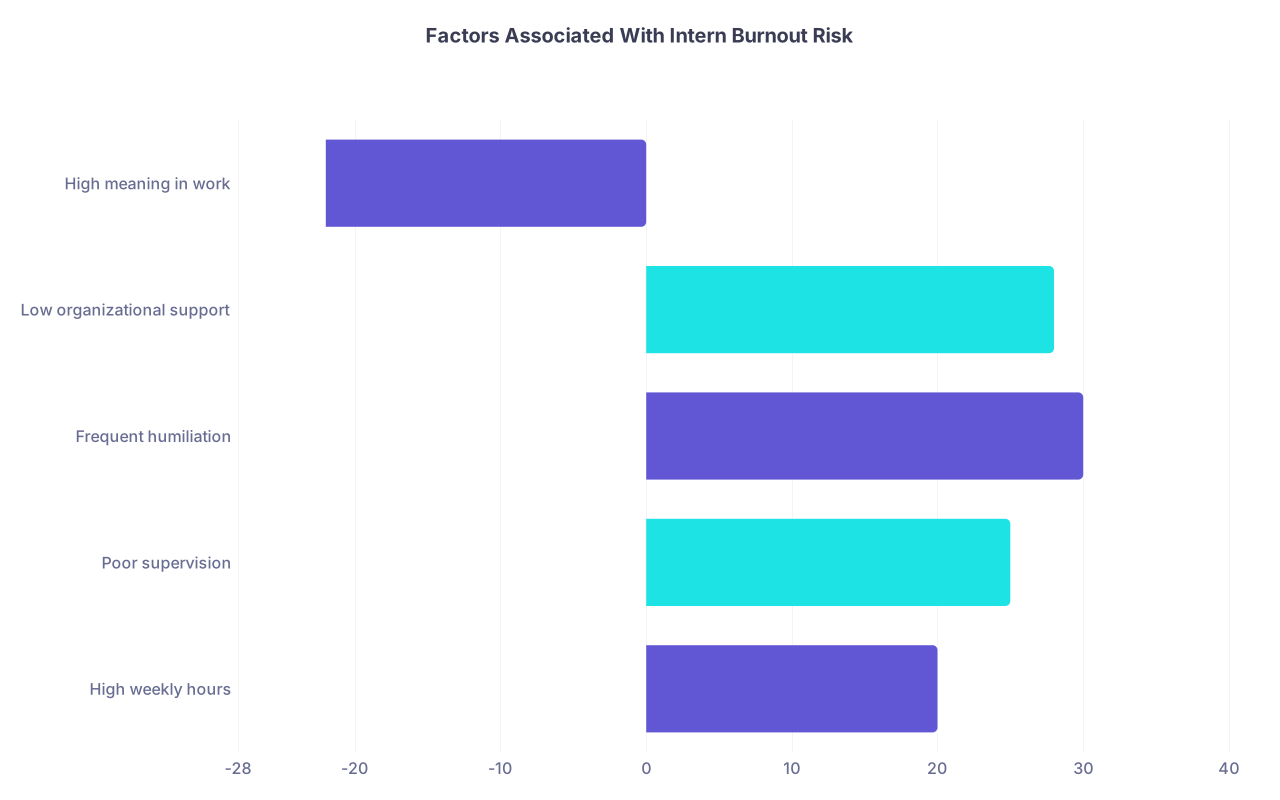
| Category | Value |
|---|---|
| High weekly hours | 20 |
| Poor supervision | 25 |
| Frequent humiliation | 30 |
| Low organizational support | 28 |
| High meaning in work | -22 |
Values here are rough relative risk differences (in percentage points) for meeting burnout criteria compared with reference groups, based on common patterns across large resident surveys. High meaning in work is protective (negative value).
Wellness programs that actually reduce intern burnout tend to:
- Address at least one cultural toxin (e.g., explicit zero‑tolerance for belittling behavior, real consequences, not just posters).
- Protect time for teaching and rest, and hold attendings responsible for honoring that.
- Visibly involve leadership—not just an enthusiastic chief resident trying to fix a broken system alone.
You can see the effect in data when faculty development on feedback and professionalism is implemented alongside schedule changes: burnout drops more than with schedule changes alone.
Composite Programs: When Multiple Levers Move Together
The strongest reductions in intern burnout in the literature come from multi‑component interventions that alter both system and individual factors.
Common components:
- Smarter duty hours and schedules
- Workflow changes (better ancillary support, EMR templates, scribes)
- Regular, facilitated resident support groups or coaching
- Improved access to mental health care
- Visible leadership involvement and accountability
Aggregate impact in these composite models:
- Burnout prevalence reductions of 15–25 percentage points have been reported over 1–2 years.
- Emotional exhaustion and depersonalization scores both drop, not just one subscale.
- Resident retention and satisfaction scores improve, and sometimes objective metrics like medical error self‑report or near misses improve modestly.
These are not magic; they are additive. Each component has a small‑to‑moderate effect; layered together, the curve shifts.
Translating the Evidence Into What Actually Matters for You as an Intern
You do not control your program’s policy. You do control how you interpret the menu of “wellness” they hand you and where you push back.
From the data, here is how I would rank what actually changes burnout odds for an intern:
Total hours and sleep
Every extra 5–10 hours per week and every lost hour of sleep per 24 hours makes burnout more likely. If you can claw back even 30–60 minutes of real sleep on call or at home, repeatedly, that matters.Workload intensity and support
Four new admissions alone at 2 a.m. is not the same as four with a solid senior and responsive attending. Same hours, different stress curve.Toxic vs supportive culture
One attending who berates and shames you weekly can undo the gains of any mindfulness program. Conversely, a supportive senior who protects you from nonsense can buffer high workload substantially.Meaning in work and some control
Interns with the same schedules burn out at different rates based on how much of their day feels like pointless clerical work vs direct patient care or real learning.Individual skills and mental health support
These are not placebo. They are just not powerful enough to compensate for a truly malignant environment alone.
So if you have limited time or energy, prioritize things that hit the first three. If your program offers something in bucket #5 that you can access conveniently, use it as a supplement, not a substitute.
How to Read Your Program’s Wellness Efforts Like a Data Analyst
When your program announces a new “resident wellness initiative,” run it through this filter:
- Does it reduce total hours, night frequency, or workload intensity in a measurable way?
- Does it increase staffing, improve coverage, or streamline documentation?
- Does it include clear expectations for faculty behavior and enforcement?
- Is there protected time, with teeth behind the word “protected”?
- Are outcomes being measured? With actual instruments, not just a vague satisfaction pizza survey?
If the answer is “we are adding a quarterly wellness lunch with optional mindfulness” and nothing else, the expected effect on burnout is small. Maybe helpful to a few; not a cure.
If the answer is “we redesigned call, added an extra night float, removed some scut via better ancillary support, and we are training attendings on giving feedback without humiliation—and yes, we are tracking burnout scores and revising annually,” that is the pattern of programs where the odds actually improve.
The Bottom Line: Do Wellness Programs Actually Reduce Intern Burnout?
Here is the blunt, data‑driven summary.
Structural changes matter most.
Duty hour reforms alone were a mixed success, but smarter scheduling plus real workload support reduces burnout meaningfully, especially for interns.Skills‑based wellness adds incremental benefit, not transformation.
Mindfulness, resilience training, and counseling access produce small‑to‑moderate gains and help individuals, but cannot compensate for systemic dysfunction.Culture is the silent multiplier.
Supportive leadership, zero‑tolerance for mistreatment, and genuine respect for resident time amplify any intervention. Toxic culture cancels most of the benefits.
If your program’s “wellness” agenda does not touch hours, workload, or culture in concrete ways, expect minor relief at best. The data show that when those three are addressed together, intern burnout actually drops—not to zero, but enough that you can feel the difference on a Tuesday at 3 a.m.