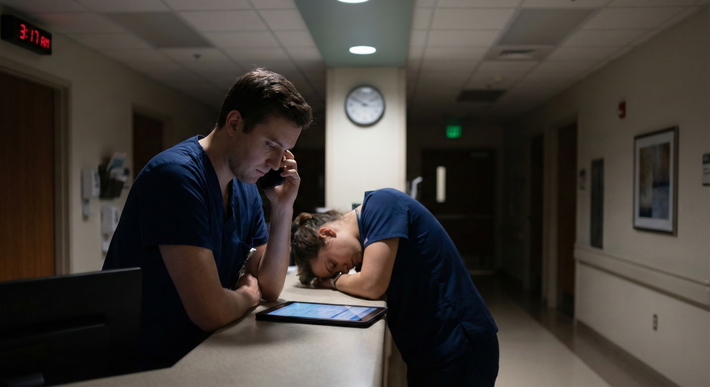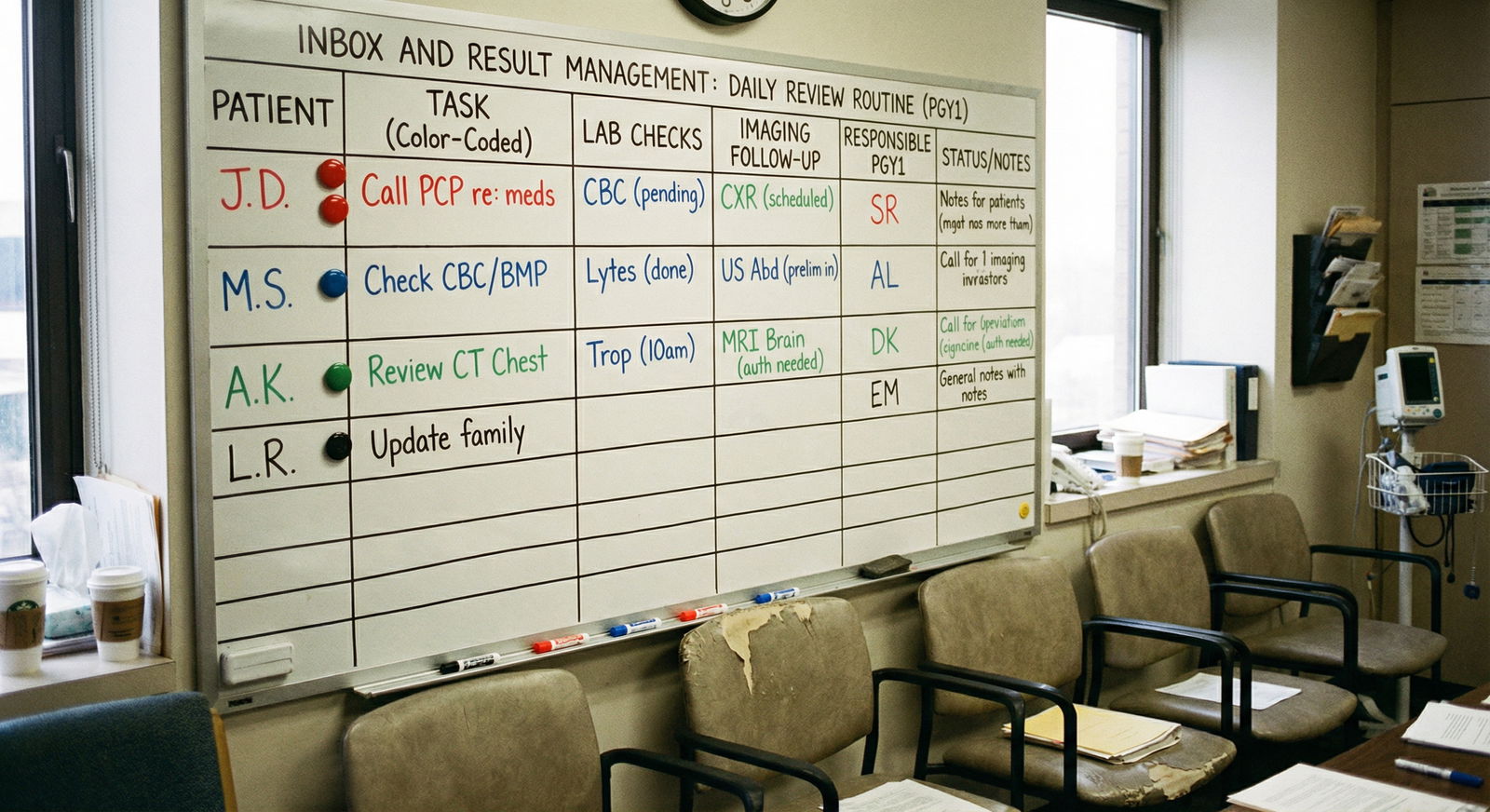
The myth of the perfectly composed intern is a lie.
You know that image they sell you? Intern on 28‑hour call, hair still neat, making clever teaching points, then going home to meal prep and a workout. Yeah. That intern exists about as often as a unicorn on night float. What actually happens is messier, uglier, and a lot more human.
And yes, sometimes it involves crying on the floor.
I’m going to say the thing we all think but don’t say out loud: a breakdown during intern year is not some rare “weak” moment. It’s practically a rite of passage. The frequency and intensity vary, but the whole “I might actually melt down in a stairwell at 3 a.m.” fear? You’re not inventing that. You’re anticipating something that’s statistically pretty likely.
Let’s talk honestly about how often people crack, what it looks like, and what it means for you.
How Often Do Interns Actually Break Down?
Let me cut through the nonsense: it happens a lot more than anyone will admit on rounds.
I’ve seen:
- The surgery intern who cried in the stairwell after being paged for the fifth time during a single bedside procedure.
- The medicine intern who burst into tears in the call room when a senior asked, “How’s it going?” with a little too much kindness.
- The peds intern who sobbed in their car after missing a kid’s decompensation by ten minutes on cross‑cover.
Most people don’t fall apart once. It’s more like a weird roller coaster: you’re fine, you’re coping, you’re managing… then something tiny pushes you over the edge.
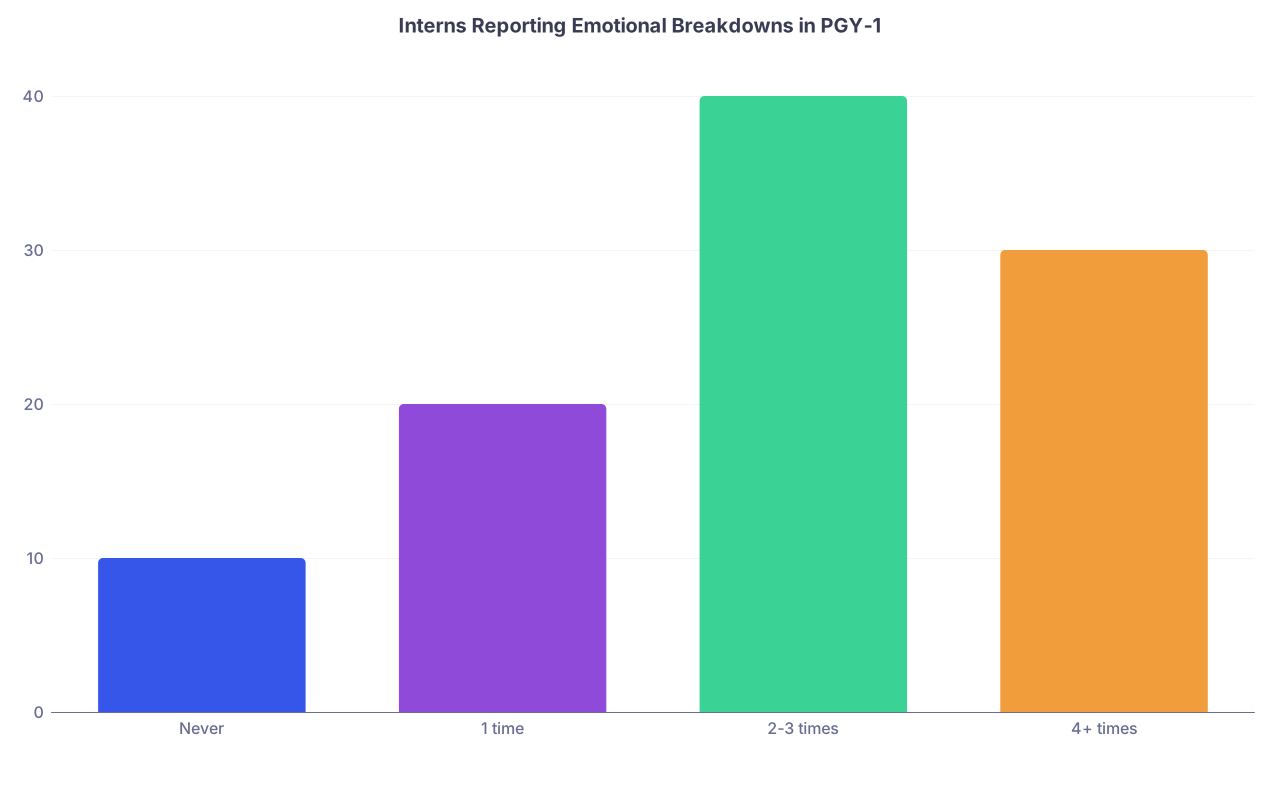
If you want numbers (because anxious brains like numbers):
| Category | Value |
|---|---|
| Never | 10 |
| 1 time | 20 |
| 2-3 times | 40 |
| 4+ times | 30 |
No, that’s not from one specific published paper—that’s the rough reality I keep seeing and hearing, year after year, across different programs. The majority of interns will have multiple emotional breakdowns. Not heroic, cinematic ones. Just ugly, tired, quiet ones.
And here’s the part your anxiety probably doesn’t believe: the attendings and seniors? Most of them did the same thing when they were interns. Some of them last week. Still.
You’re not about to be the first person who folds under the weight of it. You’re about to be the next person who realizes the weight was heavier than advertised.
What “Crying on the Floor” Actually Looks Like
Your brain is probably imagining the worst version: full‑body sobbing, on the main hallway floor, in front of the chair of the department, during morning rush, patient families staring, someone filming you for TikTok. Catastrophic humiliation.
Real life is usually… smaller.
- 3 minutes in a bathroom stall, silently crying, wiping your face with toilet paper, then re‑masking and going back out.
- Sitting on the stairwell step between floors, one hand over your mouth, tears spilling over while your pager keeps going off.
- Leaning against the on‑call room wall, crying so quietly your co‑intern doesn’t even hear you on the other side of the paper‑thin wall.
- Crying in your car in the parking garage before going in… or after leaving.
Here’s the pattern I see over and over: the “breakdown” is almost always private, short, and contained. You don’t completely disintegrate and forget how to doctor. You snap, cry, breathe, maybe text someone, then go back out there and do the next thing because there is a next thing.
Your fear is that the crying means you’re not cut out for this. The reality is, for most people, this is exactly how they get through it.
Where It Usually Happens (and How Public It Really Is)
Let’s get very specific, because vague reassurance doesn’t calm an anxious brain.

Top breakdown zones I’ve seen:
- Stairwells
- Single‑stall bathrooms
- Call rooms
- Supply closets / med rooms (the ones with a door that actually closes)
- The car, parked, engine off
- The tiny alcove near the fire exit that nobody uses
Least common? Full‑on hallway meltdown with patients and staff watching.
Here’s a quick reality check on “visibility”:
| Location | How Public It Is | How Often Used |
|---|---|---|
| Stairwell | Low | Very common |
| Bathroom stall | Very low | Very common |
| Call room | Low | Common |
| Hallway | High | Rare |
| Parking garage | Low | Common |
Could you still cry in front of someone? Sure. Does that automatically mark you as “the unstable intern”? No. In most halfway decent programs, the reaction is either:
- Quiet understanding (“You OK? Need a sec?”)
- Or, if the culture’s more toxic, awkward avoidance (“Uh… anyway, about those orders…”)
But the movie version where crying once gets you labeled forever? That belongs in your catastrophizing thought spiral, not in reality.
Will Crying Make People Think I’m Weak?
Here’s the dirty secret: the people who judge crying the harshest are usually:
- The ones who never admit they cry.
- The ones whose entire identity is “I survived this, so you must too.”
- Or the ones so burnt out they can’t feel anything anymore.
You’re not trying to impress those people. You’re trying to survive.
Most decent seniors and attendings have seen every variety of breakdown:
- The “I haven’t slept more than 3 hours in two days” tears
- The “that patient reminded me of my dad” tears
- The “I made a mistake and I’m terrified” tears
- The “this system is crushing me” tears
And you know what usually happens after?
Someone quietly covers a page or two. The senior says, “Go take 10.” Somebody sneaks you a protein bar or makes sure you actually get to eat.
Is everyone that kind? No. There are still jerks. But you’re imagining a world where one emotional moment destroys your reputation. Real world: it barely registers as a blip in the chaos unless it’s happening every single day and nobody’s addressing why.
If you’re asking “what if I cry on the floor from exhaustion?” you’re already more self‑aware than the person who steamrolls through patients with no insight and no empathy. I’d rather have the doctor who cried over the overnight disaster than the one who didn’t flinch at all.
How It Actually Affects Your Performance and Safety
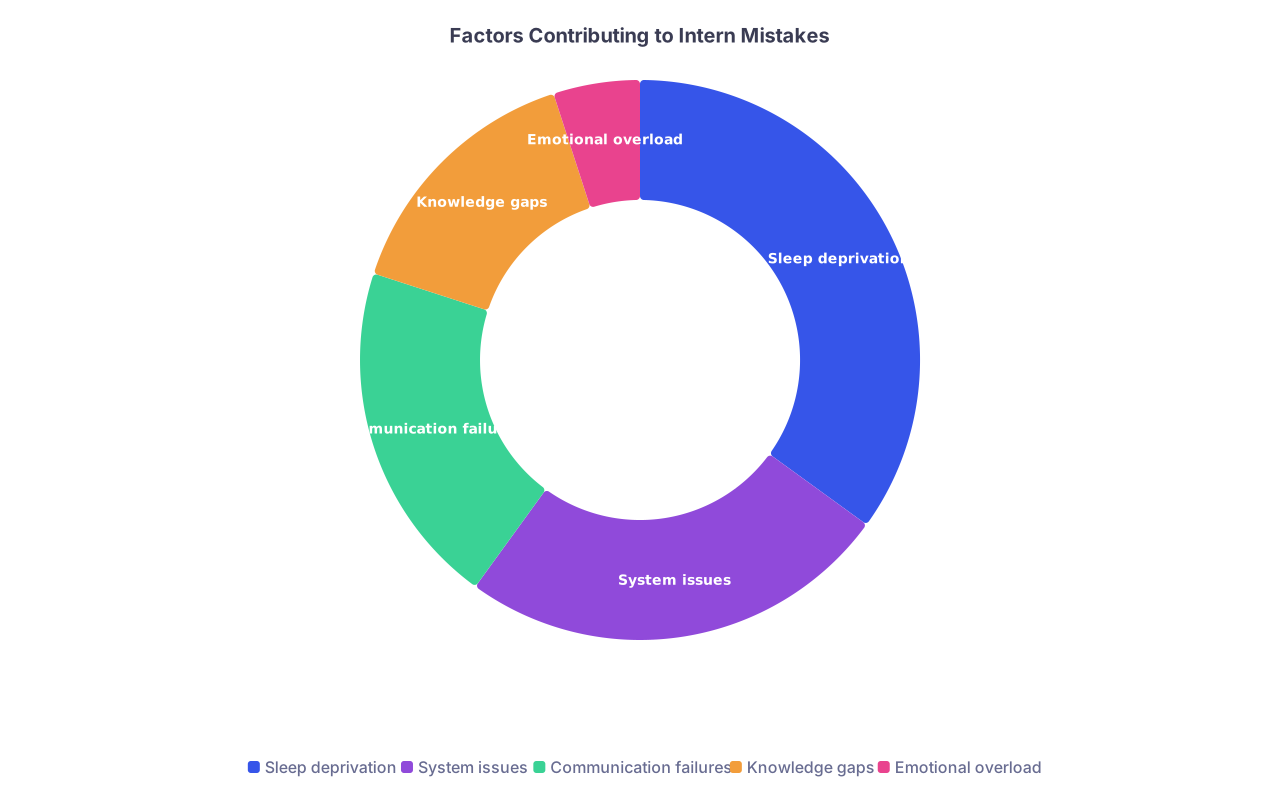
The other fear in the back of your mind is brutal and honest: “If I melt down, will I hurt a patient? Will I screw something up?”
Completely fair question.
| Category | Value |
|---|---|
| Sleep deprivation | 35 |
| System issues | 25 |
| Communication failures | 20 |
| Knowledge gaps | 15 |
| Emotional overload | 5 |
The biggest driver of mistakes is not “had a 3‑minute cry.” It’s chronic sleep deprivation and system chaos. Emotional overload plays a role, sure, but pretending you’re fine when you’re not is way more dangerous.
Crying can actually be a pressure valve. You let some of it out, regroup, then refocus.
What helps keep things safe when you’re on the edge:
- Saying to your senior: “I’m really overwhelmed right now—can you help me prioritize?”
- Double‑checking high‑risk orders when you feel spun up.
- Taking 2 minutes to breathe and ground yourself rather than blindly rushing into the next task half‑dissociated.
You know what doesn’t help? Forcing yourself to white‑knuckle through it because you’re terrified someone will see you as weak. That’s when details get missed.
Can You Actually Prepare for This?
Not in the way you want to.
You can’t grit your way into being immune to exhaustion and emotional overload. If you could, no one would burn out, and entire wellness committees would be out of a job.
But you can build a plan for “when, not if” you hit that wall.

| Step | Description |
|---|---|
| Step 1 | Feeling overwhelmed |
| Step 2 | Go to safe spot |
| Step 3 | Finish urgent task only |
| Step 4 | Set 5 minute timer |
| Step 5 | Text or message trusted person |
| Step 6 | Deep breaths, water, face wash |
| Step 7 | Tell senior honestly |
| Step 8 | Return to work with 1 clear task |
| Step 9 | Can I step away? |
| Step 10 | Still not okay? |
Your version might look like:
- Designated breakdown spots you’ve already scoped out on day 1.
- One or two people (co‑intern, friend, partner) you can text “I’m not okay” without needing to explain.
- A 3‑minute reset routine: water, bathroom, wash face, few deep breaths, one snack bite.
- A script for your senior: “I’m really maxed right now. I’m safe, but I could use 5 minutes if possible.”
Is this going to prevent every meltdown? No. But it gives you rails to hold onto when your brain is screaming and your pager won’t shut up.
The Part Your Anxiety Won’t Believe But Needs to Hear
You’re imagining that crying on the floor is the sign you’re failing at this. That you weren’t strong enough. That everyone else is handling it better.
Here’s what actually happens over intern year:
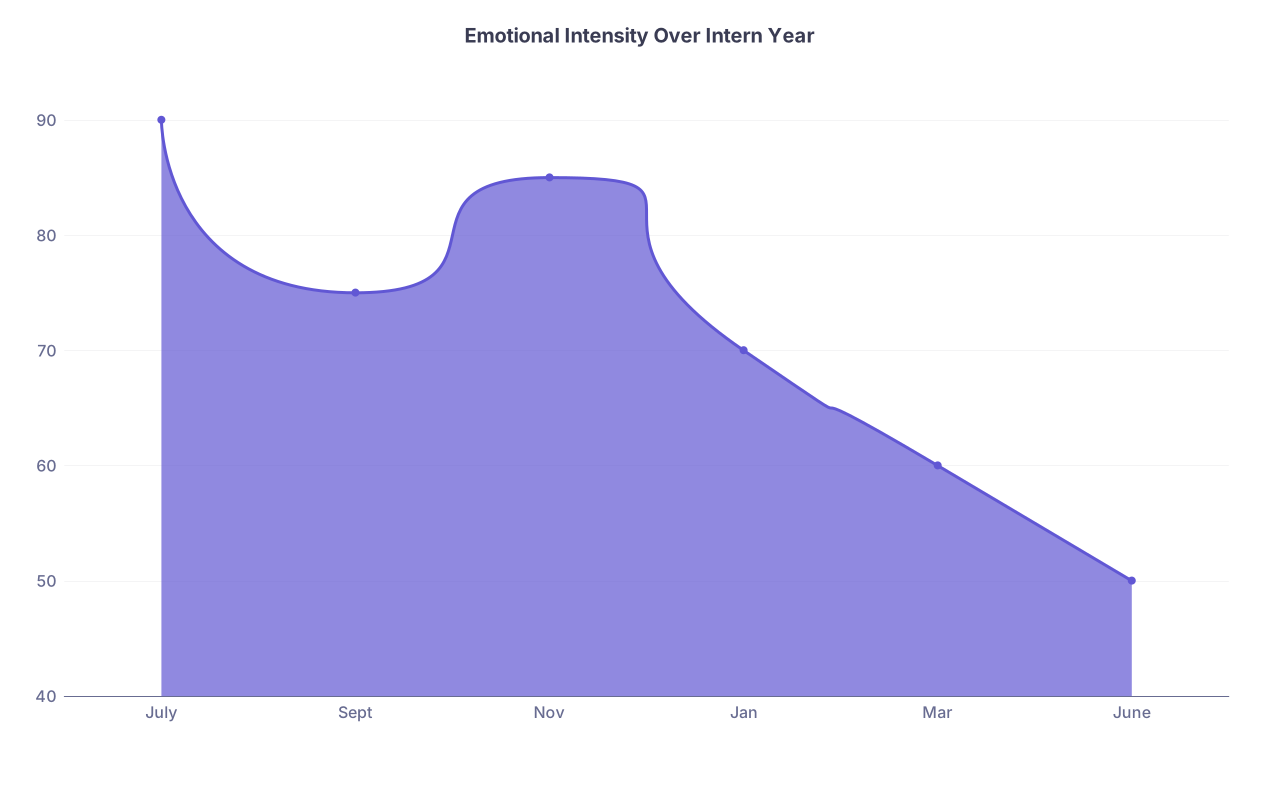
| Category | Value |
|---|---|
| July | 90 |
| Sept | 75 |
| Nov | 85 |
| Jan | 70 |
| Mar | 60 |
| June | 50 |
The first months are brutal because everything is new and you have zero proof you can do this. The middle of the year hits hard again when the novelty wears off and the grind sets in. By late spring, you’re still tired, but you’re no longer shocked by everything. You’ve seen worse. You’ve survived worse.
The number of breakdowns doesn’t necessarily go to zero, but the emotional intensity often does. You start recognizing:
- “This is my ‘I’m overstimulated and hungry’ cry, not my ‘I’m fundamentally broken’ cry.”
- “I’ve felt this exact awful way before and I got through it.”
- “I know who to text and where to go when this happens.”
You build scar tissue. Not the dead, numb kind—more like callouses. It still hurts. Just less likely to knock you flat every time.
And no, you don’t have to lose your empathy to get there. You just learn how to not drown in it.
The Darkest What‑If: What If It’s More Than Just Crying?
I’m not going to gloss over this. Sometimes the “crying on the floor from exhaustion” isn’t a once‑in‑a‑while stress release. It’s every week. It’s constant dread. It’s thoughts like, “If I got into an accident on the way to work, at least I’d get a break.”
That’s not you being weak. That’s you being injured.
There’s a difference between:
- Normal, awful intern‑year suffering
- And legitimate depression, anxiety disorder, PTSD, or burnout that requires real intervention
If you’re:
- Crying most days
- Can’t sleep or can’t eat
- Losing interest in everything outside work
- Having thoughts that you’d be better off not here
That’s not a “just push harder” situation. That’s a “this is a medical and occupational emergency” situation. And more and more programs are finally starting to treat it like that.
Does seeking help feel terrifying? Of course. Are you imagining you’ll be removed from the program, blacklisted, career over? Definitely.
But what I actually see far more often: some time off, therapy, maybe meds, adjustments in schedule, check‑ins with program leadership. Imperfect, sure. But not the career death sentence you think it is.
You’re Not Broken for Being Scared of This
The fact that you are already anxious about crying on the floor says a few things about you:
- You care about your patients and your responsibilities.
- You care about how you show up to others.
- You’ve probably always held yourself together, no matter what, and the idea of not being able to is terrifying.
You’re scared that residency is going to expose that you’re not superhuman. That all the “wow, you’re so strong, so accomplished” stuff people have said about you for years is fragile.
Here’s the truth that I wish someone had told me more bluntly: residency will absolutely expose your limits. It will break your illusion that you can power through anything with enough willpower.
What it doesn’t do—at least not automatically—is break you.
The floor cry isn’t the end. It’s usually just the moment you finally admit, “This is a lot,” and your body does what your mouth won’t say.
And then your pager goes off.
And you stand up.
And you answer it.
FAQ (Exactly 5 Questions)
1. Will crying during residency go on some kind of record or evaluation?
No. Nobody’s filling out an evaluation form that says “Cried twice in stairwell in October.” Unless your emotional state is repeatedly impairing your ability to function safely and people are worried about you, a one‑off or occasional breakdown doesn’t get documented like that. People are too busy documenting actual medical issues.
2. What if I cry in front of a patient or family member?
It happens. As long as they aren’t comforting you more than you’re supporting them, a few tears can actually read as genuine humanity. If you feel yourself losing control, it’s okay to say, “I’m feeling this with you—let me step out for a moment and I’ll be right back,” regroup, then return.
3. Should I tell my program leadership I’ve been breaking down?
If it’s rare and you’re coping, you don’t have to make a formal thing out of it. If it’s frequent, intense, or tied to real mental health struggles, yes—looping in a chief, advisor, or PD can unlock actual support: schedule changes, time off, referrals. Scary, but almost always better than silently imploding.
4. Is it a red flag if other interns seem totally fine and I’m not?
No. People perform wellness like it’s part of their job. You’re seeing curated versions of your co‑interns: at pre‑rounds, on social media, for 10 minutes in conference. You are not seeing their 2 a.m. bathroom meltdown or their car‑cry. Comparing your raw footage to their highlight reel will always make you feel defective.
5. How do I explain a breakdown to my senior if they catch me mid‑cry?
Keep it simple and honest: “I’m okay, just really overwhelmed and tired. I needed a minute. I can keep working, but a short breather would help.” Most reasonable seniors will give you that space. If they don’t, that’s about their issues, their training, their burnout—not your worth or fitness to be a doctor.
Key points to hang onto:
- Crying on the floor from exhaustion in intern year is common, not career‑ending.
- It usually happens in private, passes quickly, and doesn’t define how others see you.
- If the floor becomes your second home, that’s not weakness—it’s a sign you deserve real support, not more self‑blame.