
The biggest lie interns believe is that efficiency magically appears when you become a senior. It does not. If you are still drowning in June, you will simply be a drowning senior in July—with students and interns now depending on you.
This January–June stretch is your last clean window to rewire how you work.
Below is a month‑by‑month, then week‑by‑week, then day‑level guide to refining your efficiency before you have a team looking to you for answers. I will assume you are in a busy inpatient field (IM, surgery, EM with off‑service rotations), but the principles translate.
January: Brutal Audit and Baseline Reset
At this point you should stop pretending the chaos is temporary and start treating it like data.
Weeks 1–2: Time and Task Autopsy
For two full weeks, you should track exactly where your time goes.
Do this:
- Print your patient list every morning. On the back, draw three columns:
- Time
- Task
- Blocker (why it took longer than it should)
- Every 60–90 minutes, scribble:
- “06:40–07:10 – prerounds 6 pts – labs slow / no pre‑review last night”
- “09:20–09:45 – order writing – attending interruptions x3”
- “14:00–15:00 – notes – got lost in chart review”
By the end of two weeks, patterns appear. They always do.
Common January findings I see:
- 40+ minutes wasted daily re‑tracking down vitals, labs, imaging you already saw.
- Notes spilling into post‑call days.
- Pages pulling you in five directions because no one knows your plan.
At this point you should:
- Identify your three biggest time leaks (examples):
- Disorganized prerounds
- Notes started too late in the day
- Constant “quick questions” from nursing because your plans are vague
- Pick one to tackle first. Not all three. You are an intern, not a productivity influencer.
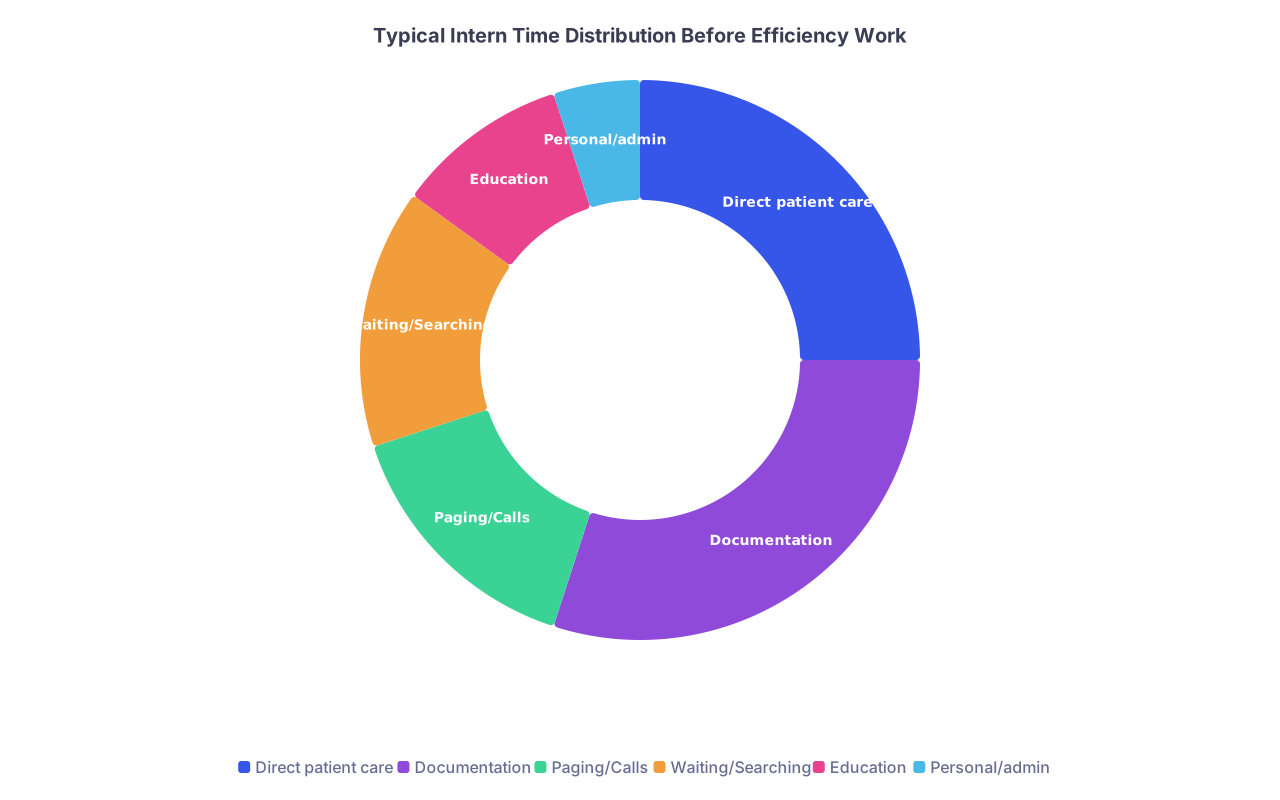
| Category | Value |
|---|---|
| Direct patient care | 25 |
| Documentation | 30 |
| Paging/Calls | 15 |
| Waiting/Searching | 15 |
| Education | 10 |
| Personal/admin | 5 |
Weeks 3–4: Build a Morning System
Morning is where efficiency lives or dies.
By the end of January, you should have a repeatable morning routine that looks roughly like this (adjust times to your hospital):
- 05:45–06:00 – Arrive, log in, open:
- EMR
- Census
- Your note templates
- 06:00–06:30 – Rapid chart scan:
- New vitals overnight
- New labs / imaging
- New consult notes
- 06:30–07:15 – Bedside focused prerounds:
- Top 3 questions per patient
- Check lines, drains, mental status
- 07:15–07:30 – Update your list with:
- Today’s one‑line plan “headline”
- Anticipated disposition (home vs SNF vs still sick)
You are not writing the whole note. You are setting up the skeleton.
At this point you should:
- Use a single master list for the team (not three half‑updated versions floating around).
- Standardize your list columns: ID / Hospital day / Overnight events / Today plan / Dispo target.
- Stop opening every chart in full every single time. Skim, then dive only where needed.
February: Note Speed and Cognitive Templates
January exposed the leaks. February is for fixing documentation and mental structure.
Weeks 1–2: Rewrite Every Template You Use
Your current note templates are probably bloated and slow. Most interns’ are.
Do this:
- Take one service (e.g., general medicine).
- Open your H&P, progress note, and discharge templates.
- Strip them down to only:
- Problem list format
- Brief hospital course
- Today’s plan in ordered bullets
Leave the fluff for faculty who brag about “comprehensive” notes and then never see patients.
Example of a problem‑based progress structure:
- Problems:
-
- Overnight: afebrile, WBC trending down
- Plan: narrow abx, wean O2, PT eval today
-
- Plan: adjust basal, diabetes educator consult
-
At this point you should:
- Have one master progress note template per rotation.
- Embed smart phrases for:
- Common order sets (DVT ppx, labs)
- Standard discharge instructions by condition
- Time yourself: progress note for a straightforward patient should be 8–10 minutes max.
Weeks 3–4: Note While You Round
By the end of February, notes should not all be waiting for you at 3 pm.
The goal:
- For simple patients: note 70–80 percent drafted before or immediately after rounds.
- For complex patients: skeleton + problem list in by 11:00.
Practical approach:
- During rounds:
- Keep your laptop or tablet open when culture allows.
- Update “Today’s Plan” live as attending talks.
- Right after each patient:
- Spend 2–3 minutes plugging in key data.
- Drop in pre‑written plan snippets.
By February 28 you should:
- Consistently have the majority of notes done before noon on non‑call days.
- Rarely be finishing core notes after 18:00 except post‑code or disaster days.
March: Communication and Page Management
If February was about documentation, March is about not being interrupted every 4 minutes.
Weeks 1–2: Preemptive Communication
At this point you should start treating nurses and consultants as efficiency partners, not obstacles.
Every morning, after your own review and before or after rounds, you should:
- Call or message:
- Charge nurse (“Any concerns on my patients? Any likely discharges you need early?”)
- For each high‑risk patient:
- Leave a clear, visible plan in the EMR and sign‑out:
- “If SBP < 90: Give 500 cc LR and page me”
- “If BG < 70: Use hypoglycemia protocol, then page”
- Leave a clear, visible plan in the EMR and sign‑out:
This cuts down on “FYI” pages that derail your flow.
Weeks 3–4: Page Rules and Mental Filters
By late March, you should have explicit rules for handling interruptions.
Set these:
- You check:
- Critical pages (BP, HR, O2 issues) immediately.
- Routine pages in batched chunks every 20–30 minutes when possible.
- You use a simple script to keep pages short:
- “What room, what is the one‑line issue, and what have you already tried?”
You also start sorting tasks into:
- Now (immediate safety issue)
- This block (before noon)
- This day
- Tomorrow
Write these on your list so you do not carry everything in your head.
April: Clinical Reasoning Speed and Anticipation
By April you are no longer new. If you still need 30 minutes to decide on fluids vs diuresis, July will crush you.
Weeks 1–2: Pattern Libraries
At this point you should start building pattern buckets for common problems, so you are not reinventing the wheel every time.
For example, for:
- Hypotension
- Hypoxia
- AKI
- Fever
- Chest pain
Create for each:
- 3–5 key questions
- 3–5 key data points to check
- Default first‑step orders
Write them on a one‑page “rapid response” sheet you keep on your workstation or phone.
Weeks 3–4: Anticipatory Orders and Discharge Planning
Your efficiency as a senior will live or die on how well you anticipate.
By the end of April, for each patient you should document by 10:00:
- Likely discharge date (even if rough).
- What is blocking discharge:
- PT/OT
- Imaging
- Placement
- Family meeting
- Orders to start clearing those blocks:
- “PT/OT early eval, case management consult, family meeting request”
On surgery:
- Start booking follow‑up appointments at the time of writing the op note or early in postop.
- Write standard post‑op order sets that mirror attendings’ preferences.
At this point you should rarely be getting the 16:30 call of “Can we discharge room 15?” with nothing done.
May: Leadership Rehearsal and Micro‑Senior Moments
May is your dress rehearsal. You are training for July.
Weeks 1–2: Run Part of the Team
Even as an intern, you can start “acting senior” in controlled ways.
Ask your senior:
- “Can I run through the plan for the stable patients before rounds?”
- “Can I try leading table rounds for 2–3 patients while you listen?”
During rounds, you should:
- Present not just data, but structured thinking:
- “Overnight X. I think Y is happening because of Z. Today I propose A, B, C.”
- Pre‑emptively summarize the plan at the end of each patient:
- “So for room 18, we will: narrow abx, pull Foley, PT eval, aim for SNF Thursday.”
This is what senioring actually is. Owning the plan, not just the orders.
Weeks 3–4: Teach as You Work
By late May, you will see medical students show up again in full force.
Use them.
At this point you should:
- Offload:
- First draft H&Ps (with you editing).
- Initial data gathering (vitals trends, med rec).
- Teach while maintaining your own efficiency:
- “While I write this note, pull all creatinine values and trend them in your head. Then we will decide on the fluid plan together.”
You are practicing supervising while still getting your work done. That is the entire job of a senior.
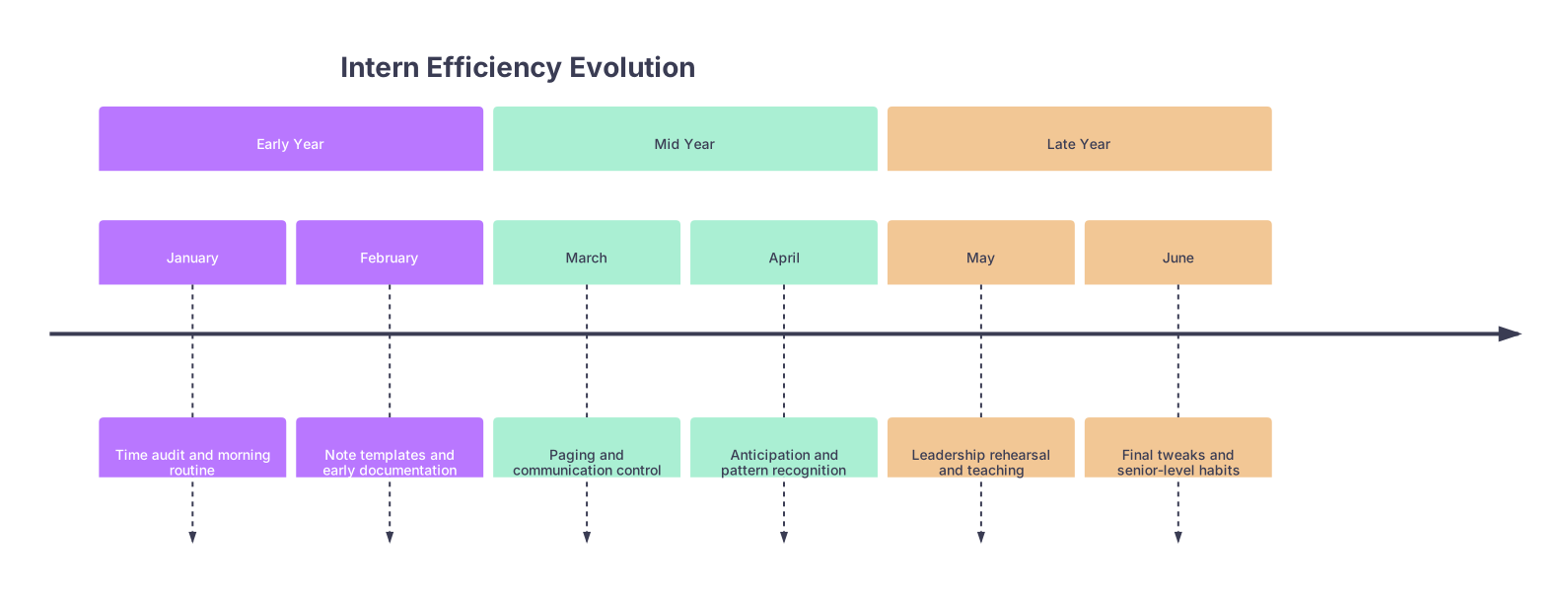
| Period | Event |
|---|---|
| Early Year - January | Time audit and morning routine |
| Early Year - February | Note templates and early documentation |
| Mid Year - March | Paging and communication control |
| Mid Year - April | Anticipation and pattern recognition |
| Late Year - May | Leadership rehearsal and teaching |
| Late Year - June | Final tweaks and senior-level habits |
June: Final Tightening and Senior‑Level Habits
June is not the time to reinvent anything. It is for sharpening and standardizing.
Weeks 1–2: Build Your Senior Playbook
At this point you should assemble a simple, brutally practical “senior playbook” you can open on July 1.
This is not a cute Evernote with inspirational quotes. It is 5–10 pages max with:
- Admission skeletons by chief complaint:
- SOB, abd pain, chest pain, fever, AMS.
- Order set checklists:
- DKA, COPD exacerbation, GI bleed, neutropenic fever.
- Rounding checklist:
- Stepwise approach to each patient (overnight events, exam focus, dispo, teaching point).
- Call‑night quick guides:
- What to do in the first 2 minutes for:
- Hypotension
- New O2 requirement
- Chest pain
- AMS
- What to do in the first 2 minutes for:
| Section Type | Number of Pages | Purpose |
|---|---|---|
| Admission templates | 2 | Fast, consistent H&Ps |
| Order set guides | 2 | Rapid safe management |
| Rounding checklist | 1 | Keep team on track |
| Call-night algorithms | 2 | High-acuity decision support |
| Teaching prompts | 1–2 | Daily student education |
You want something you can glance at in 20 seconds at 3 AM.
Weeks 3–4: Stress‑Test Your System
Last two weeks of June, you should intentionally run days as if you were already the senior.
That means:
- You pre‑round with the list in mind, not just individuals.
- You verbalize plans for the whole team before attending arrives.
- You keep a running mental (or written) list of:
- Who is sickest
- Who is closest to discharge
- Who has unaddressed safety risks
Ask your current senior to:
- Let you handle triaging new admissions (with backup).
- Sit back for half of rounds while you lead.
If they are any good, they will push you on timing:
- “You just spent 8 minutes talking about a stable CHF patient. That has to be 3 minutes in July.”
By June 30 you should:
- Have most notes done by early afternoon on normal days.
- Be finishing your sign‑out with a clear priority structure (sickest to least sick, must‑do tonight vs nice‑to‑do).
- Feel mildly nervous about July, but not clueless.
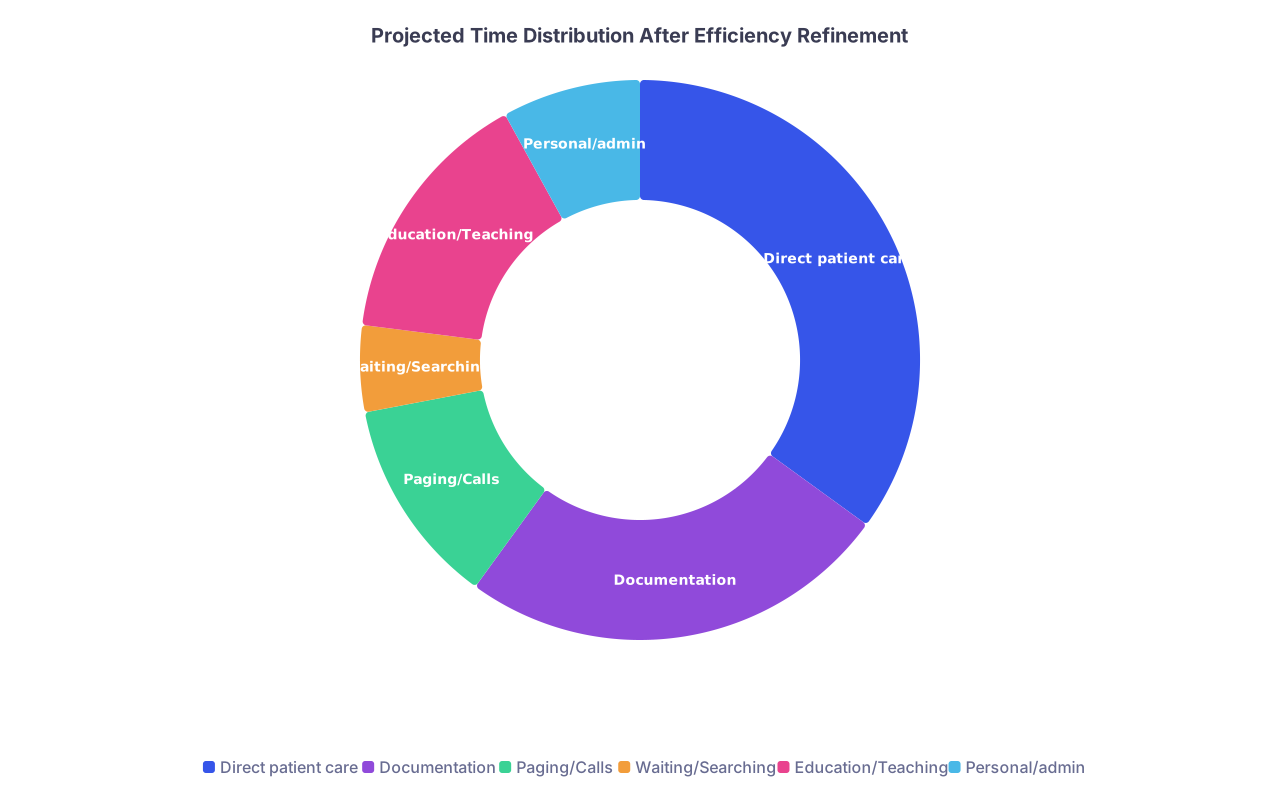
| Category | Value |
|---|---|
| Direct patient care | 35 |
| Documentation | 25 |
| Paging/Calls | 12 |
| Waiting/Searching | 5 |
| Education/Teaching | 15 |
| Personal/admin | 8 |
Your Daily Micro‑Timeline (January–June Version)
Here is the day structure you should be converging toward by late spring.
05:45–07:00: Setup and Prerounds
By this point you should:
- Log in immediately, open:
- EMR
- Patient list
- Note templates
- Rapid chart review:
- New vitals, labs, imaging.
- Identify:
- 1–2 patients who might crash.
- 1–2 potential discharges.
07:00–10:00: Rounds and Live Plan‑Building
During this block you should:
- Document “Today’s Plan” in real time.
- Start or nearly complete notes for straightforward patients.
- Communicate early discharge candidates to:
- Nurses
- Case management
10:00–13:00: Notes, Orders, High‑Value Tasks
This is your primary “deep work” period.
You should:
- Finish majority of progress notes.
- Put in all non‑urgent but important orders.
- Call consultants with a clear one‑liner and specific question.
13:00–16:00: Admissions, Procedures, Cleanup
You should:
- Batch:
- Admissions when possible (obviously not in ED chaos).
- Teaching moments.
- Reassess:
- Sick patients
- Discharge progress
16:00–18:00: Sign‑out Prep and Final Pass
End of day, you should:
- Update sign‑out with:
- Overnight concerns
- Clear contingency plans
- Do a final physical or chart check on:
- Anyone borderline sick
- Anyone likely to deteriorate