
It is 6:30 PM on a Sunday. Your co-intern is packing up after a brutal day shift, hands you the sign-out list, and says, “You’ll be fine. Just call if someone’s trying to die.” The elevator doors close. It hits you: this is your first night float week.
You are not just tired. You are disoriented. Your circadian rhythm, your eating schedule, your social life—none of it is built for 7 nights in a row of pager alarms and cross-cover calls.
This is where a timeline matters. You do not “figure out” night float on the fly. You prepare, adapt, and recover in phases.
Below is a week-by-week, day-by-day guide to get you through your first intern year night float blocks without completely detonating your body and your sanity.
2–3 Weeks Before Your First Night Float Block: Foundation Phase
At this point you should stop pretending night float is just “another rotation” and treat it like a mini-season.
1. Clarify the Logistics (And No, “It’ll Be Fine” Is Not Enough)
You want specifics, not vibes.
Ask your senior or chief:
- Exact shift times
- Common patterns:
- 7 PM–7 AM
- 8 PM–8 AM
- Common patterns:
- Admission caps and cross-cover load
- Which services you cover (e.g., all medicine floors vs just oncology + cards)
- How sign-out works (in person? phone? expected length?)
- Which procedures are realistically yours vs overnight consults
Write this down. Do not rely on “I’ll remember.”
| Item | Common Setup |
|---|---|
| Shift Hours | 7 PM–7 AM or 8 PM–8 AM |
| Nights per Block | 5–7 consecutive nights |
| Weekend Pattern | Sun–Thu or Mon–Fri |
| Coverage | 2–4 floors or entire hospital |
| Team | 1 intern + 1 senior (often) |
2. Sleep Training: Start Shifting Your Clock Gradually
You will not “wing it” and feel okay. That is a lie you tell yourself once.
2 weeks out, start pushing your sleep:
- 10 days before:
- Bed: 1–2 AM
- Wake: 8–9 AM
- 5–7 days before:
- Bed: 2–3 AM
- Wake: 9–10 AM
- 2–3 days before:
- Bed: 3–4 AM
- Wake: 11 AM–12 PM
You are teaching your brain that sleep can happen when it is dark or light. This makes the first two nights much less brutal.
3. Lock In Your “Home Base” Routine
Decide now:
- Where you will sleep (quietest room, blackout curtains, no TV)
- How you will block noise (fan, white noise app, earplugs)
- What you will tell roommates/partners (“No vacuuming, no loud calls between 9 AM and 3 PM. Non-negotiable.”)
3–5 Days Before Night Float Starts: Fine-Tuning Phase
At this point you should start living like someone who works nights, not days.
Day -4 to Day -3: Food, Caffeine, and Gear
Stock your food
Aim for boring but reliable. Night float is not when you experiment with intermittent fasting.- High-protein snacks: Greek yogurt, cheese sticks, nuts, protein bars
- Real meals you can microwave: rice + chicken, pasta, soups
- Electrolyte packets or low-sugar drinks
Set a caffeine strategy
Maximize early shift alertness, protect post-shift sleep.- First caffeine: 7–9 PM
- Last caffeine: 2–3 AM
- None after 3–4 AM if you want any hope of sleeping at 9 AM
Pack your “night float kit”
At this point you should have one bag that lives by the door:- ID, stethoscope, penlight, extra pens
- Snacks, water bottle, small instant coffee packets or tea
- Phone charger + portable battery
- Light jacket (nights get cold, and hospitals overdo AC)
- Small notebook for sign-outs and “to call back” lists

Day -2 to Day -1: Lock the Sleep and Social Boundaries
- Shift your sleep to something like 3–4 AM–11 AM–noon
- Tell family / partner:
- These are my sleep hours. You do not call. You do not schedule anything.
- Set phone to “Do Not Disturb” during sleep hours except for favorites (if needed for emergencies).
Week 1 of Night Float: Adaptation Week (The Hard One)
Assuming a Sunday night start. Adjust if your schedule begins another day—the pattern holds.
Sunday (Night 1): Shock to the System
You should not go into Night 1 already sleep-deprived.
Day (before first shift):
- Wake up late: ideally 11 AM–12 PM
- Nap: 4–6 PM if you can
- Light meal around 6 PM (not greasy; you do not want reflux all night)
6:30–7:00 PM: Arrive Early, Get Your Bearings
- Get sign-out from day team:
- “Sickest three patients?”
- “Anyone at risk for transfer to ICU?”
- “Active consultants I might hear from tonight?”
- Mark:
- DNR/comfort care patients
- Patients with unstable vitals last 24 hours
- Fresh post-op or immediate post-admit patients
Now build your list in a way your 3 AM brain can understand.
7 PM–Midnight: Front-Load the Work
At this point you should:
- See the sickest patients early, document a focused note if needed
- Put in routine orders the day team was too slammed to finish
- Call families back early (not at 1:00 AM if it can be avoided)
Midnight–4 AM: Triage Mode
This is when:
- New admits roll in
- Nurses page more often (restlessness, pain, insomnia, agitation)
Your priorities:
- ABC issues first: chest pain, shortness of breath, hypotension, altered mentation
- Things that avoid disasters: K of 2.9, new low Hgb in a GI bleeder, rapidly increasing O2 needs
- Churn: pain regimens, sleep meds, nausea, PRNs
Create a running list:
- “To see in person” vs “Can manage over phone”
4–7 AM: Close the Loop
- Recheck anyone who worried you at 1–2 AM
- Pre-round on 2–4 highest-risk patients (quick exam + note bullets)
- Start prepping your verbal sign-out to days
Post-shift (7–8 AM Monday):
- Sign out clearly. No rambling:
- “Big events overnight”
- “Labs you ordered but did not see”
- “Family conversations that need follow-up”
Then go home and protect your sleep:
- Dark room, no scrolling in bed
- Small snack + water
- If you use melatonin, keep it low dose (0.5–3 mg) and consistent
Monday–Tuesday (Nights 2–3): Stabilization
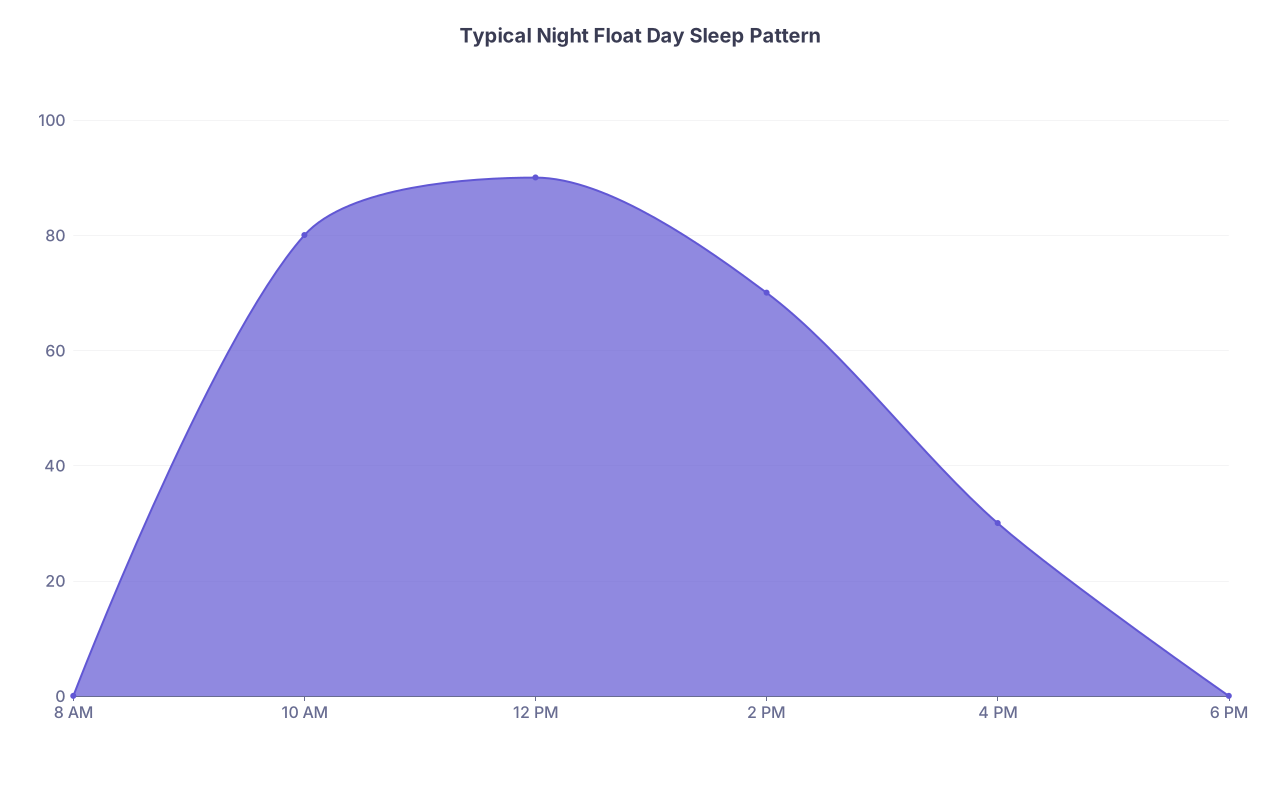
By Night 2, your body knows this is not a fluke. You should start to feel slightly less disoriented—if you rigidly protect your day sleep.
Daytime (post-shift):
Rough pattern:
- 8:30–9 AM: Home, shower, light snack
- 9:30 AM–2 PM: Main sleep block
- 2–3 PM: Wake, small meal
- 3–5 PM: Errands / walk outside / short light exposure
- 5–6 PM: 45–60 min nap if needed
| Category | Value |
|---|---|
| 8 AM | 0 |
| 10 AM | 80 |
| 12 PM | 90 |
| 2 PM | 70 |
| 4 PM | 30 |
| 6 PM | 0 |
Evening (before shift):
- Solid meal before work (avoid purely sugar-heavy meals)
- Caffeine at 7–9 PM
- Enter shift with a simple mental structure:
- 7–10 PM: Sickest patients + pending tasks
- 10 PM–2 AM: Admissions + acute pages
- 2–4 AM: Reassess and cleanup
- 4–7 AM: Stabilize, document, sign-out prep
This pattern keeps your night from blurring into chaos.
Wednesday–Thursday (Nights 4–5): The Slump and How to Survive It
At this point you are tired in a different way. Not “I pulled an all-nighter” tired. More like “jet-lagged for 4 days straight” tired.
These are the danger nights: more cognitive slip-ups, more irritability.
You should simplify your life ruthlessly:
- No major daytime obligations (dentist, DMV, social events)
- Pre-made meals or ready-made cafeteria options
- Very little phone / social media scrolling post-shift
On the job:
- Double-check orders especially in the 3–5 AM window
- Verbal readback anything critical (e.g., KCl replacement, insulin drips)
- Use your senior:
- “I saw this patient, here is my exam, here are 2 options I am considering.”
Friday–Saturday (Nights 6–7): Control the Finish
If your block is 7 nights, the last 1–2 nights are pure willpower. But you are also better at the job now.
At this point you should:
- Anticipate patterns: which floors page for what, which nurses are sharp, which patients always desat at 3 AM
- Preemptively adjust pain, bowel regimens, and sleep meds around 10–11 PM to decrease stupid pages at 2–3 AM
- Be extra kind to nurses. They are just as tired of explaining “No, you cannot have more IV dilaudid” as you are.
Recovery After a 5–7 Night Block: Reset Without Wrecking Yourself
The day your block ends is not “freedom day.” It is a controlled landing. Blow this and you will feel wrecked for a week.
If Your Last Shift Is Friday Night (Off Saturday Morning):
Saturday Morning:
- Sleep a short block: 3–4 hours (9 AM–12 PM)
- Wake up, get outside, sunlight, light physical activity (walk, short workout)
- No more naps after 3–4 PM
Saturday Night:
- Push yourself to stay awake until 9–10 PM
- Normal-size dinner, no caffeine after 3–4 PM
- Aim for a full night sleep (9–10 PM to 6–7 AM)
You will feel off, but by Sunday you are mostly back to a day schedule.
If You Go Straight from Nights to Days (the worst version)
This is common: last night float shift Thursday, then day shift Saturday or Monday.
If one day off in between:
- Follow the “short nap then early bedtime” plan
- Do not sleep 8 hours straight after your last night, or you will be awake all Saturday night
If you flip with no day off (last night Friday, day shift Sunday):
You are in survival mode:
- Post-final-night sleep: 3–4 hours
- Stay up as long as you can
- Early night: 8–9 PM
- Accept that first day shift will feel miserable; your goal is safety, not brilliance
Week-by-Week Across the Month: If You Have Multiple Night Float Weeks
Some programs do 2 weeks straight. Others do a split block (e.g., 1 week NF, 2 weeks days, 1 week NF).
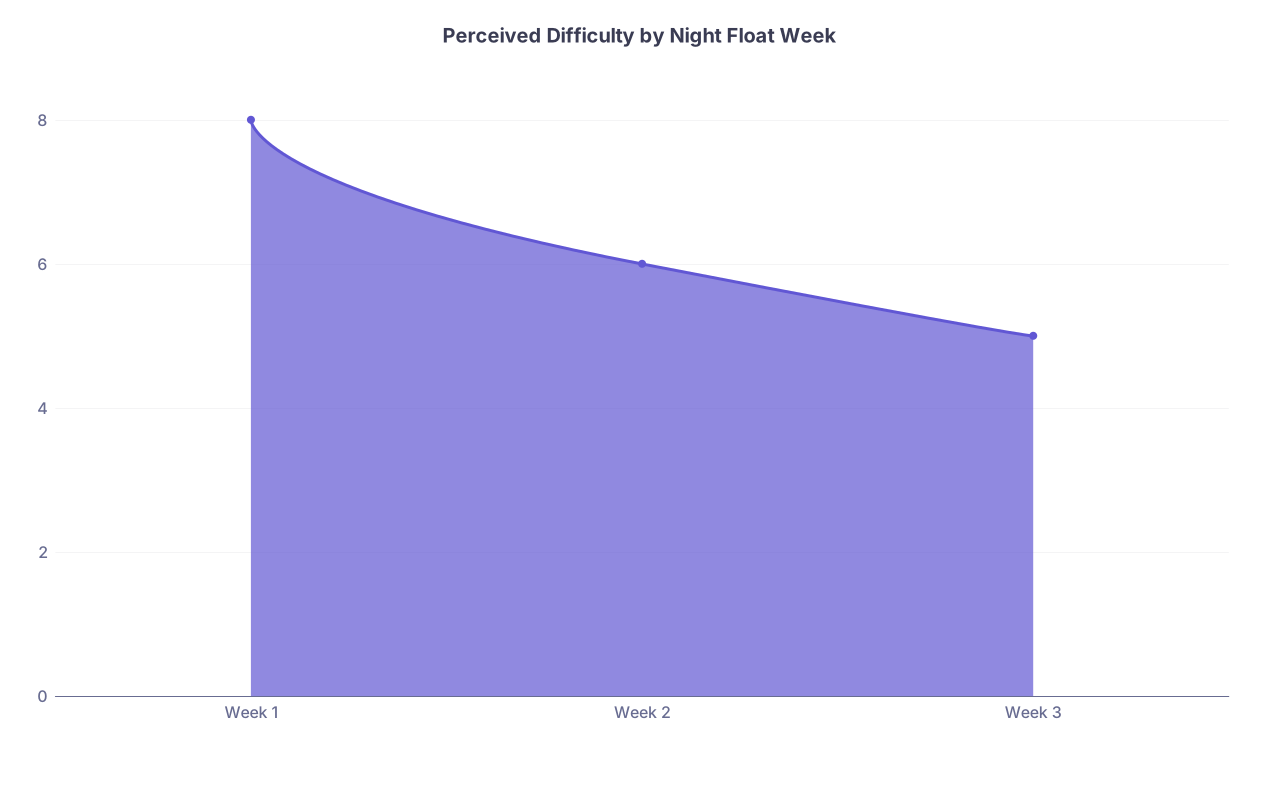
Week 1: Learn the System
At this point you should:
- Know the main frequent-flyer patients on your floors
- Understand ICU thresholds for transfer in your hospital
- Have a mental script for common pages:
- “Patient is hypertensive”
- “No bowel movement in 3 days”
- “Pain is not controlled”
Week 2: Refine and Protect
Your main tasks:
- Guard your sleep even more aggressively. No “I will just get brunch” on post-call days.
- Start adjusting your emotional bandwidth:
- Quick decompression routine post-shift (shower + 10 minutes of brainless TV or music)
- One check-in per week with someone who is not in medicine
You should also use Week 2 to get efficient:
- Templates for cross-cover notes
- Pre-made order sets (or favorite order patterns in the EMR)
- A standard structure for your intern-to-intern sign-outs
| Category | Value |
|---|---|
| Week 1 | 8 |
| Week 2 | 6 |
| Week 3 | 5 |
Clinical Adaptation Timeline: What to Focus on When
This is the part that no one really tells you. Night float is where you quietly become competent.
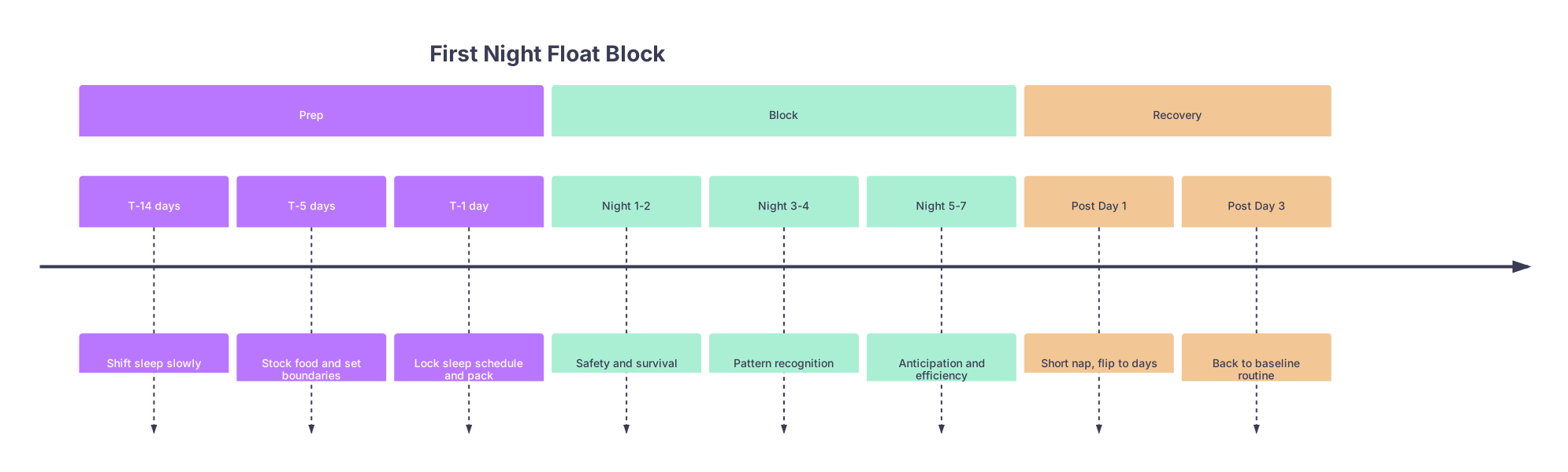
Nights 1–2: Do Not Be a Hero, Be Safe
Primary focus:
- Recognize sick vs not sick
- Call senior early for:
- Persistent hypotension
- New O2 needs
- Chest pain, neuro changes, uncontrolled bleeding
If you are wondering “Should I wake up my senior?” the answer on Nights 1–2 is yes.
Nights 3–4: Pattern Recognition
You should start:
- Differentiating true change in status vs chronic noise
- Recognizing which labs actually matter at 2 AM
- Managing bread-and-butter issues:
- Uncontrolled pain
- Mild hypertensive urgency
- Insomnia / agitation in delirium
Nights 5–7: Strategic Thinking
Now the question becomes:
“How do I prevent 4 AM disasters at 10 PM?”
You will:
- Proactively adjust meds based on trends
- Ask day team to address borderline issues before they sign out (borderline K, borderline oxygenation, tenuous blood pressure)
- Create brief backup plans in your head:
- “If the QTC is prolonged on repeat EKG, I will do X.”
- “If O2 requirement increases to 6 L, I am calling the senior and thinking about higher level of care.”
Emotional and Mental Recovery: What the Timeline Really Feels Like
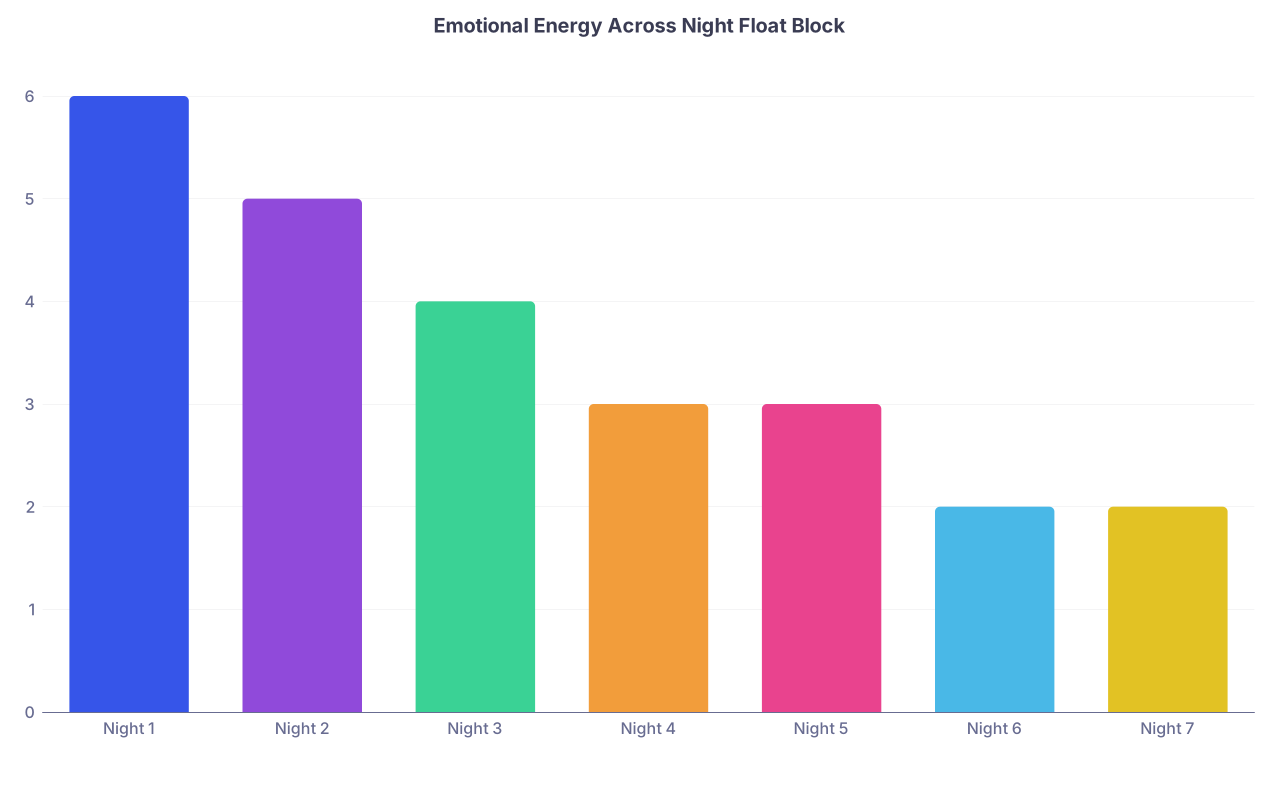
No one is “fine” during their first night float. Here is the rough emotional curve.
| Category | Value |
|---|---|
| Night 1 | 6 |
| Night 2 | 5 |
| Night 3 | 4 |
| Night 4 | 3 |
| Night 5 | 3 |
| Night 6 | 2 |
| Night 7 | 2 |
Early Nights: Anxiety + Adrenaline
- Hypervigilant, over-reading every vital sign
- Mild imposter syndrome: “Who decided I should be the doctor in the building right now?”
You normalize this by:
- Talking to your senior between bursts of chaos
- Debriefing 1–2 scary cases after the shift (briefly—do not spiral)
Middle Nights: Numb + Irritable
- Quick to snap at annoying pages
- Tempted to cut corners, especially at 3–4 AM
You counter this with:
- Simple rules:
- “If vitals are abnormal, I see the patient.”
- “If I am about to do something that feels sketchy, I call my senior.”
Last Nights and After: Flat and Detached
The risk here is you do not process any of it.
Set a boundary with yourself:
- One short reflection after the block:
- What scared you?
- What did you handle well?
- What will you do differently next time?
That is it. You are not writing a memoir. Just making sure you learn.
| Period | Event |
|---|---|
| Prep - T-14 days | Shift sleep slowly |
| Prep - T-5 days | Stock food and set boundaries |
| Prep - T-1 day | Lock sleep schedule and pack |
| Block - Night 1-2 | Safety and survival |
| Block - Night 3-4 | Pattern recognition |
| Block - Night 5-7 | Anticipation and efficiency |
| Recovery - Post Day 1 | Short nap, flip to days |
| Recovery - Post Day 3 | Back to baseline routine |
FAQs
1. How much sleep should I realistically expect during night float?
Aim for 5–7 hours in a consolidated block during the day. Many interns do 4–5 hours right after shift, then a 1–2 hour nap before work. Less than 4 hours consistently and your performance suffers; more than 8 and you will struggle to flip back to days.
2. Should I work out during a night float block or just survive?
Light movement helps more than total hibernation. Short walks, 15–20 minute bodyweight workouts, or stretching in the afternoon are ideal. Heavy lifting or long runs right after shift usually backfire and worsen your fatigue.
3. What do I do if I feel unsafe clinically overnight?
Use your chain of command. Call your senior early, then the on-call attending if needed. Phrase it clearly: “I am the night intern on X service. I am worried this patient is unstable because of A, B, C. Here is what I have done so far. Here is what I am thinking.” You are not bothering them; you are doing your job.
4. Is it better to cluster all my night float weeks together or spread them out?
If you have any choice (many interns do not), clustering 2–3 weeks of night float back-to-back means one prolonged circadian disruption instead of repeated flips. The downside is emotional fatigue. If you are prone to mood issues, spreading them out may be safer, but most residents prefer to “rip the bandage off” and get them done.
Key points:
- Treat night float like a structured season: prep 1–2 weeks ahead, adapt night by night, recover deliberately.
- Protect your sleep window and simplify everything else in your life during the block.
- Early nights prioritize safety and escalation; later nights focus on anticipation and prevention.