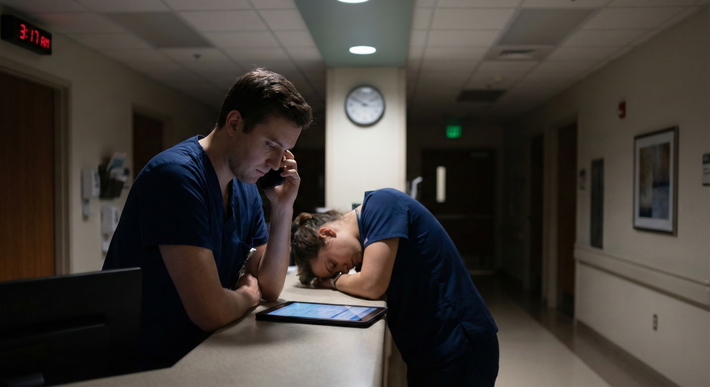
The Transition from Student to Practitioner
The move from medical student to practicing intern is one of the most profound transitions in physician training. Overnight, your name badge changes, your responsibility expands, and patients start calling you “doctor.” This first year of residency—your Medical Internship—is where textbook knowledge collides with real patients, real systems, and real stakes.
It is completely normal for this phase to feel exhilarating and intimidating at the same time. You are learning to function as a physician while still very much in training. You will be tired, challenged, occasionally overwhelmed—and you will also grow faster than at any other point in your medical education.
This guide is designed to help you navigate your first year as an intern with practical Internship Tips, strategies for Career Development, and tools for Self-Care in Medicine. Whether you are starting in internal medicine, surgery, pediatrics, psychiatry, OB/GYN, or another specialty, the principles here are relevant and adaptable to your specific program and rotation.
Understanding the Intern Year in Physician Training
What Is a Medical Internship?
A medical internship (PGY-1, or first postgraduate year) is typically the first year of residency. In some specialties, it is a preliminary or transitional year; in others, it is integrated into a longer training pathway (e.g., internal medicine, pediatrics).
During this year you will:
- Function as the front line for patient care
- Learn to manage acutely ill patients with supervision
- Develop habits and systems that will shape your entire career
- Clarify your professional identity as a physician
Think of internship as the bridge between learner and independent practitioner. You are not expected to know everything—but you are expected to care, to be reliable, to keep learning, and to ask for help when needed.
Core Responsibilities of an Intern
Specific duties vary by specialty and institution, but most interns will:
- Evaluate patients
- Take focused and comprehensive histories
- Perform detailed physical exams
- Formulate concise assessments and differential diagnoses
- Order and interpret tests
- Request labs, imaging, and other diagnostics
- Recognize critical values and escalate concerns promptly
- Develop and implement treatment plans
- Write orders (medications, fluids, tests, consults)
- Adjust management based on evolving clinical status
- Coordinate with nursing and allied health staff
- Present and document
- Present patients clearly on rounds and at handoff
- Write admission notes, progress notes, discharge summaries
- Perform procedures under supervision
- E.g., IVs, arterial blood gases, lumbar punctures, suturing, simple incision and drainage, central lines (depending on specialty and institution)
- Educate patients and families
- Explain diagnoses, plans, and prognosis in understandable language
- Provide discharge instructions and answer questions
- Participate in the healthcare team
- Attend team meetings, sign-out, and multidisciplinary rounds
- Collaborate closely with nurses, pharmacists, therapists, and consultants
You will also spend a significant portion of time navigating electronic health records, prior authorizations, and other administrative tasks. While these can feel tedious, they are integral to real-world practice and patient safety.
What to Expect in Your First Year as an Intern

Common Challenges Interns Face
1. Heavy Workload and Long Hours
Even with duty hour restrictions, internship is physically and mentally demanding. You may work:
- Early mornings (pre-rounding)
- Long day shifts and night shifts
- Weekends and holidays
- Rotations with high patient volumes and rapid turnover
The combination of fatigue, unfamiliar systems, and constant decision-making can be draining. Recognize that the learning curve is steep, especially in the first 3–6 months.
Practical tips:
- Learn your hospital’s workflow early (labs, imaging, consults, pharmacy).
- Create a standard “pre-rounding routine” to streamline mornings.
- Keep a running task list on your patient census; update it in real time.
2. Imposter Syndrome and Performance Anxiety
Almost every new intern wonders: “Did they make a mistake accepting me?” or “What if I harm a patient?” This is imposter syndrome—a mismatch between your internal self-doubt and the reality of your abilities.
You are not alone. Even senior residents and attendings remember feeling this way during their intern year.
Reframe your mindset:
- You are in a supervised learning environment; you are not alone with your patients.
- Uncertainty is not a weakness—unsafe silence is. Asking for help is a mark of professionalism.
- Keep a small log (even in your phone) of “wins” and learning moments to counteract negative self-talk.
3. Navigating Hospital Culture and Hierarchy
Every hospital and residency program has its own culture, unwritten rules, and interpersonal dynamics. Learning how to work effectively within this system is critical.
You will interact with:
- Attending physicians (often with different styles and expectations)
- Senior residents who directly supervise and teach you
- Nurses and advanced practice providers who know the practical realities of patient care
- Allied health professionals and administrative staff who keep the system running
Key principles:
- Be respectful and humble with everyone, regardless of role.
- When in doubt, ask: “What’s the usual process for…?” (consults, transfers, codes, etc.).
- Observe team norms: how people handle disagreements, escalate concerns, and communicate under pressure.
4. Work–Life Integration and Burnout Risk
Finding balance as an intern is challenging. You may:
- Miss major life events
- Struggle to maintain hobbies and relationships
- Feel guilty when not studying or working
Unaddressed, this can contribute to burnout, depression, or anxiety.
Early warning signs:
- Emotional exhaustion and cynicism
- Persistent sleep problems or somatic complaints
- Diminished empathy or irritability with patients and colleagues
Recognizing these signs early and seeking help is a strength, not a failure.
Rewards and Growth During the Intern Year
Despite the stress, your intern year is incredibly rewarding.
Rapid clinical growth
You will progress from hesitating over simple orders to managing complex patients with increasing confidence.Defining your professional identity
You begin to understand what kind of physician you want to be—your values, style, and strengths.Meaningful patient relationships
You will never forget the first patient you resuscitated, the first family you guided through a difficult diagnosis, or the first thank-you note you received.Career development opportunities
You will meet mentors, discover academic and research interests, and begin shaping the trajectory of your career in medicine.
Strategies for Success: Practical Internship Tips
Mastering Time Management in the Hospital
Effective time management is one of the most important skills for interns—and one of the least explicitly taught.
1. Prioritize Ruthlessly Using a System
Develop a mental or written triage system for your daily tasks:
- Stat/urgent (now)
- Unstable vital signs
- Concerning labs or imaging (e.g., hyperkalemia, acute bleed)
- New chest pain, shortness of breath, altered mental status
- Time-sensitive (today)
- Consults, discharges, key documentation
- Medication reconciliation
- Important but not urgent
- Family updates (don’t neglect these!)
- Non-urgent medication changes or follow-ups
- Epic “in-basket” cleanup and teaching points
Many interns use a printed patient list with space for checkboxes and notes; others use a secure digital task manager approved by their institution. The best tool is the one you use consistently.
2. Use Technology Intentionally
Technology can help—or become a distraction. Use:
- Hospital-approved apps (drug references, medical calculators, UpToDate, guidelines)
- Smart phrases/templates in your EMR to speed up common documentation
- Shared teams pages or secure messaging for quick updates and clarifications
Avoid constant non-work phone use during clinical time; it undermines trust and can contribute to errors.
3. Schedule Micro-Breaks
Even 3–5 minutes can reset your focus:
- Step away to stretch and hydrate
- Practice 10 slow breaths before calling a difficult family or presenting to a demanding attending
- Use elevator time to quickly re-center
Protect these small breaks whenever medically safe; they add up over a 12–14 hour day.
Building a Support Network and Seeking Mentorship
1. Identify Formal and Informal Mentors
Early in the year, look for:
- Senior residents whose style you admire
- Attendings who give thoughtful feedback
- Faculty who share career interests (e.g., research, advocacy, medical education, global health)
Ask directly:
“I really appreciate your teaching and perspective. Would you be open to meeting periodically to discuss career development and how I can improve?”
Come to meetings with questions and goals; follow up on their advice.
2. Lean on Peer Support
Your co-interns understand your experience more than anyone else.
- Set up informal debrief dinners or coffee after tough rotations.
- Share study resources and tips for specific services.
- Normalize talking about mistakes, uncertainty, and emotional challenges.
Peer support is one of the strongest buffers against burnout.
3. Use Feedback as a Tool, Not a Judgment
Treat feedback as data to improve performance, not as a personal indictment.
- Ask for feedback early and specifically:
- “What is one thing I can do differently to be more effective on rounds?”
- “How can I improve my sign-outs?”
- Write down key points; revisit them before your next similar situation.
- If feedback feels vague, ask: “Can you give me an example?”
Over time, you will see patterns—both strengths and growth areas—that guide your professional development.
Sharpening Clinical Skills and Medical Knowledge
1. Be Procedurally Proactive
When a procedure is needed:
- Volunteer: “Can I do this under your supervision?”
- Review the steps quickly beforehand (checklists, videos, simulation lab)
- Reflect afterward: What went well? What will you do differently next time?
Keep a simple log of procedures performed; this is often required for credentialing and helps track your progress.
2. Use Just-in-Time Learning
You cannot pre-study everything. Instead:
- Look up key questions immediately relevant to your patients:
- “Best antibiotic regimen for community-acquired pneumonia in this patient with CKD?”
- “When is CT vs ultrasound appropriate for suspected appendicitis?”
- Use reputable sources: UpToDate, institutional guidelines, society recommendations (e.g., AHA, IDSA, ACCP), and core texts.
Teach what you learn to your co-interns or medical students; teaching reinforces retention.
3. Practice Reflective Medicine
After difficult or interesting cases:
- Ask yourself:
- What did I do well?
- What would I change next time?
- Where did system issues impact care?
- Consider keeping a brief reflection journal (de-identified) to track your learning and emotional responses. This helps develop insight, empathy, and resilience.
Self-Care in Medicine: Protecting Your Well-Being as an Intern

Physical Health: Foundations You Can’t Ignore
Sleep
Aim for consistent sleep routines on off days. Use strategies on call blocks:- Darken your room and use white noise.
- Limit caffeine in the last 6 hours before sleep.
- Use short power naps (20–30 minutes) when safe on long shifts.
Nutrition
Hospital food is often fast and carb-heavy. Whenever possible:- Pack high-protein snacks (nuts, yogurt, cheese sticks, hummus).
- Keep a refillable water bottle with you.
- Avoid skipping meals during long shifts; even a 5-minute snack is better than nothing.
Movement
You may not manage full workouts consistently, but:- Take stairs when time allows.
- Do short body-weight routines at home (10–15 minutes).
- Stretch briefly during charting or while waiting for labs.
Mental and Emotional Health
Normalize emotional reactions
You will see suffering, death, and injustice. Feelings of sadness, guilt, or helplessness are human responses, not weaknesses.Use coping tools
- Mindfulness or brief meditation (apps: Headspace, Calm, Insight Timer)
- Journaling after difficult shifts
- Talking with trusted friends, peers, or partners
Seek professional support early
Many programs provide confidential counseling, wellness offices, or employee assistance programs. If you notice persistent mood changes, intrusive memories, or difficulty functioning, reach out. This is an investment in your long-term ability to practice medicine.
Maintaining Relationships and Identity Outside Medicine
Your life is bigger than your role as an intern.
- Schedule regular check-ins with family or friends (even 10–15 minutes by phone).
- Keep at least one small non-medical activity (reading, music, art, sports, faith practices).
- Set expectations with loved ones about your schedule—but also listen to their needs and concerns.
Protecting your sense of self beyond “doctor” will help sustain you throughout your career.
Communication Skills: The Core of Effective Physician Training
Strong communication is as vital as clinical knowledge.
Communicating with Patients and Families
Active Listening
- Sit down when possible; it signals presence and time.
- Don’t interrupt in the first minute—often patients reveal key concerns early.
- Reflect back: “What I’m hearing is that you’re most worried about…”
Use Plain Language
- Replace “myocardial infarction” with “heart attack,” “hypertension” with “high blood pressure.”
- Ask patients to “teach back” key points:
“Just to be sure I explained this clearly, can you tell me in your own words how you’ll take this medication?”
Delivering Difficult News (with supervision early on)
- Prepare: know the facts; anticipate questions.
- Use warning shots (“I’m afraid I have some difficult news to share.”).
- Pause for emotion; don’t rush to fill silence.
- Offer clear next steps and support options.
Communicating Within the Healthcare Team
Be clear and concise
- Use structured communication tools (e.g., SBAR—Situation, Background, Assessment, Recommendation) for calls and sign-outs.
- Example: “This is Dr. Lee, the intern on 4 South. I’m calling about Mr. X in room 410 with new chest pain…”
Respect nursing and allied health expertise
- When a nurse calls with a concern, listen carefully; they may notice subtle changes first.
- Close the loop: share updates when a plan is changed based on their input.
Handle conflict professionally
- Focus on the issue, not the person.
- Use phrases like, “Help me understand…” or “I’m concerned about…”
- Involve senior residents or attendings when needed; you are not expected to handle complex conflicts alone as an intern.
Learning from Those Who’ve Been There
Hearing from peers who’ve completed their intern year can be reassuring and instructive:
- “It’s okay not to know everything. What matters is recognizing what you don’t know and getting help early. Patients are safer when you are honest.”
- “I started each day by asking: ‘Which patients are sickest?’ and ‘What absolutely must get done today?’ That simple habit kept me organized.”
- “The turning point was realizing that self-care is not selfish. When I protected sleep on my golden weekends and asked for help when I was struggling, I became a better intern and a better teammate.”
Use these stories as reminders that growth often comes through discomfort—and that you are part of a long tradition of physicians who learned, made mistakes, and improved over time.
Frequently Asked Questions About the Intern Year
What should I do if I feel overwhelmed during my Medical Internship?
First, recognize that feeling overwhelmed is common, especially in the first months. Then:
- Talk to a trusted senior resident or chief to problem-solve specific challenges (workflow, time management, difficult rotations).
- Use institutional resources: residency program leadership, wellness offices, counseling services.
- Reach out to peers—you’re rarely the only one feeling this way.
- If you experience persistent sadness, anxiety, or thoughts of self-harm, seek urgent professional help. Your health and safety come first.
How can I build a sustainable work–life balance as an intern?
Instead of aiming for perfect “balance,” think about work–life integration:
- Protect at least some time each week for sleep, relationships, and one enjoyable activity.
- Batch tasks (notes, calls, follow-ups) when possible to reduce mental switching.
- Learn to say “no” to optional tasks when your bandwidth is exceeded, and discuss this openly with your senior or attending.
- Use your elective or lighter rotations to recharge and invest in personal life and Career Development activities (research, teaching, quality improvement).
Is it normal to feel like an imposter in my first year of Physician Training?
Yes. Imposter syndrome is almost universal among new interns and residents. To cope:
- Remember that your program selected you because they believe in your potential.
- Normalize these feelings by talking to co-interns and mentors.
- Focus on progress, not perfection—notice small improvements in your skills and confidence.
- Reframe mistakes as learning opportunities, while always prioritizing patient safety and seeking supervision when uncertain.
How can I become a more effective communicator with patients and the medical team?
- Practice structured communication (e.g., SBAR) for handoffs and pages.
- Observe attendings and senior residents you admire; model your style on effective communicators.
- Ask for specific feedback: “How was my presentation?” “Did I explain that clearly to the patient?”
- Use plain language with patients and confirm understanding with teach-back.
- Remember that compassion and clarity are as important as medical accuracy.
What resources can help me thrive during my intern year?
Consider leveraging:
- Clinical resources: UpToDate, institutional guidelines, society protocols, core specialty textbooks.
- Educational tools: Board review question banks, podcasts, case-based learning platforms.
- Professional development: Specialty society membership (often discounted for residents), hospital committees, research mentors.
- Wellness and Self-Care in Medicine: Counseling services, resident support groups, wellness curricula, mindfulness or resilience workshops.
Your first year as an intern is a demanding, formative, and deeply meaningful stage in your Physician Training. You will make mistakes, you will grow, and you will begin to see the long arc of your career taking shape. By prioritizing patient safety, seeking mentorship, investing in self-care, and remaining curious and humble, you will not only survive your intern year—you will build a strong foundation for a fulfilling life in medicine.