The idea that you’ll “find time to study once things calm down” as an intern is a fantasy. Things don’t calm down. You either protect study time on purpose, or it disappears.
Here’s how interns who actually keep up with learning do it while working 60–80 hour weeks.
The Core Rule: Treat Studying Like a Patient on Your List
Interns who succeed don’t “fit in” studying. They assign it, like any other task.
If you remember nothing else, remember this framework:
- Minimum daily dose (non‑negotiable, even on call)
- Medium blocks on lighter days
- Deep work blocks on days off and golden weekends
Most people get this backwards. They try to study for 4 hours on their off days and do nothing on work days. Then they’re constantly “catching up” and always behind.
Aim for:
- 20–40 minutes on brutal days
- 60–90 minutes on normal days
- 2–4 hours of focused time on days off
That’s it. Not glamorous, but it works.
Step 1: Build a Weekly Study Skeleton Around Your Schedule
Stop thinking day by day. Think weekly volume.
Take your schedule for the week and do this on Sunday:
- Mark call days, long days, and short days.
- Choose your non‑negotiable daily study window for each type of day.
- Decide exact start times, not vague “after work.”
Something like this:
| Day | Shift / Call | Study Plan |
|---|---|---|
| Monday | 6a–6p wards | 7:15–7:45p (30 min) |
| Tuesday | 6a–5p clinic | 5:30–6:30p (60 min) |
| Wednesday | 6a–6p wards + notes | 9–9:20p (20 min) |
| Thursday | 6a–3p lighter day | 4–5:15p (75 min) |
| Friday | 6a–6p, pre‑call | 8:30–9p (30 min) |
| Saturday | 24hr call | 2 × 15 min during lulls |
| Sunday | Post‑call off | 2–3p (90 min) + 7–8p (60 min) |
Is this perfect? No. Is it realistic? Yes.
Here’s the trick: schedule energy, not just clock time.
- After a brutal cross-cover night? Just commit to 1–2 small spaced‑repetition blocks.
- On clinic days where you leave at 4? That’s when you push a 60–90 minute block.
You’re not a robot. Don’t plan like one.
Step 2: Use Short, Aggressive, High-Yield Methods
If your “study plan” is “read UpToDate for an hour,” you’ll fail. You don’t have the bandwidth for passive learning.
Interns who improve use:
- Q‑banks (UWorld, AMBOSS, Rosh, TrueLearn depending on specialty)
- Flashcards (Anki / spaced repetition)
- Ultra‑targeted review (short articles / guidelines directly tied to cases)
Think of it like this:
- Brutal days / call days = Anki + 10–15 mixed questions
- Normal days = 20–40 questions + quick review
- Off days = 40–80 questions, plus focused reading on weak topics
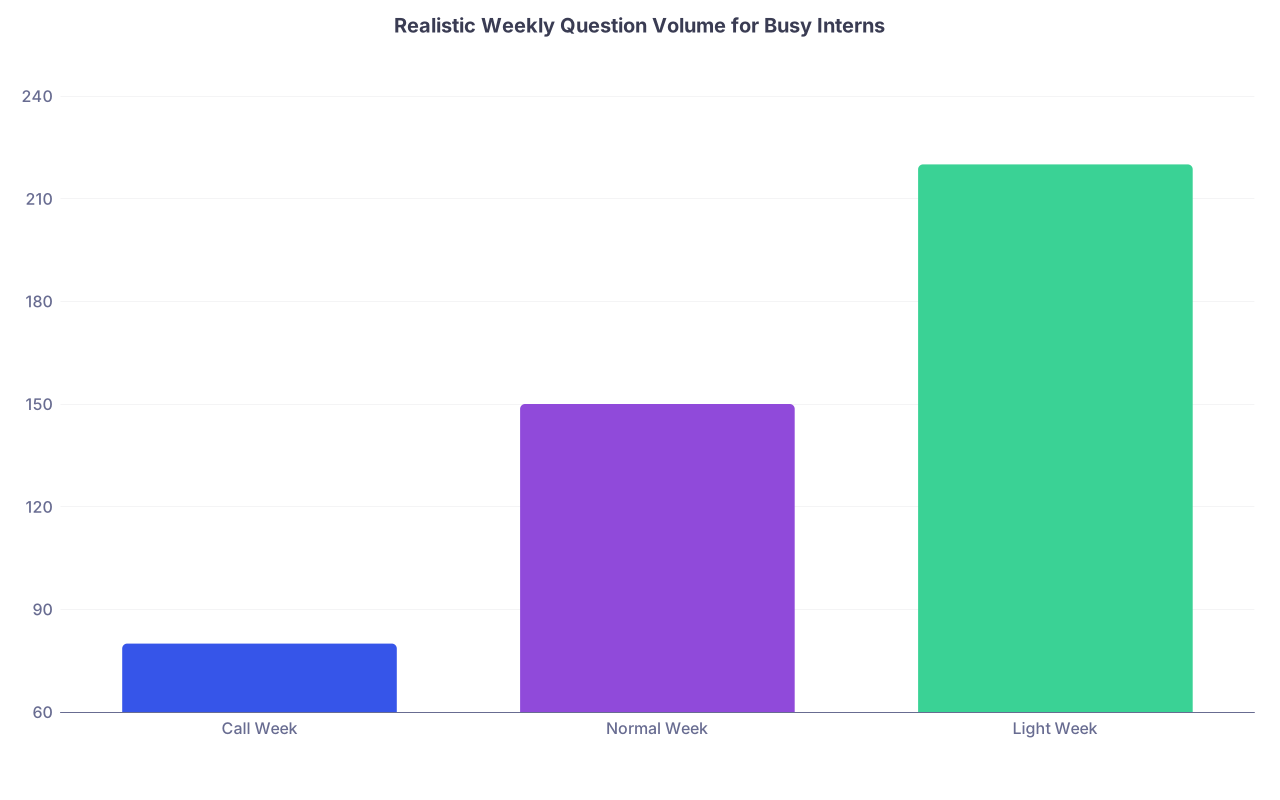
Here’s what that might look like as a weekly volume target:
| Category | Value |
|---|---|
| Call Week | 80 |
| Normal Week | 150 |
| Light Week | 220 |
If you’re trying to do 50 questions a day during a heavy inpatient month, you’ll burn out in 4 days. Don’t copy what someone did on a cush elective as a fourth‑year.
Rule of thumb:
Consistently doing 20–30 questions a day beats heroically doing 80 questions twice a week and then crashing.
Step 3: Exploit Micro‑Time Without Getting Caught in the Scroll
You have more study time than you think. You just lose it to your phone.
Real places I’ve seen interns grind:
- 7 minutes waiting for sign‑out to start
- 5 minutes while the team is still “getting vitals” for rounds
- 10 minutes between clinic patients
- 15 minutes after eating but before falling asleep post‑call
You don’t need a textbook for this. You need pre‑loaded, low‑friction tasks:
- Anki deck already set to “custom study – 20 cards”
- Qbank app set to “5 random questions”
- One saved guideline or brief article
Set up your phone so studying is one tap away and distractions are buried:
- Move Instagram/TikTok to a hidden folder or off your home screen
- Put Anki/Qbank on your dock
- Use app limits for social media after 9 p.m. on work nights
Let me be blunt: scrolling for 30 minutes in your call room at 2 a.m. feels good in the moment and dumb a month later when you’re rusty and anxious.
Step 4: Integrate Studying Into Your Actual Workday
The best interns don’t separate “work learning” and “study learning.” They merge them.
Here’s how:
One teaching point per patient.
For each new admit or interesting case, pick one learning question:- “What are the indications for CT in first‑time seizure?”
- “What are the major mortality‑reducing meds in HFrEF?”
- “What’s the correct steroid dosing for COPD exacerbation?”
Look it up quickly (UpToDate, guideline, pocket resource), write a 1–2 line summary in your note template or a running doc, and later make:
- 1–2 Anki cards, or
- a very short summary in your own words
Turn pages into questions.
When you have to read (for a case, for sign‑out issues), don’t just passively scroll. Convert it into:- “What are the 3 most important facts here?”
- “What would they ask about this on a test or on rounds?”
Use rounds as active retrieval.
Going to present your CHF patient? In the 2 minutes before, quickly quiz yourself:- “What’s their EF?”
- “Are they on all four GDMT pillars?”
- “What’s their discharge follow‑up plan and why?”
This way, a chunk of your “studying” is happening while you’re being paid to be at work, not just when you’re exhausted at home.
Step 5: Protect Sleep First, Then Carve Study Around It
You can’t out‑study sleep deprivation. You just get slower, more emotional, and more forgetful.
You’ll be tempted to cut sleep to study more. That works for about 3 days. Then you’re useless.
Here’s the hierarchy that actually works:
- Non‑negotiable sleep floor (e.g., 6 hours average over a few days)
- Study time
- Everything else (gym, social, TV, chores – harsh but true during hard rotations)
So on a post‑call day:
- Sleep first. Even if it’s 10 a.m.–3 p.m.
- Wake, shower, eat, and do one focused 45–60 minute session at some point.
- Then be done. You don’t need to “make up” 4 lost days in one post‑call.
If you sacrifice all social life and all joy for studying, you’ll also crash. Aim for “good enough and sustainable,” not monastic perfection.
Step 6: Adjust by Rotation – Not Every Month Needs the Same Plan
Trying to study the same way on ICU and outpatient clinic is dumb. The demands are totally different.
Think in rotation‑specific strategies:
- ICU / heavy wards month:
- 20–30 questions/day max
- Lots of case‑based reading directly tied to your patients
- Anki only on days you don’t feel like a zombie
- Clinic / elective month:
- Push question volume (40–80/day depending on exam timeline)
- Work on weak subject areas in a structured way
- Build or mature your flashcard deck
- Night float:
- Study early in the “night” (your morning) at home
- Do micro‑review during slow hours
- Don’t plan intense sessions right when you get home and are wrecked
Set a rotation goal, not just a daily one:
- “By the end of this ICU month, I’ll have done 400–500 critical care questions and made 80–100 flashcards from real patients.”
That way when a few days get blown up by admissions or codes, you don’t panic. You adjust within the month.
Step 7: Use Accountability and Boundaries with Your Team
You’re allowed to care about your exam and long‑term learning. You just have to be smart and not let it interfere with patient care or team function.
Some practical boundaries:
- When the work is done and sign‑out is complete, leave. Don’t linger “to look good” if your seniors are clearly done with you. That lost hour each day is your study time.
- If you’re constantly buried in scut you shouldn’t be doing, speak up once you’ve proven you’re reliable. A simple: “Hey, I’m trying to prep for [shelf/ITE/boards], any chance we can share some of these non‑educational tasks?” goes a long way with good seniors.
- Tell one co‑intern or friend your weekly study target:
- “I’m doing 120 questions this week no matter what.”
- Check in on Sunday. Shame is a powerful motivator when used wisely.
Step 8: Accept Imperfection and Focus Relentlessly on Consistency
Some weeks will be ugly. A disaster admission, a sick family member, a night you just crash face‑down on the couch. That doesn’t mean you “failed the plan.”
Intern years that end well usually look like this:
- 60–80% of days: you hit your minimum plan
- 10–20% of days: you exceed it
- 10–20% of days: it falls apart and you do nothing
That’s fine.
Where people kill themselves is with all‑or‑nothing thinking:
- “I missed 3 days, so I might as well restart next month.”
No. You restart tomorrow with 20 minutes. That’s it.
To make this easier, create two tiers:
- Tier 1 (ideal day): 40–60 questions, review, a bit of reading
- Tier 2 (bare minimum): 10 questions or 15 minutes Anki
On brutal days, hit Tier 2. On others, push Tier 1. Drop the fantasy of the “perfect study day” during residency.
Quick Example: What This Looks Like in Real Life
Say you’re a PGY‑1 on a busy medicine ward, 6a–6p, Q4 call:
On days 1–3 (on‑service, not call):
- Wake 5:15, out the door 5:35. No studying in the morning.
- After work: eat, shower, 7:30–8:00 p.m. → 15–20 mixed questions + brief review.
- In‑hospital: look up 1 key learning point per new admit.
On call day:
- During any lull: 5–10 Anki cards, or 3–5 questions on your phone.
- No heroic plan. Survive and learn from cases.
Post‑call day:
- Sleep 5–6 hours at home.
- Later: one 30–45 minute focused block on topics that came up overnight (sepsis, GI bleed, DKA, etc.).
On a lighter weekend day off:
- Morning: 60–90 minutes, 40–50 questions.
- Evening: 20–30 minutes of review or Anki.
Do that for 3–4 weeks and your knowledge, confidence on rounds, and test scores move. Even though no individual day looked impressive.
FAQs
1. Should I study before or after work as an intern?
If you’re a true morning person and can reliably wake 30–45 minutes earlier, morning study is gold because you’re less fried. But most interns end up stretching into late evenings and sabotaging sleep. My rule:
- Try mornings for 1–2 weeks.
- If you keep hitting snooze, switch to short, defined evening blocks instead of pretending you’re a 4 a.m. person.
2. Is it realistic to study on 24‑hour call?
Yes, but lower the bar. Think micro‑bursts, not “I’ll do 60 questions.” On a 24, aim for:
- 2–3 short micro‑sessions of Anki (5–10 cards)
- A few questions if there’s a lull
- Turning patient cases into learning points you solidify later
If the night is a complete dumpster fire, sleep and safety win. You’re not weak for punting formal studying on those shifts.
3. How many questions per day should an intern aim for?
For most interns:
- On heavy rotations: 20–30/day average
- On normal rotations: 30–50/day
- On light / elective rotations when prepping for an exam: 50–80/day
The real goal is weekly totals that are sustainable, not flexing one massive day of 100 questions.
4. What if my seniors don’t care about education and just push work?
That happens. You can still:
- Learn from your patients by consciously pulling 1–2 teaching points per day
- Study after work once tasks are complete; don’t volunteer for unneeded extras routinely
- Use co‑interns, residents from other teams, or online resources as your “education system”
You’re not powerless, but you’ll have to be more self‑directed.
5. Is Anki actually worth it during intern year?
If you already used Anki and have a system, yes. It’s perfect for 5–10 minute gaps. If you’ve never touched it and you’re drowning as a new intern, don’t start with elaborate deck building. Use:
- A high‑yield premade deck
- Very simple, case‑based cards you make yourself
The test is simple: if a tool helps you regularly review what you want to remember, it’s worth it. If you’re just collecting cards like Pokémon, it’s not.
6. How do I avoid burning out while trying to study “on top” of long hours?
Three things:
- Protect sleep first – nothing works if you’re chronically wrecked.
- Make your minimum study load tiny but sacred (10 questions or 10 minutes counts).
- Keep some small joy in your week: a dinner with a friend, a walk, a workout. If your life is only work + study + collapse, you’ll quit the plan within a month.
Now, do this: open your schedule for the upcoming week and block one specific 30‑minute study window on each non‑call day. Put it in your calendar like a page-out. That’s the first real step from “hoping to study” to actually doing it.