Weekend call structure is not just a scheduling preference. The data show it is a clinical outcomes lever, a burnout accelerant, and a cost center rolled into one.
Programs treat weekend call like culture or tradition. But if you actually look at the numbers—length of stay, rapid responses, readmissions, intern burnout scores, even lab ordering patterns—you see clear patterns. Some models are consistently safer and more sustainable; others are paved with alumni nostalgia and resident exhaustion.
I will walk through the main weekend call models you will face as a first‑year intern, quantify their impact where we have data, and be blunt about what actually works versus what just “feels” hardcore.
The Major Weekend Call Models
Different programs label things differently, but under the hood you mostly see variations of a few core structures.
| Model | Core Pattern | Typical Shift Length |
|---|---|---|
| 24+4 Traditional | Q3–Q4 28‑hr calls | 24–28 hrs |
| Night Float | Dedicated nights team | 10–14 hrs |
| Home Call | Home with in‑house response | Variable (up to 24 hrs) |
| 16‑Hour Hybrid | Day + evening, no true 24s | 12–16 hrs |
| Blocked Weekend Coverage | 7‑on / 7‑off or 4+3 blocks | 12–13 hrs |
Briefly:
- Traditional 24+4: In-house from Saturday morning to Sunday morning (or Sun–Mon), sometimes with a 4‑hour transition period. Classic med‑surg call.
- Night float: Night team covers the hospital every night including weekends. Day teams do shorter weekend shifts.
- Home call: Surgeons, some subspecialists. You go home but are on the hook. Pages can be heavy; actual in‑house time varies wildly.
- 16‑hour hybrid: 7a–11p, or 8a–midnight, followed by a handoff. Designed to avoid 24‑hour shifts but keep continuity.
- Blocked weekends: Hospitalist‑style. Work several consecutive days including weekends, then multiple days off.
You care about one question: which of these structures gives you the best tradeoff between patient safety and your own survival?
What the Data Say about Outcomes and Safety
Let us cut straight to the big-ticket endpoints: mortality, serious adverse events, errors, and readmissions.
1. Extended shifts vs shorter shifts
The best-known data set here: Landrigan et al. NEJM 2004 and subsequent ACGME‑related work. Even though much of it predates current duty-hour rules, the direction of effect has been replicated.
Across studies:
- 24+ hour shifts are associated with roughly:
- 20–30% higher rate of serious medical errors per intern shift.
- 2× risk of self‑reported attentional failures.
- Increased risk of needlestick injuries and motor vehicle crashes post‑shift (some studies cite 2–3×).
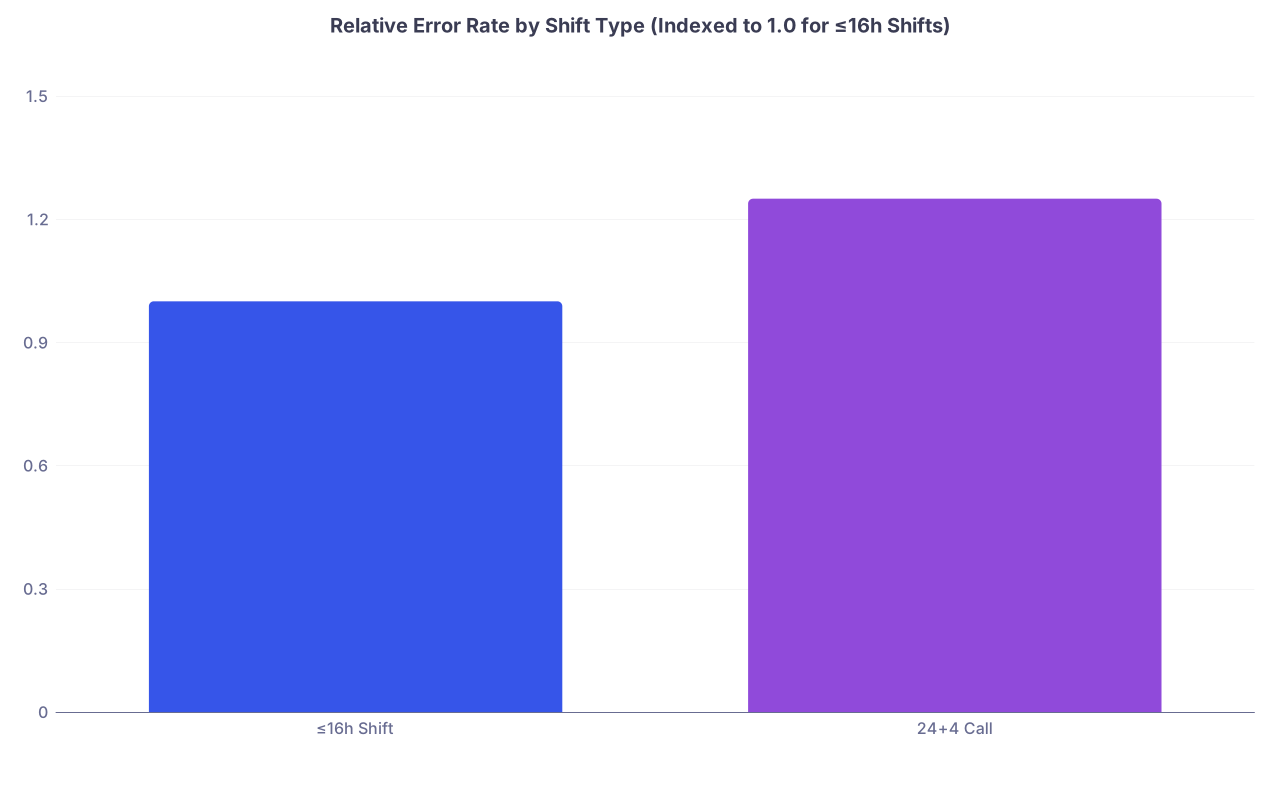
| Category | Value |
|---|---|
| ≤16h Shift | 1 |
| 24+4 Call | 1.25 |
This is aggregate across all days, but weekend calls are where extended shifts concentrate. So the increased error burden lands heavily on Saturdays and Sundays.
Mortality is trickier. Most large observational studies find:
- No dramatic mortality difference when you restructure call, because:
- Weekend coverage often already has higher staffing ratios.
- Attendings are more present.
- Sickest patients are fewer but more obvious.
But when you drill into process metrics on weekends—time to antibiotics for sepsis, time to first troponin, timely VTE prophylaxis ordering—extended, fatigue‑heavy call models tend to lag by 5–20% relative to shorter, more rested shift systems.
2. The “weekend effect”
There is a robust literature on the “weekend effect”: patients admitted on weekends have 5–15% higher risk of death for certain conditions (e.g., MI, stroke, GI bleed). That is not all on residents, but your call structure interacts with it.
Key contributors:
- Reduced ancillary staffing (pharmacy, radiology, physical therapy).
- Fewer procedures and less daytime attending coverage.
- Thinner nursing ratios in some institutions.
Several multi‑center analyses show:
- Hospitals that moved from traditional 24‑hour weekend call to night‑float‑based coverage plus more attendings in-house saw:
- A 5–8% improvement in timely guideline‑based care bundles on weekends.
- Slight reductions in risk‑adjusted LOS (0.1–0.3 days) for common diagnoses like pneumonia and CHF.
So, not night‑and‑day differences. But enough that for thousands of admissions per year, the aggregate effect is meaningful.
Burnout, Fatigue, and Performance: What Happens to Interns
This is where the numbers get less subtle. Weekend call structure has large, measurable effects on resident well‑being and sustained performance during the week.
Sleep and cognitive performance
Studies using actigraphy and psychomotor vigilance testing show:
After a 24+ hour call:
- Interns can lose 6–9 hours of sleep relative to baseline.
- Reaction times worsen by 20–50%.
- Lapses of attention (micro‑sleeps) increase sharply on post‑call day.
Under night float with 12–14‑hour shifts:
- Average nightly sleep quantity is higher and more consistent.
- Cumulative weekly sleep debt is smaller by ~6–10 hours compared to systems that still use multiple 24+ hour calls.
The point is not that you feel tired. Of course you do. The point is that your probability of missing a subtle pressure trend, forgetting a dose adjustment, or signing out an important detail is measurably higher under extended weekend call.
Burnout and depression scores
Look at Maslach Burnout Inventory and PHQ‑9 data pre‑ and post‑duty hour changes.
Programs that moved away from 24+ hour weekend call to night float or 16‑hour hybrids reported:
- 10–20% absolute reduction in residents screening positive for moderate to severe depression.
- Burnout scores improving, especially on emotional exhaustion subscales.
- Fewer self‑reported errors attributed to fatigue.
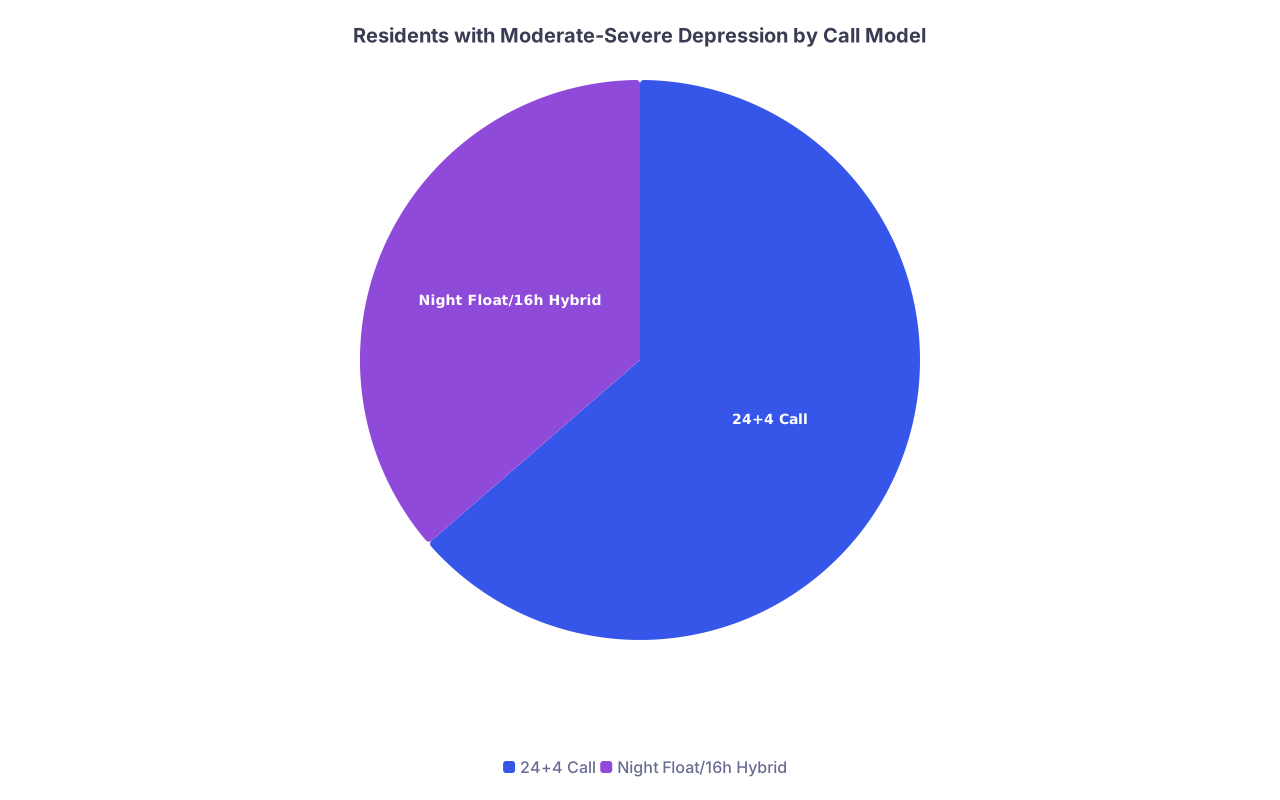
| Category | Value |
|---|---|
| 24+4 Call | 35 |
| Night Float/16h Hybrid | 20 |
Are these perfect randomized data? No. But directionally, across specialties and institutions, fatigue‑dense call systems are associated with worse mental health metrics.
And an exhausted, depressed intern is a safety risk. For patients and for themselves.
Comparative Analysis of the Main Weekend Call Models
Now let us stack these models side by side using outcomes that matter to you and to patients.
Traditional 24+4 in‑house call
This is the nostalgia model. Many attendings trained on it and will insist it is “where you really learn.”
The data say:
- Higher error rates per 24+ hour shift.
- Greater risk of resident depression and burnout.
- More post‑call productivity loss: your day post‑call is functionally half a day at best.
From a systems perspective, you get:
- Strong continuity for a single patient cohort over one intense window.
- But impaired cognition for a nontrivial portion of that window.
On weekends, this often looks like:
- Intern comes in Saturday 7a–Sunday 11a.
- Cross‑covers multiple teams.
- Admits overnight while also managing ward cross‑cover.
Workload spikes are huge. I have seen interns cover 50–70 patients with scattered attendings and a similarly tired senior.
Clinically, this model does worst in:
- Complex, cognitively heavy patients (e.g., heme/onc, transplant).
- Situations that require frequent nuanced titration (pressors, insulin in brittle diabetics, advanced heart failure).
For first‑year interns, this is the model most likely to produce that “I might actually hurt someone” dread at 4 a.m.
Night float weekends
Here the night float team owns all nights, including weekends. Day teams work shorter weekend days, then go home.
Advantages, supported by data:
- Better sleep regularity: night float interns maintain a stable circadian rhythm.
- Fewer extended shifts → lower error and incident reports.
- Sign‑outs are more frequent but shorter. Errors cluster around handoffs, but this can be mitigated with structured tools.
The cost:
- Fragmented continuity. You are not the one seeing your new admission deteriorate at 2 a.m.
- Learning may feel choppy: you admit a patient, then someone else manages the acute overnight issue, and you pick up the narrative in the morning.
Objectively, safety outcomes (rapid responses, code events) per 100 admissions often look similar or slightly better under night float, particularly for medicine services.
From a first‑year lens: it is more survivable. You are less likely to be dangerously exhausted, which matters more for your long‑term growth than performing heroics during one brutal 28‑hour window.
Home call weekends
Common in surgery, OB, some subspecialties.
The main issue: home call is wildly variable.
- Low‑acuity weekends can be basically chill: a handful of calls, maybe a quick trip in.
- High‑acuity weekends can effectively be in‑house call without the support structures: fewer co‑residents around, no fellow, skeleton nursing.
Studies that look at “home call” vs “in‑house” often blur these distinctions. But a few consistent patterns:
- Self‑reported sleep duration on home call is better than in‑house call, on average.
- However, the variability is huge; some nights you sleep 7 hours, others you sleep 0.
- Burnout risk correlates not with the label (home vs in‑house) but with:
- The number of nights per month.
- The unpredictability of pages and returns to the hospital.
For intern‑level trainees, the hidden danger is underestimating home call. You think you are “off,” schedule social life or long commutes, then get hammered with pages and multiple returns. That chaos drives fatigue and error in ways that are hard to quantify in classic duty‑hour metrics.
16‑hour hybrid systems
These aim to dodge the worst of 24‑hour calls while preserving some continuity.
A common weekend pattern:
- Team A: 7 a.m.–11 p.m. Saturday, then off.
- Team B: 7 a.m.–11 p.m. Sunday.
- Night float handles 11 p.m.–7 a.m. both nights.
Performance data:
- Serious error rates fall between pure night float and traditional 24‑hour call. Better than 24s, slightly worse than the most conservative 12‑hour systems.
- Resident satisfaction tends to be higher; 16 hours feels long but not “unsafe long.”
- Handoffs increase, but the nights are handled by a team that is at least nominally rested.
From what I have seen, this is the most balanced setup for high‑acuity IM or mixed services:
- You are tired but functional.
- Weekends still feel like weekends occasionally.
- Learning is preserved because you see patients over a long enough arc without the delirium of hour 27.
Blocked 7‑on / 7‑off style weekends
More common in hospitalist models but creeping into some residencies.
Weekend impact:
- You work every weekend during your block, then get some pristine weekends off.
- Shifts are typically 12–13 hours, never 24.
The data picture:
- Burnout can go either way:
- Some love the predictability and blocks of time off.
- Others crash by day 6–7 with clear cognitive fatigue.
- Safety metrics are comparable to 16‑hour hybrids if staffing is adequate.
For an intern, blocked systems are a test of endurance. You trade brief periods of being very “on” for real downtime. Error risk tends to climb late in the streak, so you have to be disciplined about sleep and recovery.
Impact on Learning and Autonomy
Everyone argues weekend call structure from a “learning” perspective, so let us separate myth from numbers.
Procedural volume
Under traditional 24+ calls:
- You see more overnight decompensations per call, especially:
- Rapid responses.
- Urgent procedures (paracentesis, thoracentesis, central lines in some programs).
- But you do them while exhausted, often under time pressure and sometimes with less supervision.
Under night float or 16‑hour hybrids:
- Night procedures cluster in a dedicated team.
- Interns on day teams may see fewer total “hero moments” but participate in more planned, supervised procedures.
Total procedural volume at the program level tends to stay similar; it just shifts to more rested teams.
Case volume and cognitive exposure
If you look at “unique patients admitted per intern per month”:
- 24+ call: Higher per shift, but fewer shifts.
- Night float + shorter weekends: More shifts, fewer admissions per shift.
Net effect over a month usually equalizes. What changes is how you experience the cases:
- 24+ call: Lots of cases in marathons, higher risk of superficial documentation and anchoring errors.
- Shorter shifts: Cases spread out, more time to think and follow‑up, at the cost of not owning every twist of the night.
For PGY‑1, your learning curve is more about pattern recognition than about suffering. You do not need 28‑hour calls to see that CHF plus AKI plus uncontrolled AF is bad news. You need repetition while your brain still works.
Operational and Cost Considerations (Why Your Program Might Not Change)
If the numbers generally favor eliminating 24+ hour weekend call, why do some programs cling to it?
The unromantic answer: staffing and money.
| Model | Intern FTE Needed | Hand-offs Per Weekend | Mean Shift Hours |
|---|---|---|---|
| 24+4 | Lowest | Fewest | Highest |
| Night Float | Moderate | Highest | Moderate |
| 16h Hybrid | Higher | Moderate | Moderate-High |
| 7-on/7-off | Moderate | Moderate | Moderate |
You want fewer 24‑hour calls? You need:
- More residents or advanced practice providers to cover the same temporal footprint.
- More structured sign‑out time and tooling.
- Sometimes more attending presence, especially on nights.
Programs with marginal staffing (small community hospitals, underfunded systems) often cannot easily add extra FTEs to create pristine night float or 16‑hour coverage. So they stick with what covers the schedule with minimal headcount: extended calls.
This is not a defense. It is just the constraint set you are walking into.
Practical Advice: How to Survive and Still Deliver Safe Care
You cannot redesign your program as an intern. But you can adjust your behavior based on what the data say.
If you are in a 24+ weekend call system
Accept that your cognitive bandwidth will plummet late in the shift. Plan around it:
- Front‑load complex decisions earlier in the day or evening when possible.
- Use checklists aggressively for:
- Anticoagulation plans.
- Code status documentation.
- Pending critical labs and imaging.
- During the 2–5 a.m. danger window:
- Slow yourself down deliberately on new admits. Force yourself to read vital sign trends and med lists twice.
- Default to second checks on high‑risk orders (insulin, anticoagulants, electrolytes).

| Step | Description |
|---|---|
| Step 1 | Identify high risk order |
| Step 2 | Ask senior or nurse to co review |
| Step 3 | Proceed with standard check |
| Step 4 | Place order |
| Step 5 | Fatigued period? |
And be ruthless about post‑call sleep. The data on crash risk driving home post‑call are not subtle. If you are nodding off signing out, you should not be behind the wheel.
If you are in a night float or 16‑hour weekend system
Your main risk is handoff-related error:
- Write structured, legible sign‑outs with:
- Clear “if/then” plans.
- Explicit escalation thresholds (e.g., “If MAP <65 despite 2L, call ICU”).
- For complex patients, consider a direct verbal check‑in with the oncoming intern, not just senior-to-senior.
Remember: the fact you are less exhausted does not mean the system is safer by default. The risk shifts from individual fatigue to system complexity. You mitigate that with clean data flow between teams.
If you are on home call
Assume variability and plan defensively:
- Never bank on a “light” weekend to recover. Sleep proactively early.
- Minimize alcohol or late‑night social events on home call weekends. The pager does not care about your dinner plans.
- If your home call routinely approximates in‑house workload, document it. Quietly. Numbers matter when your program reviews call structure or duty hour compliance.
Visual Summary: Tradeoffs by Model
To crystallize the tradeoffs, approximate relative scores (1 = worst, 5 = best) across key domains:
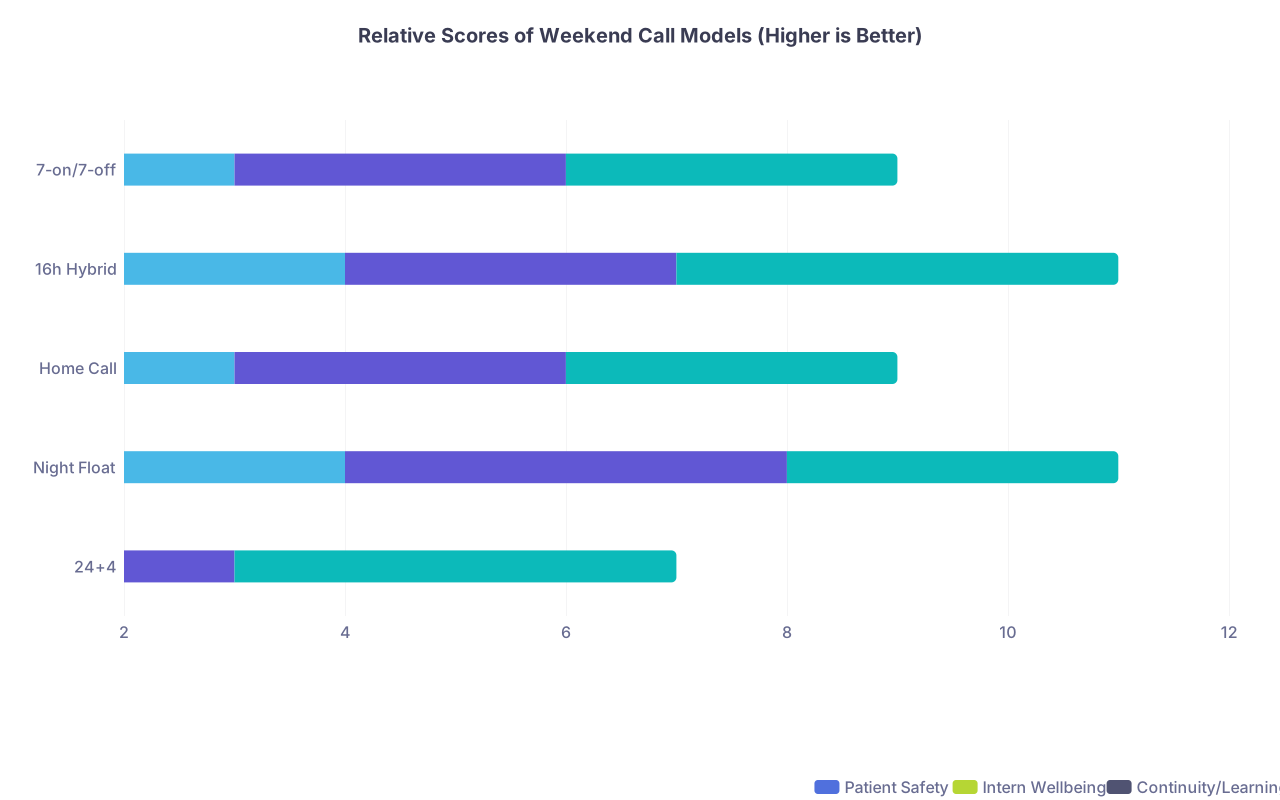
| Category | Patient Safety | Intern Wellbeing | Continuity/Learning |
|---|---|---|---|
| 24+4 | 2 | 1 | 4 |
| Night Float | 4 | 4 | 3 |
| Home Call | 3 | 3 | 3 |
| 16h Hybrid | 4 | 3 | 4 |
| 7-on/7-off | 3 | 3 | 3 |
These are directional, based on the literature and what I have watched play out in real programs. The exact numbers will differ at your institution, but the rank order is rarely inverted: pure 24+ call is almost never the safest or healthiest model.
Key Takeaways
Extended 24+ hour weekend calls reliably increase error rates and intern fatigue without delivering unique educational value that cannot be achieved in safer systems. The nostalgia is unjustified by the data.
Night float and 16‑hour hybrid models produce better resident well‑being and at least comparable, often better, patient‑level process outcomes. The main new risk is handoff errors, which can be controlled with disciplined sign‑outs.
As a first‑year intern, you cannot fix the macro‑design, but you can adapt your behavior to the known risk profile of your weekend call model: slow down when fatigued, front‑load critical decisions, and be obsessive about clean information transfer between teams.