
The fastest way to destroy a clinic day as an intern is to mismanage medication refill requests.
You think documentation slows you down? No. It is the invisible refill workflow that will quietly eat your time, your sanity, and—if you are careless—your license.
Let me walk you through the mistakes that turn “just a few refills” into a 90‑minute black hole at 4:45 p.m.
1. Treating Refill Requests as Low‑Risk, Low‑Priority “Admin Work”
This is the first and most dangerous error: assuming refills are trivial.
They are not. Every refill is a mini-clinical decision with liability attached. When you treat them like “paperwork,” you do all of the following:
- Click “approve” without reviewing the chart
- Refill controlled substances without checking dates, PDMP, or prior agreements
- Extend high‑risk meds (warfarin, DOACs, insulin, antipsychotics) without verifying labs or follow‑up
- Miss red flags buried in pharmacy notes (“patient reports new dizziness and falls”, “BP 92/54 at home”)
Here is what then happens:
- You get a safety report after a patient falls because you reflex-refilled a sedative.
- Your attending asks why you renewed lisinopril in a patient whose creatinine doubled two months ago.
- Pharmacy calls back three times to clarify half‑baked orders you pushed through in a rush.
Refills are not clerical. They are patient care decisions with fewer guardrails and less context.
Avoid this mistake by using a simple internal rule:
If you would not be comfortable defending the refill in front of your program director after a bad outcome, you should not be clicking “approve” without more information.
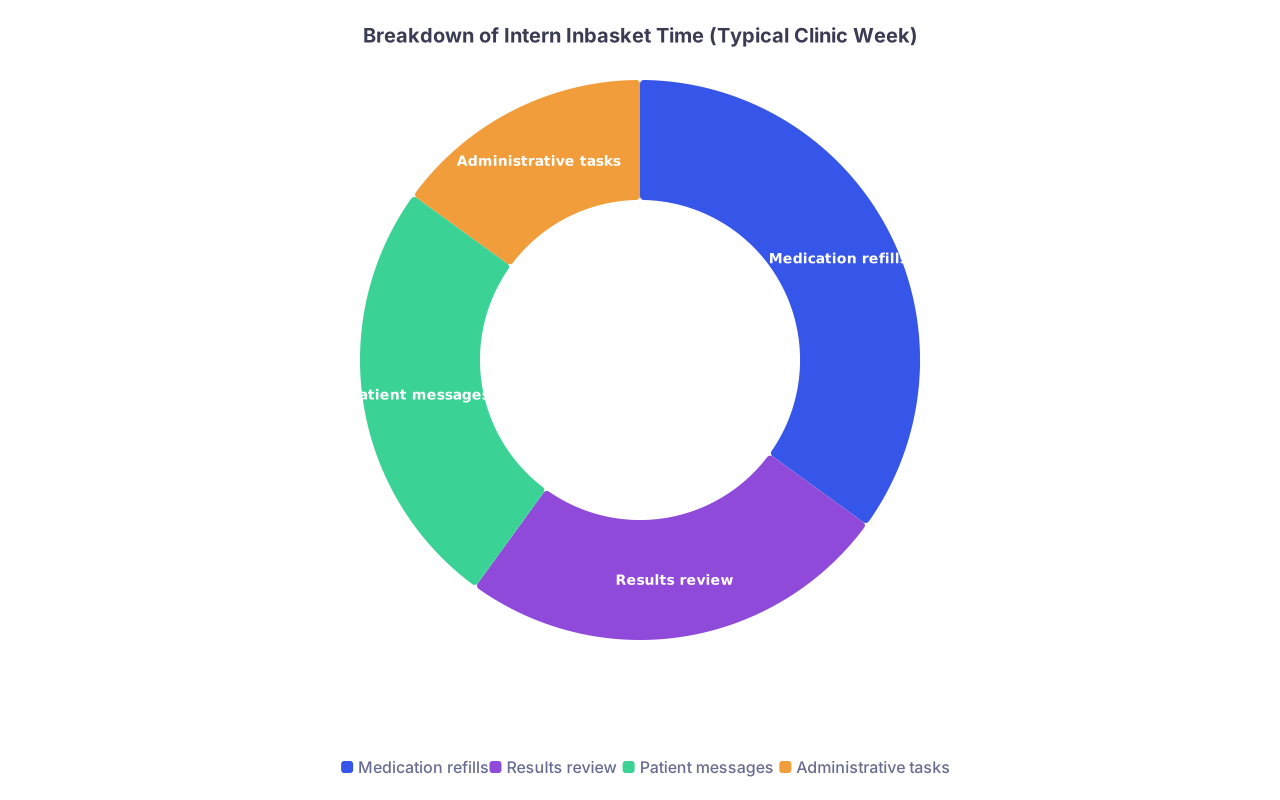
| Category | Value |
|---|---|
| Medication refills | 35 |
| Results review | 25 |
| Patient messages | 25 |
| Administrative tasks | 15 |
That 35%? That is what silently kills your clinic productivity if you are careless.
2. Opening Refill Messages One by One Without a System
The second big mistake is “random clicking.” You sit down at your workstation between patients, see 17 refill messages, and open them in whatever order catches your eye. No batching. No triage. No pattern.
That looks like this:
- Open one refill → realize you need to review labs → get distracted
- Get called into a room → come back → open a different refill → now a result pops in → you pivot
- Repeat this loop 10 times → nothing fully done, mental context switching all day
The cognitive switching cost is brutal. You feel busy the entire day but your inbasket never gets under control.
The better approach is a deliberate workflow.
For example:
First pass (triage view only, no order signing yet):
- Scan all refills by subject line/med
- Flag time‑sensitive meds (insulin, anticoagulants, anti‑rejection, seizure meds)
- Identify duplicates (same pharmacy sending the same request twice)
- Separate controlled substances from routine refills
Second pass (batch by type):
- Do all low‑risk, chronic stable meds with clear follow‑up in one go
- Then all controlled substances (slower, more careful, PDMP check, contract review)
- Then anything that requires patient contact or clarification
Third pass (communication cleanup):
- Send MyChart messages or call‑back instructions
- Document any refusals with explicit rationale
You do not need a fancy template to do this. You just need to stop clicking in random order.
3. Approving Refills Without Verifying the “Big Four”
The laziest and most dangerous move: approving a refill after glancing only at the medication name. No visit dates. No labs. No vitals. No diagnosis verification.
This is malpractice by omission.
For any non-trivial medication, you should at least check the Big Four:
Last visit date
- When was this patient actually seen?
- Was it with you, your clinic, or some other specialty?
- Are they overdue by months or years?
Relevant labs
- ACE inhibitor / ARB / diuretic: creatinine, potassium
- Statin: LFTs if there were prior issues, or at least a sense of recent lipid panel
- DOAC / warfarin: renal function, INR where appropriate
- Metformin: eGFR
- Antipsychotics / mood stabilizers: CMP, CBC, lithium level, etc.
Recent vitals
- Blood pressure trend for antihypertensives
- Weight for diabetes meds or diuretics
- Heart rate and rhythm issues for beta‑blockers, antiarrhythmics
Follow‑up arrangements
- Upcoming visit scheduled?
- Previously documented “must be seen before next refill”?
- Prior no‑shows?
If even one of those four is concerning, you do not blindly refill. You do one of:
- Limited or bridge supply (e.g., 30 days, no refills)
- Refill only after scheduling visit or labs
- Decline with clear rationale and instructions (“Needs appointment before refills due to X”)
Let me be explicit: “I was busy” is not a defense when a patient has a hyperkalemic arrest on a med you reflex‑refilled.

4. Ignoring High‑Risk Medication Categories
Another rookie error: treating all meds as equal. They are not.
Some classes demand extra friction. If you are refilling them at the same speed as vitamin D, you are doing it wrong.
| Category | Examples |
|---|---|
| Anticoagulants | Warfarin, Apixaban, Rivaroxaban |
| Insulin & Diabetes | Basal/bolus insulins, SGLT2i |
| Psychotropics | Antipsychotics, Lithium, Clozapine |
| Controlled Substances | Opioids, Benzos, Stimulants |
| Cardiac risk meds | Amiodarone, Digoxin, Sotalol |
Mistake pattern I see a lot in interns:
- Refill warfarin with no recent INR
- Extend apixaban for a patient who has not been seen in over a year
- Renew seroquel 400 mg in a patient with no metabolic labs in 18 months
- Click through 3 months of oxycodone with zero PDMP check because the pharmacy auto‑faxed you
You do not need to redesign the clinic’s policy. But you must protect yourself with personal rules. Something like:
Anticoagulants:
- Must have recent kidney function for DOACs.
- Warfarin refills only with documented INR follow‑up, or short supply + written INR plan.
Insulin and SGLT2i/GLP‑1:
- Check last A1c, creatinine, recent hypoglycemia episodes, ED visits.
Antipsychotics / Lithium / Clozapine:
- Confirm who is managing psychiatry.
- If PCP is just “continuing,” insist on recent labs or specialist follow‑up.
Controlled substances:
- PDMP check. Full stop.
- Confirm last visit and any pain contract / visit frequency expectations.
- Be very wary of “lost meds” stories arriving as refill requests.
If your clinic has no formal protocol, you still follow your own internal standard. You are the one signing the order. Your name is on that chart.
5. Letting Pharmacy and Patients Dictate Urgency
Here is a subtle but destructive mistake: allowing whoever yells loudest (pharmacy fax, portal message, front desk) to define which refills are urgent.
Examples you will see:
- Pharmacy sends a refill request marked “URGENT – patient out!” for a med the patient has not picked up in months.
- Patient messages: “OUT OF EVERYTHING HELP” → they actually mean one nonessential med.
- Every refill gets routed as “high priority” because the system is misconfigured and nobody fixed it.
If you react to urgency labels instead of clinical reality, your day gets hijacked.
Build your own urgency hierarchy. For example:
Truly urgent same‑day refills (as in, you drop what you are doing):
- Anticoagulants for known AFib / DVT / PE
- Anti‑rejection meds in transplant patients
- Essential seizure meds in poorly controlled epilepsy
- Basal insulin in insulin‑dependent diabetics
High priority (same day but can wait until end of clinic session):
- Beta‑blockers in severe heart failure
- Inhalers in severe asthma/COPD
- Psych meds in unstable or recently hospitalized psychiatric patients
Routine (within 48–72 hours):
- Chronic stable hypertension meds in well‑controlled patients
- Statins, PPIs, most non‑controlled chronic meds
- Topicals, allergy meds, non‑critical supplements
You decide the priority. Not the bold red text from a pharmacy auto‑fax.
6. Failing to Use Template Language and Smart Phrases
Another rookie trap: typing the same explanation 20 times a week.
- “I refilled this but please schedule follow‑up within 1 month.”
- “Labs are overdue; I have ordered them and will refill for 30 days only.”
- “We cannot refill controlled substances without a visit every X months.”
If you write that from scratch each time, of course refills feel punishing. You are wasting your own time.
Set up a few short smart phrases or text macros in your EHR. They do not have to be fancy. For example:
.refill30labs
“I have sent a 30‑day refill. Labs are overdue. Please complete labs within the next week so we can safely continue this medication.”.refillvisit
“Medication refilled once. Patient is overdue for follow‑up. Please schedule a visit within X weeks for further refills.”.refillcontrolled
“Controlled substance refill processed in accordance with clinic policy. Future refills require follow‑up at least every X months and may need a signed treatment agreement.”.refilldeny
“Refill request denied today because [reason]. Patient needs appointment to review medication safety and ongoing need.”
Using these cuts your time dramatically and keeps your documentation consistent when things go wrong.

7. Punting Everything to “Next Visit”
This is a classic avoidance strategy: you do not want to decide now, so you write something like “Will address at next visit” and send a short refill.
Sounds reasonable. Until you realize:
- The “next visit” is with a different provider
- The appointment gets canceled or no‑showed
- There is no documentation at that next visit explaining the partial refill or your concerns
- You have now created confusion for the next clinician and for the patient
Kicking the can is not a plan. If you are giving a short refill because of a concern, you must:
- Document the specific reason in the refill encounter.
- Create a clear action item: labs, visit type, timeframe.
- Make it visible to the team (task to front desk, scheduling message, or problem list note).
Example of what not to do:
“30 days only. Needs appt.”
Example of what actually helps:
“30‑day refill only due to rising creatinine (1.1→1.5). BMP ordered. Needs in‑person visit with PCP or any resident within 2–4 weeks to reassess ACE inhibitor safety.”
If your note does not help the next intern know what you were thinking, you did it wrong.
8. Not Protecting Your Calendar From Refill Chaos
This is where your day gets crushed.
You tell yourself you will “just do refills between patients.” Then:
- Two complicated new patients run over time
- Attending wants to staff extra issues
- You have three notes undone
- And now at 4:30 p.m., you have 22 refill requests, three pharmacy voicemails, and a message from your chief about unfinished inbasket metrics
You go home late. Again.
You need scheduled refill time. Even if it is only 15–20 minutes blocked.
Look at a typical half‑day clinic:
- 1:00–1:15 p.m. – Pre‑chart patients
- 1:15–4:15 p.m. – Direct patient care
- 4:15–4:35 p.m. – Dedicated inbasket/refills
- 4:35–5:00 p.m. – Finish priority notes
If your clinic does not officially block this time, you still mentally reserve it. You stop picking up new non-urgent issues after that point so that refills get done before they become “evening work.”
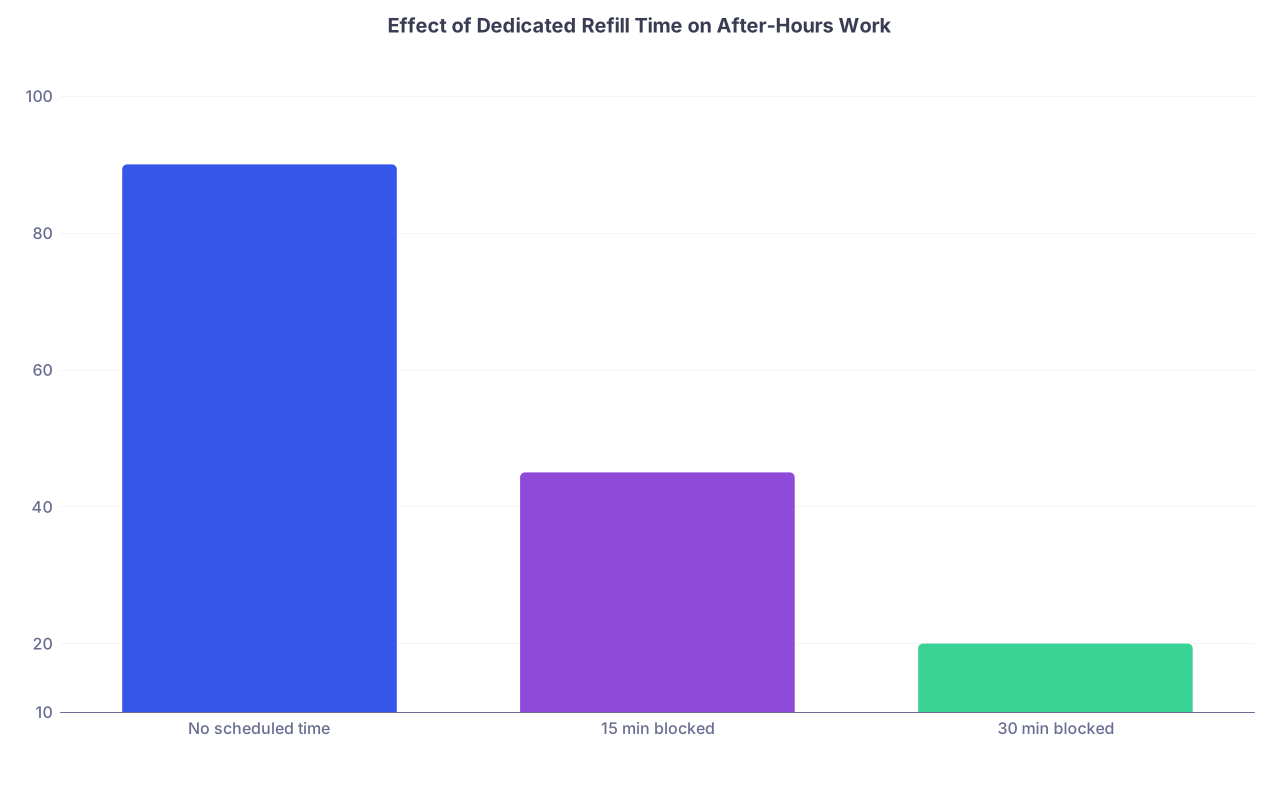
| Category | Value |
|---|---|
| No scheduled time | 90 |
| 15 min blocked | 45 |
| 30 min blocked | 20 |
Those numbers represent average minutes of after‑hours EHR time per clinic day in residents I have worked with. Blocking a small amount of protected time is not a luxury. It is survival.
9. Poor Communication With Attendings About Refill Expectations
Another mistake that burns interns: not clarifying whose refills you are responsible for and under what conditions.
Common scenarios:
- Every refill for any patient you saw once now gets routed to you for a full year.
- Your attending expects you to handle all their old panel refills too, without telling you.
- You assume someone else is dealing with high‑risk meds—but your name is on the refill because you were the last one to see the patient.
You need to have an explicit conversation with your clinic preceptor or program leadership early on:
Ask them, directly:
- “Which patients’ refills should come to me?”
- “What is our policy on anticoagulant / opioid / benzo refills?”
- “If I am not in clinic, who handles my refill inbox?”
- “Under whose name should controlled substances be refilled—yours or mine?”
Silent assumptions here create conflict, angry attendings, and unsafe care.
If the system routes everything to you by default, push back:
- Request shared or team inbaskets.
- Ask for specific high‑risk meds to route to attendings until you feel competent.
- Document when you refuse a refill and why, so nobody accuses you of neglecting work.
You are an intern, not a refill machine for the entire practice.
10. Forgetting That “No” Is Sometimes the Safest Answer
The last mistake is psychological: feeling guilty for declining refills.
You will get pressure—from patients, pharmacies, sometimes even staff—to “just refill it this once.” Especially for controlled meds, complex psych meds, or patients who bounce between clinics.
Saying “yes” feels easier in the moment. It avoids conflict and arguments. But it can be unsafe, and it trains everyone to expect that you will cave.
You are allowed to say no.
Examples where “no” is appropriate:
- Long‑term benzodiazepine use with clear documentation of plan to taper; patient has refused follow‑up 3 times.
- Opioid prescription from ED months ago with no chronic plan, now being funneled to you as PCP by default.
- DOAC in a patient with new severe renal dysfunction and no specialist input.
- Multiple early refill requests for stimulants with no upcoming visit.
When you say no, do it the right way:
- Document your clinical rationale clearly.
- Offer alternatives (short bridge only if truly necessary, urgent visit, or referral).
- Communicate in plain language (not cryptic EHR-speak) so the patient and team understand.
“The patient got upset” is not a reason to compromise your clinical judgment.

The Bottom Line: Protect Your Time, Protect Your License
If you are not careful, medication refill requests will quietly wreck your clinic days and expose you to unnecessary risk.
Keep three things in your head:
Refills are real clinical decisions, not “admin.”
Treat them with the same seriousness you would a new prescription—check visits, labs, vitals, and risk before you click.Have a repeatable system instead of random clicking.
Triage, batch by risk, use templates, and carve out protected time so refills do not bleed into every corner of your day.You are allowed to create friction where safety demands it.
Short supplies, required labs, mandatory visits, and occasional firm “no” are not cruelty—they are how you avoid harming patients and burning yourself out.
Do not wait until month 8 of intern year to fix your refill workflow. By then, the bad habits are ingrained. Start protecting yourself now.