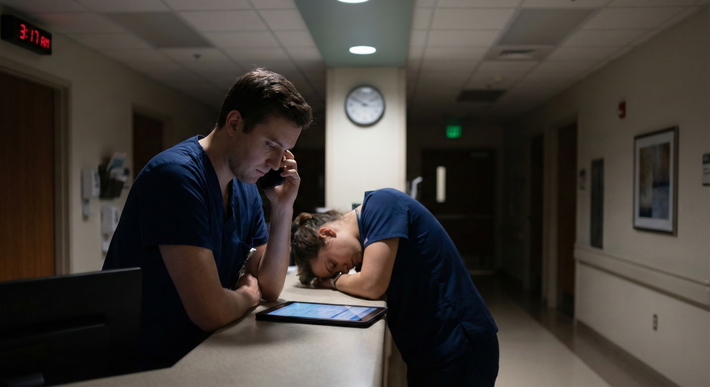
It’s 1:47 a.m. on a Tuesday. You’re on night float, staring at the pager that hasn’t stopped chirping for three hours. You just signed out 14 cross-cover patients to yourself, you’re behind on notes, and now the ED is calling with “just one more” admission that sounds like three in one.
Down the hall, another intern on your team is also on nights. Same pager load. Same census. But somehow, they’re getting tucked into bed for a 2-hour nap by the senior, the nurses are paging you first for everything, and attendings keep telling them, “Don’t worry, we’ll take care of that tomorrow.”
You’re drowning. They’re tired, but floating.
You start asking the question nobody says out loud: Why are some interns getting quietly protected from burnout while others get chewed up and spit out?
Let me tell you what actually happens behind the scenes.
The Myth: “Everyone’s Treated the Same”
Residency leadership loves the phrase: “We take wellness seriously and treat all residents fairly.” I’ve sat in those meetings. I’ve watched PDs nod solemnly as someone presents data on burnout scores and “wellness initiatives.”
Then the meeting ends, and real decisions get made in the hallway.
Here’s the uncomfortable truth: intern experience is not equal. Some people get buffer, leeway, and invisible guardrails. Others get thrown at every fire because “they can handle it” or “they’re solid.”
Nobody writes this into policy. It lives in the culture, the side comments, the mental lists faculty keep. And if you do not understand those dynamics, you’ll think burnout is just about “resilience” or “mindset.”
It’s not. It’s about how much invisible protection you’re getting.
The Four Quiet Filters That Decide Who Gets Protected
There are four big, mostly unspoken filters programs use when deciding who to cushion and who to lean on. Nobody will say this on your recruitment dinner. But attendings and chiefs talk like this all the time.

1. The “Fragility Radar” vs The “They’re Fine” Bucket
Programs are constantly triaging you into two mental categories:
- Might break
- Will survive
If you show obvious distress early — crying in workroom, saying “I’m not okay,” missing pages, visible anxiety — people start quietly tracking you. Not always out of care. Sometimes out of liability fear.
I’ve been in these conversations:
“We need to keep an eye on her.”
“Let’s not give him another insane block next; he’s on the edge.”
Result? Those interns often get more schedule protection. Better pairings. Slightly lighter services next block. Attending expectations dialed down.
Meanwhile, the intern who is clearly capable, doesn’t complain, answers pages fast, and “seems fine”? They become the program’s workhorse.
You know the phrases:
- “She’s strong.”
- “He doesn’t rattle.”
- “She’ll be okay with that heavy ICU month.”
- “If someone has to take the hit, give it to him. He can handle it.”
Here’s what happens: the “fragile” intern gets micro-guardrails put around their year. The “solid” intern gets ground down.
I’ve seen residents flame out not because they were weaker, but because they looked too strong for too long.
2. Political Capital and Likeability
Nobody wants to say this, but it’s true: how much people like working with you directly affects how much they protect you.
If you make their life easier, they make your life easier. That’s the hidden trade.
Attendings protect interns they:
- Trust to follow through
- Don’t dread seeing on the schedule
- Feel some personal connection with
What does protection look like? It’s not “take a spa day.” It’s small, decisive moments that add up:
- “You know what, I’ll write that discharge summary. You go eat.”
- “Let’s cap the team here; it’s already a heavy day for them.”
- “Don’t admit that third ICU train wreck to her. Give it to nights.”
If an attending is neutral or mildly annoyed with you — consistently disorganized, defensive, perpetually 20–30 minutes late on everything — they are much less likely to intervene in your favor. Not as punishment. Just… you’re not the first person they think about protecting.
Senior residents are even more blatant. They will fight for the interns they like and quietly let the difficult ones sink as long as they technically meet duty hours.
You do not need to be charming or fake. But if you act like every day is a grievance, or you radiate “I hate this place and all of you,” don’t expect invisible safety nets.
3. How You Use the “I’m Not Okay” Card
There is an unspoken “distress budget” you get each year. Use it well, you get protected. Use it badly, you get labeled.
Here is how programs actually react:
- The intern who rarely complains, then comes to the chief and says, “I really can’t do another 6-night stretch like this; I’m not okay” — they get taken seriously. Chiefs rearrange. Seniors cover. Extra day off mysteriously appears.
- The intern who complains constantly about every rotation, every call, every slight unfairness — they get tuned out. When they finally do hit the wall, people are slower to respond because it’s “more of the same.”
I’ve literally heard: “He always says he’s burned out; I don’t know where the baseline is anymore.”
So yes, speaking up matters. But credibility matters more. If you blast the burnout alarm daily, you will not get the same protection as the intern who usually grinds and then finally raises their hand.
4. How You Look on Paper vs How You Look at 3 a.m.
Programs also protect people they want to keep. Long-term. As fellows, chiefs, future faculty.
That decision doesn’t come from your Step scores. It comes from how you show up in the trenches.
- The intern who quietly takes care of sick patients, doesn’t melt down, and is humble enough to ask for help → people start saying, “We should groom her for chief.”
- The intern who’s smart but chronically late, sloppy with sign-out, and performs in front of attendings but disappears at night → no one is thinking “protect the asset” here.
I’ve seen PDs explicitly say: “We need to be careful with her schedule next year. She’s someone we don’t want to lose.”
If you’re seen as future leadership or fellowship material, you’re more likely to be buffered from chronic overexposure that leads to burnout. Not because they love you more. Because you’re strategically valuable.
The Schedule Games You Don’t See
You see your schedule as a PDF in your email.
They see it as a chessboard.
I’ve watched chiefs build these schedules. Interns do not realize how many manipulations happen around them — especially when someone is circling the drain.
| Protection Type | How It Actually Shows Up |
|---|---|
| Strategic lighter blocks | More electives or ambulatory after heavy ICU |
| Senior pairings | Strong seniors assigned to at‑risk interns |
| Call distributions | Fewer brutal weekend calls in a row |
| Rotation swaps | High-conflict rotations quietly removed or delayed |
| Night float adjustments | Shortened stretches or added buffer days off |
The “At-Risk” Reassignment
When an intern is visibly burning out — showing up late, snappy, crying in bathrooms, missing basic tasks — there’s often a quick chiefs + PD conversation.
You will never see the email thread, but it sounds like:
“She can’t do another heavy month right now.”
“Swap her MICU with an elective.”
“Put her with our best senior on nights.”
That intern just went from a month that would have broken them to a survivable stretch. On paper, it looks random. It is not random.
If you are not on anyone’s “at-risk” radar, no one is doing that for you.
The “Sherpa Senior” Assignment
Some seniors are known to be sherpas. They carry the team. They buffer interns.
Chiefs know exactly who they are.
When an intern is struggling — academically, emotionally, clinically — that intern gets quietly paired with the sherpas.
Conversely, if you’re seen as highly capable, you get paired with the “independent” seniors. Translation: the ones who will let you run and only intervene if you’re crashing. Great for growth. Terrible if you’re already at your limit.
I’ve heard: “Put her with Alex, he’ll carry her a bit.” And: “Give the strong intern to Sam; he doesn’t coddle.”
One gets guarded from burnout. One gets pushed closer to it under the banner of “autonomy.”
How Interns Accidentally Lose Protection
A lot of interns unintentionally push themselves out of the protection zone. Not by being weak. By trying to look strong in exactly the wrong way.
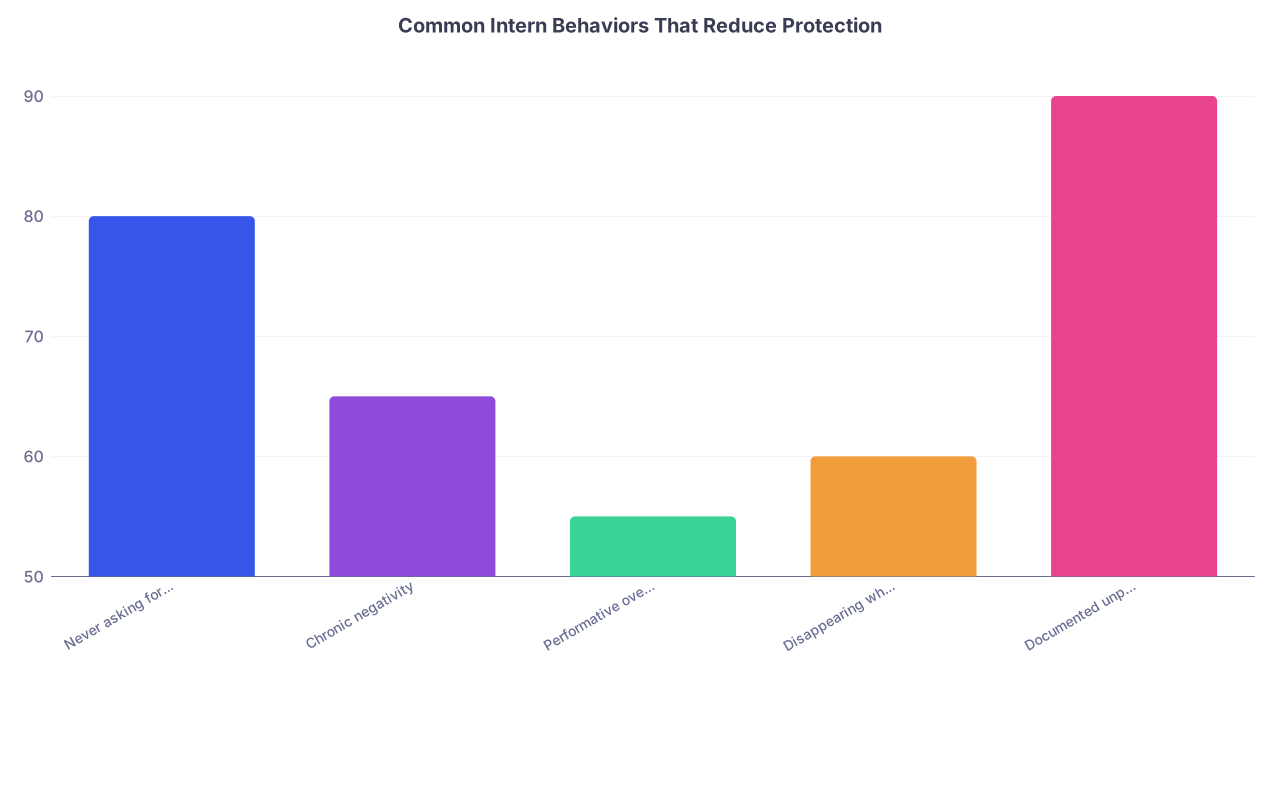
| Category | Value |
|---|---|
| Never asking for help | 80 |
| Chronic negativity | 65 |
| Performative overwork | 55 |
| Disappearing when busy | 60 |
| Documented unprofessionalism | 90 |
Trying to Be the Hero 24/7
There’s a difference between working hard and broadcasting martyrdom.
The “I stayed 4 hours post-call to finish my notes” intern thinks they’re signaling dedication. What faculty actually think:
- Poor time management
- Can’t prioritize
- Doesn’t know when to cut losses
These are the interns who don’t get schedule protection because the party line becomes, “They need to learn efficiency,” not “They need to be shielded.”
Even worse: once you show you’re willing to overwork, services and attendings will happily let you keep doing that. Nobody rushes in to say, “Go home.” They just think, “Nice, she’ll finish those 6 discharges.”
Constant Complaining Without Precision
If your entire persona becomes “this sucks, everything sucks, this place is toxic,” you stop being taken seriously.
People tune you out.
You want your distress to sound like this:
“I can handle long days. What’s pushing me over is 3 straight weekends with 80+ hours, and I’m starting to make mistakes. I need a break from this pattern.”
Not:
“This is inhumane, no one else is suffering like us, I’m so burned out, this is ridiculous.”
Same emotional truth. Very different impact on whether anyone thinks, “We should adjust their schedule.”
Burning Bridges With Nursing and Staff
If you’re dismissive, rude, or visibly impatient with nurses, case managers, or night staff, you’re cutting your own safety lines.
Nurses absolutely tell seniors and attendings:
- “She’s always behind.”
- “He snaps when we page.”
- “We don’t like working with her.”
You know what happens when there’s a chance to shield one intern from a brutal assignment and not another? The intern the nurses like gets the help.
I’ve seen night charge nurses say to seniors: “Your other intern looks dead on their feet. We’ve been trying to let them sleep between pages.” That does not happen for the intern who’s been condescending all month.
How Some Interns Quietly Get Protected (Without Being Favorites)
Now the part you actually care about: what do the interns who get protected typically do differently?
This isn’t about sucking up or being fake. It’s about how you show up in ways that trigger the system to put guardrails around you instead of load you up.

| Step | Description |
|---|---|
| Step 1 | Intern Behaviors |
| Step 2 | Perceived Reliability |
| Step 3 | Perceived Vulnerability |
| Step 4 | Seen as Asset |
| Step 5 | Seen as At Risk |
| Step 6 | Strategic Protection |
They Are Reliable, Not Perfect
The protected interns do not make zero mistakes. They just don’t make the same mistake multiple times without owning it.
Attendings and seniors think:
- “If I give her a little slack today, she’ll pay it back later.”
- “If I let him go home now, I know he’ll show up prepared tomorrow.”
That’s what gets you comments like, “Go sign out; I’ll finish this admission,” or “You look wiped, I’ll co-sign those notes later.”
Unreliability kills that generosity fast.
They Ask for Help Before Melting Down
The interns who get protected tend to say things like:
- “I’m getting behind; can you help me prioritize?”
- “I’ve got 3 sick patients and I’m worried I’m missing something.”
That signals insight, not weakness.
So when they say, “I’m hitting a wall this month, this is not sustainable,” leadership actually believes them.
Compare that to the intern who only communicates distress by exploding, disappearing, or screwing up repeatedly. People respond, but it’s crisis control, not thoughtful protection.
They Treat People Decently Even When Tired
When an intern can be dead tired and still thank the nurse who just paged them, that nurse will remember.
Same for the night pharmacist you’re calling at 1 a.m., the operator, radiology techs, security. These people see everything.
You know how many times I’ve seen a nurse quietly smooth something over for the intern they like?
- Letting them rest and paging the senior instead
- Prepping things in advance
- Helping them finish scut faster
All of that reduces burnout risk. None of it shows up in duty hour logs.
They Use Vulnerability Strategically
Protected interns aren’t stoic robots. They show just enough of the struggle that people realize, “If we keep pushing, we might break them.”
That might be a quiet conversation with a chief:
“I’m not failing, but I’m close to my limit. I’m starting to dread coming in. I need some backup somewhere.”
They’re not giving a sermon about systemic injustice (even if they’re right). They’re giving something the system knows how to respond to: a clear, targeted distress signal with a specific ask.
What You Can Actually Control
Some of this is political, unfair, and out of your hands. You cannot control whether your PD sees you as “future chief” or whether your senior is burned out themselves.
But you’re not powerless. You can tilt the system in your favor.
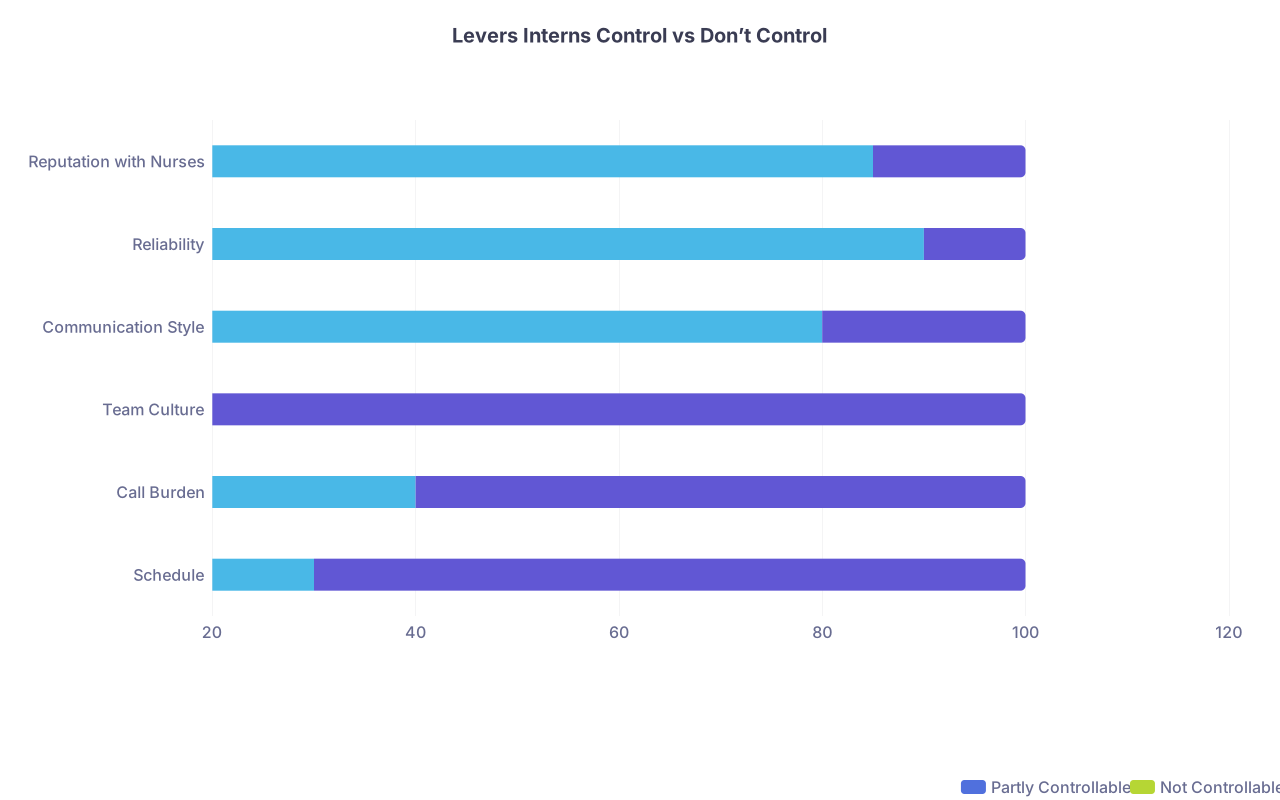
| Category | Partly Controllable | Not Controllable |
|---|---|---|
| Schedule | 30 | 70 |
| Call Burden | 40 | 60 |
| Team Culture | 20 | 80 |
| Communication Style | 80 | 20 |
| Reliability | 90 | 10 |
| Reputation with Nurses | 85 | 15 |
Focus on the levers you do control:
- Your reputation for finishing what you say you’ll do
- How you speak to people on your worst days
- When and how you escalate that you’re not okay
- Whether you ask for help early or only after a disaster
- How much you weaponize complaining vs raise focused issues
And one more blunt truth: documenting real problems (emails to chiefs, wellness forms, occupational health visits) moves you from “They’re just venting” to “We have a resident with documented distress.” Programs respond differently when there’s a paper trail. Not always perfectly. But differently.
A Quick Reality Check
Before you blame yourself entirely or your program entirely, understand this:
Residency is hard. Even the most protected intern is going to feel wiped, question their life choices, and flirt with burnout thoughts on bad weeks. There’s no magical track where you float through smiling.
The difference is degree and duration.
Some interns hover just above their breaking point, but someone is quietly watching their load, watching their face on rounds, making sure they don’t get five brutal months in a row.
Others? People assume they’re fine until they implode.
If you’ve been the second type so far, you need to force your distress into the line of sight. Calmly. Repeatedly. To the right people. That’s how you start getting pulled into the protected group instead of being the program’s unbreakable workhorse.
FAQs
1. How do I tell if I’m one of the “protected” interns or the workhorses?
Look at your last 3–4 months. Have you had any mysteriously lighter stretches after complaining of being overwhelmed? Have seniors or chiefs ever said, “We moved things around to help you out”? If not, and your heaviest months are stacked with minimal relief, you’re probably seen as “can handle anything.” That’s code for: not automatically protected.
2. Won’t speaking up about burnout make me look weak or hurt my fellowship chances?
Not if you do it like an adult. Saying, “I’m struggling; here’s specifically what’s not sustainable, and here’s what I’ve already tried,” makes you look self-aware. Repeatedly melting down without ever articulating what you need — that’s what hurts you. Fellows and attendings quietly respect people who draw lines without drama.
3. What if my program is genuinely toxic and nobody protects anyone?
Some programs really are bad across the board: no schedule adjustments, no listening, seniors as burned out as interns. In that situation, your leverage shifts: document duty hour violations, use GME and ombuds resources, and build support outside your program (therapy, mentors at other institutions, co-residents you trust). You may not get internal protection, but you can still lower your personal burnout risk.
4. How much should I share with my PD or chiefs about my mental health?
Share enough that they understand the stakes, not every detail of your psyche. “I’m seeing a therapist, I’m having significant burnout symptoms, and I need some changes to avoid decompensating” is usually sufficient. You don’t need to give them your whole therapy transcript. Keep it focused on functioning and specific accommodations.
5. Is it better to try to look strong all year and just push through?
No. That’s how you become the intern everyone assumes can endlessly absorb more work. Short-term, it earns you praise. Long-term, it erodes you. The interns who actually survive and thrive are the ones who pick their battles, protect their bandwidth, and are willing to say, “This is too much,” before they’re completely broken.
Key points: first, protection from burnout is not random — it follows patterns of perceived fragility, reliability, and value to the program. Second, you can’t control everything, but you can absolutely influence whether people see you as worth guarding or as an endless reservoir of labor. Use that knowledge deliberately, or the system will use you.