
The way intern work gets distributed is not fair, not random, and definitely not purely “by policy.” It’s an unwritten algorithm that every residency uses—but almost nobody explains to you.
Let me show you how it actually works. Because once you see the pattern, your life as an intern makes a lot more sense. And you get a lot less bitter.
The Myth vs. The Real Algorithm
What you’re told on day one goes something like this:
“Work is divided evenly. We rotate admissions. The senior oversees the list. If it gets too heavy, we redistribute.”
Sounds clean. Objective. Equitable.
Here’s the truth: the “algorithm” for intern workload is a mix of:
- Official rules (admission caps, duty hours, ACGME limits)
- Unofficial culture (who the seniors trust, who complains, who quietly handles it)
- Real-time triage (who’s drowning vs. who looks “fine”)
- Politics (who’s favored, who’s on thin ice)
No one writes this down. But every senior resident and attending uses it.
I’ve seen two interns with the same “8 patients each” have completely different days. One has 8 stable post-op day 3s. The other has 8 disasters: GI bleeds, DKA, septic shock in stepdown. On paper? Balanced. In reality? Not even close.
The written rules are just the skeleton. The hidden algorithm is the muscle.
The Official Rules They Hide Behind
Every program has some formal structure, usually something like:
- Admission cap per intern
- Daily new-admission limit
- Night float vs. 24-hour call rules
- Max number of cross-cover patients
- “Geography-based” assignments (by floor or team)
These are the rules they quote when you complain.
“Look, everyone’s capped.”
“You both have six patients.”
“You’ve had the same number of admits.”
What they don’t say is: they know those rules don’t actually measure work. They measure numbers.
Let me give you a more concrete sense of what “looks fair” vs “feels brutal” from the inside.
| Metric | Intern A | Intern B |
|---|---|---|
| Total patients | 8 | 8 |
| New admits last 24h | 2 | 2 |
| ICU transfers | 0 | 0 |
| Notes due | 8 | 8 |
On the handoff sheet this looks equal. Now here’s the reality:
- Intern A: 6 are “dispo planning,” PT/OT, placement, maybe tweaking BP meds.
- Intern B: 4 are unstable, on pressors last night, new chest pain, rapid AFib, trending lactates, families demanding daily meetings.
And yes, leadership knows this difference exists. They just rarely admit it to you.
The real algorithm lives in how the unwritten variables get factored in.
The Hidden Variables Seniors Actually Use
Here’s what your senior and attending are quietly calculating when they decide who gets what.
1. Your perceived competence
This is brutal but true: the more competent you look, the more you will be loaded. Not immediately. But over the first 2–4 weeks, they build a mental profile of you.
Pattern I’ve watched repeatedly:
Week 1–2:
- Everyone’s “protected.” Seniors try to make it “even.”
Week 3–4:
- The intern who writes clean notes, presents crisply, anticipates issues? They start getting the harder patients.
- The intern who is disorganized, slow, or constantly behind? They quietly get down-graded to “easier” admits.
Then the real kicker: the strong intern thinks, “I must be inefficient, I’m always drowning.” The weaker intern thinks, “I’m doing fine, I’m never overwhelmed.” You can see where this goes.
Programs justify it to themselves like this: “We’re matching complexity with ability. It’s safer for patients.” And to be fair, that part is not wrong. But it means you will be “punished” with work for being good at your job.
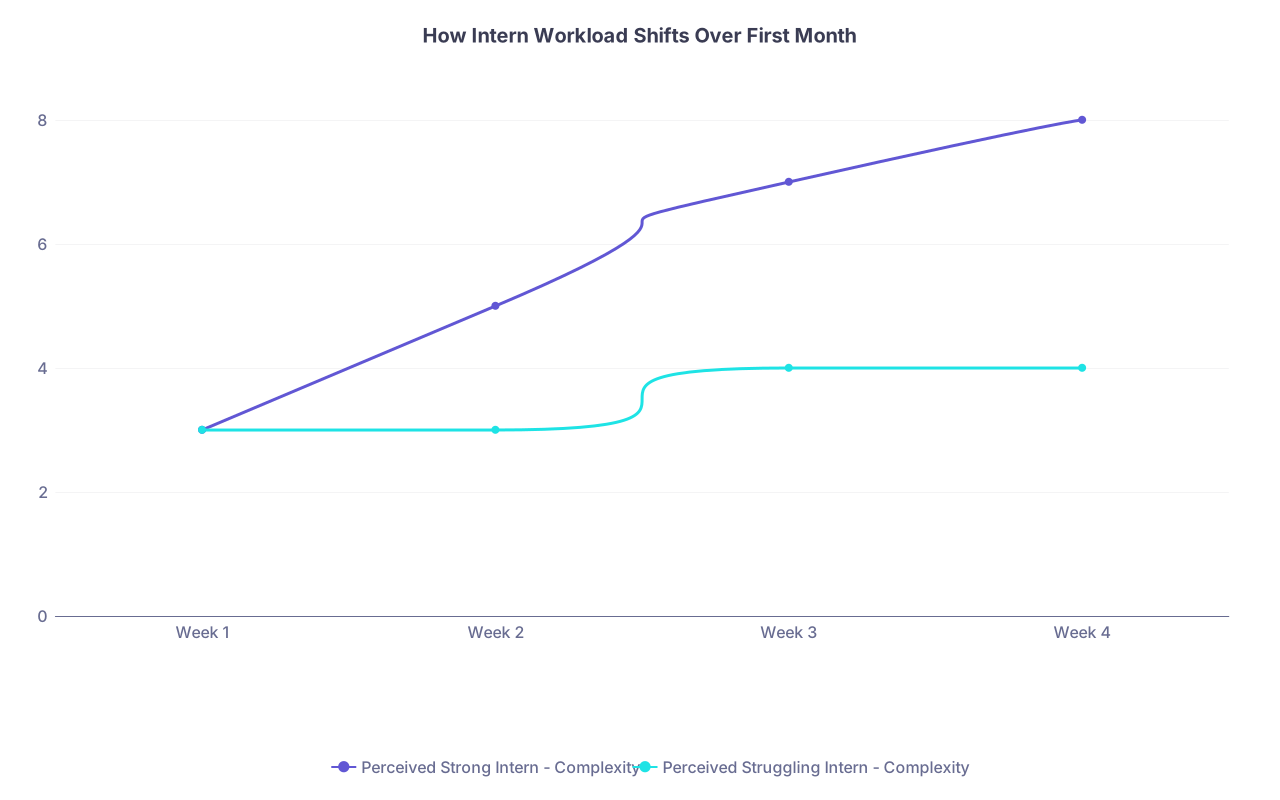
| Category | Perceived Strong Intern - Complexity | Perceived Struggling Intern - Complexity |
|---|---|---|
| Week 1 | 3 | 3 |
| Week 2 | 5 | 3 |
| Week 3 | 7 | 4 |
| Week 4 | 8 | 4 |
2. Your speed vs. your accuracy
If you’re fast and accurate? You’re going to be the workhorse.
If you’re fast but sloppy? You will get micromanaged and paradoxically get less responsibility, because seniors do not want to spend two hours at the end of the day fixing your mess.
If you’re slow but hyper-accurate? Some seniors will protect you. Others will decide you’re useless and work around you.
The unspoken rule from seniors: “Who can I trust so I can go home?”
They’re not thinking like faculty. They’re thinking like tired humans on their ninth 80-hour week.
3. Your personality and how much you complain
There are three types of interns:
- The martyr: Never complains, dies quietly, always “can take one more.”
- The squeaky wheel: Always pointing out unfairness, very attuned to “equity.”
- The balanced one: Speaks up when it’s truly unsafe, otherwise sucks it up.
You do not want to be the martyr or the squeaky wheel.
Martyrs end up doing the work of 1.5 interns because seniors unconsciously think, “They can handle it. They never say no.” I’ve literally heard, in a workroom at midnight: “Just give it to A, they’ll do it, they always do.”
Squeaky wheels get some short-term relief, but they get labeled. “High maintenance.” “Always overwhelmed.” Seniors will preemptively shield them not out of kindness, but because it’s easier than arguing. Long-term, that hurts you when people discuss you in eval meetings.
The balanced intern—who occasionally says, “This is getting unsafe,” and backs it up with specifics—is actually trusted. Seniors listen when you rarely pull that card.
4. Your status in the program (favor, reputation, backstory)
This is the most “behind closed doors” and nobody will admit it openly.
There are interns who are:
- Known to the program director (research year here, chief favorite, local med school star)
- Coming in with “concerns” already (marginal Step 2, professionalism questions, passed over in ranking debates)
- Known personal issues (family illness, new baby, health issues)
Is workload consciously manipulated around this? Sometimes, yes.
Common hidden patterns:
- The “golden child” gets stretched but also gets more support.
- The “red flag” intern quietly gets de-loaded early in the year so they “don’t fail,” but then ends up underexposed clinically.
- The intern with a crisis at home is given “lighter” rotations where possible, but the work on the core rotations gets shifted to their co-interns.
None of this goes into an email. It happens in those 5-minute hallway huddles between chiefs and seniors.
The Real-Time Triage: How Your Day Gets Destroyed
The algorithm kicks hardest not at 7 a.m. sign-out, but between 3 p.m. and 7 p.m. when everything blows up.
You think workload was set at pre-rounds. That’s cute.
Let me walk you through a very real afternoon.
- 3:10 p.m. – Rapid response on your patient with borderline vitals all day.
- 3:20 p.m. – ED calls for an admission: “Abdominal pain, stable, needs CT, likely appy vs. obs.”
- 3:30 p.m. – Your senior is in a family meeting. Your co-intern is “caught up,” you are drowning.
Here’s the decision tree in your senior’s head:
- “If I give this admit to the drowning intern, something might get missed on the rapid response patient.”
- “If I give it to the other intern, they’ll be pissed but we’ll actually be safe.”
So the other intern gets that admit. Again. And again. Then resentment builds. “Why do I keep getting hammered?” But the senior sees it as good triage.
Now zoom out. This isn’t once a week. This is daily. So the same intern keeps getting more of the late-day admits because they “look more caught up” in that moment.

| Step | Description |
|---|---|
| Step 1 | 3 pm work status |
| Step 2 | Protect Intern 1 |
| Step 3 | Protect Intern 2 |
| Step 4 | Use rotation rules |
| Step 5 | Assign new admit to Intern 2 |
| Step 6 | Assign new admit to Intern 1 |
| Step 7 | Perception Intern 2 overloaded |
| Step 8 | Perception Intern 1 overloaded |
| Step 9 | Who is drowning |
This is how the “good soldier” ends up more stacked, over and over. Not because anyone hates you. Because in the moment, this feels like the safest move for the team.
Night Float, Cross-Cover, and the Invisible Work
One of the dirtiest secrets in residency workload: the work you do at night and the chaos you inherit on cross-cover barely gets counted when people say, “Well you only have 6.”
You know this from experience: you can get absolutely destroyed on cross-cover with:
- 14 pages in one hour
- Two acute pain crises
- One new GI bleed
- Three “the family wants to talk to the doctor” calls
- Med rec for a 20-med nursing home transfer at 3 a.m.
But when you hand off in the morning, what shows up? One or two new notes. A couple of sign-out lines. No one sees the pager volume, the emotional grenades, the code you attended, the difficult family you calmed.
So on paper you look “light.”
In reality you’re fried.
This is another hidden variable in the algorithm: seniors only adjust what they can see. They see list size, note count, new admissions. They do not see how many times your pager exploded between 1 a.m. and 4 a.m.
The unfair part is simple: if you survive that chaos and keep functioning, people assume you can “keep taking it.” If you collapse or start snapping at nurses, you get labeled as “not resilient.” Nobody is weighting the invisible part of the workload.
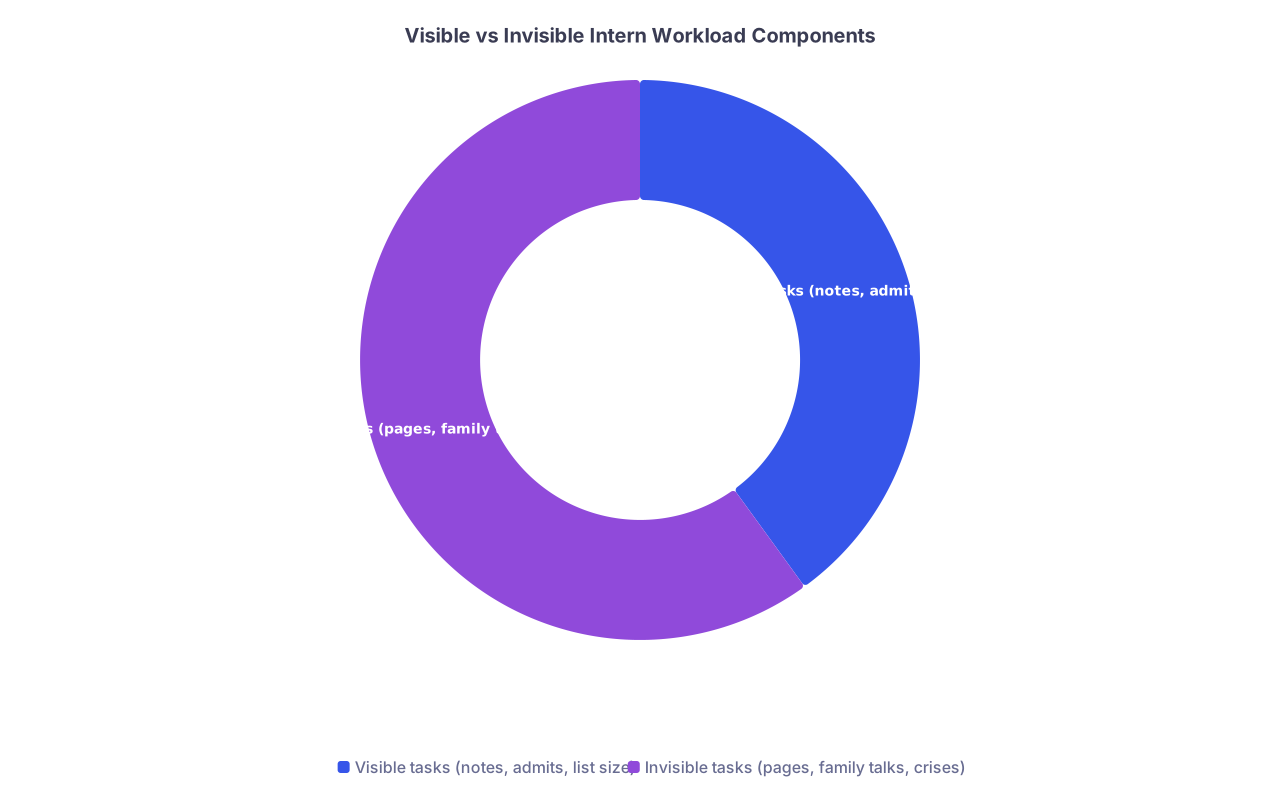
| Category | Value |
|---|---|
| Visible tasks (notes, admits, list size) | 40 |
| Invisible tasks (pages, family talks, crises) | 60 |
Service Type: Why Some Rotations Are Rigged From the Start
Not all rotations are created equal. You already know that. But the way workload is assigned inside those services has its own pattern.
Think about three rotations: General Medicine, MICU, and a “cushy” elective like Rheum consults.
General Medicine:
- Volume high
- Complexity mixed
- Discharges + admits daily
- Workload algorithm: senior often “equalizes” the list by raw numbers, with some vague nod to acuity.
ICU:
- Volume lower
- Complexity always high
- Notes long, tasks smaller in number but higher stakes
- Workload algorithm: often more strictly equal in numbers because the baseline acuity is high across the board. But the sickest patients go to whoever is “sharpest.”
Cushy Consult elective:
- Volume moderate
- Almost all cognitive work, little scut
- Workload algorithm: based on who’s around, who answered the page, and who’s “good with outpatients.”
On some rotations, the chief has already hard-coded the imbalance by design.
| Rotation | Typical Census per Intern | Avg New Patients/Day | Expected Call Intensity |
|---|---|---|---|
| Gen Med Ward | 8–12 | 2–4 | High |
| MICU | 6–8 | 1–2 | High but structured |
| Night Float | Cross-cover 30–60 | 1–3 | Very high, variable |
| Consult Elective | 4–8 | 2–3 | Low to moderate |
The hidden truth: chiefs know exactly which blocks are “meat grinders.” They try to spread them out through the year. But within that rotation, you’ll still see the same micro-algorithm: stronger intern gets sicker patients, weaker intern gets lighter load, and the team pretends it’s all even.
How Program Leadership Actually Talks About You
Behind closed doors, when APDs and chiefs sit down to “review the interns,” your name is not accompanied by precise workload metrics. They’re going off vibes plus a few data points.
The real conversation sounds like this:
- “She’s a machine. We can put her anywhere.”
- “He’s… fine. Needs a lot of guidance.”
- “Great with patients, but slow. Super nice though.”
- “I don’t fully trust his assessments yet.”
And then, quietly: “We should protect X a bit on their next couple of blocks. They were drowning on cards.” Or: “Y can handle the heavy services, schedule them for MICU early, they’ll do well.”
That’s the master algorithm. Not an Excel sheet. A bunch of semi-tired leaders with rough impressions deciding where to send you next and how much to throw at you.
Does anyone say, “We overloaded her for 3 months straight, maybe give her a break?” Rarely. Unless you’re visibly broken or someone advocates for you.
How to Tilt the Algorithm in Your Favor (Without Being That Person)
You cannot make residency “fair.” That’s a fantasy. But you can understand the levers and push the ones that actually work.
You want to be seen as:
- Competent but human
- Reliable but not a doormat
- Calm but not silent
A few specific moves that change how seniors load you:
- Narrate your bandwidth in concrete, non-whiny terms.
Don’t say: “I’m overwhelmed.”
Say: “I still have two discharges to complete and a new admit from this morning that I haven’t seen yet. If I pick up another right now, something will slip.”
Seniors respond better to specifics than vibes.
Ask for high-yield help, not global rescue.
“Can you staff dispo with me on 14B so I can safely discharge and free up time for the new admit?”
This shows you’re thinking about the system, not just your feelings.Volunteer strategically, not reflexively.
Saying “I can take the next one” when you’re at reasonable capacity is good. Saying it automatically, every time, even when you’re at your limit, just trains the team that you don’t have one.Use nights and hell days to build receipts.
When the attending asks on rounds, “How was last night?” don’t just shrug and say “Busy.” Give a one-sentence snapshot: “We had four rapid responses, one ICU transfer, and cross-cover on 50+ patients.” That sticks. It informs later decisions.
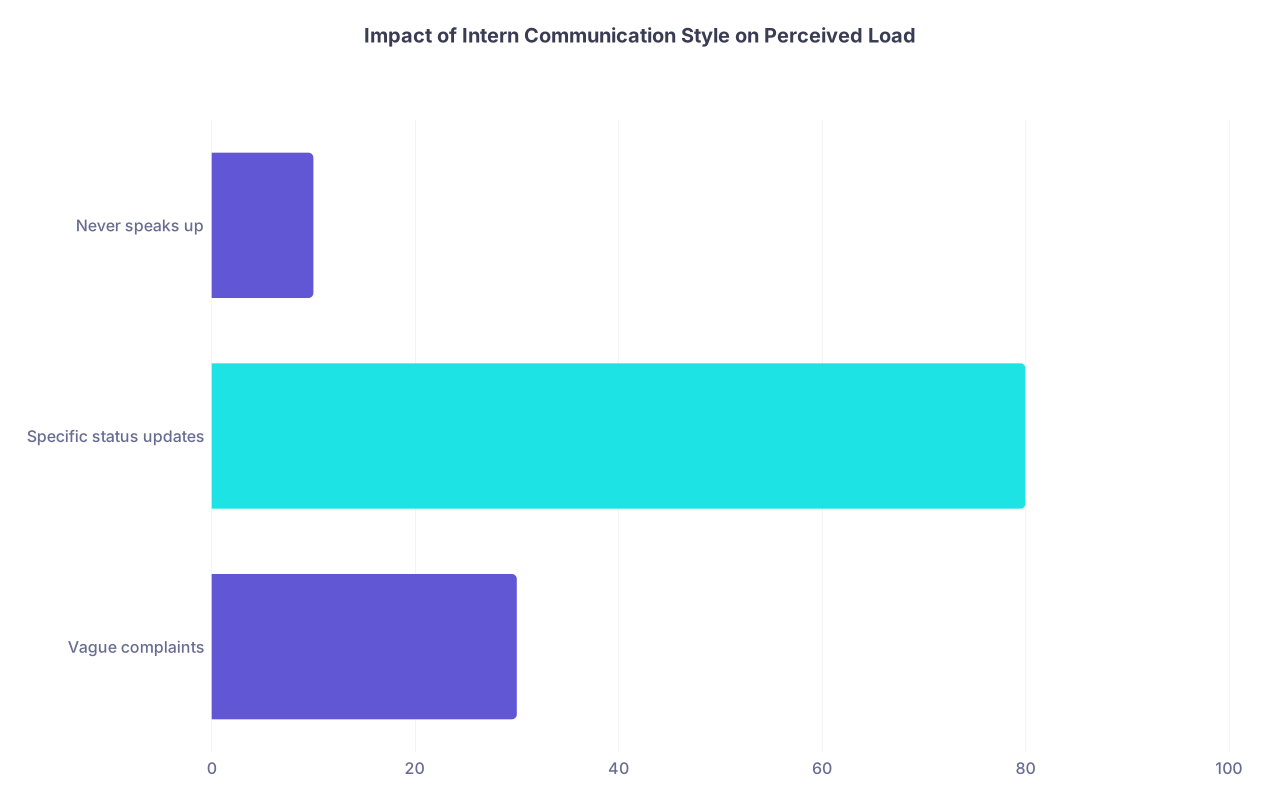
| Category | Value |
|---|---|
| Vague complaints | 30 |
| Specific status updates | 80 |
| Never speaks up | 10 |
The intern who never says anything gets overloaded by default. The one who only complains becomes background noise. The one who occasionally, clearly states what’s on their plate shapes how the algorithm treats them.
What You Should Actually Worry About (And What You Should Ignore)
There are three things worth caring about when it comes to workload:
Safety.
If things are unsafe—patients not being seen, vital tasks slipping—you must speak. That is not “being difficult.” That’s your job.Patterns, not single days.
Everyone gets wrecked sometimes. One brutal call doesn’t mean you’re being exploited. Look at 2–4 week patterns. Are you consistently the one staying 2 hours later? That’s a real pattern.Your long game.
If you’re always given the “easy” patients, that feels nice day-to-day but it damages you. You end intern year with less exposure, less confidence, and weaker evaluations. Pushing for some complex patients is in your interest.
What you should mostly ignore:
- Counting every admit with your co-intern like a running scoreboard
- Resenting a single day where “they got off easier”
- Imagining there’s a grand conspiracy targeted just at you
The algorithm isn’t that organized. It’s a messy pile of human judgment, path of least resistance, and patient safety decisions.
The Part Nobody Tells You: You’ll Eventually Run the Algorithm
Right now you’re on the receiving end, which is why it feels so arbitrary and unfair.
But in a year? You’ll be the senior deciding:
- Who gets that train-wreck ICU transfer
- Who can handle three admits in a row
- Who needs a lighter day after getting demolished yesterday
You’ll suddenly see the constraints from the other side: caps, admissions pouring in, attendings expecting you to teach, patients actually sick, and two interns with very different abilities and thresholds.
You’ll make compromises. You’ll overload the “strong” one on some days. You’ll shield the fragile one. You’ll listen more to the intern who brings you concrete info than the one who just sighs loudly.
And then you’ll realize: the algorithm is not a system. It’s a set of human habits under pressure.
Once you understand that, your job as an intern shifts. You stop expecting perfection. You start asking, “How do I present myself so the system uses me well—but doesn’t chew me up?”
Years from now, you won’t remember the exact number of admits you took on that awful call. You’ll remember whether you learned to stand your ground without burning bridges, and how you handled being overloaded when nobody else seemed to notice.