The way most interns do handoff is unsafe, inefficient, and absolutely guaranteed to double their workload.
I have watched smart, hardworking interns drown on call nights not because they were slow, not because the census was brutal, but because their handoffs were a mess. They thought they were saving time by rushing. They were actually writing themselves future disaster.
Let me show you the five handoff mistakes that quietly wreck your nights, your relationships with seniors, and your sanity.
The Hidden Cost of Bad Handoffs
Before the specific mistakes, you need to understand what is really at stake.
Bad handoffs do three things every time:
- Generate callbacks that should never have happened
- Turn small issues into 3 a.m. catastrophes
- Make your name synonymous with “I do not trust that sign-out”
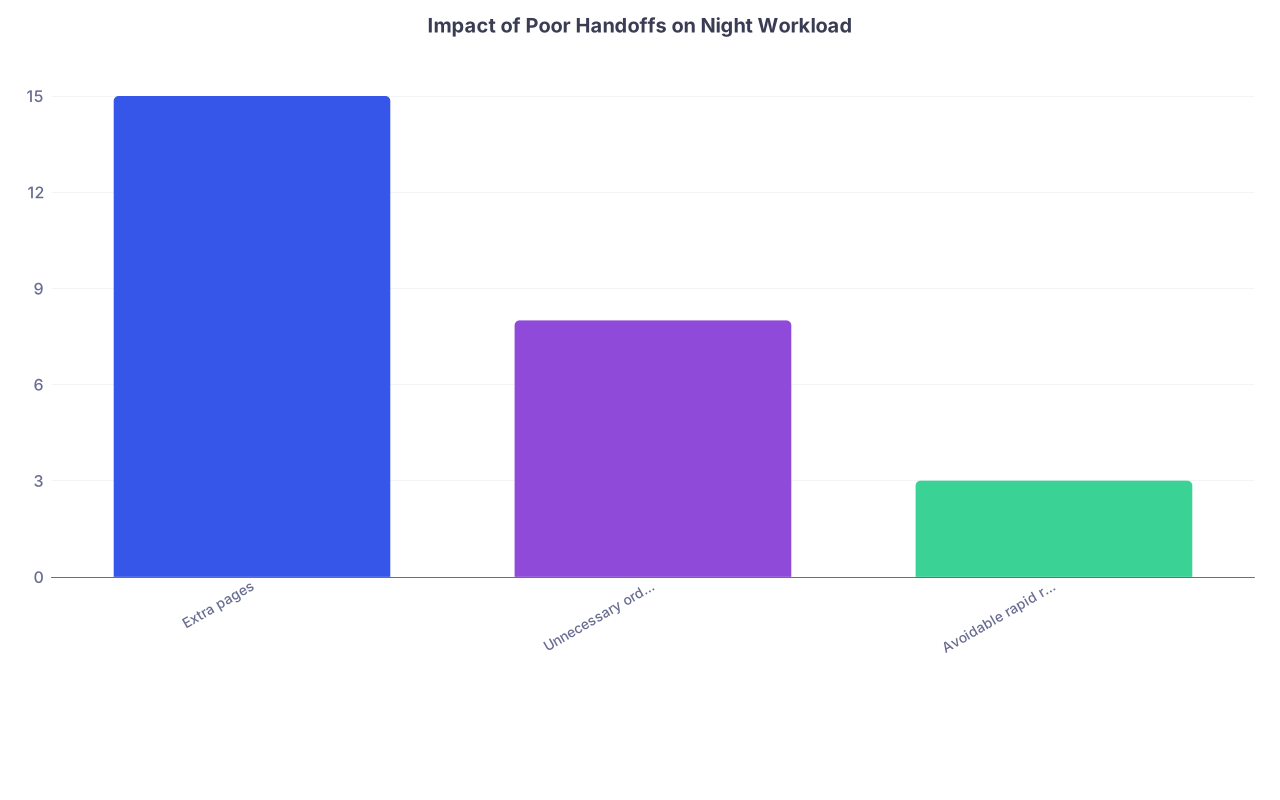
| Category | Value |
|---|---|
| Extra pages | 15 |
| Unnecessary orders | 8 |
| Avoidable rapid responses | 3 |
Those numbers are not from a randomized trial. They are from actual tally marks I kept during a brutal July when I was night float and decided to count how many problems came from incomplete or sloppy handoffs from days.
You are about to walk into the same trap unless you deliberately avoid it.
Mistake #1: “They’re Stable” – The Lazy Lie
The most dangerous sentence in any sign-out:
“They’re stable.”
Alone, without context, that line is useless. Worse than useless. It is misleading.
What “stable” often really means when I ask a few questions:
- “They are on 3 liters now but were on room air yesterday.”
- “Their blood pressure is 88/52 but that’s ‘normal for them’ (no proof).”
- “They just had a troponin bump but cards is ‘aware.’ Whatever that means.”
When you call a patient “stable” without anchoring it to numbers and trends, you set the night team up for:
- Constant pages
- Unnecessary rapid responses
- Duplicate work re-discovering information you already had
How to avoid this
Stop labeling patients “stable” without data. Instead, build a one-line stability snapshot for each patient:
- Baseline vitals trend (last 24 hours)
- Oxygen needs trend
- Pressing clinical risk(s), if any
Example of bad handoff:
“Mr. Lopez is stable. Pneumonia. No active issues.”
This guarantees a 2 a.m. call when his blood pressure is 92/50 and the nurse has no idea what is acceptable.
Example of good handoff:
“Mr. Lopez – 72M, pneumonia on CTX/azithro. On 2L NC, sat 93–96% (baseline room air). BP 95–105/55–65, that is his baseline per chart. Biggest risk: could tire out overnight; low threshold to call if needing >4L or RR >26.”
See the difference? You gave:
- Context
- Acceptable ranges
- Clear “when to worry” criteria
That is how you prevent unnecessary pages and protect the patient at the same time.
Mistake #2: No Clear “If X, Then Y” Plan
The night team is not psychic. Nurses are not psychic. Yet most interns hand off like everyone can read their mind.
I routinely see this:
- Diabetic patient handed off with no insulin plan if NPO
- GI bleeder signed out with no explicit transfusion threshold
- COPD exacerbation with no “what to do if increasing O2 requirement”
What happens?
You get blown up with pages over predictable scenarios you could have solved with one sentence.

| Step | Description |
|---|---|
| Step 1 | Day Intern Leaves |
| Step 2 | Predictable issue overnight |
| Step 3 | Nurse pages night team |
| Step 4 | Night intern has no plan |
| Step 5 | Chart review and rethinking |
| Step 6 | Delay and frustration |
How to avoid this
For every patient, identify 1–2 likely overnight issues and attach an explicit contingency plan.
Use this simple structure in your sign-out note or verbal handoff:
“If X happens, do Y, and call if Z.”
Concrete examples:
- “If SBP <90 and MAP <65 after 500 mL LR bolus, page cross-cover.”
- “If glucose <70, give D50 per protocol, recheck in 15 minutes. If still <70 or symptomatic, call cross-cover.”
- “If O2 need >4L to keep sats >92%, get VBG and CXR, then call.”
Important detail interns skip:
Specify what the nurse can do independently (protocols, PRNs, simple orders) versus what absolutely requires a call.
You are not just avoiding pages; you are giving nurses a clear, defensible plan and you look like you actually know what you are doing.
Mistake #3: Burying the Real Problem in a Novel
Another classic intern error: over-documenting and under-communicating.
I see sign-outs like this daily:
“Admitted for acute on chronic decompensated systolic heart failure with EF 20%, grade II diastolic dysfunction, moderate TR, mild MR, NYHA class III. On lasix drip at 10 mg/hr, carvedilol, spironolactone…”
Five lines of admission story. Zero lines about what could actually go wrong tonight.
Here is the rule:
At night, nobody cares about the full admission narrative.
They care about “What is likely to blow up while I am covering 60 patients with one resident?”

How to avoid this
You must separate:
- Background the night team rarely needs
- Active issues and true “watch items”
I like a simple structure:
ID & Why They Are Here (1–2 lines max)
“65M with HFrEF (EF 20%) admitted for acute decompensation.”Today’s Key Changes
“Net –2.5 L, lasix drip increased this afternoon, creatinine up from 1.2 to 1.6.”Tonight’s Risk & Plan
“At risk for hypotension and AKI. If SBP <95 or MAP <60, stop drip, give 250 mL LR, recheck in 30 min, then call.”
Notice what is missing: every detail of their entire past medical history. Not needed. If the night resident wants to dig deeper, they know how to open the chart.
Bad sign-out makes people recreate the case from scratch. Good sign-out lets them glance, understand the risk, and move on.
Mistake #4: No Ownership of Code Status and Goals of Care
This one is ugly. And common.
You will absolutely see this as an intern:
- A 90-year-old with metastatic cancer, septic, on pressors, signed out as “DNR?” or “I think they are full code”
- No documented conversation, no clarity on what has been discussed with family
- Night team called to a rapid response or code on someone who probably should never have been a code
This is how families lose trust in the team. It is how residents end up doing chest compressions on someone whose daughter told you earlier, “He would not want this.”
And yes, it also explodes your workload; you inherit moral distress, family meetings at 2 a.m., and messy charts.
| Level | Description | Consequence |
|---|---|---|
| None | Blank or “unknown” | Chaos during deterioration |
| Vague | “DNR? Need to confirm” | Moral distress, conflicting actions |
| Clear | Documented with brief context | Faster, aligned decisions |
| Clear + Plan | Documented plus next step | Night team protected |
How to avoid this
Do not dodge code status and goals-of-care because it feels uncomfortable or “takes time.”
For every patient who is frail, chronically ill, or acutely very sick, you must:
Confirm and document code status explicitly
- Full code, DNR/DNI, DNR with NIV okay, etc.
- Put it in the chart and in your handoff.
State what has already been discussed
- “Spoke with daughter today, she understands prognosis is poor but wants to continue current management. Open to revisiting if worsening.”
- Or: “No clear surrogate available; not yet discussed.”
Flag who needs follow-up
- “No GOC discussion yet; please do NOT escalate beyond current interventions without speaking to family; consider day team palliative consult.”
Example of protective handoff line:
“Mr. R – 89M with advanced dementia, aspiration pneumonia, DNR/DNI. Daughter understands poor prognosis; wants trial of antibiotics and fluids only. No ICU, no pressors. If he deteriorates overnight, focus on comfort and call family.”
That line will prevent an unnecessary ICU transfer, prevent a code, and save the night team from an awful, rushed family discussion at 3 a.m.
Mistake #5: Treating Handoff as a Transaction, Not a Relationship
Here is the part interns underestimate the most:
Your handoff is also your reputation.
When you repeatedly give sloppy sign-outs, a few things start happening:
- Nurses start paging more aggressively because they do not trust your anticipatory thinking.
- Night residents silently recheck all “sick” patients themselves, adding to their workload and resentment.
- Seniors stop relying on your judgment, which slows your autonomy and learning.
I have sat in resident rooms and heard exact phrases like:
- “Whose patients are these? Oh, that makes sense.”
- “Double-check everything on this sign-out.”
- “If they say ‘stable,’ I am still going to look myself.”
This is brutal but real. And it directly affects how much support or grace you get when you inevitably make a real mistake.
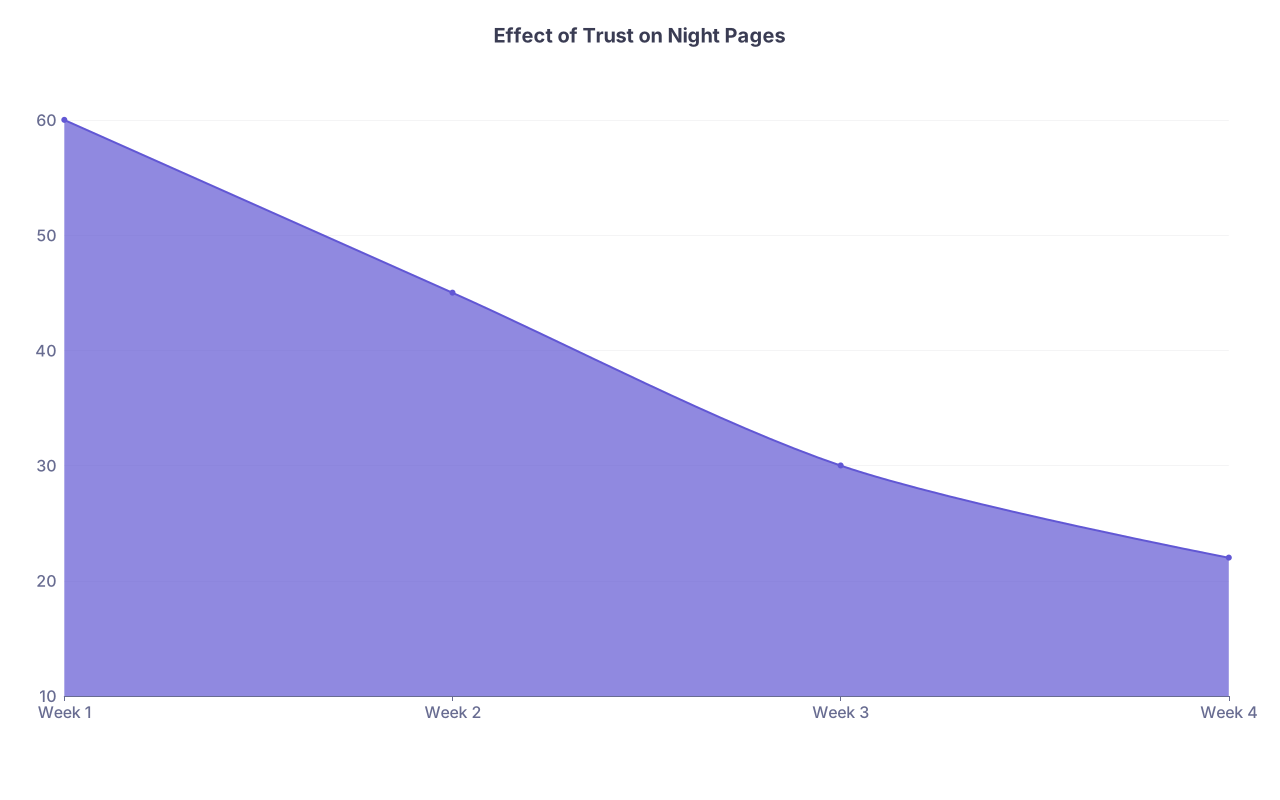
| Category | Value |
|---|---|
| Week 1 | 60 |
| Week 2 | 45 |
| Week 3 | 30 |
| Week 4 | 22 |
That “decline” is what happens when an intern starts giving consistently reliable, anticipatory handoffs. Everyone relaxes a bit because they know your patients are actually thought through.
How to avoid this
Treat every handoff as:
- A commitment: “I have thought through what could go wrong and I am handing you a safe plan.”
- A professional signal: “You can trust what I say about my patients.”
Practically:
- Show up to sign-out on time, with your notes updated. Chronic lateness screams “I do not respect your night.”
- Do not pack up and physically walk out while you are still mid-sentence about a sick patient. Stay. Make eye contact. Confirm they understood.
- Invite quick questions: “Any of these you want me to clarify more?” It shows you are not just dumping patients and running.

Your workload as an intern is not just about the census. It is about how much the system trusts you. Good handoffs reduce friction everywhere.
A Simple Handoff Template That Prevents All 5 Mistakes
Use this during your intern year and you will make fewer enemies and fewer errors.
For each patient, include:
ID + Reason for Admission (1 line)
“56F with ESLD admitted for variceal bleed.”Status Snapshot
- Vitals range last 24 hours
- O2 needs and trend
- Any new significant labs or events today
Active Issues (bulleted, no essays)
- “Hgb dropped from 9.2 to 7.6; transfused 1U at 15:00.”
- “On octreotide drip and ceftriaxone.”
- “Awaiting GI scope tomorrow a.m.”
Overnight Risks + Contingency Plan
- “Risk of rebleeding. If melena increases or SBP <90, call GI fellow on-call and cross-cover.”
- “If Hgb <7 on midnight labs, okay to transfuse 1U, then call.”
Code Status / GOC
- “Full code; limited GOC discussion, wants ‘everything done’ for now.”
- Or: “DNR/DNI, palliative involved, no ICU transfer per patient and family.”
If you do just these five segments reliably, you have already sidestepped most intern handoff disasters.
FAQ: Handoffs as an Intern
1. How long should a good handoff take per patient?
If you are routinely taking 3–4 minutes per patient, you are probably rambling or drowning in irrelevant details. On average:
- Stable, low-risk patients: 20–40 seconds
- Moderately complex: 45–60 seconds
- Very sick or unstable: maybe 90 seconds, but only if you are adding real contingency planning, not storytelling.
If your team is rolling their eyes, trim the history and expand the “if X, then Y” parts instead.
2. Should I include social details and dispo plans in sign-out?
Only when they matter tonight or tomorrow morning.
Examples to include:
- “Very high fall risk, frequently trying to get out of bed, sitter requested but not yet available.”
- “Homeless, no clear dispo plan, likely social work heavy tomorrow.”
What you can leave out at night: lengthy stories about family drama that do not change what happens if they desat at 3 a.m.
3. What do I do if I get handed a terrible sign-out from someone else?
You will. Often.
Minimum you should do:
- Skim labs and vitals on anyone labeled “sick,” “soft BPs,” “increasing O2.”
- For unclear code status on a frail or critically ill patient, check the chart for documentation; if absent, mentally flag as high risk and try to avoid drastic changes without more info.
- If you repeatedly get unsafe sign-outs from the same person, quietly mention it to your senior and ask for guidance. Protect patients first, politics second.
4. How much should I trust the prior team’s contingency plan?
Trust but verify. If the plan seems reasonable and aligns with current vitals/labs, use it. If it feels outdated or unsafe (e.g., “okay to give more lasix” but the creatinine is now 3.0), you are not obligated to follow it blindly.
Use the sign-out as a starting point, not a court order. The more your colleagues give good handoffs, the more you will find you can safely lean on their planning.
5. What if I do not know what the contingency plan should be?
This is where interns sabotage themselves out of fear of “bothering” seniors. Do not guess on sick patients.
During the day, before sign-out:
- Ask your senior: “If this patient worsens overnight, what do you want the night team to do first?”
- Translate their answer into a clear, actionable “If X, then Y” line in your sign-out.
Every time you do this, you learn clinical reasoning and build a mental library of how to think overnight. That is how you stop being the intern who writes: “If worse, call.”
Open your sign-out document for tonight right now.
Pick your sickest three patients and add one precise “If X, then Y, then call” line for each.
If you do only that, you will already have a quieter, safer night than most interns ever get.