The Art of Juggling: How to Handle Medical Intern Responsibilities
The leap from medical school to your first Medical Internship is one of the most demanding transitions in healthcare careers. Overnight, you move from being closely supervised students to frontline physicians responsible for real patients, real decisions, and real consequences. It can feel like you are constantly behind—rounds to finish, notes to write, consultations to call, pages to answer, and learning to squeeze in somewhere amid sleep deprivation.
Yet thousands of interns successfully navigate this phase every year. The difference between merely surviving and genuinely thriving often comes down to three core skills: effective Time Management, sustainable Self-Care, and strong Communication Skills within the healthcare team.
This guide breaks down the realities of intern life, the most common challenges, and detailed, practical strategies to help you manage your responsibilities without losing yourself along the way.
Understanding the Role of a Medical Intern in Modern Healthcare
Before you can manage your responsibilities, you need a clear picture of what they are—and where you fit in the system.
Core Clinical Responsibilities
As a medical intern, you are a physician in training and a crucial member of the care team. Your day-to-day work typically includes:
Direct Patient Care
- Performing focused and comprehensive histories and physical exams
- Formulating initial assessments and differential diagnoses
- Writing and adjusting daily management plans under supervision
- Monitoring clinical status and responding to changes in condition
Documentation and Electronic Health Records (EHR)
- Writing admission notes, progress notes, discharge summaries, and procedure notes
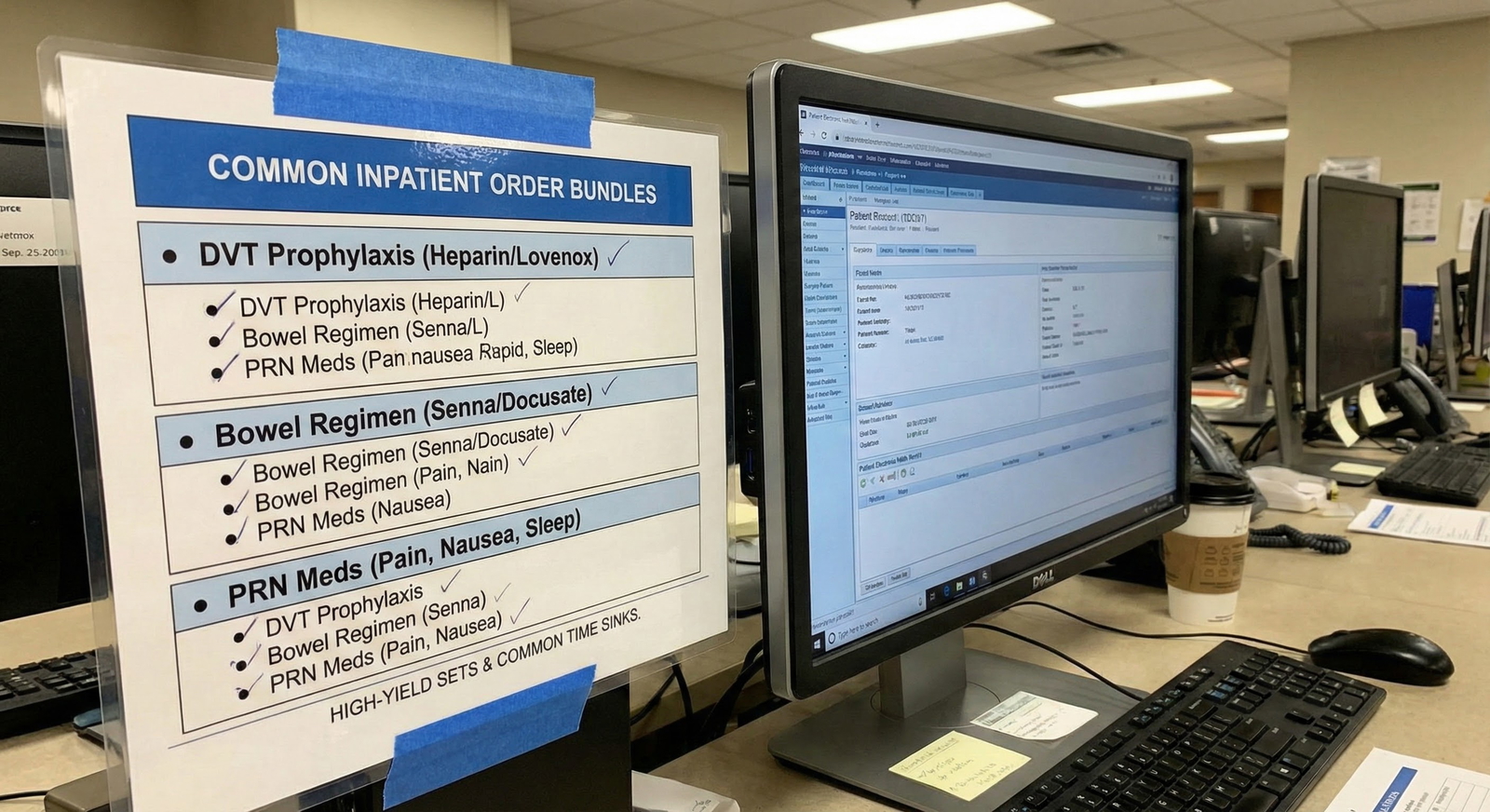
- Entering orders accurately and promptly (labs, imaging, medications)
- Ensuring documentation meets clinical, legal, and billing standards
Daily Rounds and Care Coordination
- Presenting patients clearly and succinctly on rounds
- Communicating updates to attendings, residents, nurses, and consultants
- Participating in multidisciplinary team meetings (e.g., with pharmacy, PT/OT, case management)
Procedures and Hands-On Skills
- Performing procedures appropriate to your specialty (e.g., IVs, ABGs, lumbar punctures, central lines, basic suturing) under supervision
- Obtaining informed consent when appropriate
- Practicing procedural safety, sterile technique, and complication recognition
Consults and Referrals
- Requesting consultations from other specialties with a focused question
- Calling primary care physicians or outpatient specialists to coordinate transitions of care
- Communicating with social work and case management for discharge planning
The Hidden Curriculum of Internship
Beyond the obvious tasks, there is a "hidden curriculum" you learn as an intern:
- Understanding hospital systems, workflows, and politics
- Navigating pager etiquette and escalation processes
- Managing expectations of seniors, attendings, and nursing staff
- Learning what is “urgent” versus “can wait” in real-world practice
Intern year is where you lay the foundation for the rest of your residency and future healthcare career. Recognizing that you are both learner and provider helps frame your responsibilities with the right mindset.
Common Challenges for First-Year Medical Interns
Despite careful training, most interns experience a shock to the system in their first months. Many of the struggles are shared and predictable.
1. Time Management Under Constant Pressure
Every intern quickly realizes there is more work than time:
- Dozens of patients to follow
- Notes to finish before deadlines
- Orders and results to review
- Family meetings, admissions, and discharges
- Educational conferences and didactics
Without intentional Time Management strategies, it’s easy to feel perpetually behind and stressed.
2. Emotional and Physical Exhaustion
Internship often means:
- Night shifts and 24–28 hour calls
- Rotating shift schedules that disrupt sleep
- High-acuity cases, deaths, and emotionally draining scenarios
Over time, fatigue can dull your clinical reasoning, reduce your empathy, and increase the risk of mistakes. Burnout is a real risk if Self-Care is neglected.
3. Prioritization and Clinical Triage
On paper, every task looks important. In reality, some are time-sensitive and lifesaving, while others are administrative and can safely wait. Early interns often struggle with:
- Deciding which patient to see first
- Distinguishing a “sick” from a “not sick” patient quickly
- Choosing between finishing notes vs. addressing a new page
Learning to prioritize is as much a skill as reading ECGs or interpreting labs.
4. Communication Challenges
Strong Communication Skills are essential, but not always intuitive:
- Presenting cases efficiently without leaving out key details
- Giving and receiving sign-out during handoffs
- Explaining complex medical information to patients and families
- Navigating hierarchies when advocating for patients
Miscommunication can lead to errors, frustration, and conflicts with staff or colleagues.

Core Strategies for Succeeding as a Medical Intern
1. Mastering Time Management in a Busy Clinical Environment
Time Management is not about doing everything; it’s about doing the right things at the right times efficiently.
Build a Predictable Daily Structure
Even though each rotation is different, try to create a repeatable framework:
Pre-rounding Checklist (Before Team Rounds)
- Review vitals, overnight events, and new labs for each patient
- Skim nursing notes, consult notes, and imaging results
- See your sickest or most complex patients first
- Update a running to-do list for each patient (orders, consults, discussions)
Midday Workflow
- After rounds, batch similar tasks together (enter all orders, then make all consult calls, then work on notes)
- Identify time-sensitive tasks (e.g., STAT labs, urgent imaging, critical titrations) and complete those first
- Protect chunks of time for uninterrupted note-writing when possible
Afternoon / Sign-Out Preparation
- Reassess unstable or high-risk patients before leaving
- Follow up on pending critical labs or imaging
- Update sign-out to reflect current status and anticipated overnight events
Use Simple, Effective Tools
You don’t need an elaborate system—just one you use consistently:
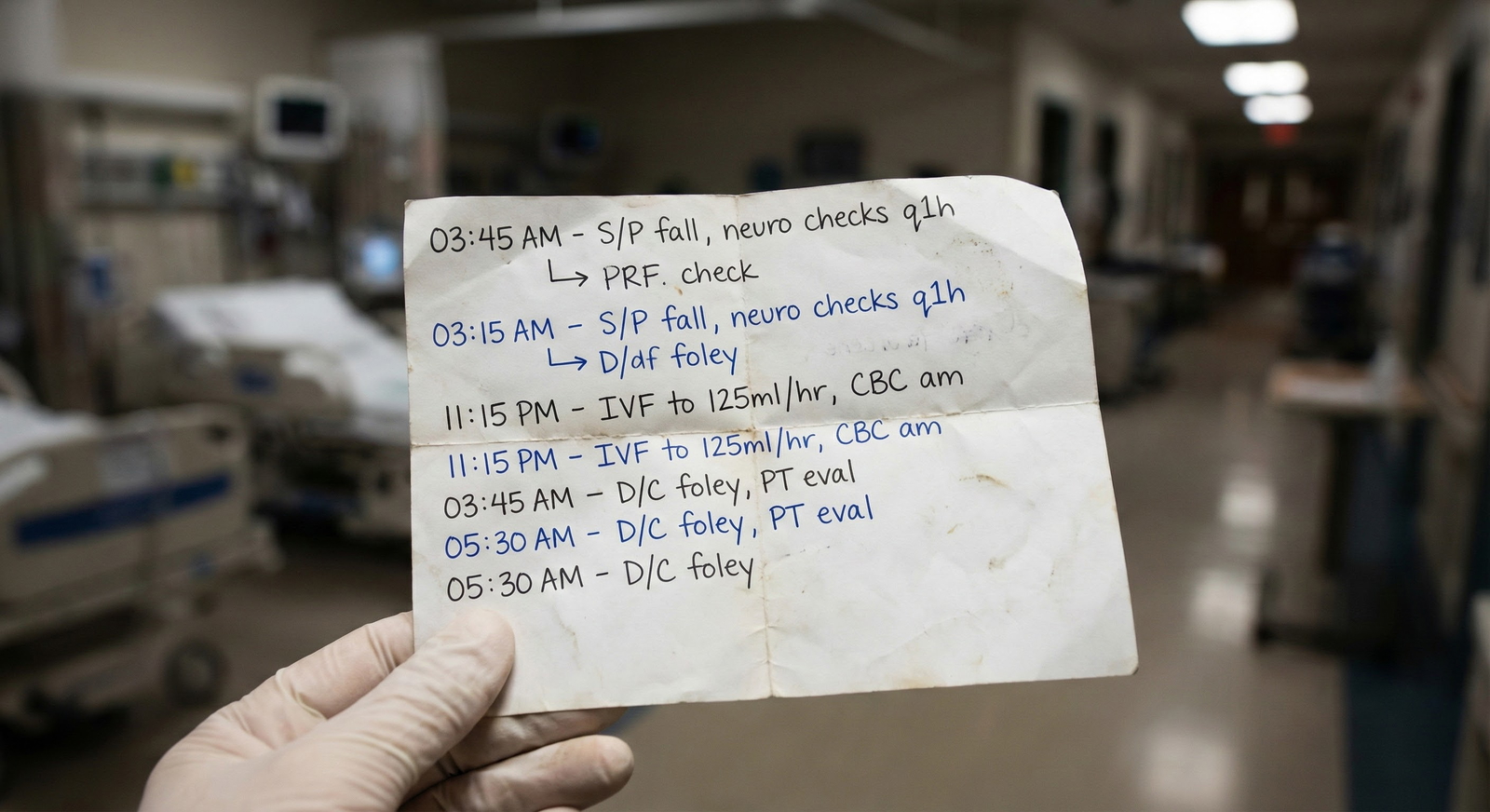
Pocket Lists / Index Cards / Phone Notes
- Keep a running list of each patient with key tasks for the day
- Mark tasks as “urgent,” “today,” or “can wait” to guide your focus
Eisenhower Matrix for Interns
- Urgent & Important: A patient with new chest pain, critical lab result, or acute change in mental status
- Important, Not Urgent: Updating a long-term care plan, reading about a complex diagnosis, following up chronic issues
- Urgent, Not Important (to you): Some administrative tasks that can be delegated or scheduled later
- Not Urgent, Not Important: Low-yield busywork—minimize when possible
Use Technology Wisely
- Set calendar reminders for key deadlines (discharge summaries, follow-ups)
- Use reputable medical apps (drug references, guidelines, calculators) for quick decision support
- Avoid over-reliance on your phone for nonclinical distractions during shifts
Batch and Prioritize
- See the sickest patients first
- Enter related orders together to reduce context-switching
- Return pages in batches when safe, but always triage critical pages promptly
- If you’re falling behind, communicate with your senior resident early—don’t wait until the end of the shift
2. Delegation, Teamwork, and Knowing When to Ask for Help
Internship is a team sport. Trying to do everything alone is inefficient and unsafe.
Understand Each Team Member’s Role
- Nurses: Your closest allies; they know the patients minute-to-minute and can identify early signs of deterioration.
- Senior Residents: Your immediate supervisors and mentors—go to them early with concerns or uncertainty.
- Attendings: Set the overall plan; use them for complex decisions and big-picture guidance.
- Pharmacists, Social Workers, Case Managers, PT/OT: Experts in their domains—engage them proactively to improve patient care and reduce your own workload.
Delegate Thoughtfully and Respectfully
- When appropriate, ask medical students to:
- Pre-round on stable patients
- Draft note templates (which you must review and edit)
- Look up background information (e.g., rare diseases, treatment options)
- Collaborate with nurses:
- Discuss medication timing or non-urgent interventions
- Ask for their assessment of changes in patient condition
- Always show appreciation and acknowledge contributions—strong relationships make the work smoother for everyone.
Ask for Help Early and Often
It is not a sign of weakness to ask for help. It is a patient safety requirement.
Ask for help when:
- You feel stuck on a diagnostic or management decision
- A patient looks sicker than you expected, or “something doesn’t feel right”
- Your workload is too heavy to handle safely
- You’re asked to do a procedure you’re not comfortable with alone
Phrase it clearly: “I’m concerned about this patient because ____. Can you come assess with me?” or “I’m not comfortable doing this procedure alone yet; could you supervise?”
3. Self-Care as a Professional Responsibility, Not a Luxury
Self-Care is often framed as “nice if you have time,” but in residency life and challenges, it is a core competency. Exhausted, burned-out physicians make more mistakes and struggle to provide compassionate care.
Protect Your Sleep as Much as Possible
- Aim for consistent sleep patterns on non-call days; avoid completely flipping your schedule unless necessary.
- Nap strategically before night shifts (60–90 minutes) if possible.
- Create a wind-down routine post-call:
- Limit screen time before sleeping
- Use earplugs/eye masks if sleeping during the day
- Keep caffeine use to earlier in the shift
Stay Physically Active in Small, Sustainable Ways
You may not have time for full workouts daily, but small habits add up:
- Take stairs instead of elevators when safe
- Do 5–10 minutes of stretching or bodyweight exercises at home
- Consider walking meetings or walking during quick breaks
Physical activity reduces anxiety, improves mood, and can enhance cognitive function—critical benefits during demanding rotations.
Build Emotional Resilience and Support
- Debrief difficult cases with peers, seniors, or mentors—especially deaths, medical errors, or moral distress cases.
- Use institutional resources:
- Employee assistance programs
- Wellness or resident support services
- Confidential counseling when needed
- Practice brief, on-the-go mindfulness:
- 3 deep, slow breaths before entering a challenging patient room
- Brief grounding exercises between emotionally intense encounters
Remember: caring for yourself is integral to caring for patients over the long course of your healthcare career.
4. Developing Strong Communication Skills as an Intern
Communication is at the heart of safe, effective medical practice.
With Patients and Families
- Start with listening. Before launching into explanations, ask: “What’s your biggest concern today?” or “What have you been told so far?”
- Use plain language:
- Say “heart attack” instead of “myocardial infarction”
- Say “kidney function” instead of “renal insufficiency”
- Summarize and check understanding:
- “Just to make sure I explained that clearly, can you tell me in your own words what the plan is?”
This not only reduces misunderstandings but also builds trust.
With the Healthcare Team
During Rounds and Presentations
- Use a structured format (SOAP or one adopted by your program)
- Lead with the big picture and the active problems
- Be concise but include key data (vitals, labs, imaging pertinent to decisions)
During Handoffs and Sign-Out
- Use a standardized template (e.g., I-PASS if your institution uses it)
- Always include:
- Illness severity (stable/unstable)
- Action list for the covering provider
- Contingency plans (“If X happens, do Y”)
- A clear follow-up of pending labs or imaging
Clear handoffs are one of the most powerful tools for preventing errors.
Managing Conflict and Difficult Conversations
- Approach disagreements (e.g., with nurses or consultants) with curiosity, not defensiveness:
- “Help me understand your concern” can de-escalate tension.
- For difficult family meetings:
- Prepare beforehand with your team
- Align on the medical facts and recommended plan
- Use empathy and silence; allow time for emotions and questions
5. Continuous Learning, Feedback, and Adaptability
Medicine evolves rapidly, and your internship is the foundation of a lifelong learning process.
Seek Specific, Actionable Feedback
- Ask seniors and attendings:
- “What is one thing I did well today, and one thing I could improve?”
- “How can I make my presentations more efficient?”
- Accept feedback without immediately defending yourself:
- Listen, clarify, and then reflect later
- Turn feedback into concrete goals:
- “Tomorrow I will present each patient in under three minutes, focusing on active problems.”
Stay Clinically Current and Curious
- Use real patients to drive your learning:
- After seeing a patient with a new diagnosis, read a short guideline or review that same day
- Set small, daily learning goals:
- “Today I will learn 2–3 key points about DKA management or pneumonia classification.”
- Use evidence-based tools:
- Clinical decision tools (e.g., risk scores, guideline apps)
- Program or hospital-approved protocols and pathways
Reflect on Your Growth
- Keep a simple journal or notes app with:
- Memorable patients and what they taught you
- Mistakes or near-misses and what you’ll change next time
- Small victories and improvements you notice in yourself
Reflection builds insight, resilience, and a sense of progress during an otherwise hectic year.
6. Mentorship, Networking, and Long-Term Career Development
Even during your intern year, you are shaping your future within healthcare careers.
Build a Supportive Network
- Invest in relationships with:
- Co-interns and residents (your immediate support system)
- Attending physicians who take an interest in teaching
- Nurses and allied health professionals
- Show up prepared and engaged; people remember reliable, thoughtful interns and are more likely to support you later (e.g., for letters of recommendation, research opportunities).
Find and Nurture Mentorship
A good mentor can:
- Offer honest advice about specialty choices and career paths
- Help you navigate program culture and expectations
- Provide opportunities in research, quality improvement, or leadership
Be proactive:
- Ask attendings you respect if they’re open to a brief career conversation
- Come prepared with specific questions rather than a vague “please be my mentor”
7. Achieving a Realistic Work–Life Balance as an Intern
Work-life balance doesn’t mean equal time; it means sustainable integration.
Set Boundaries Where You Can
- When off duty, be off:
- Avoid checking your work email constantly unless required by your program
- Politely decline extra shifts if you’re already stretched thin
- Use days off intentionally:
- Sleep, see family or friends, pursue hobbies, or simply rest
- Avoid scheduling too many errands on your only free day
Maintain Your Identity Outside Medicine
- Protect at least one small non-medical activity you enjoy:
- Reading, music, sports, art, gaming, or time outdoors
- Stay connected with non-medical friends and family as a reminder that your life is bigger than your current rotation
A grounded personal life can help buffer the inevitable stressors of residency life and challenges.

FAQ: Navigating Your First Year as a Medical Intern
Q1: What is the most challenging aspect of being a medical intern?
For many interns, the hardest part is managing time and emotional energy simultaneously. You’re expected to deliver safe, efficient patient care, learn new skills daily, and meet documentation requirements—often while sleep-deprived. The combination of clinical responsibility, steep learning curve, and long hours can feel overwhelming at first. With deliberate Time Management strategies and support from your team, this becomes more manageable over the first several months.
Q2: How can I manage stress and avoid burnout during my intern year?
Stress management starts with consistent Self-Care practices, even in small doses:
- Protect sleep when you can and use naps strategically before night shifts
- Incorporate brief physical activity—stairs, short walks, or bodyweight exercises
- Use micro-mindfulness: deep breathing, short grounding exercises between patients
- Debrief tough cases with peers, seniors, or mentors instead of internalizing them
- Seek professional support early if you notice persistent anxiety, low mood, or detachment
Programs often offer wellness resources—use them. Taking care of your mental health is part of your job.
Q3: Is it normal to feel overwhelmed and make mistakes as a new intern?
Yes. Feeling overwhelmed is very common, especially during the first 3–6 months. You’re adapting to new workflows, roles, and clinical responsibilities. Mistakes and near-misses are, unfortunately, a part of learning in medicine. What matters is:
- Speaking up and seeking help quickly when you’re unsure
- Owning errors, learning from them, and contributing to system improvements
- Using feedback constructively rather than as a personal judgment
You are not expected to know everything; you are expected to be honest, teachable, and committed to patient safety.
Q4: Can I maintain a social life while doing my Medical Internship?
Yes, but it will likely look different than it did in medical school. A realistic approach is to:
- Prioritize quality over quantity—fewer, more meaningful interactions
- Use your schedule to plan ahead for key events (family gatherings, important celebrations)
- Combine social and restorative activities when possible (walks with friends, shared meals, low-key gatherings)
Protecting some personal time is crucial for emotional health and helps you show up as a better doctor.
Q5: What resources are most helpful for interns during their first year?
Consider a combination of clinical tools, organizational aids, and support systems:
- Medical apps: UpToDate or similar, drug reference apps, medical calculators
- Organizational tools: digital calendars, simple to-do list apps, or pocket notepads
- Educational resources: residency lectures, online board review platforms, specialty society guidelines
- People resources: senior residents, attendings, mentors, therapists/counselors, and trusted peers
Don’t hesitate to ask your co-interns and seniors what tools they find most helpful—they’ve just navigated what you’re going through.
By approaching your intern year as both a clinical apprenticeship and a personal development journey, you can transform a demanding season into a powerful launchpad for your future in medicine. With intentional Time Management, sustainable Self-Care, and strong Communication Skills, you can not only handle your Medical Intern responsibilities—but grow into the kind of physician you set out to become.