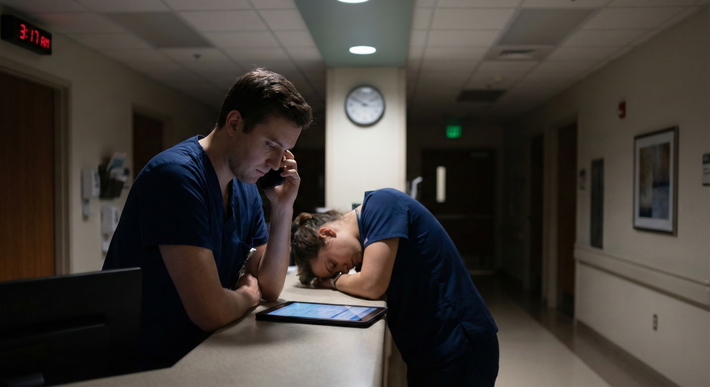
It’s 7:10 a.m. on a medicine floor. First day of intern year.
You’re at the computer with a perfectly color‑coded list, every lab from the last 48 hours printed, three pages of pre‑round notes per patient, and a meticulously drafted plan for each problem. Your senior glances over your shoulder, nods once, and says:
“Okay, we don’t have time for all that. What actually changed overnight?”
Your stomach drops. Because despite the mountain of prep, your brain is mush, you’re already behind, and you still haven’t eaten breakfast. By 10 a.m., you’re drowning, rewriting notes you already wrote, clicking through 40 EMR tabs, and staying until 8 p.m. “catching up” on documentation that didn’t need to be that long in the first place.
This is how good, hardworking interns burn out fast.
Let me be blunt: over‑prepping and over‑documenting are socially acceptable ways of being inefficient. They feel virtuous. They look diligent. But they quietly wreck your time, energy, and sanity.
You’re not lazy. You’re doing too much of the wrong work.
Let’s walk through the big mistakes I’ve watched interns make—and how to avoid burying yourself in “busy excellence” that doesn’t actually help patients or your learning.
Mistake #1: Treating Intern Year Like Another Exam To Over‑Prepare For
You just got out of 4+ years of being rewarded for sheer volume: more Anki cards, more UWorld questions, more notes, more detail. Residency does not reward that mindset.
In internship, the game changes from “know everything” to “do the right things, fast enough, without missing the critical stuff.”
Over‑prepping comes in a few flavors. None of them help you.
Flavor A: The Night‑Before Rabbit Hole
You go home after a long day and decide you’ll “crush” tomorrow by:
- Reading every UpToDate topic for all your patients
- Making multi‑page “patient packets”
- Pre‑writing full H&Ps and progress notes
- Building massive medication reconciliation spreadsheets “just in case”
You burn two extra hours. Then what happens?
- Overnight events make half your prep obsolete
- Labs and imaging change the entire plan
- Your senior wants a totally different diagnostic approach
- You’re more tired, not more effective
You did work, but not the work that actually matters at 6:30 a.m.
Flavor B: The Over‑Detailed Pre‑Round
Classic move: you spend 20 minutes per patient in the EMR before you ever lay eyes on them that morning.
You click through:
- 30 days of vitals
- Every lab from the last week
- All micro labs “just to be thorough”
- Every imaging report line‑by‑line
- Historical notes back to 2019 “for context”
Then you rush your actual exam, barely have time to talk to the patient, and are late to rounds.
Here’s the problem: you’re front‑loading data collection instead of decision‑making. You feel prepared because your brain is full of numbers, but you’re not actually any faster at:
- Prioritizing problems
- Making a safe, simple plan
- Anticipating what your attending will ask
You just did the same work twice.
Flavor C: The “Need To Know Everything” Spiral
You’re on night float. A patient has new‑onset AFib with RVR. Instead of focusing on rate control, anticoagulation, and disposition, you:
- Open 4 UpToDate tabs
- Read about rare etiologies of AF in 32‑year‑olds
- Compare every β‑blocker side effect for 15 minutes
- Start drafting a mini‑review article in your note
Meanwhile, nursing is waiting for orders and the patient’s heart rate is still 150.
This is the medical student instinct carried into a world where it can actually hurt people.
Mistake #2: Turning Notes Into Novels
Over‑documenting is the twin evil of over‑prepping. Interns confuse “good note” with “long note.” They’re not the same. At all.
The EMR already has every lab, vitals trend, and imaging report. Your note does not need to retype them all.
The Most Common Over‑Documenting Traps
Copy‑pasting entire prior notes
- The 3‑page HPI from admission doesn’t belong in every daily progress note
- No one wants to scroll through 15 unchanged chronic problems on day 9 of a routine pneumonia admit
Writing for an imaginary malpractice lawyer instead of your team
- Paragraphs of defensive language
- Every negative ROS spelled out daily
- Obsessive repetition of “patient verbalized understanding…” 7 different ways
Re‑stating every data point
- Listing every lab with normals, every day
- Re‑typing radiology impressions verbatim
- Including all vitals and I/Os line‑by‑line rather than summarizing trends
Using the note as your personal brain dump
- Long “Plan” sections that read like a stream‑of‑consciousness internal monologue
- Multiple contradictory ideas left in because you didn’t edit
- Jargon, hedging, and half‑finished sentences
The result?
- You spend 30–45 minutes per note you could have done in 10–15
- You stay late most days “finishing notes”
- Your notes are actually harder to use because the key decisions are buried in fluff
Harsh truth: your attending would rather have a short, clear note on time than a beautifully written 3‑page monster at 9 p.m.
Mistake #3: Confusing “Thorough” With “Safe”
Interns tell me, “I’d rather over‑document and be safe.” Sounds reasonable. Often wrong.
Excess is not safety. Clarity is.
Over‑prepping and over‑documenting create a few subtle dangers:
1. Cognitive overload
If you’re tracking 40 minor lab abnormalities and 20 chronic issues in excruciating detail, the real problem—like new hypoxia or acute mental status change—gets lost in the noise.
You’re so busy documenting that the potassium went from 4.0 to 3.8 that you miss the fact that the patient hasn’t peed all shift.
2. Delayed action
I’ve seen this more times than I like: an intern spends 30 minutes composing the “perfect” note and plan while a patient is deteriorating.
You don’t get points for your documentation if you didn’t call the rapid response when you needed to.
3. Communication failure
Your notes are part of patient care handoff. If they’re bloated and ambiguous, here’s what happens:
- Night float skims and misses that you were worried about a GI bleed
- Consultants can’t figure out what you actually wanted from them
- Day team tomorrow has no idea what you thought was the main problem
In other words: long does not equal safe. Long often equals confusing.
What You Should Optimize For Instead
There are only three things that matter as an intern:
- Patient safety and outcomes
- Clear communication with your team
- Your own sustainability
Over‑prepping and over‑documenting attack #3 and don’t reliably help #1 or #2.
So what do you actually aim for?
Principle 1: “Just‑Enough” Preparation
Your goal in the morning is simple:
- Know what changed
- Know what matters
- Have a reasonable initial plan
That’s it. Not a thesis.
On a typical ward day, a reasonable per‑patient pre‑round might be:
- 2–4 minutes in the EMR:
- Overnight events / nursing notes
- Current vitals + trend (last 24 hours)
- New labs, new imaging, key micro
- 2–5 minutes at bedside:
- Focused history (what changed, how they feel)
- Brief exam targeted to their issues
Then you adjust your plan as you hear your senior/attending’s thoughts.
Principle 2: Notes That Answer Two Questions
Every daily note should clearly answer:
- What is happening with this patient today?
- What do I need anyone reading this note to actually do or know?
If your note doesn’t make that obvious in the Assessment & Plan, you’re doing extra work for no gain.
How To Stop Over‑Prepping: Concrete Fixes
You cannot “willpower” your way out of over‑prepping. You need systems.
1. Cap Your Pre‑Round EMR Time Per Patient
Literally set a timer the first week.
- Floor patient: 3–4 minutes in EMR max
- ICU patient: maybe 5–7 minutes, depending on complexity
What you look at (in order):
- Last 24 hours vitals trend
- Overnight events / nursing notes
- New labs / key imaging / micro
- Active meds (quick scan)
Then stop. Go see the patient.
If you find yourself clicking back to 2017 echo reports pre‑rounds, you’re procrastinating, not preparing.
2. Use a One‑Page Rounding Tool
If your “intern list” is more than one sheet of paper (front/back), it’s too much.
Your personal paper (or tablet) should have:
- 1–3 key problems per patient
- Today’s main goal (e.g., “wean O2,” “get SNF placement,” “rule out PE”)
- One‑line to‑do items
Not full lab panels. Not full imaging reports. Not entire med rec lists.

3. Pre‑Read With a Purpose
If you’re going to “prep” the night before, be ruthless:
- 10–15 minutes max to skim tomorrow’s new admits
- Look for:
- Why they came in
- The main active issue
- Any obvious high‑risk problems (e.g., DKA, sepsis, GI bleed)
Then stop. No giant summaries. No pre‑written H&Ps. Sleep is more valuable than another article on community‑acquired pneumonia.
How To Stop Over‑Documenting: Make Your Notes Work For You
Start from the assumption: “My note will be shorter than I’m instinctively tempted to write.”
Then do the following.
1. Use a Tight Assessment & Plan Structure
For each problem, stick to this basic pattern:
- 1 sentence: What’s going on today
- 2–4 bullets: What you’re doing about it
- Optional 1 sentence: Contingency / what you’re watching for
Example for CHF:
# Acute on chronic HFrEF (EF 25%) – improving
- Net negative 1.8L last 24h, still mildly dyspneic on exertion
- Continue IV furosemide 40 mg BID; goal net –1 to –2L next 24h
- Maintain 2L NC, wean as tolerated
- Monitor BMP qAM, strict I/Os, daily weights
- If worsening dyspnea or hypoxia, consider CXR and escalate O2
That’s enough. You do not need to restate every lab and vital that supports this.
2. Stop Re‑Typing Data the EMR Already Has
Do not do this:
“WBC 10.2 (9.8), Hgb 8.3 (8.4), Plt 210 (205), Na 132 (133), K 4.0 (3.9)…”
Just… no. The EMR has a labs tab.
Instead:
- Labs: Stable CBC. Mild hyponatremia and normal K; monitor.
- Imaging: CXR yesterday with improving right lower lobe infiltrate.
Summarize, synthesize, move on.
3. Set a Time Limit Per Note
On a standard medicine floor:
- Progress note: aim for 10–15 minutes
- Simple consult note: 15–20 minutes
- Complex new H&P: 25–30 minutes
If you are consistently blowing past these:
- You’re over‑describing
- You’re repeating yourself
- You’re putting med‑student‑level detail into a job that needs resident‑level efficiency
You’ll get faster, but only if you decide to be less ornate.
Where Over‑Prepping and Over‑Documenting Really Bite: Your Time and Burnout
Let’s do some simple math.
Say you:
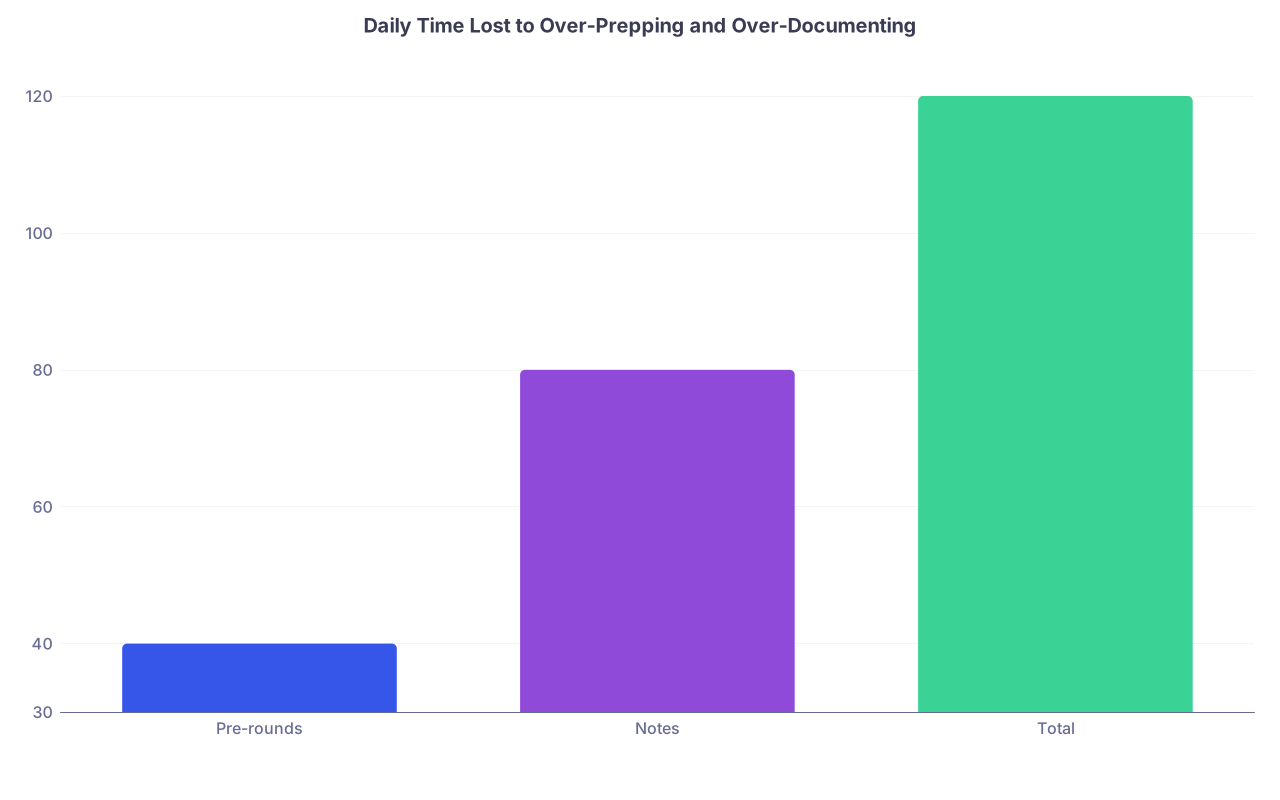
- Spend an extra 5 minutes of unnecessary EMR pre‑round time per patient
- Spend an extra 10 minutes over‑writing each note
With 8 patients:
- 8 × 5 = 40 minutes wasted pre‑rounds
- 8 × 10 = 80 minutes wasted on notes
That’s 2 extra hours. Every. Single. Day.
| Category | Value |
|---|---|
| Pre-rounds | 40 |
| Notes | 80 |
| Total | 120 |
Where do those 2 hours come from?
- Your lunch break
- Getting home on time
- Ten minutes to actually read a guideline when it matters
- Sleep
By September you feel “residency is killing me,” when in reality, you’re killing yourself with inefficiency dressed up as dedication.
I’ve watched the difference in real interns:
| Style | Average Sign-Out Time | Burnout Risk | Feedback from Team |
|---|---|---|---|
| Over-documenter | 7:30–8:30 p.m. | High | “Notes are long” |
| Balanced | 5:30–6:30 p.m. | Moderate | “Clear and helpful” |
| Under-documenter | 5:00–6:00 p.m. | High | “Missing details” |
You want to live in that “Balanced” row. Not the martyr row and not the unsafe row.
How To Know If You’re Slipping Into These Traps
Run a quick self‑check after your first 2–3 weeks.
You’re probably over‑prepping / over‑documenting if:
- You’re almost always the last intern to leave
- You dread notes more than actual patient care
- Your senior keeps interrupting your presentations with “Okay, bottom line?”
- Rounds feel like a race you’re constantly 2 steps behind on
- You “prepare” so much at home that your personal life has disappeared
Ask bluntly:
“Do you find my notes and presentations too detailed or just right?”
If more than one senior says, “They’re… very thorough,” that’s code for “You’re doing too much.”
How To Reset Without Freaking Out About Missing Something
You’re probably thinking: “If I scale back, won’t I miss stuff?” Fair question.
Here’s how to cut excess without sacrificing safety.
1. Decide What’s Non‑Negotiable
These must be done carefully:
- Med lists and high‑risk meds (anticoagulants, insulin, opioids)
- Allergy documentation
- Code status and goals of care
- Critical events, changes in mental status, rapid responses
Be meticulous there. That’s where details save lives.
2. Build “Trigger Lists” Instead of Catch‑Alls
Instead of trying to track everything, focus on triggers. For example:
- Sepsis patient triggers:
- MAP <65
- Lactate uptrending
- Worsening O2 requirement
- GI bleed triggers:
- New melena or hematemesis
- Tachycardia, hypotension
- Hgb drop >2 in 24 hours
Document those clearly once. Don’t write a paragraph of daily physiology to feel thorough.

| Step | Description |
|---|---|
| Step 1 | Notice change |
| Step 2 | Reassess patient now |
| Step 3 | Note in chart |
| Step 4 | Call senior or rapid |
| Step 5 | Document plan |
| Step 6 | Is it a trigger item |
| Step 7 | Needs escalation |
3. Ask Seniors What They Actually Want
Instead of guessing, ask:
- “For a standard floor progress note, what do you consider must‑have vs nice‑to‑have?”
- “Where do you see interns waste the most time in notes?”
- “Can you show me one of your notes you think is ‘just right’?”
Steal their structure. Use their shortcuts. They’ve already paid the price learning what’s overkill.
When You Should Go Deep
To be clear, sometimes you absolutely should go all‑in:
- A complicated new ICU admit with unclear diagnosis
- An ethics‑heavy case where goals of care are complex
- A weird zebra your attending is clearly excited about
- A sentinel event or near‑miss that needs detailed documentation
Depth has a purpose there: it informs major decisions, protects the patient, and guides the team.
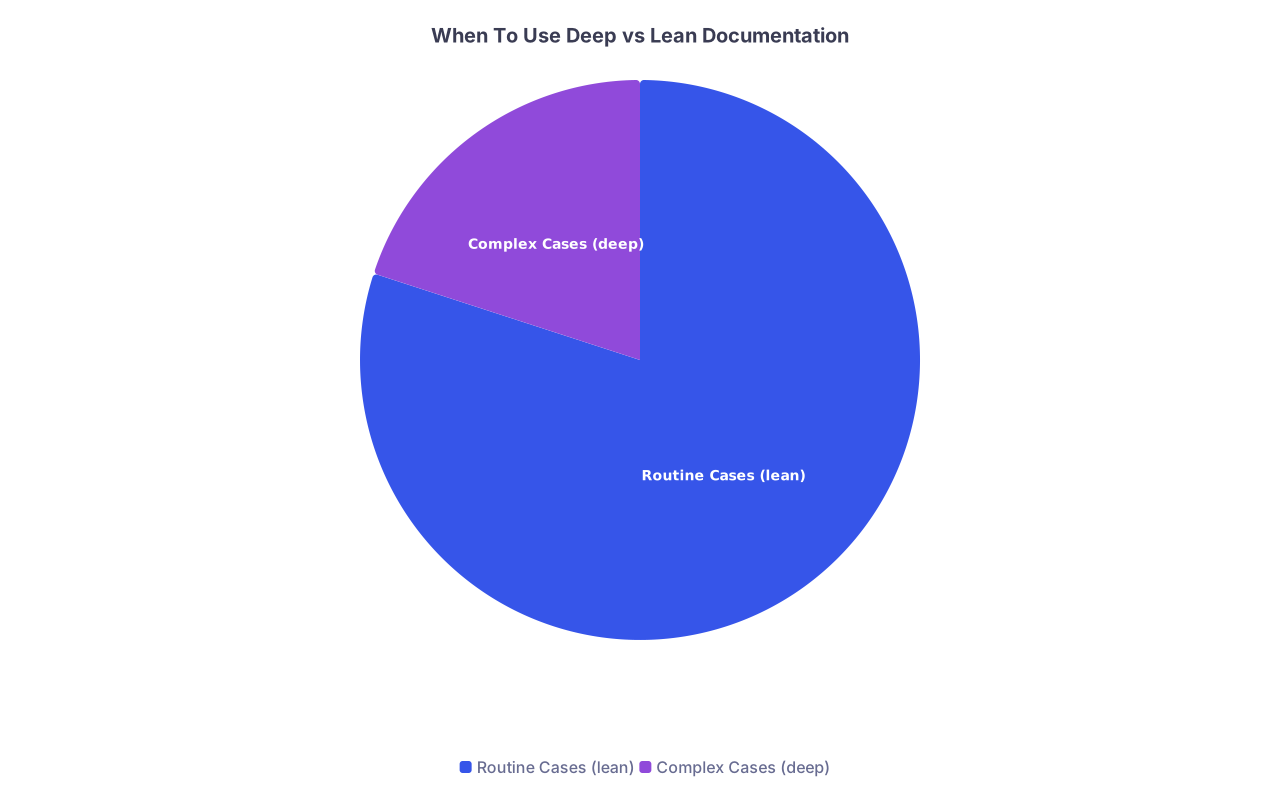
The mistake is treating every routine COPD exacerbation like a grand rounds presentation.
| Category | Value |
|---|---|
| Routine Cases (lean) | 80 |
| Complex Cases (deep) | 20 |
Roughly 80% of your notes should be lean. Save your energy for the 20% that truly need depth.
Protecting Your Future Self
There’s one more angle you’re probably not thinking about: your reputation.
By the end of intern year, what people remember about you isn’t your knowledge of obscure nephrology physiology. They remember:
- Do your notes make their job easier or harder?
- Do you finish work on time or constantly lag behind?
- Can you prioritize when the floor gets busy, or do you freeze in data?
The over‑prep / over‑doc intern gets quietly labeled:
- “Hard‑working but slow”
- “Very thorough but always behind”
- “Nice, but I worry about them in a code”
You don’t want that label following you into senior year.
You want: “Efficient. Safe. Knows what actually matters.”

FAQs
1. How do I know if my note is “too short” and risks under‑documenting?
Ask yourself two questions:
- Could a night‑float resident understand what happened today and what to watch for, just from this note?
- Did I clearly document my reasoning for any non‑obvious decisions (e.g., why I didn’t anticoagulate, why I held a med)?
If yes to both, you’re probably fine. If your plan is just “continue current management” with no explanation, that’s too thin. Short is okay. Vague is not.
2. My attending loves super detailed notes. Do I have to write novels for them?
You adapt slightly, but don’t destroy yourself. Ask them explicitly: “Can you show me an example of the level of detail you like?” Often, what they say (“very thorough”) and what they actually write are not the same. Meet their key expectations (e.g., more explicit differential, clearer justification) without padding the rest of the note.
3. I’m slow at notes because I’m still learning the EMR. Is that the same problem?
No, that’s a separate, temporary handicap. Fix it aggressively:
- Spend one afternoon asking a co‑resident to show you all the smart phrases, templates, and shortcuts they use
- Build your own templates for common problems
- Learn keyboard shortcuts
If your slowness is mostly navigation/template‑related, that’s fixable in weeks, not months. Over‑documenting is a mindset you have to challenge directly.
4. How do I balance learning deeply vs being efficient on busy days?
Use a two‑tier system:
- During the shift: aim for safe, clear, efficient. Write down questions that come up.
- After the shift (or on a lighter day): pick one real patient problem and read deeply for 20–30 minutes, not three hours.
Depth should be focused and delayed, not dumped into every real‑time decision. Your learning will actually stick better when it’s anchored to specific cases, not random rabbit holes at 2 a.m.
5. My anxiety drives my over‑prepping. How do I handle that without being unsafe?
Name it for what it is: anxiety management disguised as diligence. Then replace the behavior, not the goal:
- Keep safety as the goal, but use checklists and trigger lists instead of massive notes
- Ask your senior: “What are the 3 things that would make you worry about this patient overnight?” Write those down and focus on them.
- When you feel the urge to over‑prep, set a timer and commit to stopping when it goes off—then do one anxiety‑reducing action outside the EMR (deep breaths, brief walk, quick debrief with a co‑intern).
You’re not trying to be less careful. You’re trying to be carefully targeted.
Today’s action step:
Pull up one of your recent progress notes and your pre‑round checklist. Cut 30% of the fluff. Remove any data that’s already easily visible in the EMR, and rewrite the Assessment & Plan to fit on half a screen. Tomorrow, use that as your new baseline—and see how much time you get back.