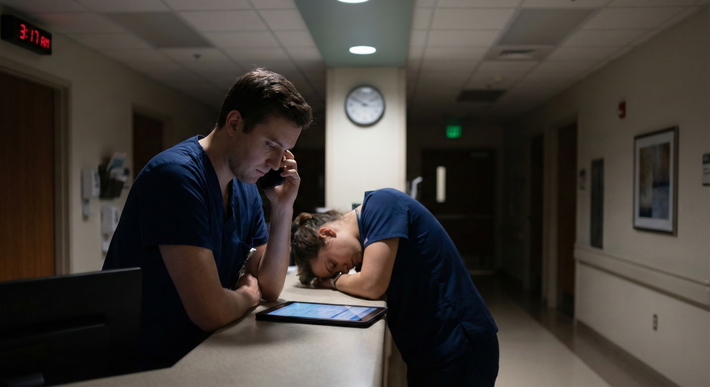
Your seniors are judging you on call long before they ever comment on your notes or your differential.
That first month, nobody explains the hidden scorecard. But it’s there. Every night. Every page. Every sign-out.
I’ve sat in workrooms at 2 a.m. listening to chiefs, seniors, and attendings dissect interns after they’ve gone home. The words are almost always the same: “Can I trust them on call?” That’s the real question. Everything else is detail.
Let me walk you through what they actually expect from you on call, the stuff they assume you know but never bother to spell out.
The Unspoken Contract of Call
On call, your senior’s reputation is tied to your decisions.
If you miss a GI bleed, that’s their miss. If a patient codes and you never called them, that’s their “failure to supervise” when the M&M slides go up. They’re not just being tough because they’re burned out. They’re being tough because they’re exposed.
So there’s an unspoken contract they expect from you:
- You call for the right things.
- You don’t call for stupid things.
- You execute what they tell you quickly and correctly.
- You don’t make them look blind in front of attendings, nursing, or consultants.
They rarely put it in those words, but that’s the framework in their heads.
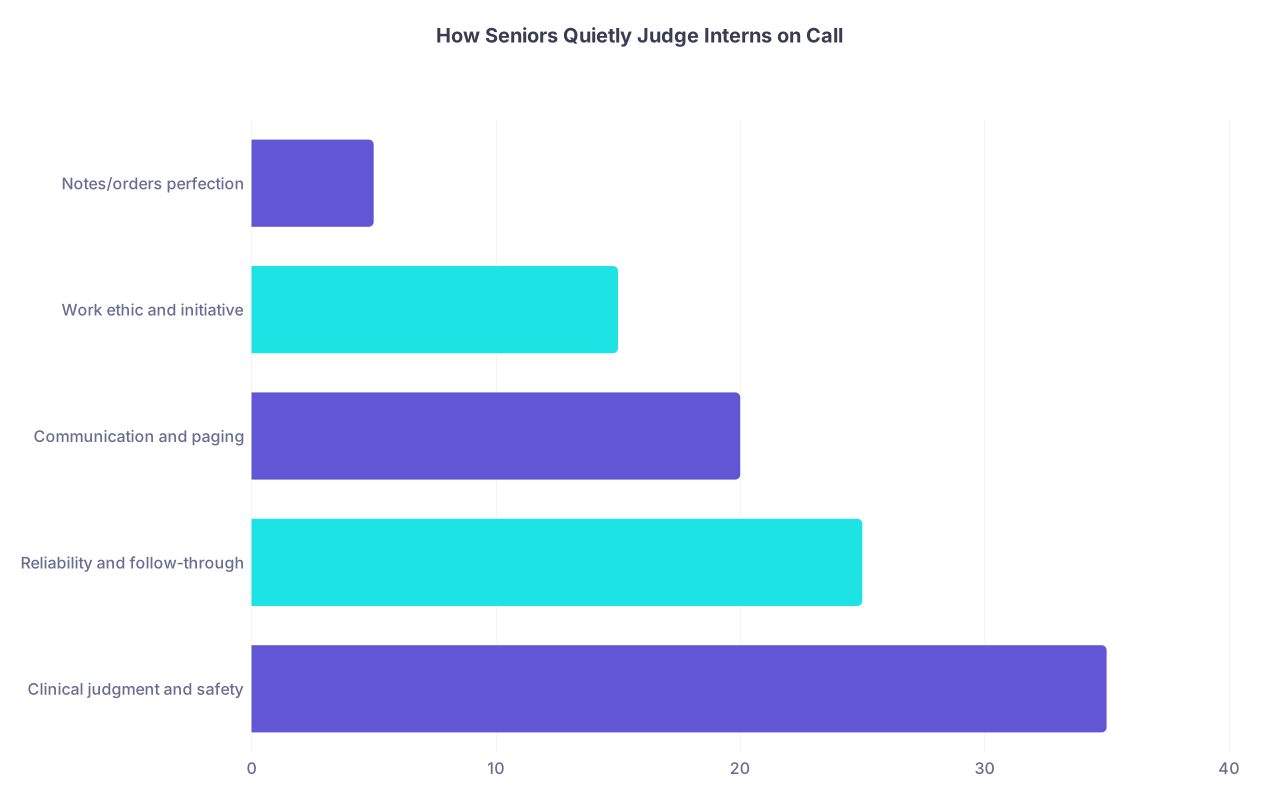
| Category | Value |
|---|---|
| Clinical judgment and safety | 35 |
| Reliability and follow-through | 25 |
| Communication and paging | 20 |
| Work ethic and initiative | 15 |
| Notes/orders perfection | 5 |
The key point: nobody cares if you’re slow on notes at 2 a.m. They care if they sleep. Safely.
What They Expect Before the First Page
This starts before the first code, before the first chest pain page.
They expect you to own sign-out
Here’s the part people underestimate: how you handle sign-out is your first on-call impression.
Your senior expects you to:
Know the “sickest 5” on your list cold
Not the entire census in insane detail. The top 3–5 who are likely to blow up tonight.They’re assuming you’ve already asked at sign-out:
- “Who’s your most unstable patient?”
- “Anyone you’re worried might decompensate?”
- “Any pending critical tests that might come back overnight?”
If you don’t ask those questions, you already look green.
Actually read your sign-out, not just glance at it
They can tell in 10 seconds if you’ve read the sign-out or if you’re winging it. The giveaways:- You ask, “Why is this patient admitted?” for someone who’s been here 5 days with a one-line summary in the sign-out.
- You get surprised by a known problem (like “Oh, I didn’t know she had a GI bleed yesterday”) that’s literally the first sentence of the note.
Know “the plan if X happens”
Seniors love interns who ask at sign-out:
“If this guy spikes again tonight, do you want me to just give Tylenol and recheck, or are we escalating?”
That single question tells them you’re thinking ahead—and that you want to align with their threshold for worry.
Lazy sign-out behavior signals to them that they’ll have to micromanage you all night.
When the Pager Goes Off: What They Expect in the First 10 Seconds
The first page is where interns crash and burn.
The nursing page comes in: “Patient is short of breath.”
Here’s the raw expectation your senior has:
You do not call them before you lay eyes on the patient.
Unless the nurse is literally saying, “Get here now” or “I’m calling a rapid.”
They expect, by default, that you will:
- Go see the patient.
- Take at least a basic set of vitals yourself or from the monitor.
- Do a quick focused exam.
- Pull up the chart before you call them.
They will not say this to you. They will just get increasingly short with you if you call without this.
They’re tracking two things in their head:
Do you leave the workroom when you should?
They notice the intern who sits at the computer asking a hundred questions before actually going to the bedside. That person gets labeled fast: “afraid of patients.”Do you over-rely on nurses’ wording?
They expect you to respect nursing but verify.
“Nurse says they look bad” should trigger you to move, not paralyze you into a 10-minute chart review.
The unspoken rule: first see, then think, then call.
What a “Good Page” to a Senior Sounds Like
This is where most interns get quietly destroyed.
They don’t care about a perfectly polished SOAP presentation at 3 a.m. They care if you’re organized, concise, and not wasting their time. Here’s what they expect when you call:
You lead with the headline, not the life story.
What your senior expects to hear first:
- “Hey, it’s [Your Name]. I’m on cross-cover for [Team/Service]. I’m calling about Mr. Smith in 822—he just developed new chest pain.”
Not:
- “Uh hi, sorry to bother you, um, so there’s this 67-year-old guy who came in a few days ago with COPD and heart failure and…”
The internal checklist they’re using when you present:
- Do you know why the patient is admitted?
- Do you know the relevant history or meds that obviously matter?
- Have you checked vital signs? (If you call without vitals, they absolutely notice.)
- Have you formed any impression or plan?
Here’s the ugly truth: they’re not just listening to help with the patient. They’re deciding if they can trust you alone in a room with a crashing patient.
The minimum they expect from you on a typical page:
Basic background
“He’s here for pneumonia with hypoxia, improved over last 24 hours.”What changed
“Now he’s more short of breath and tachycardic to 120, O2 up from 2L to 5L.”Your quick exam/vitals
“BP 100/60, RR 26, sat 90% on 5L, using accessory muscles, lungs with new crackles on the right, no chest pain.”Your working concern and first thought
“I’m worried about worsening pneumonia or possible PE. I’ve already increased O2, ordered a stat CXR, and drew labs including ABG and troponin, but I wanted to loop you in now because he looks worse.”
That last part is the secret: they want to see that you’re not just a messenger. You’re thinking, you’re moving, you’re acting.
The “Don’t Ever Do This” List (They Judge You Hard Here)
These are the patterns that get interns blacklisted on call. Nobody tells you straight, but they talk about it in the workroom after.
1. Calling with zero data
If you say: “He looks bad,” and you have no vitals, no physical exam details, no basic context, your senior will mentally file you as: unsafe.
Doesn’t matter how nice you are. Unsafe.
2. Burying the lede
You start with: “So Mr. Jones, 54-year-old, came in for abdominal pain three days ago and…”
And only in minute three do you say:
“…and now he’s hypotensive to 70/40.”
They won’t forget that. You just showed them your clinical priorities are upside down.
3. Hiding your uncertainty
You’re scared. You don’t want to sound clueless. So you pretend you’re confident and gloss over your doubts.
Seniors hate this. They’d absolutely rather hear:
“I’m not totally sure what’s going on, but here’s what I’m seeing and what I’ve done so far.”
Hiding your uncertainty is how patients get hurt and seniors get burned at M&M.
4. Paging 6 times for 6 small things
This one kills them.
- Page 1: “Can I give Tylenol for this fever?”
- Page 2: “Can I renew this home med?”
- Page 3: “He says he has heartburn, should I order Tums?”
They’re thinking, “Why didn’t you batch this?” They expect you to have the awareness to say, “Anything else you’d like me to handle now while I’m on the phone?” and clear multiple issues at once when possible.
How They Expect You to Handle “I Don’t Know What This Is”
This is the part you don’t learn from lectures.
There will be a night when a patient deteriorates and you have no idea what’s happening. Your senior does not expect you to suddenly become a second-year cardiology fellow. They expect this pattern:
You go see the patient early in the change, not at the last minute.
You admit you’re not sure—but you still do the basics:
- Vitals, basic exam.
- Make sure there’s IV access.
- Put the patient on the monitor if needed.
- Grab the chart and see major diagnoses/meds.
You call before things are catastrophic.
Phrase it this way: “I’m not totally sure what’s going on yet, but something’s not right and I wanted you to know quickly rather than wait.”
That sentence gets trust, not ridicule.
Your senior is listening for whether you have a sense of trajectory. Is this a slow burn you can watch for an hour? Or is this trending toward disaster?
The Hidden Expectation: Make Good Use of Them
Seniors don’t want you to be independent. They want you to be appropriately dependent.
They expect you to use them well. That means:
- You call early when a patient is clearly sicker.
- You don’t call for problems you can fix yourself with basic judgment.
- When they do come see the patient, you’ve already done first steps, not stood frozen at the foot of the bed.
I’ve watched seniors absolutely light up when an intern says at 3 a.m.:
“I already ordered the EKG, troponin, CXR, and labs, but he’s looking worse so I called you while that’s in progress.”
That’s the on-call gold standard. You’re not dumping. You’re escalating wisely.
What They Expect from Your Documentation at 2 a.m.
Here’s the secret: during call, documentation is about protection, not beauty.
Your senior assumes you understand two things about nighttime notes:
If something significant happens, you document it.
Not a novel. But something that proves:- You saw the patient.
- You examined them.
- You made a plan and/or spoke to someone.
“Called to bedside for increased SOB. Vitals…Exam…Assessment…Plan…”
That’s enough. But if it’s big (hypotension, hypoxia, chest pain, bleed), there must be a footprint.You write what actually happened.
Sloppy: “Patient stable overnight, no issues.” when you were there at midnight pushing fluids for a BP of 80/40.
That comes back to haunt people. Seniors know that.
They’re not expecting Shakespeare at 2 a.m. They’re expecting a medicolegal shield that proves people weren’t just left to crash without eyes on them.
How They Expect You to Interact with Nurses on Call
Most seniors will never say this part out loud, but it drives a lot of their opinion of you.
They expect you to:
Treat nurses as partners, not task-rabbits
If a nurse is worried enough to call you at 3:27 a.m., your default answer should not be, “Just recheck in an hour” from your chair. Unless you trust the situation and know the patient well, you go look.Not throw nurses under the bus when talking to seniors
Saying, “The nurse is being annoying” or “She’s overreacting” without data makes you look arrogant and inexperienced. A senior who’s been burned before will immediately distrust your judgment.Translate nursing concerns into medical language
Instead of: “Nurse says he’s not himself.”
Say: “Nurse reports new confusion and agitation compared to baseline tonight; he’s disoriented to time now, was fully oriented this afternoon.”
Your senior expects you to be that bridge. If you do it well, they trust you faster.
What They Want to See by the End of a Long Night
By 5 a.m., most seniors are not grading your knowledge. They’re grading your growth curve.
They’re silently asking:
- Did you make the same mistake three times?
- Are you more decisive than you were at 7 p.m.?
- Did you learn from the first “hey, always check vitals before calling me” conversation?
You don’t need to be brilliant. You need to trend in the right direction—in confidence, in pattern recognition, in judgment.
Some seniors will test you. They’ll say less, see what you do, then decide how much rope you get.
The ones who advocate for you later in resident eval meetings? Those are the ones who saw you go from hesitant and messy at 8 p.m. to steady and thoughtful by morning sign-out.
What Makes an Intern “Great on Call” (From a Senior’s Mouth)
When seniors talk about a “great intern on call,” they’re not talking about someone who knows every guideline.
They’re talking about someone who:
- Shows up to the bedside quickly.
- Gets a basic story, vitals, and exam before calling.
- Gives a concise, structured picture of the problem.
- Has already done 1–2 appropriate first steps.
- Knows when they’re in over their head and says so.
- Documents the important overnight events cleanly.
- Doesn’t wake them up 8 times for stuff they could clearly have handled.
Those are the interns they trust with the sick patient at 3 a.m.
Those are the interns they recommend for chief. For fellowships. For the good letters.

A Simple Mental Flow for Overnight Calls
You want a practical mental script? Use this.

| Step | Description |
|---|---|
| Step 1 | Pager goes off |
| Step 2 | Ask nurse brief concern |
| Step 3 | Go see patient |
| Step 4 | Check vitals and exam |
| Step 5 | Start basic interventions |
| Step 6 | Call senior with concise summary |
| Step 7 | Review chart and orders |
| Step 8 | Decide plan |
| Step 9 | Implement plan and update nurse |
| Step 10 | Sick or unstable? |
| Step 11 | Uncertain or change from baseline? |
If you follow that pattern consistently, you’ll avoid 90% of the “What were they thinking?” conversations about you.
Quick Reality Check: Your Seniors Are More Afraid Than You Think
You feel terrified on call. Fine. Normal.
What you don’t see is that your senior is also quietly anxious—about you. About what they’ll miss because you didn’t call. About the pager that doesn’t go off until the patient is peri-code.
So yes, they can be short. Abrupt. Even harsh at times. Underneath that, the real expectation is simple:
They want to sleep without getting blindsided—and they want their patients to be alive and roughly intact at 7 a.m.
Everything I’ve told you here is in service of that.
You don’t need to be perfect. But if you can show them you understand the game they’re actually playing, not the one you imagined from textbooks, your life on call gets much easier.
| Situation | How You Handle It | How Seniors Perceive You |
|---|---|---|
| New hypoxia | See patient, vitals, call early | Trustworthy, safe |
| Mild fever | Think, order basics, no call | Independent, appropriate |
| Confusing deterioration | See patient, admit uncertainty | Mature, teachable |
| Multiple minor issues | Batch questions on one page | Efficient, respectful |