How Program Directors Spot Interns Who Are Nearing Burnout
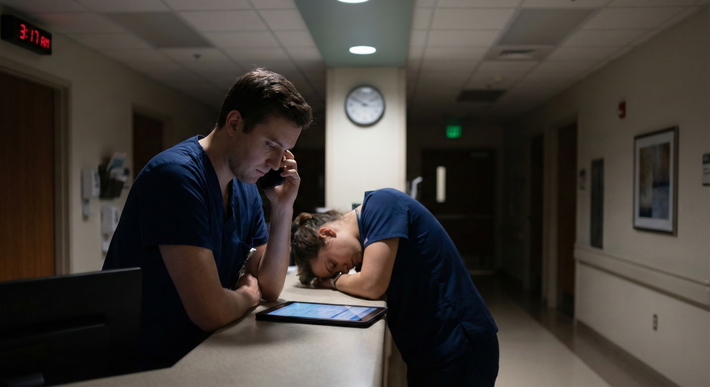
It’s 4:12 a.m.
You’re in the workroom, staring at a blank progress note, knowing full well you’ve rounded on this patient three times this week. Your brain just… won’t fetch the words. The night float just poked their head in to say, “Hey, sign-out in 20?” and you’re still clicking through labs you’ve already seen twice.
Across the hall, your PD walks by, supposedly “just checking in on nights.”
You think you look fine. Tired, sure, but fine.
Let me spoil something for you: they already know which of you is close to the edge.
Program directors, chiefs, a few seasoned attendings—they can pick out the interns who are quietly burning out long before those interns crash. They may not always intervene the way you wish they would, but do not kid yourself: they see it.
Let me walk you through what they’re actually watching for, what gets talked about behind closed doors, and the signals you’re giving off that you do not realize are screaming, “I’m not okay.”
What PDs Actually Track (That You Never See)
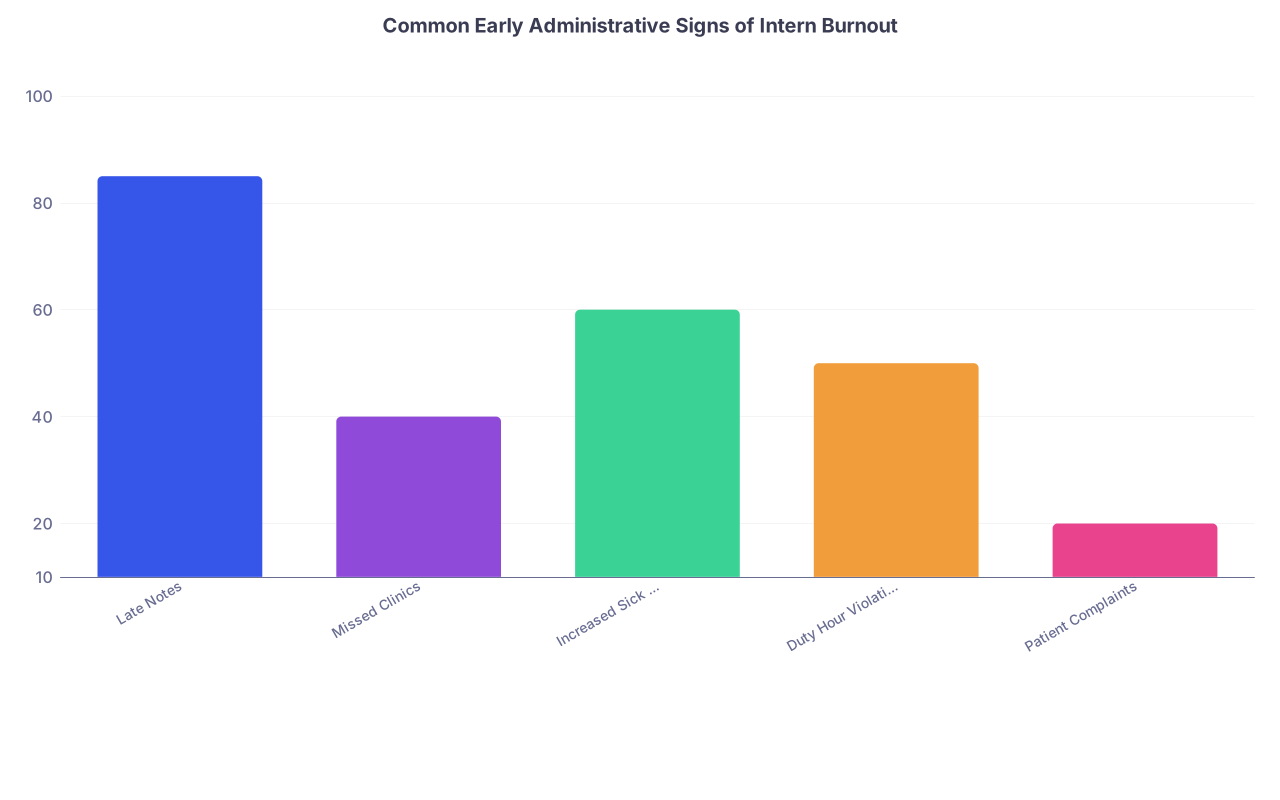
Here’s the first behind-the-scenes truth: your PD is not relying on “a feeling” to know you’re struggling. They have data. A lot more than you think.
| Category | Value |
|---|---|
| Late Notes | 85 |
| Missed Clinics | 40 |
| Increased Sick Days | 60 |
| Duty Hour Violations | 50 |
| Patient Complaints | 20 |
Those numbers aren’t from your specific program, obviously, but the pattern is real everywhere. Let me break down the usual internal dashboard.
1. Documentation and Inbox Lag
The EHR is a snitch. A very detailed one.
Every month (sometimes every 2 weeks), many PDs get a report: unsigned notes, incomplete charts, delayed discharge summaries, late orders. They don’t read every single one. They scan patterns.
Intern A: notes usually done same day, occasionally one left over post-call.
Intern B: notes consistently 2–3 days late, multiple “documentation reminders” from the system, messages piling up.
Guess which intern gets quietly flagged at the next Clinical Competency Committee (CCC) meeting?
It’s not because they think you’re lazy. Veteran PDs know what this usually means: you’ve lost cognitive bandwidth. You’re spending all your energy just keeping the ship from sinking, and documentation is where burned-out interns start to drown.
2. Duty Hour Patterns and “Hero” Narratives
Duty hours aren’t just about compliance. They’re a crude burnout barometer.
Your program gets reports by resident: total weekly hours, number of 80+ weeks, missed days off, back-to-back heavy stretches. Here’s the part you don’t hear: PDs don’t just look for under-reporting. They look for “martyr patterns.”
The intern who:
- Always “stays to help” until 9 p.m.
- Writes in the duty system, “Left at 7:30” when their senior clearly saw them at 9:15
- Comes in sick “so the team isn’t short”
That might look noble to you. To a PD who has watched people flame out for 15 years, it’s a red flag. That behavior almost always precedes one of three things: major medical error, emotional blow-up on the unit, or abrupt leave.
And yes, when the chiefs meet with the PD, specific names come up.

| Step | Description |
|---|---|
| Step 1 | Resident Data Reports |
| Step 2 | Routine Monitoring |
| Step 3 | Discuss at CCC |
| Step 4 | Coaching or Remediation |
| Step 5 | Check in or Wellness Referral |
| Step 6 | Follow up at Next Meeting |
| Step 7 | Concerning Pattern |
| Step 8 | Performance or Wellbeing Issue |
The Behavioral Tells: What Attendings Whisper About You
Let me be blunt: the biggest signs of impending burnout aren’t in the EHR. They’re in the way you walk into the room, the way you respond on rounds, the way your name shows up in side comments.
Here are the real-world signals attendings talk about when the door is closed and the “how are the interns doing?” conversation starts.
1. The Shift from Anxious to Apathetic
Every PD expects interns to start out anxious. Over-prepped, overworried, triple-checking orders. That’s normal.
The pattern that worries them is:
- Month 1–2: High energy, high anxiety. Asking questions, maybe over-documenting, visibly trying.
- Month 4–6: Anxious but more efficient. Some dark humor, but still engaged.
- Month 7–9: Blunted affect, emotionally flat. Not pushing back. Not advocating. Just shrugging and saying, “Whatever you want.”
The anxious intern is usually okay. The apathetic intern is not.
I’ve sat in meetings where an attending says, “You know, she used to ask smart questions. Lately she just stands there, nods, and writes what I say. Something’s off.”
That “something’s off” is burnout creeping in—but it often gets mislabeled as “lack of initiative” unless someone is paying attention.
2. Subtle Sloppiness in Cognitive Tasks
Burnout doesn’t hit your knowledge first. It hits your working memory.
PDs hear about patterns like:
- Presentations that leave out essential data you clearly knew yesterday
- Repeating the same mistake—ordering the wrong dose, forgetting the same lab—despite having been corrected kindly once or twice
- Being unable to synthesize because your brain is stuck on “just get through the list”
An attending will say, “He’s a smart guy, but his presentations got… scattered. Like he can’t hold the whole picture together anymore.”
They don’t always label it burnout, but PDs know that’s what they’re looking at when a previously solid intern starts making weird cognitive errors.
3. Professional Courtesy Starts to Crack
There’s a specific tone residents use when they’re burning out. You’ve heard it. The clipped replies to nurses. The slightly sarcastic responses to consultants. The not-so-subtle eye roll when the ED calls about an admission at 6:58 p.m.
The PD isn’t on the floor at 7 p.m. But the nurses, senior residents, and chiefs are, and those stories travel.
“Dr. X snapped at me when I asked about a PRN,” a nurse mentions to the nurse manager.
“I think she’s just really tired lately,” the chief tells the PD.
“We’ve had a couple complaints about his tone,” the PD hears at CCC.
PDs are not naive. They know the system pushes you to the edge. But repeated incivility, especially from someone who used to be polite, is interpreted as a soft burnout marker.
And once nurses start writing actual incident reports? That’s no longer soft.
The Social Disappearance Act
Here’s something you probably don’t realize: PDs and chiefs watch how you move socially in the program over time. Not because they care whether you’re “popular,” but because social withdrawal in residency is extremely predictive of trouble.
1. From Group Text Active to Ghost
Every intern class has some group chats with chiefs, a wellness committee, social threads. PDs don’t read them (at least, the sane ones don’t want to). But they get told things like:
- “We invited him to dinner three times. He always says no.”
- “She used to come to didactics and hang out after. Now she bolts the second it ends.”
There’s a difference between introversion and retreat. PDs have seen both. The burned-out intern slowly stops showing up—physically and emotionally.
2. Mounting Absences from Non-Mandatory Things
You miss one social event? Nobody cares. You miss four in a row, skip resident retreat, stop showing up to optional noon conferences, always claim “I have work to finish”—that gets flagged.
I watched one intern go from running the residency book club in September to “I just don’t feel up to it” for every single thing by February. She was technically functioning fine at work. But when her PD heard from three different residents, “We’re worried about her; she doesn’t do anything except work and sleep,” that triggered a direct check-in.
Some PDs are better than others at responding. But do not think they aren’t seeing the pattern.

Physical and Emotional Micro-Signs PDs Notice
You think you can hide your exhaustion by saying “Oh, just tired.” You can’t. Not from people who’ve watched hundreds of interns cycle through.
1. The “Residency Face”
There’s a look. Slightly hollowed cheeks. Dark circles. The thousand-yard stare in morning report. PDs are not basing decisions on your face, but it reinforces everything else they hear.
You drag in late to morning conference three days in a row, coffee in hand, sit in the back, stare at your phone between cases. The PD at the front of the room doesn’t miss that. They may keep talking about AKI, but they’re quietly scanning: Who looks wrecked? Who’s stopped pretending to be awake?
2. Emotional Lability on Rounds or in Conference
The first time an intern tears up when getting firm feedback, most attendings interpret it as “new stress, normal.” When it becomes a pattern—overreaction to minor criticism, shutting down after feedback, visible shaking during case discussions—that story makes its way upstairs.
On the other side, PDs also track the sudden dark humor and cynicism jump. The intern who goes from nervous and eager to “Whatever, they’re all train wrecks anyway” in three months? The chiefs notice. And they mention it.
Because that cynical shield is usually a coping mechanism for feeling overwhelmed and helpless.
The Mistake Chain: When Burnout Shows Up in Patient Care
You worry that one bad night will get you labeled unsafe. It won’t. What PDs really pay attention to is pattern and trajectory.
| Pattern Type | How PDs Interpret It |
|---|---|
| Single near-miss | Learning opportunity |
| Repeated similar error | Cognitive overload / burnout risk |
| Defensive response | Insight problem |
| Tearful, guilty, reflective | High stress, but good insight |
| Sudden spike in errors after heavy rotation | System + burnout combo |
Here is the chain that sets off quiet alarm bells:
- An intern who previously did okay starts having multiple small errors in a short period.
- The senior or attending mentions, “I’m worried they’re spread too thin.”
- Nursing files one or two small incident reports about delayed responses, missed lab follow-up.
- That intern looks visibly worn down, documentation is late, and they start to withdraw socially.
Now you’ve got a cluster: performance, behavior, and affect all trending in the wrong direction. That’s where a seasoned PD reads “nearing burnout” rather than “bad resident.”
The tragedy is that not every system responds well. Some PDs lean punitive. The better ones will bring you in and say, “Listen, something has changed. What’s actually going on?”
The Conversations Behind Closed Doors
You should know what they actually say about you in those CCC or leadership meetings, stripped of the polite language.
I’ve heard versions of:
- “She’s a good doctor. But she looks exhausted. Is she okay?”
- “He’s starting to snap at staff. That’s not like him. Is he over-rotated?”
- “Her notes are always late now. She used to be on top of everything. I wonder if she’s burning out.”
- “He’s ghosting the cohort. Didn’t even show up to retreat. I’m worried he’s isolating.”
And sometimes the harsher takes:
- “He’s checked out.”
- “She looks done. I don’t know how she’ll make it through ICU.”
- “If we don’t pull him off nights, we’re going to have a problem.”
The better PDs will pause and ask, “Okay, what can we adjust? Does he need a week off? Different rotation? Wellness resources?” The weaker ones will say, “He needs to toughen up,” and do nothing.
But they all see it. That’s the point I want you to understand.
The One Thing That Changes How PDs Respond
You cannot fully control whether you burn out. The system is built to grind you down. But you can control one thing that massively changes how PDs interpret what they’re seeing: whether you show insight and ask for help early.
From the PD side, these are two completely different stories:
Story A:
Intern starts making small mistakes, becomes short with staff, documentation late, denies being overwhelmed, insists “I’m fine,” gets defensive about feedback.
Story B:
Intern comes in and says, “I’m worried about myself. I’m more exhausted than I should be, I’m dropping balls I never used to, and I don’t like the doctor I’m becoming on bad days. I need help.”
The behavior might look the same on the floor. But Story A gets labeled “professionalism problem” much more often. Story B gets labeled “burnout risk, high insight.” That second label buys you a lot of grace.
I’ve watched PDs scramble to protect a resident who was honest early—changing schedules, moving ICU later, getting them therapy—while quietly sharpening the knife on a resident who kept saying “no worries” while things crumbled.

What You Can Do When You Start To See These Signs In Yourself
You’re not reading this because you want to understand PD psychology as an abstract topic. You’re reading it because some of this feels uncomfortably familiar.
Here’s the insider move: do not wait until your PD is putting together the pattern. Bring them part of the pattern yourself.
Tell your chief or PD something like:
“I’m still getting the work done, but it’s costing more than it should. I’m slower, I’m more irritable, I’m forgetting things I normally never would. I don’t want this to spiral into patient care issues. Can we talk about options?”
That phrasing does three things:
- Shows insight
- Signals you care about patient safety
- Frames it as a shared problem, not you dumping a mess in their lap
From behind the curtain, I can tell you: those are the residents leadership fights for.
| Category | Value |
|---|---|
| Adjusted Schedule | 30 |
| Formal Wellness Referral | 25 |
| Added Supervision | 20 |
| Temporary Leave | 10 |
| No Change | 15 |
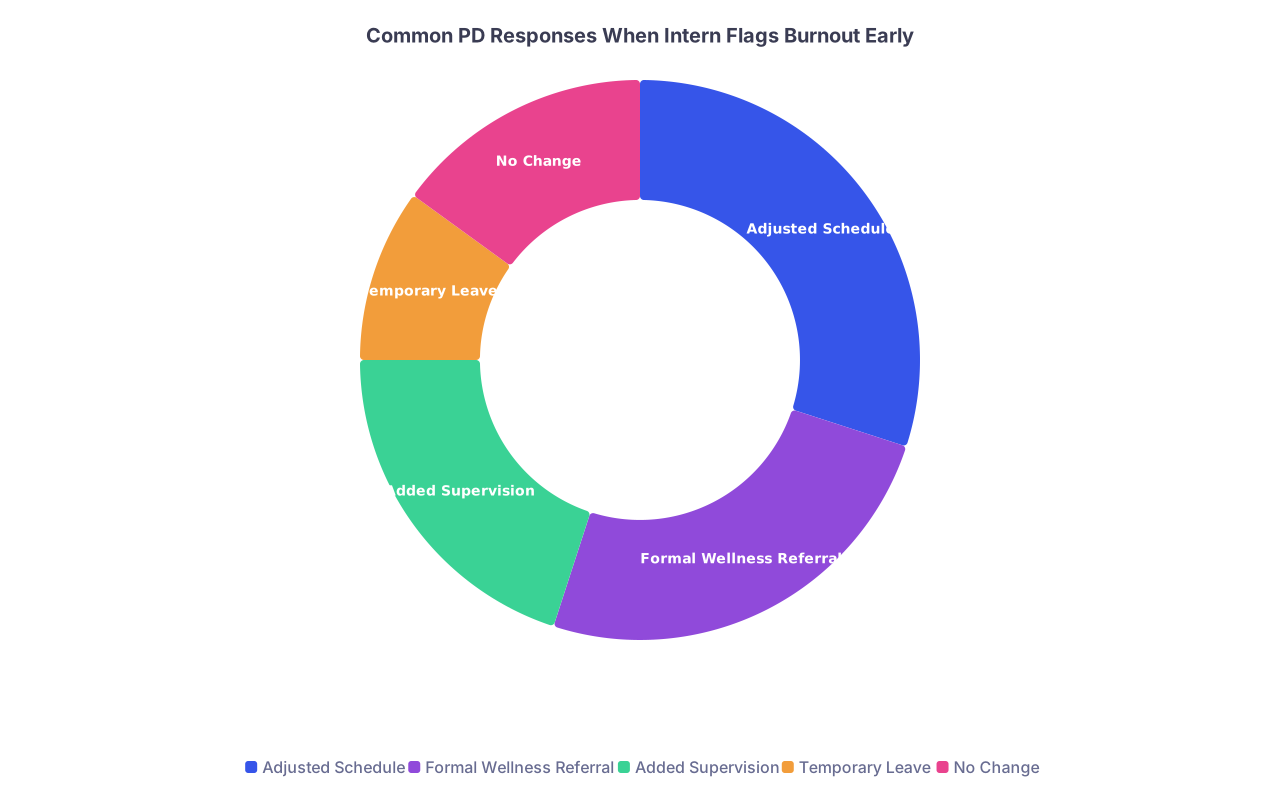
No, not every PD will handle it well. Some will disappoint you. Some will make you regret being honest. But many—more than you think—are actively looking for reasons to justify helping you. Early, honest communication gives them that justification.
How This Looks Years Later
Here’s the perspective you do not have yet.
Five years from now, you’ll struggle to remember the exact patient list from that brutal ICU month. You will remember the night you almost broke down in the stairwell. You’ll remember whether your PD saw you as a problem to fix or a person to protect. And you’ll remember whether you waited until your life was on fire to say something.
Burnout in residency isn’t a moral failure. It’s a predictable outcome of a bad system plus a certain kind of person: conscientious, self-sacrificing, terrified of letting anyone down.
Program directors have gotten better at spotting the smoke. But they’re still not mind readers, and they’re still constrained by service needs, hospital politics, and their own blind spots.
Your leverage point is this: understand what they’re already seeing, then meet them halfway before it becomes a formal “issue.”
Because years from now, you won’t remember the exact number of late notes. You’ll remember whether you spoke up when you started to fade—and what that taught you about the kind of physician you intend to be.