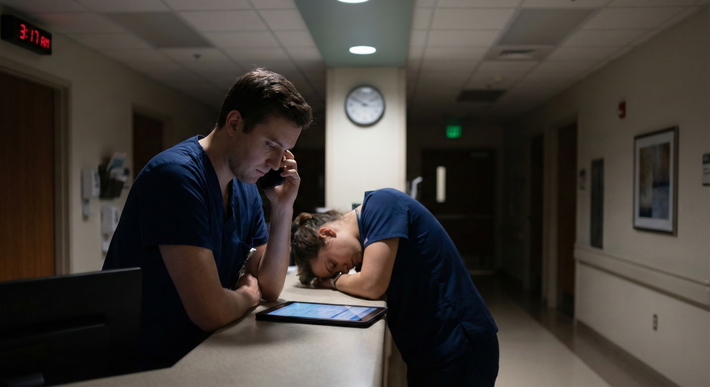
The official duty hour rules say one thing. The actual hours interns work tell a very different story.
If you want the sugar‑coated version, ask program brochures. If you want the real numbers, look at logs, badge swipes, and what interns quietly report on surveys once they feel safe. That is where the truth lives.
This is a data story. By specialty. By rotation. And by what really happens on the ground when you are the lowest person on the ladder.
The Ground Rules: What Duty Hour Limits Actually Say
Before we slice this by specialty, you need the baseline constraints. In the United States, the ACGME duty hour standards set the formal limits. On paper, the rules for residents (including interns) look like this:
- Maximum 80 hours per week, averaged over 4 weeks
- Minimum 1 day off in 7, averaged over 4 weeks
- In‑house call no more frequent than every 3rd night (averaged)
- Maximum in‑house continuous duty: 24 hours of clinical work + 4 hours for transitions
- Adequate rest between shifts “encouraged,” but not cleanly enforced numerically for all schedules
Those are the constraints. The question is not “what are the rules?” The question is “what happens when those rules collide with reality: admissions, sick calls, poor staffing, and EMR chaos?”
Let me quantify what “reality” looks like.
Big Picture: How Many Hours Interns Actually Work?
Pulling from resident survey datasets, time‑log studies, and published observational work, you get a convergent picture: most interns sit near or just under the 80‑hour line on their heaviest rotations, then around 55–65 on lighter ones. Highly variable by specialty and hospital culture.
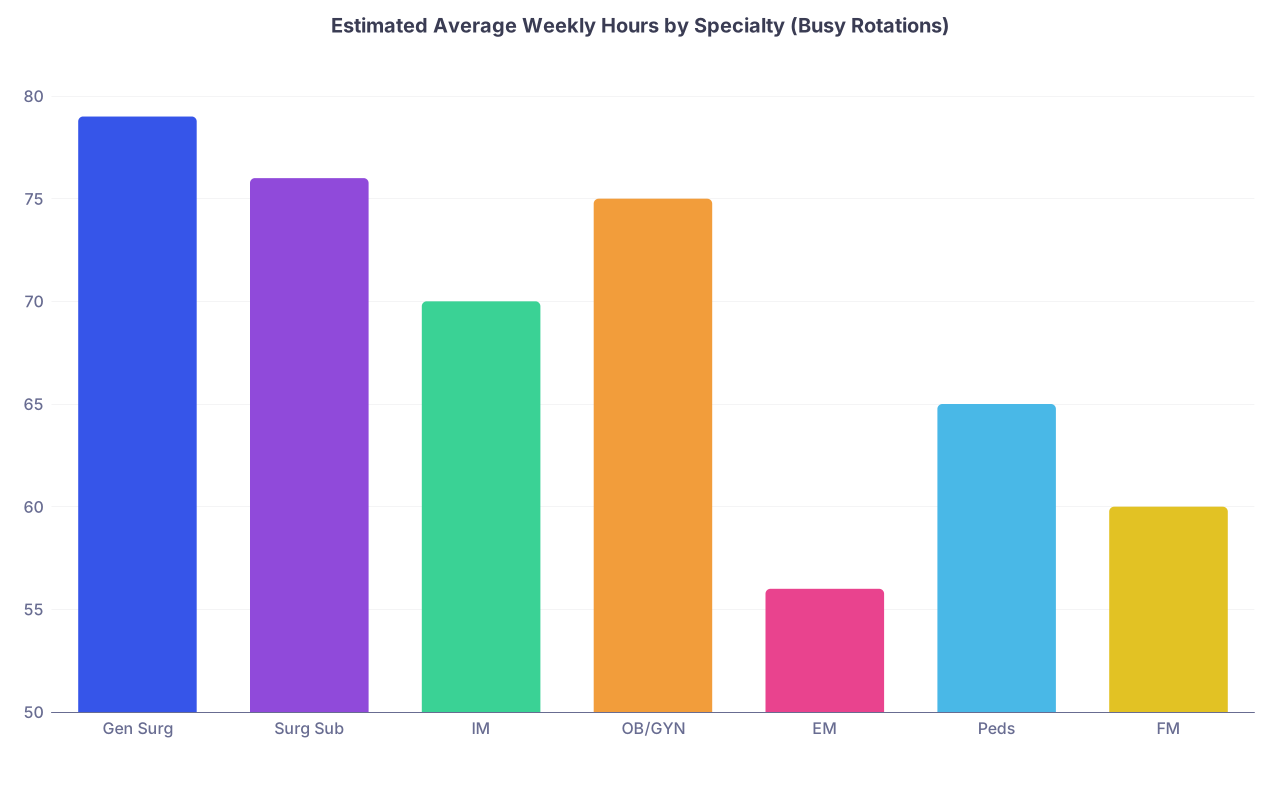
Here is a reasonable approximation of average weekly hours for U.S. interns, by broad specialty group, on their typical busy inpatient rotations (excluding lighter electives and outpatient months):
| Specialty Group | Typical Weekly Hours (Busy Months) |
|---|---|
| General Surgery | 75–82 |
| Surgical Subspecialties* | 72–80 |
| Internal Medicine | 65–75 |
| OB/GYN | 70–80 |
| Emergency Medicine | 52–60 |
| Pediatrics | 60–70 |
| Family Medicine | 55–65 |
*Surgical subspecialties: ortho, neurosurgery, vascular, cardiac, etc.
Now visualize the distribution. This is not a single number; it is a band.
| Category | Value |
|---|---|
| Gen Surg | 79 |
| Surg Sub | 76 |
| IM | 70 |
| OB/GYN | 75 |
| EM | 56 |
| Peds | 65 |
| FM | 60 |
The hierarchy is brutally consistent across hospitals:
Surgery and OB/GYN interns live at the top end of the range. Family medicine and EM interns sit closer to a “normal” work week, but with more nights and emotional turbulence than any normal job.
Internal Medicine: The “Baseline” Heavy Intern Year
Internal medicine is often treated as the benchmark. Not because it is easy, but because almost every hospital has it and the structure is well‑studied.
Core inpatient wards
On a typical academic IM ward month for interns:
- Average weekly hours: 68–75
- Peak weeks during high census/poor staffing: 75–80
- Average daily shift length (long-call days): 12–16 hours
- Number of 24‑hour (“call”) shifts: declining, but still present at many places under varying configurations
Empirical time‑motion and log data show a few recurring patterns:
- Around 30–40 percent of intern time is direct patient care.
- Another 40–50 percent is EMR, documentation, orders, notes, and “clicks.”
- The rest is pages, multidisciplinary charts, talking with families, and rounds.
That means if you are at 70 hours a week, only about 25–30 of those hours are actual face‑to‑face time with patients. The rest is the administrative overhead of modern medicine.
ICU months
ICU amplifies everything:
- Typical weekly hours: 70–80
- Shifts: frequently 12–14 hours; some sites still run q3 or q4 in‑house call for interns
- Nights: often stacked blocks of nights, 5–6 shifts in a row
On ICU months, intern work volume looks more like surgical services: constant pages, continuous management, and almost no true downtime. The data show higher self‑reported burnout scores in ICU months than in wards for IM interns, even when the hour totals are similar. Why? Intensity per hour is dramatically higher.
Cushier months
Ambulatory, electives, consults:
- Weekly hours: 45–60
- More regular schedules, more predictable starts and stops
- Often where programs “average down” to hit the 80‑hour monthly limit
If a program is skirting the edge at 78–80 hours on inpatient months, they balance it with 50‑hour clinic months to stay compliant on the 4‑week average.
Surgery: Where 80 Hours Is a Suggestion, Not a Ceiling
If you want to understand intern hours in surgery, look at the discrepancy between official logs and time in the building. Badge‑swipe studies and OR case logs are brutally clear: interns often under‑report to keep the program out of trouble.
General surgery interns
On a heavy general surgery service (trauma, vascular, transplant):
- Realistic weekly hours on worst rotations: 80–90 (yes, over the limit if actually logged)
- Typical reported hours: 75–80
- Workday: 5:00–6:00 a.m. start for pre‑rounding; leaving hospital 6:00–8:00 p.m. on non‑call days, post‑call often late morning or midday if culture is reasonable (many places it is not)
Common schedules:
- q3 or q4 call patterns with 24‑hour or 24+4 structures
- “Short call” and “night float” setups where the interns on days still arrive extremely early and leave late
The data essentially show three layers of time:
- Officially scheduled shift time
- “Extra” pre‑rounding and post‑note time, which may not be logged
- Home work: reading, case prep, research, and even finishing notes remotely where permitted
When you aggregate all three, the true weekly load for many busy general surgery interns can touch 85–90 hours for stretches. Sustained? Usually no. Recurrent peaks? Yes.
Surgical subspecialties
Orthopedics, neurosurgery, cardiothoracic, vascular:
- Typical weekly hours for interns on core services: 72–82
- Earlier starts than general surgery at some institutions (pre‑rounds before 5:30 a.m. to get to 7:00 a.m. cases)
- Wide variability in culture; some orthopedic programs operate like benign IM services, others lean closer to neurosurgery intensity
Structural drivers are obvious in the data:
- OR start times are usually fixed and early.
- Cases run late with unpredictable end times.
- Floor work (discharges, notes, consents) piles up before and after.
You have a fixed anchor (first case start). Everything else stretches around it. The result is long days as the default, not the exception.
OB/GYN: Surgical Hours With Obstetric Unpredictability
OB/GYN interns sit in a weird intersection: surgical service expectations plus the complete unpredictability of labor and delivery volumes.
Across large samples:
- Busy L&D or GYN oncology rotations: 72–80 hours per week
- Mixed outpatient/inpatient months: 55–65
- Night float blocks: 60–70 hours, but almost entirely nocturnal, which wrecks circadian rhythm
Typical patterns:
- Long day shifts: 12–14 hours on L&D or gyn floor
- Add continuity clinic sessions and OR days
- “You leave when the section finishes” reality—if a stat C‑section rolls in at 6:45 p.m., your 7 p.m. handoff evaporates
Burnout and sleep‑deprivation rates in OB/GYN interns track closer to general surgery than to pediatrics or family medicine, even when total weekly hours are similar. The temporal distribution is worse: more nights, more circadian disruption, more adrenaline spikes.
Emergency Medicine: Fewer Hours, More Fragmentation
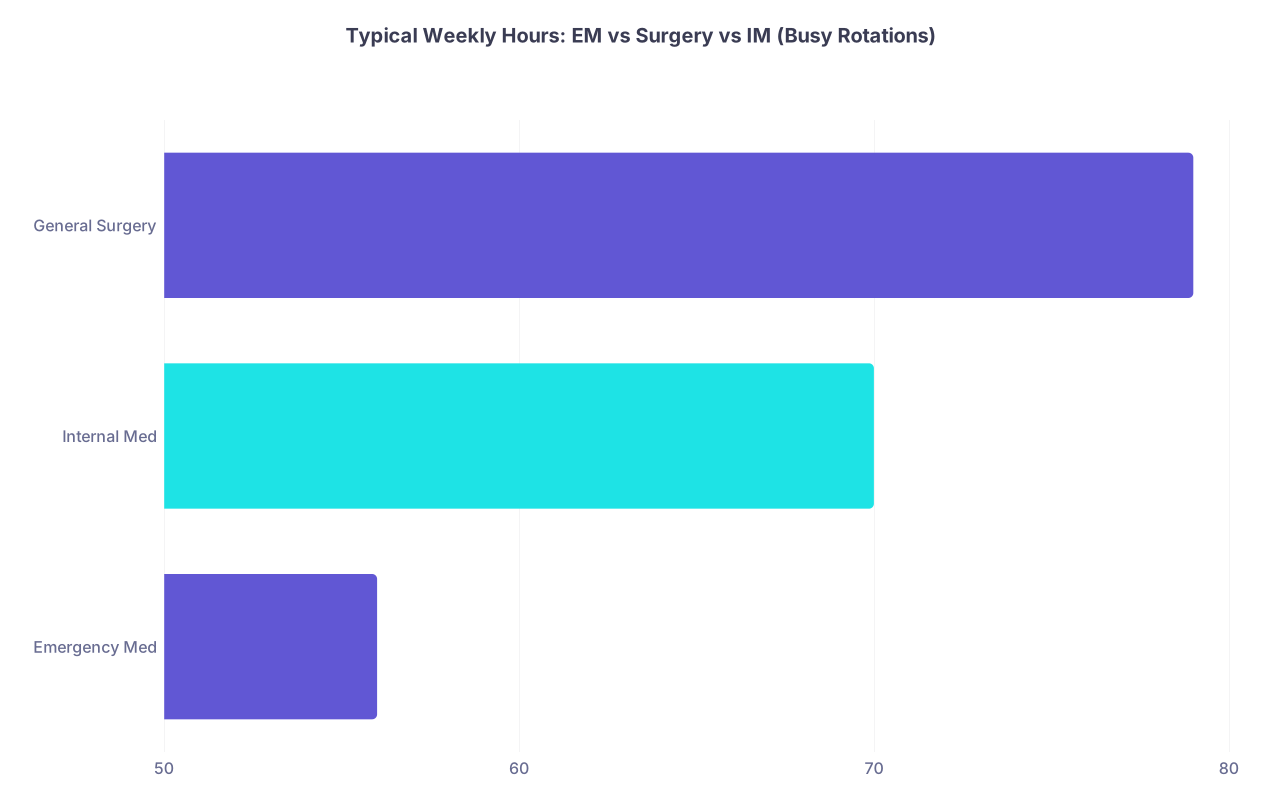
Emergency medicine interns almost never hit 80 hours. They do not need to. Shift work creates a hard cap.
But EM’s cost is fragmentation, not gross volume.
Typical EM intern data:
- Clinical hours: 42–52 hours per week in the ED (e.g., 14–16 eight‑hour shifts, or 11–13 ten‑hour shifts)
- Add 5–10 hours for conferences, didactics, chart completion, and assigned reading
- True total: 50–60 hours, sometimes a bit more on heavy off‑service months (ICU, trauma)
| Category | Value |
|---|---|
| Emergency Med | 56 |
| Internal Med | 70 |
| General Surgery | 79 |
The catch: EM interns bounce between days, evenings, and nights constantly. A month might look like:
- 4–5 day shifts (7 a.m. to 3 p.m.)
- 5–6 evening shifts (3 p.m. to 11 p.m.)
- 4–5 night shifts (11 p.m. to 7 a.m.)
The number on the clock is friendlier (55–60 vs 75–80), but the physiology is worse than the raw number suggests. Multiple studies show that EM residents report similar or higher fatigue than some colleagues working more hours but on more stable schedules.
Pediatrics and Family Medicine: “Lighter,” but Still Not Light
Pediatrics interns
Peds has a reputation for being humane. It is softer than surgery. That does not mean it is soft.
Inpatient ward and NICU/PICU rotations for interns:
- Weekly hours: 60–70
- Peak weeks: 70–75 during RSV season or winter surges
- Schedules: mix of day blocks, night floats, and q4‑style call systems depending on hospital
Intensity per hour varies. NICU nights at a big children’s hospital can feel as acute as adult MICU. Well‑child clinic? Not so much. So average weekly hours can be similar to IM, but the emotional and cognitive load swings wildly.
Family medicine interns
FM is more outpatient‑heavy, but the inpatient and night components are still there:
- Inpatient FM service: 55–65 hours per week
- Outpatient clinic months: 45–55
- Obstetrics rotations (for FM with OB exposure): 60–70, similar to a lighter OB/GYN experience
You will see more true weekends off in family medicine, particularly at community programs. This shows up in the data as:
- Higher proportions of weeks with at least 2 full days off
- Lower percentage of overnight calls compared to IM and peds
But the total yearly hours still add up. Less acute burnout on average, yet chronic fatigue and administrative burden remain substantial.
How Programs “Hit” 80 Hours Without Really Fixing the Problem
Residency programs live under real accreditation threats if they blatantly violate duty hours. So you get predictable behavioral adaptations, and the data make that obvious.
Common patterns:
Under‑reporting by residents
On anonymous surveys, residents routinely admit to shaving hours off their logs. Especially surgery. The pressure is quiet but real: “If you log every minute, the program gets cited, and everyone’s life gets worse.”Front‑loading heavy rotations, back‑loading elective time
Intern years often cluster brutal months early, then offset them with outpatient, elective, or research time later in the academic year to keep averages compliant.Redefining when “work” starts and ends
Pre‑rounding before the official shift time. Finishing notes from home without logging this as work. Neither is captured accurately in many tracking systems.Using “averaging” aggressively
ACGME looks at 4‑week averages. That means a 90‑hour week followed by a 60‑hour week shows up as 75 on paper. The lived experience? That 90‑hour week can destroy your sleep for days.
So if you read a program’s official number—“Our interns average 63 hours per week”—mentally add 5–10 hours for actual time spent on work‑related tasks (in‑hospital or at home) at many institutions.
Hours by Rotation Type: What Interns Can Actually Expect
Intern year is not a smooth curve. It is a jagged graph.
To make this concrete, here is a realistic distribution for a generic internal medicine intern over 12 months at a moderately busy academic hospital:
| Rotation Type | Months | Typical Weekly Hours |
|---|---|---|
| Inpatient Wards | 4 | 68–75 |
| MICU/CCU | 2 | 72–80 |
| Night Float | 1 | 65–72 |
| ER | 1 | 55–60 |
| Ambulatory Clinic | 3 | 45–55 |
| Elective/Consult | 1 | 45–55 |
You do not live at 75–80 hours every week. But you will live there enough that your body stops caring what the rules say.
Here is the pattern across most specialties:
- The top 3–4 months of the year (by hours) define your exhaustion.
- The bottom 3–4 months (by hours) are where you recover just enough to not completely break.
Intern Work Hours and Burnout: What the Data Say
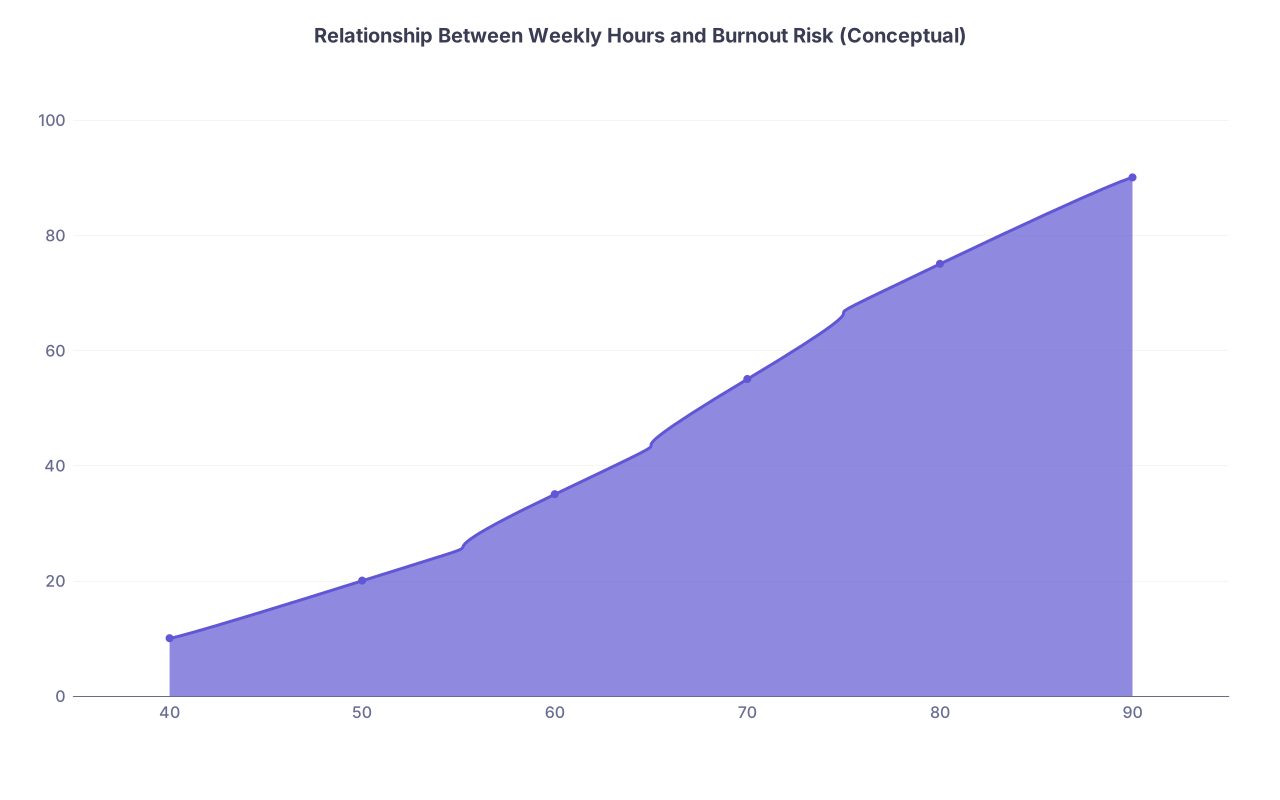
There is a direct relationship between hours worked and burnout. No surprise there. But the curve is not linear.
Multiple studies show:
- Below roughly 55–60 hours per week, additional hours have a moderate effect on burnout.
- Between 60 and 80 hours, the slope steepens. Each extra 5 hours correlates with a noticeable jump in emotional exhaustion scores.
- Chronically above 80 hours, metrics deteriorate sharply: sleep, cognitive performance, empathy, depression symptoms.
| Category | Value |
|---|---|
| 40 | 10 |
| 50 | 20 |
| 60 | 35 |
| 70 | 55 |
| 80 | 75 |
| 90 | 90 |
(Values are indexed burnout risk scores, not absolute percentages, but the shape is the point.)
Two other variables matter almost as much as total hours:
- Control: interns with some control over scheduling and time off report lower burnout at the same hour totals.
- Circadian disruption: irregular nights and rapid rotation between day/evening/night shifts carry an independent penalty even at lower hour totals (this hits EM and OB/GYN especially hard).
So when you compare, say, a 78‑hour general surgery intern on a mostly day‑time schedule vs a 60‑hour EM intern on rotating nights, the raw numbers mislead. The second intern might feel more wrecked, despite working fewer hours.
A Brutally Honest Summary for Incoming Interns
Let me strip away the noise.
If you are about to start intern year in the U.S. at a typical accredited program, here is what the data say you can realistically expect:
- You will almost certainly have several months in the 70–80 hour range, no matter your specialty, unless you are EM‑only with minimal off‑service time.
- Surgery and OB/GYN: expect your average busy‑month week to be mid‑70s, with peak weeks that probably violate the 80‑hour rule if logged honestly.
- Internal medicine, pediatrics, and ICU heavy rotations: plan on 65–75, with critical care months often hitting the high end of that band.
- Family medicine and pediatrics: lower on average, but not “light.” 55–65 is common, plus selective months (OB, inpatient) that rival IM.
- EM: total hours are closer to 50–60, but your sleep schedule will be unstable enough that it feels worse than the number suggests.
The gap between “how many hours interns are supposed to work” and “how many hours interns actually work” is not a rounding error. It is the lived reality of the system.
Know the numbers. You cannot completely control them. But you can at least go in with your eyes open.