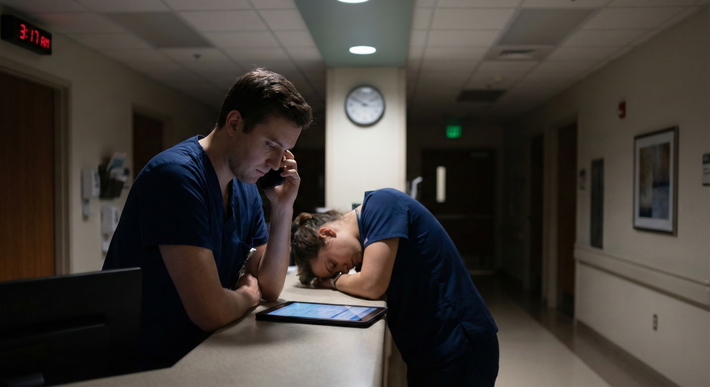
The average intern now spends more time clicking boxes than touching patients. That is not an impression. The time-motion data back it up.
The Hard Numbers: How Interns Actually Spend Their Day
Let me start with the most uncomfortable statistic.
Across multiple large time–motion studies, interns spend roughly:
- 10–20% of their time in direct patient contact
- 40–50% of their time on the EMR and documentation
- The remaining 30–40% in indirect care, education, and “other” tasks (paging, moving, waiting, logistics)
Different hospitals, same pattern: the computer gets more of you than your patients do.
Here are representative figures pulled from well-known intern workflow studies (internal medicine and surgery, mostly academic centers):
| Study / Setting | Direct Patient Care | EMR / Documentation | Other (Rounds, Calls, Admin) |
|---|---|---|---|
| Internal Med, Academic (US) | 12% | 43% | 45% |
| Surgical Interns, Academic (US) | 18% | 44% | 38% |
| Internal Med, Community Teaching | 16% | 38% | 46% |
| Combined Estimate (Typical Intern) | 14–18% | 40–48% | 34–42% |
If you work a 12‑hour shift, that means:
- About 1.5–2 hours actually at the bedside
- 4.5–6 hours in the chart
- 3–5 hours in rounds, calls, walking, procedures, waiting for transport, dealing with coordination chaos
And yes, that is “normal” now.
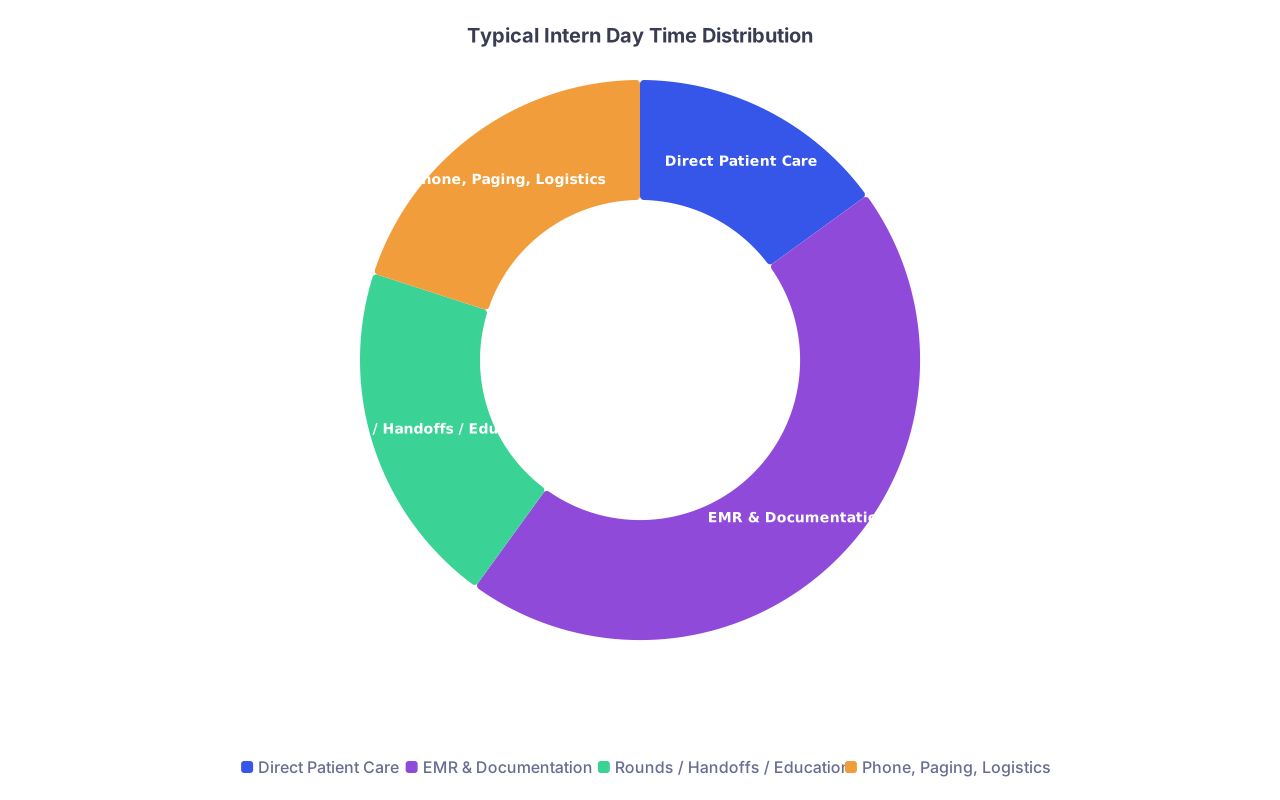
| Category | Value |
|---|---|
| Direct Patient Care | 15 |
| EMR & Documentation | 45 |
| Rounds / Handoffs / Education | 20 |
| Phone, Paging, Logistics | 20 |
The fantasy that “most of your day is taking care of patients” is about twenty years out of date. The modern intern is a data manager with a stethoscope.
What Counts as “Patient Care” vs EMR?
Definitions matter. A lot of hospital administrators play games with categories to make things look better.
When I say direct patient care, I mean tasks where:
- You are physically in the room with the patient or immediately next to them
- The patient (or family) could point at you and say “they are doing something for me right now”
In practice that includes:
- History and physicals
- Family meetings at the bedside
- Point-of-care procedures (paracentesis, LP, lines if you actually get to do them)
- Bedside teaching while examining the patient
- Acute evaluations (“rapid response”, new chest pain evaluation, etc.)
Everything else is not direct care, even if it is clinically important.
EMR / documentation includes:
- Writing and editing notes (admission, progress, discharge, consults)
- Reviewing labs, imaging, vitals, telemetry in the EMR
- Writing orders, med reconciliations, CPOE order sets
- Inbox work: signing orders, refills, reviewing results, acknowledging alerts
Then there is the messy middle:
- Workroom discussions about patients
- Teaching rounds away from bedside
- Calling consultants, pharmacy, radiology
- Tracking down records, speaking with case managers, dealing with bed control
- Walking to radiology to see films, or to another floor to find a nurse
Most time–motion studies lump that last bucket as “indirect care” or “coordination”. Functionally, it is glue work to keep the system running.
But if your real question is: “How much of my intern day will feel like I am actually being a doctor with patients, versus being a data-entry clerk?” the answer is very simple: about a 1:3 ratio. One unit of bedside time for every three units of computer time.
A 24-Hour Call or 12-Hour Shift: What the Timeline Really Looks Like
To make this less abstract, look at a typical 12‑hour day shift distribution. Assume a medicine intern on a ward team with 8–12 patients:
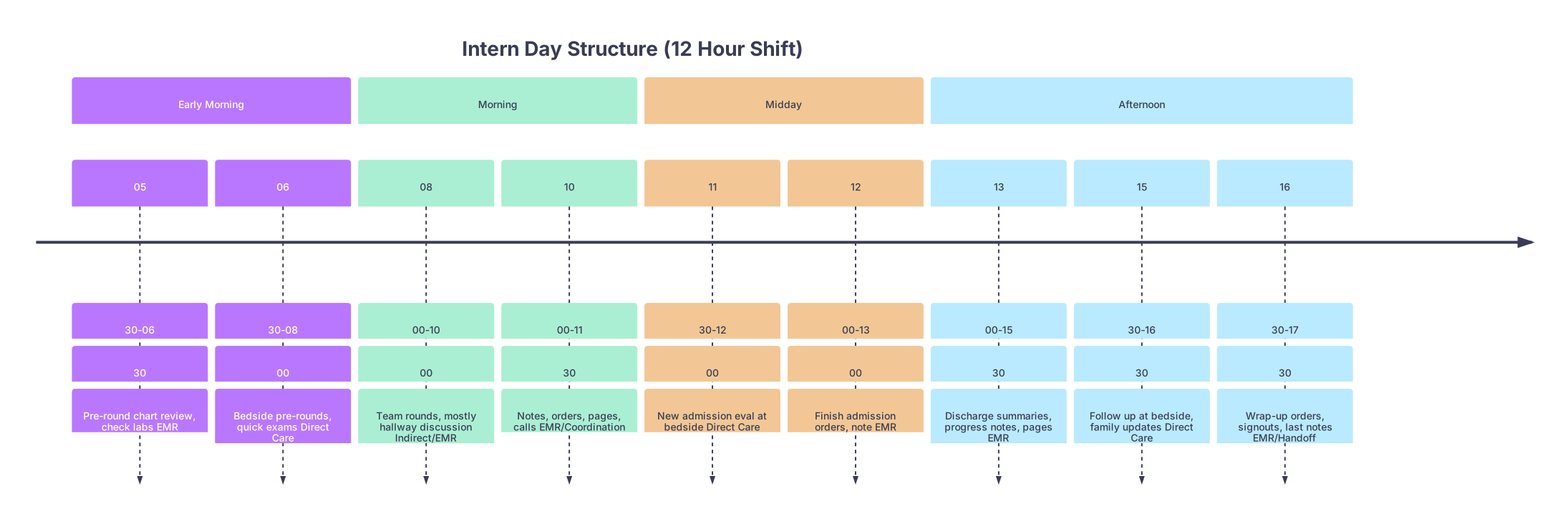
| Period | Event |
|---|---|
| Early Morning - 05 | 30-06 |
| Early Morning - 06 | 30-08 |
| Morning - 08 | 00-10 |
| Morning - 10 | 00-11 |
| Midday - 11 | 30-12 |
| Midday - 12 | 00-13 |
| Afternoon - 13 | 00-15 |
| Afternoon - 15 | 30-16 |
| Afternoon - 16 | 30-17 |
Count the blocks. Direct care is squeezed into maybe three short windows:
- Quick pre-rounds (and let’s be honest, sometimes you just “chart round” if census is brutal)
- A new admission or acute event
- A late-afternoon touch base if you are not buried in discharges
On a 24‑hour call, you add overnight admissions, cross-cover calls, and a second set of notes. The pattern does not change much. EMR still wins.
Now put numbers on it for a high-volume day (say 10 patients, 3 discharges, 2 new admits):
- Progress notes: 10–15 minutes each → 100–150 minutes
- Discharge summaries: 20–30 minutes each (if you are fast) → 60–90 minutes
- Admissions notes: 45–60 minutes each with orders → 90–120 minutes
- Orders / follow-up charting / inbox: at least 60–90 minutes sprinkled through the day
That is 5–7 hours before you even consider teaching, rounds, or the random chaos that interrupts you. The EMR workload is baked in.
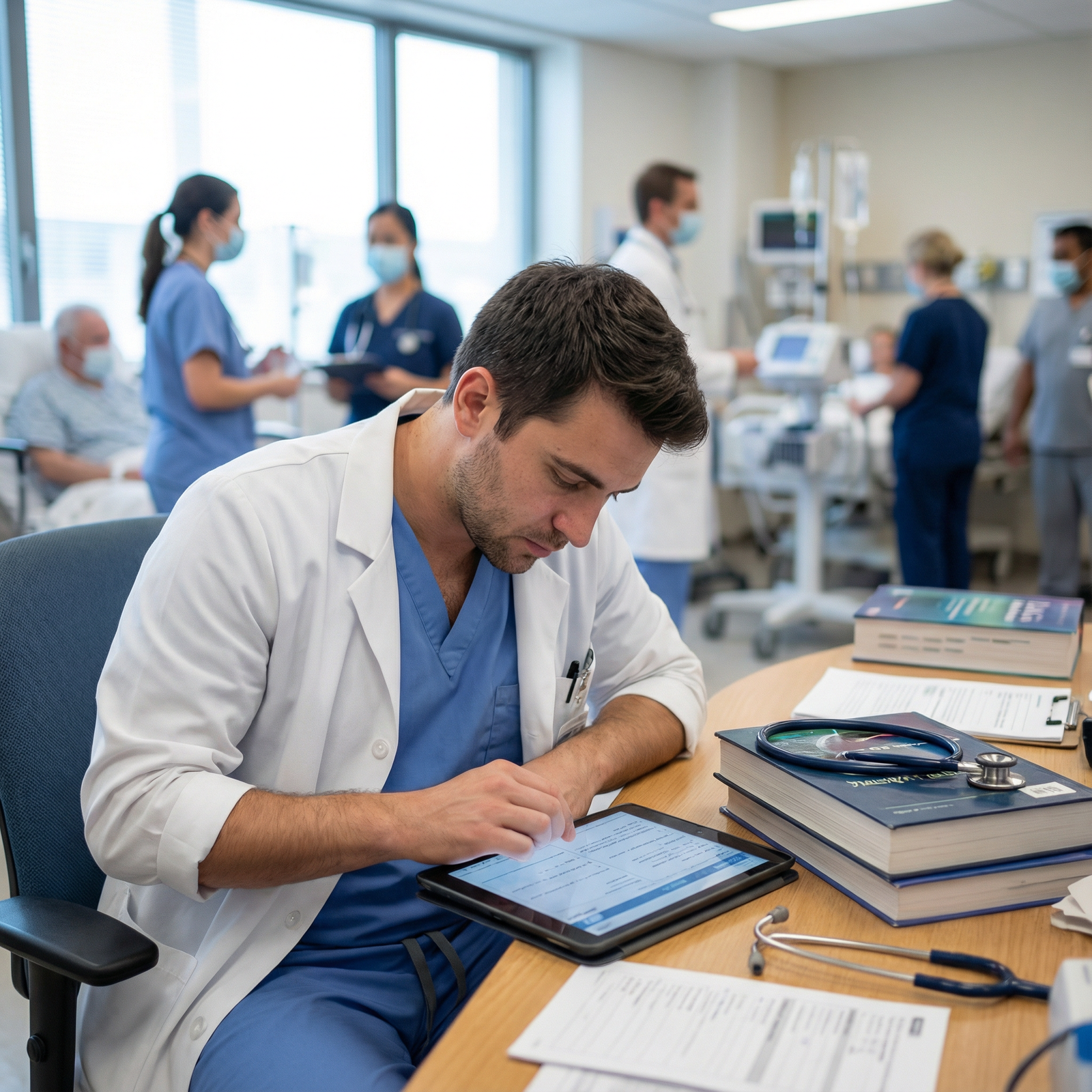
Why EMR Eats So Much Time (The Data Behind the Frustration)
There are three main drivers, and none of them are “interns are slow.”
1. Documentation Inflation
Compare a handwritten progress note from the early 2000s to a modern EMR note. First is half a page, mostly synthesis. Second is a 2–4 page monstrosity with:
- Autopopulated labs, meds, vitals
- Redundant problem lists
- Required attestations, billing language, compliance statements
Time-motion data show that for internal medicine:
- Interns spend about 1.5–2.5 hours per day just writing notes
- Residents spend closer to 2–3 hours
- Attendings another 1–2 hours in addenda and attestation nonsense
Almost none of that adds marginal clinical value beyond the first few paragraphs. It adds billing value. And medicolegal cover. That is where the pressure comes from.
2. EMR as a Multi-Tool (and Single Point of Failure)
The EMR is not just a chart. It is:
- Lab interface
- Imaging viewer
- Orders system
- Messaging system
- Task list
- Signout tool
- Bed management interface (in some systems)
- Quality metric tracker
Time–motion observers consistently count 200–300+ EMR “interactions” per intern per day: clicks to open charts, sign orders, review results, acknowledge alerts. Many of those actions are short (5–15 seconds). They add up to hours.
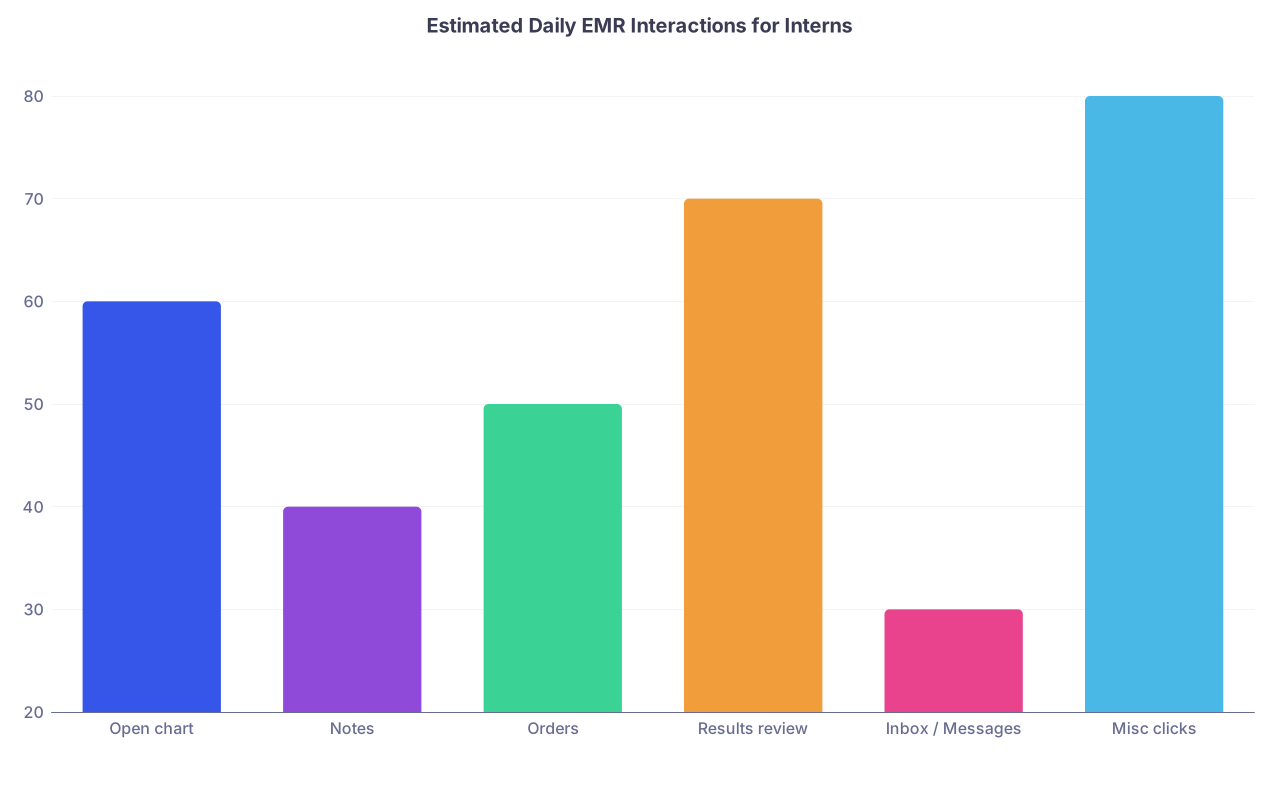
| Category | Value |
|---|---|
| Open chart | 60 |
| Notes | 40 |
| Orders | 50 |
| Results review | 70 |
| Inbox / Messages | 30 |
| Misc clicks | 80 |
That chart is conservative. On heavy days, I have seen >500 clicks logged in usability audits.
3. Fragmentation and Rework
You do not write one note. You start it, get paged, come back. You enter an order, get an error, backtrack. You try to find an old echo or outside record, click through three menus. All of that is overhead.
Studies that differentiate “focused EMR use” (e.g., writing a note straight through) from “fragmented EMR use” show that fragmentation can add 30–50% overhead to documentation time.
You feel that as the constant sense of never finishing anything.
How This Varies by Specialty and Setting
The exact percentages are not identical everywhere. Some patterns:
- Medicine wards: EMR/documentation often hits the high end (45–50% of the day). Lots of patients, complex notes, tons of labs and imaging, constant order changes.
- Surgery: Slightly more direct time in OR and procedural settings, but still heavy on EMR for consults, post-op notes, orders, and discharge work.
- ICU: Denser bedside time (vent checks, lines, family discussions) but also some of the heaviest EMR load thanks to sheer data volume.
- Community vs academic: Community sites sometimes show a bit more bedside time because of smaller teams and shorter notes, but EMR still dominates.
If you plotted it, it looks roughly like this:
](https://cdn.residencyadvisor.com/images/articles_svg/chart-direct-patient-care-vs-emr-by-rotations-8973.svg "Direct Patient Care vs EMR by Rotations")
| Category | Value |
|---|---|
| Medicine Wards | 15 |
| Surgical Wards | 20 |
| ICU | 22 |
| [Night Float](https://residencyadvisor.com/resources/intern-year-survival/error-rates-and-fatigue-what-studies-show-about-intern-night-float) | 10 |
Those values are percentage of shift in direct patient care. EMR/documentation makes up about 2–3 times that in each setting.
The Psychological Mismatch: Why It Feels Worse Than the Numbers
On paper, 15% vs 45% may not sound catastrophic. In practice, it feels worse because of when and how the tasks happen.
- Bedside time tends to come in short bursts where you feel like a doctor.
- EMR time is constant background noise, fragmented by pages and interruptions.
- The EMR work often gets pushed to the edges of your day (early pre-rounds, late stay to finish notes), so it defines your fatigue.
So your internal story becomes: “All I do is charts,” even though you did see 10–12 patients. The experience is dominated by slog time, not meaning time.
Most interns I talk to around December say a version of the same thing: “I feel like a glorified scribe.” The data say they are not wrong.
What You Can Actually Control (And What You Cannot)
You are not going to fix the EMR as an intern. But you are not helpless either. The data on high-performing interns show consistent patterns in how they claw back patient-facing time.
1. Batch Your EMR Work Aggressively
Fragmented work is what kills you. You can’t avoid pages and new admissions, but you can stop nibbling at everything.
Patterns I see in efficient interns:
Morning:
- 30–45 minutes of pure data review / list building before seeing anyone. No notes. No side tangents.
- Then a focused pre-round sweep of rooms, minimal documentation (just jot key updates).
Late morning / early afternoon:
- One heavy documentation block for all progress notes and most orders. Page your senior: “I am going to be in the note cave for 90 minutes unless there is an emergency.”
Late afternoon:
- Short wrap-up block to finish residual notes, discharge summaries, and signout.
Compare that to the chaos model: open a note, get paged, write an order, get interrupted for transport, try to go see a patient, get pulled into a family meeting. Same tasks, 30–40% more time.
2. Shrink the Note, Relentlessly
No one reads your autopopulated trash. They skim your assessment and plan. Time-motion plus chart-audit data make this obvious: attendings spend almost all their review time on the first 10–15 lines.
Behaviors of efficient note-writers:
- Hard character or line limit for HPI and interval history
- Concise problem list with bullets, not paragraphs
- Labs and imaging only summarized if they affect decisions (otherwise let the EMR display them)
- Smart phrases used for structure, not to dump five pages of ROS and exam you did not perform
Short notes write faster. Short notes also protect you medicolegally because there is less noise obscuring what you actually thought.
3. Move Work to Team-based Tasks
You are not supposed to be a one-person workflow engine.
Strategies that actually stick:
- Signout discipline: Use signout to offload non-urgent day tasks to the night team with clear instructions, instead of staying an extra hour to “just finish everything.”
- RN communication: Low-friction pathways with primary nurses (e.g., “batch pages for this patient unless it’s red-flag criteria X/Y/Z”). It reduces pure interruption count.
- Leverage students (when you have them): They can preround, draft notes, and gather data to free you for more bedside and higher-order work.
The meta point: stop treating every task as something you must complete personally, in real time.
The Hidden Curve: How Time-on-Task Shifts Across PGY1
One thing that does improve. You get faster.
If you roughly track intern EMR vs direct care time across the year, the ratio shifts a bit:
Early PGY1:
- Direct care ~10–15%
- EMR ~50%+
- Constant overrun and staying late
Mid PGY1:
- Direct care ~15–18%
- EMR ~40–45%
- You know the order sets, templates, shortcuts
Late PGY1:
- Direct care ~18–22%
- EMR ~35–40%
- Better at triage, shorter notes, ruthless prioritization
The total shift is not enormous, but those few percentage points matter. On a 12‑hour day, moving even 30–45 minutes from mindless clicking back into real patient time changes how the day feels.
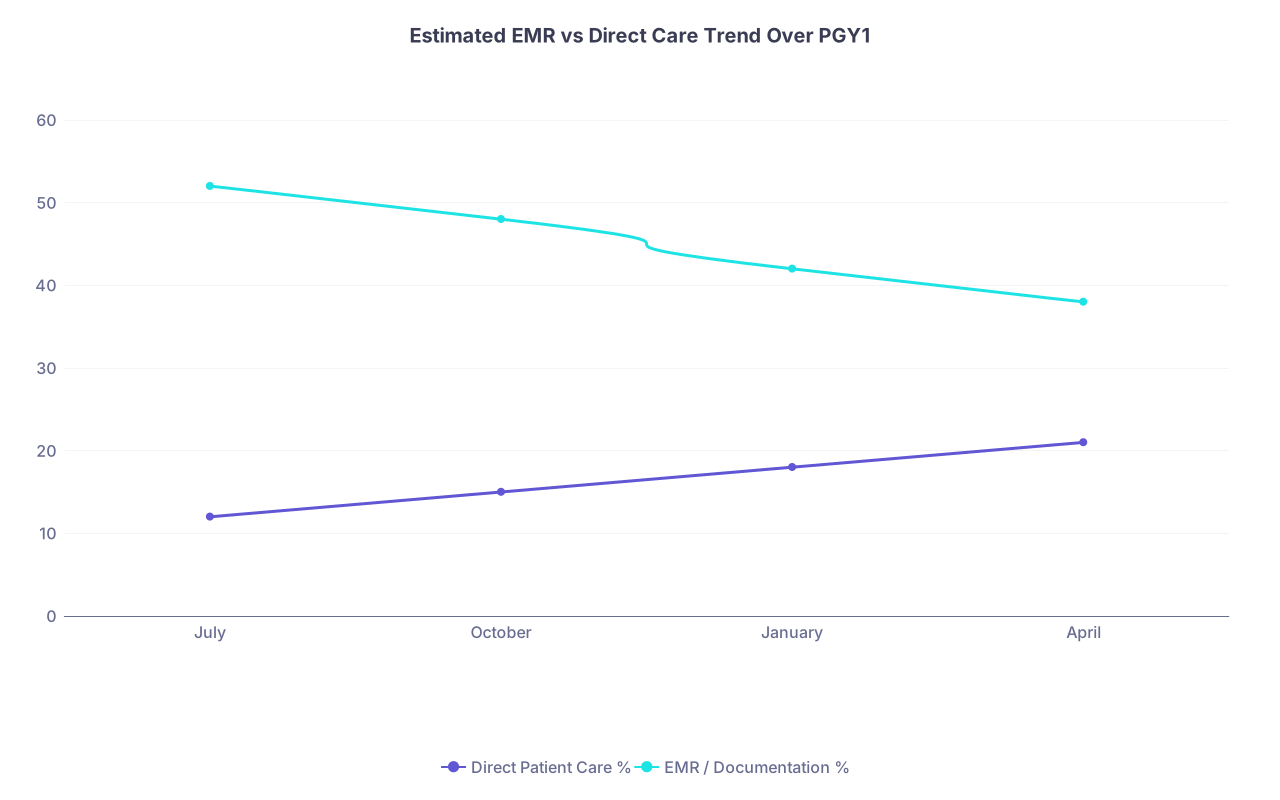
| Category | Direct Patient Care % | EMR / Documentation % |
|---|---|---|
| July | 12 | 52 |
| October | 15 | 48 |
| January | 18 | 42 |
| April | 21 | 38 |
You will still be an information worker. But by spring, you are a faster one.

The Cost: Burnout and Learning Loss
This is not just an annoyance story. The time distribution has real consequences.
- Burnout: Multiple surveys correlate perceived EMR burden with burnout, more strongly than raw hours worked. What fries people is not just the length of the day. It is spending most of that day on tasks that feel low-value.
- Learning: When interns are chained to computers, they see fewer physical exams, fewer family meetings, fewer procedures. The cognitive feedback loop shortens: you write more notes about illnesses you do not physically reassess. Learning gets detached from patients and attached to lab trends.
- Patient experience: Patients notice. The classic line: “The doctor just stares at the computer.” They are not wrong. Your literal face-time with them is being cannibalized by a system that optimizes billing and data capture, not human connection.
Every extra 10 minutes in the EMR is 10 minutes you are not at the bedside, not watching an attending think through a case, not learning communication by osmosis. Over the course of a year, that is hundreds of hours.
What You Should Expect Going In
If you are starting intern year or early in it, calibrate your expectations to reality, not to the fantasy where residency equals endless bedside teaching.
The data say you should expect:
- Roughly 4–6 hours per 12‑hour shift in EMR/documentation
- Maybe 1.5–2.5 hours in direct, in-room patient contact
- The remaining time in indirect care, education, and getting yanked between competing demands
You will feel like a data analyst masquerading as a clinician. Ironically, that is close to the truth.
So your goal is not to avoid the EMR. You will not. The goal is to contain it. Compress it. Strip out every wasted click and every unnecessary sentence so you can reclaim a few percent of your day for the work that actually made you go into medicine.
Because the numbers are blunt:
- The EMR will win by volume.
- You decide whether it wins by a factor of 2… or a factor of 5.
The bottom line
- Time–motion data across specialties are consistent: interns spend about 3 times more of their shift in the EMR than in direct patient care.
- You can push that ratio modestly in your favor by batching EMR tasks, shrinking notes, and treating yourself as part of a team workflow, not a solo operator.
- Even small shifts—30–60 minutes reclaimed per day—compound over a year into hundreds of hours of additional bedside time and learning, which is what you actually signed up for.