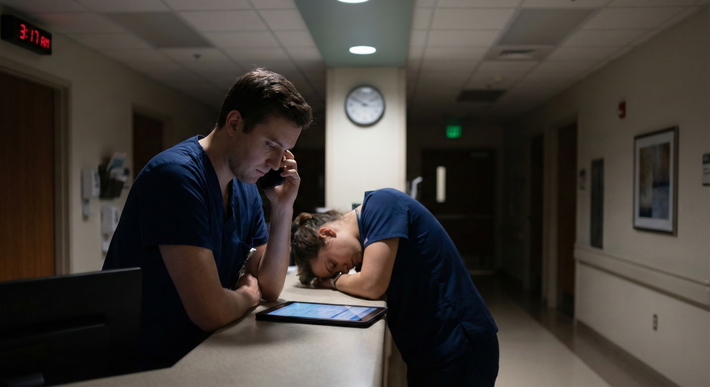
The myth that “more hours automatically make better doctors” is not just wrong. The data shows it is dangerously simplistic.
If you are a first-year intern trying to reconcile 28-hour calls with actually learning medicine, you are stuck in the middle of a twenty‑year experiment in duty hour reform. And the numbers are a lot more nuanced than either side of the argument likes to admit.
This is not about vibes. It is about outcomes: mortality, complication rates, exam scores, error rates, and how much you actually remember three months later.
Let’s walk through what the data really shows about long hours, short hours, and the actual quality of your training.
The Big Picture: What Duty Hour Reforms Actually Changed
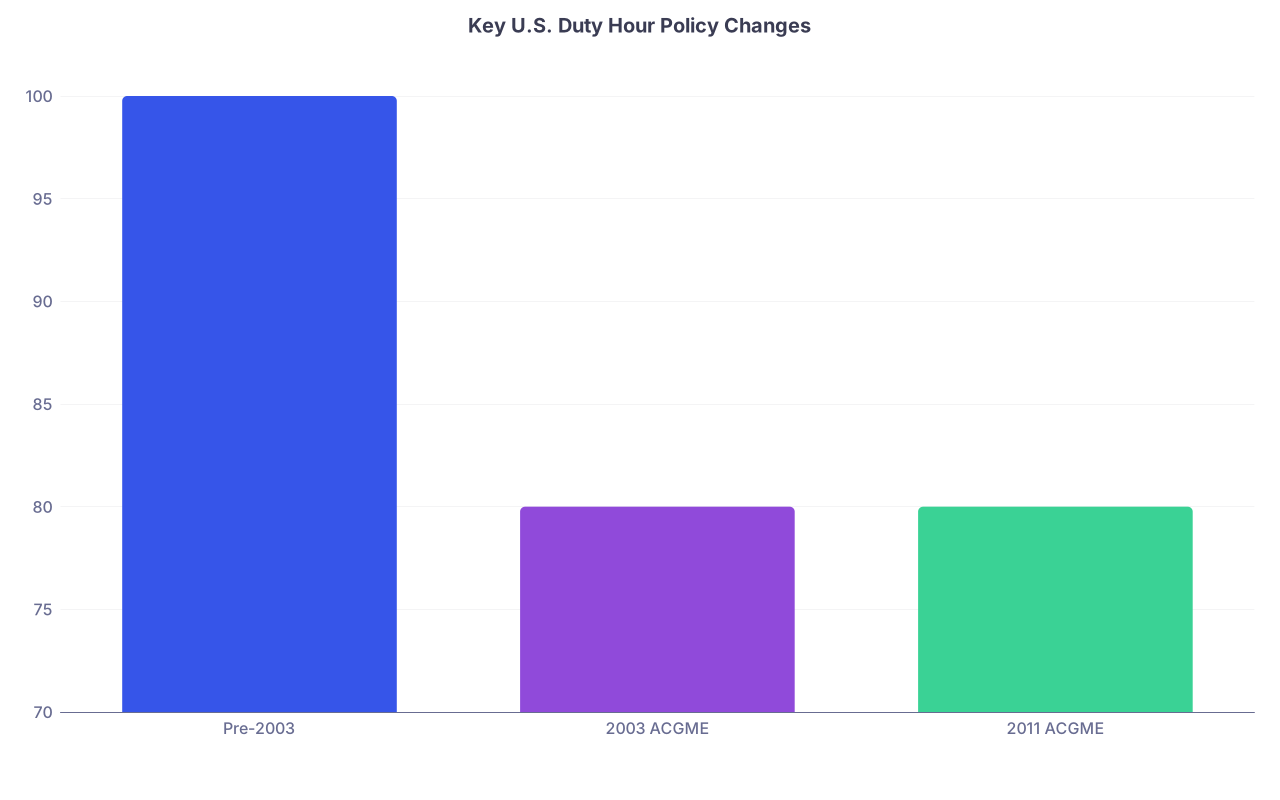
Intern duty hours have not always looked like this. The landscape shifted in two big waves: 2003 and 2011, plus the more recent FIRST and iCOMPARE trials.
| Category | Value |
|---|---|
| Pre-2003 | 100 |
| 2003 ACGME | 80 |
| 2011 ACGME | 80 |
Rough translation:
- Pre-2003: Effectively no national cap; 100+ hours/week common on some services.
- 2003 ACGME rules: 80‑hour workweek average, 24+6 hour maximum continuous duty, one day off in 7.
- 2011 changes (for interns): Maximum 16‑hour shifts; more focus on supervision and transitions.
- Post-2016 research (FIRST for surgery, iCOMPARE for IM): Compared standard limits vs more flexible schedules.
The public narrative went like this:
- Long hours → more errors, burnout, worse patient outcomes.
- Fewer hours → safer patients, happier residents, maybe weaker training.
The actual data? Mixed. But not random.
Patient Outcomes: Do Long Hours Kill People?
The simplest question: do shorter hours save patients? The answer: not as clearly as the media promised.
Across multiple large studies after the 2003 rules:
- Patient mortality: Mostly unchanged.
- Complication rates: Mixed, small differences at most.
- Readmissions: Essentially flat.
- Safety outcomes: A bit of signal for fewer resident‑reported errors, but not a big shift in hard endpoints.
The 2011 intern-specific 16‑hour cap looked promising in theory. But again, when you look at population-level outcomes, mortality did not plunge.
Where the data does hit harder is on fatigue and error risk at the individual level.
One landmark finding (from pre‑reform era, but still instructive): interns working traditional 24‑hour+ shifts:
- Had about 2.3 times the risk of a significant medical error.
- Were 5.6 times more likely to report a “serious diagnostic error”.
- Had markedly higher risk of motor vehicle crashes after call (roughly 2–3×).
You feel that at 3 a.m. on night float: attention drops, working memory tanks, and subtle details in the chart disappear.
So what happened after reforms? Multiple surveys and observational studies show:
- Self‑reported fatigue decreased modestly.
- Resident‑reported errors went down.
- But system‑level outcomes, averaged over thousands of patients and buffered by attendings, mid-levels, and nurses, remained relatively stable.
In other words: the system absorbed a lot of your fatigue in the pre‑reform era. You personally were more dangerous and more exhausted, but patients did not always die at higher rates, because redundant checks, more senior backup, and selection bias (healthier patients at night, etc.) blunted the effect.
So long hours do increase your error risk and safety risk. But shaving hours without fixing everything else (handoffs, supervision, staffing) does not magically improve aggregate mortality metrics.
Learning vs Hours: Where the Curve Actually Bends
Now to the question you actually care about: are fewer hours killing your education?
The uncomfortable reality: learning is not linear with hours. There is a steep learning curve early, then diminishing returns, then eventually negative returns once fatigue crosses a threshold.
Think in rough numbers, based on repeated patterns in the literature and exam performance data:
- 40–60 clinical hours/week: strong learning zone. Enough repetition, patient volume, and procedural exposure. Reasonable time for reading and reflection.
- 60–80 hours: still high learning, but more “service” begins to crowd out deliberate practice and structured teaching.
- Beyond ~80: marginal learning per hour plummets. You show up; you get reps; but retention, reflection, and higher‑order reasoning degrade.
There is also the type of hours:
- Direct patient care with feedback (rounds, consults, procedures): high learning per unit time.
- Scut-heavy, low-supervision cross‑cover at 2 a.m.: lower yield for complex reasoning, better for autonomy and triage skills.
- Administrative overhead, EMR clicks, paging chaos: mostly noise.
The data that best addresses learning quality focuses on board scores, in‑training exams, and procedural competence.
Exam Performance: Did Shorter Hours Weaken Knowledge?
The clearest data points:
- After the 2003 80‑hour rule: USMLE Step 3 and in‑training exam scores in several specialties did not crash. Some analyses show flat or even slightly improving trends (more likely driven by broader educational changes than hours alone).
- After the 2011 intern 16‑hour cap: again, no consistent drop in exam performance across large cohorts.
In other words: cutting hours from 100 to 80, or from 28‑hour calls to 16‑hour shifts for interns, did not uniformly harm test-based knowledge.
The FIRST trial (surgery) and iCOMPARE (internal medicine) are more instructive. They compared:
- Standard duty hours (more restrictive) vs.
- Flexible schedules (longer shifts, fewer handoffs, but same 80‑hour cap)
| Study | Specialty | Schedule Model | Max Shift Length | Weekly Cap |
|---|---|---|---|---|
| FIRST | Surgery | Standard vs Flexible | 16–24+ hours | 80 |
| iCOMPARE | IM | Standard vs Flexible | 16–28 hours | 80 |
| 2011 Rules | All (interns) | Standardized cap | 16 hours | 80 |
Key findings:
- Patient safety and mortality: no significant difference between flexible and standard arms.
- Intern and resident satisfaction: generally worse with flexible (longer) shifts.
- Exam performance: no significant difference in board or in‑training exam scores.
This is the paradox you are living: the number of hours, within a reasonable band (say 60–80), has less impact on test scores than people argue. What matters as much, or more, is:
- Quality of supervision.
- Structured teaching (conferences, bedside teaching).
- Case mix and complexity.
- Your baseline preparation and study habits.
So if your program insists that “we need 28‑hour calls for you to really learn,” the hard data does not back that up for cognitive knowledge. It might for specific types of autonomy and continuity (we will get to that), but not for passing your boards.
Continuity vs Fragmentation: The Real Trade‑Off of Shorter Shifts
Where long shifts legitimately have an edge is continuity. You admit the patient, follow them through the night, see the labs, respond to the crash, and round in the morning. That continuous thread is powerful for learning.
Shorter shifts and strict caps create the opposite problem: fragmentation. You admit someone at 10 p.m., hand off at 7 a.m., and never see them again. You lose the “arc” of the illness.
The data from the 2011 rules and iCOMPARE show:
- Number of handoffs increased significantly.
- Residents reported more frequent sign‑outs and a heavier cognitive load around transitions.
- Self‑reported sense of ownership decreased for some interns.
More handoffs predict:
- Higher risk of communication errors.
- More lost details (e.g., that one subtle finding on the CT).
- Reduced perceived continuity of care and continuity of learning.
But the effect on actual patient mortality again was minimal when systems compensated with better handoff protocols and supervision.
From a learning standpoint, what you are trading is:
- Long shifts: fewer handoffs, more continuity, more experiential learning in one case, but higher fatigue and lower retention.
- Shorter shifts: more handoffs, less continuity on each patient, but potentially better cognitive bandwidth and more consistent functioning.
There is likely a sweet spot. The data suggests something like:
- Avoid chronic 24–30 hour shifts multiple times per week.
- Ensure that even with shorter shifts, interns see follow‑ups: scheduled continuity clinics, post‑call follow visits, or structured patient “follow‑through” assignments.
I have watched interns who tracked “their” patients across days—even when off‑service or post‑call—learn dramatically more than those who never looked back at what happened.
Burnout, Sleep, and the Illusion of Recovery
Burnout statistics under different duty hour regimes matter because they directly impact learning capacity.
Common patterns across studies:
- Residents average < 6 hours of sleep on call nights and ~6–7 hours on non-call nights.
- Chronic sleep restriction leads to cognitive deficits equivalent to acute total sleep deprivation after several days. Subjectively, people feel “used to it.” Objectively, reaction times and decision-making degrade.
After the 80‑hour cap, surveys show:
- Slight reductions in reported emotional exhaustion.
- Less drastic, but significant, improvement in days with severe fatigue.
- Still high rates of burnout (often 40–60% depending on specialty).
The 16‑hour intern cap:
- Reduced the number of nights with extreme sleep deprivation.
- Increased number of transitions and sometimes extended total days in the hospital due to pre‑ and post‑shift tasks.
- Did not consistently eliminate burnout.
Where this intersects with learning:
- Cognitive tasks (diagnostic reasoning, reading, integrating feedback) are impaired by fatigue much earlier than basic task performance (writing notes, checking labs).
- So those extra hours at the end of a 28‑hour shift are particularly low‑yield for complex learning, even if you are physically present.
You have probably felt it: at 4 a.m. you can still check vitals and respond to pages, but reading an UpToDate article and retaining anything is basically fantasy.
Autonomy and Identity: What You Actually Lose with Reduced Hours
The one argument in favor of longer shifts I take seriously is autonomy and professional identity. Around the 12–18 hour mark into a call:
- You are making triage decisions without immediate attending input.
- You are prioritizing pages across multiple unstable patients.
- You are experiencing the emotional load of being “it” for a service overnight.
This builds what is often called “clinical judgment,” but in more measurable terms, it likely boosts:
- Comfort with uncertainty.
- Rapid pattern recognition during decompensation.
- Situational awareness across multiple patients and systems.
The problem is, this is very hard to quantify. We do not have a nice chart that says “28‑hour calls increase your senior‑year cross‑cover performance by 15%.”
However, surveys of fellows and new attendings who trained under stricter hour limits sometimes show:
- A subjective sense of being less prepared for unsupervised practice.
- Desire for more graded autonomy during residency, not necessarily more raw hours.
The data from FIRST and iCOMPARE again shows no catastrophic collapse in competence. But a subtle shift is there: without deliberate design, reduced hours can become reduced responsibility instead of restructured responsibility.
That is not a function of the rules alone. It is how programs implement them.
What the Data Suggests Is Actually Optimal
If you strip away nostalgia and fear, the numbers suggest a few practical conclusions about hours vs learning, especially for you as an intern.
1. Above ~80 hours/week, the returns on learning drop sharply
You get:
- More service, more exposure, more notes.
- Less retention, more errors, more personal safety risk.
- No consistent improvement in exam performance or patient mortality.
The old surgical bragging about 110‑hour weeks is more about culture than outcomes.
2. Between ~60–80 hours/week, content and structure matter more than the exact number
In this band:
- Programs that protect teaching time, insist on bedside teaching, and push deliberate feedback produce better learners, even at slightly lower hours.
- Programs that treat you as a note factory burn your hours without added educational yield.
You already know which one you are in. The evidence agrees with your impression.
3. Shift length should be capped where fatigue destroys complex learning, not where it feels “tough enough”
The evidence from sleep studies and simulation work shows:
- After 16–20 hours awake, complex decision‑making substantially degrades.
- At 24+ hours, performance in some domains approximates being legally intoxicated.
So the data supports:
- Avoiding routine >24‑hour shifts for interns.
- Considering intermediate solutions like 16–24 hour caps depending on supervision, specialty, and workload, but building robust handoff structures.
Programs that argue you need 28 hours to “really see the arc of disease” are ignoring the quality of your cognition in hours 20–28.
As an Intern: How to Maximize Learning per Hour You Actually Work
You cannot rewrite ACGME rules from your call room. But you can control how much learning you squeeze out of each hour, especially in a constrained duty hour world.
Here is what the data and pattern recognition suggest:
Front‑load your attention early in the shift. Cognitive bandwidth is highest in the first 8–12 hours. Use that time to:
- Ask more “why” questions on rounds.
- Do real-time reading on your most complex patients.
- Seek feedback on your plans, not just your notes.
Track outcomes across days even when off‑duty. Continuity is a learning multiplier.
- Keep a simple list of 5–10 interesting patients per month.
- Check their charts briefly on a later day: final diagnosis, complications, discharge summary.
- This single habit dramatically improves diagnostic calibration over time.
Use sign‑outs as active learning, not just information dumps.
- For each sick patient you sign out or receive, mentally rank: low, medium, high risk of crashing.
- Keep a small mental (or physical) log of how often your risk assessment was right.
- This is how you convert fragmented care into iterative training in clinical judgment.
Protect minimal sleep windows when possible.
- Even 60–90 uninterrupted minutes on call can buffer the worst cognitive decline.
- The data on micro-sleeps in fatigued physicians is ugly; fight to avoid getting there if you have any control over workflow.
Tie your studying to real cases.
- Reading for 20 minutes about a patient you just saw has a retention advantage far beyond a random review book session.
- Case‑based learning consistently produces stronger long‑term recall in controlled studies.
Visualizing the Trade‑off: Hours vs Learning Yield
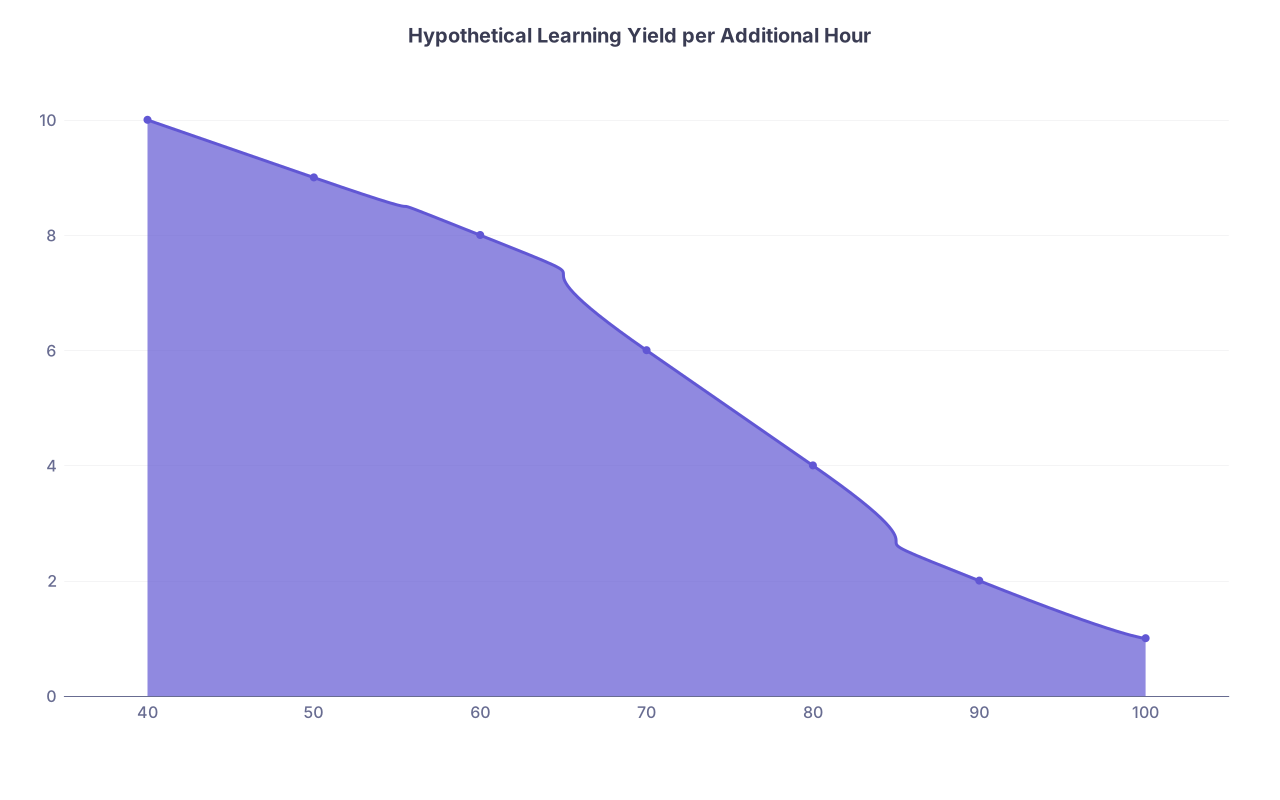
Conceptually, your learning yield per additional hour worked looks like a declining curve.
| Category | Value |
|---|---|
| 40 | 10 |
| 50 | 9 |
| 60 | 8 |
| 70 | 6 |
| 80 | 4 |
| 90 | 2 |
| 100 | 1 |
This is not from one single exact study; it summarizes what multiple lines of evidence imply:
- The first 40–60 hours: steep, high-yield zone.
- 60–80: still productive but with diminishing returns.
- 80–100: very low added gain and increased error and burnout risks.
Your goal is to push more of your high-value learning into the left side of that curve by being deliberate about how you use your better hours.
Systems, Not Heroes
One last point interns do not hear enough: the obsession with hours is a symptom of a bigger problem. We built a care-delivery system that depends on resident labor as cheap throughput. Then we argued over exactly how many hours that labor should last.
The data from 20 years of reforms tells a pretty stark story:
- Patient mortality does not swing wildly with duty hour caps in the 60–80 range.
- Resident fatigue and safety risk do change meaningfully with extreme hours.
- Learning quality depends more on structure, feedback, and case mix than on raw hours alone.
Which means this: the hero narrative—“I worked 120 hours, so I am a better doctor”—is statistically weak and educationally lazy.
If you are an intern trying to become good, not just survive, you are better off focusing on:
- How many feedback loops you create per week.
- How often you see the full course of a few complex patients.
- How intentionally you convert experiences into calibrated judgment.
The duty hour arguments will continue above your head for years. Your job is to extract maximum learning from whatever slice of the schedule you are given.



| Step | Description |
|---|---|
| Step 1 | Duty Hours |
| Step 2 | Fatigue Level |
| Step 3 | Case Volume |
| Step 4 | Clinical Exposure |
| Step 5 | Learning Efficiency |
| Step 6 | Knowledge and Skills |
| Step 7 | Supervision and Teaching |
| Category | Value |
|---|---|
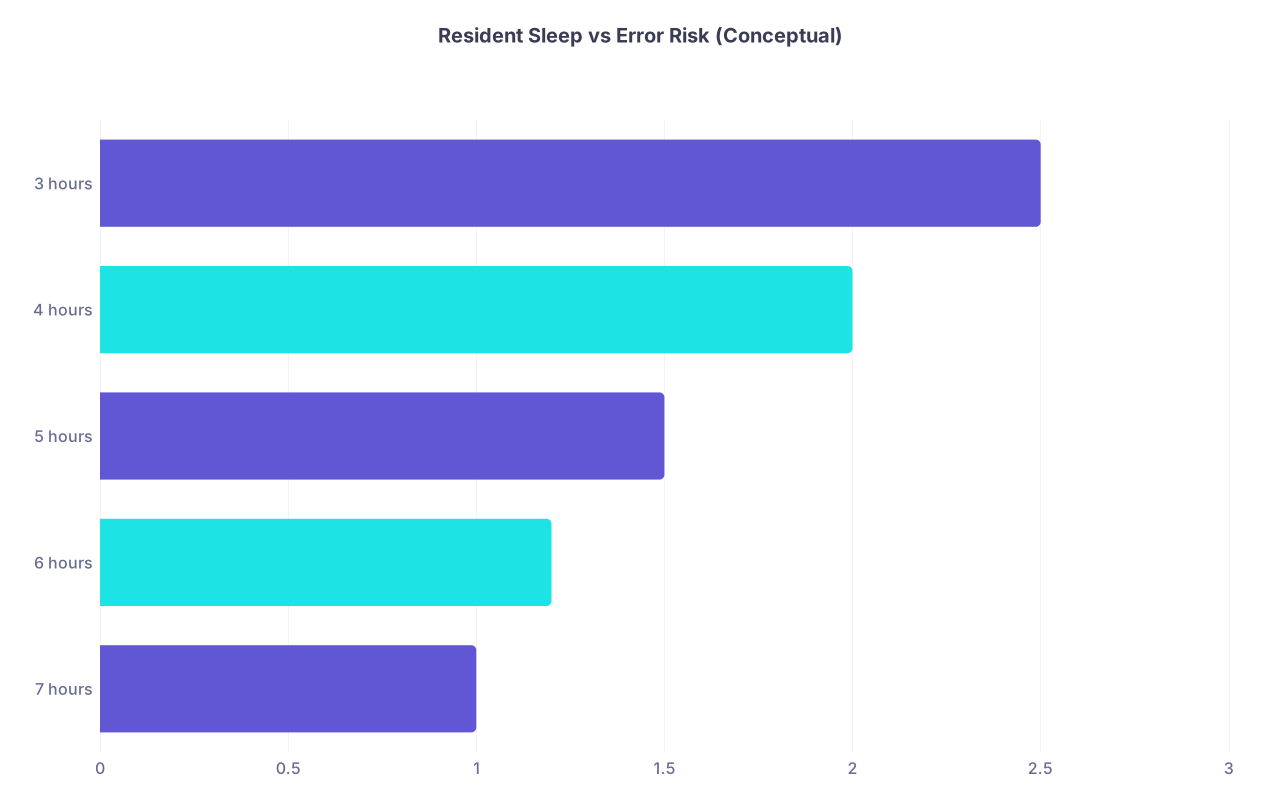
| 7 hours | 1 |
| 6 hours | 1.2 |
| 5 hours | 1.5 |
| 4 hours | 2 |
| 3 hours | 2.5 |
The core data-backed takeaways
- Long hours beyond ~80 per week add minimal learning and substantial fatigue, without clear improvements in patient outcomes or exam performance.
- Within a moderate range of hours, the quality of supervision, feedback, and continuity matters more for your training than the exact number of hours worked.
- As an intern, you maximize your growth by treating your best‑energy hours as scarce resources for high-yield learning, not just survival—because the system is not going to do that optimization for you.