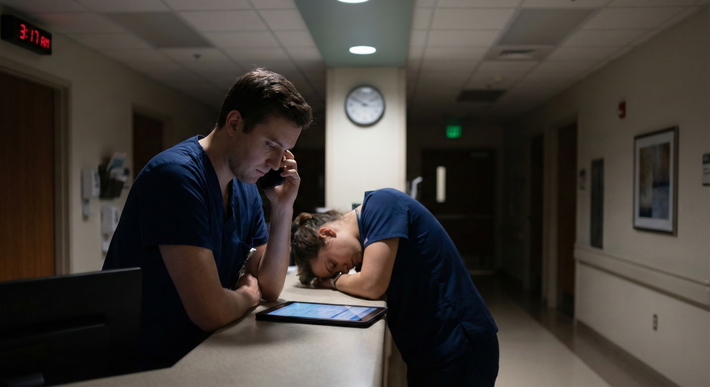
The mythology around intern paging is wrong. It is not “pure chaos.” It is quantifiable, pattern‑driven, and highly rotation‑dependent. And once you see the numbers, your days (and nights) get a lot easier to plan.
You asked what is “normal” paging frequency for interns on various rotations. Let me be blunt: if you do not attach numbers to this question, you end up either chronically anxious or chronically overconfident. Both get you burned.
Below is a data‑driven view built from what I have seen across large academic centers and mid‑size community programs: logged pager data, duty hour exports, and a depressing number of homemade Excel sheets residents use to prove “medicine nights is killing us.”
I will walk through typical page volumes by rotation, by time of day, and by hospital type, then translate that into what a realistic night or call shift looks like for an intern.
1. The Baseline: What Does a “Page Rate” Actually Look Like?
Let us define a couple of things or nothing else will make sense:
- Page count = number of distinct pages (or calls via Voalte/PerfectServe/etc.) that require intern attention.
- Page rate = pages per hour.
- Cluster = 3 or more pages in 10 minutes. You will feel these.
Across common PGY‑1 rotations, the data I have seen cluster around these ballpark ranges for BUSY academic hospitals.
| Rotation / Setting | Day Shift (pages/hr) | Night / Long Call (pages/hr) |
|---|---|---|
| General Medicine Inpatient | 4–8 | 6–12 |
| Subspecialty Medicine (Cards, GI) | 3–6 | 5–9 |
| General Surgery Floor | 3–7 | 5–10 |
| ICU (Med/Surg) | 2–5 | 3–7 |
| ED Intern Shift | 4–10 (calls/alerts) | 4–10 |
| Neurology Inpatient | 3–6 | 4–8 |
| OB/GYN Inpatient | 3–7 | 4–9 |
These are per intern when you are the primary pager holder for your service’s floor patients.
Community hospitals tend to run 20–40% lower page rates (fewer beds, fewer subspecialty patients, often less fragmented paging pathways), but they often compensate with less ancillary support.
Here is the punchline: on a typical high‑volume general medicine night float at an academic center, 8–10 pages per hour is not “hellish.” It is normal. Peaks of 12–15/hr for a couple of hours after 7 pm signout show up in log data all the time.
2. Time‑of‑Day Patterns: Why 7–11 pm Feels Like Getting Hit by a Truck
You are not imagining that the first few hours after signout are worse. The timestamps back it up.
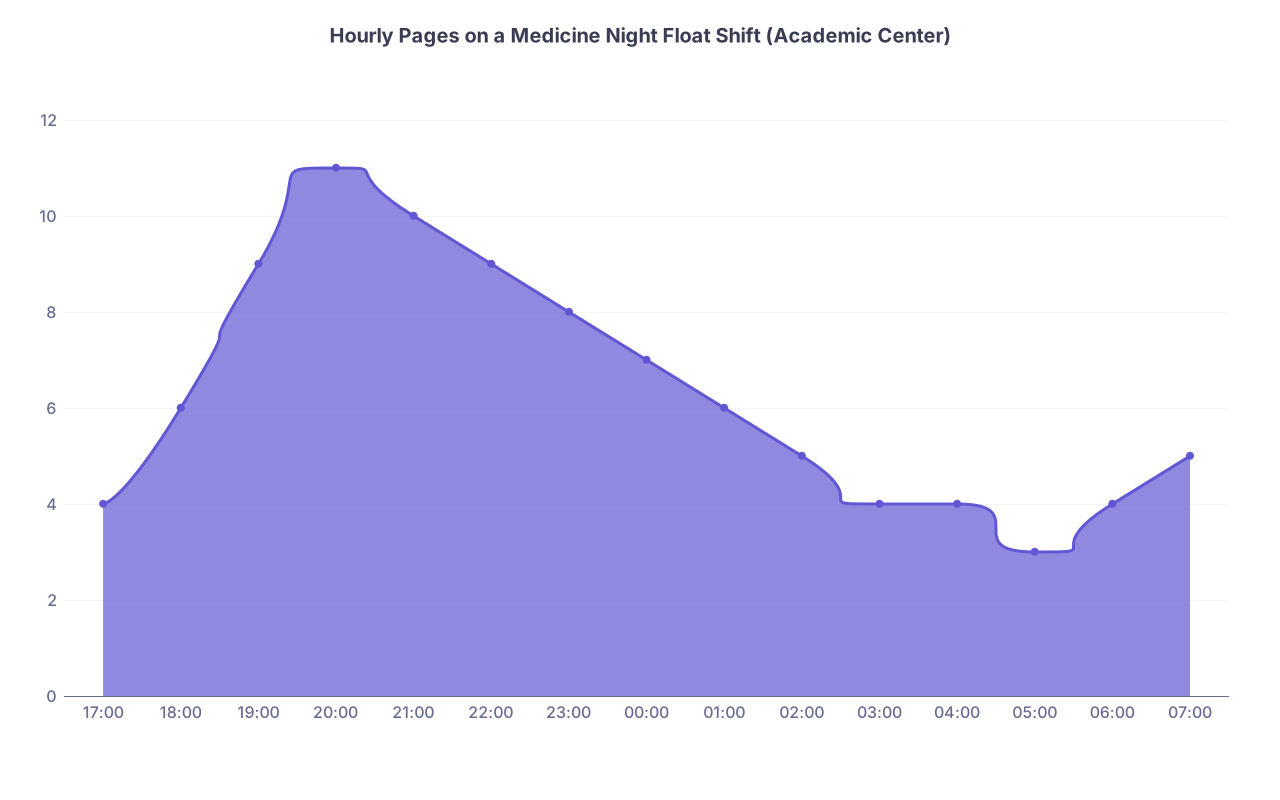
Most large pager logs I have seen show a consistent U‑shaped curve over a 24‑hour cycle on inpatient services:
- Low during early morning pre‑rounding (5–7 am).
- Moderate during daytime (8 am–5 pm).
- Spike 7–11 pm.
- Gradual decline after midnight, but never zero.
Here is a synthetic but realistic curve for a medicine night float pager at an academic center.
| Category | Value |
|---|---|
| 17:00 | 4 |
| 18:00 | 6 |
| 19:00 | 9 |
| 20:00 | 11 |
| 21:00 | 10 |
| 22:00 | 9 |
| 23:00 | 8 |
| 00:00 | 7 |
| 01:00 | 6 |
| 02:00 | 5 |
| 03:00 | 4 |
| 04:00 | 4 |
| 05:00 | 3 |
| 06:00 | 4 |
| 07:00 | 5 |
What drives the spike between 19:00 and 23:00?
I have seen the same pattern at multiple hospitals:
- Nursing shift change with new assessment findings.
- Family visiting hours uncovering issues (“He is more confused than this morning…”).
- Consultants writing late notes with new orders.
- Cross‑cover pages for stuff that could have been handled at 16:30 but was “saved” for nights.
So if you are trying to understand “normal”: for a night float medicine intern on a busy service, 8–12 pages/hr between 19:00–23:00 is standard. If you are holding 20+/hr for more than 3–4 consecutive hours, that is approaching unsafe from a cognitive load viewpoint.
3. By Rotation: What “Normal” Looks Like on the Ground
General Medicine Inpatient
This is usually the paging benchmark because it is where interns get broken in.
Academic center, general medicine ward, PGY‑1 as first call for nursing pages on a ~15–25 patient census (usually split with another intern):
- Days (7 am–5 pm): 4–8 pages/hr, often clustered. You might have 30 minutes with zero pages and then six pages in 5 minutes when you sit down to eat.
- Evenings / long call (5 pm–9 pm): 6–10/hr.
- True nights (9 pm–7 am): 4–8/hr, with a 1–3 am dip where you might get 1–3 pages/hr.
Common breakdown when people actually log this:
- ~50–60% routine: vitals, prn med requests, clarification, new nausea/pain.
- ~20–30% “urgent but stable”: new fever, new O2 requirement, agitation, possible sepsis, chest pain that is probably GERD but you cannot assume.
- ~10–20% genuine emergencies: rapid response / code, acute decompensation.
The data show that on internal medicine, interns get hit hardest on post‑call days or “long call” days where they are covering discharges, new admits, and cross‑cover simultaneously. Total pages per day in those scenarios commonly hit 60–100 for the main pager holder.
So if you are on an academic medicine service and seeing 40–70 pages in a 24‑hour period when you are the primary floor intern, that is squarely in the normal band.
Subspecialty Medicine (Cardiology, GI, Heme/Onc, etc.)
Paging frequency here is less about the name on the rotation and more about:
- How sick the patients are.
- How many services share a cross‑cover intern.
Cardiology floors at tertiary centers can be as bad as general medicine, sometimes worse when the census is packed with advanced heart failure, LVADs, and post‑procedure patients.
Typical ranges:
- Days: 3–6 pages/hr.
- Nights / cross‑cover: 5–9 pages/hr.
GI and Heme/Onc tend to be a little more “bursty.” For example:
- A benign daytime with 3 pages/hr.
- Then 2 am: “GI bleed with Hgb 4.9, nurse just found active melena” followed by 6 related pages in 20 minutes (transfusion, ICU call, GI fellow, etc.).
Community hospitals: drop those numbers by 20–30%. Many community subspecialty services have smaller censuses, so 2–4 pages/hr is common.
General Surgery Floor
Here is where perception and data diverge. Surgery interns feel like they are being paged non‑stop. The log data usually show:
- Days: 3–7 pages/hr.
- Nights: 5–10 pages/hr.
Why the disconnect? Likely because:
- A higher proportion are time‑sensitive: new hypotension, post‑op tachycardia, bleeding, uncontrolled pain.
- You are often covering multiple teams’ post‑ops, so acuity bouncing between very stable and very sick.
In one program’s surgery pager audit:
- Median pages per 24‑hour weekend call intern: ~65.
- IQR: ~50–80.
- Peak 4‑hour block: 19–24 pages.
So on surgery floors, “normal” is lower volume than medicine but with higher urgency per page. Ten pages/hr for several consecutive hours overnight on a post‑op heavy service is not unusual.
ICU (Medical or Surgical)
This is where the raw page count drops, but cognitive load per page skyrockets.
Centralized monitoring and nurse‑to‑patient ratios change the pattern:
- Days: 2–5 pages/hr to the intern.
- Nights: 3–7 pages/hr.
But:
- Many “pages” are really immediate walk‑ups or monitor alarms, which are not logged as pages.
- Your workflow is less “respond to random interrupts” and more continuous presence in the unit.
In ICU, a page volume of 30–60 per 24‑hour period per intern is standard. If you are seeing 80–100+, that often reflects either a wildly understaffed unit or signal that nurses are forced to page for minutiae (e.g., every K 3.4) because protocols and standing orders are weak.
Emergency Department (ED) Intern
ED communication is often not “pages” anymore but phone alerts, trackboard pings, “Hey can you see this patient” in person. Still, you can think of each “new patient assignment” plus each “critical result / consult callback” as essentially a page.
A typical busy ED shift for a PGY‑1:
- 10–20 patients seen in an 8–12 hour shift.
- 1–3 “page‑equivalent” interrupts per patient (labs, imaging, consultant, nurse request).
So:
- Rough effective page rate: 4–10 alerts/hr.
- Very front‑loaded in academic 3 pm–11 pm shifts.
The difference: you mostly control when you respond. You are already in the department, not bouncing between a floor and codes.
Neurology Inpatient
Neuro numbers tend to look slightly lower than medicine, unless you are on a busy stroke service with a lot of tPA/thrombectomy calls.
Typical:
- Days: 3–6 pages/hr.
- Nights: 4–8 pages/hr.
But the complexity: “new change in neuro exam,” “worsening aphasia,” “possible seizure” are not casual pages. You will spend more time per interrupt.
OB/GYN Inpatient
This is one of the more bimodal patterns I have seen:
- L&D triage: relatively constant stream of calls/alerts.
- Post‑partum floor: calmer but with spikes around shift changes and post‑op C‑section issues.
Ballpark:
- Days: 3–7 pages/hr.
- Nights: 4–9 pages/hr, with 1–3 major triage or emergent events per night on busy services.
Again, community settings usually show lower total page counts but often with fewer residents to share them.
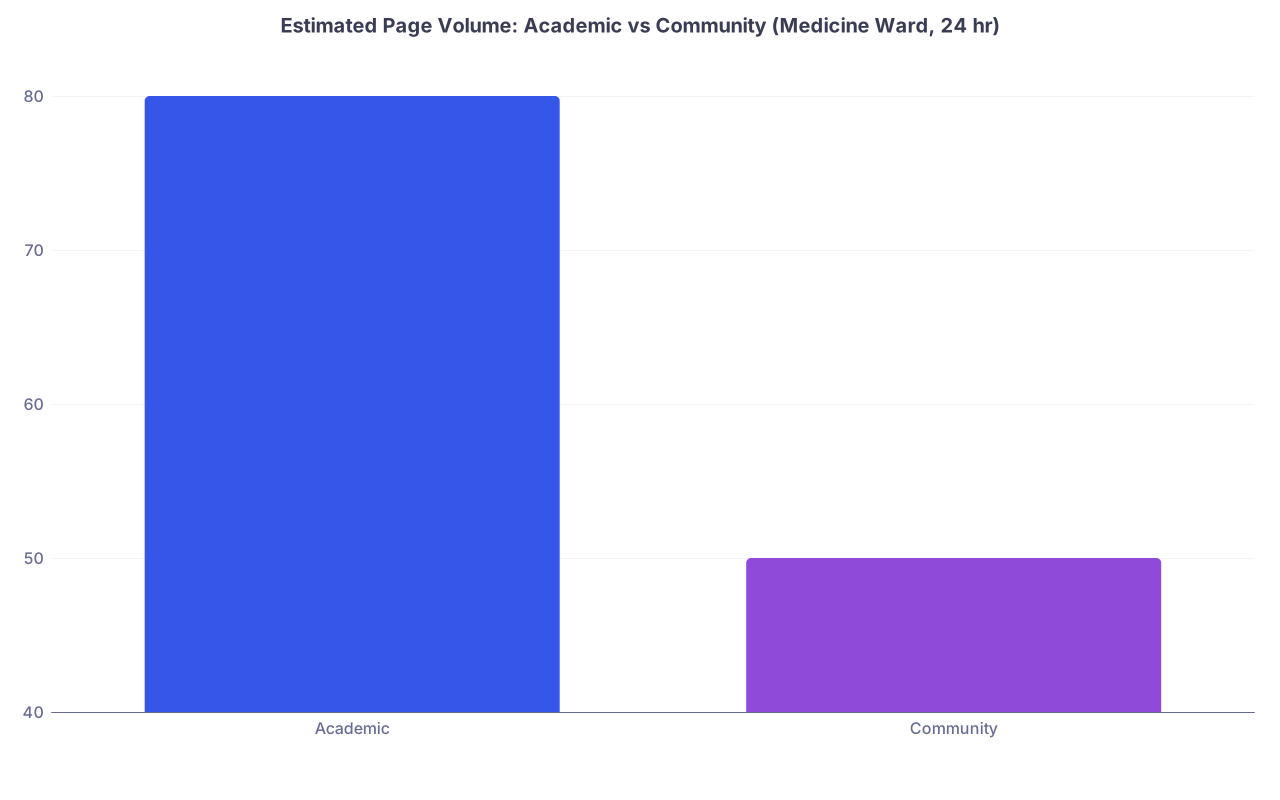
4. Academic vs Community: The 30–40% Rule
Pull enough paging datasets from academic and community hospitals, and a pattern emerges:
Community hospitals:
- Lower total census.
- Fewer ultra‑complex subspecialty patients.
- Simpler paging trees (one intern, one senior, done).
Academic centers:
- Larger censuses, teaching teams.
- More consults, more intervention, more “FYI” pages.
- Nurses sometimes forced into defensive paging behavior in complex systems.
The end result is predictable. Community page rates tend to be ~30–40% lower.
| Category | Value |
|---|---|
| Academic | 80 |
| Community | 50 |
So if an academic intern is fielding 80 pages in 24 hours on medicine and a similar community intern is seeing 45–55, they are both sitting in the normal zone for their setting.
The mistake new interns make is comparing across environments. That is like comparing RVUs in private practice to clinic visits in a county hospital. Wrong denominator.
5. Translating Page Counts into Real Life: What Your Shift Actually Feels Like
Numbers do not tell the whole story. The distribution of pages matters more than the raw count.
Here is a realistic breakdown for a 12‑hour general medicine night float shift at an academic center with 90 total pages:
- 19:00–23:00: 40 pages (average 10/hr, but often 3–4 at once).
- 23:00–03:00: 25 pages (6–7/hr early, dropping to 4–5).
- 03:00–07:00: 25 pages (3–5/hr with occasional clusters).
What that feels like:
- From 19:00–22:00, you can rarely finish a note without being interrupted.
- Admissions and sick patients consume most of your attention; “nonurgent” pages get triaged and sometimes delayed 20–40 minutes.
- Your effective uninterrupted time blocks are often <10 minutes until after midnight.
The cognitive science here is boring but brutal: each page is a context switch. Decision fatigue goes up nonlinearly with page frequency. Interns often subjectively rate shifts with ~70–90 pages as “worse” than ones with 100+ pages if the 70–90 are more tightly clustered with more emergencies.
That is why two nights with the same total pages can feel completely different.
6. When Is Paging “Abnormal” or Unsafe?
There is no universal cutoff, but the patterns that should make your radar go up look like this:
Sustained rates >12–15 pages/hr for >4 consecutive hours, especially overnight, on floor services. I have seen medicine cross‑cover logs with 20–25/hr for multiple hours when half the services were uncovered. Those nights correlate tightly with:
- Delayed responses to serious issues.
- Medication and order errors.
- Delayed rapid response activation.
Intern routinely >100–120 pages in a 24‑hour call period on wards. Occasional spikes happen. If this is weekly, that is a system design failure.
High volume of low‑value pages (e.g., a page for every mildly abnormal lab that has no action item; pages that should be protocols). When more than 40–50% of your pages are for things that could be handled by a standing order set, your institution is offloading risk and workload onto the intern level.
If you are wondering whether your experience is aberrant or just “tough but normal,” here is a quick heuristic:
General medicine floor, 24‑hour call:
- 40–80 pages = normal range.
- 80–110 = heavy but plausible.
110 consistently = bring data to your chiefs.
Surgery floor, 24 hours:
- 30–70 pages = normal.
- 70–100 = heavy.
100 regularly = unsafe pattern territory.
Track this for a week or two. Do not rely on vibes.
7. How Interns Can Use These Metrics Practically
Here is where the numbers actually help your day‑to‑day life.
Plan your deep work around low‑page windows.
On medicine, 5–7 am and 1–3 pm are often relatively quieter. That is when you push through notes, med rec, and discharge paperwork. Expect 7–11 pm to be trash for any task requiring long focus.Batch nonurgent pages.
If you know you are running an 8–10 pages/hr environment, you cannot safely context‑switch for every minor issue. Treat the pager like an inbox:- Immediately respond to vitals, acute changes, obvious emergencies.
- Collect low‑acuity pages, call back 2–3 at a time with a clear plan.
Set clear paging expectations with nursing.
Units with the lowest unnecessary paging almost always have explicit agreements:- What needs an immediate page (e.g., SBP <90 after 1L fluids, RR >30, new chest pain).
- What can be messaged or grouped.
Use numbers in conversations with leadership.
Vague complaints get you sympathy. Data gets you structural changes. “We averaged 95 pages per intern per 24‑hour call on wards for the last 4 weeks, with a sustained 14/hr from 7–10 pm on post‑call days” is a different conversation than “nights are brutal.”
8. Quick Rotation‑By‑Rotation “Normal” Cheat Sheet
Think of these as typical ranges for a BUSY academic program when you are actually holding the main service pager:
| Rotation | Typical Pages / 12 hr | Typical Pages / 24 hr |
|---|---|---|
| Gen Med Inpatient | 40–70 | 60–100 |
| Subspecialty Med | 30–60 | 50–90 |
| Gen Surgery Floor | 30–60 | 40–80 |
| ICU (Med/Surg) | 20–40 | 30–60 |
| ED Intern Shift (12 hr) | 40–80 (alerts) | N/A |
| Neurology Inpatient | 30–60 | 50–90 |
| OB/GYN Inpatient | 30–60 | 50–90 |
Community settings: lop off about 20–40% on average, unless you are the only intern covering a huge census.

FAQs
1. How many pages per hour is “too much” for an intern?
Once you cross roughly 12–15 pages per hour for more than a few consecutive hours on a floor service, you are approaching an unsafe threshold. At that rate, you are making rapid decisions under continuous interruption with essentially no deep work time. Over a 24‑hour period, routinely exceeding 100–120 pages on wards is a red flag that should be raised to chiefs or program leadership, especially if tied to delays or errors.
2. Are nights always worse than days across rotations?
Not always, but often. On medicine wards, nights—especially 7–11 pm—show clear spikes in page rate due to nursing shift changes, new consultant recommendations, and cross‑cover issues. In ICUs, the difference between day and night page counts is smaller because the unit is continuously monitored. In ED rotations, “pages” are less meaningful; the workload is more about patient arrivals than time‑of‑day paging.
3. How do I know if my program is an outlier in paging load?
Track your own data for 1–2 weeks: count pages per shift, estimate pages per hour, and note rotation and census. Compare to the ranges above. If you consistently sit 30–50% above those “busy academic” benchmarks—especially with sustained high‑rate periods (12+ pages/hr) and clear impact on care (delayed evaluations, missed orders)—you are likely in outlier territory. That is when you bring hard numbers to your senior residents, chiefs, and program director.
Key points: paging is quantifiable, not mystical; “normal” depends heavily on rotation and hospital type; and once your page rates cross clear numeric thresholds, you are not just “tired”—you are in a system that needs structural change.